
Expert Comment: The Bayeux Tapestry and news headlines of 1066
With the Bayeux Tapestry back in England for the first time in almost a thousand years, Dr Emily Winkler, Lecturer in Medieval History at Hertford College and St Edmund Hall, and author of Pocket Bayeux Tapestry, looks at what its embroidered scenes still tell us about kings, comets and a cross-Channel world older than either nation.

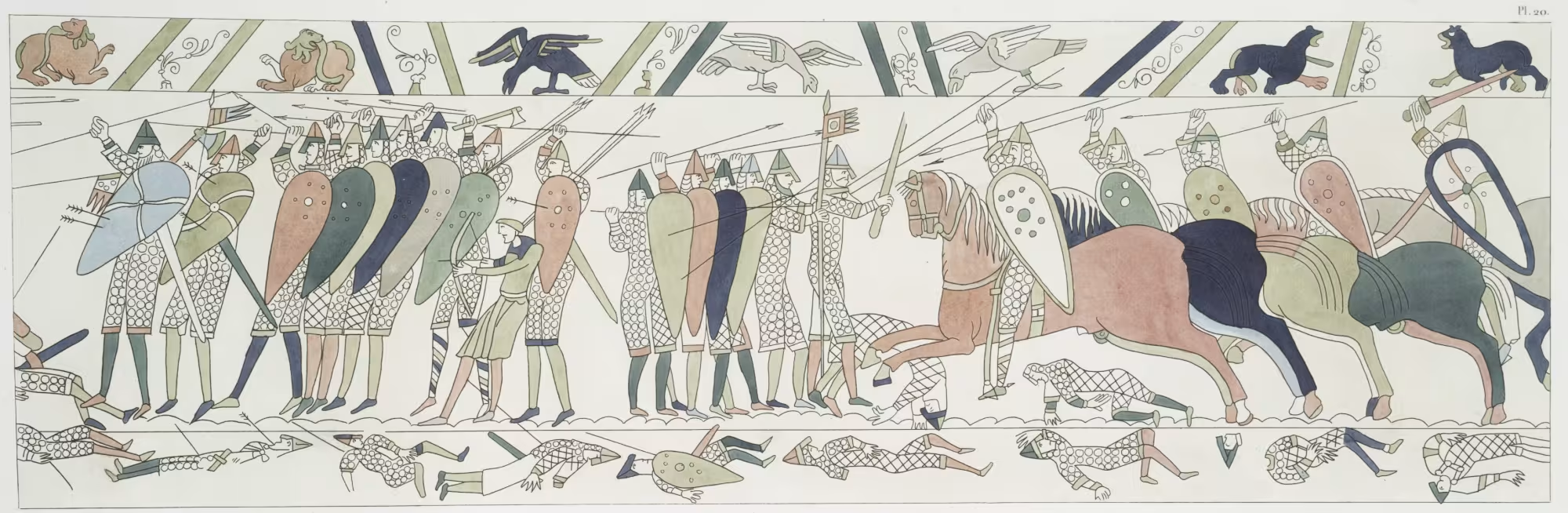
The Bayeux Tapestry is a war memorial. A work of commemorative art, it remembers the lives of those caught up in the dramatic events that led up to the Battle of Hastings, and the story of the rivalry between Harold Godwineson and William of Normandy that concluded with the Norman Conquest. It shows us past people, from kings and invaders to workers, farmers, families, and refugees. It is unflinching about the colossal scale of the Norman victory and about the honourable defence of a kingdom that nonetheless ended in defeat.
The Tapestry is on display at the British Museum in London until July. In the future, it will reside in a new, state-of-the-art museum in Bayeux. Here in the UK permanently is the distinguished full-size copy of the Tapestry made by women in Staffordshire in the 1880s, now in Reading Museum, where it can be seen for free.

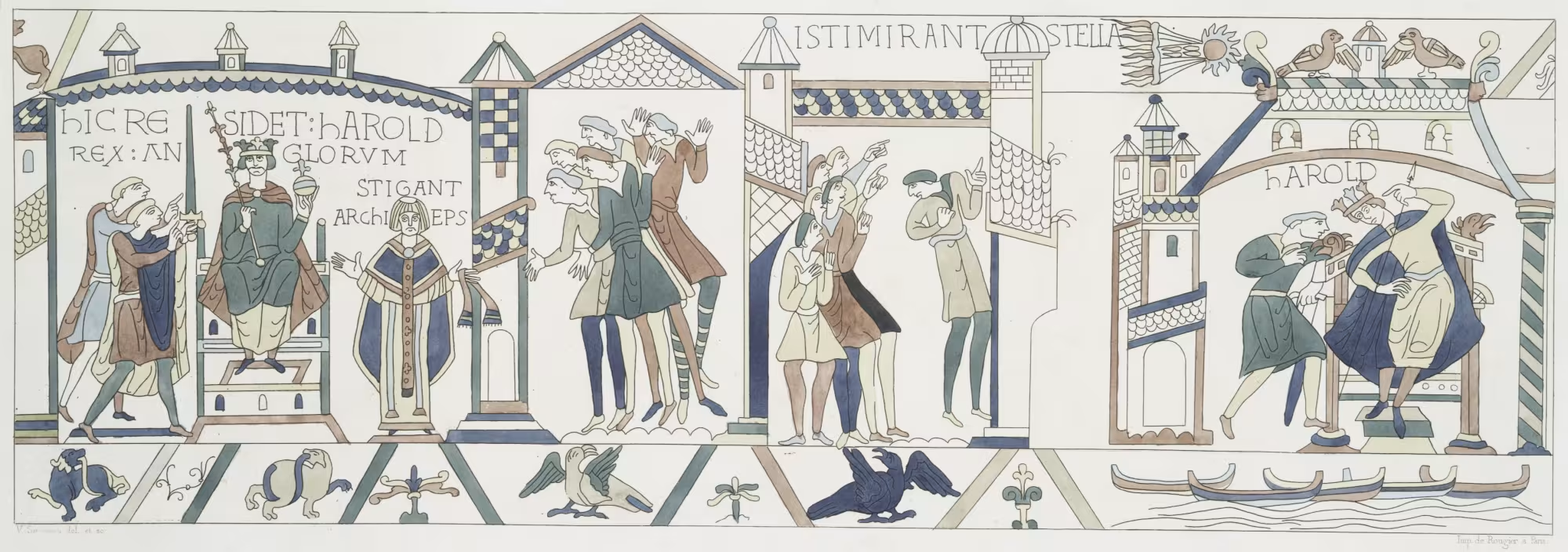
“The people depicted on the Tapestry express their sense of wonder, curiosity, and foreboding [at witnessing Halley’s comet, which was visible across northern Europe in April 1066]. In their interest in the skies, they are not so different from us, who recently saw two eclipses in northern skies. Nearly one thousand years separate us from the Tapestry’s skyward-looking figures—but only twelve appearances of Halley’s comet.”
Although distant in time, the Tapestry is full of familiar things to discover.
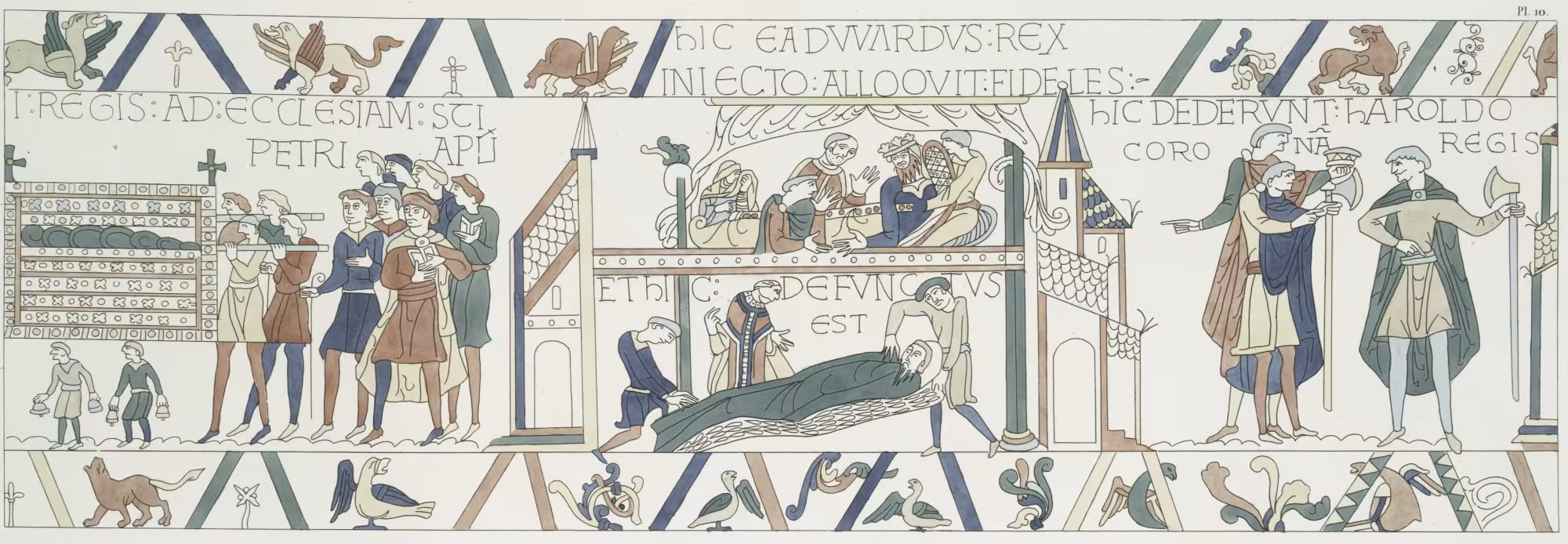
The first figure who meets your gaze directly is Harold, sitting on his throne shortly after the leading nobles gave him the English crown. The long-tailed star nearby is Halley’s comet, which was visible across northern Europe in April 1066. The people depicted on the Tapestry express their sense of wonder, curiosity, and foreboding. In their interest in the skies, they are not so different from us, who recently saw two eclipses in northern skies.
Nearly one thousand years separate us from the Tapestry’s skyward-looking figures—but only twelve appearances of Halley’s comet.
The politics in the borders
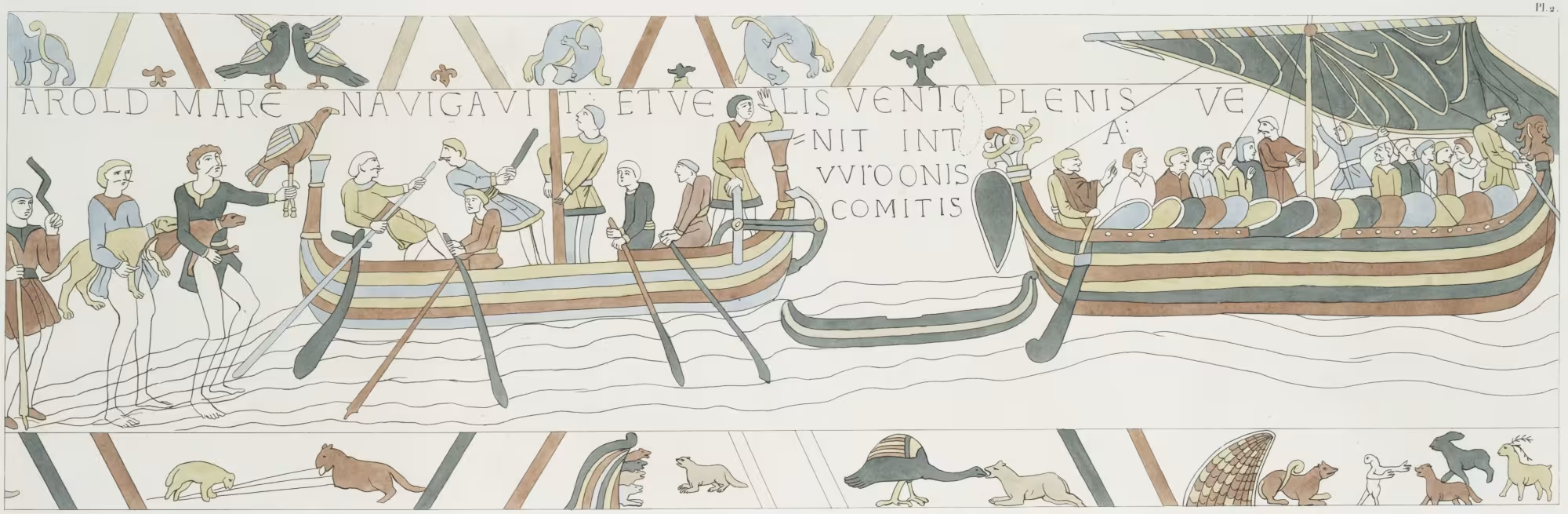
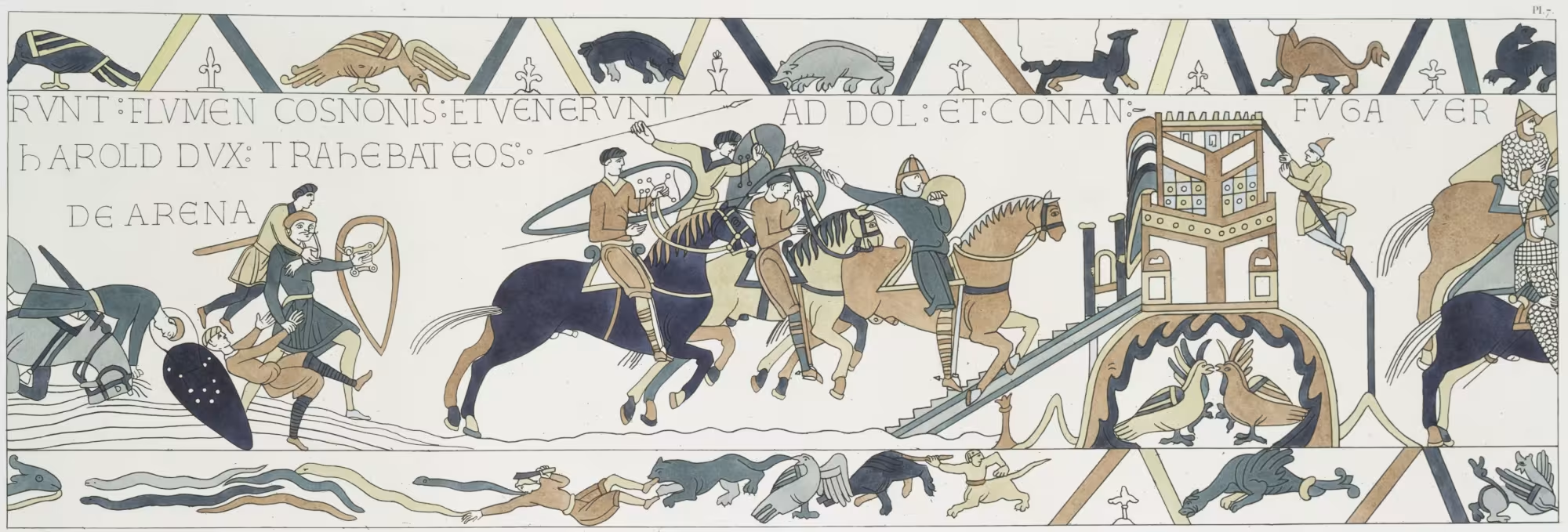
The borders adorning the Tapestry reveal familiar creatures from Aesop’s fables: foxes, crows, lions. The embroidered fables, at once wise, witty, and absurd, remind us that Harold and William’s glamorous world of political intrigue was similar to the rough realm of birds and beasts competing to survive. George Orwell’s Animal Farm did political commentary with allegory. The Tapestry did it by using the borders to run a wry visual interplay with the central drama. Only a few strands of woollen yarn separate humans from animals.
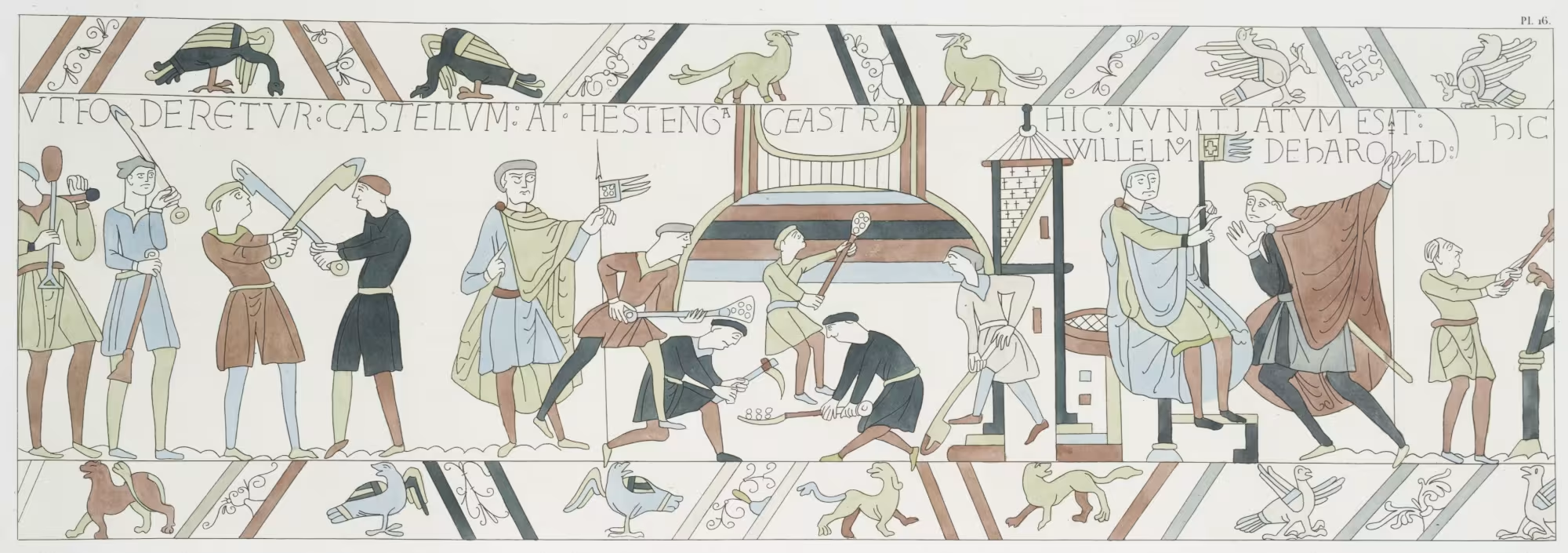
Everyday human activities are there too. At one point, the Tapestry captures a moment of play. Two Norman soldiers mimic swordfighting with their shovels as they take a break from digging to build a castle mound.
Beyond finding familiar things, we can peek behind the scenes at the wider world the Tapestry starts to reveal.
The news in the last week frequently cited the historic relationship between England and France and the loan of the Tapestry as a gesture of goodwill and friendship between two nations. This is one way in which this Anglo-Norman artefact is politically meaningful today. In 1066, these two nations as we know them today did not exist.
“The Tapestry offers a glimpse of an eleventh-century political world more intricate and interconnected than one of ‘two nations’, involving friends, neighbours, and rivals from around the North Sea. It illuminates the lives of peoples who lived along and travelled across the Channel and the sea.”
Personal relationships and power plays of lords with lands governed the dynamics of the day, rather than operations of distinct nation-states with clear borders. The Tapestry offers a glimpse of an eleventh-century political world more intricate and interconnected than one of ‘two nations’, involving friends, neighbours, and rivals from around the North Sea.
It illuminates the lives of peoples who lived along and travelled across the Channel and the sea. For example, it shows the negotiations of the count of Ponthieu and the escapades of the count of Brittany, Normandy’s neighbours. The Tapestry’s artistic design drew on many motifs from Scandinavia, which reflects England’s experience of Danish rule earlier in the eleventh century.
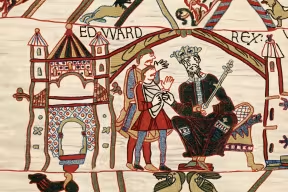
Three kings of England are at the centre of the Tapestry’s story: Edward the Confessor, Harold Godwineson, and William of Normandy. Their doings created a sensation in their own day: Edward listening to his men reporting about missions in Europe; Harold rescuing two Norman men from quicksand; William gathering an army and a fleet to invade. The Tapestry’s Latin captions describing these men and their deeds might be headlines. They do not tell the full story. The young Edgar, Edward’s adopted heir, had been competing to take the throne but was overpowered by both Harold and William. The king of Norway, Harald Hardrada, invaded England in 1066 but was killed by Harold Godwineson. The Tapestry depicts the last round of a competition spanning generations and contenders from different lands.
England was already Norman
The Battle of Hastings brought changes to England in the holding of land, the people and language of the ruling class, and the livelihoods of families dispossessed by conquest and its aftermath. What the battle did not do was to connect England with the Continent. That link was already in place.
England’s King Edward, whose death in early 1066 sparked the fight for the crown, had grown up in Normandy. His mother was Norman. When he became England’s king in 1042 he brought Norman bishops, Norman architecture, and Norman ideas. The Tapestry does not document a moment of transformation in which England became a Norman land. The Bayeux Tapestry is special because it itself is our most spectacular evidence of that existing Anglo-Norman world.
The Tapestry records and remembers a story broader than the rivalry of two men. It captures the financial and political opportunities of the victors; the scale of human labour involved in realising the aspirations of medieval lords; and the lives lost on both sides of an unusually gruesome battle. The care, dignity, and public excitement with which the Tapestry is being treated across France and England shows its value for people today. This historic loan of the Tapestry offers an opportunity to remember again the losses and lives of English and Norman people a thousand years ago.
All images: Les anciennes tapisseries historiées, Vol. 1, 1838. The Miriam and Ira D. Wallach Division of Art, Prints and Photographs: Art & Architecture Collection, The New York Public Library.
For more information about this story or republishing this content, please contact [email protected]


