
New exhibition on critical raw materials opens to the public
The hidden materials behind everyday life are front and centre in the latest special exhibition at Oxford University Museum of Natural History (OUMNH), which opened this week.
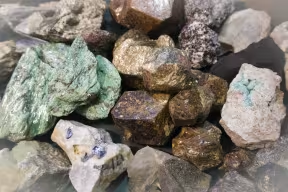
The exhibition '34: The Critical Raw Materials Shaping Our Future' explores the 34 raw materials deemed essential to the UK’s future. Image credit: Jazziell, Getty Images.

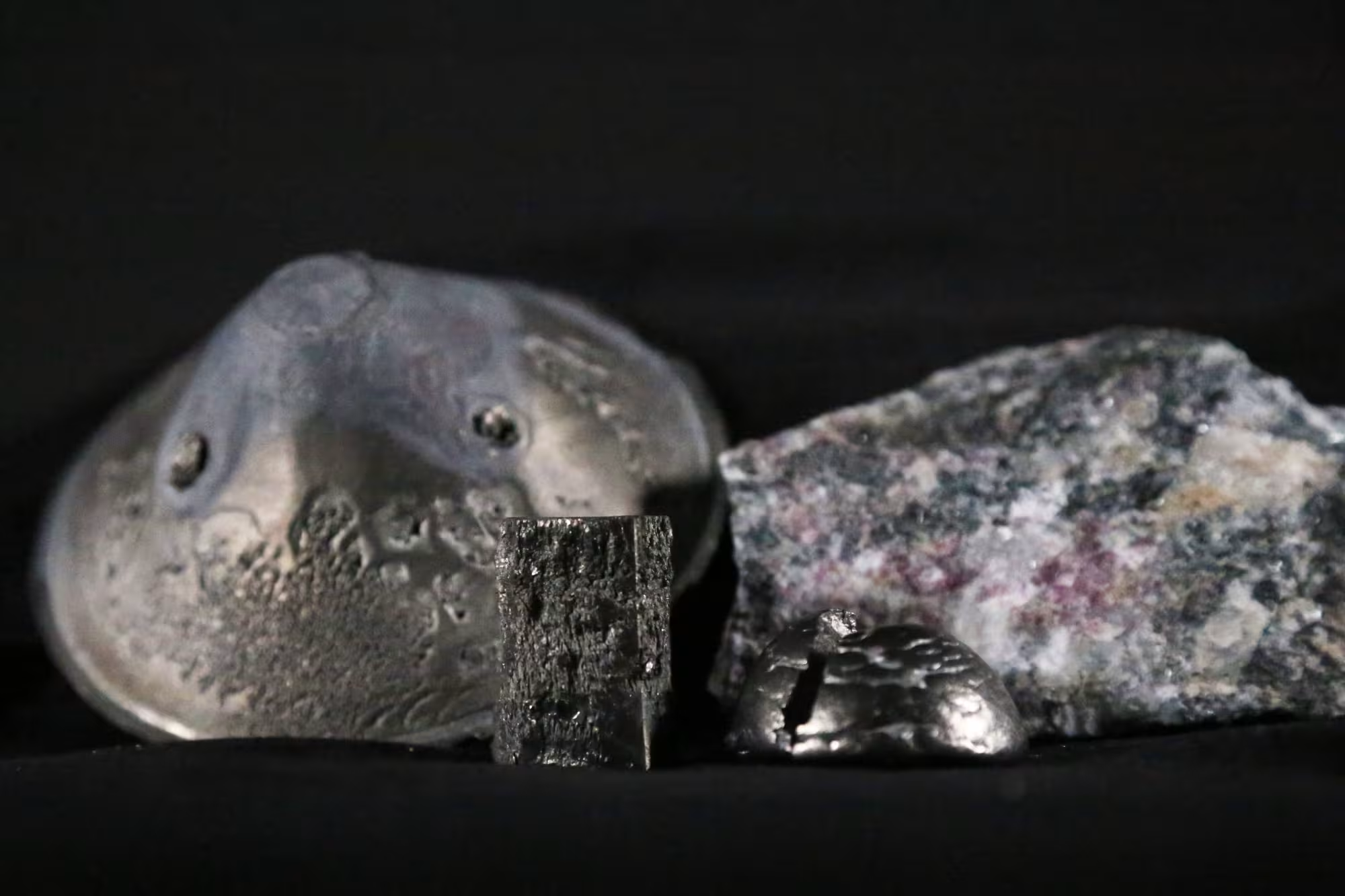
34: The Critical Raw Materials Shaping Our Future, reveals the hidden powers and global stories behind the 34 raw materials deemed essential to the UK’s future. Through case studies, historical and modern artefacts, and interactive installations, the free exhibition will open the eyes of visitors to the geopolitics, complex supply chains and human perspectives behind the minerals that make our modern lives possible. Alongside the exhibition, a lively programme of public events and workshops will invite visitors and communities to engage more deeply with the exhibition’s themes.
34 is a collaboration between OUMNH, Oxford University’s Department of Earth Sciences, and Oxford EARTH – a transdisciplinary research programme addressing the resourcing challenge we face to meet future demand equitably and sustainably.
Critical materials – why now?
From the smartphones in our pockets to the imaging equipment in our hospitals, modern life is built on materials taken from the Earth’s crust.
Critical materials are those which are essential for a country’s economy or national security, but which may not have a reliable supply chain. At a time of rising geopolitical tensions and growing competition over the resources needed for clean energy, modern technology and defence, there has never been a more timely moment to shine a spotlight on them.
At the heart of the exhibition are 34 raw materials officially designated as ‘critical’ to UK development by researchers and the Government. These include familiar materials such as iron, aluminium, lithium, cobalt, titanium, helium and rare earth elements, alongside less well-known but equally essential substances.
As governments seek to decarbonise energy systems, electrify transport and expand digital infrastructure, demand for these materials is increasing at unprecedented speed. For instance, the International Energy Agency predicts that, globally, we could need around five times as much lithium by 2040, and twice as much graphite and nickel. Decisions made now about mining, recycling, product design and consumption will have long-lasting consequences.
By bringing together geological specimens and industrial products, historic objects, contemporary technologies and cutting-edge scientific research, 34 asks how we can meet rising demand for critical raw materials without further endangering the ecosystems and communities that call Earth home.
“Our exhibition, 34, will not only deepen public understanding of one of today’s most urgent global challenges, but also reflects our ongoing commitment to present topical, relevant content that helps audiences understand how the natural world shapes and connects with our daily lives.”
From deep time to cutting-edge research
School project ReSET (rethinking natural resources). Credit: Mike Kendall.
34 takes a long view of humanity’s relationship with the Earth, starting with a 40,000-year-old iron-rich ochre from Ngwenya Mine in present-day southern Africa, which marks one of the earliest known moments when humans deliberately extracted material from beneath the ground. The story continues with case studies ranging from 19th century gold rushes in North America to present-day lithium extraction in Chile’s Atacama Desert. These demonstrate how the pursuit of raw materials has repeatedly transformed landscapes, displaced communities and driven economic booms and busts.
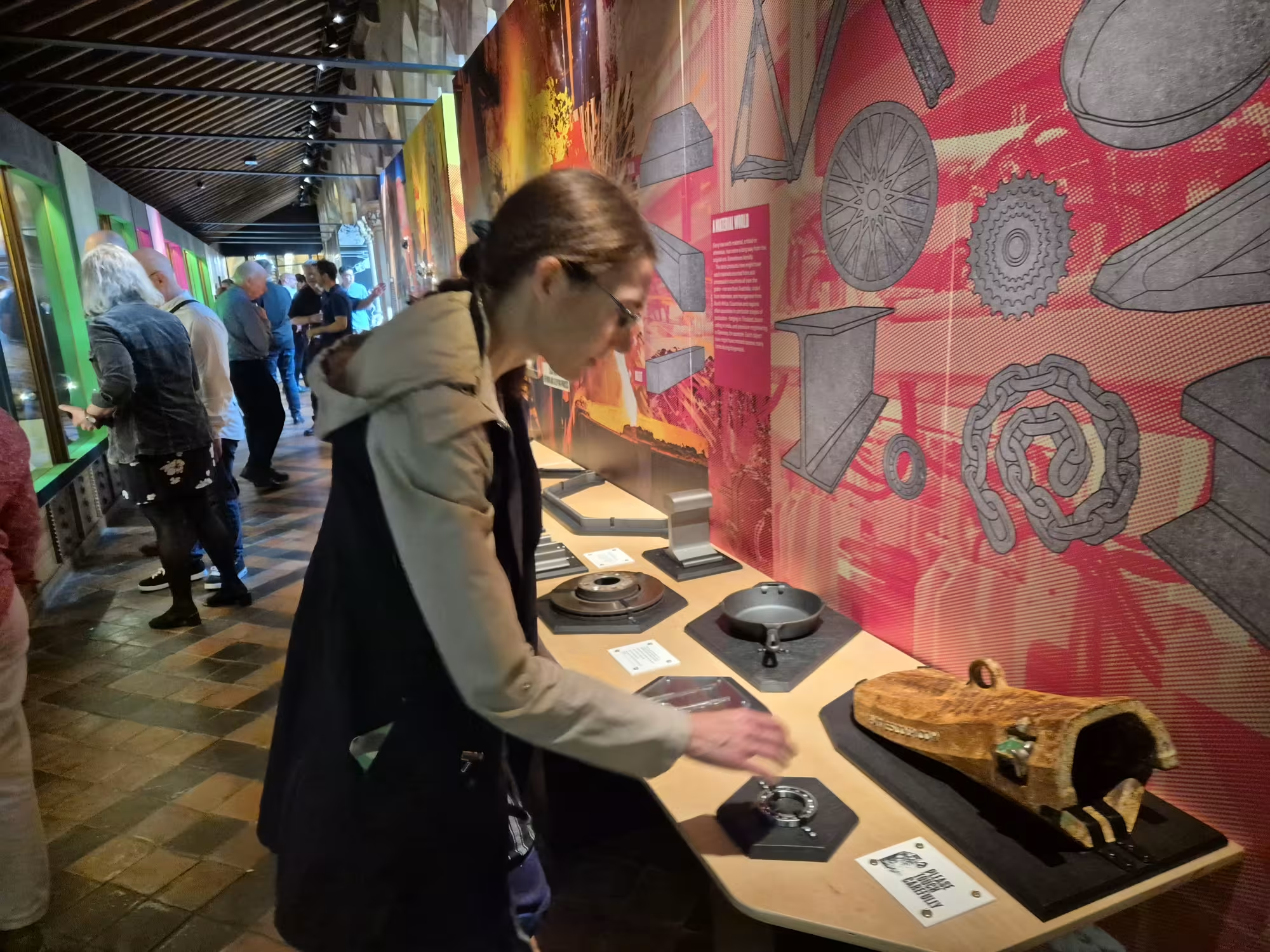
The exhibition is structured around familiar environments - kitchens, hospitals, streets, renewable energy production in our countryside and the aerospace industry - connecting our everyday experiences with the places and practices that provide our raw materials. All 34 critical raw materials, and a few more besides, are placed directly alongside the technologies and products that drive demand. Aerospace components, wind-turbine magnet replicas, battery modules and medical devices sit next to the rocks that made them possible.
Extracting these critical materials, however, can be associated with dangerous working conditions and environmental damage. 34 showcases the cutting-edge research from Oxford University and the wider scientific community exploring how we can meet rising demand for critical raw materials without further endangering the ecosystems and communities that call Earth home. These include both alternative extraction methods with reduced environmental impacts and approaches to reduce our reliance on high-risk materials, for instance through recycling, repair and substitution.
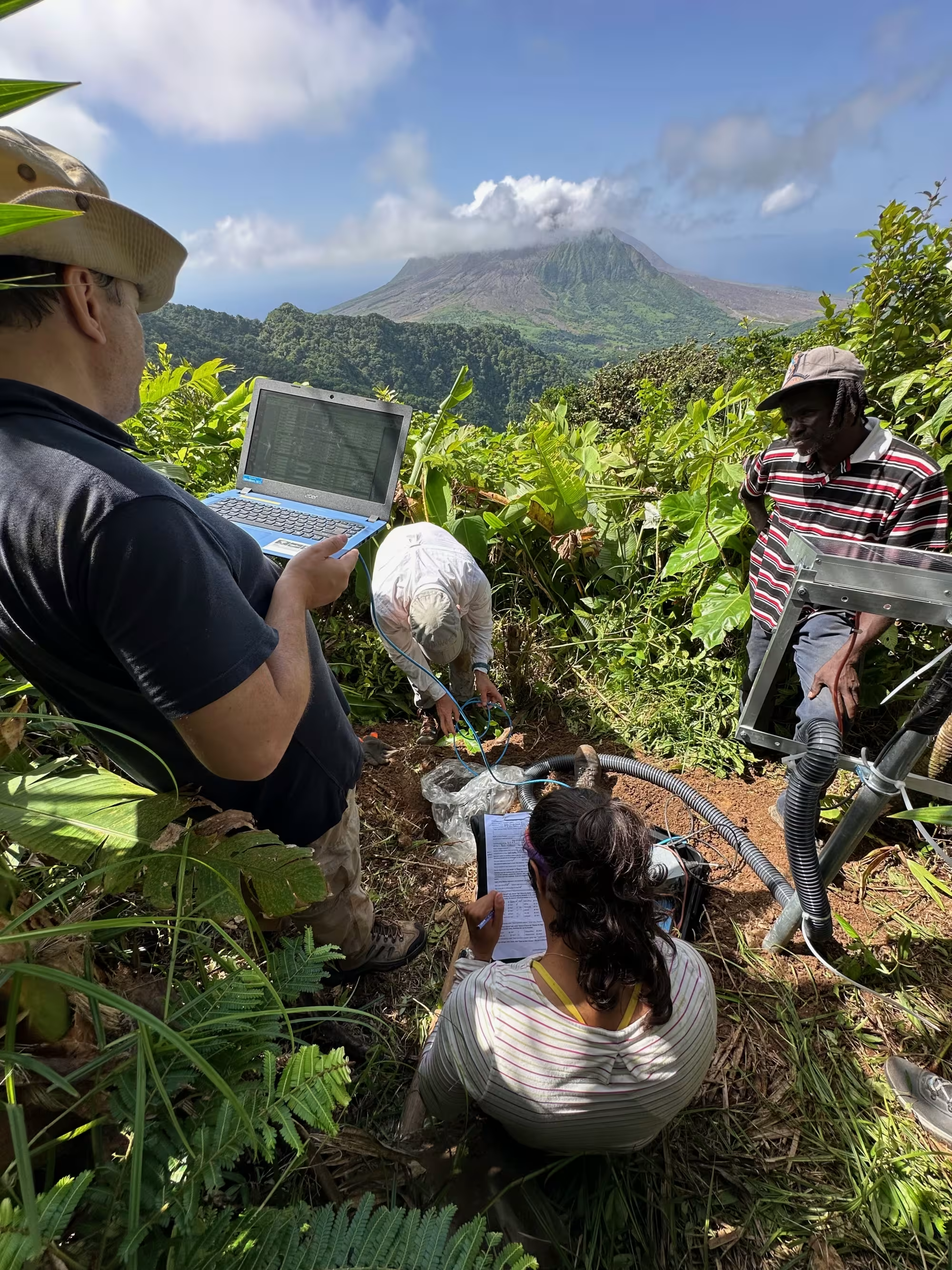
For instance, the extraction of the lithium essential for rechargeable batteries places intense pressure on water supplies and fragile ecosystems. New research led by the Oxford EARTH programme is investigating whether mining geothermal brine in places such as New Zealand and Montserrat could enable a more environmentally sustainable supply.
“Achieving net zero and a sustainably secure future will place unprecedented demands on natural resources, requiring innovative ways to discover, refine and reuse critical materials - bringing both major challenges and unique opportunities.”
Digital and interactives; art and reflection

Interactive digital installations allow visitors to dismantle everyday objects virtually, revealing the dozens of elements inside, and to watch the volcanic processes that put mineral-rich rocks and liquids within our grasp. Other interactives invite visitors to hear directly from researchers, industry workers, policymakers, activists and community members involved in extraction.
A tactile, hands-on section enables visitors to physically trace iron’s journey from ore through smelting and refinement to alloyed products, with the opportunity to handle raw minerals, ingots, pellets and finished objects.
A vital part of the exhibition, a specially-commissioned artwork by Katie Surridge, responds to the history and scale of human raw material extraction and use. Developed in dialogue with Oxford University researchers, the commission will offer a space for reflection on landscapes shaped by extraction within the exhibition. Alongside this, a collaboration with the Oxford Flash Fiction Prize will give voice to aspiring and established authors responding creatively to society’s relationship with critical raw materials.
The exhibition is supported by a varied programme of events, from talks and tours, to late-night openings, family activities, performances and hands-on workshops. Designed for audiences of all ages, the programme brings together researchers, artists and communities to explore the exhibition’s themes in different ways.
The exhibition is free to visit and can be accessed during the Museum’s normal opening hours. More information can be found on the OUMNH website.
For more information about this story or republishing this content, please contact [email protected]


