
Oxford’s Museum of Natural History completes biggest redisplay in its 165-year history
The Museum of Natural History, University of Oxford, founded in 1860, has completed an ambitious redisplay project with new installations showcasing three Oxfordshire dinosaurs. These mark the final phase of ‘Life, as we know it’ – an eight-year programme to transform the presentation of the Museum’s collections to visitors.
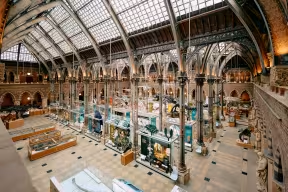
The new exhibits in the ‘Life, as we know it’ redisplay project, located in the Museum of Natural History’s main court. Image credit: Fisher Studios and Museum of Natural History, University of Oxford.

The redisplay project has installed 48 new displays in 24 state-of-the-art showcases themed around Biodiversity, Ecosystems, Evolution, and Earth. Together, these exhibits encompass the intricate relationships between our planet and life. The redisplay has involved the movement and conservation of over 3,000 Museum specimens to stage them in a fresh, bold design within the main court of the historic, neo-Gothic Victorian building.

“Life, as we know it’ has been a long-term effort to rethink how we present the natural world to our visitors, and it is a pleasure to see that vision now fully realised. The new displays bring together thousands of specimens to tell some of the most important stories in science, from the history of life on Earth to the extraordinary diversity of the natural world today. We hope they will inspire curiosity, encourage discovery and help visitors of all ages see their place within the wider story of our planet.”
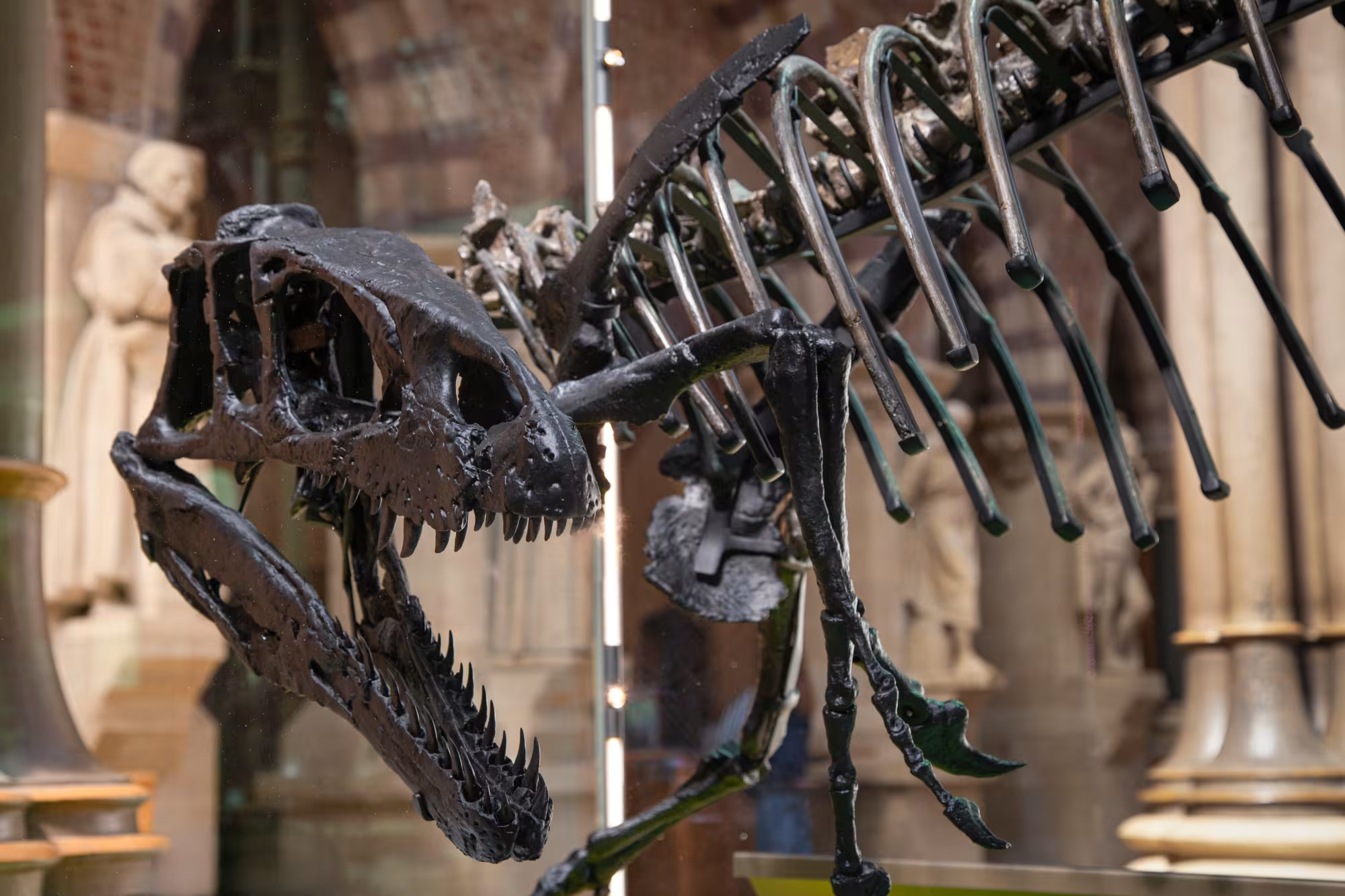
At the heart of the latest installations is Megalosaurus, a Jurassic dinosaur discovered in an Oxfordshire quarry in Stonesfield in the late 18th century. It became the first dinosaur ever to be scientifically named when University of Oxford Professor William Buckland presented its fossilised remains to the Geological Society of London in 1824. The living dinosaur would have measured around nine metres in length and weighed around a tonne. The fossilised remains of this ‘first dinosaur’ now form part of the new displays on prehistoric ecosystems.The displays also showcase Eustreptospondylus, a predatory dinosaur discovered in Summertown, Oxford, in 1870. This cousin of Megalosaurus will be exhibited for the first time as a fully articulated skeleton, using a combination of original fossil material, digital modelling and 3D printing, created in collaboration with the University of Chicago. A third Oxfordshire dinosaur Cumnoria, named after its discovery in Cumnor in 1879, is displayed sinking through the ocean to its final resting place in a showcase on fossilisation.
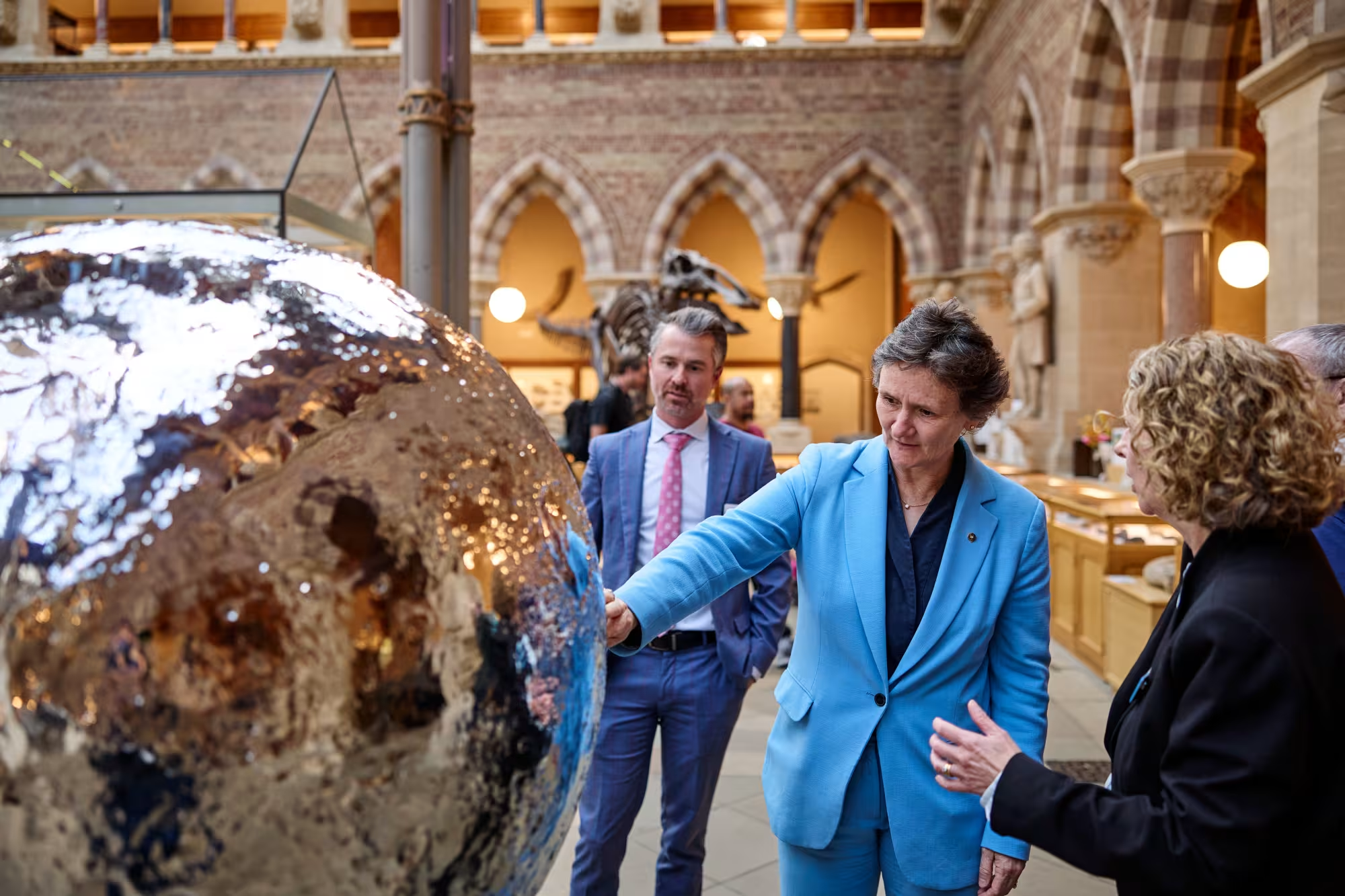
The new exhibits also track the history of our planet, showing how life and Earth exist in a dynamic relationship, each shaping the other. Visitors can experience a tactile connection to these themes through a series of touchable mineral specimens, as well as a new installation, Mirror Moon, created by artist Luke Jerram. The one-metre diameter polished steel sculpture presents a reconstruction of the Moon’s surface, based on accurate topographic data from NASA. Visitors will be able to feel every crater, valley and mountain.
Another of the new displays features an innovative digital interactive, Prehistoric Diver, which recreates ocean ecosystems from the Jurassic era and even further back in time to the Cambrian period, an age of rapid evolution 500 million years ago. Prehistoric Diver explores these lost worlds, placing visitors at the helm of a virtual submarine scanning the seas for ancient lifeforms.
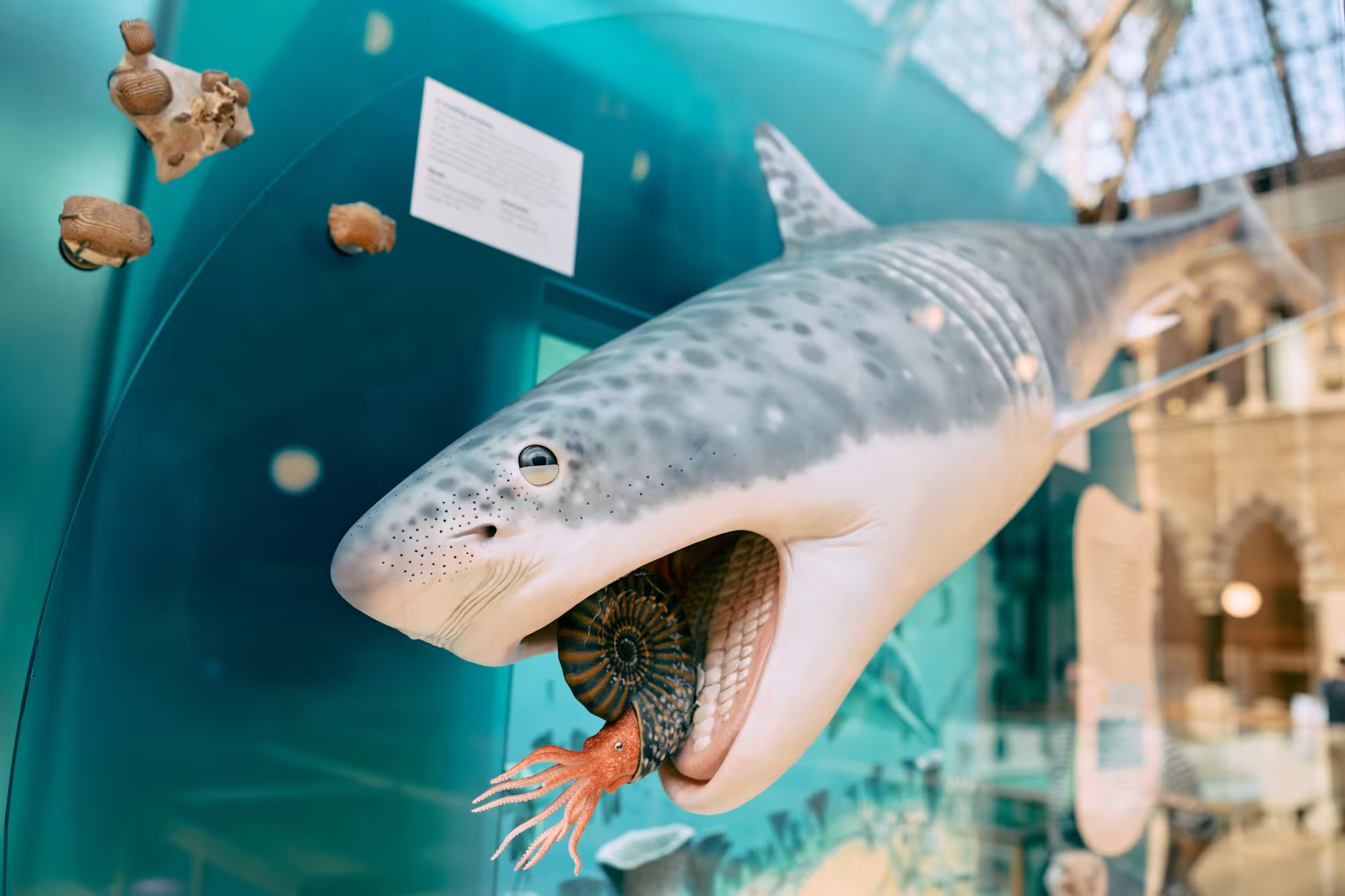
Across the redisplay, the exhibits use a diverse range of media to communicate key themes. Custom-made digital animations, developed by the University’s Video Production Team, illustrate complex scientific concepts including ecological networks, genetic variation and biogeography. Specialist models reconstruct long-extinct animals including the shark Ptychodus and giant arthropod Arthropleura. Case studies reveal research taking place at Oxford University; the Laboratory with leaves display, for instance, is based on studies at Wytham Woods to demonstrate how we can measure and understand biodiversity and ecology.
“The new displays at the Museum of Natural History genuinely change the way you see the world, and our part in it as humans.”
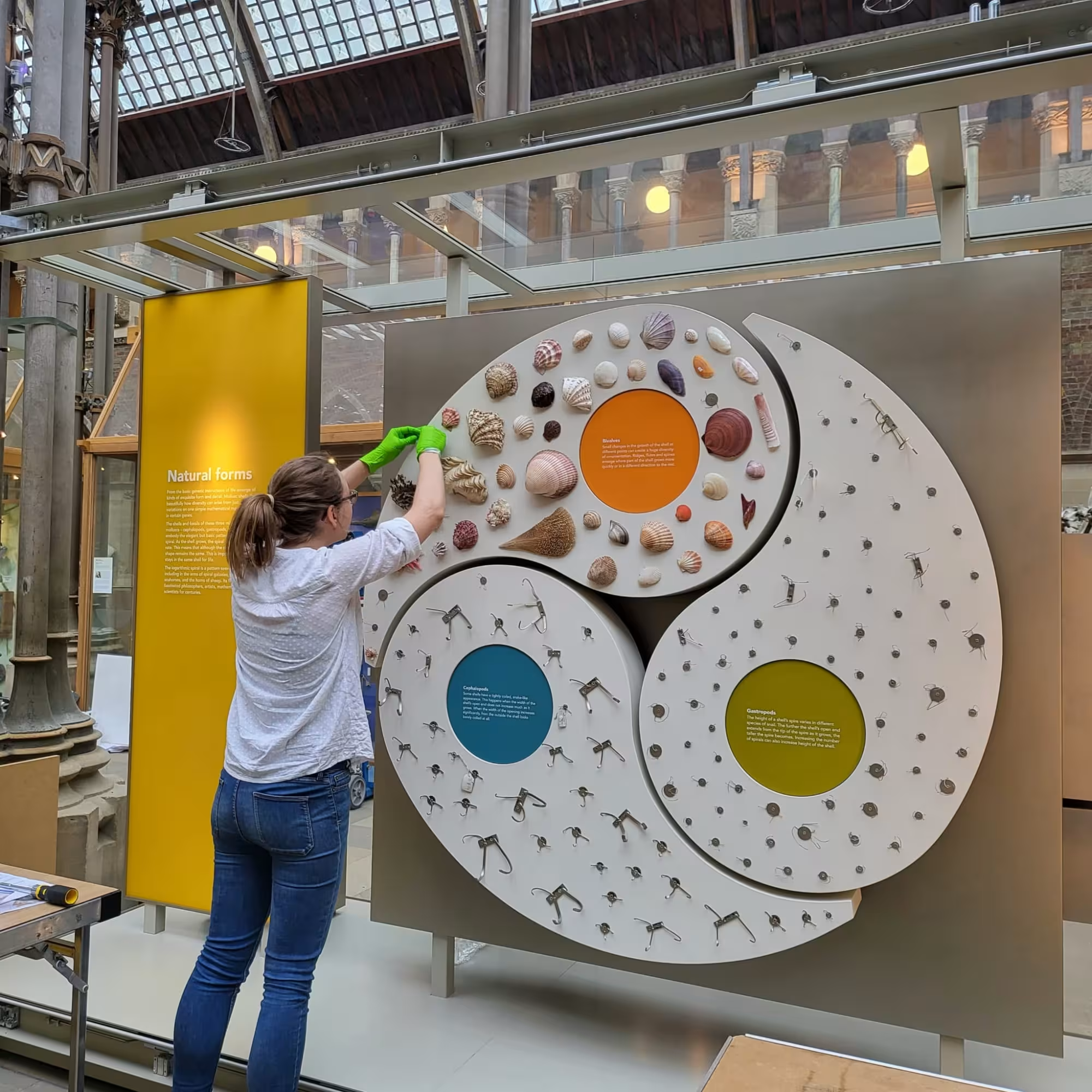
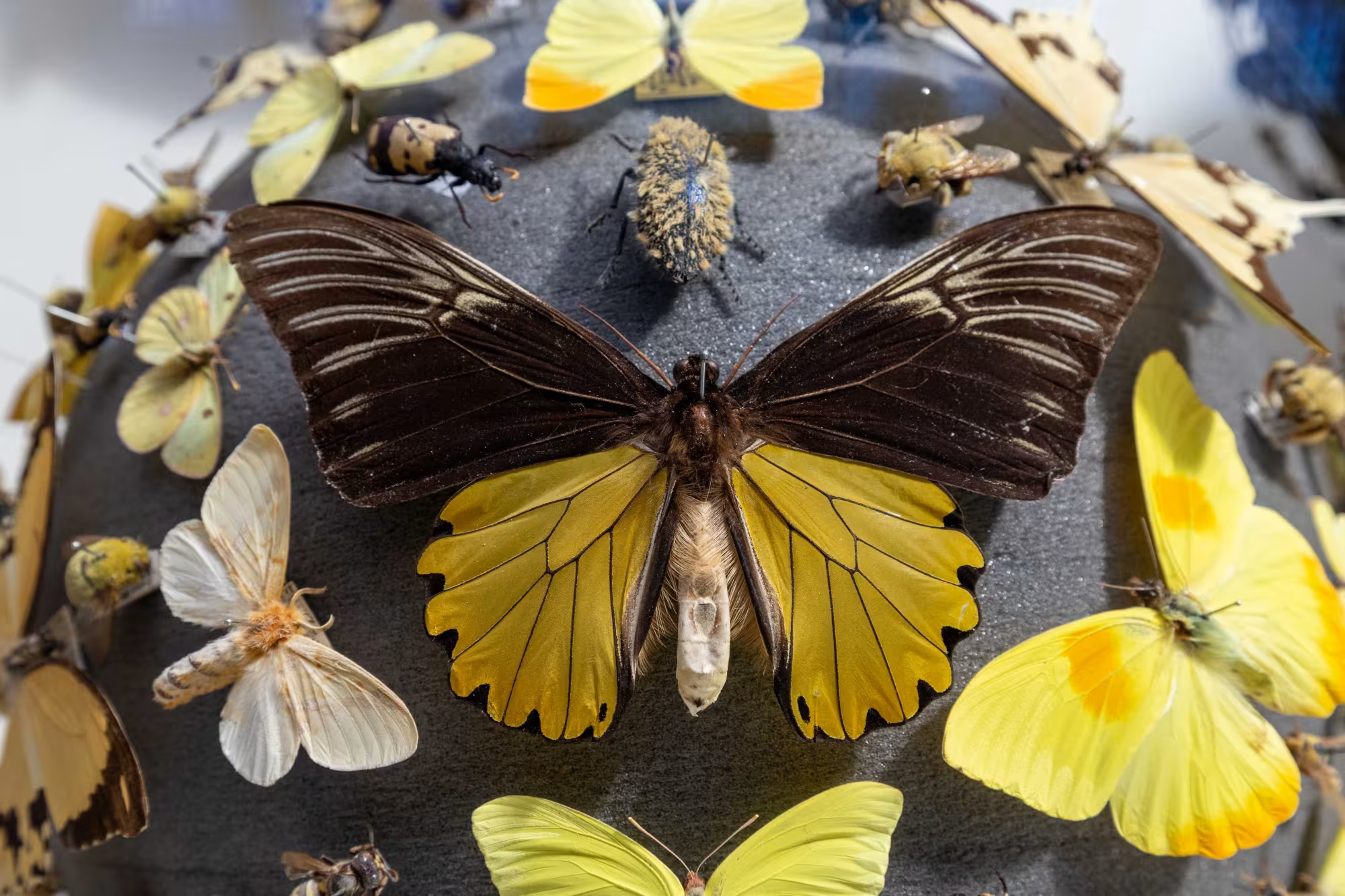
Throughout the eight-year redisplay project, the content for 'Life, as we know it’ was developed by multiple different teams across the Museum, spanning Public Engagement, Collections and Research. Staff from all across the Museum had the chance to help conserve and paint hundreds of arthropods in the Great and small display. The project continued when the COVID-19 pandemic hit, with the first showcases built during lockdown. Since then, the build and installation took place alongside visitors, with the Museum remaining open to the public.
The Museum of Natural History, University of Oxford is the world’s first purpose-built museum of natural history and now holds the University’s internationally renowned collections of natural history specimens and archives. The Museum is free to enter, and its growing collections underpin a lively programme of research, teaching and events focused on the sciences of the natural environment.
The final phase of ‘Life, as we know it’ has been generously supported by Biffa Award, a fund that helps to build communities and transform lives across England and Northern Ireland as part of the Government's Landfill Communities Fund. Previous phases of the redisplay project were supported by the FCC Communities Foundation.
Rachel Maidment, Grants Manager of Biffa Award, said: ‘We are delighted to have supported the final phase of the Museum of Natural History’s ‘Life, as we know it’ redisplay project through the Landfill Communities Fund. This ambitious programme will help visitors of all ages explore the story of life on Earth, while improving access to nationally significant collections and creating lasting benefits for communities. Biffa Award is proud to fund projects that build communities and transform lives, and this remarkable new display is a fitting example of that mission in action.’
Professor Irene Tracey CBE, FRS, FMedSci, Vice-Chancellor of the University of Oxford, said: ‘Oxford’s gardens, libraries and museums are among the most visible ways in which the University shares its research and collections with the wider public and were enjoyed by a record 3.8m visitors in 2025. Last year alone, more than 877,000 people came to the Museum of Natural History, making it one of the most visited university museums in the world. The completion of ‘Life, as we know it’ is a remarkable achievement that brings together cutting-edge science, outstanding collections and public engagement, helping new generations of visitors explore the history of our planet and the extraordinary diversity of life upon it.’
For more information about this story or republishing this content, please contact [email protected]


