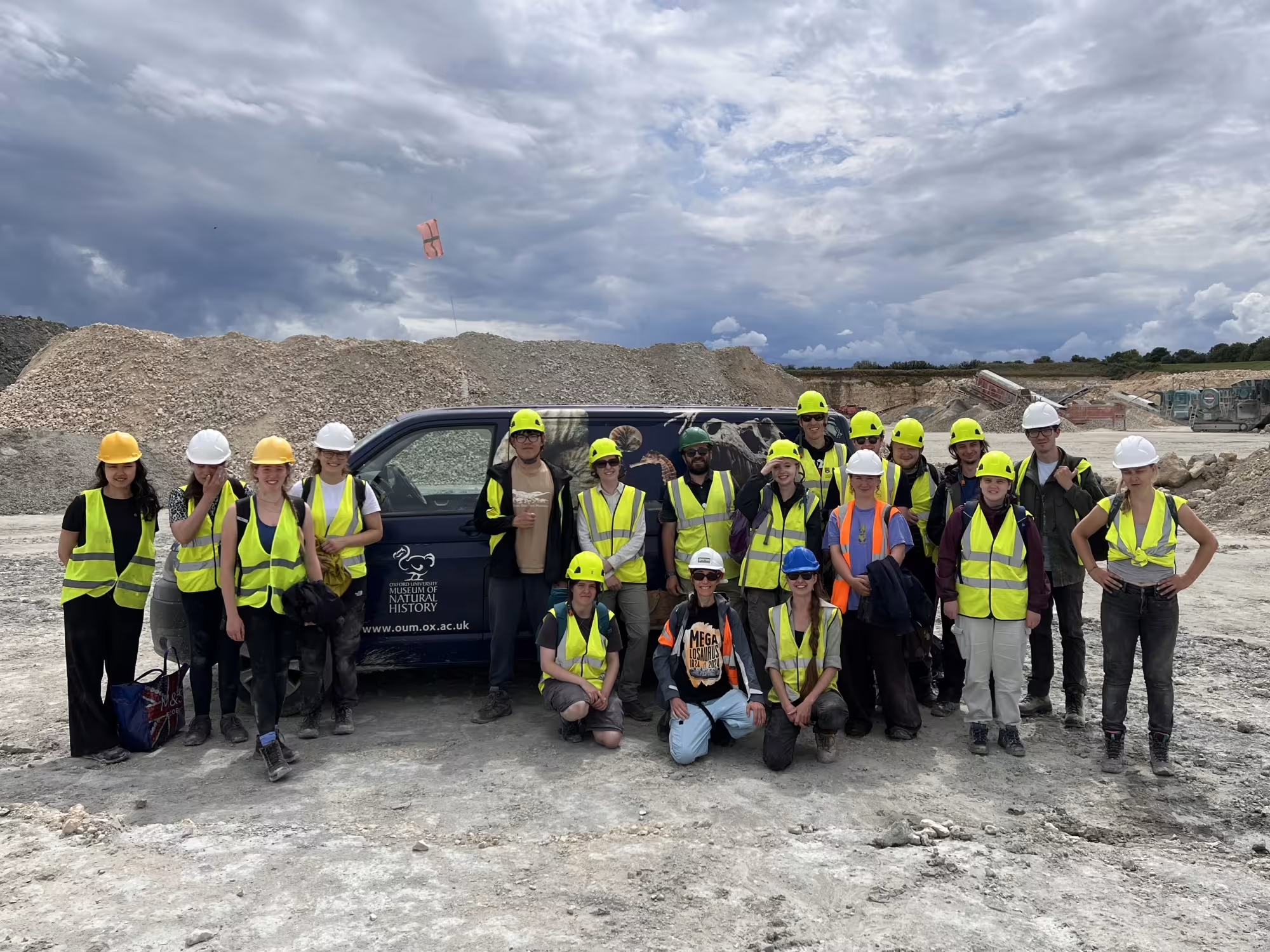
Return to the Dinosaur Highway
This summer, the Dinosaur Highway research team returned to Dewars Farm Quarry, in Oxfordshire, to continue excavating one of Britain’s most remarkable fossil sites. The Dinosaur Highway site dates to 168-166 million years old, making it Middle Jurassic in age. Numerous dinosaur trackways cover the area, primarily left by large long-necked dinosaurs called sauropods, as well as a large predatory dinosaur, potentially the 9 metre-long Megalosaurus.
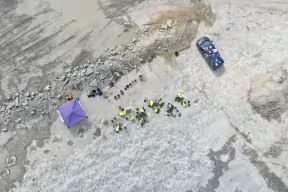

The 2026 excavation was organised and led by a collaborative partnership between Oxford University Museum of Natural History (OUMNH) and the University of Birmingham, with additional researchers joining the excavation from Liverpool John Moores University. The aims of the excavation were to extend the trackways uncovered in previous field seasons, uncover new trackways and identify any additional, previously unreported, aspects of the site.

“Since the major new area of trackways was discovered, announced to the public in 2025, the response has been extraordinary, both in Britain and around the world. Especially heartening is the interest and pride local people have taken in Oxfordshire’s rich dinosaur heritage.”
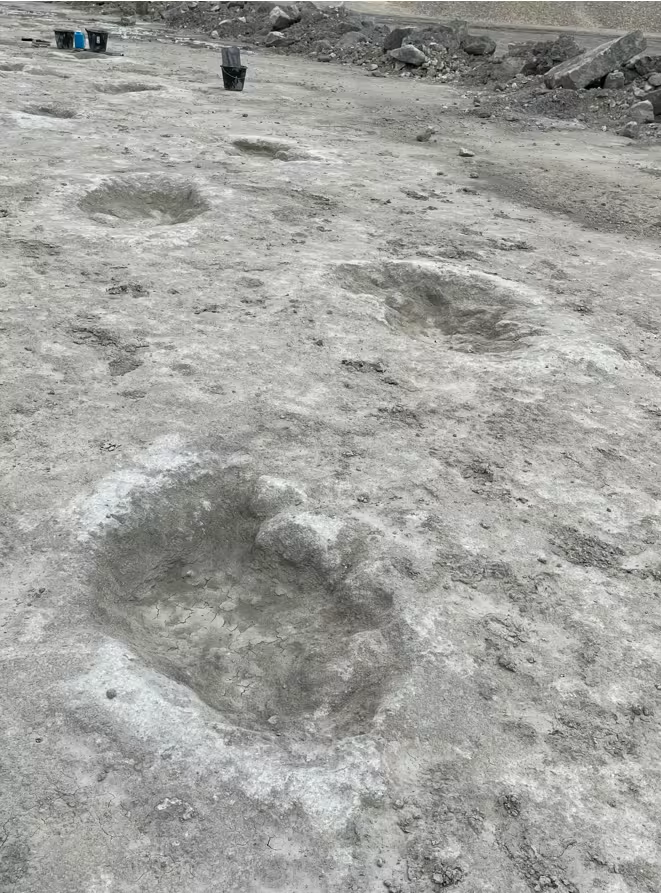
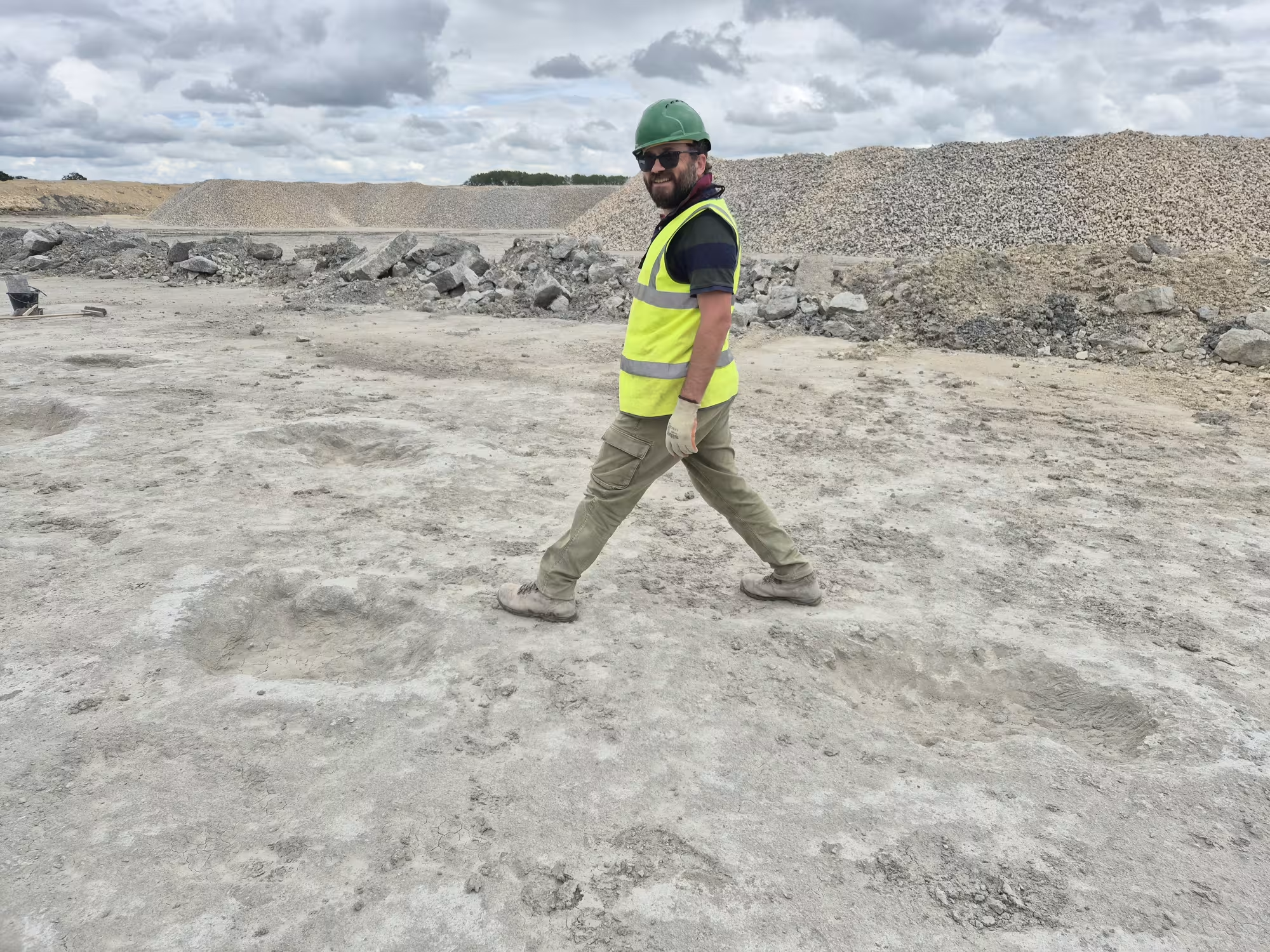
Throughout the week-long dig, the team located sauropod trackways made by larger individuals by the presence of crescent-shaped bumps on the quarry floor where the animal’s foot had kicked forward some wet sediment. The sediment hardened into rock over millions of years.
Other sauropod trackways were harder to find as they lacked this characteristic bump. This could be because the individual that made them was smaller and lighter, or because the mud the animal walked across was drier and harder than when the deeper trackways were made. To find these other types of trackway, the team looked for mud cracks on the surface – subtle clues that a footprint may lay buried beneath. By carefully digging these out using trowels and brushes, the team uncovered around 150 new footprints.
Professor Richard Butler (University of Birmingham) said: ‘Drone imaging allows us to create a digital model of the entire area, and it’s then possible for us to place all the discoveries from different years together on a common map.’
“One of the sauropod trackways we excavated this summer joins up with that of previous years, making it at least 320 metres long. This makes it one of the longest sauropod trackways in the world.”
Besides dinosaur footprints, the team also uncovered evidence of crocodilians, including two teeth and a section of bone embedded in the trackway surface.
‘We can tell these teeth belonged to a type of crocodilian rather than a dinosaur like Megalosaurus based on their physical characteristics,’ said Dr Emma Nicholls, Vertebrate Palaeontologist at OUMNH. ‘Megalosaurus teeth are serrated, like a kitchen knife, whereas crocodilian teeth are more cone-shaped and have vertical grooves running down the shaft, called striations.’
The team also uncovered important clues to the ancient landscape, including marine brachiopods and bivalve molluscs. Together, these are helping the team to build up a richer picture of the local environment during the Middle Jurassic.
‘I was particularly pleased that a member of the team found a beautiful, round, test of a sea urchin,’ said Dr Duncan Murdock, Earth Scientist at OUMNH. ‘These animals only live in marine environments and so, along with other invertebrate sea creatures we have found, like brachiopods, they provide evidence that these sediments were deposited in a lagoonal environment connected to a shallow inland sea that would have covered Oxfordshire in the Middle Jurassic.’
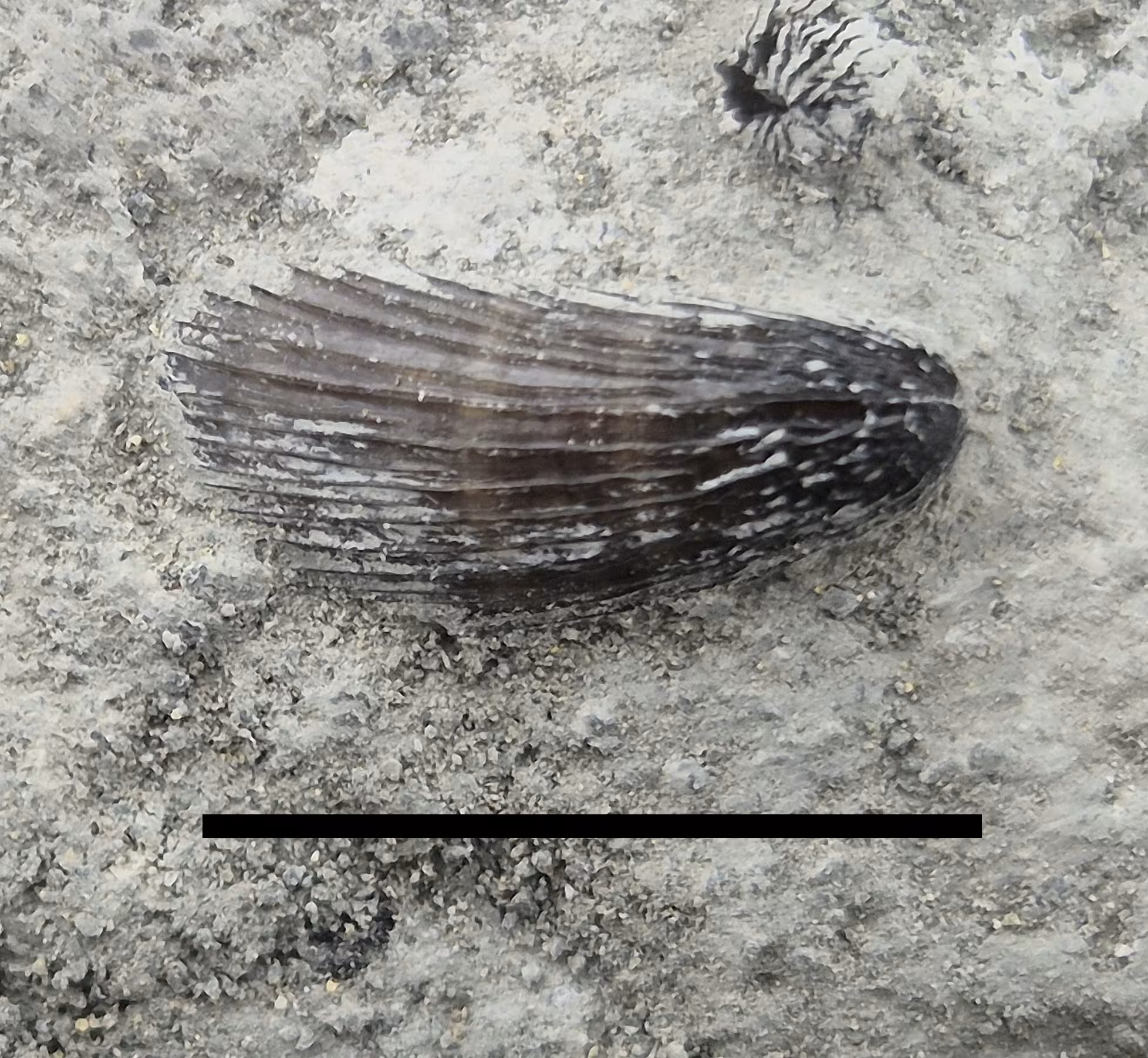
However, remains of wood, transformed to lignite – a type of coal – and impressions of logs discovered during the week also reveal that land-based vegetation was present. ‘We believe that the site was once what we call a marginal area, where the land meets the sea,’ added Professor Kirsty Edgar (University of Birmingham). ‘Each find helps us to build up a picture of the wider environment.’
Throughout the excavation, the team were assisted by student volunteers from the Universities of Birmingham and Oxford. ‘For us, this excavation had a dual purpose: to expand our understanding of the site and to give students valuable, first-hand experience of a real excavation,’ said Dr Murdock. ‘We were glad to offer this opportunity to Oxford Biology undergraduates this year, and they have been wonderfully enthusiastic and engaged throughout.’
Holly Biddulph (Palaeontology and Geology undergraduate student, University of Birmingham) said: ‘I have really enjoyed the anticipation of what you are going to find. You never know what you’ll pull out. I even found a brachiopod which I was ecstatic about.’

“I wanted to be a palaeontologist since I was a kid, so working on the trackways site is a dream come true. It is also a useful way for me to get more practical field experience for my course.”
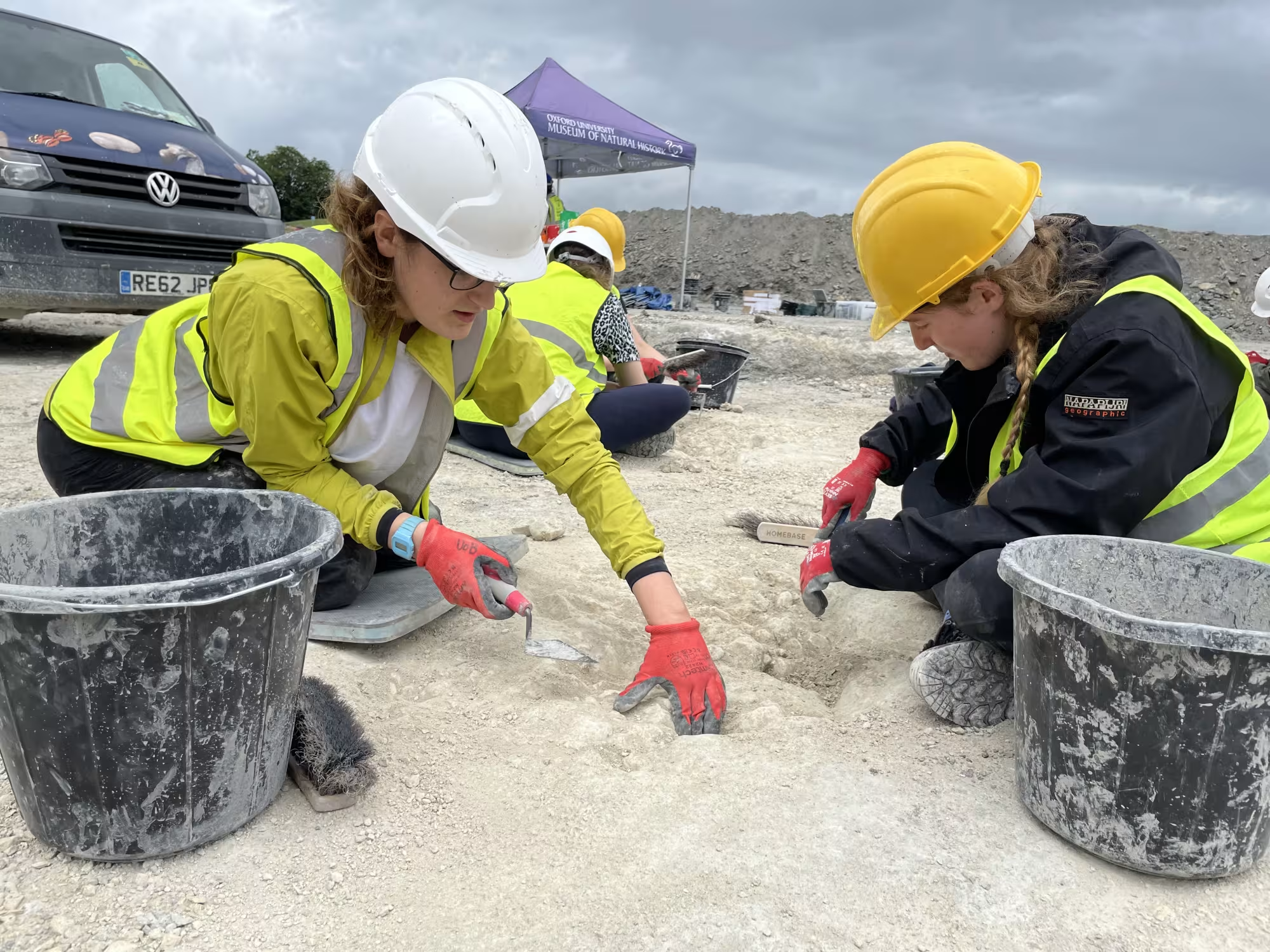
The entire team are extremely grateful to Smiths Bletchington for their ongoing support and for facilitating access to the site. Particular thanks go to Quarry Manager Mark Stanway and Site Supervisor Justin Pitts, for their help throughout the excavation.
Quarry Manager Mark Stanway said: ‘We’re really proud to have these trackways here and it has been exciting to see what the team discover. The Quarry is a very busy operational site, with machines and a processing plant in use each day, so hosting an excavation of this scale has required close collaboration throughout. Everyone has worked together professionally to overcome complexities and ensure everything has gone extremely smoothly. It is a great example of what can be achieved when industry and science work together.’
You can learn more about Oxfordshire’s rich palaeontological heritage at OUMNH where brand new displays showcase the original Megalosaurus fossils alongside other exciting and dynamic Oxfordshire dinosaur displays.
For more information or to enquire about reusing this content, please contact [email protected]