
Learning through looking: a new Centre for object-based teaching
This month, Oxford’s new Collections Teaching and Research Centre (CTRC) opens beneath Reuben College. The purpose-built facility brings together storage, conservation, research and teaching spaces for some of the 8.5 million objects across the Ashmolean Museum, the History of Science Museum, the Museum of Natural History and the Pitt Rivers Museum.
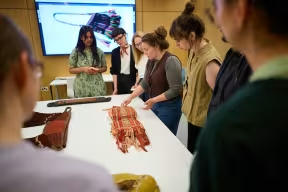

A new home for object-based teaching
The new Centre will make it easier for students and researchers to learn directly from world-leading collections, spanning archaeology, art, science and natural history. By bringing together objects from all four museums, it will also create new opportunities for object-based teaching and interdisciplinary collaboration.
For Jim Harris, Teaching Curator at the Ashmolean Museum for the past 14 years, the new Centre is an exciting development. ‘This is an extraordinary opportunity’, he says. ‘For the first time, objects that have previously been separated by institutional boundaries can be brought into dialogue with one another and we will be able to create teaching experiences that work across collections.’
The value of objects in teaching
Jim, who describes himself as ‘neither a conventional lecturer nor a conventional curator’, works with colleagues across the University to use the Ashmolean’s collections in teaching and research across disciplines ranging from English, History and Law to Archaeology, Geography and Refugee Studies.
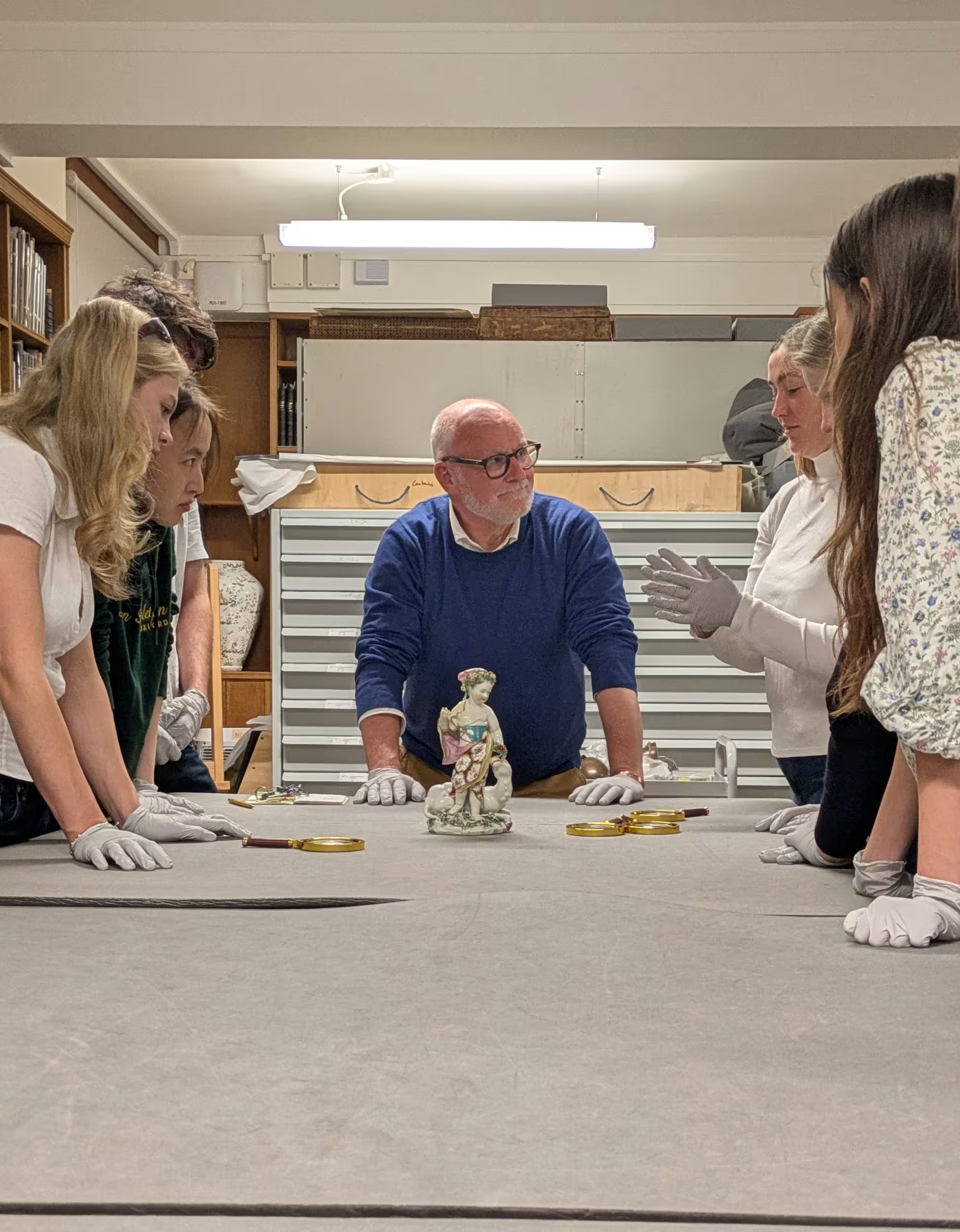
Perhaps unsurprisingly, Jim’s day-to-day teaching mostly focuses on the humanities and social sciences. Classes visit the Ashmolean Museum once or twice across a term, often spending an hour or two with relevant objects chosen to deepen students' understanding of their courses.
Handling objects is central to the teaching, and each object is selected with curatorial and conservation colleagues to ensure it can be safely handled.
For Jim, nothing replaces encountering an object in person, where every aspect becomes open to investigation: scratches, dents, inscriptions, materials, even the sound of a lid closing.
He also argues that it creates a more inclusive and equitable learning environment. ‘When students can examine an object from every angle, everyone can contribute an observation. Different people notice different things,’ explains Jim. ‘I might ask each student to tell me just one thing they notice. The questions are deliberately focused on observable facts, so everyone can answer them and we move towards a genuinely democratic form of knowledge creation.’
Learning through looking
In the Ashmolean’s Western Art Print Room, members of the Edgar Wind Society, Oxford's student art history society, joined Jim for an object handling session. Wearing gloves and gathered around a large table, they are quickly put at ease when Jim reminds them that they handle objects every day. ‘Be confident with it’, he says.
Small-group teaching is central to Oxford’s educational experience. Jim describes object-based teaching as a valuable complement to the tutorial model, helping students develop careful observation, critical questioning and confident participation. He asks each member of the group to describe what they see before they interpret it, gradually building up a picture of the object’s history, purpose and meaning.
‘A student can learn a great deal through careful observation, even before they know the name, maker, date or place of origin. That demonstrates something fundamental about research: primary sources can tell us a great deal if we learn how to interrogate them properly.’
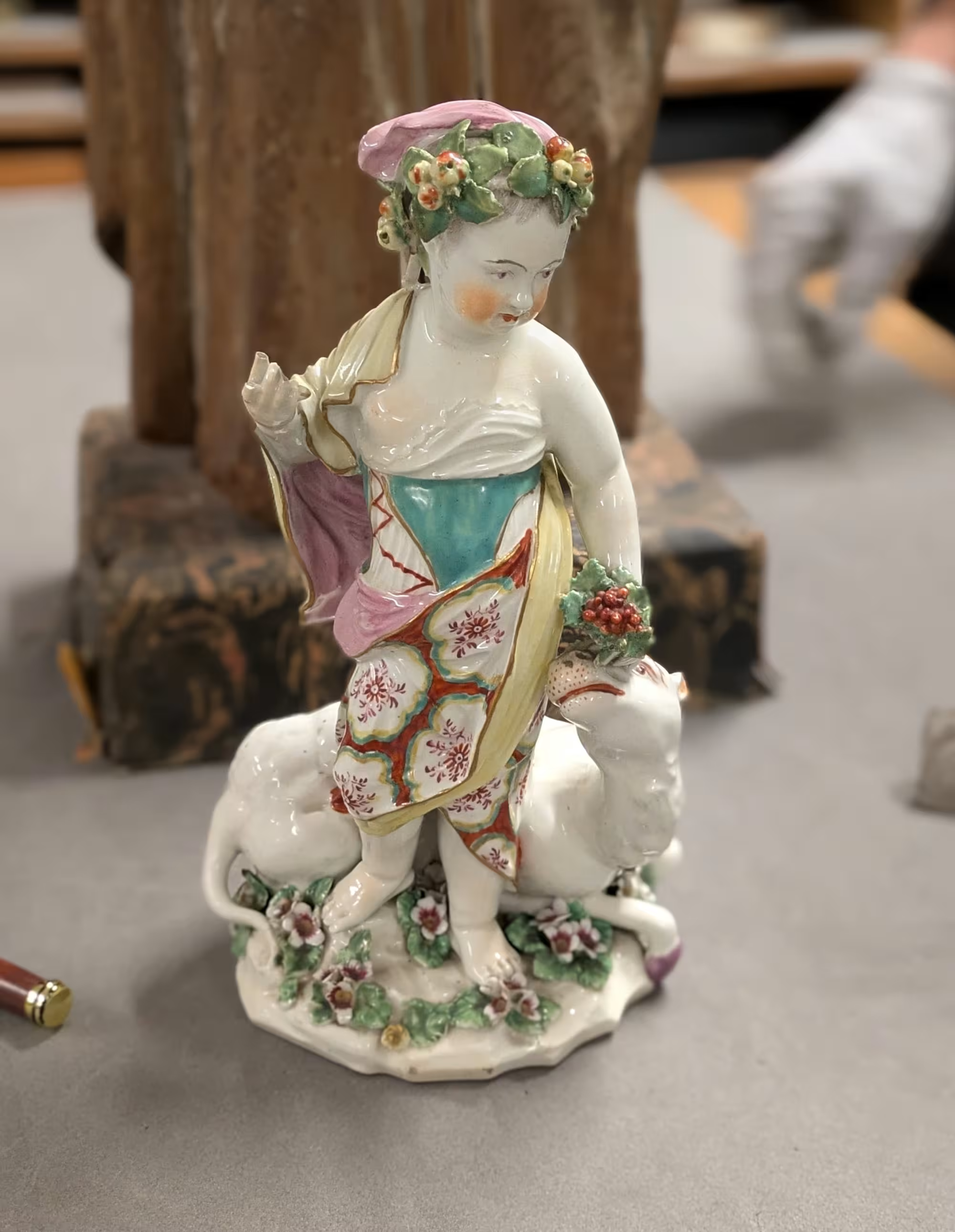
A porcelain sculpture from the 1760s is identified as an allegorical representation of 'Asia', prompting discussion of how 18th-century Britain’s view of the continent is reflected in the object.
Among those taking part is Lydia Green, President of the Edgar Wind Society and a third-year undergraduate reading Classics (Literae Humaniores) student. She says learning directly from museum collections has brought art to life.
‘There's something very special about being in the presence of the thing itself. A lecture or tutorial can give you the academic context, but an object makes you look properly before you can conclude anything. You have to ask, What is this made of? How was it handled? What did it ask of the person who made it, owned it, used it, displayed it or preserved it?’
‘Oxford's collections are one of its extraordinary strengths, and they can make teaching both more rigorous and more vivid. For students, especially undergraduates, it is very exciting to be trusted with that kind of encounter .’
Find out more about the Collections Teaching and Research Centre (CTRC) here.


