
Professor Menna Clatworthy appointed new Regius Professor of Medicine at the University of Oxford
The University of Oxford has announced today that Professor Menna Clatworthy FRCP, PhD, FMedSci, Professor of Translational Immunology at the University of Cambridge, has been appointed to the Regius Professorship of Medicine in the Medical Sciences Division with effect from 1 March 2027.


The King approved Professor Clatworthy’s appointment in succession to Professor Sir John Bell, who was Regius Professor of Medicine between 2002 and 2024. Professor Clatworthy will also be a fellow of Christ Church.
Professor Clatworthy is Professor of Translational Immunology at the University of Cambridge, former NIHR Research Professor and Honorary Consultant Nephrologist at Cambridge University Hospitals NHS Foundation Trust. She is also Director of the Cambridge Institute of Therapeutic Immunology and Infectious Disease (CITIID), Associate Faculty in Cellular Genetics at the Wellcome Sanger Institute, and a Fellow and previous Director of Studies in Clinical Medicine at Pembroke College, Cambridge. Her clinical and academic career has focused on immunology and nephrology, with research spanning fundamental immunology, experimental medicine and clinical research. She was elected a Fellow of the Academy of Medical Sciences in 2020 and a Fellow of the Learned Society of Wales in the same year, and was elected to EMBO in 2022.
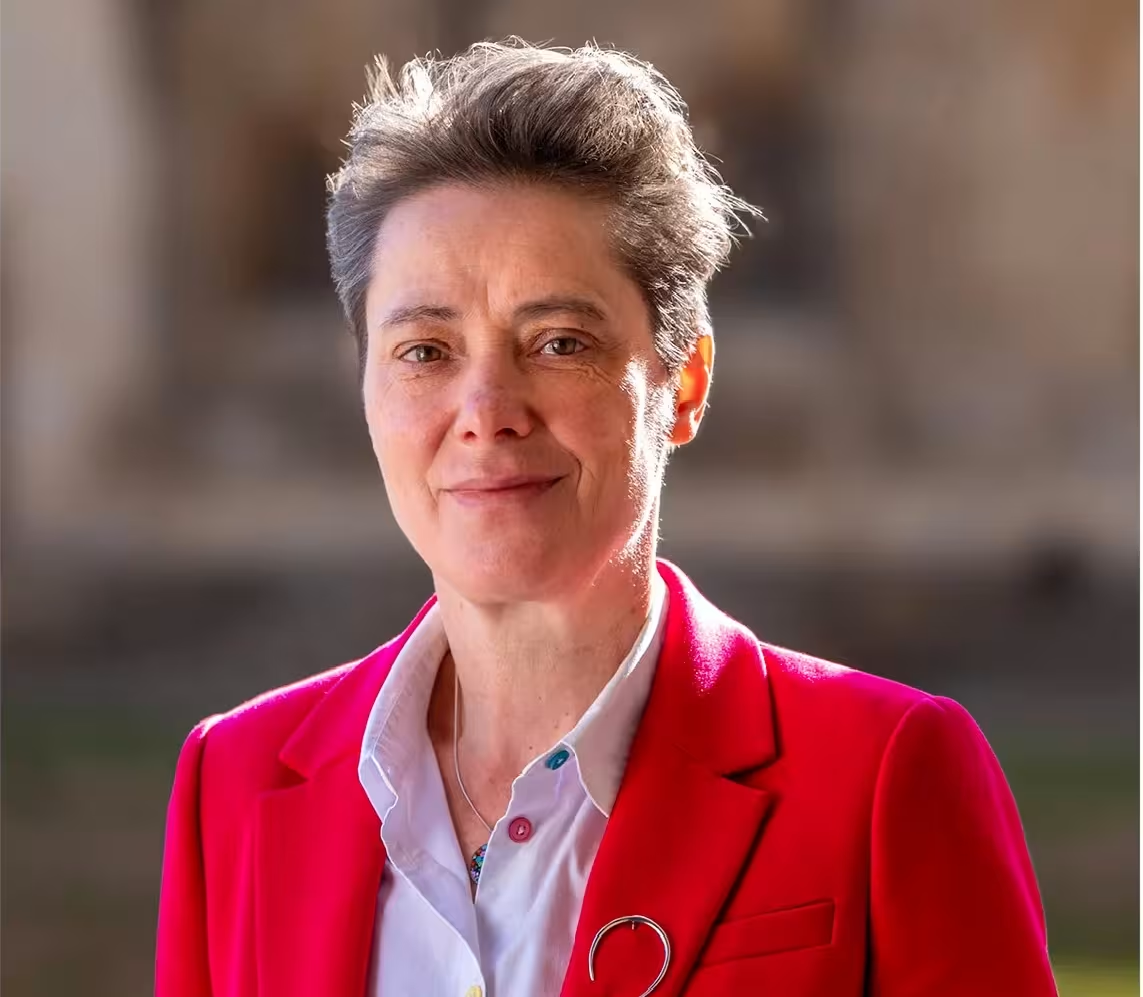
She is known for her influential work in tissue and humoral immunity, particularly on how tissue environments shape immune-cell function and how B-cell activation and antibody responses are regulated in organs including the kidney and gut. Her work has identified an unanticipated link between immunity in the gut and the central nervous system (CNS), with direct trafficking of gut-primed B and T cells to the meninges and brain, changing the established dogma on how peripheral immune stimuli in the gastrointestinal tract may influence the CNS. Her research combines in vitro and in vivo models with analysis of primary human tissues with single-cell and spatial genomic and transcriptomic technologies, and has contributed to understanding of immune responses in kidney disease, transplantation and infection. This includes the discovery of how the kidney microenvironment creates distinct zones of immune defence and the identification of therapeutically tractable, cell type-and tissue-specific targets in autoantibody-mediated diseases.
Professor Irene Tracey CBE FRS FMedSci., Vice-Chancellor of the University of Oxford, said: ‘I am delighted to welcome Menna to Oxford as our next Regius Professor of Medicine. She is an outstanding clinician-scientist whose research has transformed our understanding of immune responses in human disease and has helped shape new approaches to treatment. Beyond her remarkable scientific achievements, she is an inspiring academic leader with a strong commitment to collaboration and the development of the next generation of researchers and clinicians. I look forward to working with her as we continue to strengthen Oxford's position as a world-leading centre for medical research, education and innovation.'
Professor Gavin Screaton, Head of the Medical Sciences Division at the University of Oxford, said: ‘I am delighted to welcome Menna to Oxford as our next Regius Professor of Medicine. She is an outstanding clinician-scientist whose research has transformed our understanding of immune responses in human disease and has helped shape new approaches to treatment. Beyond her remarkable scientific achievements, she is an inspiring academic leader with a strong commitment to collaboration and the development of the next generation of researchers and clinicians. I look forward to working with her as we continue to strengthen Oxford's position as a world-leading centre for medical research, education and innovation.’
The Regius Professorship was established by the Crown centuries ago to anchor medical scholarship at Oxford in service of the nation and the wider world. Over the years, those who have held this chair have not only advanced understanding within their field, but have also helped set the course of medicine itself - through discovery, through teaching, and through their public voice.


