
Expert Comment: Falling numbers and mega-dinghies - UK migration trends in the summer
Ahead of the next release of UK migration data on 27 August, Dr Mihnea Cuibus, Senior Researcher at the Migration Observatory at the University of Oxford, contextualises the recent headlines about ‘mega-dinghies’ arriving on UK shores, and sets out what else we can expect to see in the statistics.


News in the UK this week was dominated by the arrival of a ‘mega-dinghy’ on UK shores. The term points to its remarkable size compared to the usual small boats used by migrants to cross the English Channel. A record 230 people arrived in the UK on a single boat early on Monday – similar to the passenger capacity of a Boeing 737. Recent weeks saw the arrival of the first boats with more than 150 migrants. The story comes just ahead of new Home Office migration statistics, which will be released on Thursday August 27th. It highlighted the risk of new tragedies in the Channel, and renewed concerns about the ability of the British government to secure its borders.
Packing more people in each boat has long proved a winning strategy for smugglers aiming to maximise profits and efficiency. The average number of people per boat has increased steadily, from 7 in 2018 to around 65 over the last year. The arrival of boats with hundreds of people on board marks an acceleration of this longstanding trend. The development is likely connected to increased enforcement efforts – the government has been working with European partners to make it harder for smugglers to secure equipment, disrupting supply chains and confiscating boats and engines. This has created an additional incentive for smugglers to fit as many people as possible into available boats.
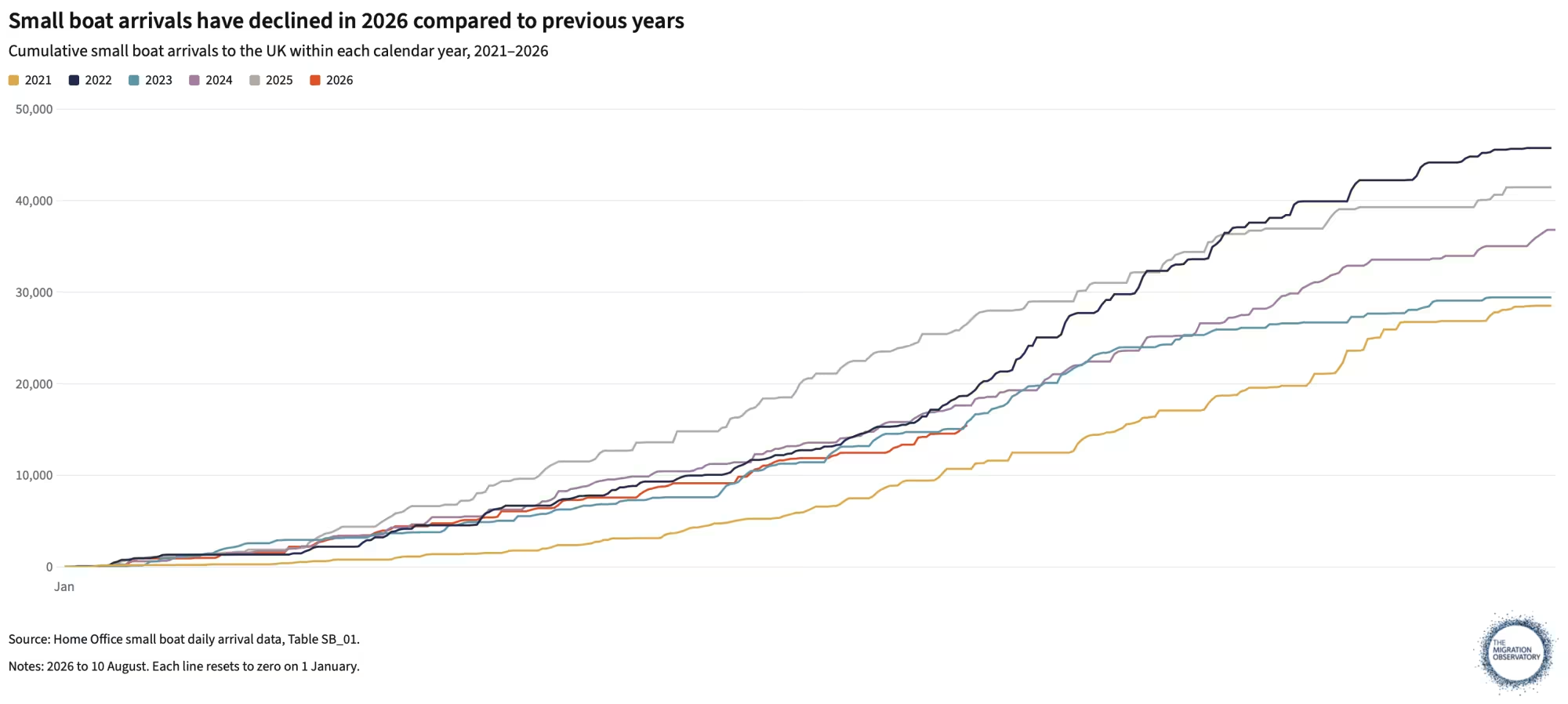

“While small boat arrivals make for striking pictures that understandably generate news coverage, the spectacle also obscures an important piece of context in this debate, which the forthcoming migration statistics will underline: small boat arrivals have fallen sharply in 2026.”
While small boat arrivals make for striking pictures that understandably generate news coverage, the spectacle also obscures an important piece of context in this debate, which the forthcoming migration statistics will underline: small boat arrivals have fallen sharply in 2026.
So far this year, numbers are lower than in any other year since 2021. Arrivals have fallen by 43% compared to the same period of 2025. It is impossible to say exactly why this happened, just as we cannot be sure exactly why arrivals increased last year. Multiple factors influence arrivals all at the same time, making it difficult to disentangle their effects, particularly over a relatively short period of time.
The government has made several policy changes since taking office in 2024. This included scrapping the previous government’s Rwanda scheme, restricting refugee family reunion, and shifting to a model of temporary protection for refugees. It has also scaled up existing enforcement efforts and reached a deal to return some people who arrive by small boat to France.
Some of these policies may have contributed to the recent decline. Restrictive family reunion policies are generally associated with fewer asylum claims, and physically preventing boat departures appear to have reduced crossings elsewhere around the world. The deal with France may also deter migrants if a significant share of arrivals were to be swiftly returned, though numbers remain relatively low. Around 4% of all arrivals have been returned since the deal took effect last September. In addition, smugglers seem to have changed how and where they operate in response to more enforcement in France – we’ve seen more departures from Belgium this year, alongside the use of larger boats.
“The next few weeks and months will tell us whether arrivals continue to decline or bounce back, and whether the 'mega-dinghy' might become a regular sight in the Channel, posing new challenges for the government and increasing risks for migrants. However, small boats are only one part of the UK’s broader debates about migration. There are several other important trends to watch in the next quarterly migration statistics.”
External factors are likely to have also played a role in the decline, though. Unauthorised arrivals into the EU have fallen significantly since 2024, which may ultimately lead to fewer crossings to the UK. Improvements to the security situation in key origin countries, such as in Syria after the fall of the Assad regime, can also affect how many people arrive to claim asylum in countries like the UK.
The next few weeks and months will tell us whether arrivals continue to decline or bounce back, and whether the 'mega-dinghy' might become a regular sight in the Channel, posing new challenges for the government and increasing risks for migrants. However, small boats are only one part of the UK’s broader debates about migration. There are several other important trends to watch in the next quarterly migration statistics.
New data on asylum applications will reveal whether overall numbers have declined alongside small boat arrivals, given that a large share of asylum claims are actually made by people who come to the UK legally using visas. We will also find out whether the government has made further progress towards its goal of closing all asylum hotels by the end of this parliament. The number of asylum seekers in hotels fell by about a third in the first three months of the year.
Finally, new data will show whether we are seeing the beginning of a spike in settlement grants, after an unprecedented wave of immigration to the UK at the start of this decade. The government is yet to finalise its plans to severely tighten requirements for settlement, which were first announced last November. These were at least partly motivated by concerns about the potential fiscal impact of large numbers of migrants obtaining settlement in the next few years.
For more information about this story or republishing this content, please contact [email protected]


