

Professor Timothy Walsh, OBE
Professor of Medical Microbiology, Department of Biology
Professor Walsh has been studying antimicrobial resistance (AMR) for nearly 40 years and co-established the Ineos Oxford Institute (IOI) of Antimicrobial Research. Notably, he has discovered and named two of the most notorious antibiotic resistant genes: NDM-1 and MCR-1. His work also helped discover the mobile tigecycline gene (tetX variant). As director of BARNARDS, he leads efforts to understand the neonatal sepsis burden across low- and middle-income countries while also examining the impact of affordable antibiotic access. In 2020, he was awarded an OBE for services to microbiology and international development.
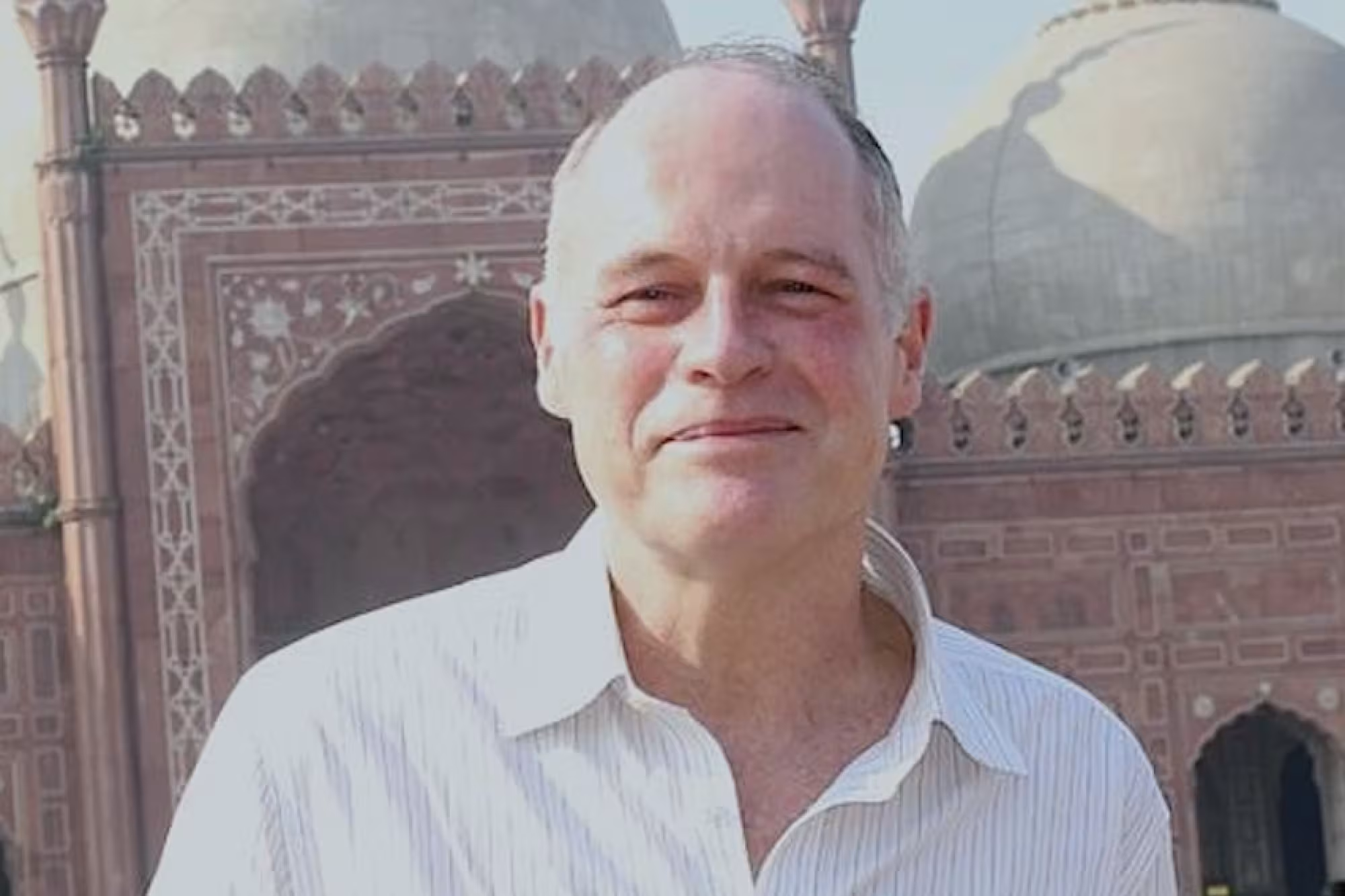
About
Professor Timothy R. Walsh, OBE is Research Director (biology) at the Ineos Oxford Institute for Antimicrobial Research and Professor of Medical Microbiology in the Department of Biology at Oxford University.
Professor Walsh has been studying antimicrobial resistance (AMR) mechanisms for nearly 40 years and publishes regularly in Nature and Lancet journals. Notably, in his career he has discovered and named two of the most notorious antibiotic resistant genes – NDM-1 and MCR-1. His work also helped discover the mobile tigecycline gene (tetX variant).
Professor Walsh is director of BARNARDS, a Gates Foundation project on AMR, prospectively examining the burden of neonatal sepsis in Pakistan, India, Bangladesh, Rwanda, South Africa, Nigeria (Abuja and Kano) and Ethiopia. Follow up programs include assessing the risks of still-born infants and maternal care in sub-Sahara Africa, as well as assessing the impact of access to affordable antibiotics. Professor Walsh has led studies in Pakistan investigating the role of insects in post-surgical infections and the unfortunate global trade of colistin in agriculture.
Professor Walsh was Principal Investigator (PI) of DETER-XDR-CHINA, a study examining the spread and burden of AMR in public health sectors and hospitals in 30 provinces in China. He was also PI of CUT-SEC, a One Health project in China and Thailand. In addition, he heads up a Welcome Trust study examining the international impact of COVID on AMR.
In 2020, Professor Walsh moved to University of Oxford and co-established the Ineos Oxford Institute of Antimicrobial Research, where he is Director of Biology. As part of the Institute, the Walsh Lab’s key interests are:
1. The use of antimicrobials in animals and its impact on human clinical failures.
2. The drivers of AMR across all One Health sectors.
3. Causes and management of AMR neonatal sepsis and stillbirths in low- and- middle income countries (LMICs)
4. The clinical and economic burden of AMR in LMICs.
Professor Walsh has also been appointed to the Fleming Fund expert advisory panel, is an advisor to the Foundation Merieux AMR teaching program, and is a member of the WHO Strategic and Technical Advisory Group for Antimicrobial Resistance (STAG-AMR).
He holds an honorary chair at the China Agricultural University in veterinary microbiology and is advisor to the ENABLE 2 program on antibacterial drug discovery.
In 2020, he was awarded an OBE for his services to microbiology and international development, and in 2022 was awarded his DSc (University of Bristol).
Expertise
- Antimicrobial resistance (AMR)
- Antibiotic resistance
- Drug resistant infections
- The use of antimicrobials in animals and its impact on human clinical failures
- Clinical and economic burden of antimicrobial resistance in countries
- Developing new non-human antibiotic compounds to use in animals
- Causes and management of AMR neonatal sepsis and stillbirths in low-middle income countries
Selected publications
- Evaluation of alternative blood culture systems in detecting pathogenic bacteria: a multi-site, observational prospective study (2026)
- In vitro and in vivo evaluation of nitroxoline as an effective antimicrobial alternative to poultry production (2026)
- Acquisition of Escherichia coli carrying extended-spectrum ß-lactamase and carbapenemase genes by hospitalised children with severe acute malnutrition in Niger (2025)
- Beyond the samples: Nigerian research staff perspectives on a multicentre neonatal sepsis study’s impact (2025)
- Global health equity and diagnosis of sepsis in low-income and middle-income countries (2025)
- A framework towards implementation of sequencing for antimicrobial-resistant and other health-care-associated pathogens (2025)
- Evolution of triclosan resistance modulates bacterial permissiveness to multidrug resistance plasmids and phages (2024)
- Colonisation of hospital surfaces from low- and middle-income countries by extended spectrum β-lactamase- and carbapenemase-producing bacteria (2024)
- Characterisation of colistin resistance in Gram-negative microbiota of pregnant women and neonates in Nigeria (2024)
- Interphylum dissemination of NDM-5-positive plasmids in hospital wastewater from Fuzhou, China: a single-centre, culture-independent, plasmid transmission study (2024)
Media experience
Professor Timothy Walsh has media experience of interviews and documentaries for outlets including the BBC, ITV, Financial Times and The Telegraph.