
Oxford Robotics Institute celebrates ten years
From autonomous vehicles and robot dogs to soft robotics and technologies for monitoring forests and oceans, the Oxford Robotics Institute (ORI) – part of Oxford’s Department of Engineering Science - has spent the past decade advancing how robots can operate intelligently and autonomously in the real world.
Founded in 2016, the Institute has grown into a major centre for robotics and artificial intelligence (AI) research, developing technologies with applications across areas including environmental monitoring, energy, construction and healthcare. To mark its tenth anniversary, ORI brought together researchers, collaborators and partners for a special day of talks, demonstrations and discussions, celebrating a decade of achievements and looking ahead to the future of robotics research.
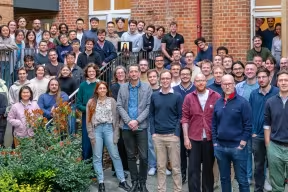
Oxford Robotics Institute researchers and students. Image credit: ORI.

A long history of robotics research
Today, ORI is home to over 100 people across nine research groups. These carry out fundamental research in robotics and AI, as well as working directly with partners in sectors such as construction, agriculture, care, manufacturing and energy. This work is advancing crucial technologies that could help address key societal challenges including environmental management, social care and net-zero technologies.
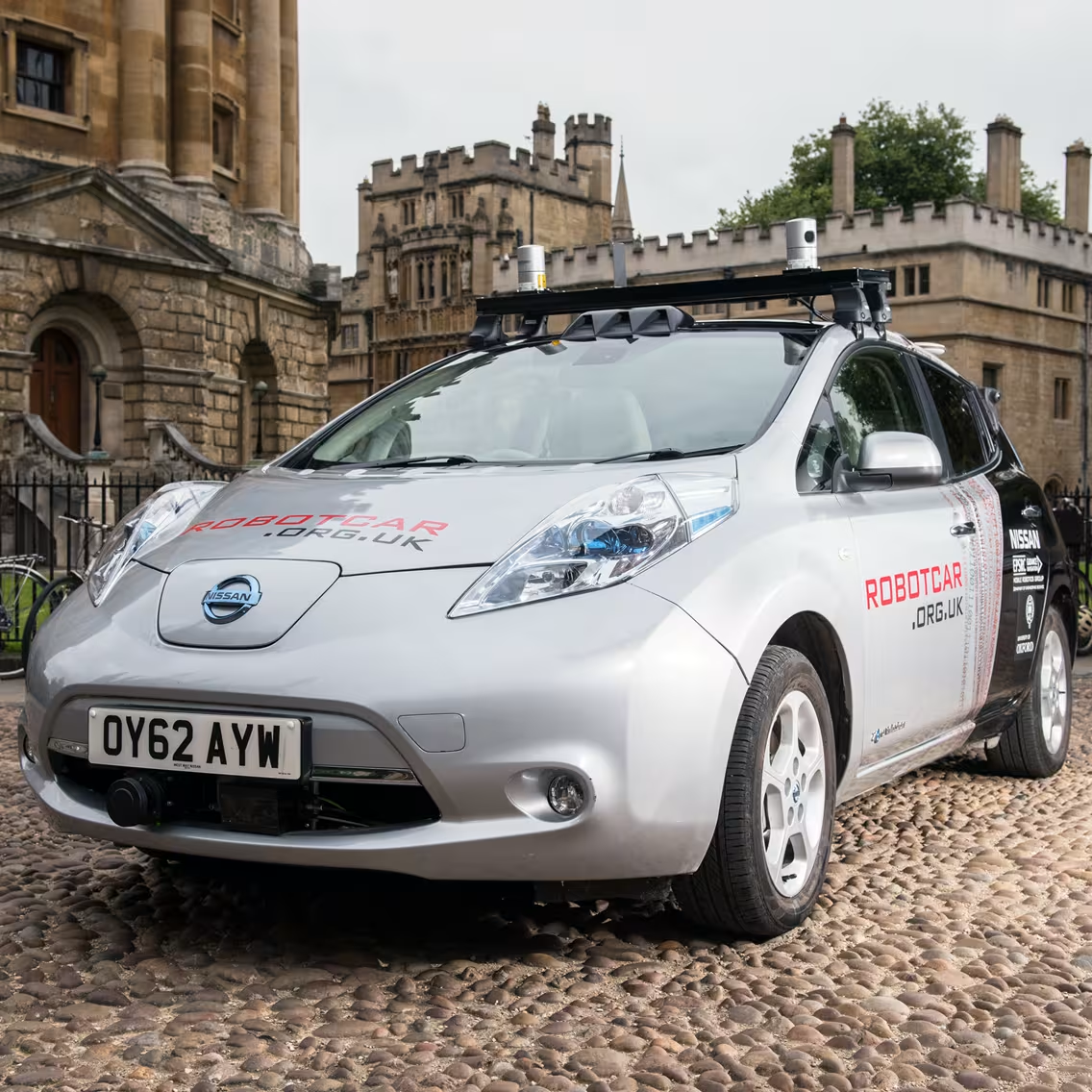
Robotics research at the University of Oxford has a long history. The original Robotics Research Group was founded by Professor Sir Michael Brady in 1985, and carried out influential early research in mobile robotics. In 2003, the Mobile Robotics Group was founded to research robot navigation in real-world conditions and at scale. From this group emerged the Applied Artificial Intelligence Lab in 2011, which explores how AI and machine learning can be applied to enable robots to effectively operate in complex, real-world environments.
A significant achievement by the two research groups was to adapt a Nissan Leaf into a RobotCar (now displayed in the Science Museum in London). In 2014, this became the first car to drive autonomously on UK public roads. At this time, Oxbotica was founded by Professor Paul Newman and Professor Ingmar Posner to commercialise self-driving technologies.
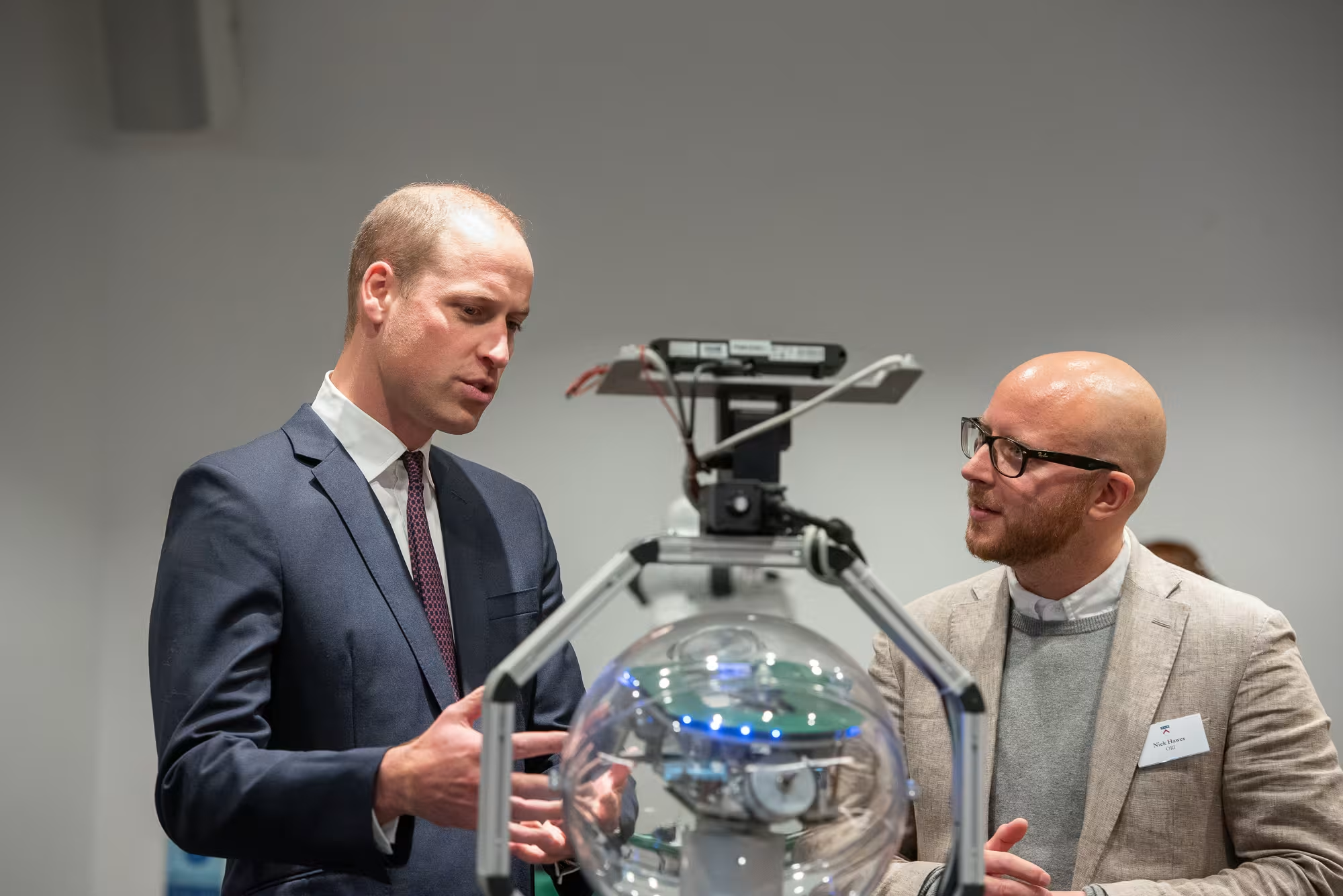
This work on autonomous vehicles laid the foundation for establishing the ORI in 2016. The Institute’s key aim was to act as a centre of excellence to address the technical, ethical, social and economic issues impeding large-scale adoption of robotics. After a rapid period of growth, which saw ORI expand into legged robots, soft robotics, touch feedback and more, the Institute opened a new lab in the HB Allen Centre, which was formally opened by the Duke of Cambridge in October 2019.
Research highlights
Highlights from ORI’s research portfolio to date include:
- A major strategic collaboration with Amazon Web Services (AWS) to develop pioneering AI, robotics and human-centred computing across various research projects as part of ORI’s Human-Machine Collaboration Programme.
- Collaboration with the United Kingdom Atomic Energy Authority (UKAEA) on The AutoInspect Project, to develop a fully autonomous robotic system to safely conduct inspections at nuclear fusion facilities.
- Involvement in the UK Space Agency’s Mars Utah Rover Field Investigation (MURFI) project. This carried out field trials in the Utah desert to test the performance of advanced navigation and autonomous driving algorithms in an environment that closely resembled the Martian surface.
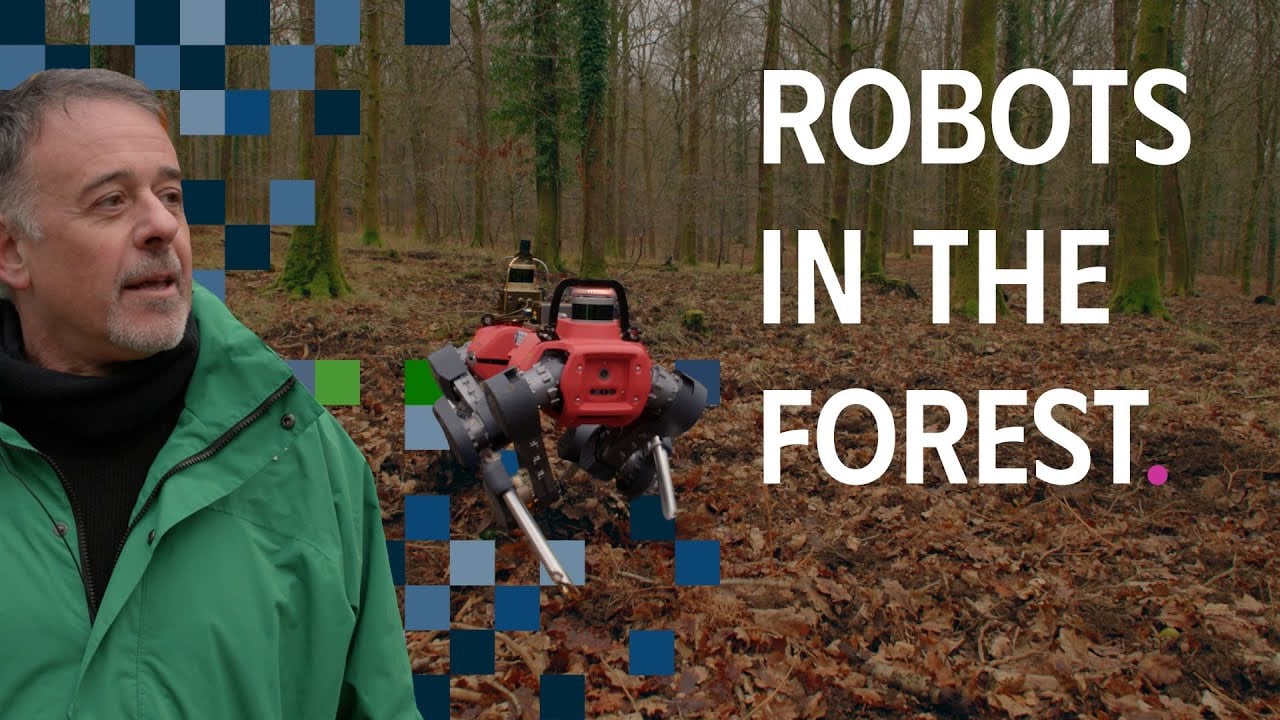
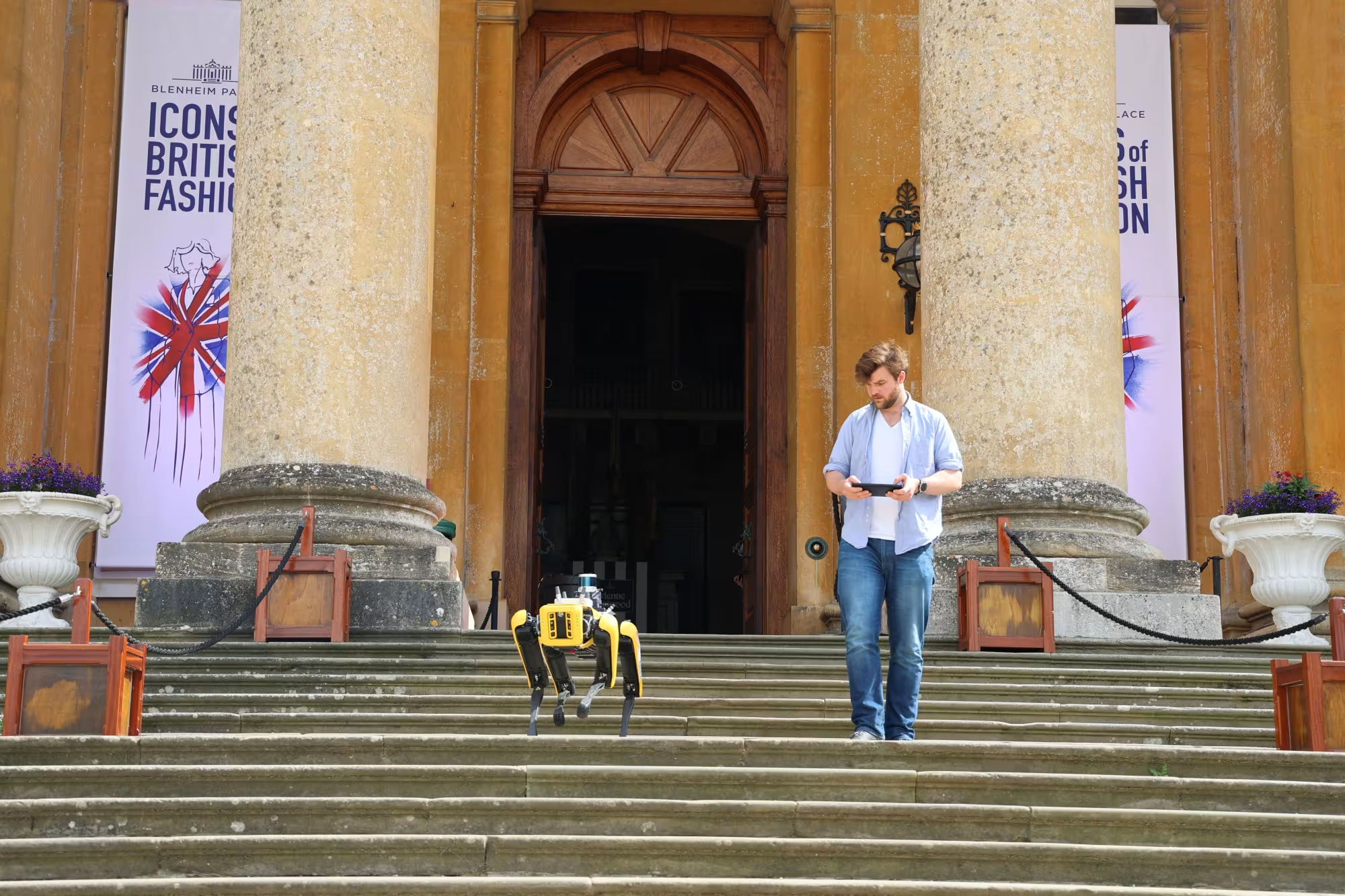
- Collaboration with Oxford’s Department of Biology to develop autonomous robots for large-scale collection of ecological data. This could help monitor and predict how ecosystems and their species will respond to environmental disturbances such as climate change. This saw Robo-dog deployed at Blenheim Palace and Wytham Woods to test the system’s ability to gather data about species diversity.
- The multi-institute DigiForest project, which is developing transformative technologies for forestry management. A key focus is creating autonomous systems capable of navigating and mapping forests, that could enable digital maps and 3D reconstructions of forests.
- Collaborations with the National Oceanography Centre and the UK Met Office to develop autonomous piloting systems for gliders used in ocean monitoring. This would enable more efficient data collection of various oceanic variables that could help improve weather forecasts, climate models and environmental monitoring.
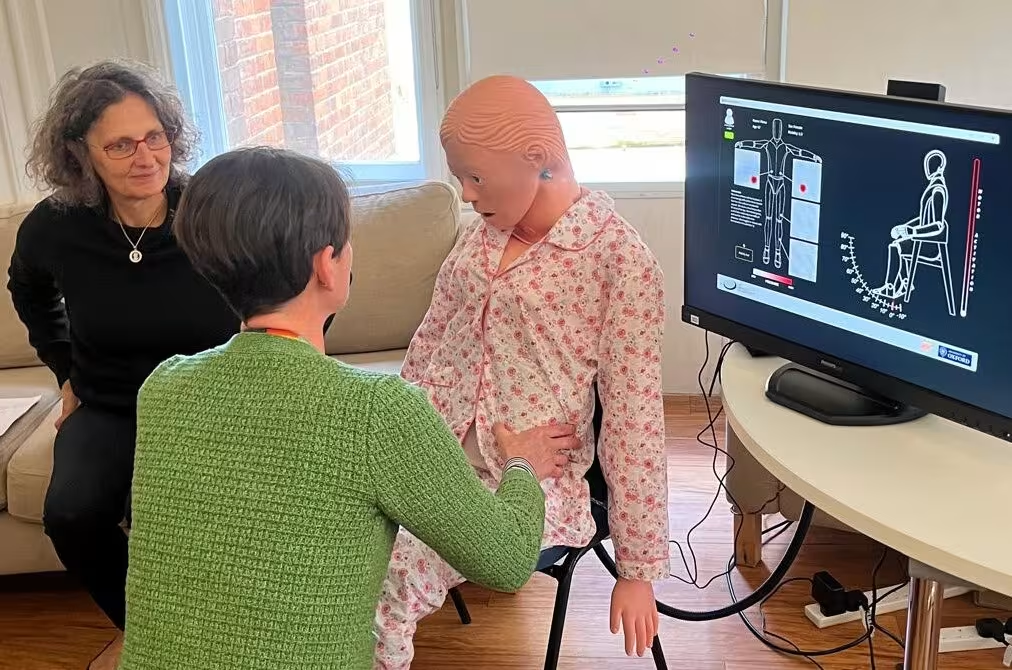
- Work by the Embodied Intelligence Programme to develop a robotic patient simulator for training occupational therapists. Advanced soft robotics and artificial skin enable the robot to respond to human touch, for instance recoiling when a simulated pain point is pressed.
- A project which collected real-world traffic data to explore how cycling infrastructure can affect cyclists' behaviour and safety during their journeys.
Recognition and engagement
In November 2023, ORI’s research led to it being awarded a Queen’s Anniversary Prize for innovation in autonomous robotic technologies. This prestigious award, part of the UK’s national Honours system, recognises outstanding work by UK colleges and universities which demonstrates excellence and innovation, and delivers real benefit to the wider world.
ORI research has also been commercialised through several successful spinout companies. These include NavLive, which makes AI-powered high-precision construction mapping, and Stateful Robotics, which develops decision-making software for autonomous robots.
ORI has also played a crucial role in teaching the next generation of robotic engineers, hosting over 80 graduate students at any time. Alongside the University of Manchester and the University of Glasgow, it hosts the RAINZ Centre for Doctoral Training, which focuses on developing the robotic systems engineers need to enable the net zero transition. In 2026, ORI welcomed its inaugural cohort of students on the MSc in Autonomous Robotics course.
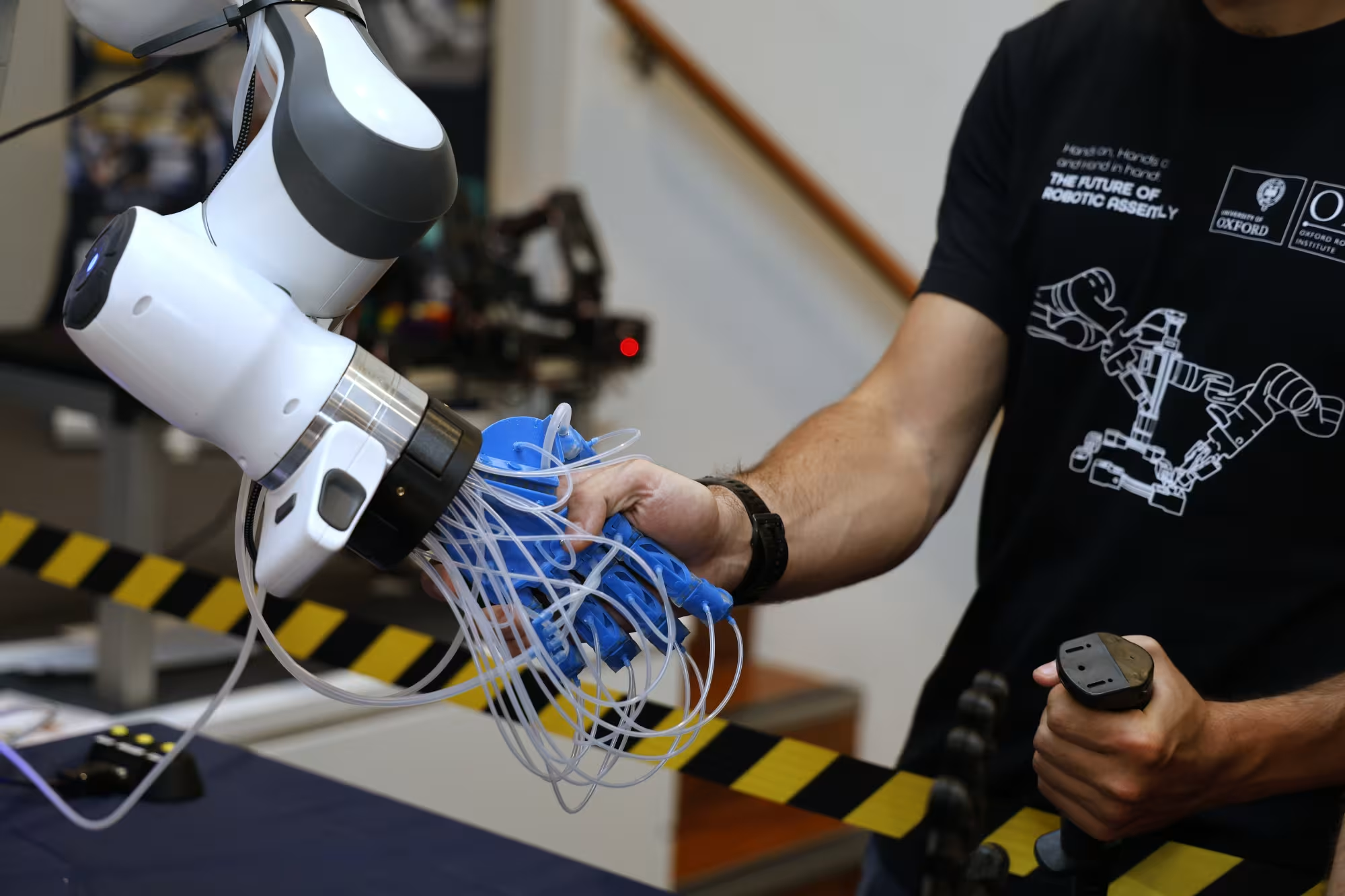
ORI researchers also regularly participate in public engagement events, including the 2023 Royal Institution Christmas Lectures and the Goodwood Festival of Speed. In 2019, ORI partnered with Blenheim Palace to introduce a robotic guide, ‘Betty’, to visitors. This year, the Embodied Intelligence programme was selected to be showcased at the 2026 Royal Society's Summer Science Exhibition, attended by over 10,800 people.
Reflecting on the anniversary, Professor Nick Hawes, Director of ORI, said: ‘The last decade has been a period of significant growth for the Institute, and it has coincided with dramatic changes in technology and in the needs of society. One thing that hasn't changed is that robotics research needs creativity and collaboration, and I'm proud to say these are a core part of ORI's culture that we've kept throughout our growth. Our success is really just the success of all the wonderful people who have come through the place. Over the next decade we'll apply ourselves to problems that matter to the world, from green energy and clean environments to supporting social care and the circular economy. Here’s to another ten years!’
You can learn more about ORI’s story here.
For more information about this story or republishing this content, please contact [email protected]


