
Scholarships that are helping to change the world: leveraging data as a force for positive social change
Meet Oxford alumna and former Felix Scholar Sruthi Chandrasekaran, who is combining her passion for data, research and policy to help make visible and address the inequities faced by some of our most vulnerable and marginalised communities.
Tags:

Sruthi Chandrasekaran: ‘Oxford really helped me to think about things differently’
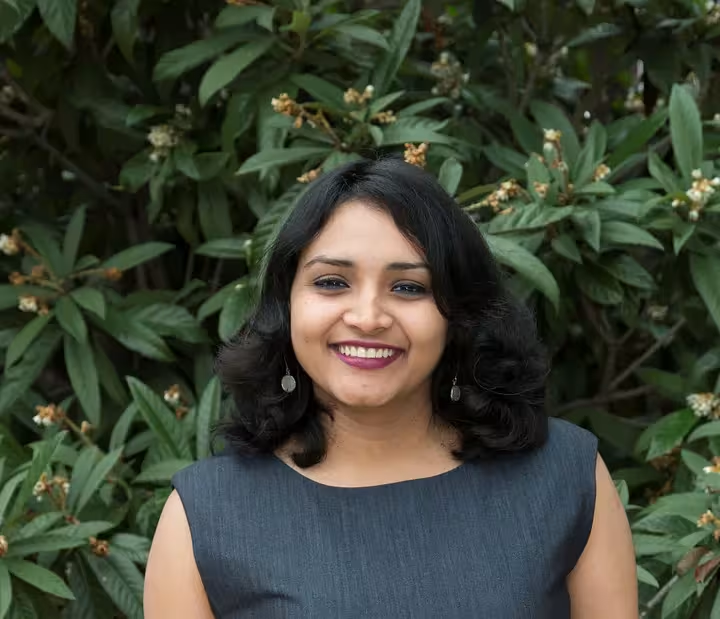
Sruthi has over a decade of experience working with non-profits, foundations and government funding agencies on challenges faced by marginalised communities around the world. She is currently the Director of Data and Research at The Asian American Foundation (TAAF), an organisation committed to creating a safer future for Asian Americans, Native Hawaiians and Pacific Islanders in the US. Her career journey began in 2012 when she graduated with an MSc in Comparative Social Policy from Oxford, where she was a Felix Scholar.
I’ve been in the non-profit sector all of my life. I think what’s drawn me to it is that lack of equity in accessing whatever it might be: basic needs, healthcare or just whatever is your right, and I want to use my interest, which is in the research/data arena, to address some of those gaps. I think that’s what I’m trying to do: matchmake between what I’m interested in and the inequities that I see in the world.
I grew up with a lot of privilege but only realised this when I started working with communities and thinking about how social policy, when it’s applied as a broad tent and then actually distils down to the people it’s intended for, has sometimes unintended consequences. It doesn’t always reflect the priorities of the most vulnerable or the communities that might need it the most.
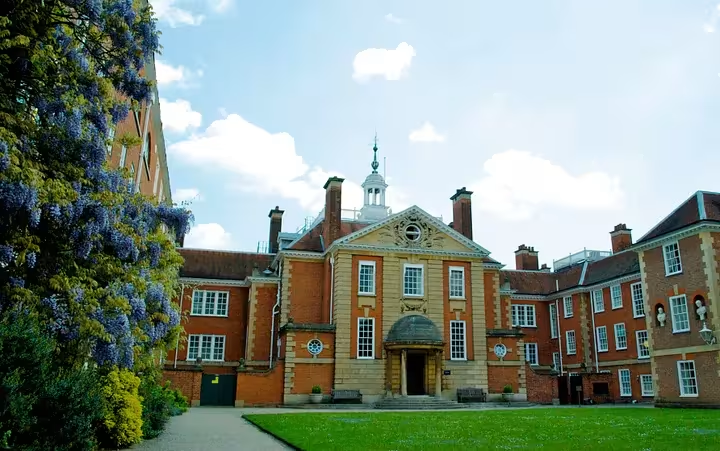
The thing that led me to Oxford was a summer internship I did in a semi-urban city in India, where I saw how, as part of beautification efforts, the community that had been living on the banks of this river were uprooted. And even though the policy was to help improve the economy of that particular city, it had this sort of flip side of not protecting the rights of the people who were going to be most affected by it.
That left me wanting to know more about how to design policy so that you can try and minimise any adverse impact it may have. And how you can think about learning from history and apply that going forward so that you’re centring the needs of the people who might need it most.
My master’s course was really interesting. One of the key things that drew me to it was the comparative lens: each country is so different and there’s so much diversity even within different communities. Being able to understand why a policy that’s applied in one country might work very differently in another, the kinds of policy conditions you might need, and the social demographic things you might want to think about before applying something – those are really useful tools.
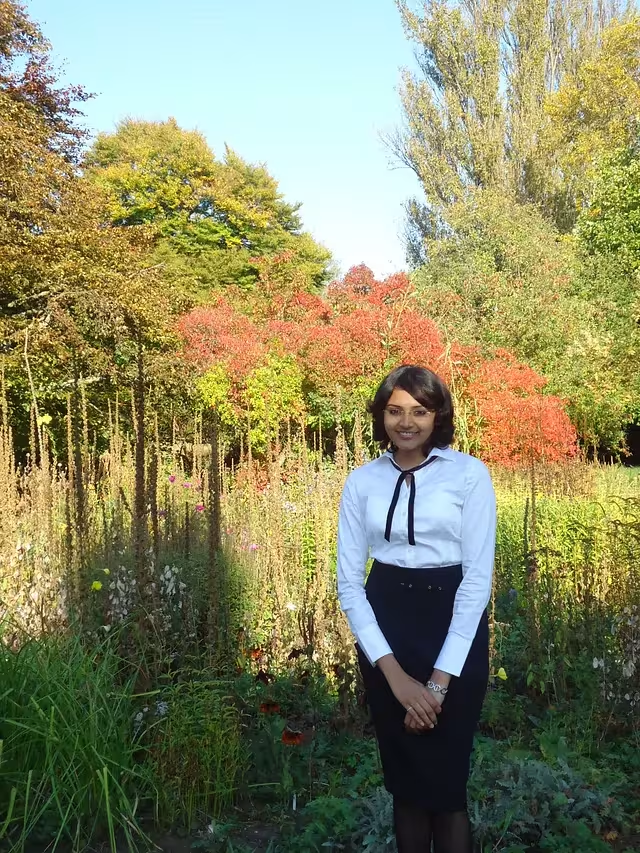
That experience really led to me working in the development sector and with communities that are the most vulnerable. I started out working in the Poverty Action Lab, running a randomised control trial to understand how the use of technology can help improve treatment outcomes for patients with tuberculosis in rural India. After that I worked as a Global Health Corps Fellow at Marie Stopes International (now MSI Reproductive Choices) in Washington DC, exploring how the use of family planning vouchers can help increase take-up of services in developing countries.
I have also worked on the funding side: with the David and Lucile Packard Foundation on their reproductive health programme in India and the Department for International Development (UK Aid Agency) in the South Asia Research Hub. These experiences helped me understand how to best use evidence to allocate scarce resources.
I’ve spent more than a decade working in public health – most recently reproductive health, rights and justice – but I’ve now pivoted from that. I moved to work with TAAF a little over two years ago. That transition has also been a personal journey for me. When I relocated to the United States I started observing what life was like for my family – seeing the rise in anti-Asian hate here in the US during the time of COVID was really a driving force that led me to TAAF.
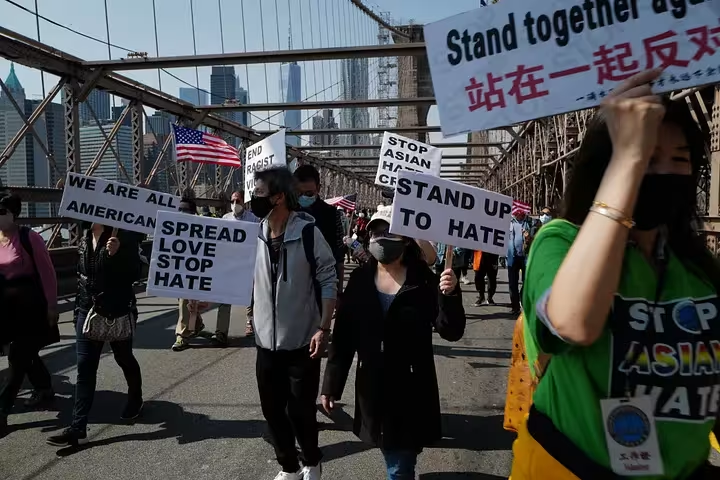
The Asian American, Native Hawaiian and Pacific Islander (AANHPI) community is very understudied. There is a lack of understanding of our needs and of the status of several key issues for our community, and so my role has been mainly uncovering some of those data gaps, conducting research and also disseminating our research in a host of accessible ways.
I’m currently leading a study looking at the mental health and wellbeing of young AANHPIs from 14 to 25 years old. This group has one of the highest rates of suicide in the country and so it’s been especially enlightening to be able to work with this community to uncover their needs, understand the status of their mental health, and figure out what are some inroads we can make to better support young people and meet them where they are.
“It’s been over 10 years since the last nationally representative study about the mental health of AANHPI youth was done, so it’s a privilege to be able to contribute to the literature and to also think about how we can go beyond it: how can we make sure that this is being reflected in policy and programming, in advocacy, so that young people get the care that they deserve?”
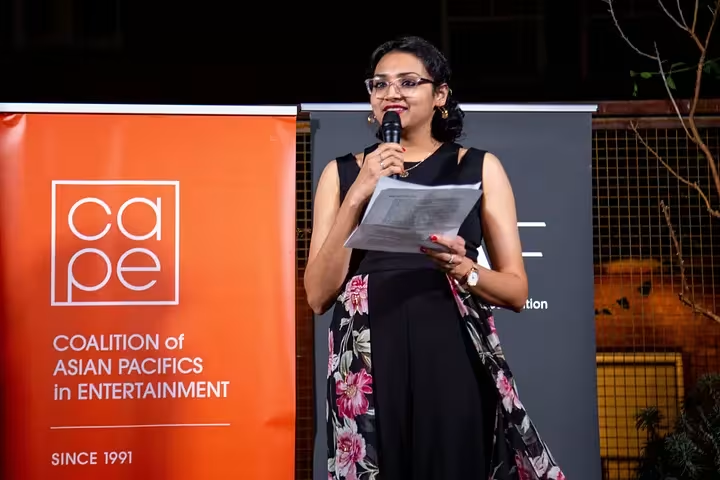
It’s been such a privilege working on that study because I also get to work with academic experts as well as young people and their parents. And as a parent myself now, I think about, down the line, how can I be a better parent for my kids? How can I provide them the space they may need to be able to have a conversation about their mental health, and how can we normalise mental health and wellbeing in our everyday lives? So, I hold that project really close to my heart.
It’s really fulfilling to be able to use my skills to address different kinds of data gaps. I recently led an effort to build a database of over 700 organisations that are set up to support the AANHPI community, and every year we release the STAATUS Index, a study on how Asian Americans in the country are perceived – it’s been very interesting to see the extent to which certain stereotypes associated with our community continue to percolate in society today, and how we can work with different stakeholders to effect change.
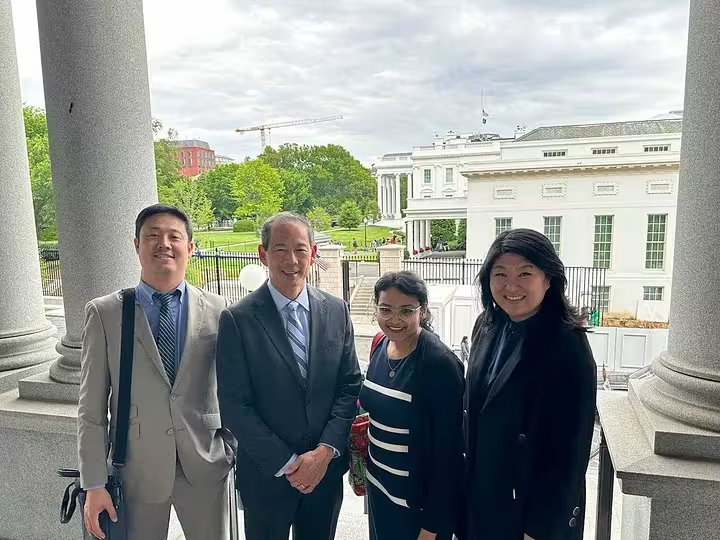
I’m so grateful for my year at Oxford because it really helped me think about things differently, about how to structure what I’m thinking about and how to communicate it in a way that is convincing to the audience. One of the main ways of being tested was writing essays and that was a new skill for me to learn – a lot of the work that I now do involves writing; it’s something I hold very dear to my heart and Oxford really helped me to think about how I can be clearer in the way I write, about the audience and the structure of my arguments.
I would not have been able to attend Oxford had it not been for the Felix Scholarship. I had applied to other places both in the US and Europe but given that I had a full scholarship from Oxford, it made the decision-making process really, really easy. And now, looking back, I know the value of not having to worry about paying back your loans after you graduate because it gave me the luxury of being able to take up jobs where money was not the first thing I needed to think about. Instead, I could think about what it was about the role that really drew me to it.
It also introduced me to a cohort of people who are other Felix scholars. I’m still friends with many of them today and when I come to the UK or go to India we will try to meet up. Having access to that community is so important.
“The scholarship has benefited me in many ways, it definitely made a dream come true.”
As a student I used to think if you can just get this data piece right, this policy right, apply it the right way, implement it the right way and get it to the right people, things will change. But in the real world there’s so much more going on than just this neatly drawn plan. One of my hopes working in this sector now is that the data, the efforts, the research that we produce, is of use to the communities we’re working with. And that, to the best extent possible, we’re thinking of ways to factor in the rights and the needs of the most vulnerable and designing policies so that everyone benefits, but especially the people who need it the most. Hopefully my work is contributing to that in some small way – that’s what gets me up in the morning!


