
Israeli-Turkish Relations at the End of the Cold War: The Geopolitics of Denying the Armenian Genocide
- Date:
- Time:
- 4:00 pm - 5:30 pm
- Event type:
- Lectures and seminars
- Contact email:
- Email us
- Venue:
- Seminar room 5, St Anne's College
- Address:
-
Woodstock Road
Oxford

Description
But to understand the significance of this moment, we need to go back to the decade in which Israel’s policy was fundamentally shaped: the 1980s. How formative were those years in establishing the relationship between Israel, Turkey, and the politics of Armenian Genocide recognition?
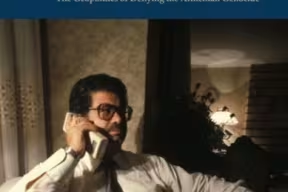
Israeli–Turkish Relations at the End of the Cold War: The Geopolitics of Denying the Armenian Genocide is the first book to pull back the curtain on this pivotal decade, revealing a period of clandestine diplomacy, strategic bargaining, and calculated international memory trade-offs that reshaped Middle Eastern alliances.
Drawing on previously untapped archival material and 30 oral history interviews, Eldad Ben Aharon reconstructs how the geopolitical upheavals of the 1980s transformed Israeli–Turkish relations and made the Armenian Genocide an increasingly important component of bilateral diplomacy. The story begins with the 1979 Islamic Revolution in Iran, which fundamentally altered Israel’s regional strategic environment. As Israel sought to avoid growing isolation in the Middle East, preserving its relationship with Turkey acquired new strategic importance.
The book follows this transformation through a succession of regional and international crises, from the 1980 Jerusalem Law and Turkey’s military coup to the 1982 Lebanon War, Turkey’s 1987 application to join the European Economic Community, and battles over Armenian Genocide recognition in the United States. In doing so, it challenges established explanations that place American Jewish organisations and Turkish Jews at the centre of Israeli–Turkish relations, bringing diplomats, state institutions, and geopolitical bargaining back into the story.
For the Oxford Israel Studies Seminar, the talk will use the book to show just how foundational the 1980s were in constructing the political and diplomatic architecture that shaped Israel’s approach to the Armenian Genocide for decades to come.
The Israeli government’s recognition in June 2026 offers a new vantage point from which to assess that history and the remarkable durability of the structures, interests, and memory politics forged during the final decade of the Cold War.
More info
Dr. Eldad Ben Aharon is a Senior Researcher at the Peace Research Institute Frankfurt (PRIF).
His first monograph, Israeli–Turkish Relations at the End of the Cold War: The Geopolitics of Denying the Armenian Genocide, was published by Edinburgh University Press in 2025. Dr Ben Aharon’s research explores the intersections of international security, memory politics, public and digital diplomacy, and international norms, drawing on insights from securitisation theory, foreign policy analysis, and oral history.
His work has appeared in numerous academic journals, including Global Studies Quarterly, European Journal of International Security, Intelligence and National Security, Studies in Conflict & Terrorism, Oral History Review, The International History Review, among others.
He is currently completing a second monograph that extends this research into the twenty-first century, examining Israeli memory politics surrounding the Armenian Genocide from 2000 to 2026, which he further developed as a Visiting Scholar at New York University in spring 2026.