
Dissent on the Streets, in Print, and Through the Lens: Citizens and the State under Authoritarianism
Two film screenings followed by Q&A with the directors
- Date:
- Time:
- 12:00 pm - 3:00 pm
- Event type:
- Other
- Contact email:
- Email us
- Venue:
- Lower ground floor
- Address:
-
Kin-ku Cheng Lecture Theatre (lower ground floor)
Dickson Poon Building
Canterbury Road
Oxford
Oxfordshire
OX2 6LU
United Kingdom

Description
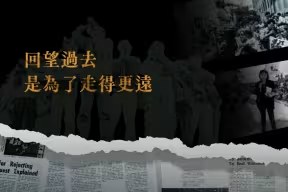
Commemorating the forthcoming 40th anniversary of the lifting of martial law in 1987, this transnational screening features two documentaries, Eyes on Democracy (民主之眼) and Behind the Scenes (幕後吶喊). Featuring nine veteran photojournalists, Eyes on Democracy presents Taiwan’s democratic awakening through the journalists’ lenses. It traces how their careers coincided with the emergence, expansion and diversification of socio-political movements since the early 1980s. Their decisions about where, when, what and how to capture the emotions and politics of either a large-scale rally or a localised sit-in have shaped how these movements are remembered and interpreted by later generations. Focusing on twenty activists dedicated to protecting the public sphere, Behind the Scenes narrates the contribution of underground opposition magazines (黨外雜誌) to Taiwan’s democratisation. It zooms in on the activists’ strategies, collaborations and means of survival while they were under intensive surveillance by the authoritarian state. Their defiance of state censorship, which led to imprisonment and, at times, financial ruin, has left behind a powerful legacy concerning the transformative power of writing and reading. At a time when artificial intelligence can generate images in a split second to accompany news stories that may themselves be produced by machines, the two documentaries also drive home a critical message about how ideas, concepts, cultures and practices travel across time, societies and geographical boundaries.
For the three of us, Yi-Chieh Chung, Tzu-ming Huang and Isabelle Cockel, film screenings function not only as a means of dissemination but also as a platform for two-way communication between filmmakers and audiences. Audience responses to our pilot versions inform subsequent editing and revision. Films are re-edited for international audiences based on our understanding of different audiences’ needs and expectations. Filmmakers also act as mediators of information exchange, sharing insights gained from different audiences across screening sites, both in person and through social media. As a result, the screening process becomes a site of knowledge co-production. Audience responses, alongside the films’ content, emerge as dynamic sources of interpretation.
Organiser: Dr Isabelle Cockel, University of Portsmouth