
Off the Shelf: October 2026
This month democracy, private libraries, Israel-Palestine, global security, terrorism, vampires and silence
Author:
Richard Lofthouse
Tags:

Why Democracy Needs You
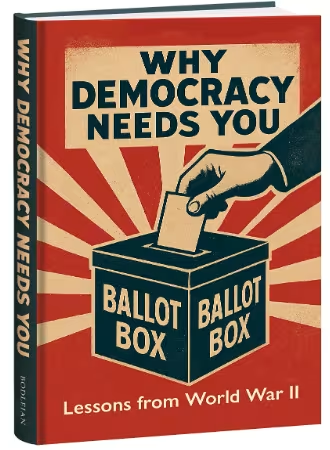
Why Democracy Needs You: Lessons from World War II, introduction by Ashley Jackson (Bodleian Library Publishing, 29 October 2026)
‘The tragedy of the last twenty years is that the people of the great democracies, including our own, failed so lamentably to rise to their responsibilities.’ This was written in 1942 as part of a series of pamphlets distributed to British soldiers, designed to lift morale via basic instruction: not only the scourge of fascism they were fighting against, but the glorious parliamentary democracy they were fighting for.
This little volume, beautifully produced in hardback and handsome but compact and portable (well done Bodleian Library Publishing), captures the highlights of those pamphlets and puts Oxford back in the limelight as to World War Two, the subject of a terrific previous volume by Ashley Jackson (Oxford's War, 1939-45), who is a Visiting Fellow at Kellogg College as well as Professor of Imperial and Military History in the Defence Studies Department at King's College London.
The authors of the original pamphlets were many and various, but the tone cultivated was simultaneously very basic instruction as to how our system works (which is remarkably good – anyone would read it with gratitude for the plain English and simplicity), but accepting that fascism offers a very simple and strong message and in a sense a challenge to democracy, which only does well if it avoids timidity and moves ahead.
The Conservative Right thought the pamphlets were too lefty, but the Labour Left felt it was far too righty. In fact the tone struck a brilliant equipoise between old and new. In the section titled ‘Democracy must take the offensive’, it tells the soldiers in uniform that they are defending ‘civil and religious liberty, free speech, the right to combine, local democracy, Parliamentary institutions, and our great legacy of social legislation’.
But then comes the rousing bit. ‘Democracy – rightly understood – is a dynamic idea. It implies that every man – whatever his race or colour or creed – should be given an equal opportunity of realising the best that is in him.’
If you edited for gender bias and perhaps deleted the almost laughably white-washy bits touching on Empire, much of this stuff is spot-on for 2026. At one point the authors suggest that fascism is childish, by playing up the ‘adult’ form of democracy, ‘which can only be worked successfully by responsible grown-up people’.
After a summary ‘what’s at stake’ preamble, the book covers politics, law, education and ‘the Information Services’. The section ‘Position of the BBC’ is almost exactly unchanged all these years later, troubled by the idea of a monopoly but wedded to the noble cause. ‘It must be inspired throughout by the utmost carefulness, which is something wholly different to timidity,’ opines the anonymous author.
The then-new Nuffield College, Oxford (1937) gets an honorary mention as one of the organisations revving up for a bright, post-war future. There is inadvertently much humour, much by omission and also where figures of speech (‘every Tom, Dick and Harry knows that…’) try to land complex ideas with soldiers imagined to be bored and thick.
The future novelist Anthony Burgess led classes for troops in Gibraltar and considered the whole exercise futile, but would have acknowledged his privilege of liberty, indeed Jackson says that the primary contrast between democracy and totalitarianism influenced ‘novels such as 1984 and A Clockwork Orange’.
One can imagine buying this little gem in bulk and scattering it around the Christmas stockings, so pertinent is much of its message.
Portrait of an Obsession
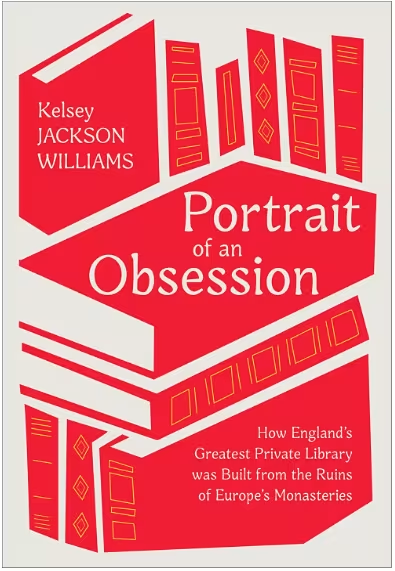
Portrait of an Obsession, How England’s greatest private library was built from the ruins of Europe’s monasteries by Kelsey Jackson Williams (Oxford University Press, 8 October 2026)
A self-confessed book collector and Associate Professor of Early Modern Literature at the University of Stirling, the author here strikes upon a golden, deep theme and mines it superbly:
‘It is an awkward fact for modern librarians and scholars of the book that most very early printed books were once in monastic libraries and most no longer are.’
If part of the pillage came out of the Reformation, there was another wave during the Napoleonic Wars, and there to exploit it were a sub-segment of the English upper class. Overcome with bibliomania, their chief exponent was the 2nd Earl Spencer, a certain George (1758-1834), who despatched agents all over the place to ruthlessly build a priceless collection. It’s a good story told in careful scholarship, and no, the greatest of the Regency bibliomanes did not read them all.
Resolving the Israeli–Palestinian Conflict

Resolving the Israeli–Palestinian Conflict: A Critical Study of Peace Negotiations, Mediation and Facilitation Between Israel and the PLO by Raphael Cohen-Almagor (Cambridge University Press, 2026)
The author (St Catherine’s College, 1987) insists that true reconciliation remains possible and has interviewed over 100 Middle Eastern, European and American leaders, alongside extensive archival research. The resulting book offers a rare insight into the dynamics of diplomacy, revealing how trust, fairness, and political courage are vital for peace. By analysing pivotal moments – from Oslo to Camp David and the Abbas-Olmert talks – Raphael identifies recurring mistakes and proposes strategies to foster mutual recognition and lasting coexistence. Both authoritative and accessible, the book blends history, law, ethics, and international relations into a practical roadmap for future peace efforts. Its interdisciplinary approach and use of primary sources make it both scholarly and engaging. Readers will come away with a deeper understanding of the conflict and the tools needed to help resolve it.
Age of Security

Age of Security: The rise of a global obsession by Ruben Andersson (William Collins, 13 August 2026)
What Ruben does here is evince a single big idea, that for every advance in ‘security’ we denude ourselves of a little liberty, despite convincing ourselves that the opposite is true. If you’ve ever tried to track your kids on your phone and realised that it made you compulsively and anxiously check your phone, then you may agree. He asks: ‘What would you give up to feel safe?’ Quite a lot, it turns out, with one of the global baselines being the ‘global war on terror’, which was not baseless, of course, but which set up an infinite line of expenditure exploited by vast swathes of creative, capitalistic entrepreneurs and corporations, Ruben rolls it up into ‘surveillance capitalism’.
A Professor of Social Anthropology at Oxford’s Department of International Development and a Fellow at Wolfson College, Ruben previously co-authored with Professor David Keen of LSE Wreckonomics: Why it's time to end the war on everything, the subject of an interview. In that book they noted how if you can build up the picture of a great threat, you can use it to procure funding and justify actions that wouldn’t be possible without it.
Now he has written this book for a more general audience and we’re into the land of doorbell cameras, secretive data harvesting, the internet of things and a rapid incoming tide of facial recognition. He is expert at writing about unintended consequences.
We hear about the rise of keys and locks, Jeremiah Chubb’s lock patent from 1818. They were an early Victorian achievement and a means to privacy. Suddenly, there were lock boxes, safes, handcuffs and all manner of ‘lock and key’ devices. The technology spread to all classes of people. The assumption throughout was that it was for the convenience and security of the user, although of course they had to pay for the craftsmanship.
The same mentality prevails now where parents track their children on Life360 or with AirTags. Smartwatches and sleep trackers may or may not improve anything but they sure supply data to their providers and their ‘trusted partners’, says Ruben.
‘Security through privacy has given way to security through surveillance,’ and it is mostly a disaster, he argues, unless you are part of the industry that has done so well from it all.
He tells hair-raising stories about parenting and schools, where apps have replaced books so that reading can be ‘tracked’. This is to create ‘trust’. Only then is the child allowed to read ‘a book.’ EdTech was estimated to be worth $163bn in 2024, doubling by 2030. The UK is a key market, ‘thanks to government campaigns and lack of meaningful regulation’. Why is it a disaster? Because it undermines autonomy, distorts agency and diminishes risk appetite to the point where no one can make a decision for themselves or think critically, and that apparently includes the parents.
Ruben has not lost hope. ‘Yet the future does not belong to the strongmen and securocrats, the doom-mongers and data barons. We must reclaim it.’ He sketches ways that we can resist by simply not joining in, but conceptually he draws on his own upbringing in Sweden to argue that we need to pursue what the Swedes call trygg, ‘that Swedish word for a sense of everyday stability, safety and trust’. Weirdly, a lot of what Ruben argues for echoes precisely what those World War Two pamphlets were arguing for (reviewed above) – democratic government back on the front foot, more empowered to take a stand for ordinary people and against big tech, less inclined to outsource and privatise everything, abdicating their core responsibility to defend liberty.
How to Think About Terrorism
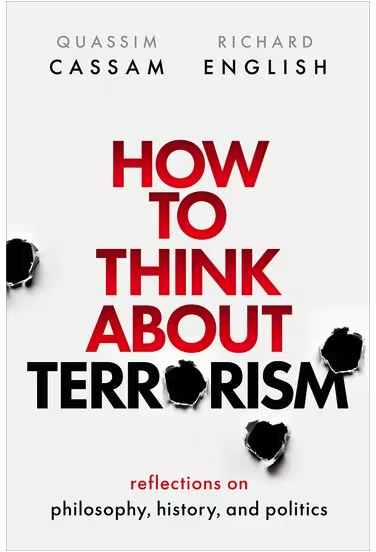
How to Think About Terrorism: Reflections on Philosophy, History, and Politics by Quassim Cassam and Richard English (Oxford University Press, 8 October 2026)
Both authors are Honorary Fellows of Keble College: Quassim Cassam, Professor of Philosophy at the University of Warwick, and Richard English, Professor of Politics at Queen's University Belfast. The interdisciplinary mix works brilliantly here, allowing history, politics, real-world examples and philosophy to engage together persuasively. The book reflects on the vital question of definition, recognising that a useful description of terrorism should be sufficiently flexible and open-ended to accommodate the great variety of terrorist methods, motives, objectives, perpetrators, and targets.
The authors account for the differences between non-state terrorism and state terrorism, and the dynamics and nature of state terrorism itself. They go on to study how people become terrorists, combining in a hybrid view the strengths of generalist and of particularist approaches; and offer a realist middle way between irrationalism and rationalism. They consider torture. The volume would be a fine accompaniment to the preceding one about the nature of global security, not least because they also study counter-terrorism and whether it works.
Vampire Tales
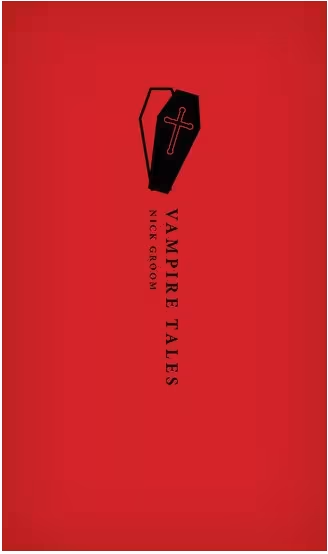
Vampire Tales, edited by Nick Groom
Published in September but saved up by us for the lead-up to Halloween…the Professor of Goth has produced a cracking sweep of vampiric literature and it enters the Oxford World's Classics series as a lurid red hardback complete with a little coffin, just for good measure. From Lord Byron and John William Polidori to Mary Elizabeth Braddon and Rudyard Kipling, this new edition brings together the best Romantic and Victorian vampire tales pre-dating Bram Stoker's Dracula (1897). By going backwards from that seminal moment, Professor Groom is able to show how the vampire tales of the nineteenth century are firmly rooted in these earlier accounts and the contexts of medicine, political science, theology, and philosophy. Really and truly, the results are a fascinating combination of cultural history and literary insight.
Silence Please
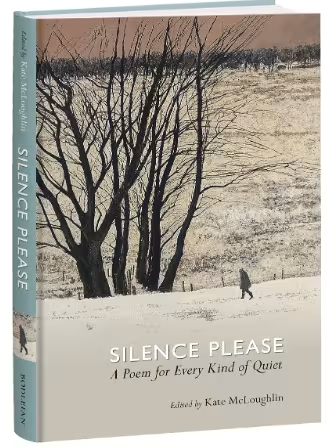
Silence Please: A poem for every kind of quiet, edited by Kate McLoughlin (Bodleian Library Publishing, 22 October 2026)
How could we not end with this haven of silences with which to withdraw from a world gone mad? One hundred poems chosen by Kate McLoughlin, a Professor of English Literature at Oxford and Fellow and Tutor in English at Harris Manchester College, are themed around wonder, intimacy, nature, the quiet life, night-time and deliberate silencing. The collection opens with Wordsworth’s ‘Composed upon Westminster Bridge’, 3 September 1802:
‘This City now doth, like a garment, wear/The Beauty of the morning; silent, bare,…’
We particularly rate the second themed section, 'Anatomies of Silence', where Professor McLoughlin has uncovered great writers reflecting themselves on the many different silences, so a great Victorian like Emily Barton conjures the inner world of emotional drama that we might associate with Victorians(!).
‘Expressive silence! When eye meeting eye, /Relieves the trembling lip and stricken tongue;’
The book ends on a section called ‘Hush’, which offers great creativity, but never at the expense of thoughtful curation. Wallace Stevens is opposite William Carlos Williams, for example. You know you’re in safe hands, and that the work was done, this volume coming in the recent slipstream of her wonderful Silence: A Literary History, about which more can be read in an earlier profile.
'Off the Shelf' typically concerns books where there is an Oxford connection, whether the place, the University or, of course, the author. Our editorial selection rests on books appealing to the broadest alumni audience.
For more recommended books from Oxford academics and alumni, head over to the @oxfordalumni social channels on Instagram, Facebook and X.
Alumni are entitled to discounts at Blackwell's and Oxford University Press.