
Remember Galileo
Dieter Helm calls time on the cosy climate consensus and discusses global futures
Author:
Richard Lofthouse
Tags:
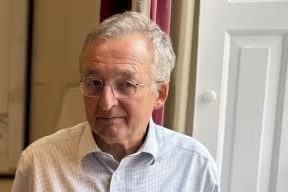
Professor Sir Dieter Helm in his rooms in New College, University of Oxford, on 7 October 2026.


Anyone who read history or a science at Oxford may remember that little gem of a book by Thomas S. Kuhn, The Structure of Scientific Revolutions (1962). The physicist and philosopher noticed a common pattern in the history of science, where an established way of thinking was defended long after it had fallen into crisis, eventually collapsing amidst furious infighting, to be replaced by something better.
If the greatest example of a paradigm shift is the Copernican revolution, when an Earth-centric model of the universe was replaced by a Sun-centric (heliocentric) model, then Professor Sir Dieter Helm (Brasenose, 1975) could be compared to Galileo, only in 2026 aiming his telescope at the politics and economics of climate change, particularly relevant given that the next UN Climate Change Conference (COP31) is in November.
We meet at Dieter’s airy study in the Old Building of New College (founded in 1379).
Frequently described as an iconoclast, he wants to be known only as a climate realist, hence the title of a new book published on 8 October, Climate Realism: Facing the Facts about Energy.
‘The question I get asked the most at lectures is whether I am an optimist or a pessimist,’ he says. ‘But I always say I am neither one nor the other. I am a realist.’
Realism is ‘incredibly simple’, he contends. ‘If something is unsustainable, then it will not be sustained.’ This was one theme of his last book, Legacy: How to Build the Sustainable Economy (2024): our economies are not remotely sustainable in their current form.
He adds that he’s been wanting to write a sequel to that book, called How it Ends, and is still keen on the idea. But readers of Climate Realism can already find a detailed sketch of those ideas in Chapter 11, titled ‘What Happens if We Don’t Act’.
In fact, that might be the most visited part of the book because he argues that the arbitrary target of limiting global warming to 1.5°C has already been passed, even though the debate rumbles on in theory; that 2°C has been experienced in some places in the past two millennia and is within tolerable limits for the majority of the global population, particularly with technology; that there are huge uncertainties that are essentially unknowable; that parts of the Global North are already seeing benefits in the form of longer growing seasons and reduced winter heating bills. He argues that out beyond 2°C, probably from the middle of this century forwards, things are likely to get exceedingly difficult, with terrible consequences for large swathes of the global population.
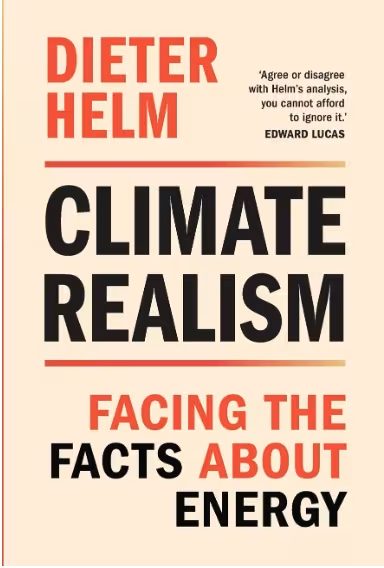
Beyond sketching this partly unknowable future, Helm, who is Professor of Economic Policy at the University of Oxford and a Fellow in Economics at New College, Oxford, takes aim at the paradigm that goes back to the Kyoto Protocol, the founding international treaty adopted on 11 December 1997, in Kyoto, Japan, that committed industrialised nations to limits on their greenhouse-gas emissions.
He declares the process broken, proposing possible ways forward, not necessarily a new paradigm yet.
‘We’re roughly adding 2 parts per million per annum [of carbon]. It's just gone up to about three. It’s been linear, then tilting up more recently, ever since 1990. If I go back to the first book I ever wrote about this stuff, The Carbon Crunch in 2012, the question I asked then was, why has so little been achieved when so much money has been spent? When I wrote that, I wouldn't have imagined that a decade and a half later, actually, nothing much more would have been achieved.’
Note that the new book is not called ‘Facing the Facts about Climate Change’. The climate science is very straightforward, or as Professor Helm notes succinctly, it’s ‘nineteenth-century science’. Denying it in 2026 is a purely cultural or political stance, a post-truth posture.
But the broader subject of energy and where the world derives it from is absolutely pivotal. That is also where Professor Helm sees the greatest confusion, particularly among the climate community, many of whom are cross with Professor Helm for upsetting the calculus of their most cherished assumptions.
‘Some of this is new since three years ago,’ he says. ‘It hadn't dawned on me then, that AI, and broader energy demand, would probably lead to a doubling of electricity demand by 2050, in conjunction with a global economy that may also double in size.’
Doubling in size? It is hard to grasp the enormity of this.
As such, the book begins with a series of salvos. Professor Helm is very good at this. His intellect radiates authority bristling at weak or flawed thinking.
The first salvo is that there is no observable ‘transition’ to clean energy, despite the concept having become normative in public debates. The second salvo is that there is no clean energy as such, only varying degrees of dirty energy. The third salvo is aimed at the argument that renewables are ‘cheap’, which leads him to ask why then do they require so many subsidies.
His starting point is that 30 COPs have failed miserably and our economies remain ‘profoundly unsustainable’.
‘The 2025 COP in Brazil was a new low – most of the important world leaders didn’t attend, the thousands of attendees who flew there proceeded to the event on a road cut from the Amazon rainforest.’
He reminds us that historically, it was not the case that wood gave way to coal, coal to oil and gas, then (say, in France) oil and gas to nuclear. World history since 1800 instead saw explosive economic growth twinned with explosive energy demand in all its forms. The new energies came along but they were never replacements. And within the mix, some of the older fuels have increased in demand.
True, the UK retired its domestic coal production. But this led only to greater imports of products, some of which are made with coal power in a different geography, says Professor Helm. So the UK did not ‘get off coal’: it just deindustrialised while China burned more of it, some of it for the UK.
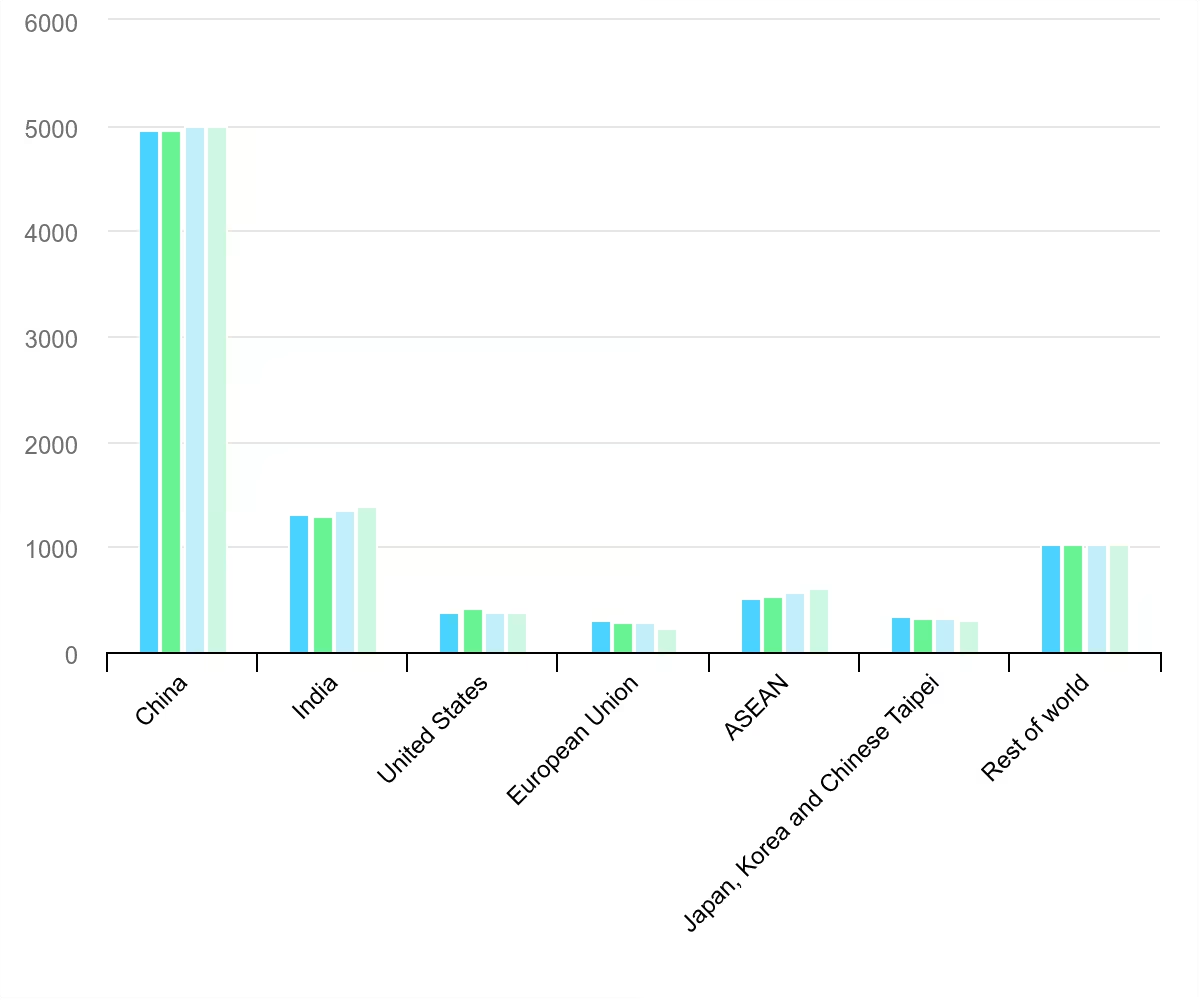
China’s explosion in coal burning over the past three decades is so massive that it is hard to grasp. China is now the world’s largest emitter of climate gases, and in seven years emits more than Britain did in 150 years of industrial revolution. It burns more than half the world’s coal.
Even in Europe, it’s a complex tale – consumption of the dirtiest brown coal went up in Germany as a consequence of a political decision to quit nuclear.
These inconvenient truths are not separate from calling out the absence of ‘clean energy’, which Professor Helm deems a falsehood. ‘There are only varying degrees of dirty. Batteries are in fact incredibly dirty in regard to their ingredients and their manufacturing. Much of the refining of those elements in China is done with energy from burning coal.’
More fundamentally than almost anything else, he points out, fossil fuels stubbornly account for over 80% of primary energy globally. This dial has not budged over the past quarter century.
To the extent that solar, offshore wind and other renewables have been introduced, ‘they have served only to prevent the 80% fossil fuel figure from climbing higher. They have staved off an even worse outcome, but there is no evidence for any transition to them.’
To be clear, Professor Helm is not arguing that a transition is not desirable. He describes ‘a very sharp reduction’ in ‘fossil fuels’ and preventing ‘ecosystem destruction’ as ‘incredibly urgent’.
All he is saying is that this is not currently happening. In fact, other economies, including Turkey, Brazil, Indonesia and India, are all poised to increase their energy acquisition from the cheapest possible source, with coal firmly on the menu.
Another theme of Professor Helm’s analysis is a whole-system approach to the energy grid. It’s a political trick, he contends, to claim that renewables are very cheap. At a system level, they are actually very expensive because they require a lot of grid extension as well as standby power, typically from fossil fuels, and storage to compensate for their intermittency.
‘The intermittency is becoming more of an issue, not less, because data centres require firm power.’
Besides AI, quantum and the hardware required to run it all, other steeply rising vectors of energy demand are desalination and air conditioning, he says, noting that in the UK in the great hot drought of 2026, portable air-conditioning units sold out, such was the demand.
He is unsparing in criticising politicians, several of whom he has worked with directly going all the way back to Tony Blair.
‘They told the electorate a fairytale, that they could have maximum economic growth, cheaper energy and no one would have to do anything differently, so-called “green growth”. But the UK has some of the most expensive energy in the world right now…
‘I call it the Miliband technique, to say it will be cheaper. But it’s irresponsible to say it if it’s not true.’
Professor Helm never forgets the broader environment and the politics. The mining involved in renewables is leading to massive environmental degradation and biodiversity loss, especially in Asia, but western consumers are shielded from this supply chain when they set their sights on a shiny new electric SUV.
‘The popular far right has net zero in its sights, not just immigration. Voters are not stupid. They can see that Europe has deindustrialised, that jobs have gone, that Asian imported goods have made up the deficit.’
At heart, he insists that world leaders chose the wrong metrics: instead of measuring carbon production on a territorial basis, we should count carbon consumption, at which point the imported Chinese electric car would no longer count for zero but have to be measured for its sizeable carbon footprint.
‘We should internalise the environmental costs in our choices and what we do, but we don’t.’
This solution points towards the implementation of a carbon tax, but this feels unworkable right now, viewed politically in a democratic context, so I ask Professor Helm what he would do if he were Andy Burnham, the current UK Prime Minister.
‘It depends whether my only goal is winning the next election. But charitably, the answer is first to stop digging holes. It would do him no harm whatsoever to just stop the nonsense of net zero. It’s the most expensive way possible to decarbonise, it accelerates deindustrialisation and it puts prices up. Let’s be decent and assume then that he actually wants to address the problem. I’d say, consider what the UK does best towards solving what is a global problem. Offshore wind is something we do very well and we’ve done it. Second, we have all these shallow [oil and gas] wells that can be deployed for carbon capture and storage. Third, there is no point unilaterally stopping gas production in the British North Sea only to import more gas from the Norwegian North Sea or dirtier gas from the US. Fourth, Britain has some of the leading climate science and scientists, including here at Oxford. That is where we can make an appreciable contribution. I’m not sure it’s ideal to carpet the land with solar panels because they don’t work so well in the northern hemisphere especially in the winter. That’s where sunnier countries have a natural advantage, but not the UK.’
Professor Helm doesn’t fly and he installed lots of solar panels, exporting more to the grid than he consumes but still noting how woefully they perform in a northern winter.
He expresses a barely restrained impatience towards the campaigning group Just Stop Oil, where the ‘blame’ is pinned on oil companies, typically western ones, he points out. He never loses sight of personal responsibility.
‘It’s us! We’re all consuming too much. Goods need to be priced to reflect their pollution cost.’
Some of the talking points in the book are unexpected. He claims that US tariffs against China are in effect a sort of carbon tax, just as the taxation of oil products is also a sort of carbon tax (‘but people keep buying it, so valuable are these products!’).
He says that we are well past the point where you can simply wave Adam Smith around and talk about free trade, in a cut-throat mercantile world laced with hidden state subsidies.
That said, he is relaxed about economic growth from technology, pointing to his phone and reminding us that it has more computing power than the largest computer when he first came to Oxford.
Going forwards, he paints an incredibly difficult scenario in which even maintaining fossil fuels at their current level will require simply massive deployment of renewables and nuclear power. He says that this is why energy company Exxon has modelled global consumption of oil still at 100 million barrels per day by 2050. In climate terms, this would be a catastrophe, yet, as things stand, it might even seem like a good result, such is the likely increasing global demand for energy.
He does not think that geoengineering, direct air capture of carbon or carbon capture and storage are anything like the ‘get out of jail free’ cards that some of their supporters believe them to be.
There are very few individuals with the track record of senior public service and intellectual acumen to pull off such a bracing book as this, but Professor Helm is one.
He served as the independent chair of the UK government’s Natural Capital Committee (NCC) from 2012 to 2020. In this role, he provided expert advisory support on the sustainable use of natural resources and heavily influenced England’s 25 Year Environment Plan.
He says that when he delivered the Battcock Lecture in Oxford in May 2025, the title of which was ‘Climate Realism: Time for a Re-Set’, ‘my lecture infuriated lots of what might be called “the climate change community”.’
He uses the word ‘paradigm’ to describe the current consensus that will propel thousands by kerosene-powered aircraft to COP31 in Turkey, short of calling it a ‘religion’.
But the parallels are there. The Catholic Church tried the astronomer Galileo Galilei for arguing that the Earth revolves around the Sun, finding him ‘vehemently suspect of heresy’ and placing him under house arrest for life.
No such thing will happen in a modern Oxford University, but it remains to be seen if humans can bring order to their habitation of the planet and justice to current and future generations. The lurking suspicion is that they will not, and Professor Helm notes the evolutionary advantage of taking a myopic view in daily affairs, not to burden oneself with the distant future.
But if this is how it goes, it will end badly.
‘It won’t be solved if we carry on with the current deeply flawed and often counterproductive climate policies. There is no escape from this basic realism.’
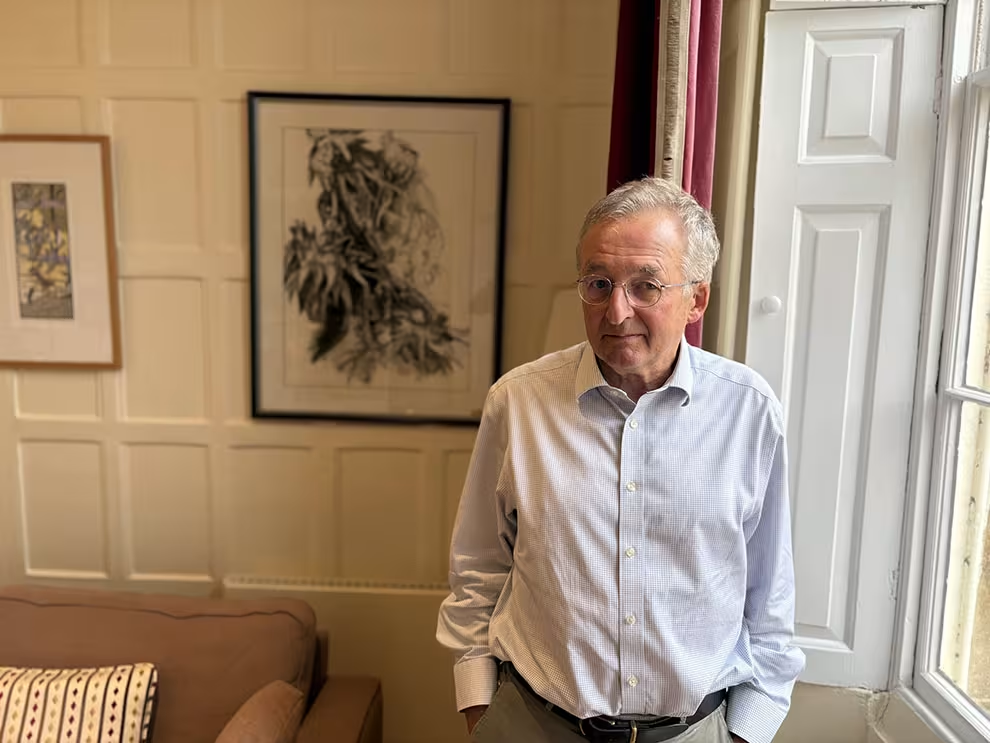
Professor Sir Dieter Helm is Professor of Economic Policy at the University of Oxford and Fellow in Economics at New College, Oxford. From 2012 to 2020, he was Independent Chair of the Natural Capital Committee, providing advice to the government on the sustainable use of natural capital. He provides extensive expert advice to UK and European governments, regulators and companies across three key areas: energy and climate; regulation, utilities and infrastructure; and natural capital and the environment. Dieter is a Vice President of the Exmoor Society, a Vice President of Berkshire, Buckinghamshire and Oxfordshire Wildlife Trust, and an Honorary Fellow of Brasenose College, Oxford. His latest publication is Climate Realism: Facing the Facts about Energy, published by Cambridge University Press on 8 October 2026.


