
Ancient genome duplications laid the foundations of complex brains
A new study led by Oxford University and published today in Nature has found that genetic doubling events that occurred over 450 million years ago helped kick-start the evolution of complex brains.
A new Oxford-led study has shed light on how vertebrates evolved the complex brains that distinguish them from other animals. Image credit: nopparit, Getty Images.

New findings, published today (10 June) in Nature, help to answer the riddle of how vertebrates evolved the diverse array of brain cells that distinguishes them from other animals. It appears that a dramatic expansion of the genetic toolkit more than 450 million years ago enabled the emergence of different kinds of brain cells. These cellular innovations are shared across vertebrates - from primitive fish to mammals - and form the basis of the sophisticated brains seen today.
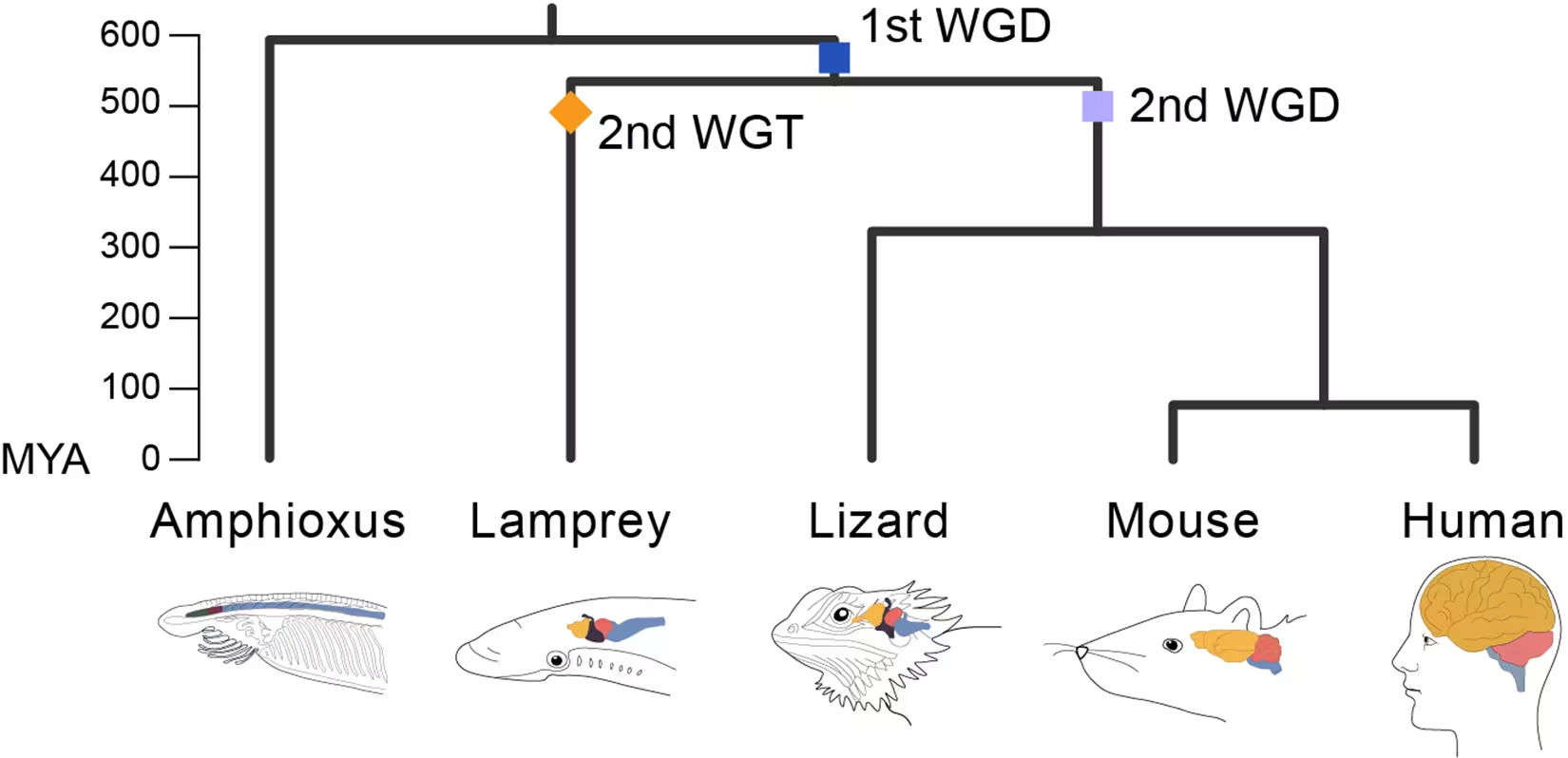
By comparing the gene activity of single brain cells across five species, including humans, mice, lizards, lampreys (a primitive, eel-like fish) and amphioxus (one of our closest invertebrate relatives), the team reconstructed how brain cell types evolved over deep time. They found that many of the major cell type families in vertebrate brains arose after a genome duplication event in the common ancestor of vertebrates roughly 520 million years ago. A further genome duplication (around 500 million years ago) then added to this.
“Our findings reveal that two genetic doubling events were foundational in enabling the evolution of complex brains. By duplicating every gene in the genome, nature gained raw material that could be repurposed to build new types of brain cells.”
Whole-genome duplication occurs when an organism’s entire genetic material is duplicated. Scientists have long debated whether the expansion of brain cell types was driven by these rare genome-wide events or by more gradual, small-scale gene duplications. While many duplicated genes are lost, some are retained and gradually take on new or specialised roles. The researchers found that gene pairs retained from whole-genome duplication events- known as ‘ohnologues’- are disproportionately involved in defining distinct brain cell types.
Across the species analysed, genes originating from these ancient duplications were significantly more likely to be active in particular brain cell types than genes duplicated through other mechanisms. These genes were especially enriched for regulatory roles, helping control how different cell types develop and function. Because the brain relies on many specialised cell types working together, this diversification of cells is a key component of its overall complexity.
“The data analyses were mind-bogglingly complicated - great credit to graduate student Yuanzhen Zhu - but the conclusion is clear: new brain cells needed new genes. And not just any genes - these were the extra genes spawned by accidental doubling of DNA before the first fish swam in the sea.”
The team also found evidence that early vertebrate brains evolved by dividing ancestral cell types into more specialised forms. In simpler animals that are close relatives of vertebrates (such as amphioxus), key regulatory genes are broadly active across cells. In vertebrates, duplicated versions of these genes are deployed in different cell types, helping to establish distinct cellular identities. The study revealed that most duplicated genes did not evolve entirely new functions. Instead, they partitioned the roles of their ancestral gene between them, helping to fine-tune the diversity of brain cell types.
Importantly, the impact of these ancient duplications did not stop in early vertebrate evolution. By analysing brain cell types that evolved much later - such as those in the grey matter of the cerebellum - the researchers show that genes originating from these duplications continued to be used to define new cell types over hundreds of millions of years. The findings highlight how rare genomic events can have lasting evolutionary consequences, shaping the biological complexity seen across entire groups of animals.
The paper ‘Whole genome duplication shaped cell 1 type evolution in the vertebrate brain’ has been published in Nature.
For more information about this story or republishing this content, please contact [email protected]


