
New study reveals that Sabah's ferret badger is found nowhere else on Earth
Oxford biologists have helped to lead the most comprehensive assessment to date of the endangered Bornean ferret badger (Melogale everetti) – a rarely seen nocturnal carnivore weighing only one kilogram. The results, published in Ecology and Evolution, reveal that this elusive mammal is found only in the mountain landscapes of western Sabah, located in the northern part of the island of Borneo.
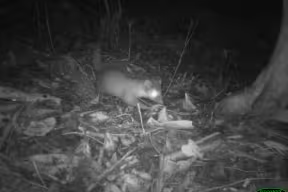
Bornean ferret badger identified in an extensive camera trap survey conducted by the research team. Image credit: AJ Hearn

This largest-ever study of the species was the result of a collaboration between Oxford University’s Wildlife Conservation Research Unit (WildCRU)’s Bornean Carnivore Programme and Sabah Parks. Researchers analysed data collected between 2021 and 2024 from 188 camera-trap stations across the western highlands of Sabah. More than 400 occurrences of the species were recorded, and these revealed a previously unknown population in Nuluhon-Trusmadi Forest Reserve. This extends the species' known range eastwards beyond the Kinabalu-Crocker landscape.
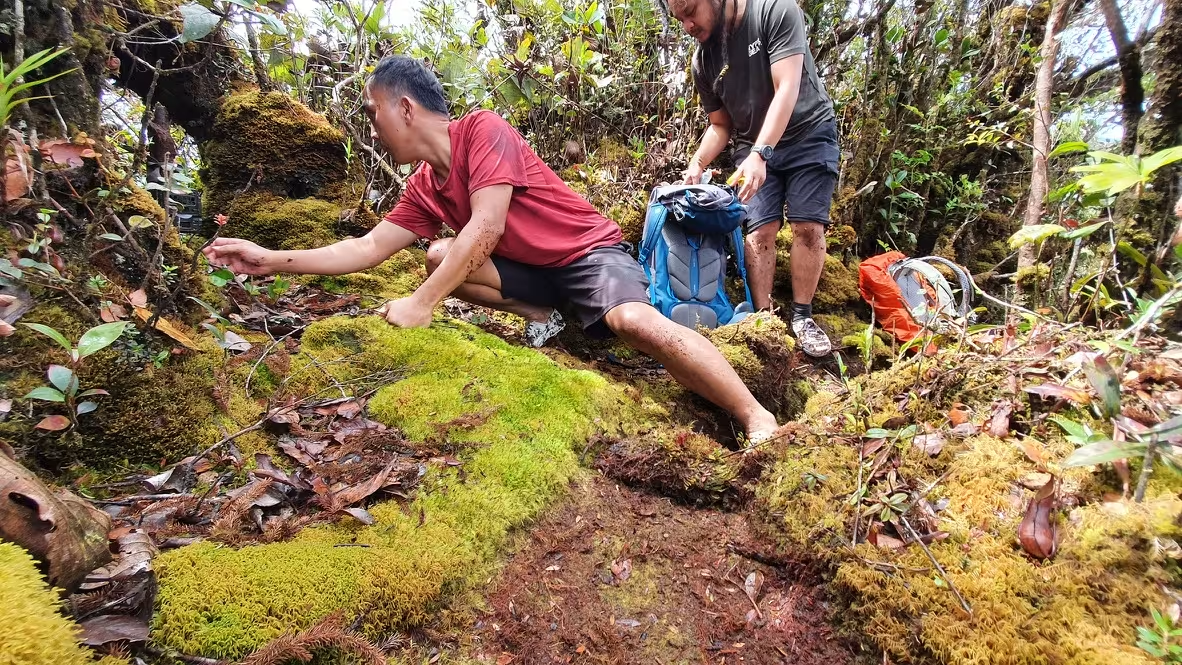
The team combined these records with habitat-modelling techniques to assess the species' potential distribution. Despite the discovery of the Trusmadi population, the resulting maps indicate that suitable habitat remains largely confined to the Kinabalu-Crocker-Trusmadi mountain landscape, providing further evidence that the Bornean ferret badger is found only in mountain landscapes of western Sabah. As one of Southeast Asia's most geographically restricted carnivores, the study results support the Bornean ferret badger’s Endangered classification on the IUCN Red List.
Despite occurring in one of the world's best-known biodiversity hotspots, remarkably little is known about the ferret badger’s behaviour and ecology. Camera traps revealed the species foraging on the forest floor at night, and researchers have even photographed an individual carrying a snake, providing a rare glimpse into the secretive life of this elusive mammal.
‘I grew up in Tambunan and had never seen or even heard of the Bornean ferret badger,’ said Mohammad Aliyuddin bin Jaini, Field Manager of the Bornean Carnivore Programme. ‘I decided to place some camera traps around my family's farm simply to see what wildlife might be there, and I was amazed when a Bornean ferret badger appeared in the photographs.’
“To discover that an Endangered species found only in Sabah was living right on our doorstep was a special moment. I hope this study helps more Sabahans appreciate and take pride in the remarkable wildlife that makes our state unique.”
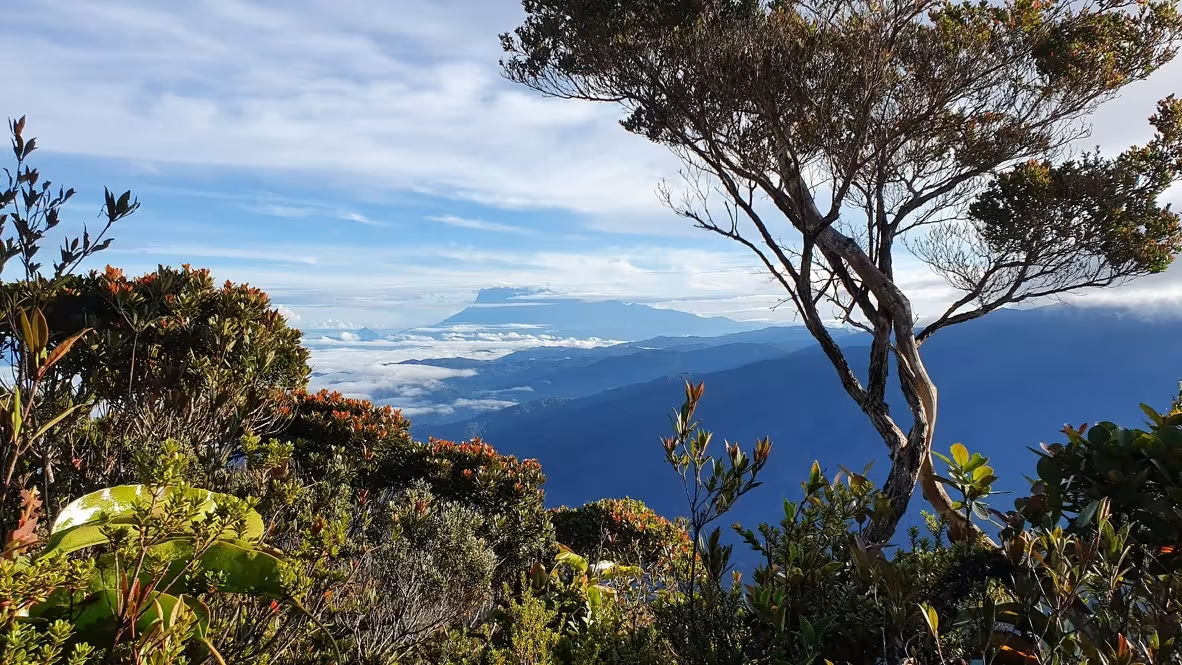
Researchers believe the Bornean ferret badger could become an important flagship species for the conservation of Sabah's montane ecosystems. The forests of the Kinabalu-Crocker-Trusmadi mountain landscape support many endemic plants and animals and provide vital ecosystem services, including water catchments that support communities throughout the state.
“Our study adds further weight to the conclusion that the Bornean ferret badger is found only in Sabah. Despite decades of wildlife surveys across Borneo, all confirmed records remain confined to the Kinabalu-Crocker-Trusmadi mountain landscape. Few places in the world can claim a mammal found nowhere else on Earth, and Sabah should be proud to be one of them.”
Dr Andrew Hearn, lead author of the study and Director of the Bornean Carnivore Programme, said: ‘We have suggested that the alternative common name “Kinabalu ferret badger” could help strengthen the connection between the species and the landscape it calls home. Like several other species named after Mount Kinabalu, it represents a unique component of Sabah's mountain biodiversity.’
‘The species may also offer opportunities for carefully managed nature-based tourism. Wildlife enthusiasts already travel from around the world to Sabah to experience its extraordinary biodiversity, and local communities, especially those from the Kinabalu Ecolinc area, may one day be able to provide specialist wildlife-watching experiences focused on the Bornean ferret badger.’
“Conserving the Bornean ferret badger is ultimately about conserving Sabah's extraordinary mountain ecosystems. This species is part of Sabah's natural heritage, and its future depends on the continued protection of these forests and the partnerships that have helped safeguard them.”
The study was made possible through a long-term collaboration between the Bornean Carnivore Programme and WildCRU at the University of Oxford, Sabah Forestry Department, Sabah Parks, Sabah Wildlife Department, Sabah Biodiversity Centre, local communities and numerous field assistants who helped conduct surveys across Sabah's mountain landscapes.
The study ‘Distribution, Habitat Use and Conservation of the Bornean Ferret Badger’ published in Ecology and Evolution.
For more information about this story or republishing this content, please contact [email protected]


