
MPhil in Global and Area Studies
Drawing on the multidisciplinary and area expertise of the Oxford School of Global and Area Studies' (OSGA) seven regional centres, to deliver an innovative Comparative Area Studies programme, which addresses contemporary global challenges through developing innovative multidisciplinary approaches.
Full time
- Upcoming application deadline for 2027-28 entry:
- 12:00 midday UK time on Tuesday 26 January 2027
- Expected length
- 21 months
- Expected start date
- 4 October 2027
- English language level
- Higher level required
Application deadlines
Final application deadline for entry in 2027-28
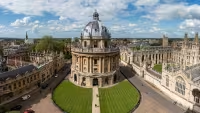
The Radcliffe Camera at the University of Oxford

About the course
The overall objectives of the MPhil are to:
- provide you with a multi-/interdisciplinary and comparative understanding of different regions of the world;
- allow you to work on key thematic global challenges from a comparative area studies perspective;
- equip you with the conceptual and theoretical expertise to interrogate the notions of ‘area’, ‘comparative area’ and the implications for disciplinary enquiry;
- embed inter-cultural understanding and global citizenship in the study of area;
- develop research methods and skills that are appropriate for the comparative study of areas and regions including through the development of new digital approaches for area studies; and
- promote a wider international network of area studies scholars and practitioners.
Courses are taught through a combination of lectures and classes. You will be required to submit essays and make class presentations. Through a Research Methods element, you will receive relevant training in methodologies to enable you to carry out research and writing for your 30,000-word thesis. The thesis is expected to incorporate a global, transnational or comparative area studies approach and/or to address key cross-region global challenges from an area studies perspective.
In addition, lively programmes of seminars, workshops and conferences throughout OSGA will complement the MPhil and you are encouraged to make the most of these opportunities.
Course structure
The course is structured around six study components, facilitating an interdisciplinary approach to comparative study across two or more regions and a critical approach to area studies.
The six study components are:
- Theories and Approaches in Global and Area Studies
- Global and Area Studies (which focus on Comparative and Transnational Area Studies approaches)
- Research Methods for Social Sciences and Humanities
- Area Studies Immersion
- Area Studies Options
- Global and Area Studies Research Thesis.
Your supervisor will help you to identify a viable topic for your thesis and offer guidance regarding secondary literature, primary sources, appropriate methodologies, any fieldwork planned, and a research and writing timetable. The supervisor will also oversee your integration into OSGA and the course. With this support you will present an essay setting out your proposed research and you will present this proposal in a thesis workshop during Trinity term of the first year. This provides an additional opportunity for you to receive feedback from academic members of staff and peers. At this point, if your thesis topic has progressed in a different direction to that anticipated, your supervisory arrangements may be reviewed. By the end of the Trinity term, you will be expected to have developed a thesis outline, identified the means (eg field or archival work) through which you will gather your primary sources, and agreed a timetable for the summer and Michaelmas term work with your supervisor.
During your second year, you will undertake a period of area studies immersion. You will also present your work in progress thesis in research seminar workshops or webinars convened for this purpose. Further arrangements for feedback and comments on drafts will progress through a series of meetings held by arrangement between you and your supervisor during the Hilary term of the second year. You will also submit your thesis in Trinity term.
Core components
You will take three core courses and submit a final thesis.
Option modules
You will take one further research methods course, four option courses and a period of area studies immersion.
Course details
Entry requirements
For entry in 2027-28