Features

By Hunter Doughty and Joss Wright
Targeted advertising and news coverage are powerful, and controversial, tools for influencing human perceptions and behaviour. This influence can be perceived as exploitative – notoriously Cambridge Analytica’s alleged influence in the Brexit referendum and the 2016 US Presidential election. Such cases have received widespread attention and raised ethical questions around whether, or how, these tools should be used. But do they, unwittingly, reveal new conservation solutions?
As researchers working to improve conservation of the world’s wildlife, we wondered: could we, and should we, subvert these tools’ main use of peddling products and political ideals, to instead promote positive conservation messages?
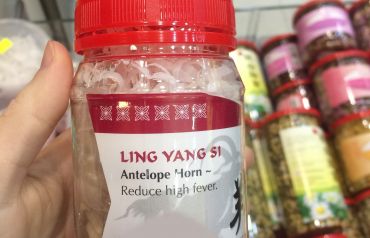 Saiga horn packaged as medicinal remedy in traditional Chinese medicine
Singapore is a top saiga horn consumer country, so we implemented a behaviour change intervention to attempt to shift Singaporean saiga horn consumers towards more sustainable TCM treatments such as chrysanthemum tea
One species under significant trade impact is the saiga antelope - a Critically Endangered animal from Central Asia, whose horn is used in traditional Chinese medicine (TCM) and often marketed as líng yáng, 羚羊. Singapore is a top saiga horn consumer country, so we implemented a behaviour change intervention to attempt to shift Singaporean saiga horn consumers towards more sustainable TCM treatments such as chrysanthemum tea. Based on findings from our initial research, we decided to test whether strategic advertising of news media would be an effective way to engender desirable responses among a target audience of middle-aged women (who were selected because they are most likely to purchase saiga horn for both themselves and their families).
Algorithms have identified that the more individuals see something, the more attractive or trustworthy it appears
It is well evidenced that repeated exposure to an idea increases the chance that an individual will ‘adopt’ that idea. This is why advertisers show adverts over and over, and why YouTube repeatedly serves up the same suggested videos. The algorithms have identified that the more individuals see something, the more attractive or trustworthy it appears. Similarly, the more that we hear an idea directly from other people, the more it is ‘socially reinforced’ as being good or accurate.
Targeted online advertising, built on profiling individuals’ online activity, underpins the business model of most large online services
Targeted online advertising, built on profiling individuals’ online activity, underpins the business model of most large online services, and has proven highly effective at directing an audience’s attention in a way that maximises profits for both advertisers and platform operators. Targeted advertising makes use of demographic data, online activity, social networks, and a myriad of other data points to present adverts to the ideal consumer and, crucially, provides a wealth of information back to the advertiser concerning which groups saw adverts, how well they were received, and how widely the message spread.
Would it be possible to use this understanding of human behaviours and these tactics for social good?
The source of the advertisement, however, also matters. Sources that are perceived as trustworthy to an audience give greater weight to the content. News coverage in particular, whether offline or online, can often fill the role of a trustworthy source. On their own, news stories can certainly have influence over us, as shown through research around voting and health behaviours; but brought together, repeated exposure to news content via targeted advertising forms a powerful one-two punch of behavioural influence.
We employed targeted online advertisements through Facebook, Google, and Outbrain to promote news articles discussing the origin of saiga horn products as being from an endangered species
Would it be possible to use this understanding of human behaviours and these tactics for social good? To test this approach in the fight to save the saiga we employed targeted online advertisements through Facebook, Google, and Outbrain to promote news articles discussing the origin of saiga horn products as being from an endangered species. Advertising performance and in‐depth Facebook analyses let us assess audience response both at scale and in detail. Our message spread extensively through Singapore’s media, with our adverts being shown almost five million times, and with the story running on at least seven news outlets, including some of the largest and most trusted outlets in Singapore.
There were widespread desirable audience responses
Our analysis found that there were widespread desirable audience responses, exemplified by 63% of Facebook users' engagements showing identifiably positive features, such as calls for public action to reduce saiga horn consumption, anger at having unknowingly used an endangered species, and self‐pledges to cease using saiga horn products. By contrast, only 13% of engagements showed identifiably negative features. Following the results of the online intervention, we are now carrying out an on-the-ground evaluation to assess how this observed online response translates into real-world behaviour change.
Our research demonstrates that the use of targeted advertising to promote conservation messages through news media has promise. The capabilities of online advertising to directly target consumers of unsustainable products, and the information subsequently available to researchers to analyse advert performance, makes their use particularly effective. Merging these techniques with news content for social good can greatly augment the reach and influence of these positive messages.
Hunter Doughty is a Doctoral Researcher based at the Department of Zoology and Joss Wright is a Senior Research Fellow based at the Oxford Internet Institute. This research is part of the Oxford Martin School Programme on Illegal Wildlife Trade.
Read the full open-access paper, ‘Strategic advertising of online news articles as an intervention to influence wildlife product consumers’ in Conservation Science and Practice.
Read background research: ‘Saiga horn user characteristics, motivations, and purchasing behaviour in Singapore’, published in PLOS One, December 2019.
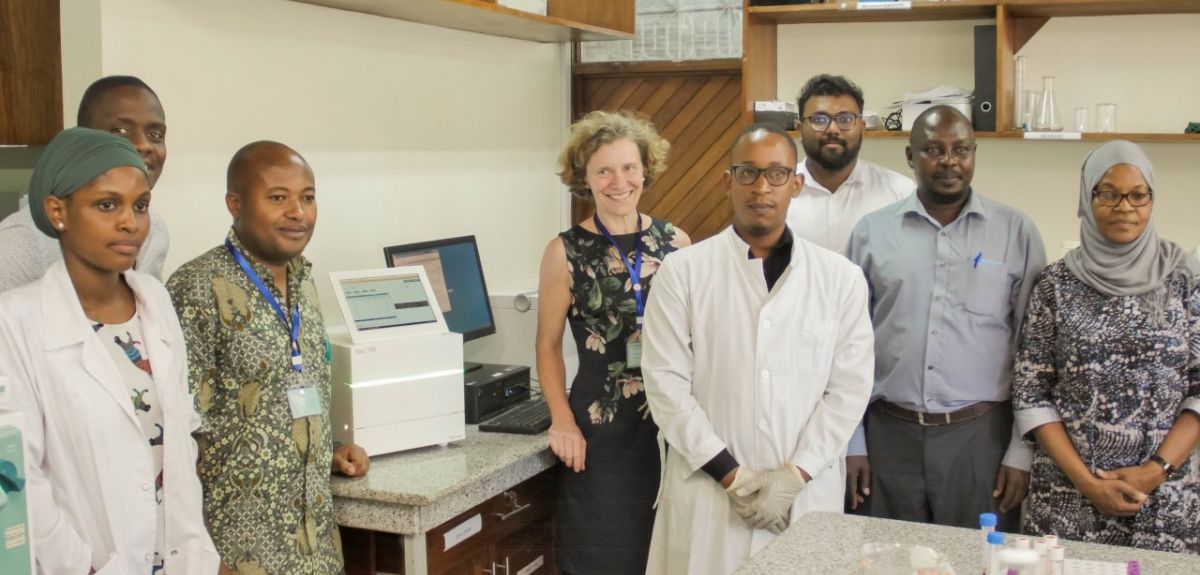
Oxford researchers are working with colleagues in sub-Saharan Africa to change a 90% death rate, into a 90% cure rate.
According to the World Health Organisation, cancer is a leading cause of death for children and adolescents worldwide, with blood cancers such as leukaemia and lymphoma being the most common. In high-income countries more than 80% of children with cancer are cured, but in many low- or middle-income countries, only 20% are cured.
Childhood blood cancer kills thousands of children every year in sub-Saharan Africa. A subsection of blood cancers known as Epstein-Barr Virus-related lymphomas (or EBV lymphomas) are particularly deadly, and have become the focus of a new international global health collaboration which hopes to improve EBV lymphoma treatment and diagnosis, AI-REAL (Aggressive Infection-Related East Africa Lymphoma).
Traditional but painful and expensive diagnostic procedures, such as invasive needle biopsies, are currently more commonly used in sub-Saharan Africa due to a lack of advanced equipment. Only 29% of hospitals in Tanzania and Uganda have the required surgeons to perform these procedures.
As a result, many children are going undiagnosed and untreated leading to an astonishing 90% death rate from EBV driven lymphomas. But through improved equipment, training and access to advanced diagnostic technologies, AI-REAL aims to turn this 90% death rate into a 90% cure rate.
Professor Anna Schuh, Professor of Haematology at the University of Oxford leads this new UK-Africa project, which aims to bring the next generation of diagnosis technology to Tanzania and Uganda. Prof. Schuh hopes the in-country testing process for EBV lymphomas can be further developed, in order to improve early diagnosis and chances of survival.
Schuh says, ‘There are currently 43 pathologists in Tanzania for 56 million people alone, so there is a big need to improve the capacity for early diagnosis through access to diagnostic software and training. By bringing in these new technologies we hope to train the future generation of clinicians and scientists to speed up diagnosis and improve the lives of millions of children in sub-Saharan Africa.’
Professor Schuh and her team will be visiting Africa during the duration of the project to provide training in various techniques and equipment, such as next generation genetic sequencing technology and artificial intelligence tools, with the hope of minimising patient pain and delivering faster diagnoses.
By sharing these best practices and bringing the latest technological advances in genetic testing in country, it is possible to set up effective and affordable cancer diagnostics through the use of simple blood tests to screen for cancer.
This project was launched in February 2020, and is a partnership between the University of Oxford and medical teams in the Muhimbili National Hospital, Kilimanjaro Christian Medical Centre, St Mary’s Hospital (Lacor) and Muhimbili University of Health and Allied Sciences, with funding from the NIHR RIGHT Programme. September is Blood Cancer Awareness month. To find out more about blood cancers, visit the Blood Cancer UK website.
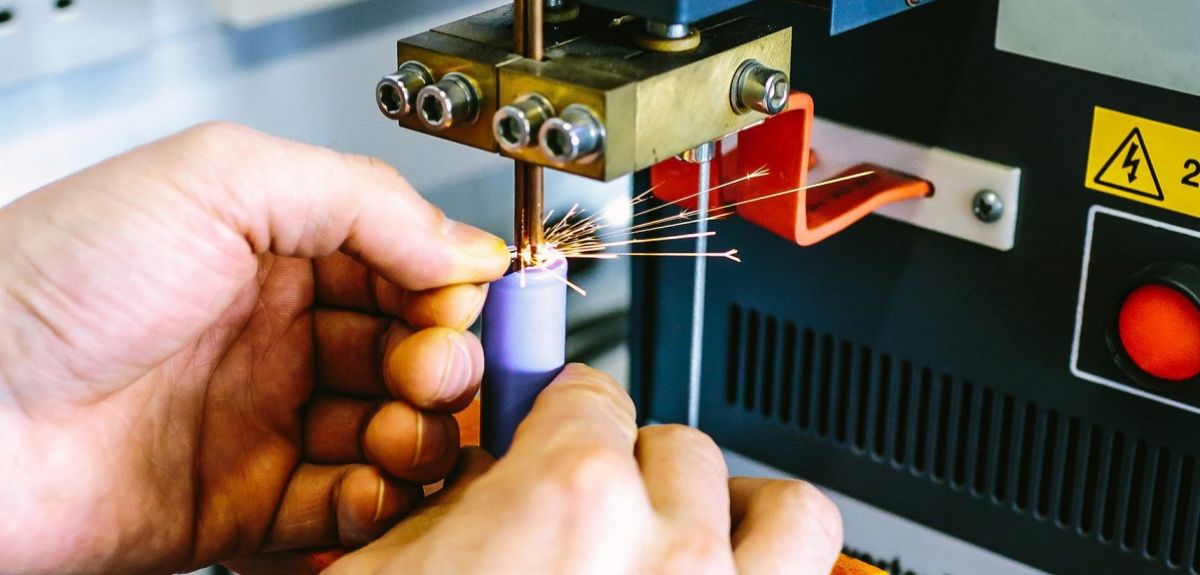
To tackle the climate crisis and accelerate the transition to renewable energy sources, we urgently need to build more energy storage. As part of Energy Superhub Oxford, the University of Oxford’s Department of Engineering Science is developing an advanced technical model which will give unprecedented insight into battery performance. Jorn Reniers, Postdoctoral Researcher at the Department talks black boxes, computational challenges and how engineers can help address societal problems.
Tell us about the University’s Department of Engineering Science
The University of Oxford’s Department of Engineering Science is world leading and covers the entire spectrum of engineering disciplines, from traditional engineering like turbines or heat flow to cutting-edge topics like machine learning. Across the university the departments are very interconnected which is great because you always have an eye on the bigger picture you’re trying to solve, rather than looking at a technical problem in isolation.
What insight and expertise does it bring?
Our research group at the Department is the Battery Intelligence Lab, and as you can infer from the name, we research batteries and specifically lithium-ion batteries. We understand how they work, their efficiencies in terms of thermal behaviour, degradation and all these other things. That’s important because these details are really hidden and the investors and developers building and operating these batteries don’t necessarily have that level of insight into how high-level decisions will impact individual cells.
What is your role within Energy Superhub Oxford?
My role within ESO is to create a digital twin of the grid battery. This is basically a model of the physical asset which can simulate every individual component inside the battery and how they work together. A lot of physical assets are black boxes. When you buy an asset the manufacturer provides a data sheet on how you should use it and what you should expect from it. For instance, a battery will tell you how often it can be charged or discharged at certain power levels, and what efficiencies and behaviour you can expect. It’s a very high-level overview when what you actually have is a field full of containers of tens of thousands of cells.
The digital twin allows you to understand how everything works together, and more importantly to test different scenarios. If you have an asset which is worth tens of millions of pounds, you don’t want to do something in the real world unless you’re certain it will work, because it’s quite expensive if you make a mistake.
What challenges have you encountered developing this model?
The main challenge has been a computational challenge because the battery contains hundreds of thousands of components and you want to simulate them all individually. Simulating a 1 MWh battery would take a couple of hours so it’s always a challenge to make sure that the model is both efficient and accurate. You don’t want to ignore some important physics or other interactions while keeping everything computationally under control.
How will the model interface with the hybrid battery when it goes live?
We’re aiming to have API access where we can pull live operating data from the database. Our model will interpolate between these datapoints and simulate things for which we don’t have datapoints. So, it will try and estimate, “OK. Where is the real battery currently at,” and “OK, now we think this would happen,” and when the next datapoint comes in a minute later it will compare and see how accurate its prediction was. It will keep doing this until it can confidently predict what is happening between datapoints.
How can the model support energy storage growth globally?
I think the biggest issue is uncertainty, because this is still a relatively new technology and it is being improved year-on-year. And uncertainty always reduces the investment you get because it reduces the business case. Our model aims to provide a reliable tool which can give investors more confidence and improve the business case, and in turn unlock more investment into grid-connected batteries.
What do you find most exciting about working on Energy Superhub Oxford?
Our role as engineers in society is to take new discoveries from science and bridge the gap between what works in the lab and what works for people in the real world in an economic setting. What I find exciting about Energy Superhub Oxford is the sheer scale of the battery. We know lithium-ion batteries work for a phone, and the project is trying to see, “Well, can it actually scale up from a phone to containers, to a field full of containers and so on?” And the collaboration between industry and academia means we can access data about how these batteries will be used in the real world and transfer learnings from the lab to the real world.
What changes are you hoping to see in the energy sector over the next decade?
I would like to see an increased contribution of renewable energy sources, whether they are onshore of offshore wind, PV or some other novel type of renewable energy source. I think that’s a change that is happening, but if we want to have more of these renewable energy sources we need flexibility to help manage their intermittency.
Batteries are one of the options, but there are other options too, such as smart charging of electric vehicles and so on. What I really hope is that this flexibility is not delivered with traditional solutions such as gas plants or coal plants because that would negate a lot of the benefits from the increased amount of renewable energy sources.
How do you think Energy Superhub Oxford can help to deliver these changes?
My background is in power system engineering, and in power system engineering things are always big. You always talk about gigawatts, which is a thousand megawatts, which is a million kilowatts. If you see a transformer it’s the size of a room, and if you then come and say, “Oh, we need storage,” the problem there is a battery cell is really small. It can charge your phone, but we would need billions of batteries to solve the problem we have.
But Energy Superub Oxford is saying, “Look, you can take this small technology and scale it up to solve a real problem.” This applies equally to the rapid electric vehicle charging and the heat pumps, as well as the battery. These are all relatively small technologies on the scale of the power system, but we are showing how multiple of these small things can be combined to have a meaningful impact to help solve the problem we face.
Do you see any positives coming out of this period of lockdown for the energy transition?
I think lockdown has helped people to realise they don’t need to drive everywhere, maybe they can work from home on some days, perhaps not every day, but you start to think about things differently. I think that reduction in transport is really a big advantage in terms of the long term changes, both technical changes, but also the psychological and behaviour changes that we really need for people to adapt and make sure we can be more sustainable in the future.
This post was kindly reproduced with the permission of Energy Oxford Superhub.
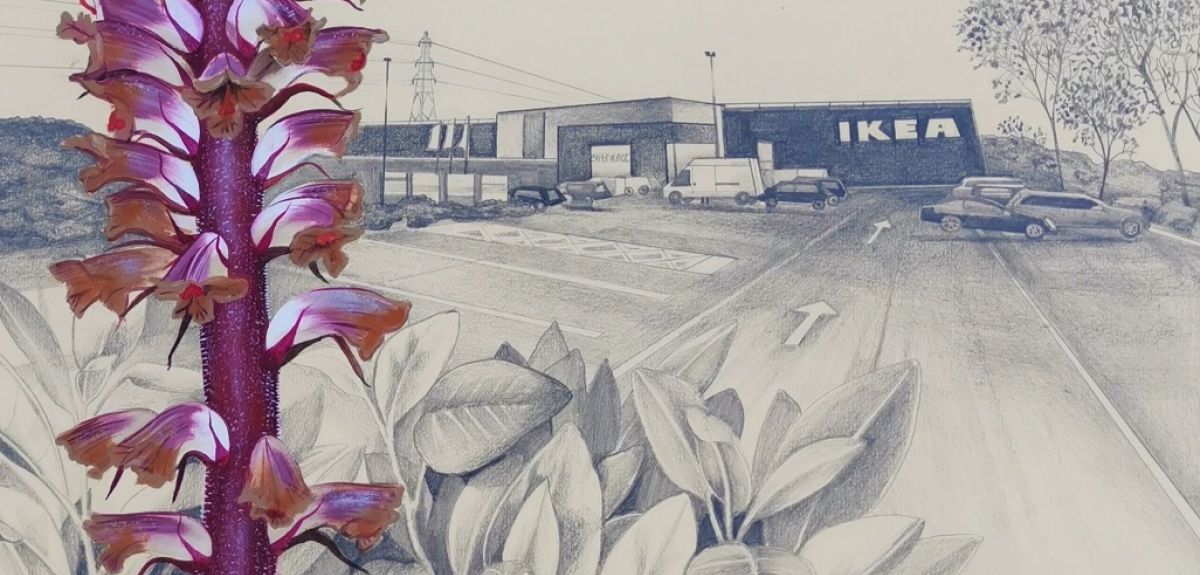
Scientists Dr Chris Thorogood at the University of Oxford Botanic Garden, and Dr Fred Rumsey at London’s Natural History Museum have just described a new form of a strange parasitic ‘vampire’ plant known as ‘common broomrape’.
Broomrapes are sap-sucking ‘plant pilferers’ that steal their food from the roots of other plants, their so-called ‘hosts’. In this case, the new variety they name Orobanche minor var. heliophila has a peculiar affinity for Ikea and Tesco carparks!
 The newly described variety of parasitic 'vampire plant'
The sinister looking ‘vampire’ has no leaves, roots or green pigments of its own, and comprises a peculiar purplish flowering spike that juts out of the ground.
The reason the newly discovered variety has an affinity for this somewhat surprising habitat is linked to its penchant for a particular shrub called Brachyglottis × jubar 'Sunshine' that is often planted in shop carparks – and the occasional service station too – enabling the parasite the thrive there.
It also grows in amenity plantings in parks, gardens and along sea fronts. The botanists named the new variety after its host, heliophila, meaning ‘sun-loving’. Although the plant is a parasite, it poses no threat to plants it feeds on and is not dangerous or harmful.
The scientists examined a range of features in great detail, for example the anatomy of the roots, floral parts, colour, ability to regenerate (perennation) – and its ability to grow on different host plants.
Parasitic plants, like broomrapes, have aroused curiosity for centuries yet they remain one of the most poorly understood groups of all the flowering plants.
Together, these data indicate that the newly described variety is a race that is distinct from other forms of the plant that are well known to science. The new variety occurs throughout Britain, especially in the south and southeast, but it is unknown when it evolved because its host (Brachyglottis) was introduced to the UK after 1910 from New Zealand. It is possible that a shift in host has taken place from native vegetation to the cultivated shrub, following the widespread introduction of Brachyglottis for amenity planting in recent decades.
Parasitic plants, like broomrapes, have aroused curiosity for centuries yet they remain one of the most poorly understood groups of all the flowering plants. Indeed much of their evolutionary biology and life history remains a mystery.
It goes to show that you don’t have to go to a remote tract of rainforest to discover new plant life – new species can be hiding in plain sight
There are over 4,000 species of parasitic plant and they occur in all major ecosystems from tropical rainforests to arctic tundra, and new species are discovered every year. Because they derive nutrition from their hosts, some have lost the features typical of most plants, for example green leaves, stems and even roots. Botanists previously relied on such features to classify plants, and so the evolutionary relationships among these parasites have long remained unclear.
The scientists’ latest research featured here shows that broomrapes appear to be forming new species by switching hosts, but the process has gone largely unnoticed because they look so similar. It goes to show that you don’t have to go to a remote tract of rainforest to discover new plant life – new species can be hiding in plain sight. Next time you do the shopping or refill the car, look carefully at the shrubbery and you may well spot a ‘vegetable vampire’ at your feet…
Dr Chris Thorogood is Deputy Director and Head of Science for Oxford Botanic Garden and Arboretum and lecturer at the Department of Plant Sciences. His research focuses on speciation (the formation of species) in tropical pitcher plants and parasitic plants; the floral diversity of biodiversity hotspots such as the Mediterranean Basin and Japan; and biometic applications in plants. He is a fellow of Linacre College.
The new variety was published in the journal British and Irish Botany, and the original article can be seen here: https://britishandirishbotany.org/index.php/bib/article/view/54
Follow Chris on Twitter @thorogoodchris1 and Instagram @illustratingbotanist.
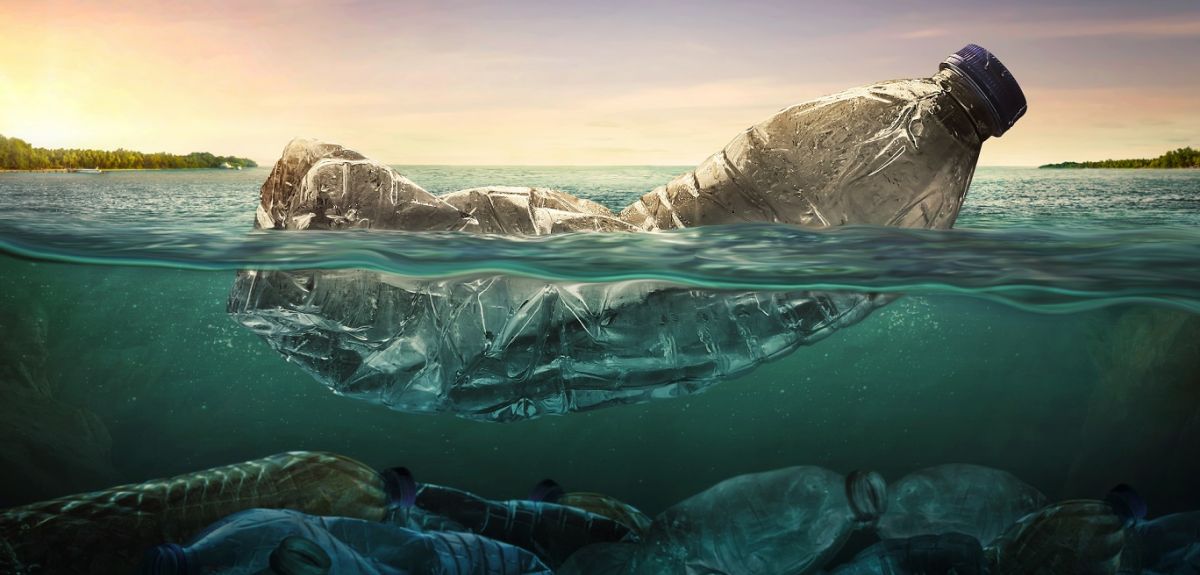
By Alexis McGivern, Environmental Change and Management MPhil at the Environmental Change Institute
I have an obsession that I’ve given up trying to beat: I’m fascinated by trash. I started low-waste and plastic-free living in 2013 with a month-long challenge and have since oriented my career and studies around the captivating problem of over-consumption. In 2015, I started working on plastic pollution issues at the International Union for Conservation of Nature (IUCN) in a position funded by the Gallifrey Foundation, a Swiss-based philanthropic foundation.
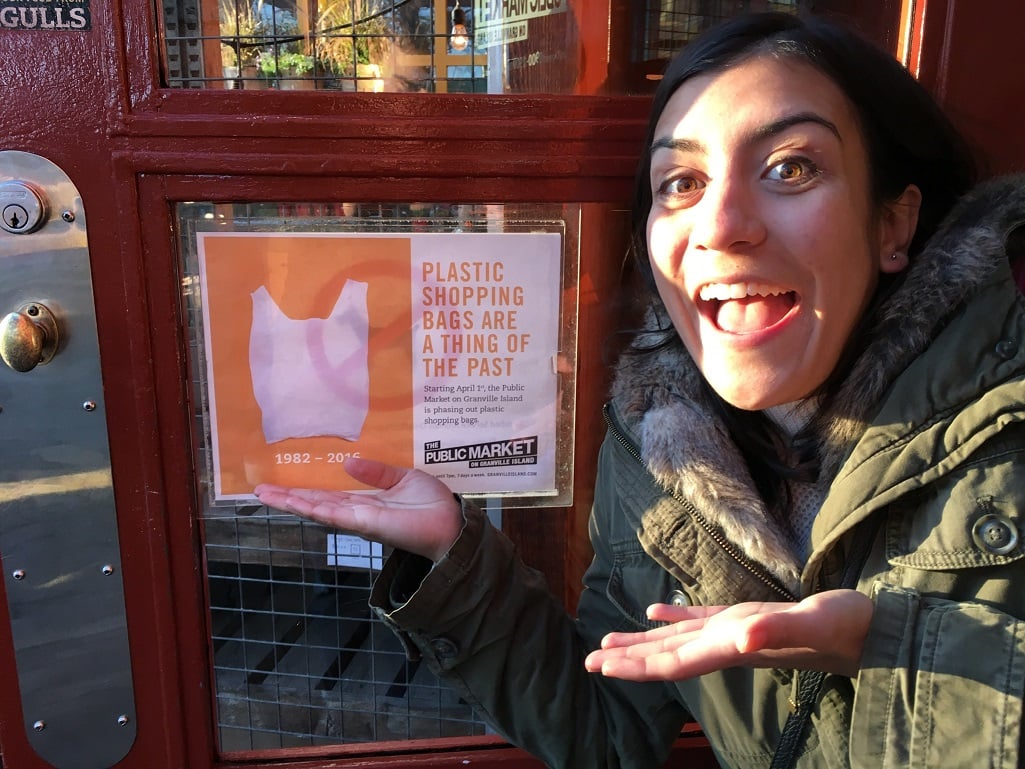
My current research at Environmental Change Institute, University of Oxford, looks at the environmental justice implications of waste management interventions, examining the relationship between social deprivation and the location of waste incinerators in the UK.
Plastic pollution has captured public attention like few other environmental crises. Those of us in this field pre-2016 saw the ‘Blue Planet Effect’ happen in real-time: at IUCN, we went from trying to convince funders that plastic pollution was a problem worth caring about to having our cup runneth over with funders who wanted to make a splash on the current hottest environmental problem.
Unless we can rapidly halt plastic production, we need to rapidly transition towards a plastic economy that is circular.
In 2018, I represented IUCN in negotiations at the UN for an international treaty on plastics and saw firsthand how complicated it is to reach meaningful consensus between industry, governments and environmental NGOs. Despite these difficulties, there are a huge number of international, national and corporate commitments that all work towards the goal of reducing the amount of plastic leaking into our environment. But how effective are these lofty ambitions at managing this ever-growing problem?
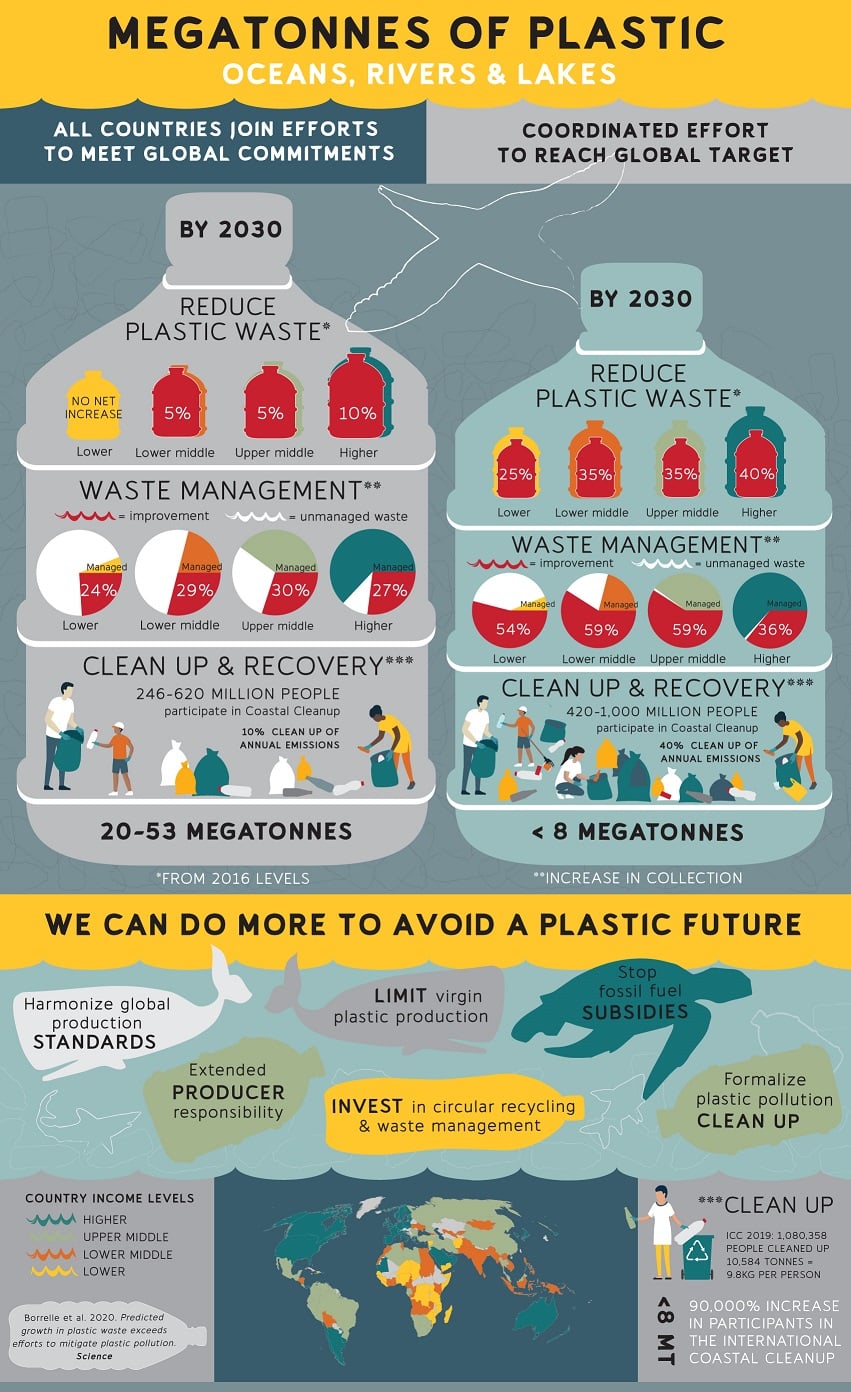 The Plastic Pollution Emissions Working Group (PPEG) is a group of experts who wanted to pin down how effective different interventions actually are at reducing the amount of plastic into aquatic ecosystems. We knew we wanted to pin down how much plastic was currently leaking into all aquatic ecosystems: the oft-quoted Jambeck et al (2015) figure of between 8 -12 million metric tonnes (Mt) annually did not include lakes and rivers, and also needed to reflect 2020 numbers of production and consumption. We found current annual leakage to be between 24-35 million metric tonnes, which is more than three times the number currently used to inform policy responses (Jambeck et al. 2015). It was an incredible experience to work with authors from that seminal study (Jenna Jambeck and Kara Lavender Law) and to be a part of generating new insights for academics and practitioners in this space.
We wrote down a laundry list of policy interventions, from bag bans to an internationally harmonised recycling standard, and got to work quantifying their impact at reducing the mammoth number leaking into our aquatic ecosystems each year
Using a cross section of interventions across three categories (reductions in plastic waste generation, waste management interventions and recovery interventions), we compared multiple reduction scenarios to a business as usual scenario. We wrote down a laundry list of policy interventions, from bag bans to an internationally harmonised recycling standard, and got to work quantifying their impact at reducing the mammoth number leaking into our aquatic ecosystems each year.
We found that even under current ambitious global commitments, between 20-53 million metric tonnes of plastic will enter aquatic ecosystems annually by 2030. That’s the same approximate weight as up to one million ‘Hercules’ airplanes!
This demonstrates that our current commitments are not enough to deal with increasing production of virgin plastics, rising consumption rates, current inadequate waste management efforts, and population growth.
Another scenario we generated sought to keep annual plastic emissions below 8 million metric tonnes, the estimated global emissions in 2010 to the oceans, and the number that prompted a wave of action and commitments on plastic pollution.
We found that the global community would need to make profound, systemic changes to achieve this target:
- Almost halving the amount of plastic waste going to our trash cans by 2030;
- Increasing our waste management capacity by an additional 36-59% each year (in low-income countries, the capacity increase would need to be tenfold);
- And capturing at least 40% of plastic leakage through beach, river and lake clean-ups every year.
What does all of this tell us? There is no time to waste. Unless we can rapidly halt plastic production, we need to rapidly transition towards a plastic economy that is circular. End-of-life plastic products must be valued in order to avoid becoming waste, and clean-up strategies must expand beyond grassroots efforts into systematised efforts in order to catch inevitable leakage. We all must come together to transform the plastics economy and avoid these troubling futures.
Current Environmental Change and Management MPhil Alexis McGivern is a co-author on an article published in Science that quantifies the amount of plastic pollution in lakes, rivers and the oceans by 2030. See 'Predicted growth in plastic waste exceeds efforts to mitigate plastic pollution' in Science.
The study demonstrates that plastic waste production is rapidly outpacing the ability to manage it. Even under the most ambitious current commitments, there will still be up to 53 million metric tonnes of plastic leaking into aquatic environments every year.
- ‹ previous
- 37 of 252
- next ›
 What US intervention could mean for displaced Venezuelans
  Setting the agenda for the next century of quantum
 10 years on: The Oxford learning centre making an impact
 Mapping the Moon: the world’s first lunar atlas goes digital
  Oxford and The Brilliant Club: inspiring the next generation of scholars
 New course launched for the next generation of creative translators
 The art of translation – raising the profile of languages in schools
  Opening a window into the quantum world
 Tracking resistance: Mapping the spread of drug-resistant malaria