
What US intervention could mean for displaced Venezuelans
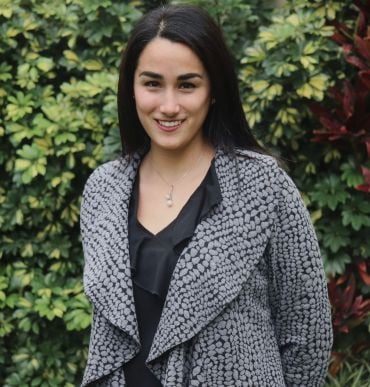 Alessandra Enrico Headrington, COMPAS
The United States’ intervention in Venezuela on 3 January 2026 marks a critical moment not only for the country’s political trajectory, but also for the future of one of the largest displaced populations in the world.
The situation before US intervention
The United States’ intervention in Venezuela has ignited questions about its legality under international law and the principles set out in the United Nations Charter. This moment reflects a broader trend in which core legal principles appear increasingly subordinated to power politics. Beyond questions of legality, it also raises deeper uncertainties about Venezuela’s political future and what leadership change might mean for the possibility of return for nearly 8 million Venezuelans displaced since around 2015.
Of the majority of those displaced, around 6.9 million are hosted by countries in Latin America, with Colombia and Peru receiving the largest numbers, followed by Ecuador and Chile, and more recently by Brazil. Since 2015, governments have granted legal stay through the provision of over 5.1 million special, time-limited residence permits. These measures allowed Venezuelans to live and work legally and were initially conceived as rapid and flexible tools to manage large-scale displacement.
This moment reflects a broader trend in which core legal principles appear increasingly subordinated to power politics. Beyond questions of legality, it also raises deeper uncertainties about Venezuela’s political future and what leadership change might mean for the possibility of return for nearly 8 million Venezuelans displaced since around 2015.
However, the limitations of this interim solution have become increasingly visible. Access to temporary permits has grown more restrictive, with the enforcement of tighter eligibility requirements and the reintroduction of border controls. While these schemes have enabled a quick path to legal stay for many Venezuelans, their temporary and conditional nature offer limited certainty about long-term protection or settlement. This policy choice is particularly striking in Latin America, where many states have deliberately incorporated the Cartagena definition into their national frameworks. This regional standard broadens refugee protection to include people fleeing widespread violence, human rights violations and serious public disorder. Under this definition, a significant share of Venezuelans could, in principle, be recognised as refugees, accessing a stronger, rights-based form of protection with greater legal certainty over time in host countries.
Nevertheless, my ongoing doctoral research at the University of Oxford with Venezuelans in Colombia, Peru and Ecuador, points to a clear pattern: many Venezuelans prefer temporary permits, despite their precarious and uncertain nature, over seeking refugee status, which is a protracted and complicated process. Temporary permits are comparatively simple and predictable – even when they involve fees.
But as the political environment shifts, broader questions are likely to arise about the sustainability of temporary permits and about what may come next for the more than 5 million Venezuelans currently living under them.
Will displaced Venezuelans return to Venezuela?
Comparative experience from other displacement contexts, such as Syria, suggests that even significant political or economic shifts in countries of origin do not automatically translate into large-scale return.
For many displaced Venezuelans, recent events symbolise the end of a political era marked with widespread human rights violations, the erosion of the rule of law, and large-scale displacement. These perceptions matter: they shape expectations about the future, influence personal and family decisions, and frame narratives around the possibility of return, even in the absence of immediate material change.
However, while the changing political situation may shape displacement dynamics, return is unlikely to be immediate or uniform.
Comparative experience from other displacement contexts, such as Syria, suggests that even significant political or economic shifts in countries of origin do not automatically translate into large-scale return. International standards make clear that return must be voluntary, safe and dignified, and premised on effective guarantees of physical security, legal protection, access to livelihoods, and institutional stability. In the absence of these conditions, and drawing on comparative experience from other protracted displacement contexts, any return is likely to remain limited and selective rather than widespread.
What may come next for displaced Venezuelans
After more than a decade spent managing Venezuelan arrivals, the question for host countries is no longer how to extend short-term legal stay, but whether this model can meaningfully evolve, or whether a different approach is needed. For most Venezuelans, medium-to long-term stay in host countries across the region therefore continues to be the more realistic horizon. This evolving situation points to three likely scenarios:
- Temporary protection as the dominant response: Temporary permits may continue to define access to legal stay across Latin America, operating largely at governments’ discretion, while refugee protection plays an increasingly limited role. As country-of-origin assessments evolve, this may affect future asylum decisions and, in some cases, the review of existing refugee status under international refugee law.
- Tighter access to legal stay and rising irregularity: Temporary permit schemes could be adjusted, affecting eligibility, duration, and in some cases their continuation. Given their discretionary nature, such shifts could increase legal uncertainty and, over time, push more Venezuelans into irregular status and onward movement.
- Selective return alongside sustained mobility: Voluntary return is likely to remain limited rather than widespread, shaped by continued uncertainty in Venezuela and occurring alongside ongoing mobility, including new departures by groups that had previously stayed in the country, some of whom supported Nicolás Maduro.
The bigger picture
The future of protection for Venezuelans will be shaped both by events in Venezuela and by political and electoral shifts in host countries. Electoral cycles and shifting domestic agendas in countries such as Ecuador, Chile and Peru are likely to influence whether existing legal protections are maintained, progressively narrowed, or increasingly reoriented towards return-focused approaches.
The future of protection for Venezuelans will be shaped both by events in Venezuela and by political and electoral shifts in host countries. Electoral cycles and shifting domestic agendas in countries such as Ecuador, Chile and Peru are likely to influence whether existing legal protections are maintained, progressively narrowed, or increasingly reoriented towards return-focused approaches.
Beyond Venezuela, these dynamics carry broader significance. The Latin American response, marked by the large-scale use of temporary permits and a more limited reliance on refugee protection, offers a revealing case of how states manage protracted displacement with precarious tools and under political uncertainty.
What happens next will affect not only the future of Venezuelans, but also how large-scale displacement is managed in other regional and global contexts, with consequences for society as a whole.
 25-year Oxford study finds the effects of conflict last for generations
 What Louise Thompson’s campaign tells us about the national maternity crisis
 Celebrating 25 Years of Clarendon
  Learning for peace: global governance education at Oxford
  What US intervention could mean for displaced Venezuelans
  Setting the agenda for the next century of quantum
 10 years on: The Oxford learning centre making an impact
 Mapping the Moon: the world’s first lunar atlas goes digital
  Oxford and The Brilliant Club: inspiring the next generation of scholars
 New course launched for the next generation of creative translators