Features
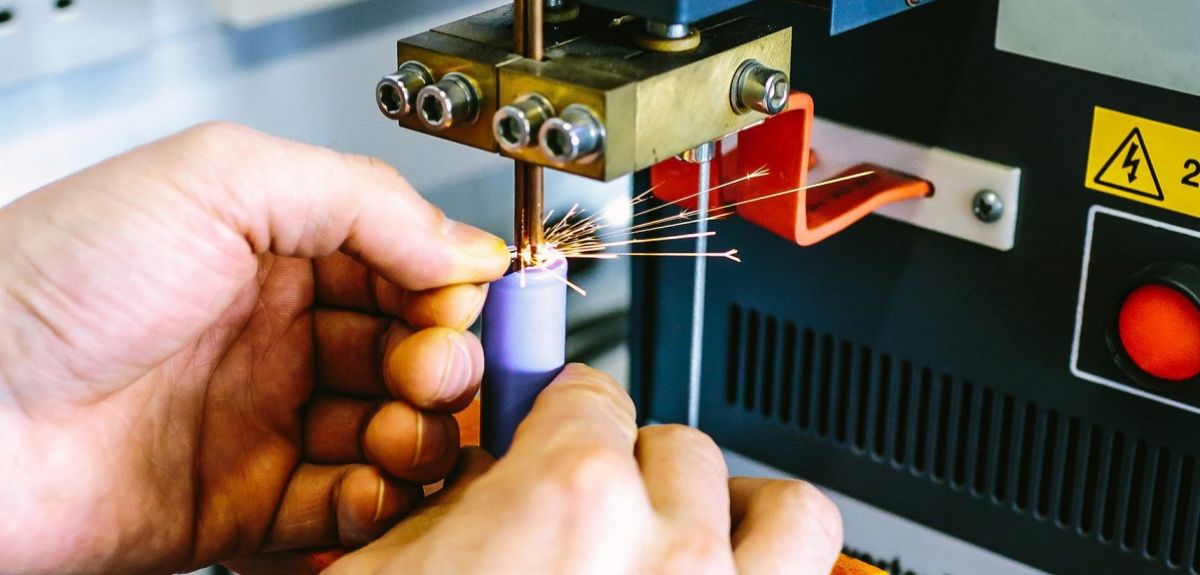
To tackle the climate crisis and accelerate the transition to renewable energy sources, we urgently need to build more energy storage. As part of Energy Superhub Oxford, the University of Oxford’s Department of Engineering Science is developing an advanced technical model which will give unprecedented insight into battery performance. Jorn Reniers, Postdoctoral Researcher at the Department talks black boxes, computational challenges and how engineers can help address societal problems.
Tell us about the University’s Department of Engineering Science
The University of Oxford’s Department of Engineering Science is world leading and covers the entire spectrum of engineering disciplines, from traditional engineering like turbines or heat flow to cutting-edge topics like machine learning. Across the university the departments are very interconnected which is great because you always have an eye on the bigger picture you’re trying to solve, rather than looking at a technical problem in isolation.
What insight and expertise does it bring?
Our research group at the Department is the Battery Intelligence Lab, and as you can infer from the name, we research batteries and specifically lithium-ion batteries. We understand how they work, their efficiencies in terms of thermal behaviour, degradation and all these other things. That’s important because these details are really hidden and the investors and developers building and operating these batteries don’t necessarily have that level of insight into how high-level decisions will impact individual cells.
What is your role within Energy Superhub Oxford?
My role within ESO is to create a digital twin of the grid battery. This is basically a model of the physical asset which can simulate every individual component inside the battery and how they work together. A lot of physical assets are black boxes. When you buy an asset the manufacturer provides a data sheet on how you should use it and what you should expect from it. For instance, a battery will tell you how often it can be charged or discharged at certain power levels, and what efficiencies and behaviour you can expect. It’s a very high-level overview when what you actually have is a field full of containers of tens of thousands of cells.
The digital twin allows you to understand how everything works together, and more importantly to test different scenarios. If you have an asset which is worth tens of millions of pounds, you don’t want to do something in the real world unless you’re certain it will work, because it’s quite expensive if you make a mistake.
What challenges have you encountered developing this model?
The main challenge has been a computational challenge because the battery contains hundreds of thousands of components and you want to simulate them all individually. Simulating a 1 MWh battery would take a couple of hours so it’s always a challenge to make sure that the model is both efficient and accurate. You don’t want to ignore some important physics or other interactions while keeping everything computationally under control.
How will the model interface with the hybrid battery when it goes live?
We’re aiming to have API access where we can pull live operating data from the database. Our model will interpolate between these datapoints and simulate things for which we don’t have datapoints. So, it will try and estimate, “OK. Where is the real battery currently at,” and “OK, now we think this would happen,” and when the next datapoint comes in a minute later it will compare and see how accurate its prediction was. It will keep doing this until it can confidently predict what is happening between datapoints.
How can the model support energy storage growth globally?
I think the biggest issue is uncertainty, because this is still a relatively new technology and it is being improved year-on-year. And uncertainty always reduces the investment you get because it reduces the business case. Our model aims to provide a reliable tool which can give investors more confidence and improve the business case, and in turn unlock more investment into grid-connected batteries.
What do you find most exciting about working on Energy Superhub Oxford?
Our role as engineers in society is to take new discoveries from science and bridge the gap between what works in the lab and what works for people in the real world in an economic setting. What I find exciting about Energy Superhub Oxford is the sheer scale of the battery. We know lithium-ion batteries work for a phone, and the project is trying to see, “Well, can it actually scale up from a phone to containers, to a field full of containers and so on?” And the collaboration between industry and academia means we can access data about how these batteries will be used in the real world and transfer learnings from the lab to the real world.
What changes are you hoping to see in the energy sector over the next decade?
I would like to see an increased contribution of renewable energy sources, whether they are onshore of offshore wind, PV or some other novel type of renewable energy source. I think that’s a change that is happening, but if we want to have more of these renewable energy sources we need flexibility to help manage their intermittency.
Batteries are one of the options, but there are other options too, such as smart charging of electric vehicles and so on. What I really hope is that this flexibility is not delivered with traditional solutions such as gas plants or coal plants because that would negate a lot of the benefits from the increased amount of renewable energy sources.
How do you think Energy Superhub Oxford can help to deliver these changes?
My background is in power system engineering, and in power system engineering things are always big. You always talk about gigawatts, which is a thousand megawatts, which is a million kilowatts. If you see a transformer it’s the size of a room, and if you then come and say, “Oh, we need storage,” the problem there is a battery cell is really small. It can charge your phone, but we would need billions of batteries to solve the problem we have.
But Energy Superub Oxford is saying, “Look, you can take this small technology and scale it up to solve a real problem.” This applies equally to the rapid electric vehicle charging and the heat pumps, as well as the battery. These are all relatively small technologies on the scale of the power system, but we are showing how multiple of these small things can be combined to have a meaningful impact to help solve the problem we face.
Do you see any positives coming out of this period of lockdown for the energy transition?
I think lockdown has helped people to realise they don’t need to drive everywhere, maybe they can work from home on some days, perhaps not every day, but you start to think about things differently. I think that reduction in transport is really a big advantage in terms of the long term changes, both technical changes, but also the psychological and behaviour changes that we really need for people to adapt and make sure we can be more sustainable in the future.
This post was kindly reproduced with the permission of Energy Oxford Superhub.
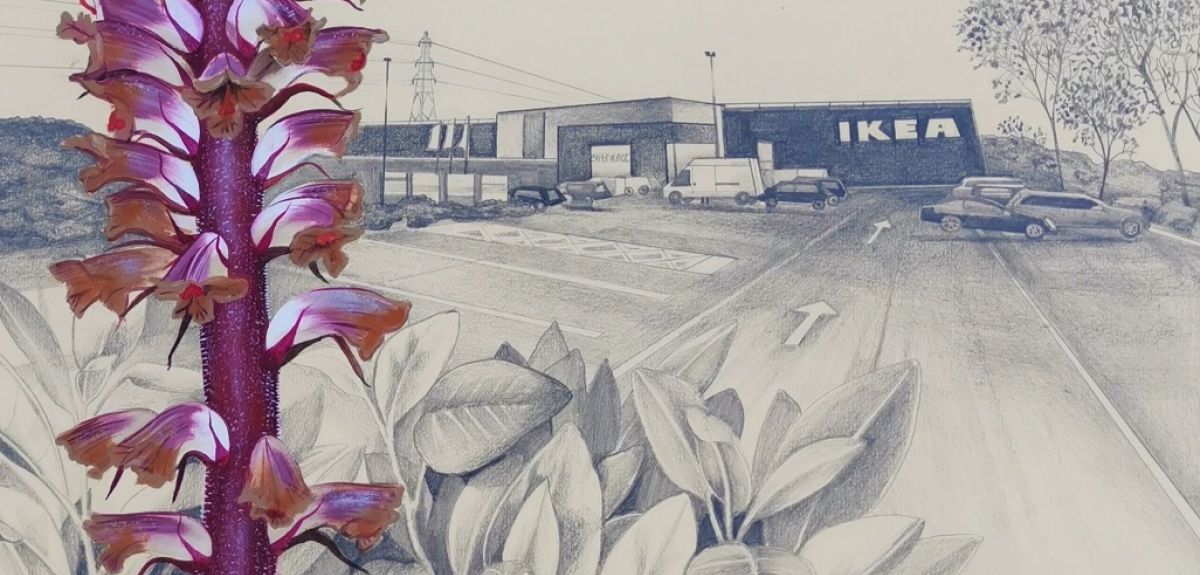
Scientists Dr Chris Thorogood at the University of Oxford Botanic Garden, and Dr Fred Rumsey at London’s Natural History Museum have just described a new form of a strange parasitic ‘vampire’ plant known as ‘common broomrape’.
Broomrapes are sap-sucking ‘plant pilferers’ that steal their food from the roots of other plants, their so-called ‘hosts’. In this case, the new variety they name Orobanche minor var. heliophila has a peculiar affinity for Ikea and Tesco carparks!
 The newly described variety of parasitic 'vampire plant'
The sinister looking ‘vampire’ has no leaves, roots or green pigments of its own, and comprises a peculiar purplish flowering spike that juts out of the ground.
The reason the newly discovered variety has an affinity for this somewhat surprising habitat is linked to its penchant for a particular shrub called Brachyglottis × jubar 'Sunshine' that is often planted in shop carparks – and the occasional service station too – enabling the parasite the thrive there.
It also grows in amenity plantings in parks, gardens and along sea fronts. The botanists named the new variety after its host, heliophila, meaning ‘sun-loving’. Although the plant is a parasite, it poses no threat to plants it feeds on and is not dangerous or harmful.
The scientists examined a range of features in great detail, for example the anatomy of the roots, floral parts, colour, ability to regenerate (perennation) – and its ability to grow on different host plants.
Parasitic plants, like broomrapes, have aroused curiosity for centuries yet they remain one of the most poorly understood groups of all the flowering plants.
Together, these data indicate that the newly described variety is a race that is distinct from other forms of the plant that are well known to science. The new variety occurs throughout Britain, especially in the south and southeast, but it is unknown when it evolved because its host (Brachyglottis) was introduced to the UK after 1910 from New Zealand. It is possible that a shift in host has taken place from native vegetation to the cultivated shrub, following the widespread introduction of Brachyglottis for amenity planting in recent decades.
Parasitic plants, like broomrapes, have aroused curiosity for centuries yet they remain one of the most poorly understood groups of all the flowering plants. Indeed much of their evolutionary biology and life history remains a mystery.
It goes to show that you don’t have to go to a remote tract of rainforest to discover new plant life – new species can be hiding in plain sight
There are over 4,000 species of parasitic plant and they occur in all major ecosystems from tropical rainforests to arctic tundra, and new species are discovered every year. Because they derive nutrition from their hosts, some have lost the features typical of most plants, for example green leaves, stems and even roots. Botanists previously relied on such features to classify plants, and so the evolutionary relationships among these parasites have long remained unclear.
The scientists’ latest research featured here shows that broomrapes appear to be forming new species by switching hosts, but the process has gone largely unnoticed because they look so similar. It goes to show that you don’t have to go to a remote tract of rainforest to discover new plant life – new species can be hiding in plain sight. Next time you do the shopping or refill the car, look carefully at the shrubbery and you may well spot a ‘vegetable vampire’ at your feet…
Dr Chris Thorogood is Deputy Director and Head of Science for Oxford Botanic Garden and Arboretum and lecturer at the Department of Plant Sciences. His research focuses on speciation (the formation of species) in tropical pitcher plants and parasitic plants; the floral diversity of biodiversity hotspots such as the Mediterranean Basin and Japan; and biometic applications in plants. He is a fellow of Linacre College.
The new variety was published in the journal British and Irish Botany, and the original article can be seen here: https://britishandirishbotany.org/index.php/bib/article/view/54
Follow Chris on Twitter @thorogoodchris1 and Instagram @illustratingbotanist.
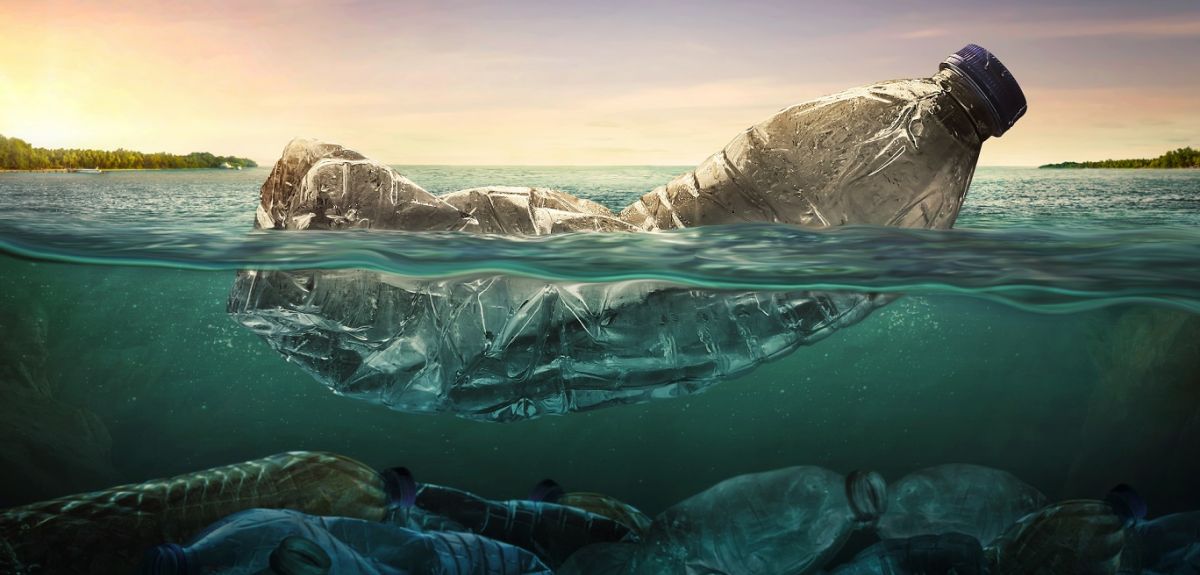
By Alexis McGivern, Environmental Change and Management MPhil at the Environmental Change Institute
I have an obsession that I’ve given up trying to beat: I’m fascinated by trash. I started low-waste and plastic-free living in 2013 with a month-long challenge and have since oriented my career and studies around the captivating problem of over-consumption. In 2015, I started working on plastic pollution issues at the International Union for Conservation of Nature (IUCN) in a position funded by the Gallifrey Foundation, a Swiss-based philanthropic foundation.
My current research at Environmental Change Institute, University of Oxford, looks at the environmental justice implications of waste management interventions, examining the relationship between social deprivation and the location of waste incinerators in the UK.
Plastic pollution has captured public attention like few other environmental crises. Those of us in this field pre-2016 saw the ‘Blue Planet Effect’ happen in real-time: at IUCN, we went from trying to convince funders that plastic pollution was a problem worth caring about to having our cup runneth over with funders who wanted to make a splash on the current hottest environmental problem.
Unless we can rapidly halt plastic production, we need to rapidly transition towards a plastic economy that is circular.
In 2018, I represented IUCN in negotiations at the UN for an international treaty on plastics and saw firsthand how complicated it is to reach meaningful consensus between industry, governments and environmental NGOs. Despite these difficulties, there are a huge number of international, national and corporate commitments that all work towards the goal of reducing the amount of plastic leaking into our environment. But how effective are these lofty ambitions at managing this ever-growing problem?
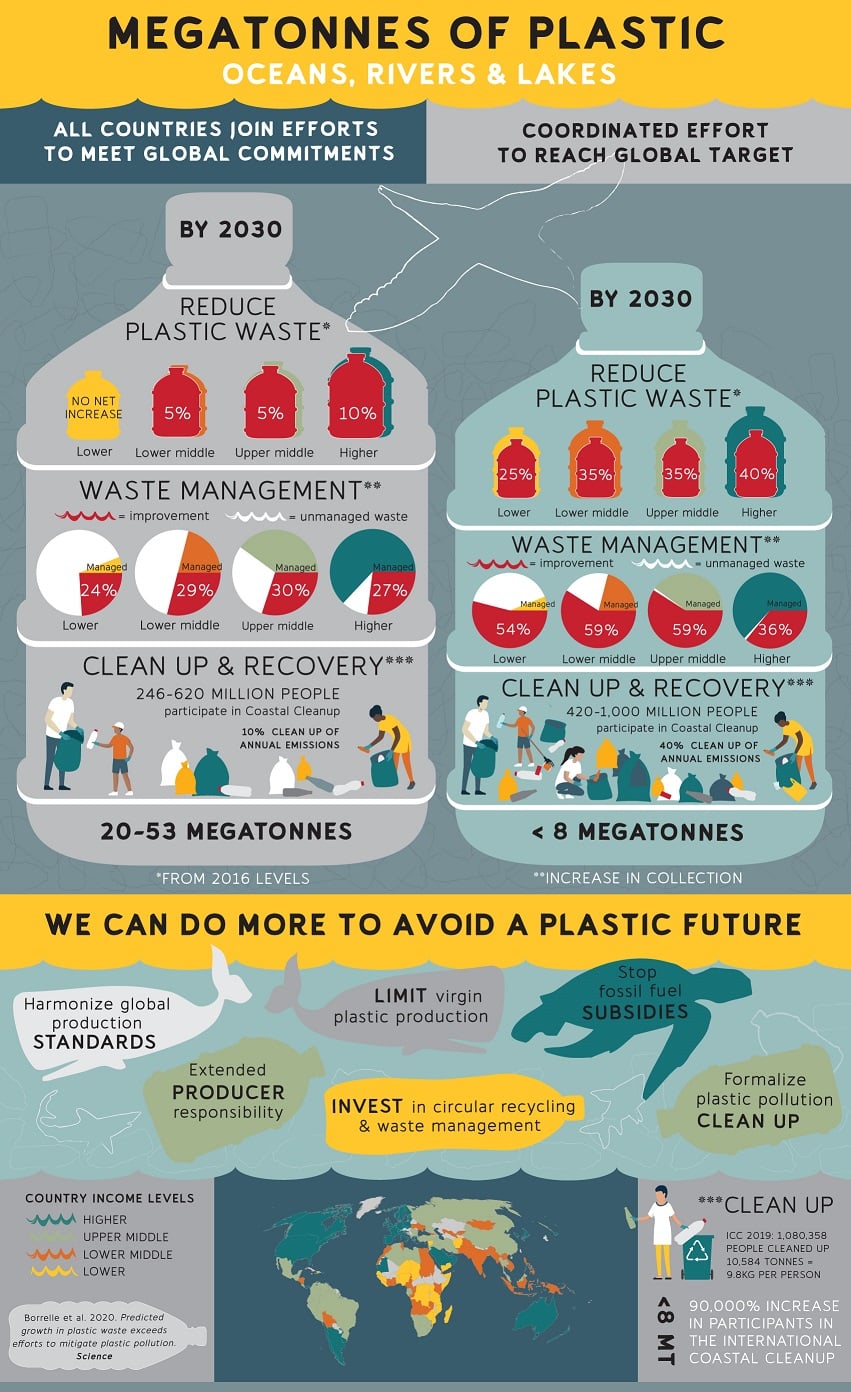 The Plastic Pollution Emissions Working Group (PPEG) is a group of experts who wanted to pin down how effective different interventions actually are at reducing the amount of plastic into aquatic ecosystems. We knew we wanted to pin down how much plastic was currently leaking into all aquatic ecosystems: the oft-quoted Jambeck et al (2015) figure of between 8 -12 million metric tonnes (Mt) annually did not include lakes and rivers, and also needed to reflect 2020 numbers of production and consumption. We found current annual leakage to be between 24-35 million metric tonnes, which is more than three times the number currently used to inform policy responses (Jambeck et al. 2015). It was an incredible experience to work with authors from that seminal study (Jenna Jambeck and Kara Lavender Law) and to be a part of generating new insights for academics and practitioners in this space.
We wrote down a laundry list of policy interventions, from bag bans to an internationally harmonised recycling standard, and got to work quantifying their impact at reducing the mammoth number leaking into our aquatic ecosystems each year
Using a cross section of interventions across three categories (reductions in plastic waste generation, waste management interventions and recovery interventions), we compared multiple reduction scenarios to a business as usual scenario. We wrote down a laundry list of policy interventions, from bag bans to an internationally harmonised recycling standard, and got to work quantifying their impact at reducing the mammoth number leaking into our aquatic ecosystems each year.
We found that even under current ambitious global commitments, between 20-53 million metric tonnes of plastic will enter aquatic ecosystems annually by 2030. That’s the same approximate weight as up to one million ‘Hercules’ airplanes!
This demonstrates that our current commitments are not enough to deal with increasing production of virgin plastics, rising consumption rates, current inadequate waste management efforts, and population growth.
Another scenario we generated sought to keep annual plastic emissions below 8 million metric tonnes, the estimated global emissions in 2010 to the oceans, and the number that prompted a wave of action and commitments on plastic pollution.
We found that the global community would need to make profound, systemic changes to achieve this target:
- Almost halving the amount of plastic waste going to our trash cans by 2030;
- Increasing our waste management capacity by an additional 36-59% each year (in low-income countries, the capacity increase would need to be tenfold);
- And capturing at least 40% of plastic leakage through beach, river and lake clean-ups every year.
What does all of this tell us? There is no time to waste. Unless we can rapidly halt plastic production, we need to rapidly transition towards a plastic economy that is circular. End-of-life plastic products must be valued in order to avoid becoming waste, and clean-up strategies must expand beyond grassroots efforts into systematised efforts in order to catch inevitable leakage. We all must come together to transform the plastics economy and avoid these troubling futures.
Current Environmental Change and Management MPhil Alexis McGivern is a co-author on an article published in Science that quantifies the amount of plastic pollution in lakes, rivers and the oceans by 2030. See 'Predicted growth in plastic waste exceeds efforts to mitigate plastic pollution' in Science.
The study demonstrates that plastic waste production is rapidly outpacing the ability to manage it. Even under the most ambitious current commitments, there will still be up to 53 million metric tonnes of plastic leaking into aquatic environments every year.
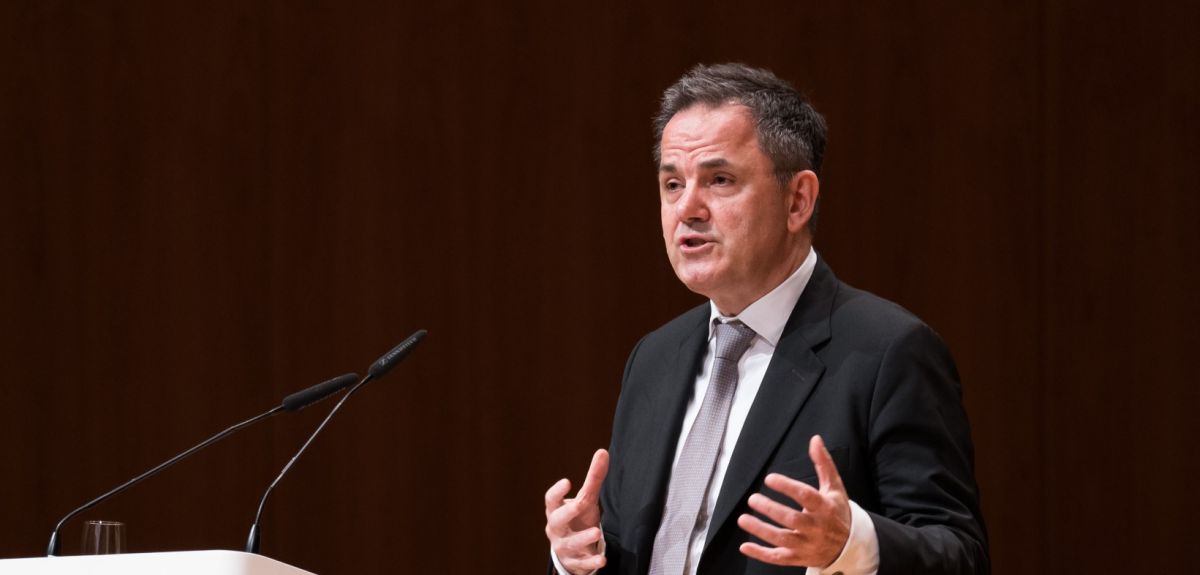
Professor John Tasioulas has been appointed as the first Director of Oxford University’s Institute for Ethics in AI. You can read about his appointment here. Ahead of starting his new role in October, he sat down with us to explain why he is excited about the job and what he hopes the Institute will achieve.
Professor Tasioulas is currently the inaugural Chair of Politics, Philosophy and Law and Director of the Yeoh Tiong Lay Centre for Politics, Philosophy & Law at King’s College London. He has strong links to Oxford, having studied as a Rhodes Scholar, completed a doctorate in philosophy and taught philosophy from 1998-2010. He is also a Distinguished Research Fellow of the Oxford Uehiro Centre and Emeritus Fellow of Corpus Christi College, Oxford. He has held visiting appointments at the Australian National University, Harvard University, the University of Chicago, the University of Notre Dame, and the University of Melbourne, and acted as a consultant on human rights to the World Bank.
What role do you envision for the Institute?
'My aim is for the Institute to bring the highest standards of academic rigour to the discussion of AI ethics. The Institute is strongly embedded in philosophy and I do not know of any other centre along those lines. At Oxford, we have the largest Philosophy department in the English-speaking world and it has historically been a very powerful presence in the discipline. We will also draw on other disciplines like literature, medicine, history, music, law, and computer science. This is a radical attempt to bridge the divide between science and humanities in this area and Oxford is uniquely placed to pull it off.'
Why Oxford a good place for the Institute?
'Oxford is an outstanding environment for the Institute not only because of its great academic strengths generally, and especially in philosophy, but also because in Oxford the study of philosophy at undergraduate level has always been pursued in tandem with other subjects, in joint degrees such as PPE, Physics and Philosophy, and Computer Science and Philosophy. The Institute can reap the benefits of this long historical commitment to the idea that the study of philosophy is enriched by other subjects, and vice versa. Add to this the interdisciplinary connections fostered by the collegiate system, and also the high regard in which Oxford held throughout the world, and I think we have the ideal setting for ambitious interdisciplinary project of this kind.'
Why is AI ethics important?
'AI has a transformative potential for many parts of life, from medicine to law to democracy. It raises deep ethical questions – about matters such as privacy, discrimination, and the place of automated decision-making in a fulfilling human life – that we inevitably have to confront both as individuals and societies. I do not want AI ethics to be seen as a narrow specialism, but to become something that anyone seriously concerned with the major challenges confronting humanity has to address. AI ethics is not an optional extra or a luxury, it is absolutely necessary if AI is to advance human flourishing and social justice.
'Given that AI is here to stay, we must raise the level of debate around AI ethics and feed into the wider democratic process among citizens and legislators. AI regulation and policy are ultimately matters for democratic decision-making, but the quality of the deliberative process is enhanced by the arguments and insights of experts working on questions of AI ethics.'
How does COVID-19 make you think about AI ethics and the Institute?
'COVID-19 demonstrates that it is never going to be enough just to "follow the science’. There are always value judgements that have to be made, about things like the distribution of risk across society and tradeoffs between prosperity and health. Science can tell us the consequences of our actions but it does not tell us which goals we should pursue or what sacrifices are justified to achieve them. In so far as we are going to have AI as part of the technological solution to societal challenges, we inevitably have to address the ethical questions too. AI ethics is a way to get clearer about the value judgements involved and to encourage a more rigorous and inclusive debate.'
What are your priorities for the Institute?
'There are many things I want to get done. I want to embed within Oxford the idea of AI ethics as an important, high quality area of research and discussion that is open to all interested parties. Not everyone has it at the forefront of their minds, but I want people to become aware that there is a lively and rigorous discussion going on about the very pressing questions it raises, one which bears on the topics they are already interested, such as health care, climate change, migration, and so on. If we can secure this high-quality culture of research and debate, it will be the platform on which we can achieve everything else. Vital to all this is getting serious intellectual buy-in from the broader Oxford community.'
At King’s, you led and developed a centre that was also new when you became the Director. What lessons can you bring from that experience?
'The first challenge is getting people from different disciplines to talk to each other in a productive way. This is not easy because the meanings of words, and the methods adopted, can differ significantly from one discipline to another, so people can talk past each other. And then there is just the inertia of staying in your intellectual comfort zone. We need to generate an environment of goodwill in which people feel comfortable talking about things with those from other disciplines and to learn from each other.
'Another important challenge is that this discussion must not be confined to academics. It is important that whatever we do must also be presented in a way that is accessible to a broader community, whether that is legislators, scientists or ordinary citizens. However profound or sophisticated our research is, we must convey it in a way that can be engaged with by a non-specialist community. Otherwise we will not be fulfilling our task. I want us to hold events where the general public feels very free to come along, engage and make points in the discussions.'
What aims do you have for teaching AI ethics in Oxford?
'It looks like AI will become an inescapable feature of ordinary human life. In so far as an undergraduate degree equips students to cope with life in a critical and intelligent way, it would seem natural that the ethical dimension of AI is one of the aspects of life they should be able to engage with in the course of their degrees. AI ethics can be seen through the lens of any given discipline, whether it is classics or medicine or something else.'
What is your aim for the field of AI ethics as a whole?
'Bioethics is a good example of the role of ethics in tackling major issues facing society, but it is also a cautionary tale. Bioethics has truly outstanding figures with a strong philosophical background who drew on deeper expertise in moral and political philosophy in order to advance that discipline. But at the moment, a lot of what you hear about AI ethics lacks this kind of depth, too much is a rehash of the language of corporate governance, or even just soundbites and buzzwords. A sustainable AI ethics needs to be grounded in something deeper and broader, and that must include philosophy and the humanities more generally. The Institute can serve to channel this intellectual rigour and clarity into the sphere of public debate and decision making.
'In the past, philosophers have played an active role in government reports on matters such as censorship, IVF or gambling, but no philosopher was involved in the recent House of Lords report on AI, for example. This is unfortunate and can lead to an unnecessarily limited perspective. Often what happens is people are tempted to use the law as a framework for evaluating various options in AI. Law is, of course, extremely important as a tool of regulation. But ethics goes deeper than law, because we can always ask whether existing law is acceptable, and because we need more than legal rules in order to live good lives.'
Finally, how do you feel about "returning" to Oxford?
'Although this is a new and exciting challenge, it’s also a homecoming because I have always regarded Oxford as my intellectual home. I have such great admiration for Oxford because it manages to combine a commitment to the highest intellectual standards with a broadly democratic academic culture. In that sense, too, I think Oxford is unique in the world and this combination equips us well to pursue our aims for the Institute.'
You can find more information on the Institute here.
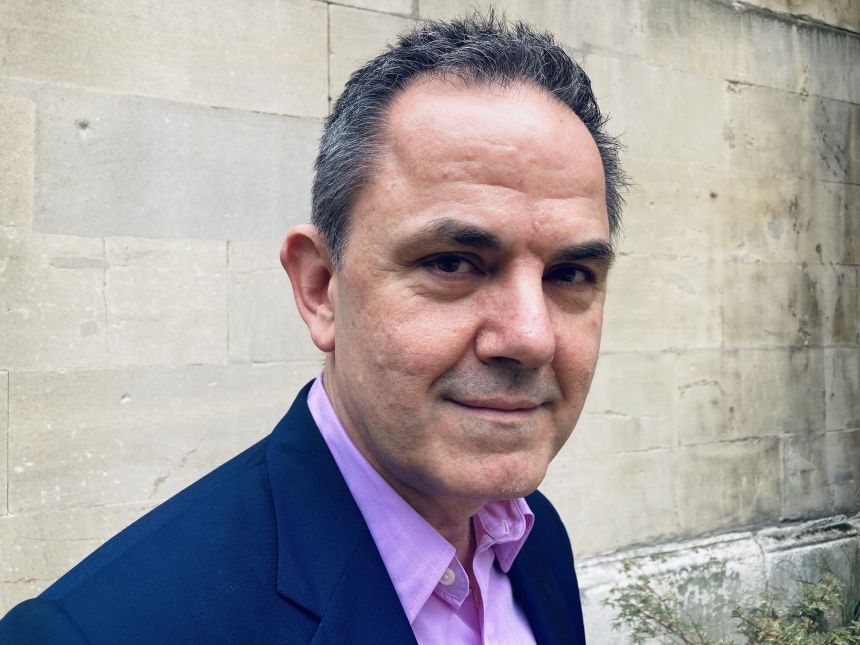 Professor John Tasioulas, the inaugural Director of the Institute for Ethics in AI
This year’s winner of the Premier League Fantasy Football competition and Oxford Mathematician, Joshua Bull, talks to Oxford Science blog about strategy and how maths can help us understand the infinite complexity of the world – from football to cancer.
 Joshua Bull
I’ve had a team for a few years. We have a family league, called The Bullfight, because of our name.
Did you apply mathematics to your fantasy football team?
I had some strategies that I was trying to follow, but I don’t know if they’re mathematically the right strategies. I’ve since done some analysis, and although I didn’t use maths to get to these conclusions, I’m asking myself if I can use maths to show whether they’re the right conclusions or not? Can I improve on my strategy?
Was your instinct underpinned by mathematical knowledge?
There’s a lot of strategic thinking in the game which mathematicians tend to be quite strong at; the planning ahead with a view to maximising points - not just this week but for the next few weeks. Magnus Carlsen, who’s the world chess champion, was top of the fantasy league at one point this season. He finished within the top 10. People at the time were saying – this is someone who’s famous for thinking strategically, and then when I started doing well they said ‘Hang on, there’s an Oxford mathematician also doing well’, so they tried to make those links. There’s a lot in strategic thinking in it.
The talk that I’m giving on Tuesday 8 September is linking my day to day work to this win, where I try to use maths to try to tackle complex problems. The way that we do that is to break the complex problems down into smaller, simpler examples. By making those simplifications, you try to understand how one, specific thing might impact that big system. You can apply the exact same logic to fantasy football. So, you’ve got all of this data out there and you want to know how making your team choice is going to impact on your points. That’s the kind of thing that you can quite happily model mathematically. These are the things I was thinking about, even if I wasn’t writing down equations.
Are people writing algorithms for fantasy football teams?
Some people certainly do. There’s a lot of teams where people will train a neural network on the data of previous seasons and try to predict the best team. Some of those are more successful than others. But it’s not the case that it’s a game that a computer is better at than a person.
All the teams play once and then you can make transfers. You can only make one or two changes per week. If you want to make any more than that it starts costing you points – you have to pay a forfeit. So, there’s a real optimisation problem where there are players you might want to bring in, but it’s not necessarily easy to say ‘I want them in my team, so I’ll get them in my team.’
Everybody knows at the start of the year which players are going to get most points, but as a result they’re priced accordingly. So, you have the question, do I have a few very expensive people but have to make compromises for the rest of my team? Or do I have less of those expensive players and have a more balanced team? In itself – that’s a classic maths problem.
How much time did you spend on the league?
Not a massive amount. I did get into a routine – particularly as I started to do well – checking in with a very active online community. I’d spend probably 10-15 minutes a night checking what I’d missed, and then trying to take all of that information in and make the decision about what transfer to make over the course of the end of one week and start of the next.
Do you think there’s anything that transfers to the real world that might be helpful?
The skills that I was using, they’re not directly relevant for managers, but I think that maths itself is very relevant for football managers. We’re starting to see much more focus being put on looking mathematically at how you can improve your football team. The things that footballers traditionally think are important for scoring more goals and winning games are not necessarily the things that are statistically more important. For example – when should you take a shot as a footballer to give you the highest probability of scoring, from certain positions on the field? The best option statistically speaking isn’t necessarily the one that gets the crowd excited! It’s the same in fantasy football as well. You can use maths to show you an improved strategy to improve your odds, but you still need to take those risky shots that might pay off.
Could you tell me about your own research – what do you look at?
At the highest level, what I’m looking at is how we can improve cancer research using maths. So that’s a very broad interest. I focus on the locations of immune cells within tumours. It correlates to the patient prognosis and has all sorts of effects on treatments – particularly immunotherapies. I collaborate with groups in the Nuffield Department of Medicine and in clinical research as well – it’s very much a two-way street.
What got you interested in this area of research?
It’s a very long story, but ultimately, when I was doing my Masters, I actually got a brain tumour – it was benign and it was OK in the end but it was on my pituitary gland. So, I basically had no working memory for a few months and I had to drop out of my Masters – this was at Durham. They very kindly said: ‘if you get your memory back, come back next year and go again.’ I saw a course on mathematical biology including tumour modelling. I’d never heard of that before but thought I’d give it a go. I ended up applying here at Oxford for the PhD.
You recovered and your memory came back?
It did indeed. I didn’t notice anything at the time but everyone around me was saying – ‘Josh, you really need to go and talk to a doctor, you can’t remember anything.’ I would have conversations with my friends and say ‘What day is it today?’ and a few moments later I’d ask again. People thought I was joking at first and then realised I wasn’t and it was serious. Luckily there was a drug treatment that was able to shrink that particular tumour. From my point of view, it was like a miracle cure – within a few months I was back to normal. It was absolutely amazing. It really got me interested in applying maths to the real world. I never thought that people were doing it in biology, in cancer research. It does feel really good to do things which one day might have an impact on patients. I don’t think we’re there yet, but I think in 10-20 years’ time it will be much more routine that cancer treatment will be personalised based on mathematical predictions. I believe that’s the direction we’re moving in.
Are you committed to this area of research now?
One of the wonderful things about maths is that you can apply similar techniques to all sorts of different fields. I definitely want to keep working in cancer research, but, for example, the techniques I use can be applied to other problems like looking at immune cells in Covid. So, from a biological point of view it’s a completely different problem, but we can apply the same types of mathematics and hopefully understand a completely different system. I love that idea that, with maths, your main focus can be on tumours, but that you can basically do anything else. The world of biology is so big, there are so many things to look at. If you can describe something mathematically, you can understand it better with mathematical models. It’s true for cancer, it’s true for fantasy football.
Watch Joshua Bull deliver his talk ‘Can maths tell us how to win at Fantasy Football?’.
- ‹ previous
- 38 of 253
- next ›
 What Louise Thompson’s campaign tells us about the national maternity crisis
 Celebrating 25 Years of Clarendon
  Learning for peace: global governance education at Oxford
  What US intervention could mean for displaced Venezuelans
  Setting the agenda for the next century of quantum
 10 years on: The Oxford learning centre making an impact
 Mapping the Moon: the world’s first lunar atlas goes digital
  Oxford and The Brilliant Club: inspiring the next generation of scholars
 New course launched for the next generation of creative translators
 The art of translation – raising the profile of languages in schools