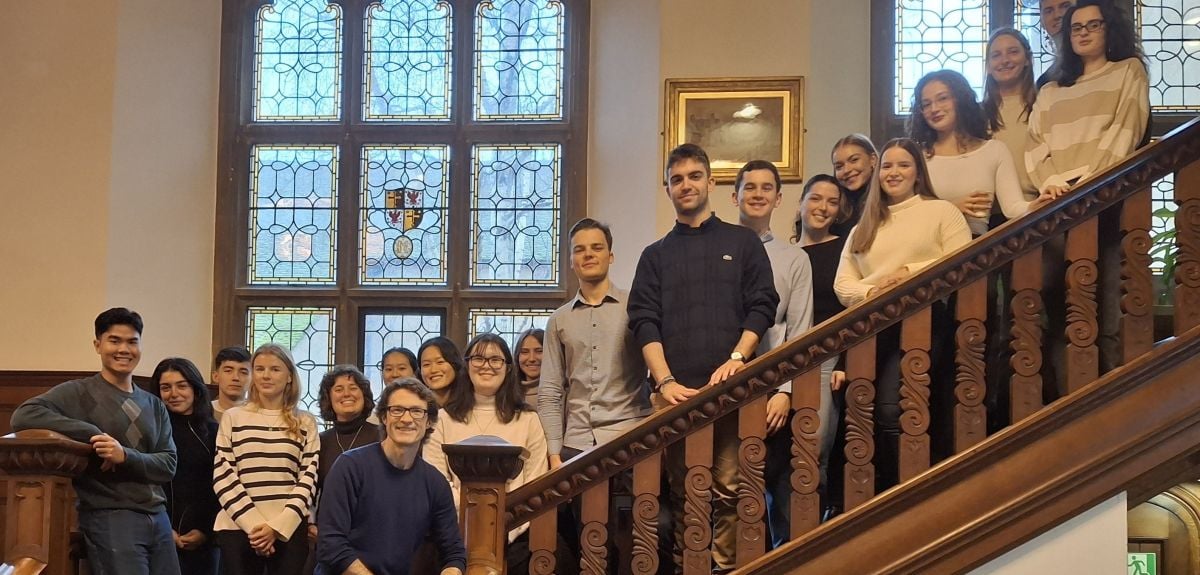
Learning for peace: global governance education at Oxford
In Oxford’s Department of International Development (ODID), graduate students are grappling with pressing questions in the field of global governance at a time of growing international uncertainty and geopolitical complexity.
Associate Professor John Gledhill, originally from Australia, has been with ODID since 2011. He teaches on the MSc in Global Governance and Diplomacy, a nine-month master’s degree that examines questions of governance at international, transnational, state and domestic levels.
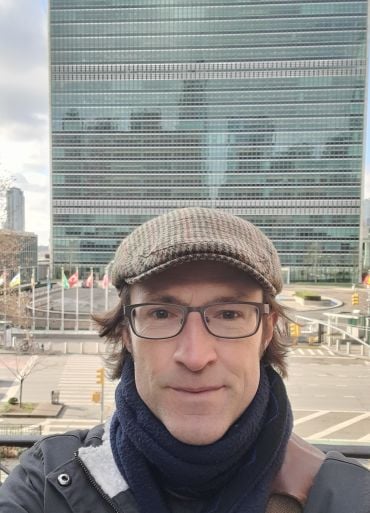 Professor Gledhill in front of the UN headquarters, New York, during a fieldwork research trip
Each year, up to 10 students take Professor Gledhill’s course, 'Peacebuilding and Statebuilding'. The seminars are deliberately small and discussion-driven, he explains, allowing students to bring their own experiences, insights and professional backgrounds directly into the classroom.
The course attracts students from around the world and from a wide range of personal and professional backgrounds. Some have lived in conflict-affected regions or have worked in the UN system or for NGOs, while others approach the subject primarily from an academic perspective.
The resulting diversity of viewpoints, says Professor Gledhill, is one of the privileges of teaching at Oxford and it fundamentally shapes the depth and quality of discussion. ‘I am a student of the students as much as they are of me – they learn from each other and draw on each other’s expertise.’
Current DPhil student, Rachel Nguyen-Morrow, has returned to Oxford after completing the MSc in Global Governance and Diplomacy in 2014 and then working for NGOs in Jordan and Afghanistan, followed by a role at the UAE Ministry of Foreign Affairs.
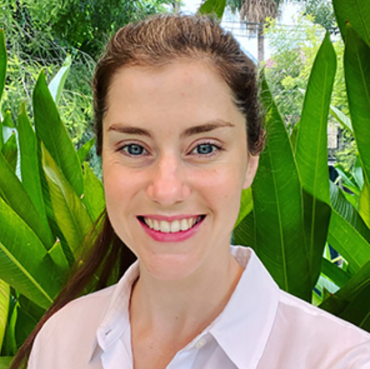 Rachel Nguyen-Morrow has returned to Oxford after several years working in the field
Reflecting on her time as a master’s student in ODID, she agrees that the depth of analysis and thinking of the cohort makes Oxford stand out. ‘It was so intense’, she says, ‘and it opened my world so much. A lot of people say Oxford changes how you think.’
Grounded in the post-Cold War experience of international peacebuilding, the course examines the evolution of international support for peacebuilding – from managing conflict during the Cold War, through fostering ‘positive peace’ by rebuilding state institutions and creating economic opportunities under the auspices of multidimensional peacekeeping in the 1990s and 2000s, and on to recent trends in an increasingly fragmented international peacebuilding landscape.
While the course structure has remained largely consistent over time, Professor Gledhill notes that in recent years the nature of classroom discussions has evolved in response to a world that has seen an increasing number of international and internationalised conflicts.
‘Peacebuilding and international contributions to peacebuilding are at a point of inflection,’ says Professor Gledhill, pointing out that there have been no new UN peacekeeping missions since 2014. As established, UN-led models of peacekeeping decline, and actors
such as Qatar and Turkey become more active in brokering peace, new contexts are reshaping the field.
Education is about critical thinking and understanding other people’s perspectives...If education can build empathy, it can contribute to sustaining peace.
John Gledhill, Associate Professor in Oxford's Department of International Development
‘Peacebuilding is phenomenally complex. There are no clear answers,’ Professor Gledhill says; and this uncertainty is central to the course. ‘Ultimately, the aim is to equip students with a way of thinking — a framework to ask critical questions, think about alternative perspectives, and recognise the potential consequences of decision-making — that they can carry into whatever roles they take on next.’
Students are encouraged to consider dilemmas such as the timing of elections in post-conflict contexts and management of the distribution of humanitarian aid in insecure environments, as well as broader questions about power and the international community’s role in peacebuilding – and whether it should have one at all.
The opportunity to engage with interdisciplinary research tackling complex issues, and to think more deeply about questions that emerged during her work, was a key reason behind Rachel’s decision to return to academic study and ODID. Her doctoral research examines how aid can exacerbate inequalities between groups, increasing the risk of conflict – an issue close to her heart.
‘Keeping up to date on the research is an important part of continual learning in the field,’ says Rachel. ‘I want to read and understand the research and effectively convert that into policy and practice in my next role.’
For Professor Gledhill, the connection between education and peacebuilding is fundamental. ‘Education is about critical thinking and understanding other people’s perspectives. Ultimately, that is also what peacebuilding is about. If education can build empathy, it can contribute to sustaining peace.’
Find out more about the work of the Department of International Development (ODID) here.
 25-year Oxford study finds the effects of conflict last for generations
 What Louise Thompson’s campaign tells us about the national maternity crisis
 Celebrating 25 Years of Clarendon
  Learning for peace: global governance education at Oxford
  What US intervention could mean for displaced Venezuelans
  Setting the agenda for the next century of quantum
 10 years on: The Oxford learning centre making an impact
 Mapping the Moon: the world’s first lunar atlas goes digital
  Oxford and The Brilliant Club: inspiring the next generation of scholars
 New course launched for the next generation of creative translators