
MPhil in Egyptology
Offers advanced study in ancient Egyptian languages, culture and history, with a strong emphasis on primary texts in context.
Full time
- Upcoming application deadline for 2027-28 entry:
- 12:00 midday UK time on Tuesday 5 January 2027
- Expected length
- 21 months
- Expected start date
- October 2027
- English language level
- Higher level required
Application deadlines
Final application deadline for entry in 2027-28
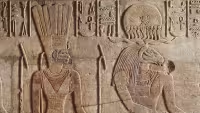
A close up of Taharqa’s shrine in the Ashmolean Museum, Oxford

About the course
The MPhil functions as a course in its own right, but it is also designed to take students to the stage where they can embark on doctoral research in Egyptology. The course allows students to read and analyse a range of Egyptian texts, to develop their critical analysis of texts as cultural artefacts, and to specialise in chosen aspects of Egyptian culture. The focus of the course is on textual culture, and there are two parallel pathways: Syllabus A for students with significant previous training in Egyptology; and Syllabus B for graduates studying Egyptology for the first time.
Course structure
The course has two distinct pathways through the curriculum, Syllabus A and Syllabus B. In both cases, syllabuses are tailored to the interests of the students in each year as far as planned teaching cycles and supervising specialism allows; the individually tailored elements of the course are the dissertation and extended essays. The syllabuses can include an archaeological and/or material-culture element where teaching allows. You will have the opportunity to develop your skills in working with Egyptian artefacts from the extensive and diverse collections of the Ashmolean Museum.
The number of students accepted for the course each year is very small. This ensures that teaching can be tailored to the research interests and training requirements of the year. Teaching is also very much focused around small groups and one-on-one tutorials and supervisions for which small cohorts are vital. Some classes may be shared with undergraduates and graduates on other degrees where appropriate for your research training needs. Depending on options, there are usually on average six to nine contact hours a week.
During the teaching term, Egyptology and Ancient Near Eastern Studies holds a regular research seminar with invited speakers. These are usually on Tuesday afternoons and you are expected to attend regardless of the specialism of the speaker. All seminars offer perspectives on method and analysis which can be useful for your own project development.
Pathway selection
You will choose one of two distinct pathways through the curriculum, and in your application you should specify which Syllabus you are applying for.
Core components
You will take a core course and write a dissertation.
Option modules
Both Syllabus A and B students will choose from a list of option courses.
Course details
Entry requirements
For entry in 2027-28