Features
Oxford feels different over the summer. The High Street is devoid of undergraduates streaming in and out of lectures. They are replaced by tourists who are in much less of a rush.
The pace of academic life changes, too. Although graduate teaching continues, academics have more time to focus on their research or write their next book.
But many academics in the Humanities Division found their research interrupted by a knock on the door from Bethany White.
Bethany is a DPhil student in the Faculty of History and Trinity College, and she was given artistic license to roam the various departments in the Humanities Division and write a series of articles on some of the most exciting and unusual research going on.
The results are thrilling - keep your eyes peeled for her article about medical remedies in medieval England. Did you know that medieval doctors recommended applying heated eight-day old urine to your face to cure acne? If you didn’t, please don’t now try it at home.
Bethany has also written a series of profiles about students in the humanities doing interesting things – from the student balancing literature lectures with running a campaign to help refugees, to the aspiring historian helping her classmates to fight procrastination.
“I learnt more than I imagined I would - about graffiti, bilingualism, Qawwali music, medieval medicine and so much more,” says Bethany.
“It struck me just how much research is being done in Humanities, and what a range and depth there is. It was exciting to think that this is all going on at once, and that you can learn so much from a quick chat with anyone in Oxford.”
Today, we release the first article in the series: could social media save endangered languages?
You can find out more about Bethany's own research into working-class women and higher education in Britain from 1965 - 1975 here, and follow her on Twitter here.
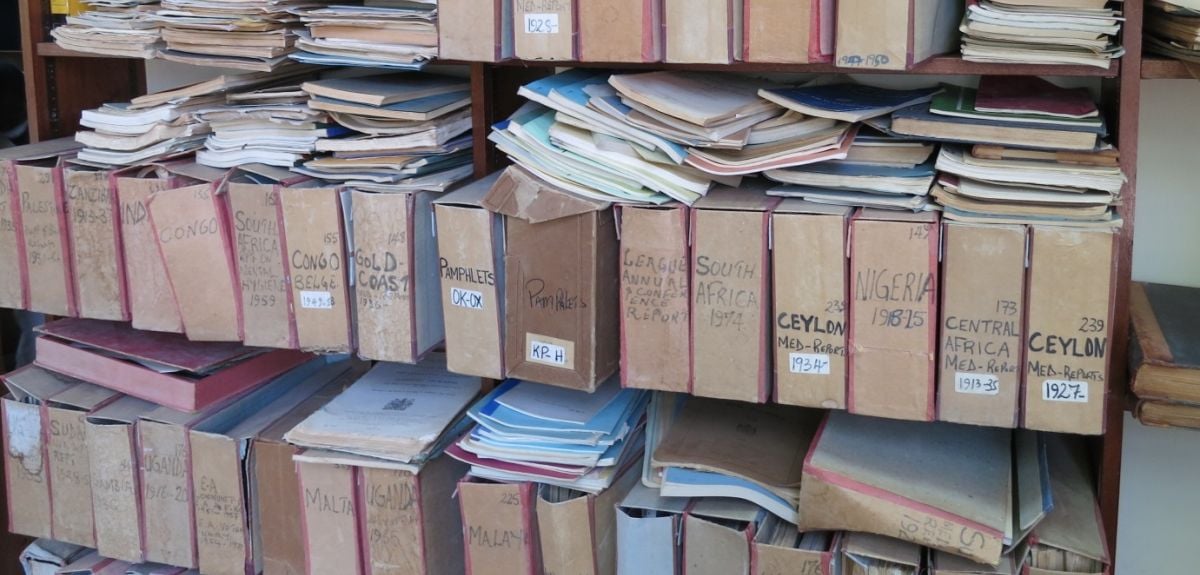
The largest repository of any parasitic disease in the world - a collection of malaria survey data in Africa – has been unveiled by researchers at the Kenya Medical Research Institute and the Wellcome Trust. The collection covers more than 50,000 surveys spanning 115 years since 1900, each documented by date, geolocation, number of people, and the proportion positive for Plasmodium falciparum infection.
The researchers analysed the data to estimate malaria infection prevalence for each of 520 administrative units of Sub-Saharan African Countries and Madagascar for 16 time periods since 1900 through to 2010-2015.
The biggest historical drops in malaria followed the Second World War with the discovery of DDT and chloroquine, and later in 2005 with the rolling out of insecticide treated bed nets and new drugs to treat malaria.
Malaria prevalence was low during the late 1960s, through the 1970s and early 1980s. This was a period when, despite the international community abandoning investment in malaria control in Africa, chloroquine use was widespread with repeated dosing available to the general population. Together with drought across the Sahel, this produced the perfect lull in malaria transmission.
‘People often focus on recent history in tracking malaria in Africa, to inform donors and control programmes on recent actions,’ says the study’s lead author Professor Bob Snow of Oxford’s Centre for Tropical Medicine and Global health. ‘The longer history of malaria in Africa allows us to put into context the recent decline.’
Chloroquine resistance expanded across Africa in the 1980s, and in the late 1990s unprecedented rainfall led to flooding and major malaria epidemics. Ministries of Health across the continent woke up to the perfect storm without any significant mosquito vector control in place. Malaria prevalence returned to the levels seen before the Second World War.
It took a further five years for the international community to provide free insecticide treated bed nets and effective malaria treatments. The financial response by the Global Fund and the technical revisions to policy by the World Health Organisation after 2005 led to one of the largest drops in malaria infection prevalence witnessed since 1900.
Co-author, Abdisalan Noor of the Kenya Medical Research Institute/Wellcome Trust Research Programme (KEMRI-WTRP), adds: ‘Shown in context, the cycles and trend over the past 115 years are inconsistent with explanations in terms of climate or deliberate intervention alone. The role of socio-economic development, for example, remains poorly understood.’
The current prevalence of infection, 24%, is at its lowest in 115 years but gains have stalled since 2010 and 240 million infected individuals remains a substantial burden. Little has changed in the high transmission belt across West and Central Africa. Emerging insecticide and drug resistance remain a threat, along with growing international ambivalence to funding control.
‘The history of malaria risk in Africa is complex, there have been perfect lulls when drugs worked and droughts prevented mosquito’s transmission infection; there have been perfect storms when drugs stopped working and flooding affected large parts of Africa,’ adds Snow. ‘It has been a history of long term cycles and predicting the future of malaria in Africa based on climate or intervention coverage alone is difficult.’

A new website, writersmakeworlds.com, has been launched at Oxford today (16 October).
Postcolonial Writers Make Worlds asks how our reading of British literature shapes our sense of identity in Britain today. It focuses in particular on how Black and Asian writing in Britain might give us new ways to think about Britain in the world.
In a guest post, the project leaders Elleke Boehmer (Professor of World Literatures) and Erica Lombard (Postdoctoral Research Fellow) explain their research:
Recent global developments have sharply polarised communities in many countries around the world. A new politics of exclusion has drawn urgent attention to the ways in which structural inequality has marginalised and silenced certain sectors of society. And yet, as a recent report shows, diversity and inclusion in fact “benefit the common good”. A more diverse group is a stronger, more creative and productive group.
In the world of literary writing, we find similar gaps and exclusions. But these are counterbalanced in some respects by new positive initiatives.
In 2015, a study revealed that literature by writers of colour had been consistently under-represented by the predominantly white British book industry. Statistics in The Bookseller show that out of thousands of books published in 2016 in the UK, fewer than 100 were by British authors of a non-white background. And out of 400 authors identified by the British public in a 2017 Royal Society of Literature survey, only 7% were black, Asian or of mixed race (compared to 13% of the population).
A similar marginalisation takes place in the curricula in schools and universities, mirroring exclusions in wider society. In most English literature courses of whatever period, the writers taught are white, largely English and largely male.
A fundamental inequality arises in which, though British culture at large is diverse, syllabuses are not. Indeed, many British readers and students find little to recognise or to identify with when they read and study mainstream British literature.
But it’s not just a case of under-representation. It’s also a case of misrepresentation.
Black and Asian writers who have been published within the mainstream British system describe the pressure they have felt to conform to cultural stereotypes in their work. Their books are often packaged and presented in ways that focus on their ethnicity, regularly using cliches.
At the same time, more universal aspects of their writing are overlooked. For example, the covers of novels by Asian British writers usually stick to a limited colour palette of yellows, reds, and purples, accented by “exotic” images.
These writers bristle at the sense that they are read not as crafters of words and worlds, but as spokespeople for their communities or cultures. At its worst, this process turns these writers and their books into objects of anthropological curiosity rather than works inviting serious literary study or simply pleasurable reading. The message is that black and Asian literature is other than or outside mainstream British writing.
Against these exclusions, leading British authors such as Bernardine Evaristo and others have urged for a broader, more inclusive approach. They recognise that what and how we read shapes our sense of ourselves, our communities and the world.
The Postcolonial Writers Make Worlds research project, based in the Oxford English Faculty and The Oxford Research Centre in the Humanities, set out to ask what it means to read contemporary fiction as British readers. Working with reading groups and in discussion with writers, we found that readers of all ages entered the relatively unfamiliar worlds created by BAME authors with interest.
For many, finding points of familiarity along gender, age, geographical or other lines was important for their ability to enjoy stories from communities different from their own. Identifying in this way gave some readers new perspectives on their own contexts.
At the same time, unfamiliarity was not a barrier to identification. In some cases, universal human stories, like falling in love, acted as a bridge. This suggests that how literature is presented to readers, whether it is framed as other or not, can be as significant as what is represented.
Contemporary black and Asian writing from the UK is British writing. And this means that the work of writers such as Evaristo, Nadifa Mohamed and Daljit Nagra be placed on the same library shelf, reading list and section of the bookshop as work by Ian McEwan, Julian Barnes and Ali Smith – not exclusively in “world interest” or “global literature”.
Equally, much can be gained by thinking of white British writers like Alan Hollinghurst or Hilary Mantel as having as much of a cross-cultural or even postcolonial outlook as Aminatta Forna and Kamila Shamsie.
There are positive signs. A new EdExcel/Pearson A-level teaching resource on Contemporary Black British Literature has been developed. The Why is My Curriculum White? campaign continues to make inroads in university syllabuses. And the Jhalak Prize is raising the profile of BAME writing in Britain. Against this background, the Postcolonial Writers Make Worlds website offers a multimedia hub of resources on black and Asian British writing, providing points of departure for more inclusive, wide-ranging courses. Yet there is still much to be done.
All literature written in English in the British Isles is densely entangled with other histories, cultures, and pathways of experience both within the country and far beyond. Its syllabuses, publishing practices, and our conversations about books must reflect this.
This article has also been published on The Conversation.
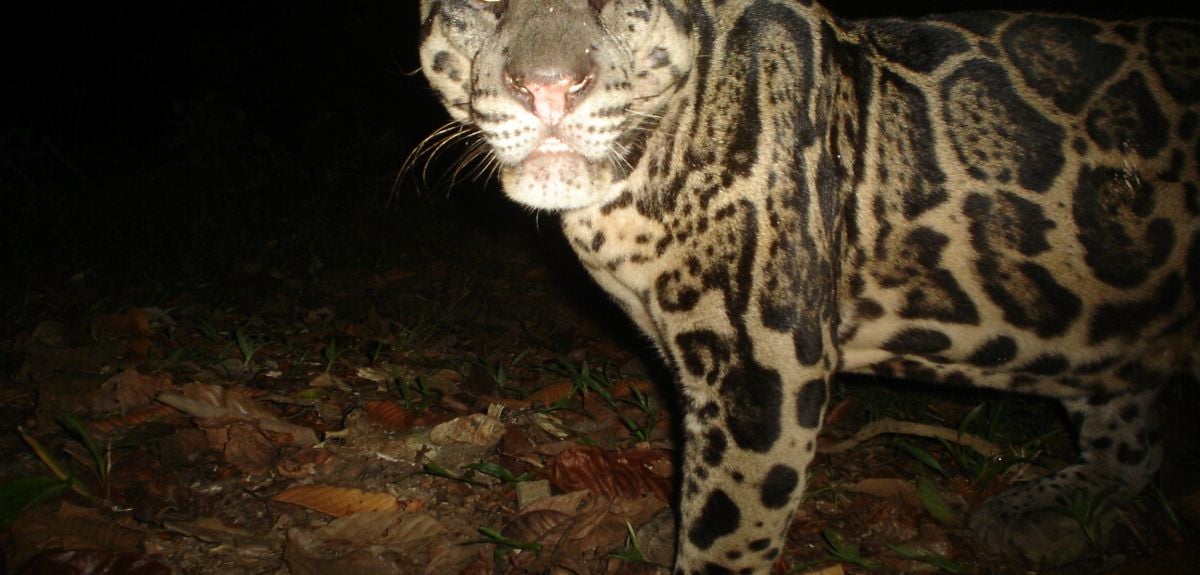
A new study led by Oxford scientists has produced the first robust estimate of the number of Sunda clouded leopards remaining in the state of Sabah, Malaysian Borneo.
The research also explores how changes to Sabah's forest landscape may be affecting these threatened wild cats.
The study, led by researchers from Oxford’s Wildlife Conservation Research Unit (WildCRU) in collaboration with partners from the Universiti Malaysia Sabah, Danau Girang Field Centre (DGFC), Sabah Wildlife Department and Panthera, provides the first evidence that the population density of the Sunda clouded leopard is negatively affected by hunting pressure and forest fragmentation.
The research, published in the journal Oryx, also had some positive news, showing that clouded leopards can persist after a forest is logged and that their numbers may increase over time as the forest begins to recover.
Dr Andrew Hearn from WildCRU, first author of the paper, said: 'For six years, we conducted intensive camera-trap surveys of eight protected areas in Sabah. We used the cloud-shaped markings on the coat of the animal and morphology to identify and sex individual animals and used sophisticated statistical methods to estimate their population density in different forest areas across Sabah. We also analysed our camera-trap data to provide an estimate of poaching pressure for each study area.
'We found evidence of poaching activity in all forest areas, with the lowest detection rates being in Danum and the highest in Kinabatangan. We finally estimated the size of the population of the Sunda clouded leopard to be around 750 individuals in Sabah.'
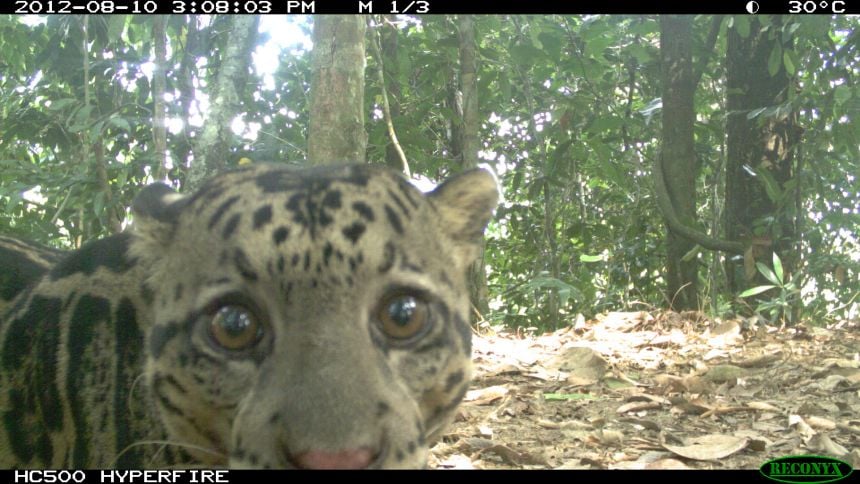 Clouded leopard (image credit: DGFC)
DGFC director Dr Benoit Goossens, a co-author of the study, said he hoped the results of the study, together with the action plan for the Sunda clouded leopard being launched next year, will help to manage the species in Sabah's forests. He added: 'The fact that selectively logged forests provide an important resource for Sunda clouded leopards suggests that appropriate management of these commercial forests could further enhance their conservation value. But the overriding priority for our wildlife managers is to reduce poaching pressure, both on these felids and their prey, by reducing access to the forest interior along logging roads and by increasing enforcement patrols at strategic areas.'
Professor David Macdonald, Director of WildCRU, said: 'Clouded leopards are stunningly beautiful, and as denizens of some of the most threatened forests in the world they have the potential to be iconic symbols for conservation: our findings are a big step on that road.'
Luke Hunter, President and Chief Conservation Officer at Panthera, said: 'The clouded leopard is the top cat of Sabah, playing a similar role as tigers or leopards in continental Asia. Sadly, just as for tigers and leopards elsewhere, clouded leopards are targeted by poachers. Our work emphasises yet again how saving big cats and their prey relies on strong protection and robust anti-poaching measures.'
The research was primarily funded by the Darwin Initiative, the Recanati-Kaplan Foundation, the Robertson Foundation and the Sime Darby Foundation.
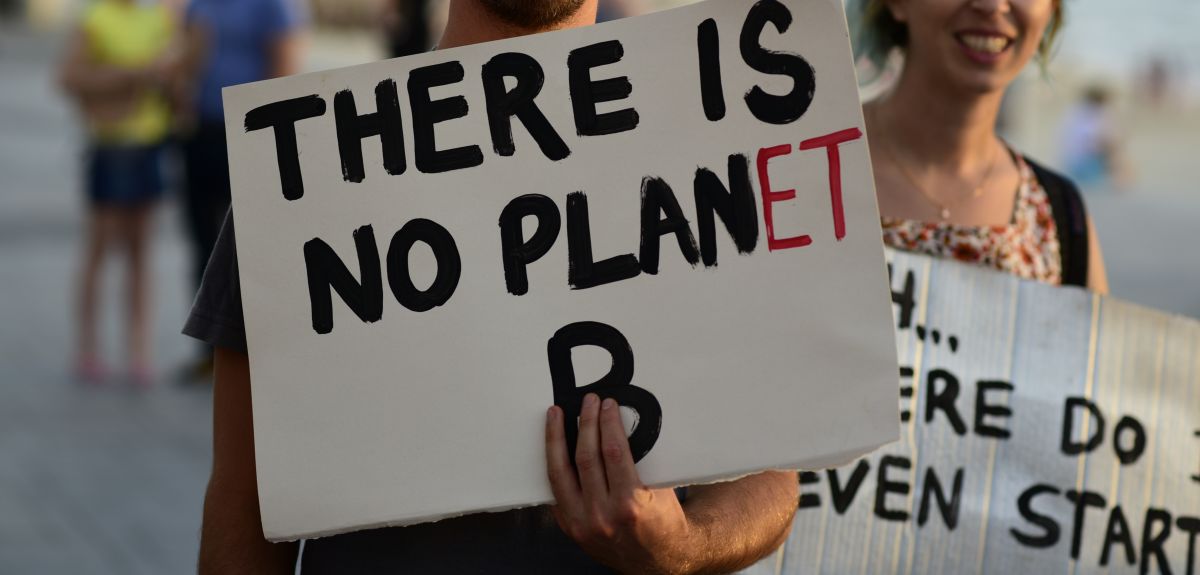
What do scientists, philosophers and religious leaders all have in common? The answer may surprise you, but collectively at least, they have the power to fight climate change.
At a recent special event during the 2017 European Capacity Building Initiative (ecbi) Oxford Seminar, leading voices from these three fields came together to discuss one of society’s most challenging questions: ‘what can we do to support the fight against global warming in the current political climate?’
Held at the University of Oxford, Museum of Natural History, the ‘We Meet Again!’ event was reminiscent of the renowned ‘Oxford Evolution Debate’ of 1860, and was intentionally named to draw comparison to that historic event.
Key speakers from the day share highlights and their thoughts on on how the problem can be best managed:
There is a myth that religious groups do not care about or believe in climate change - but the reality could not be further from the truth. Climate deniers exist in all walks of life and religious influencers such as myself, put a lot of effort into both educating their sects about the reality of environmental change and encouraging those involved in creating solutions to consider these communities.
It is vital that all involved in climate change negotiations understand and take seriously the different faith-based communities in the world, who are natural allies in carbon emission reduction and a more sustainable future.
Faith communities know how to take action for change and how to mobilise others to achieve common goals.
These groups are places where small groups of thoughtful and committed citizens are found. They have significant influence, a natural compassion for the earth and a sense of being part of a global community. They are not perfect, or uniform. But they are communities of hope whose values lead us to work for change, not against the findings of science, but in tandem, to bring about a more sustainable world.
The ferocity of Hurricane Harvey and Irma has many in the media and elsewhere saying that this is because of climate change, while others are saying they are nothing to do with climate change. Most scientists tend to be sitting somewhere in the middle, trying to stay true to their scientific, observational, evidence, theory and their projections for the future. Their message is ‘well neither of you are quite right’, instead giving a more nuanced message; that’s exactly what we have to do - and what we have to keep doing.
As scientists, we must continue to search for evidence-based answers and share the results of our work with a wide, diverse audience - not just our peers, opinion formers or politicians but ordinary people, without either exaggeration or understatement. We have to recognise that how these messages are received is directly influenced by the values and beliefs of the audience. For example, when confronted, some climate deniers approach the subject from a vested personal interest or political creed. Often the science is secondary to them and muddies the waters of what they want to believe.
As scientists, we must recognise that we are also influenced by our values and beliefs. We need to find common ground and a starting point for conversation. Then we must position the best science and research-led evidence at the fore-front of this climate change conversation.
Philosophers have played a role in shaping popular opinion and challenging the status quo since time immemorial. John Alexander Smith, Waynflete Professor of Moral and Metaphysical Philosophy at Oxford University, opened his 1914 undergraduate lectures with the following caveat: ‘Apart from the few who go on to become teachers or dons, nothing that you will learn in the course of your studies will be of the slightest possible use to you in life, save only this, that if you work hard and intelligently you should be able to detect when a man is talking rot..’
Philosophers have an important role to play in separating truth from nonsense. 'Alternative facts' only work if one removes objective truth from what we mean by 'fact'. Yet, "2+2 = 5" is not an 'alternative fact' of mathematics. It is simply wrong, and anyone claiming the contrary is, to quote Professor Smith: 'talking rot'.
And the same applies to climate science, where assertions are objectively true or false, and not mere subjective opinions without objectively falsifiable content. To reply: “this is your opinion” when challenged about a statement in this context, and to leave it at that, is simply not good enough.
Stressing this unequivocally is one thing philosophers can do to support the fight against global warming in today’s fragile political climate. Academic thinkers and philosophers have a duty to stand up for critical thought and the truth, to counter the current tide of ‘alternative facts’ and ‘post-truth’ politics.
As an Arctic scientist I have been travelling to the Northern Hemisphere for more than thirty years, and have seen polar melting with my own eyes. I can say with confidence that climate change is not a myth. It is very real. It is happening and it shows no signs of slowing down.
In today’s society, Arctic research is more valuable than ever. The reasons for this will vary from field to field, but climate change is currently at its most exaggerated in polar areas. For glaciologists and those interested in climate change, the Poles are therefore a rich environment to witness climate change first hand. Where as, for geologists and people in my discipline, the exposed rock is the real attraction. In the Arctic we are not hindered by vegetation. There are of course areas covered with glacial deposits, but other than that, there is just the expanse of exposed rock that you just don’t get at lower latitudes. The far north has perfect “outcrop”, as we call it.
We live in a time where the value of science is constantly being questioned and undercut, it has never been more important for us as scientists to perform our jobs well, deliver accurate research and clearly communicating the findings. The consequences of not doing so are catastrophic.
- ‹ previous
- 90 of 253
- next ›
 25-year Oxford study finds the effects of conflict last for generations
 What Louise Thompson’s campaign tells us about the national maternity crisis
 Celebrating 25 Years of Clarendon
  Learning for peace: global governance education at Oxford
  What US intervention could mean for displaced Venezuelans
  Setting the agenda for the next century of quantum
 10 years on: The Oxford learning centre making an impact
 Mapping the Moon: the world’s first lunar atlas goes digital
  Oxford and The Brilliant Club: inspiring the next generation of scholars
 New course launched for the next generation of creative translators