Features
Written by Mark Mann, Innovation Lead for Humanities and Social Sciences, and Gregg Bayes-Brown, Communications Manager, Oxford University Innovation. First published on the Oxford University Innovation blog.
Since its inception, tech transfer – or university innovation – has been a field dominated by the STEM sciences.
There are a number of good reasons for this. First and foremost is the level of support it requires for a physical or life sciences-based spinout company to go from incorporation to market. Compared with a regular startup company, which can take anywhere between a couple of months to three to five years before it's making money, the development cycle for a spinout can be up to ten years and beyond.
There's also patenting, which is typically focused on technological innovation – a core activity of a university innovation office such as Oxford University Innovation (OUI). While there's nothing set in stone about how to catalyse innovative ideas, the general rule of thumb will involve patenting the ideas OUI deals with first before developing them further. While this works fine for areas such as engineering or drug discovery, it's a different story for ideas from humanities and social sciences (SSH).
OUI has made some inroads to challenging this STEM bias and supporting the wider University, punctuated by the OUI Incubator. Since its inception in 2011, the OUI Incubator has helped incorporate nearly 30 startups, over half of which emerged from social sciences. And yet, for academics in SSH wishing to pursue spinouts, university innovation has been largely off limits.
Until now.
OUI is responding to increasing demand for innovation support from the SSH community and is developing a number of different products to support academics looking to create greater impact from their ideas.
First is the social enterprise, or social venture, model. Sitting in the overlap between a charity and a for-profit company, social enterprises come in a few different flavours. The general idea is that all profits from the company are considered 'evergreen' – that is, they are continually funnelled back into the company to create sustainable growth. While these companies do remain profit-making organisations, the focus isn't 'for-profit', but 'for-impact'.
We feel that the social ventures model is more in line with SSH's ethical, moral and impact-driven motivations for engaging with innovation. Consequently, OUI is conducting research into social enterprise programmes at peer institutions, it has taken on staff focused on SSH, and it is currently leading discussions with the wider university to design and deploy Oxford's social enterprise offer.
Most importantly, OUI is busy developing strategies and initiatives that ensure the successful launch, growth and sustainability of social enterprise. At present, OUI-backed spinouts have a survival rate (that is, they are still in business or have successfully sold after their initial three years) of 87%, compared with a national average of 54%. Bringing the same level of high-quality support our spinout body benefits from to social enterprise will be mission critical for OUI.
We're yet to formally roll out the social enterprise offer but already have over 20 projects in our pipeline from word of mouth alone. In fact, there's actually a race on between SSH and the Medical Sciences Division to see which will be our first, sOPHIa from SSH or LIFE (Life-saving Instructions For Emergencies) from tropical medicine.
LIFE is using mobile and virtual reality to medically train people in developing countries and was the first beneficiary of another key vehicle for SSH-related innovation at Oxford: OxReach. A crowdfunding platform developed by OUI in partnership with the University's Development Office, OxReach has now raised around £200,000 for four projects by harnessing Oxford's extensive network for support. The latest, Greater Change, is looking to rethink how we help the homeless. The Greater Change team successfully raised £33,000 in December and is currently using the funds to develop an app that facilitates secure, cashless donations to the homeless.
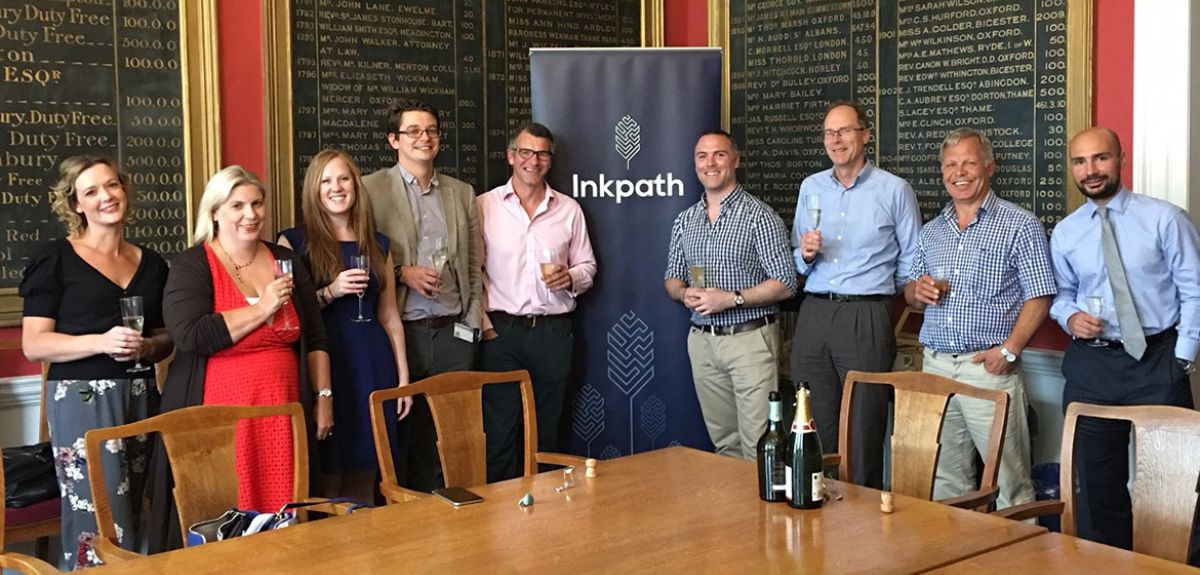
We've also been busy getting SSH ideas out into the wider world through what we know best: spinouts. We completed InkPath, a Humanities Division spinout offering career support for academics, in 2017, and we'll be announcing our first Social Sciences spinout in 15 years in the coming weeks.
This is just the beginning. The work innovators in SSH have done so far, and what we're hoping to achieve together with SSH in the future, will be the focus of our next Oxford Innovation Society meeting later this month. In the long term, we're hoping that our work with SSH will open up a new chapter in university innovation.

On 27 February 1854, the acclaimed composer Robert Schumann attempted suicide by jumping off a bridge into the Rhine. Although he was rescued by boatmen and brought home, he afterwards insisted on being placed in an asylum for his own and his family's good. He would spend the last two years of his life there, before dying of pneumonia at the age of 46.
For several years beforehand, he had been plagued by auditory hallucinations, erratic moods and depressive episodes — which historians speculate might have been the result of anything from bipolar disorder to syphilis or mercury poisoning. Despite these symptoms, he still experienced fits of creative energy, producing several pieces in this time, including the Maria Stuart songs and Lenau Lieder. Because of their radically different style to his earlier works, these have often been taken as a symptom of a tragic creative decline, the work of a man whose judgement was fatally impaired by the ravages of his illness.
But according to Laura Tunbridge, Professor in Oxford's Faculty of Music and Henfrey Fellow and Tutor at St Catherine's College, there is no reason to assume that. She says we might have been overly influenced by the work of his first biographers, as well as of his wife Clara and his younger colleagues Johannes Brahms and Joseph Joachim, who edited and compiled his work after his death. All of them wanted to conceal what they felt was a shameful detail about the great man's life, and, as a result, some of the later pieces have tended to be erased from discussion of his life's work.
Professor Tunbridge says: 'In the mid-19th century, there was a huge social stigma about mental illness. And so his family and his friends and his colleagues didn't particularly want people to know. And you can see that in the way the first biographers write about him — they assume that mental illness is going to have a detrimental effect.'
In fact, you often see a new period of experimentation in other composers' late works. There are many reasons why a composer might change their style which have nothing to do with their mental state. Professor Tunbridge thinks that the necessity to write for a more popular audience, to support an ever-growing family, as well as the influence of a younger generation of composers represented by Joachim and Brahms, probably had just as much of an impact on Schumann’s new musical direction. People have also tended to underestimate these works simply because they are written in a simpler, less ostentatious style.
Professor Tunbridge adds: 'Some composers — say, Beethoven — at the end of their career write these late works and people think they're amazing and radical and new and experimental. But with Schumann there's a sort of idea that his creative powers fall off and that they're not so significant. So I'm trying to figure out whether that's really the case or whether that's because of all the assumptions people make.'
As part of a Knowledge Exchange Fellowship with TORCH (The Oxford Research Centre in the Humanities) last year, Professor Tunbridge worked with Oxford Lieder to produce a series of podcasts, Unlocking Late Schumann, exploring Schumann's later works in conversation with performers and critics, to prompt reassessment of his work.
The collaboration also organised performances of these works for the annual Oxford Lieder Festival. Professor Tunbridge says that having these works performed is a crucial component to rescuing them from their critical obscurity: 'You can be a historian and say all these things about how wonderful these works are, but unless someone's actually going to sing them, it doesn't make any difference.'
She has also been thinking about how recitals can present works in ways that engage the audience and involve them in interpreting the pieces they are hearing, rather than simply giving them a programme note telling them what the music is 'about'. This resulted in some exciting and innovative programming, including a recital where Schumann's work was performed alongside some experimental modern composers who have been inspired by him.
Alongside the podcast, which can reach a wider audience than the demographic who usually attend classical music festivals, this represents a new approach to interpreting and appreciating Schumann. Professor Tunbridge hopes this can encourage appreciation of the composer's work, without preconceived notions getting in the way: 'As academics, we do all this educational work to try and explain things. But actually do we need that much historical context or do we need to encourage people to listen in a fresh way, without preconceptions?'

Professor Guy Thwaites, Director of the Oxford University Clinical Research Unit, Vietnam, explains the discovery of yet another use for one of the most ubiquitous and ancient of drugs – aspirin.
Tuberculous meningitis is the most lethal form of tuberculosis (TB), killing or disabling around half of all sufferers despite the best available treatment. Aspirin is a commonly available over-the-counter medication that prevents blood clotting and helps reduce and resolve inflammation. Our research team in Vietnam wondered whether this ancient drug might help increase survival rates from TB meningitis by reducing brain inflammation and preventing the disease from blocking blood vessels in the brain that cause parts of the brain to die (commonly called ‘stroke’).
With funding from the Wellcome Trust, UK, we investigated whether the addition of aspirin at low (81mg/day) or high (1000mg/day) dose, or placebo, to the first 60 days of current standard TB meningitis treatment (anti-TB drugs and steroids) was safe and reduced new strokes or death from this severe disease.
 Dr. Guy Thwaites - Director OUCRU-VN
To understand how aspirin might work in TB meningitis treatment we took brain fluid from the trial participants before and after 60 days of treatment and measured an array of substances known to be linked to inflammation and aspirin’s treatment effects. When we compared 81mg with 1000mg of aspirin we found that 1000mg was associated with much lower concentrations of thromboxane A2, which would inhibit the blood’s ability to clot and may help prevent stroke. We also found higher concentrations of molecules called ‘protectins’ which help the body resolve inflammation. These findings are especially interesting as they may indicate new ways to treat TB meningitis and other forms of TB, and they support the trial’s clinical findings that aspirin 1000mg/day may reduce the risk of stroke and increase survival rates in patients.
The next step will be larger trials in children and adults, including those co-infected with HIV, to confirm our results. But it seems TB meningitis may be added to the long list of life-threatening conditions that benefit from a daily aspirin dose, including stroke, heart attacks, and the prevention of colorectal cancer.
While aspirin was developed as a drug in the form we now recognise in the 19th century, the active compounds occur naturally in willow bark and other plants, and humans have been using it in its natural form for thousands of years. There is evidence of ancient Egyptians using willow bark as a medicine, and the ancient Greek physician Hippocrates wrote about the benefits of willow bark and willow leaves to relieve pain and fevers. Nowadays, aspirin should be used in consultation with a doctor to minimize any side-effects. However, this study has shown more evidence that aspirin is indeed a remarkable drug.
The full paper, ‘A randomised double blind placebo controlled phase 2 trial of adjunctive aspirin for tuberculous meningitis in HIV-uninfected adults’, can be read in the journal eLife Sciences.

An Oxford research project mapping all the hillforts across England and Ireland, has been lauded by industry leaders at the American Association for the Advancement of Science (AAAS) conference, Austin, Texas, as one of the best examples of multidisciplinary research in the UK.
Selected as the only Arts and Humanities Research Council (AHRC) funded project to be presented at the AAAS Conference, the atlas was built in collaboration with the University of Edinburgh and the support of citizen scientists across the country. The survey was five years in the making and includes information on all of the hillforts in Britain and Ireland – 4,147 in total, collated into a publicly accessible website.
The AAAS Conference attracts more than 8000 delegates from broad ranging fields including academic science, government policy and more general interests.
Professor Gary Lock, co-principal investigator on the project and Emeritus Professor of Archaeology at Oxford University and John Pouncett, also of The School of Archaeology, Oxford University, attended the event alongside Professor Ian Ralston co-principal investigator and Professor of Archaeology at Edinburgh University, to demonstrate the atlas to attendees who also included school age children and their parents.
Professor Lock said, ‘To be chosen as the single project to represent the AHRC at the AAAS is an incredible honour that verifies the importance of our work and shows the leading position of archaeology within international humanities and scientific research.'
The unique resource provides free access to information about world-famous sites as well as many previously little-known hillforts, helping ramblers, cyclists, naturalists, and history enthusiasts discover them and the landscapes around them.
Mostly built during the Iron Age, the oldest hillforts date back to around 1,500BC and the most recent to around 700AD. Hillforts played a pivotal role in more than 2,000 years of ancient living and served various functions, such as defence and communal gathering spaces, while other uses have yet to be fully understood.
Terry O’Connor, Communications Director at the Science and Technology Facilities Council and lead for the UKRI AAAS campaign said: ‘We selected the Hillforts Atlas exhibit as an excellent example of the best of UK multidisciplinary research – combining archaeology, remote sensing, citizen science and other techniques to provide not only a new research tool but an exciting way of engaging the public with research. The team of Gary, Ian and John were fabulous ambassadors for the project, their science and their universities.’
Mike Collins, Head of Communications at the Arts and Humanities Research Council, said: 'The Hillfort Atlas project was the ideal fit for the AAAS conference in Texas as it showcases brilliantly the use of technology to tell the story of hillforts across the UK and Ireland. The Atlas was one of the public engagement hits of 2017 with hundreds of thousands of people visiting the website and an amazing reaction in the media and through social media. It's been a great example of how years of hard research work can pay dividends and get the public excited about the history of where they live or a place that they love to go on holiday too.'
Since its launch in June 2017 the Atlas website has been a tremendous success with the general public, students, academics and a range of environmental specialists. The site is still being developed with new functionality and analytical capabilities to be added.
Fort finder: An atlas of the hillforts of Britain and Ireland:

If you were asked to name a weapon used in World War I, you’d probably think of gas attacks, or artillery, or tanks.
But another unusual weapon was battering people across the world, and caused suffering long after the bell tolled on the 11th November 1918. It wasn’t a new invention: it was hunger.
Dr Mary Cox and Dr Clare Morelon, early career researchers in the History Faculty, and Principal Investigator Professor Sir Hew Strachan, are leading a groundbreaking international research project that is exploring how one of our most basic requirements—food—shaped World War I and its aftermath.
The Hunger Draws the Map project is revealing how the Great War, including a British and French blockade that prevented ships carrying food and weapons from getting to Germany, Austria-Hungary, Bulgaria, and Turkey until 1919, caused malnutrition and starvation across Europe and the Ottoman Empire - for years after the war ended.
“There was so much suffering in the world after the war was over,” says Dr Cox. “Yes, there’s the terrible stuff you hear about—injured soldiers, people who were maimed—but during and after the war, people were hungry.”
And debates have been raging for a hundred years about just how hungry people were. “We’re actually plugging into a debate that goes back a hundred years,” Dr. Cox says. “Some call it a myth; others say people were dying on the streets.”
By using innovative new methods and making thematic comparisons, Dr Cox and the team, working with an international group of researchers, are working on a book that will try to trace just how hungry populations were, and what effect this had on the post-war world.
The project is trying to understand hunger in lots of different ways. This involves looking at how much food was available and measuring the growth curves and weights of people at the time. But it also means thinking about hunger in other ways.
“How did states understand food security? What were the political responses to hunger? Who did everyone blame?” Dr Cox asks.
In Germany, farmers often got the blame. “People in the cities accused farmers of keeping their food for themselves, rather than giving it to people in towns and cities.”
And how did being hungry change the way people lived their lives? “The black market was huge, and people smuggled food when they could,” Dr Cox explains.
“But hunger also changed how people behaved. If you had an occupation where you physically needed to work a lot--swing a hammer, wash laundry, walk miles to get to a factory—that burned calories. People limited their physical activity in order to survive.”
And, with so little food, people had to resort to survival strategies. “People tried to grow gardens, or share what they had with their loved ones. In Germany, women sacrificed themselves for their children.”
Not many people know about how hunger was used as a weapon in this way, but Dr Cox says the impact was vast.
“This story really needs to be told and understood,” she says. “This war affected the rest of the twentieth century.
"Hunger is such a horrible, horrible thing to experience, people don’t forget very easily. People lost trust in their governments, sometimes their neighbours, and social divisions were often amplified.”
And, at root, this is a story about everyday people.
“Hunger is experienced on an individual level, so even though there were millions of people, we’re trying to put individual faces to their suffering,” Dr Cox says.
Together, the Hunger Draws the Map team are working on a thematic book that explores all of these issues from a comparative, international perspective, from Finland to the Netherlands to Bohemia. By doing so, they encourage us to remember, as we celebrate the centenary of the end of the war in 2018, how hunger drew the post-war map.
- ‹ previous
- 80 of 253
- next ›
 What Louise Thompson’s campaign tells us about the national maternity crisis
 Celebrating 25 Years of Clarendon
  Learning for peace: global governance education at Oxford
  What US intervention could mean for displaced Venezuelans
  Setting the agenda for the next century of quantum
 10 years on: The Oxford learning centre making an impact
 Mapping the Moon: the world’s first lunar atlas goes digital
  Oxford and The Brilliant Club: inspiring the next generation of scholars
 New course launched for the next generation of creative translators
 The art of translation – raising the profile of languages in schools