Features
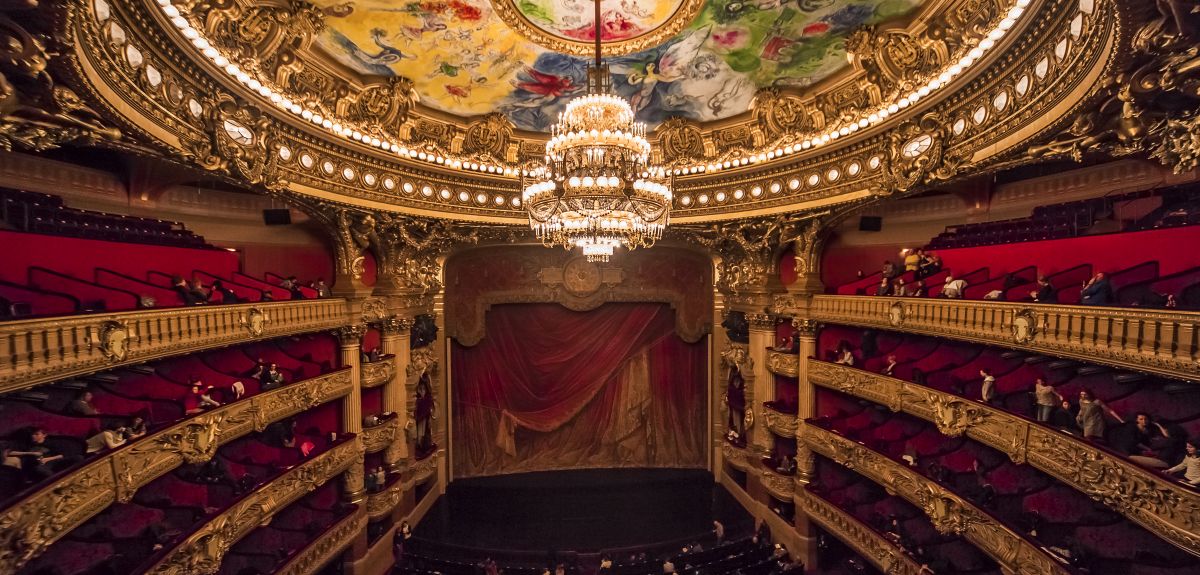
Francesca Moll meets the pioneering songwriter on a mission to prove that opera is for everyone.
What do you think of when you think of opera? 'I think we're past the "fat lady with horns" now,' says Dr Toby Young, the Gianturco Junior Research Fellow researching Music and Philosophy at Linacre College.
But while other genres of classical music have been undergoing something of a renaissance, opera remains a niche interest, hampered by the perception of it as a difficult genre reserved for the privileged few. This is something that Toby, a true music lover who appreciates everything from 13th-century Armenian folk music to the grime artists recently so instrumental in Jeremy Corbyn's election campaign, is determined to change.
'Opera was for a long time very much the music of the people,' he says. 'Now, stereotypically, the audience is white, middle-aged and fairly wealthy. I want to say that opera is for everyone, but at the moment it clearly isn't.'
Nobody could be better placed to change this. In addition to his academic work, Toby is also a songwriter exploring the boundary between pop and classical music. As well as writing for the London Symphony Orchestra and King's College Cambridge choir, he has worked with a variety of big names including drum and bass group Chase and Status, Duran Duran and the Rolling Stones ('They're just amazing musicians, Mick is just an amazing performer').
As part of a Knowledge Exchange Fellowship with The Oxford Research Centre in the Humanities (TORCH), Toby has been working with McCaldin Arts, a group of professional opera singers, to explore precisely what it is that makes opera so difficult to engage with.
Apparently, the issue is not simply the cost of going to the opera: 'Actually it's cheaper to go to the opera more often than it is to go to the football.'
It also is not a question of opera being especially removed from the rest of modern music. In the course of workshops with singers from a wide range of genres, Toby and his partner at McCaldin Arts, Clare McCaldin, discovered something rather surprising. Technically speaking, there is actually very little difference between opera and pop, with singers from both genres making use of a similar set of skills. A lot of the distinctiveness simply lies in how a piece of music is presented: for example, whether there is a piano accompaniment or a drum and bass beat playing in the background.
Actually, according to Toby, 'pop and opera aren't that different after all'.
It seems opera's problem is far more complex: often it's simply the case that people are raised in certain cultural worlds and are unwilling to stray out of their comfort zone. This is not helped by the fact that traditional opera, with its lengthy run times and big, over-the-top subject matter, can often seem out of touch with modern people's everyday lives.
Toby says: 'Especially now, as society speeds up, we're dealing with people's short attention spans. Opera requires you to slow down a bit.
'It's not so much that they don't understand it. But people haven't experienced a good one, or else they've seen one that put them off for life. You know, they went with school, and they just went, "Why am I seeing this slightly weird hammy thing with someone just standing and singing at me?"
'I think when it's done well, opera is such an effective, emotional, moving and wonderful thing. When it's not done well, it can be really strange, off-putting and distancing. It's such a fine balancing act between a really amazing effective thing where you leave there and go, "wow, that has inspired me in so many ways" versus something where you leave going "oh my God, that was a waste of three hours of my life."'
Work has been done by groups such as Opera Up Close and Silent Opera to bring opera to communities that might be unfamiliar with it, but Toby thinks it requires more than just playing a traditional opera in a new setting to truly engage people. He believes that opera also needs to create a fresh sound that is closer to music people recognise. This is something he hopes to work on in the future, drawing on his experience of popular and classical songwriting to create an original piece that fuses elements of both.
Despite all the challenges, Toby is convinced that opera can be a vital, relevant genre, in a unique position to hold up a mirror to the problems modern society faces.
'There's no other art form that's so complete,' he says. 'You have interesting visuals, you have the acting, and you have the dramatic music all coming together in a truly unique way.
'Because it has to work so hard to draw you in, when you're drawn in I think you're hooked.'
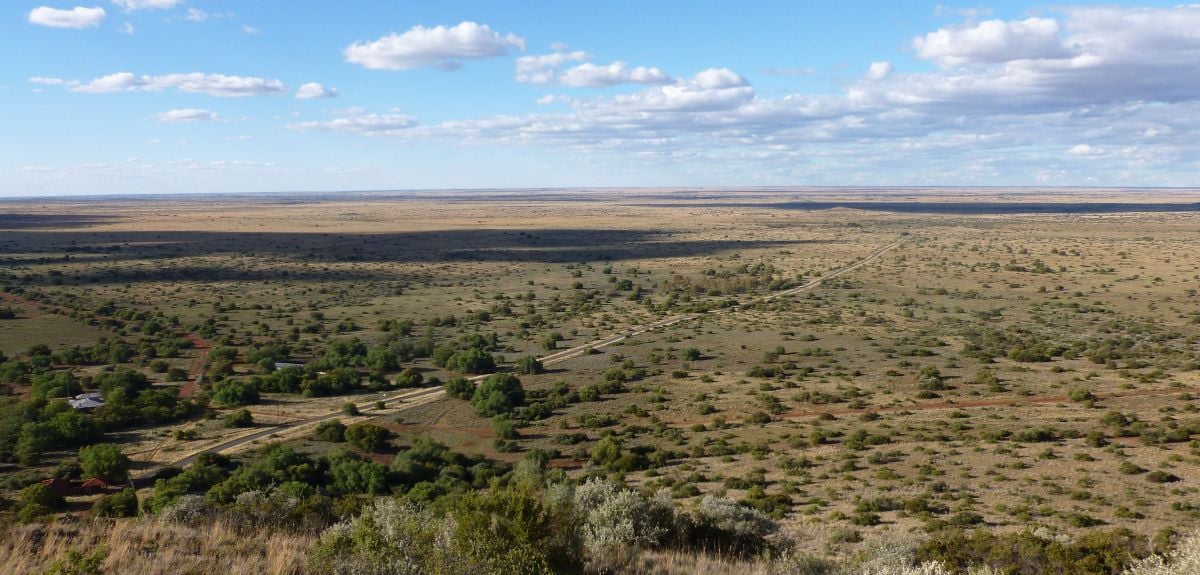
Michaela Ecker, a former doctoral student in the Oxford School of Archaeology, details her recent research at Wonderwerk Cave of Southern Africa, on which she is the lead-author. Conducted in partnership with the University of Toronto, the Hebrew University Jerusalem, the National Museum in Bloemfontein and the McGregor Museum in Kimberley, South Africa, the findings, published in Nature Ecology & Evolution, shed light on how the first humans and the environment itself may have evolved.
From the smallest to the largest, environmental context is the key driver behind the evolution of organisms. Understanding the environments in which humans evolved is thus key to improving our knowledge of our species and its development. My recent work at Wonderwerk Cave has demonstrated how humankind existed in multiple different environmental contexts in the past, contexts which were substantially different from the local environments in the modern day.
My research in South Africa began at the Florisbad Quaternary Research Station (part of the National Museum in Bloemfontein, South Africa) where James Brink has assembled an unparalleled collection of fossil and modern specimens of the bovids of southern Africa. Walking into his lab that is housed in a large building made of corrugated metal is like stepping into a great library, only instead of books the shelves are lined with bones.
By analysing the isotopes of teeth of a spectrum of animals from the different levels at Wonderwerk Cave - which cover a period of close to two million years, I hoped to be able to fill in the picture of the environmental history of the interior of southern Africa and particularly the ecological context of early human occupations.
Even before I drilled a single tooth for stable isotope analysis, the first thing that caught my attention as we examined the fauna from excavations at Wonderwerk Cave was a tooth of an antelope that most people have never heard of - the Southern Lechwe (Kobus leche). This animal needs permanent standing water as habitat and is nowadays restricted to the extensive wetlands in northern Botswana, Namibia and Angola. It could not survive in the modern environment around Wonderwerk Cave, which is a semi-arid thornbush savanna that receives rainfall only in the summer months. This means the environment must have been extremely different in the past that it could support this species, assuming it had the same habitat requirements as today.
After studying the collections at Florisbad Quaternary Research Station it was time to visit the site itself, together with Liora Kolska Horwitz, the co-director of overall research at Wonderwerk Cave.
The cave itself is a long tube with a low ceiling, running from a single entrance 140m into the hill, until the visitor is surrounded by complete darkness. The samples for this study were excavated near the cave’s entrance, where daylight still reaches and Holocene rock art adorns the walls. The present-day vegetation at Wonderwerk Cave, at the edge of the Kalahari, is composed of grasses that follow the C4 photosynthetic pathway and trees and bushes that follow the C3 photosynthetic pathway.
The lechwe antelope teeth showed carbon isotope values that are similar to contemporary animals. However, the carbon isotope results for species that consume a grass diet showed a mix of C3 and C4 in their diet. This meant there was not only much more water around, as attested by the very presence of the lechwe, but also a plant community that is not found in a modern African savanna.
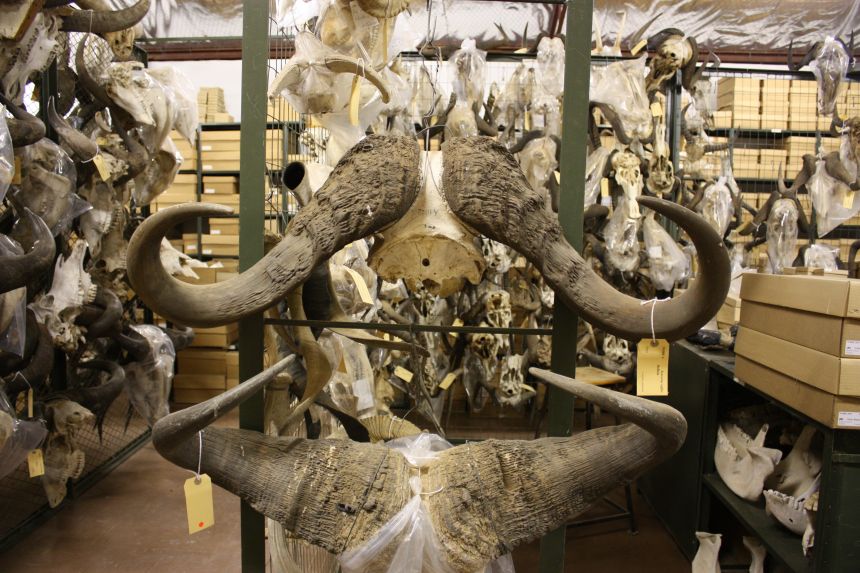 A relic of the Southen Lechwe Antelope sits in the collection at the Florisbad Quaternary Research Station, National Museum, Bloemfontein, South Africa. Credit: Wonderwerk Cave Research Project.
I presented these findings in 2016, at the Society of African Archaeologists meeting in Toulouse, where unbeknownst to me, Lloyd Rossouw, an archaeologist from the National Museum in Bleomfontein and another member of the large international Wonderwerk team, was also presenting results from Wonderwerk Cave, only this time focused on Phytoliths - the mineral particle that form inside plant tissues.
Once we realised our research links, it became apparent that our results evidenced similar trends and conclusions, which we then combined with a whole range of analyses from other specialists. This exchange of knowledge allowed us to build a clearer picture of the environment at Wonderwerk Cave during the occupation of the earliest toolmakers in the region, and their descendants.
These findings challenge the narrative of early Homo adapting to open, arid C4 savannas. It shows that these hominins lived in a wide range of environments, some of them different to anything existing in Africa today.
This study highlights the need to review local terrestrial records to reconstruct past climate and environmental conditions, rather than global records alone. While this can be challenging, since some areas don't preserve long sequences well, Wonderwerk Cave is a rare exception in this region in the dry interior of southern Africa and testament to the importance of considering every aspect of the local ecology – you never know where your first clue might come from.
The full list of people involved in this project is as follows:
Lead author: Michaela Ecker (former doctoral student at Oxford’s School of Archaeology, now postdoctoral fellow at the University of Toronto)
Excavation directors: Michael Chazan (University of Toronto), Liora Horwitz (Hebrew University Jerusalem), Francesco Berna (Simon Fraser University).
Julia Lee-Thorp (Head of Oxford’s School of Archaeology), James Brink and Lloyd Rossouw from the National museum in Bloemfontein, South Africa.
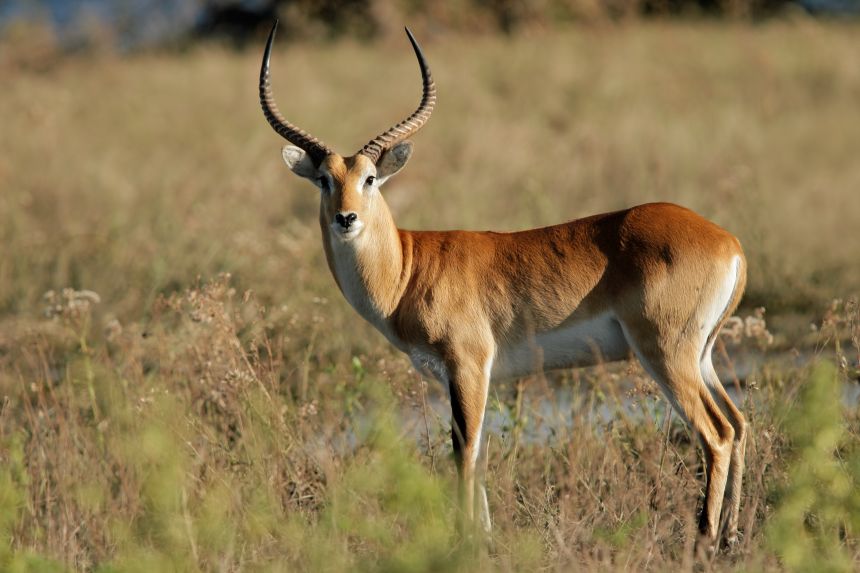 The Southern Lechwe Antelope (Kobus leche) is an animal that needs permanent standing water as habitat, and is nowadays restricted to the extensive wetlands in northern Botswana, Namibia and Angola.
Image credit: Shutterstock
The Southern Lechwe Antelope (Kobus leche) is an animal that needs permanent standing water as habitat, and is nowadays restricted to the extensive wetlands in northern Botswana, Namibia and Angola.
Image credit: Shutterstock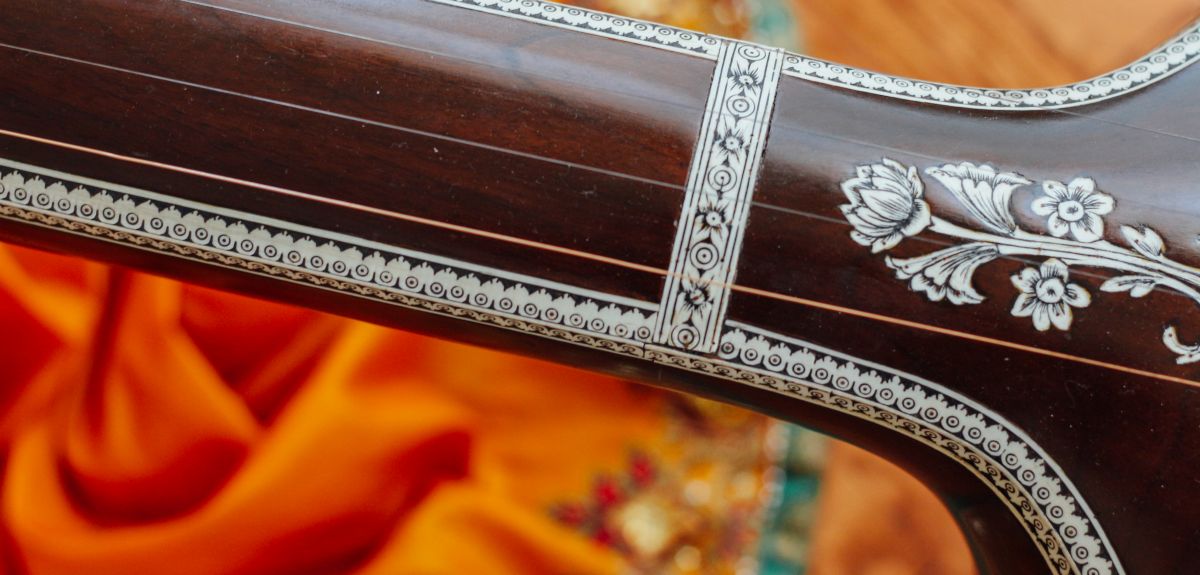
Des Oliver is a composer and has recently completed his doctorate in composition and critical writing at Worcester College, Oxford. He is currently the curator of the Oxford Music Faculty's 'Sounds of South Asia' series. Des went into music because he is creative but says 'it could have been anything: painting, music, architecture, anything that involved creation'.
The 'Sounds of South Asia' series is a new addition to the events calendar at the Faculty of Music that came, according to Des 'out of a long journey with many legs'.
During study for his DPhil in composition, Des had to complete both a thesis and a portfolio of work. His thesis concentrated on a 20th-century French composer called Olivier Messiaen and on post-colonial discourse in art – particularly the ethics of cultural appropriation by musicians. It was important to Des as a way to consider and challenge his own cultural appropriation and to open a dialogue as to why artists do it.
The final part of his thesis was to consider cultural appropriation from a viewpoint other than his own – a Western classical composer – so he contacted Dr Shruti Jauhari, an Indian Hindustani vocalist. This meeting led to the formation of the 'Sounds of South Asia' series and Dr Jauhari's performance in the first concert.
The first concert of the series on the theme of 'appropriation, cross-pollination and cultural transmission' took place in April at Oxford's Holywell Music Room. This was formed of three parts: first,
Maurice Delages' del Quatre poèmes hindous (Four Hindu poems), each named after a city in India that he had travelled through during his tour of the country in 1911-1913. The third part was a traditional Hindustani work performed by Dr Jauhari. Between these two pieces was a composition of Des's own, Malli Kamoda, which was created to act as a bridge between the Western composition and the Hindustani, pulling in aspects from both.
'The most interesting part of setting up this series has been seeing how very different artists share similarities, how different traditions like to push the envelope and challenge themselves,' says Des. 'I was also overwhelmed by the amount of interest we have had in the series from BME students around the University and from schools throughout Oxford who have been in touch to set up workshops around this topic.'
Des's next aim is to get funding in order to record his Malli Kamoda piece so that more people can experience the mix of cultures that the piece covers. He is also writing a monograph based on his thesis, concentrating on Messiaen and cultural appropriation in music.

Professor Ard Louis from Oxford’s Department of Physics explains the maths behind a phenomenon observed in science and engineering termed ‘simplicity bias’, which makes simple outputs far more likely than complex outputs.
Despite the apparent complexity of the world around us, there is an inherent bias towards simplicity. This holds true as much for biological processes as for engineering and mathematics in everyday life.
Consider the familiar analogy of monkeys hitting keys at random on a typewriter. As the story goes, if the monkeys could type long enough, then they would eventually produce the full works of Shakespeare (although it would take much longer than the age of the universe to do so ).
To put this into a quantifiable form, for a typewriter with N keys the probability of the monkeys producing a specific sequence of characters of length K is just 1/NK, since at each stroke, the probability of getting the right character is 1/N, and they have to do this correctly K times in a row. This argument also implies that all sequences of length K are equally likely or unlikely (assuming of course that the monkeys type in a truly random way). In other words, the monkeys are equally likely to produce Hamlet, which has about 100,000 characters, as they are any other sequence of about 100,000 characters.
Now consider a different scenario, where the monkeys are typing not into a typewriter but instead into a computer programming language. Then some sequences of characters can be generated quite simply. For example, a short 22 character program ‘Print “0011” 250 times’ will produce a 1000 character sequence of the repeating form ‘00110011001100110011…..0011’.
The probability of accidentally generating this program by monkeys typing on a computer is 1/N22, which is much less than the 1/N1000 probability that they would produce the full sequence on a typewriter (or a word processor). Interestingly, most sequences don’t have programs to generate them that are much shorter than simply ‘Print “sequence” ‘, which means the probability of obtaining them by monkeys either typing into a computer program or on a typewriter is more or less the same. But for some sequences, like the one above, the computer program route is exponentially shorter, and so it is much more likely to occur upon random key strokes.
The basic intuition behind monkeys typing into computer programs was formalised over 50 years ago in the field of algorithmic information theory (AIT). In brief, the simplicity or complexity of a sequence is defined in AIT by the length of the shortest program that can generate the sequence on a universal Turing machine, a basic computer device, first hypothesised by Alan Turing, which can perform any possible computation.
Unfortunately, while the results from AIT are mathematically profound and elegant, they are difficult to apply in practice because universal Turing machines are rather special objects, and moreover, for deep reasons linked to the foundations of mathematics, the AIT definition of complexity is formally incomputable.
To make progress, our team at Oxford derived a form of the AIT coding theorem of Solomonoff and Levin, which calculates the probability that a random program will generate a particular output.
While this new coding theorem result only provides an upper bound on that probability, and so is less powerful than the full AIT coding theorem which provides both an upper and a lower bound, it is much easier to use in practice.
We applied our theorem to input-output maps, which are a general class of systems that take some input, and after some calculation, produce an output. The really interesting thing we found was that for many maps we need to know very little about the map. We can simply convert the outputs to binary strings, and then compress them with a simple compression algorithm (not unlike those you have on your computer to zip files).
The new bound predicts that if an output is highly compressible, then it is much more likely to occur upon random inputs to the map. Not needing to know much about the map is analogous to not needing to know what programming language the monkeys are typing into in order to still predict that they are much more likely to produce something like a highly compressible 1000-character sequence that repeats the pattern ‘0011’, than they are to produce some truly random and incompressible sequence of 1000 characters.
As in AIT, if a sequence is highly compressible, this implies that there exists a short code to generate it, so we called these outputs simple. Since simple outputs are much more likely to occur, we say that this broad class of maps exhibit ‘simplicity bias’.
Many systems in science and engineering can be analysed as input-output maps. Examples range from the biological mapping from RNA sequence to RNA secondary structures, to systems of coupled differential equations, to simple models from financial mathematics; these all show an exponential bias towards simple outputs.
In other words, we can expect that many different situations both in science and engineering will manifest simplicity bias, and it is very likely that simplicity is all around us.
The full paper, 'Input–output maps are strongly biased towards simple outputs,' can be read in Nature Communications.
How good are we at predicting upcoming words during a conversation? If someone begins a sentence with the words 'You never forget how to ride', you'll be surprised if it doesn't end with 'a bike'. But if the sentence begins with 'You never forget how to ride an', then, phonologically, the bike is out of the question – but an elephant isn't.
In a new study published in the journal eLife, an international team including Oxford's Dr Matt Husband investigated, using neuroimaging techniques, whether our brains have the capacity to make very specific predictions about upcoming words, such as their initial sound.
Dr Husband, from the Language and Brain Laboratory in Oxford's Faculty of Linguistics, Philology and Phonetics, talks to Arts Blog about the research.
What was the prevailing wisdom on our ability to predict upcoming words?
For the last decade, our ability to predict upcoming words has become integral to our understanding of language comprehension. The idea that we predict upcoming words has gone from the fuzzy intuition that we all, more-or-less, seem to experience during conversations to a detailed mechanism proposing that we comprehend language in part by predicting what will be said next.
The key empirical questions of the last decade have moved from 'do we predict?' to 'what is it that we predict?' We might, for instance, only predict a very abstract, high-level meaning of what will be said, or our predictions could be quite fine-grained – perhaps even all the way down to the probability for what specific form a word will take.
Arguably the most high profile evidence for this 'specific word' view of prediction is DeLong, Urbach and Kutas' 2005 Nature Neuroscience paper titled 'Probabilistic word pre-activation during language comprehension inferred from electrical brain activity'. They investigated how the brain responded to the expectations set up by sentence fragments such as 'The day was breezy so the boy went outside to fly…' when it continued with the expected phrase 'a kite' or an unexpected phrase like 'an airplane'.
DeLong and colleagues cleverly manipulated the indefinite article in their study, taking advantage of a phonological rule of English in which the indefinite article is realised as 'a' before consonant-initial words and as 'an' before vowel-initial words. This allowed them to ask whether the brain was predicting the sound form of a word before actually seeing that word. They examined electrical brain activity elicited by articles that were comparable with the highly expected yet unseen noun ('a', followed by 'kite'), or by articles that were incompatible with the highly expected noun and heralded a less expected one ('an', followed by 'airplane'). They reported increased brain activity for articles that were incompatible with the highly expected noun compared with those that were compatible with the highly expected noun, suggesting that predictions could be very specific and fine-grained.
What does this new research find?
It is perhaps surprising given how foundational and widely cited the DeLong, Urbach and Kutas study is that a direct replication of this effect on 'a/an' had not been reported in the published, peer-reviewed experimental literature. The study reported in our paper is the first large-scale attempt to directly replicate these results, using both their original methods and analysis and new analysis techniques currently available to us. This was a massive effort, coordinated between nine UK university labs and collecting 334 participants – ten times what an experimental study of this type would normally have. The participants read sentences that were presented one word at a time, while electrical brain activity was recorded at the scalp. Each sentence contained an expected or unexpected combination of an article and a noun, such as in the kite/airplane example given earlier.
Surprisingly, even with such high statistical power, our study did not replicate the key finding of DeLong, Urbach and Kutas, suggesting that either the effect on 'a/an' is, in general, too weak to detect using current neuroimaging techniques, or that the predictions we make during language comprehension are not so specific as to single out a particular word.
What are the implications of this study?
Our failure to find the 'a/an' prediction effect stands as an important reminder that it should take a large body of research to fully convince a field to adopt a new theoretical proposal. The results of a single published study, even in a high-impact journal, need to be considered with care.
Our failure to find the 'a/an' prediction effect should also caution us when it comes to how detailed our predictions can be. It may be that we still predict broad meanings and perhaps some specific features of upcoming words, but very fine-grained, phonetically detailed predictions may be out of reach for the human mind.
The study was led by Mante Nieuwland, cognitive neuroscientist at the Max Planck Institute for Psycholinguistics (MPI) and the University of Edinburgh, and involved researchers from nine UK laboratories: University of Birmingham, University of Bristol, University of Edinburgh University of Glasgow, University of Kent, University College London, University of Oxford, University of Stirling, and University of York.
The Oxford laboratory research was supported by the John Fell Fund.
- ‹ previous
- 74 of 253
- next ›
 What Louise Thompson’s campaign tells us about the national maternity crisis
 Celebrating 25 Years of Clarendon
  Learning for peace: global governance education at Oxford
  What US intervention could mean for displaced Venezuelans
  Setting the agenda for the next century of quantum
 10 years on: The Oxford learning centre making an impact
 Mapping the Moon: the world’s first lunar atlas goes digital
  Oxford and The Brilliant Club: inspiring the next generation of scholars
 New course launched for the next generation of creative translators
 The art of translation – raising the profile of languages in schools