Features
The Antibiotics and Activity Spaces project is a survey of 4,800 villagers in Chiang Rai (Thailand) and Salavan (Lao PDR) to better understand (1) how people access healthcare and what actually counts as 'problematic' antibiotic use, (2) whether antibiotic-related information from educational activities spreads or simply evaporates in village community networks, and (3) whether there are simple 'early warning' indicators (eg specific symptoms) to detect whether people are likely to have 'problematic' antibiotic use. The project is hosted by Oxford's Centre for Tropical Medicine and Global Health.
Survey researchers Nutcha (Ern) Charoenboon, Marco J Haenssgen, Kanokporn (Joobjang) Wibunjak, Patthanan (Mind) Thavethanutthanawin, and Penporn (Yok) Warapikuptanun recently hosted a photography exhibition in Bangkok on rare and vivid narratives of healing in Northern Thailand. In today’s Science Blog the researchers reflect on these stories and the relationship between traditional medicine, modernity, and current global health crises.
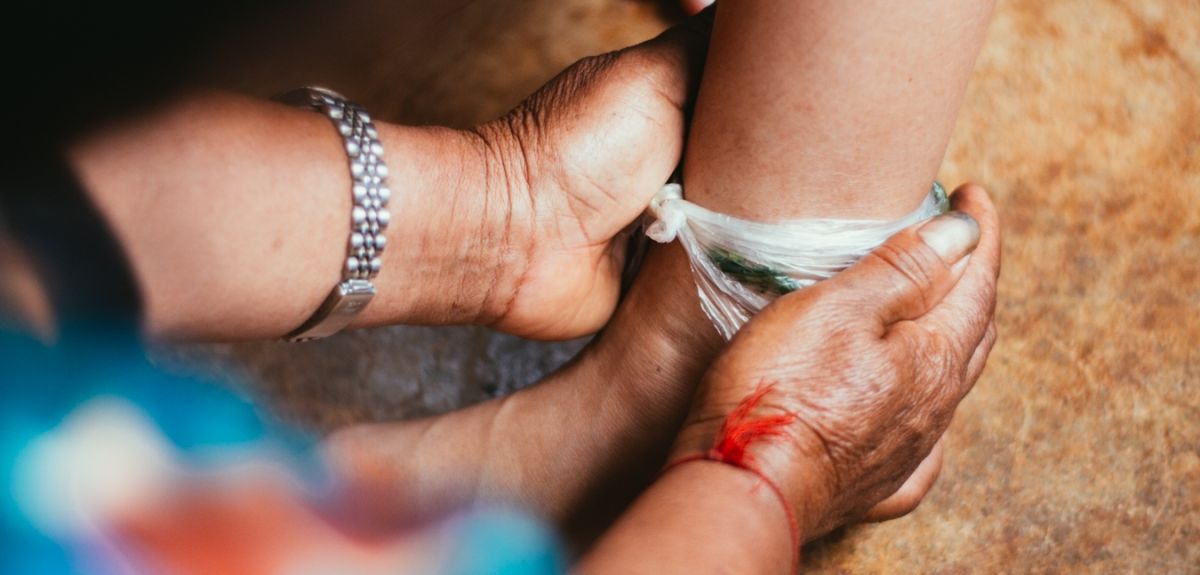
A healing stone brought from Burma a generation ago lies alongside a tiger claw on Abor’s wooden table. Scraping this 'Black Stone' against a rock creates a fine grey powder, which Abor dissolves in water and applies to wounds that he had previously perforated lightly with a hammer holding small nails. Legends tell of people with broken bones who, unable to stay off work during the hospital’s recommended three-month recovery period, would convalesce within a week after receiving Abor’s treatment.
Abor’s story and the legends around the Black Stone are just one of the many fascinating tales of treatment that the Antibiotics and Activity Spaces survey team encountered during a demanding journey to 72 villages and more than 15 different ethnic groups in Northern Thailand. Tales about herbal medicine, ghost doctors, sacred books of chants, and ceremonial posts highlight that healing maintains firm though waning links to local knowledge and belief systems even in an economy and society transitioning as rapidly as Thailand’s.
The villagers who told their stories would still seek care from doctors for serious health conditions, using traditional healing often only as a secondary step when they had started to lose hope about the ability of formal healthcare to cure them. Traditional healing and medicine therefore do not necessarily compete with or substitute for formal healthcare from trained doctors and nurses. Rather, tradition blends into and complements modern forms of healing that have their own limitations.
One example of the blend of the traditional and the modern is the work of Grandma Kaew. The skills and knowledge for her work as a herbalist had been passed down to her from previous generations, enabling her to produce herbal compresses and mixtures and to blow ancient chants on to patients’ wounds. Practical reasons also require her to process herbs efficiently, owing to which she also blends sun-dried herbs and packages them in capsules for easier storage and administration. Her industrious work combines century-old traditions and knowledge with patient expectations for capsules that resemble modern pharmaceuticals.
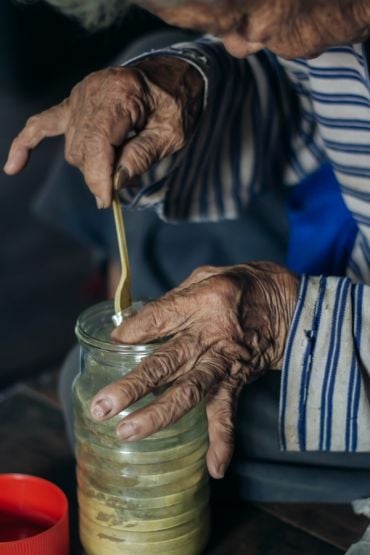 Grandma Kaew dispenses herbal medicines to villagers.
Image credit: Patthanan Thavethanutthanawin
Incidentally, Grandma Kaew’s capsules do not only embody the knowledge and skills of past generations, but they also resemble solutions for acutely current global health policy problems: microbes’ resistance to antibiotics and other types of antimicrobial medicine is growing. Also known as drug resistance, this process makes medicine less effective, infectious diseases more difficult to treat, and it is feared to become the leading cause of death by 2050. One way to counteract this development is to preserve the effectiveness of the medicine by using it as sparingly as possible. Thai health policy follows this approach by promoting the use of herbal medicines through its Antibiotic Smart Use programme, which has equipped nurses and doctors with an alternative to antibiotics should patients expect or demand medicine for non-bacterial infections.
Reflecting on the relationship between traditional medicine and modern global health problems, project leader Dr Marco J Haenssgen argues: 'The Tales of Treatment are not only a vibrant account of Northern Thai culture and customs, but they also reveal an ironic situation in global health. Modern medicine has often discredited traditional medicine as unscientific and created a widespread dependence on Western pharmaceuticals. This dependence has quite plausibly accelerated the development of antimicrobial resistance, yet the threat of antimicrobial resistance may also entail a recognition of traditional forms of healing as a substitute for needless antimicrobial use. While we do see a co-existence of different systems of medicine in some health systems like in India and China, there is perhaps more that Western biomedicine can and should learn from local knowledge.'
The curators – Joobjang, Mind, Yok, and Ern – exhibited their work from 14-17 July at Art Gallery G23 (Srinakharinwirot University, Bangkok), welcoming enthusiastic visitors from NGOs, the United Nations, research institutes, Thai government departments and schools, and many more. The exhibition narrated 12 photographic tales that ranged from sacred healing stones via traditional herbal medicine to summoning ghosts, thereby illustrating still-existing yet fading rural lifestyles and medical treatments.
This provided an opportunity for visitors to envision the gradual blend of the 'traditional' and the 'modern', as research officer Ern Charoenboon recalls: 'It’s not only interesting to learn how villagers make sense out of modern medicine during our time in the field, but when we brought the stories from Chiang Rai to Bangkok, it was also fascinating to see how urban dwellers interpret these "traditional treatments," "old-days solutions," and "rural beliefs."'
The exhibition also shared a glimpse of early research findings from the Antibiotics and Activity Spaces project and paid tribute to the hard-working survey teams in Thailand and Lao PDR who made this work possible.
The Antibiotics and Activity Spaces project is funded by the Antimicrobial Resistance Cross Council Initiative supported by the UK's seven research councils in partnership with the Department of Health and Department for Environment, Food & Rural Affairs (grant ref. ES/P00511X/1, administered by the UK Economic and Social Research Council).
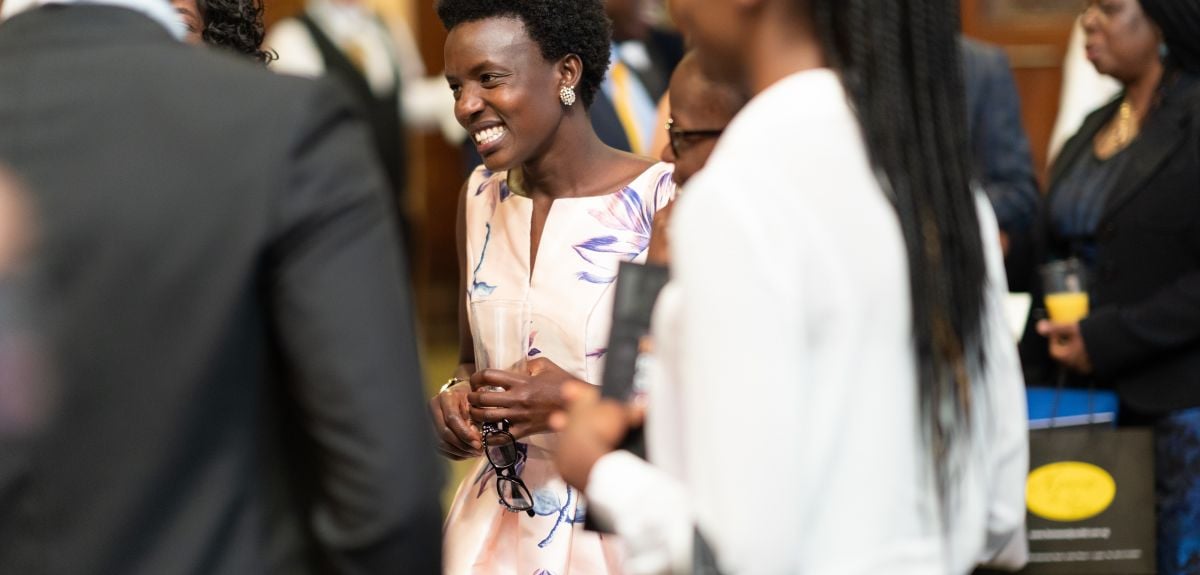
An Oxford University graduate named as one of the UK’s top black students has news for those that believe people are born smart. Revealing that you don’t necessarily have to be gifted to succeed in life, and with hard work and determination there is hope for us all – even underachievers.
Gladys Ngetich, Rhodes Scholar and Aerospace Engineering DPhil Student in the Department of Engineering, was recently named as one of the ‘UK Top 10 Rare Rising Stars’ of 2018.
Now in its tenth year, Rare Rising Stars is a celebration of the achievements of the UK's best black students. The judging panel included: Sophie Chandauka, Trevor Phillips OBE and Jean Tomlin OBE.
In addition to being recognised as a Rare Rising Star, Gladys’ time at Oxford has been memorable. Highlights include: registering a patent in collaboration with Rolls Royce Plc, being interviewed by BBC Science and also being awarded the ASME IGTI Young Engineer Turbo Expo Participation Award, which resulted in her presenting a paper at the annual American Society of Mechanical Engineers (ASME) conference.
However, despite her significant achievements, many would be surprised to know that Gladys has not always been so academically gifted. Born in Amalo, a small village in Kenya, she once performed so badly in the national Primary School exam (the Kenya Certificate of Primary Education - KCPE) that she struggled to find a High School (school age 14-18 years old) that would accept her.
She credits her mother as a key support in encouraging her to continue her education and follow her dream of becoming an Aerospace Engineer. It was this determination that motivated her to reverse the situation, and subsequently graduate from High School with the highest grades of any student in her district.
She then won a James Finlay Scholarship which enabled her to pursue her undergraduate degree (a BSc in Mechanical Engineering) at Kenya's top engineering university - Jomo Kenyatta University of Agriculture and Technology (JKUAT), graduating with distinction in 2015, winning several awards along the way and setting the scene for her hard-earned path to Oxford.
Of selecting Gladys as part of the Rare Rising Stars top 10, a Rare Recruitment spokesperson, said: ‘Rare Rising Stars like Gladys personify Rare's philosophy: that a person's ethnic or socio-economic background should not determine their future. It's important that elite universities like Oxford have recognised that too.’
Rare Recruitment also created and run Target Oxbridge, the programme that helps high-achieving black students gain places at top British universities, which recently announced plans to expand dramatically with support from Oxford University. A spokesperson for Rare Recruitment, said: ‘Having both Oxford and Cambridge's strong support for Rare's Target Oxbridge programme really demonstrates to young black school children across the country that the sky is the limit. Applications open for Target Oxbridge for talented black Year 12s this autumn - I hope that potential candidates can take inspiration from the achievements of our Rare Rising Stars.’
Gladys herself was overcome with emotion upon hearing the news that she had placed on the list, and explains: ‘I must confess that I have not recovered from mixed feelings of excitement and disbelief. I come from a very humble background and I have had to navigate a lot of challenges to get to where I am. Thus, this award means a lot to me. My hope is that it will inspire students with humble backgrounds like mine’.
Gladys’ commitment to inspiring others, particularly young women like her, runs throughout everything she does. In April 2018, she was awarded the Skoll World Forum Fellowship as a budding inspirational social entrepreneur, and she is co-founder and CEO of the ILUU Organisationin Nairobi which mentors and inspires girls from rural parts of Kenya. She has also been shortlisted for the McKinsey & Company Next Generation Women Leaders Award.
Intent on encouraging the next generation of female engineers, Gladys served on the EngineerGirl Markers Panel and she is currently working with the Beyond Boundaries Project and IF Oxford Science Festival to organise exciting initiatives aimed at raising the profile of black women in engineering.
Her advice to others that aspire to reach and even exceed their potential is simple: ‘keep going, keep stretching beyond your comfort zone, and keep dreaming because no one knows what the future holds.’
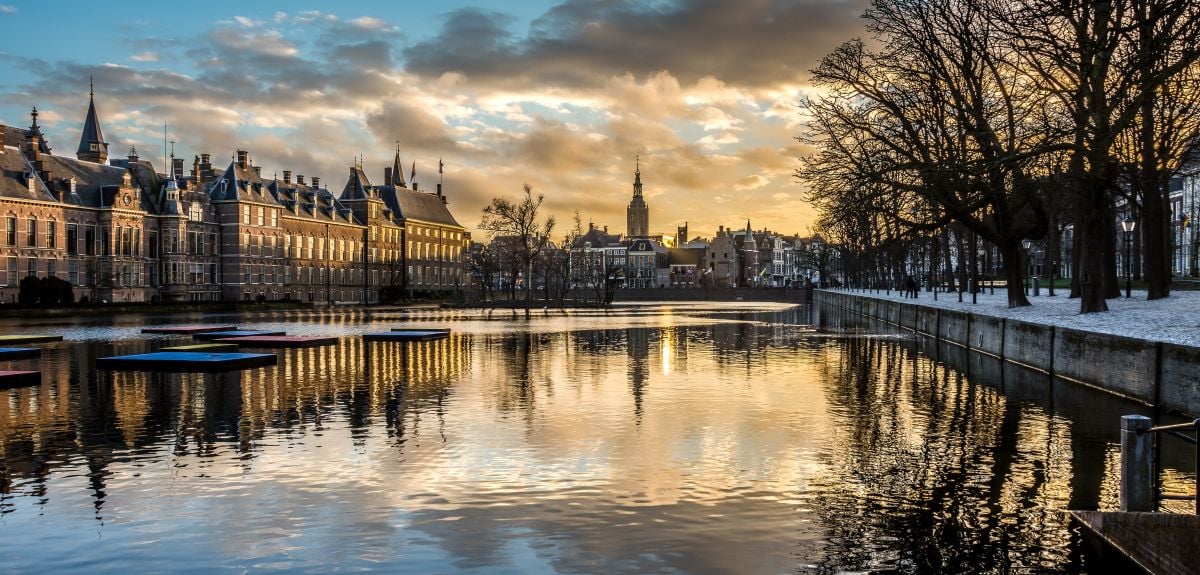
The Cut Out Girl by Oxford English professor Bart van Es has been named Costa Book of the Year, after previously winning the biography category of the awards. Professor van Es triumphed ahead of literary figures including novelist Sally Rooney. Read our Q&A below with Professor van Es, whose book tells the story of Lien de Jong, a young Dutch girl hidden from the Nazis during World War II.
*************************************************************************************************
The last time Lien de Jong saw her parents was in the Hague, where she was collected at the door by a stranger and taken away to be hidden from the Nazis. She was raised by her foster family as one of their own, but a falling out after the war put an end to their relationship. What was her side of the story, wondered Oxford University's Professor Bart van Es, a grandson of the couple who looked after Lien.
Professor van Es, of St Catherine's College and Oxford's English Faculty, talks to Arts Blog about the journey that led to the publication of his new book, The Cut Out Girl: A Story of War and Family, Lost and Found.
How did you discover the story of Lien de Jong?
I had always known that my grandparents had been part of the Dutch wartime resistance and had sheltered Jewish children, but I had never looked into what actually happened. Then in November 2014 my eldest uncle died and I knew that if I did not pursue the matter now this history would be lost forever. Thanks to my mother’s maintaining of an old connection, I got to meet Lien, who was by that time over 80 and living in Amsterdam. As a young Jewish girl Lien had lived in hiding with my grandparents and after the war she had continued to live with them. However, a row in the 1980s had cut her off from the family, which meant that she and I had never met. Lien was cautious when we met in late December 2014, but, once trust was established, we struck up a powerful partnership. Lien agreed to work with me and shared a wealth of materials: letters, photographs, official documents, and also a poetry book that she kept up throughout the war. Through many tens of hours of recorded interviews, Lien shared a story that was immensely moving and far more complex than I could have imagined.
Can you describe the process of researching and writing the book?
Starting out from those interviews with Lien, this became an archival research project as well as a literary journey. In January 2015 I decided to visit the places of Lien’s childhood: her parents’ home in The Hague (now a physiotherapy gym), my grandparents' old address in Dordrecht (now in a deprived area inhabited mainly by recent immigrants), and a series of other hiding addresses across the Netherlands, including my mother’s home village, where Lien spent time. These places brought their own stories, which I then began to investigate. Among other things I spent a lot of time at the Dutch National Archives looking at the prosecution material on 230 Dutch police officers who were investigated after the war for their role in the Holocaust. What I ended up with was a huge amount of material: the intimate narrative of Lien’s life from childhood to old age combined with archival evidence on resistance networks, police collaboration, and the wider history of Jews in the Netherlands. The challenge was to put this into a single book.
How easy was it to combine academic research with such a personal story?
It was challenging to combine the two kinds of material I had to hand, and I had some sleepless nights over what I was doing. After various experiments I opted for a double narrative with one strand in the first person (describing my travels and the documentary evidence I encountered) and a second strand that was much more novelistic (written in the third person, voicing the childhood experiences of Lien). I’d never written in such an emotionally intense way before. It was exciting and all-consuming. At the same time it was important to remain academically objective: there could be no factual errors about what happened in the war and afterwards, both because of its historical importance and because there were real, still-living people involved.
Are there any moments from your conversations with Lien that particularly stand out?
The things that stand out for me are the documents that Lien has kept with her. For example, there is the letter that Lien’s mother wrote to my grandparents in August 1942, in which she gave up her child in the hope that Lien would survive the war even if the rest of the family could not. There is also the last letter that Lien ever wrote to her mother, which was not delivered because her parents were already in Auschwitz by the time it would have been sent via the secret post. Also very powerful are the wider stories of resistance activity that came to me in the course of my research. In one case a group of young Dutch women decided that the only way in which they could save Jewish babies would be to claim them as their own illegitimate children, fathered by German soldiers. This brought absolute safety to the babies, but also, of course, terrible shame to the women themselves.
In the book I try to answer some big questions, including:
- Why was the Netherlands so compliant with the Nazis, so that 80% of the country’s Jews were killed, a far higher percentage than elsewhere in the West?
- What was it that made some brave people (such as my grandparents) resist the Nazis?
- What were the psychological consequences for survivors and rescuers?
- And, most pressingly as far as The Cut Out Girl story is concerned, how could my grandmother (who rescued Lien and brought her up as her own daughter after the war) have ended up quarrelling with the person she saved from the Holocaust? How could she have sent her a letter, in July 1988, that cut Lien out of her life?
Answering those questions will, I hope, give a new perspective on what happened in World War II.
The Cut Out Girl by Bart van Es is published by Fig Tree, 2 August, priced £16.99.
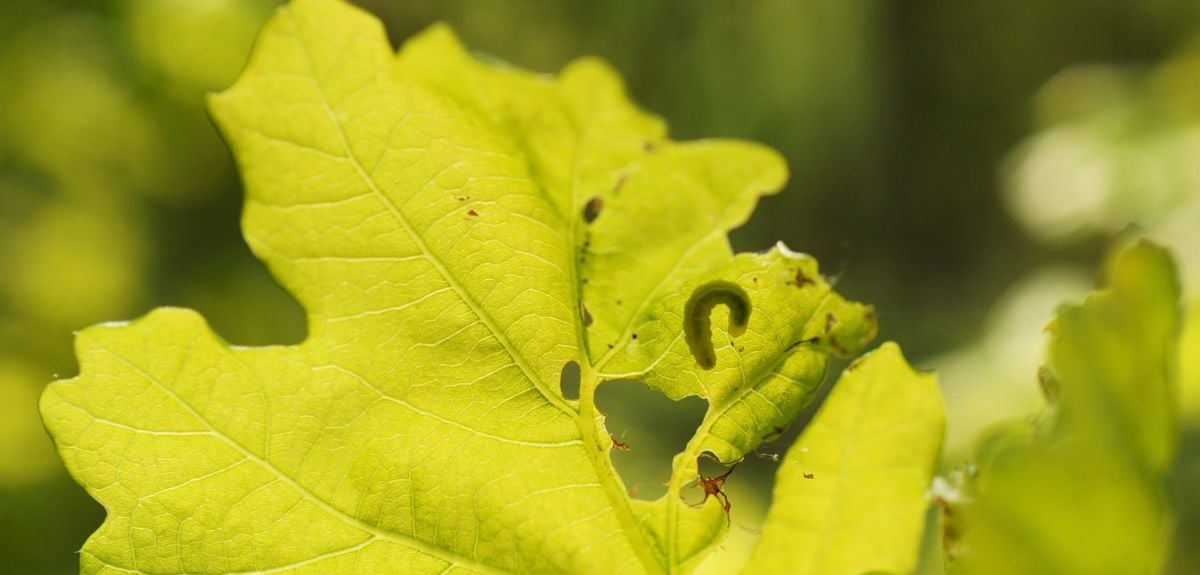
Kristiina Visakorpi, a doctoral researcher in Oxford’s Department of Zoology, sheds light on her work studying insect herbivores and the effect that they have on plant processes such as photosynthesis, their carbon emission levels and the potential long-term implications for the environment.
Almost every plant will be eaten by an insect at some point in its life. While the damage caused by plant-feeding insects is understood to impact the functioning or structure of plants and trees, we still know very little about how these changes affect larger-scale plant processes and the canopy ecosystems that they are part of.
The role of insects is usually not taken into account when estimating fluxes of carbon between forests and the atmosphere, or when predicting how changes in the climate might affect the intake of carbon by plants. However, our new study, published in the journal New Phytologist looks at how insects feeding on oak leaves can affect both the photosynthetic rate of these leaves, and whether or not these changes can alter the amount of carbon being absorbed by the tree.
We studied winter moth caterpillars, which are a common insect species that feeds on leaves of many trees, including those in Wytham Woods, Oxford. We found that the photosynthetic rate is substantially lower on leaves that have either been eaten by caterpillars, or on uneaten leaves, growing next to these leaves.
Next, we looked at how many eaten leaves there are in the oak canopy, compared to completely uneaten leaves surrounded only by other uneaten leaves. When we take into account the leaf-level changes, and the proportion of these different leaves in the canopy, we estimate that half of the potential photosynthesis on a level of the canopy is lost. This means that even a small amount of damage caused by caterpillars on an individual leaf, adds up to a huge amount of carbon not being assimilated through photosynthesis across the whole tree.
With the warming climate, many insect species are predicted to spread to new areas, or increase in abundance. If the effects we found in our experiment hold for other tree and insect species, the changing climate, through changing the ranges and abundances of insect populations, can alter how well the forests take up carbon in the future. Unless the effects we have measured are taken into account in climate predictions, the outcomes of these predictions might be misleading.
Earlier this year our research featured in the BBC documentary Judi Dench: My passion for trees.
Over the coming months we will explore if other oak leaf traits change simultaneously with the photosynthetic rate. This will involve measuring the chemistry of the leaves to see if the tree is producing defensive chemicals to protect itself from the caterpillars, which might be taking up resources needed for photosynthesis. We also aim to understand exactly how much carbon is being lost through a lowered seasonal rate of photosynthesis, and on the scale of the whole forest.

If you listen to Piers Morgan, Love Island, the reality TV programme that has had 3.4 million people hooked night after night this summer, is for the ‘uneducated’ and ‘dim-witted’.
However, writing for the Daily Mirror this week, as part of her British Science Association Media Fellowship placement, Dr Holly Reeve of Oxford University’s Department of Inorganic Chemistry, revealed that fans of the show have more in common with professional scientists than you might expect.
Do your evenings involve:
- predicting who will find who attractive?
- studying contestants 'impressive' approaches to coupling up?
- wondering what will happen when more men or women are introduced?
- marvelling over the response of individuals to the latest dramatic twist?
Sounds like you're a scientist. An evolutionary biologist to be precise.
Dr Stuart Wigby and his team at the University of Oxford literally watch flies mating to study everything from reproduction and fertility, to changes in female behaviour (including aggression) after sex, to the link between sex, aging and number of sexual partners.
So, what can Love Island fans learn from science - and just as importantly, can the scientists learn anything from Love Island?
One of the biggest similarities between fly sex research and Love Island is the ability to control sex bias in populations (or on islands). That means that you can study the effect of having more males or females in a population on an individual's behaviour.
However, it's worth remembering that flies have very different concerns to their Love Island counterparts.
Sally Le Page from the Wigby lab says for flies, mating ‘is all about the number of offspring’, you can produce with no concern about the morality of partnerships.
In Love Island, to survive the public vote, ‘contestants effectively have to pair up in ways in which the watching public approve!’
But it's these very different concerns that make Love Island interseting.
So, what can we learn from Love Island?
Love Island essentially sets up and enforces sequential monogamy - that is, to survive (stay on the island) you need to be a couple.
It's a different setup from an evolutionary perspective where the costs and benefits of mating are different for men and women.
Dr Wigby says Love Island ‘makes the costs and benefits equal for both sexes’.
‘You might expect males and females to become more similar in behaviour...and, over evolutionary time, appearance too’.
Yikes!
Of course, things are a bit different when nature and evolution come in to play.
As Empirical Zeal explains; when it comes to flies: ‘Sex is war. It's a battle for limited resources.
"The source of sexual conflict is this: sperm is a relatively cheap resource for males to produce, whereas producing eggs and rearing offspring is a much larger investment on the part of the female.’
Which is where some of the conflict comes from on ITV each night - contestants bucking the evolutionary trend in order to win the contest.
We know how to study Love Island, but how do you study fly sex.
Studying fly sex and studying Love Island have some similarities (and some differences).
Male and female Drosophila melanogaster flies can be identified by their bottoms. Females tend to have large light coloured behinds, whereas males have smaller black ones.
From a selection of flies, you can separate them into compartments at male to female ratios of your choice... using small paint brushes (so the flies don't get damaged)!
From there, you can sit, watch and wait.
Studying fly behaviour
And you'll see the flies starting to mate.
Dr Wigby says: ‘It usually takes them around 20 minutes" (impressive) "so realistically you don't have to check in on them too often.'
Number of mates, fly behaviour, number of eggs laid and number of baby flies hatched can all be carefully monitored.
All in the time it takes to watch an episode (or perhaps two) of our favourite show.
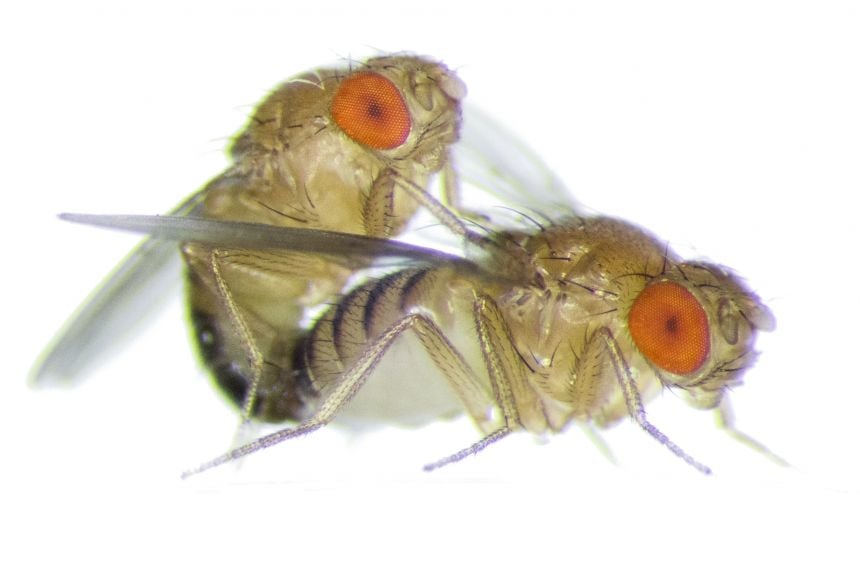 Two fruit flies mating.
Image credit: Amy Hong
Why do scientists study fly sex?
Flies are a good model to study for a number of reasons.
Firstly, they have short life cycles, and therefore evolution can be studied much more easily than in larger animals or humans.
Secondly, particular species of flies (like Drosophila melanogaster ) are really well understood at a genetic level. That means that it's much easier to relate findings to actual genetic changes.
Lastly, it's not particularly ethical to study these things in humans, unless it's broadcast on TV...
What have we learnt from insect sex research, past, present and future?
We've learnt a lot from studying mating in animals, including in flies and other insects.
For example, there's research that says sex can alter female behaviour.
That's because ejaculate contains a cocktail of proteins alongside sperm. These proteins can lead to emotional, and over time evolutionary, changes to females. In one Wigby group study 'when males were exposed to a competitor male, matings were longer' and more of two particular sex proteins were transferred to the females. And in another, sex led to a significant increase in aggression of female flies when it came to fighting over food! The little flies got way more angry than the bigger ones.
A Love Island-esque study showed that high male biased populations led to the evolution of males who lost the ability to maintain higher fertility over successive ejaculations.
Eeek, just another reason for our Love Island males to fear more men being introduced to the island. Some other female responses to receiving sex proteins from across the animal kingdom include - spontaneous ovulation and decreased female sexual receptivity (so a lower sex drive!).
But some results are more relevant to our lives.
In fact, in 2017 Jeffrey C. Hall, Michael Rosbash and Michael W. Young won a Nobel prize for their research into the circadian rhythm (our biological clocks). Some of this research was based on our friends, the flies.
Some recent results show that aging in men can affect sperm and sex protein quality leading to significant consequences for fertility.
Usually female age is considered more important in reproductive capabilities, but these findings help researchers look more widely at factors contributing to fertility.
And finally, are there any limitations of Love Island preventing scientific conclusions?
Wondering how the Love Island creators could make the show more scientifically relevant, and possibly more entertaining?
Firstly, the population is far too attractive. Normal populations and sex decisions rely on diverse sexual desirability. In flies, larger females and larger males are preferable as potential mates.
Secondly, the animal kingdom doesn't follow heterosexual monogamy so strictly, allowing trios (or more) and same sex coupling would be more realistic.
Perhaps we'll see that in next year's series.
- ‹ previous
- 68 of 252
- next ›
 Learning for peace: global governance education at Oxford
  What US intervention could mean for displaced Venezuelans
  Setting the agenda for the next century of quantum
 10 years on: The Oxford learning centre making an impact
 Mapping the Moon: the world’s first lunar atlas goes digital
  Oxford and The Brilliant Club: inspiring the next generation of scholars
 New course launched for the next generation of creative translators
 The art of translation – raising the profile of languages in schools
  Opening a window into the quantum world
 Tracking resistance: Mapping the spread of drug-resistant malaria