Features
As part of World Cancer Day 2022 we are diving into 10 of Oxford’s most impactful historical and modern contributions to the field of cancer science and treatment. Read more about what Oxford researchers have done to shape this ever-important area of medical science.
1. Uncovering the significance of hypoxia in cancer science
A discovery so significant that it warranted a Nobel prize: Sir Peter Ratcliffe is famed for his work on oxygen deprivation (hypoxia) and subsequent cellular responses.
Cancers have unique microenvironments, which they must overcome in order to grow rapidly and uncontrollably. By understanding these conditions and how they come about, clinicians and researchers can strive to develop new drugs to reverse or suppress these pathways.
During his time in Oxford’s Nuffield Department of Medicine, Sir Peter discovered that a specific hormone, known as EPO, was involved in the production of blood cells in response to low oxygen levels in the kidneys. The underlying mechanism behind this process was later applied to cancer, and explained how cancers could create new blood vessels to sustain their fast and uncontrolled growth. This discovery was so significant, he was awarded the Nobel Prize in Medicine in 2019. Ratcliffe’s work into EPO has paved the way for the development of new drugs to improve the efficacy of cancer treatments.
NOW: Continuing this important work into tumour microenvironments, the Oxford ARCADIAN project is now investigating how common antimalarial drug Atovaquone can help to reduce the hypoxic environment of tumours and improve the efficacy of treatments such as radiation.
2. The discovery of regulatory T-cells (Tregs) told us a lot about how cancers can progress
Regulatory T cells, also known as Tregs, were first discovered in 1990 by Fiona Powrie and collaborators, whilst at the Sir William Dunn School of Pathology at the University of Oxford.
Regulatory T cells (Tregs) are a specialized subpopulation of immune cells that act to suppress the body’s immune response. Because of this, their importance in the cancer development process cannot be understated. If there is a dysregulation in Treg frequency or function, diseases such as cancer can be allowed to thrive and progress. The discovery of Tregs has explained - in part - why the immune system does not effectively defend against tumour cells, as well as identifying a new avenue for targeted cancer treatment. Since their discovery, a taxonomy of new Treg subtypes with varying functionalities have been found, further diversifying the potential for new therapeutic targets.
NOW: Developments into Immuno-oncology remains one of the four priority cancer themes at the University of Oxford, with researchers at the interface between cancer and immunological sciences striving to unravel the mysteries of the immune system. As part of this dedication, the University looks forward to welcoming the launch of the upcoming Oxford Centre for Immuno-oncology in 2022.
3. Shaping public policy around the risk of smoking, diet & cancer
There are many potential environmental factors linked to cancer, but smoking and diet are two factors that are known for certain to significantly increase your risk. However, it took a long time for society to understand this risk, and for smoking cessation and diet to be integrated into public health policy.
Sir Richard Peto dedicated his research in Oxford to unravelling the connections between smoking, diet and cancer risk. Through his meta-analyses we have found key pieces of information that have contributed significantly to shaping public policies, such as showing that UK cancer death rates are still one-third higher than they would be if people didn’t smoke. He was also the first to describe the future worldwide health effects of current smoking patterns, predicting one billion deaths from tobacco in the present century if current smoking patterns persist.
He and his colleagues are running studies of millions of people followed for many years in many countries to assess the changing effects of smoking, drinking, diabetes and obesity on death from cancer and many other conditions. As the world’s leading expert on death related to tobacco, Sir Richards’s work in cancer was so significant, he even had a paradox named after him.
NOW: His work has inspired many more in Oxford to investigate the causational links between lifestyle and cancer, through the ongoing work of the Cancer Epidemiology Unit, European Prospective Investigation into Cancer and Nutrition (EPIC) and with international datasets such as the China Kadoorie Biobank.
4. Developing simple cancer blood tests and rolling them out into the NHS
Diagnosing cancer can take time. From the moment a patient sees their GP they may undergo rigorous and invasive testing, which take time and resources. As we learn more about cancer, we are finding unique features that allow us to develop new, simple tests to accurately and quickly diagnose multiple cancers.
Liquid biopsies, such as blood or urine, can be used to find trace-materials indicative of cancer. This is leading to a revolution in early-cancer-detection blood tests being developed and trialled in Oxford. Some researchers are developing tests to identify genetic material of cancers, whilst others are looking for cancer metabolites, and all are showing very promising early results.
NOW: Oxford is currently involved in the SYMPLIFY study – validating the use of one such blood test within the NHS. Initial results from the nationwide study are expected to be released by 2023. If positive, the study will be expanded to involve around 1 million participants in 2024 and 2025 before potential roll-out into the NHS for general use.
5. The link between HRT and cancer risk, and informing its use
Hormone replacement therapy (HRT) came as a blessing to many menopausal women in the late 1990s. However its discovery was somewhat dampened as results of the Women’s Health Initiative in 2002, which showed that HRT had potentially more detrimental effects than beneficial ones. Its association with increased risk of cancer meant that public and medical opinion quickly changed: its usage was quickly unrecommended, leading to negative consequences for the health and quality of life of menopausal women.
The work of the late Dame Valerie Beral and the Million Women Study (MWS) was quick to delve further into these cancer-related links, in order to better understand HRT and inform its usage. The MWS, opening in 1997, recruited more than 1.3 million UK women over 50, becoming the biggest dataset of its kind at the time.
Results from the study in 2003 confirmed the associated risk of HRT with certain cancers, such as breast cancer. But more importantly, the study also showed that risk increases the longer a woman uses HRT, but drops to the normal level within five years after stopping use. This discovery was significant in defining recommended length usage of HRT, and allowed patients and clinicians to weigh up the associated risks of HRT against the benefit to a woman’s wellbeing.
NOW: Dame Valerie’s legacy into improving women’s health continues in Oxford with the work of ovarian cancer researcher Ahmed Ahmed and the continuation of the Cancer Epidemiology Unit where her work originally took place.
6. Developing new drugs to treat historically difficult-to-treat cancers
Cancer treatments are never a one-size-fits-all solution. There is always a need to discover new therapeutic drugs that target specific cancer subtypes, or can treat cancers that do not currently have any effective treatment options. Researchers at the University of Oxford from departments such as Chemistry, Biochemistry, Pharmacology and Oncology are continuing to develop new treatments for patients with little or no viable treatment options.
NOW: The immunotherapy drug Tebentafusp has been tested in Oxford clinical trials and shown to improve the longevity of patients with metastatic uveal melanoma – a cancer that is historically hard to treat. Now in its Phase 3 of clinical trials it has become the first new therapy to improve the overall survival of uveal melanoma patient in 40 years, and will be applied to more cancers in the future as research progresses.
7. Discovery of the first tumour-specific antigens that went onto produce the first generation of anti-cancer vaccine
Finding molecules that are unique to cancers is an ideal way to create targeted treatments that don’t damage healthy, normal tissue. Discovering these molecules on multiple different tumour types is even more exciting as it can lead to the development of multi-cancer treatments.
NOW: The work undertaken by Benoit Van den Eynde at the Ludwig Institute in Oxford discovered tumour-specific antigens known as MAGE-A3 and NY-ESO-1, which were found on multiple different cancer types but crucially not on normal cells. This allowed the development of novel immunotherapy vaccines in collaboration with Adrian Hill, who co-developed the ChAdOx1 viral vector (famed for its use in the AZ-Oxford COVID vaccine). This collaboration has since seen the development of the first-of-its-kind cancer vaccine, which entered clinical trials in 2022.
8. Revolutionising the way we deliver drugs to a tumour
Traditional chemotherapy is released across the body, with only a fraction of the therapeutic reaching a tumour. As a result, it is associated with toxic side-effects that often lower a patient’s quality of life throughout treatment. Oxford researchers are finding novel ways to deliver lifesaving anti-cancer drugs in more targeted, direct ways. In doing so, clinicians can raise drug dosage and increase the chance of treatment success, without damaging healthy tissue and causing unacceptable toxicity to patients.
NOW: Ongoing projects such as PanDox and BUBBL are trialling novel ways to encapsulate anti-cancer drugs, and release drugs directly in and around tumours. These particular projects, lead by the Department of Engineering, are combining ultrasound, oncology and bubble technology to achieve this.
9. Implementing cancer risk scores into primary care
Not everyone will get cancer in their lifetime, but some people are at an increased risk due to genetic, environmental or other biological factors. Identifying these people by giving them a risk score would allow clinicians to prioritise patients for more regular screening, to increase the chance of early detection.
NOW: Oxford researcher Julia Hippisley-Cox has established risk scores for multiple diseases, including cancer, through her QResearch database. Utilising the plethora of information in patient medical records, Julia’s work has allowed for the identification of new cancer-related symptoms and develop risk-scores to prioritise patients using the tool QCancer. This tool was similarly used to prioritise patients for vaccination during the COVID pandemic, and is now used widely across the NHS to ensure people at risk are identified and monitored.
10. Pioneering the use of mammographic imaging in breast cancer screening
Human error is always a risk when diagnosing cancers. So there is a need to find new ways to analyse patients and the results of their medical tests (such as medical scans) that use reliable computer-based technologies. Whilst many Oxford researchers are exploring the applications of AI in analysis, Oxford’s contribution to this field began a lot earlier in the 1990s with Sir Mike Brady. Sir Mike switched from his field of robotics at MIT to the field of medical imaging after he saw, first hand, how important accurate medical image analysis is in early cancer detection.
Sir Mike continued his work in Oxford and became a pioneer into mammographic imaging of breast cancers. Sir Mike’s work focused on the mathematical modelling of X-rays and how they travelled through the female breast. This entirely novel ‘physics based’ approach became the basis for analysing digitised mammographic images and identifying cancer, which has since become part of standard UK screening.
NOW: Nowadays the University of Oxford has a wide variety of projects dedicated to medical imaging analysis. In 2020 the Government announced a £11 million, Oxford-based, AI research programme to improve the diagnosis of lung cancer and other thoracic diseases. The project, known as DART, will use AI to more accurately diagnose lung cancer from imaging data.
There are now over 1,000 Oxford researchers who dedicate their work to tackling cancer-related challenges, and continuing on the legacy of world-class cancer discoveries across our key themes.
As part of World Cancer Day 2022 we thank all the researchers, clinicians, administration and support staff who dedicate their time to finding new and improved ways to understand, detect and treat cancer.

As part of their research project Amanda Matthes and Jonas Beuchert, supervised by Professor Alex Rogers, developed ‘SnapperGPS’, a low-cost, low-power wildlife tracking system based on satellite navigation. In summer 2021, they deployed it for the first time on wild animals: endangered loggerhead sea turtles in Cape Verde.
Location tracking devices are an important tool for biologists to study animal behaviour. Usually, they use global navigation satellite systems like the GPS for this. However, existing devices are often expensive and come with heavy batteries for long-term deployments. One tag can easily cost more than $1000, which prohibits studies with many animals. That is why SnapperGPS was developed.
Location tracking devices are an important tool for biologists to study animal behaviour.
The aim was to create a cheap, small, and low-power tracking solution. The core idea is to make the hardware simple and energy efficient by doing as little signal acquisition and processing on the device as possible.
Instead, they created a web service that processes the signals in the cloud. This allows them to build a bare-bone receiver for less than $30, which runs for more than ten years on a single coin cell.
The concept they employ is known as snapshot GNSS. Its advantage is that a few milliseconds of signal are enough to locate the receiver. With SnapperGPS they faced the particular challenge that the hardware records signals at a much lower resolution than existing receivers. To address this problem, they developed and implemented three alternative algorithmic approaches to location estimation from short low-quality satellite signal snapshots, which are all based on probabilistic models.
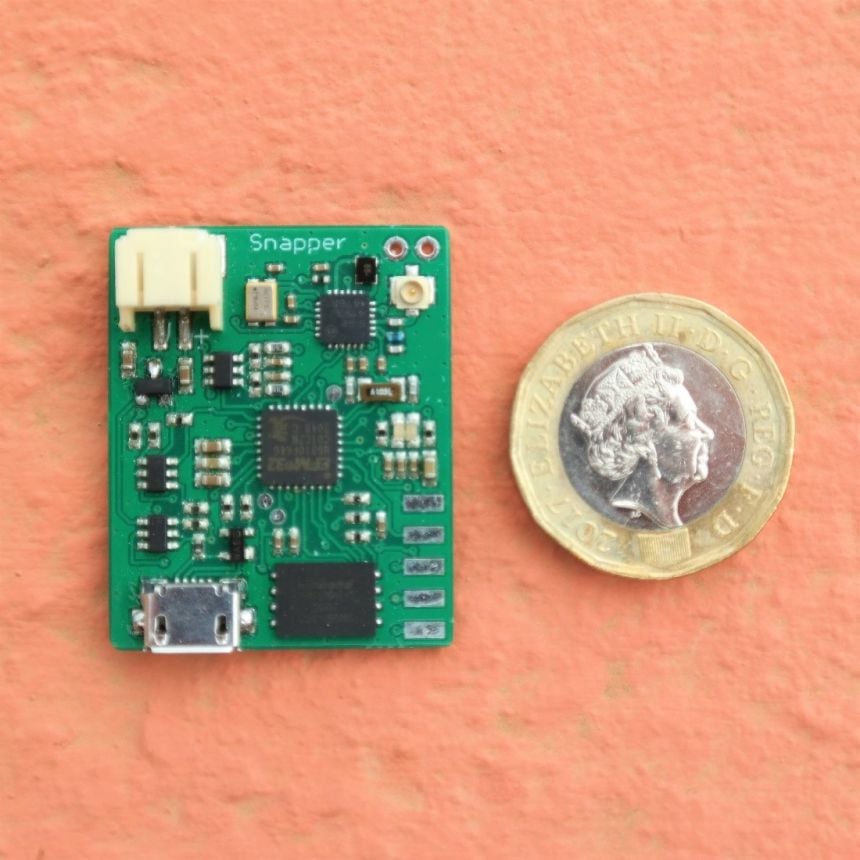 A SnapperGPS board next to a £1 coin. It measures only 3.5 cm x 2.8 cm.
Image credit: SnapperGPS team
In summer 2021 SnapperGPS was deployed on nesting loggerhead sea turtles (Caretta caretta) on the island of Maio in Cape Verde.
Loggerhead sea turtles spend most of their life in the ocean, but every two to three years mature females come to a beach to nest. They lay several clutches of eggs separated by roughly two weeks, which makes it possible to recover the hardware and any data it captured.
Navigation satellite signals cannot travel through water, but sea turtles regularly come to the surface to breathe. These short windows of opportunity may not always be enough for traditional GPS methods to resolve the position of the receiver. But a snapshot method only requires milliseconds of the signal which makes them ideal for such marine applications.
For this turtle deployment, the SnapperGPS tags were placed into custom-made enclosures that were tested to be waterproof to at least 100 m.
Due to the COVID-19 pandemic, they had to deploy the tags late in the nesting season which negatively affected our recovery rate as many turtles were already laying their last nest when they were tagged.
In total twenty tags were deployed and nine recovered. Some experienced unexpected technical failures but the tags that survived were able to capture several location tracks that showed unexpectedly diverse behaviour among turtles.
Wildlife location tracking data can inform conservation policy decisions that help protect habitats and prevent human-wildlife conflicts.
This data provides novel insights into the loggerhead sea turtle population on Maio. The exercise also taught the team important lessons about the specific challenges of deploying SnapperGPS on a sea turtle and they are working on an improved version for next year’s nesting season.
Wildlife location tracking data can inform conservation policy decisions that help protect habitats and prevent human-wildlife conflicts. In the case of loggerhead sea turtles, understanding their movements can inform where to direct anti-poaching measures and it can identify important marine habitats that may need special protection.
SnapperGPS is supported by an EPSRC IAA Technology Fund. Additionally, Amanda and Jonas receive support from the EPSRC Centre for Doctoral Training in Autonomous Intelligent Machines and Systems (AIMS CDT). The field work was made possible through a cooperation with the Maio Biodiversity Foundation and the Arribada Initiative.
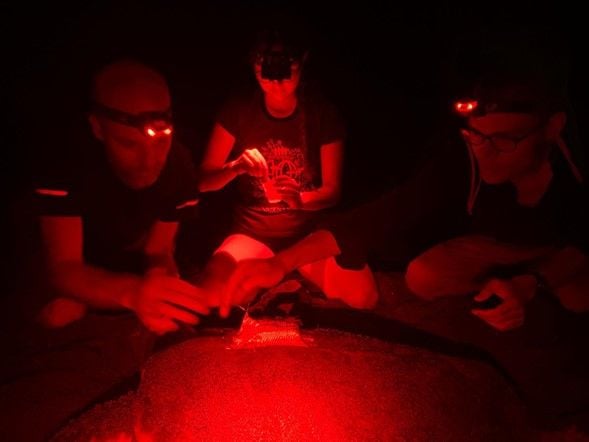 SnapperGPS team has tracked to a location of a loggerhead sea turtle captured by a SnapperGPS tag.
 Image credit: SnapperGPS team

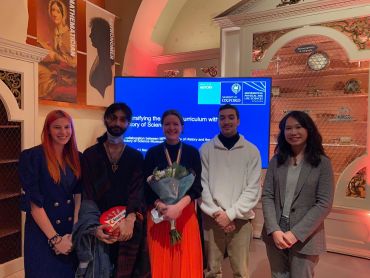 The four of the five undergraduate students from different universities who participating in the internship across five STEM-based subjects.
 The Diversifying STEM Curriculum project has created a unique and original collection of online materials engaging with some significant issues currently discussed in higher education and wider society.
The material reflects upon key scientific concepts and research and places them into wider historical contexts than has been the norm. In particular it highlights diverse contributions that have previously not been given the recognition they deserve including: ethnicity, gender, nationality, sexual orientation, disability, class and religion.
Each research project explores specific issues within their subject curricula to broaden the global historical and social context to scientific research
Jo Knights from Equality, Diversity and Inclusion team at the Mathematical, Physical and Life Sciences (MPLS) Division, said: ‘Each research project explores specific issues within their subject curricula to broaden the global historical and social context to scientific research, to give agency to scientists who have not been appropriately recognised, and to provide lecturers, researchers, students – anyone who is interested in diversifying their curricula – the content and research to integrate these projects into their teaching and learning.’
The projects aim to support the cultural shift towards a STEM curriculum that embraces an interconnected global view of sciences and maths, one that includes a diverse range of people and a more inclusive historical context.
The inaugural Diversifying STEM Curriculum project began in the summer of 2021, with five undergraduate students from different universities participating in a two-month internship across five STEM-based subjects at the University of Oxford. The students picked their own research topics and developed their final projects in collaboration with each other and their supervisors. The projects include:
Aleisha - Biology
By focusing on science as a process, I want to demonstrate how information builds and develops, and how it is communicated across cultures. I especially wanted to highlight the importance of agency, as oftentimes the narratives I’d heard would give agency to European scientists, but less so to people from other communities. I’ve chosen to discuss the world’s most consumed psychoactive drug: caffeine. Specifically, this project centres around coffee and yerba mate: two plants with seemingly opposing stories.
Mathematical history has brought out narratives about science that often focus on the singular, brilliant scientist, in most cases male and European,.... despite the ways in which the historical narrative is presented to the public, the evolution of mathematics is hardly as straightforward and linear as it may seem to be.
Adil - Physics:
My project seeks to provide a decolonialist account of South Asian science by interrogating the scientific-historical environment of colonial India at the time of its acceptance into western scientific spheres in the mid-20th century.’
Samy - Mathematics:
‘Teaching of mathematical history has brought out narratives about science that often focus on the singular, brilliant scientist, in most cases male and European, who makes substantial contributions through their innate genius. However, despite the ways in which the historical narrative is presented to the public, the evolution of mathematics is hardly as straightforward and linear as it may seem to be. We must therefore begin our delving into this history of mathematics as an attempt to unveil our own cultural prejudices.’
Sara - Chemistry
‘Named reactions are a very useful tool in organic chemistry and their importance became evident as their number increased through time. However, they are becoming increasingly controversial. One of the major issue arising is that at least half of the population was blatantly forgotten in the naming process: women. I am highlighting the origins behind the limited number of reactions named after women in the first thirty years of the 20th century and celebrating the achievement of women pioneers in organic chemistry in Europe.’
One of the major issue arising is that at least half of the population was blatantly forgotten in the naming process: women.
Yayan - Engineering:
Engineering has developed rapidly in the UK and has been one of the main engines of the UK economy. But it is obvious that the gender imbalance in engineering is relatively high, compared with other industries. In 2016, women only accounted for 21% of the engineering workforce, comparing with 47% in all industries on average. I’m investigating how gender equality was improved in the past, and if there are any lessons learnt which can improve gender equality at the present. I’m looking particularly at the inter-war years because women engineers started to realise the importance of gender equality and took various approaches to promote women’s status in engineering.’
The Departments of Chemistry, Engineering Science, Maths, Physics and Zoology have partnered with the Faculty of History and the History of Science Museum for these projects. Funding has been received from the Vice Chancellor's Diversity Fund.
See all the projects here: https://www.mpls.ox.ac.uk/equality-and-diversity/diversifying-stem-curriculum-projects-2021
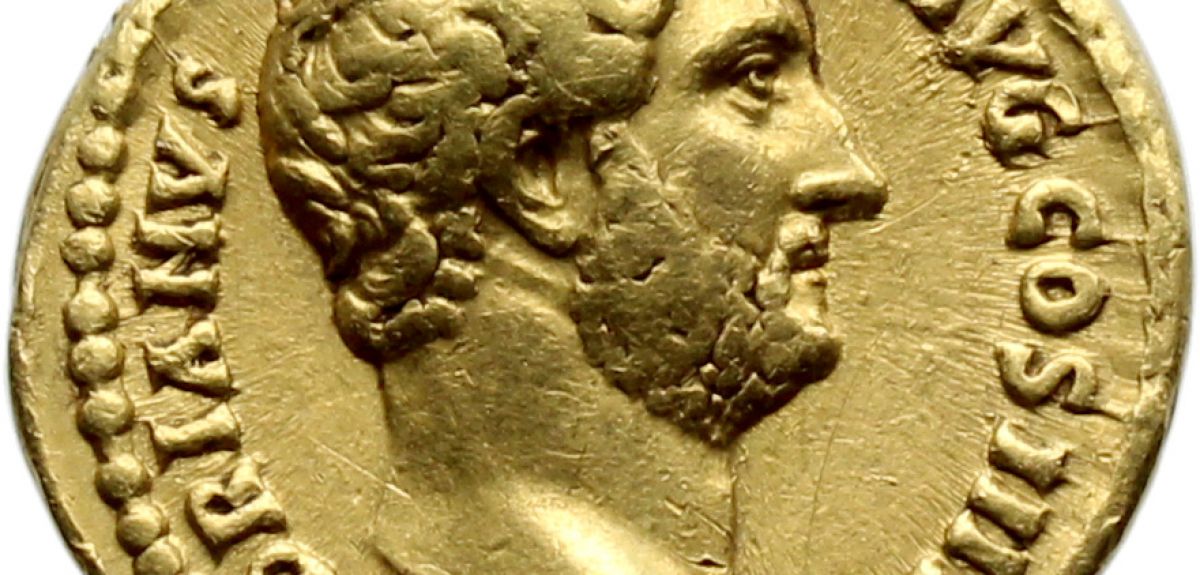
Cutting-edge scientific study of gold coins from different moments of the Roman Empire has revealed a thriving economy in the periods when the coins were minted.
Researchers from the University of Oxford and the University of Warwick brought three Roman coins for analysis by the Science and Technology Facilities Council’s ISIS Neutron and Muon Source. Each coin was from the reign of a different Roman emperor: one from Hadrian (2nd century AD), one from Tiberius (early 1st century AD) and one from Julian II (4th century AD).
When high-value artefacts need to be analysed, researchers are generally required to employ non-destructive techniques. The aim in this case was to see if the coins had been surface enriched – or secretly mixed with other metals. By doing this, the team could deduce a number of things, including the levels of economic stability.
The results from the surface level analyses of these coins suggested that they were very high purity gold...We know the Romans deliberately surfaced enriched their silver coins to ‘hide’ the fact there was a lot of copper in them, so it is plausible something similar happened to the gold
Dr George Green
Lead author, Dr George Green, Leverhulme Trust Early Career Fellow and Lavery-Shuffrey Early Career Fellow in Roman Art and Archaeology at the University of Oxford, says, ‘The results from the surface level analyses of these coins suggested that they were very high purity gold. However, these measurements were from the first few fractions of millimetres of the coins. There was a very reasonable ‘what if’ of ‘what if they’re actually made of something different beneath the surface?’ We know that the Romans deliberately surfaced enriched their silver coins to ‘hide’ the fact there was a lot of copper in them, so it is plausible something similar happened to the gold.
‘Our work at ISIS enabled us to sample the very centre of these coins totally non-destructively and conclusively show that the high purity seen on the surface was representative of the composition of the ‘core’ of the coin. At a basic level, it is further testament to the economic health of the Roman Empire, but these conclusions are also useful for researchers who need to employ non- or negligibly-destructive techniques on the surfaces of Roman gold coins. Now they can be confident the surface is representative of the bulk of these objects.’
Our work at ISIS...conclusively shows the high purity on the surface was representative of the ‘core’
To measure the purity of the gold coins they used muonic X-ray emission spectroscopy, a totally non-destructive analytical process that involves firing negative muons at the artefact. The muons are then captured by the atoms within the coins, which then emit a ‘fingerprint’ of muonic X-rays that are unique to the chemical element they came from.
Using this technique allows scientists to probe deeper into the elemental make-up of the historical artefacts than possible with other methods, while being entirely non-destructive.
Muonic X-ray emission spectroscopy also does not require the object to be cleaned before analysis, reducing the workload placed on cultural heritage institutions. Cleaning some artefacts can actually lead them to become damaged, so this technique is particularly useful for analysing objects still covered in a layer of mud or soil – such as those salvaged from shipwrecks.
These results highlight the potential of this technique within the field of cultural heritage. It is a non-destructive technique...making it a perfect tool for those working on museum collections
Dr Adrian Hillier
Dr Adrian Hillier, lead instrument scientist at ISIS and the muon group leader, says, ‘These results highlight the potential of this technique within the field of cultural heritage. It is a non-destructive technique that can sample deep beneath the surface of archaeological objects. It requires no sample preparation and does not leave the artefact radioactive, making it a perfect tool for those working on museum collections.
‘Beyond working out the sub-surface purity of an object it could: determine the depth of any corrosion on an object; identify chemical changes within the artefact caused by unique manufacturing processes; or reveal that an object we thought was made of one thing is actually a forgery made of another – all without causing any damage.’
The RIKEN-RAL muon beamlines at the ISIS Neutron and Muon source was used as they could produce muons with a high enough momentum to penetrate deep beneath the surface of the artefact being studied. The muons are created by bombarding a carbon target with high energy protons, this causes the creation of pions which are extracted and then decay into muons. These muons have a range of different momenta; the muons with lower momentum are used to analyse the surface of the artefact and the high momentum muons pass deeper into the artefact obtaining data from its core.
See the journal article.
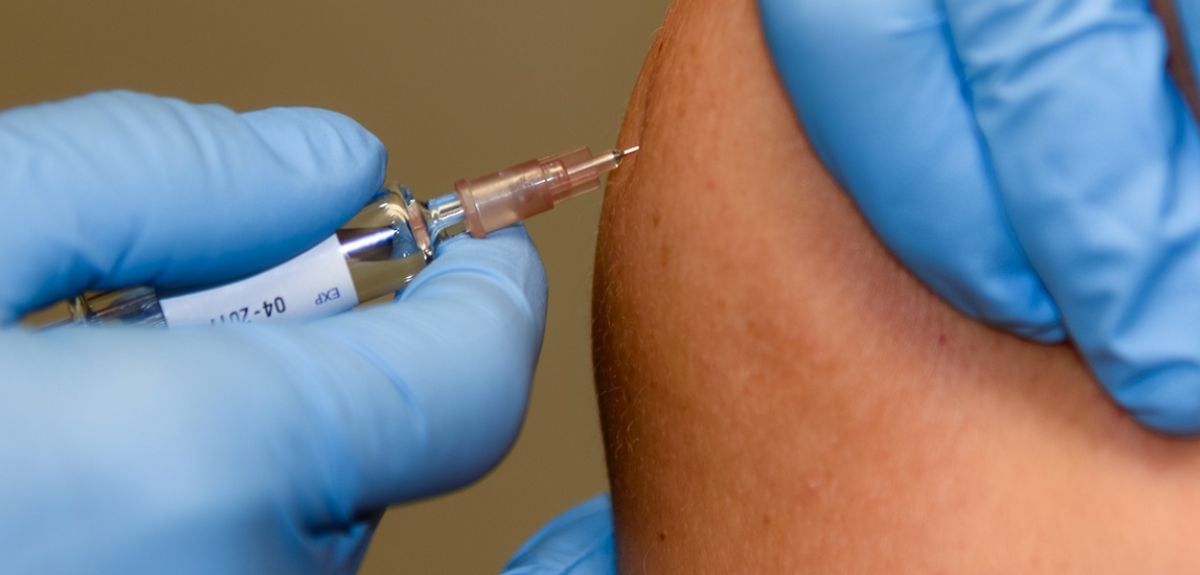
The year is 1934, and in a laboratory hidden in the basement of the Oxford University Museum of Natural History, a young woman peers at the clear crystals handed to her by the Waynflete Professor of Chemistry at Oxford University. The crystals are made of the peptide hormone insulin, which has been familiar to endocrinologists since 1921. But its intricate structure is still a mystery.
Its importance, however, was known even before insulin was actually discovered – the name ‘insulin’ was first used by the British physiologist Sir Edward Sharpey-Schafer in 1916, for a hypothetical molecule produced by the pancreatic islets that controls glucose metabolism.
Insulin stopped being hypothetical in 1921, when the Canadian physiologists Frederick Banting and Charles Herbert Best, working in the laboratory of J.J.R. Macleod, isolated insulin from a dog’s pancreas.
On a cold January just a few months later, Leonard Thompson, a 14 year old boy with diabetes, became the first person ever to receive an injection of insulin. Despite a serious allergic reaction, the insulin treatment worked, with usually high levels of blood and urine sugars seen in diabetes dropping to normal – Leonard lived for another 13 years.
'Before the discovery of insulin, there really wasn’t much you could do for people who had diabetes’, said Katharine Owen, Associate Professor of Diabetes and diabetes consultant physician. 'It really was a terrible diagnosis.'
100 years after the discovery of insulin made diabetes a treatable illness, it continues to be an active subject of study for scientists, including at Oxford. Endocrine research at the University has long roots, and it was here, in 1934, that the Nobel prize-winning physiologist Dorothy Hodgkin took the first X-ray crystallography photos of an insulin crystal, in her basement laboratory at the Museum of Natural History.
But while insulin’s intricate structure and its utility in treating diabetes (known since 1922) continued to fascinate Professor Hodgkin, it wasn’t until 1969 that she and her team were able to decode the structure of insulin –when she first started studying insulin, X-ray crystallography and computing techniques were simply not advanced enough to untangle the complex structure of insulin. It took 35 years of collaborative work at Oxford and beyond before these techniques were up to the task of understanding insulin.
On the face of it, insulin is simple – it’s a short chain of amino acids, produced by beta cells of the pancreatic islets, and it spurs the liver, fat and skeletal muscle cells to absorb glucose from the blood stream. But decreased or absent insulin activity, as well as insensitivity to insulin results in diabetes, a disease that affects 422 million people across the world.
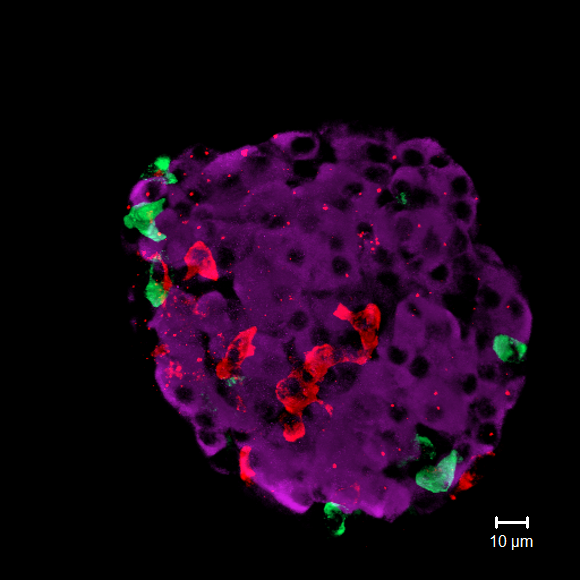 A microscopy image showing mouse islet cells: the purple blobs are insulin-producing beta cells (credit: Dr Quan Zhang, OCDEM)
Understanding the structure of insulin not only made the mass production of insulin possible, allowing many more people to be treated – it also allowed other researchers to alter the structure of insulin, to create even better treatment options for patients. Insulin was the first protein to be chemically synthesised and produced by DNA recombinant technology, and it is on the World Health Organisation’s list of the medications needed in a basic health system.
But 100 years on, only about half of people requiring insulin actually have access to it. Within the UK, compared to white cohorts, children and young people with type 1 diabetes from minority ethnic communities are more likely to have higher indices of uncontrolled blood sugar, and were less likely to use insulin pumps or real-time, continuous blood sugar monitoring.
'These interventions have been really transformative in how we treat patients with diabetes', said Professor Owen. 'It is important that we try and get these treatments to all patients.'
A DIY movement
Professor Owen has seen the insulin treatment for diabetes transformed over the course of her 20 year career. 'Initially, the insulin treatments we gave didn’t allow patients much flexibility – patients had to eat meals with set amounts of carbohydrates, to match the insulin dose than clinicians gave them,' she said.
'But now, there are short and long-acting varieties of insulin, and patients can titrate the amount and type of insulin they take to fit in with life, mimicking a natural physiological response much more closely.'
This change has been driven by greater understanding of how insulin works, as well as technological advances such as insulin pumps (a small, body-worn electronic device that delivers insulin) and continuous glucose monitors (which continuously monitor blood sugar levels, and can easily send this information to a device like a smartphone). Enterprising diabetes patient communities have taken these technologies a step further – the #WeAreNotWaiting diabetes DIY movement developed a community-developed, open source algorithm that allows insulin pumps to use the information from continuous glucose monitors to dispense the appropriate amount of insulin, a closed loop which comes close to mimicking how insulin control works normally.
Professor Owen hopes that researchers will continue to refine this closed loop technology, and over 50 years after the structure of insulin was decoded at its Natural History Museum, Oxford University continues to be a hotbed of insulin and diabetes research: the University works closely with Novo Nordisk, the healthcare company which first started producing insulin in 1922, months after it was first used in a patient. Professor Chas Bountra, the Oxford University Pro-Vice-Chancellor for Innovation, says: 'Our partnership with Novo Nordisk has enabled us to accelerate game changing research through sharing valuable resources and knowledge exchange. This ultimately leads to people with diabetes benefiting sooner from resulting medical innovations.'
The Novo Nordisk Research Centre Oxford aims to identify game-changing therapies for patients with type 2 diabetes and cardiometabolic diseases, and Professor Bill Haynes, VP and Site Head of the Novo Nordisk Research Centre Oxford explains its mission: 'These projects involve innovative in vitro and in silico approaches to gain a deeper understanding of the mechanisms involved. Using cutting edge methodologies and collaborating in this way gives us the best chance of finding novel therapies for patients with diabetes.'
Similarly, the Oxford Centre for Diabetes, Endocrinology and Metabolism (OCDEM) combines clinical care, research and education in its building at the Churchill Hospital, while the Diabetes Trial Unit specialised in performing local, national and multinational clinical trials to treat and manage diabetes.
Predicting the future
A major theme of recent work has been to identify and treat worsening conditions even before they happen – work led by OCDEM’s Professor Rury Holman suggests that clinicians might be able to predict diabetes-associated heart failure in newly diagnosed type 2 diabetes patients with a simple blood test. Another major project from OCDEM’s Dr Rustam Rea aims to develop a tool to predict which people with diabetes are at risk of low blood sugar levels when they are admitted to hospital.
In contrast to type 2 diabetes, which is caused by the body becoming increasingly insensitive to insulin even though it is still being secreted, type 1 diabetes is caused by the insulin-producing beta cells being destroyed, because of an auto-immune reaction.
But here too, Oxford researchers hope to enable clinicians to act early – Professors John Andrew Todd and Linda Wicker are currently trialing therapy using a new drug to compensate for this autoimmune reaction. Professor Todd said ‘Our hope is the results will help to implement a therapy for children and young adults who have signs of autoimmunity but are not yet diagnosed with the disease and thus prevent progression of this serious disorder, which affects one in 400 children per year.’
In September this year, Professor Todd was awarded the 2021 EASD-Novo Nordisk Foundation Prize for Excellence, for his decades of effort to understand, prevent and combat type 1 diabetes, some of which may ultimately make insulin redundant as a treatment.
‘The really remarkable thing is that 100 after the discovery of insulin, the fundamental treatment for diabetes hasn’t changed – doctors gave diabetic patients insulin in 1922, and we still give essentially the same treatment in 2021,’ said Professor Owen. 'But this new line of work raises the possibility of immunotherapy for at least some types of diabetes, which means we’ll finally have treatments other than insulin to offer.'
'I’m really optimistic about the future of treatment for diabetes, especially type 1 diabetes,' she added. 'Instead of figuring out better ways of giving insulin, we’re finally at the point where can start testing treatments that stop the disease getting worse, or even reverse it.'
The centenary of the discovery of insulin may therefore finally mark the turning point where insulin treatment for some of the diabetes patients who currently rely on it, may no longer be required.
- ‹ previous
- 16 of 252
- next ›
 Learning for peace: global governance education at Oxford
  What US intervention could mean for displaced Venezuelans
  Setting the agenda for the next century of quantum
 10 years on: The Oxford learning centre making an impact
 Mapping the Moon: the world’s first lunar atlas goes digital
  Oxford and The Brilliant Club: inspiring the next generation of scholars
 New course launched for the next generation of creative translators
 The art of translation – raising the profile of languages in schools
  Opening a window into the quantum world
 Tracking resistance: Mapping the spread of drug-resistant malaria