Features
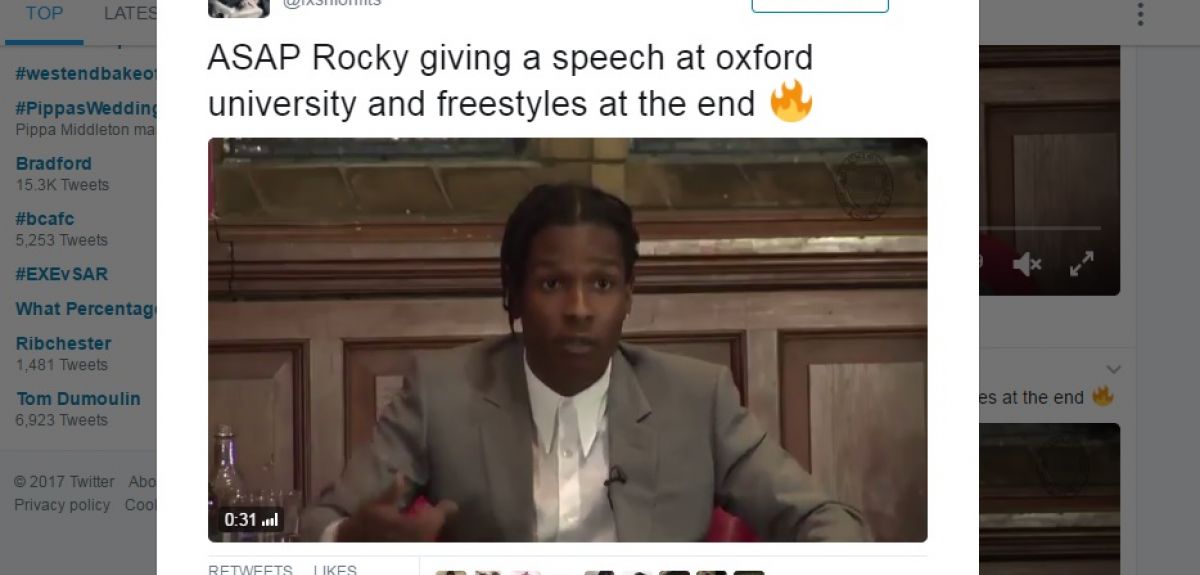
Most hip hop promoters could only dream of signing ASAP Rocky and Stormzy.
But last week, they were both in the headlines for stories involving Oxford University.
On Monday, grime artist Stormzy helped one of our students reach her goal of studying for a master’s at Harvard University by donating £9,000 to her crowdfunding page.
Fiona Asiedu, a final-year Experimental Psychology student at New College, says she was “completely overwhelmed” when she saw the donation and that it will be “life-changing” for her.
She met the musician when he visited Oxford’s African and Carribean Society last year, and has promised to thank him by taking him for dinner at Nando’s.
She is now hoping to put any extra money she raises to provide financial support for black British students from low-income backgrounds who gain places at Oxford and Harvard.
The next day, our Twitter mentions blew up after a talk by rapper ASAP Rocky went viral.
Rocky spoke to the Oxford Union back in June 2015 and last week, nearly two years later, a freestyle rap he performed during the lecture was shared online thousands of times.
Part of the reason why both of these stories have been so popular is that people are surprised that these artists would visit Oxford University, which is well-known for its world-leading choirs and classical musicians.
But many people living and studying in Oxford are not surprised – musical tastes and even the University’s music curriculum are changing all the time.
Since 2012, Oxford University has offered a course on global hip hop to first-year undergraduates at Oxford University. To date, nearly 400 students have passed the course.
Earlier this year, the Race and Resistance Programme in The Oxford Research Centre in the Humanities (TORCH) hosted a lecture about the cultural value of hip hop.
The lecture hall was full as participants including a professor from Harvard University’s Hiphop Archive and Research Institute discussed the significance of hip hop’s rising popularity.
In his speech, ASAP Rocky said he was pleasantly surprised by what he found in Oxford.
‘‘When I was coming here, I expected to see a bunch of stiff, fancy schmancy people,’ he said.
‘You guys are fancy but you’re not stiff, you’re cool. To come to Oxford and to be walking around and you see people looking like hipsters, you see people who like hip hop, you see people who look kind of regular, who look like they don’t really care about what they wear.
‘It’s really diverse, and it shows the progress, man.’
We cannot confirm the rumour that ASAP Rocky is a devoted reader of Oxford University’s Arts Blog – possibly because we have only just started that rumour.
But in case Rocky is spending his Monday morning browsing this page, we want him to know he is welcome back here any time he wants.
In today’s political climate, science’s value to society is under threat and consistently questioned.
Yet in our everyday lives we reap the rewards of research without even realising it. Take chemistry, for instance. From the flavourings in the food we eat, to the fragrances we wear and the life-saving pharmaceutical drugs that we rely on, the field has a phenomenal impact on the world at large. But this impact often comes with a financial and environmental price attached.
A new Oxford Sparks animation, developed in collaboration with Dr Holly Reeve of Oxford University’s Department of Inorganic Chemistry, breaks down how scientists are working to make the chemicals they produce both cleaner and greener, by highlighting the value of applied science in a real world context. Dr Reeve is co-investigator and manager of HydRegen, an innovative, early-stage, yet already award-winning technology. The product’s name is a play on how it recycles hydrogen to produce ‘cheaper, faster, safer, cleaner’ chemicals.
Learn more about HydRegen here:
Dr Reeve talks to scienceblog about her role in taking one of the university’s most exciting innovations to market and why academics need to get real about science.
Where did the idea for HydRegen come from?
It was the brainchild of my Professor Kylie Vincent’s and our collaborators Oliver Lenz and Lars Lauterbach’s at the Technical University in Berlin. At the start of my undergraduate Masters project, Kylie challenged me to achieve hydrogen driven co-factor recycling by adding two particular enzymes to a carbon particle, the end result hopefully being a method for cleaner, safer chemical products. We had no idea if it would work, but she is a great mentor, and I believed in her vision. After trying every day for six months, we finally cracked it.
The market for HydRegen could be massive, but for now we are focusing on high value speciality fine chemicals, where selectivity is important to the chemicals’ function, for example, the molecules used in pharmaceuticals, food flavourings and fragrance scents. In the future it could be useful for fuel chemicals, but that is a long way off.
How could HydRegen be used?
HydRegen is a clean way of using enzymes to carry out very specific hydrogenation reactions that are essential steps in the production of many chemicals. The market could be massive, but for now we are focusing on high value speciality fine chemicals, where selectivity is important to the chemicals’ function, for example, the molecules used in pharmaceuticals, food flavourings and fragrance scents. In the future it could be useful for fuel chemicals, but that is a long way off.
How has the project evolved over the last three years?
In 2013 we entered the Royal Society Chemistry Emerging Technology Competition and won a prize package which included mentoring. This helped us to start networking and form a picture of the impact that we could have. We then met with Oxford University Innovation, and quickly began to build a picture of the project’s real world value. I then carried on the research as my DPhil project.
Oxford is such a renowned institution, so the opportunities for development are endless. It is a very entrepreneurial environment that offers great training. Supported by Jesus College and the Maths, Physics and Life Sciences (MPLS) division, I was able to take a business and innovation course which has really helped me develop the skills I need for this industry-facing project.
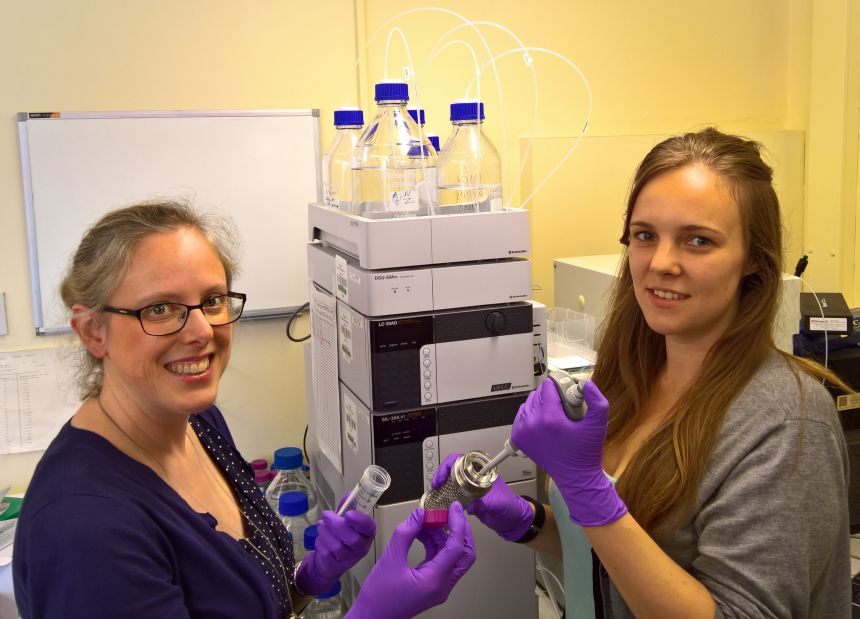 Professor Kylie Vincent and Dr Holly Reeve co-managers of the award-winning HydRegen, which recycles hydrogen to produce ‘cheaper, faster, safer, cleaner’ chemicals.
Image credit: OU
Professor Kylie Vincent and Dr Holly Reeve co-managers of the award-winning HydRegen, which recycles hydrogen to produce ‘cheaper, faster, safer, cleaner’ chemicals.
Image credit: OUA lot is often said about innovation, would you describe the University environment as particularly innovative?
I think it is a word that confuses people. To me, innovation is about having great ideas with real world applications, and then working out the best way of achieving them. Oxford is overflowing with great research, which is a pretty good start for that.
I don’t think that the traits you need to be a scientist - creativity, problem solving, persistence and passion - are exclusively male traits.
The growing number of entrepreneurial opportunities mean we now have more and more commercially aware scientists, who are driven by applied science. I think the next generation of scientists are going to have even more to offer. The entrepreneurial training and funding offered make innovation even more attainable, all we need now is more incubator space.
When do you envision the product being available for commercial use?
We won Innovate UK/EPSRC/BBSRC funding in 2016, for a five year grant worth £2.9 million. The aim is to launch HydRegen as a spinout by the end of the project, within the next four years. However, we are currently mapping out some new, related ideas which could get us to market sooner.
 Dr Reeve grew up on a farm where everyone pitched in, and there were never any gender bias around who did what.
Image credit: Shutterstock
Dr Reeve grew up on a farm where everyone pitched in, and there were never any gender bias around who did what.
Image credit: ShutterstockWhat challenges do you anticipate along the way?
At the moment the process works nicely but on such a tiny scale that it couldn’t be implemented in industry, so the challenge is in the scale-up, For instance, trying to make the enzymes required on a larger scale and to implement them cost effectively. Basically, convincing industry that we can ‘beat’ their existing processes on cost, as well as on our ‘green’ credentials.
We often find our academic curiosity and our commercialisation time-line can be conflicting. However, our academic curiosity is what got us here, and we have already come up with some new ideas since we started this project. Overall, it’s a tricky balance between the two, but both are really important to our success.
What are you working on at the moment?
In collaboration with industry partners, we are testing the product’s industrial attainability. Our team has grown from just Kylie and myself to eight members, and each member is working on a different aspect of this scale-up. Understanding the feasibility of mass producing the enzymes and catalytic beads will help us understand how HydRegen could eventually be useful to industry. Next up though, we have some patents to file. Looking forwards, our focus will be on writing a business plan and generating investment.
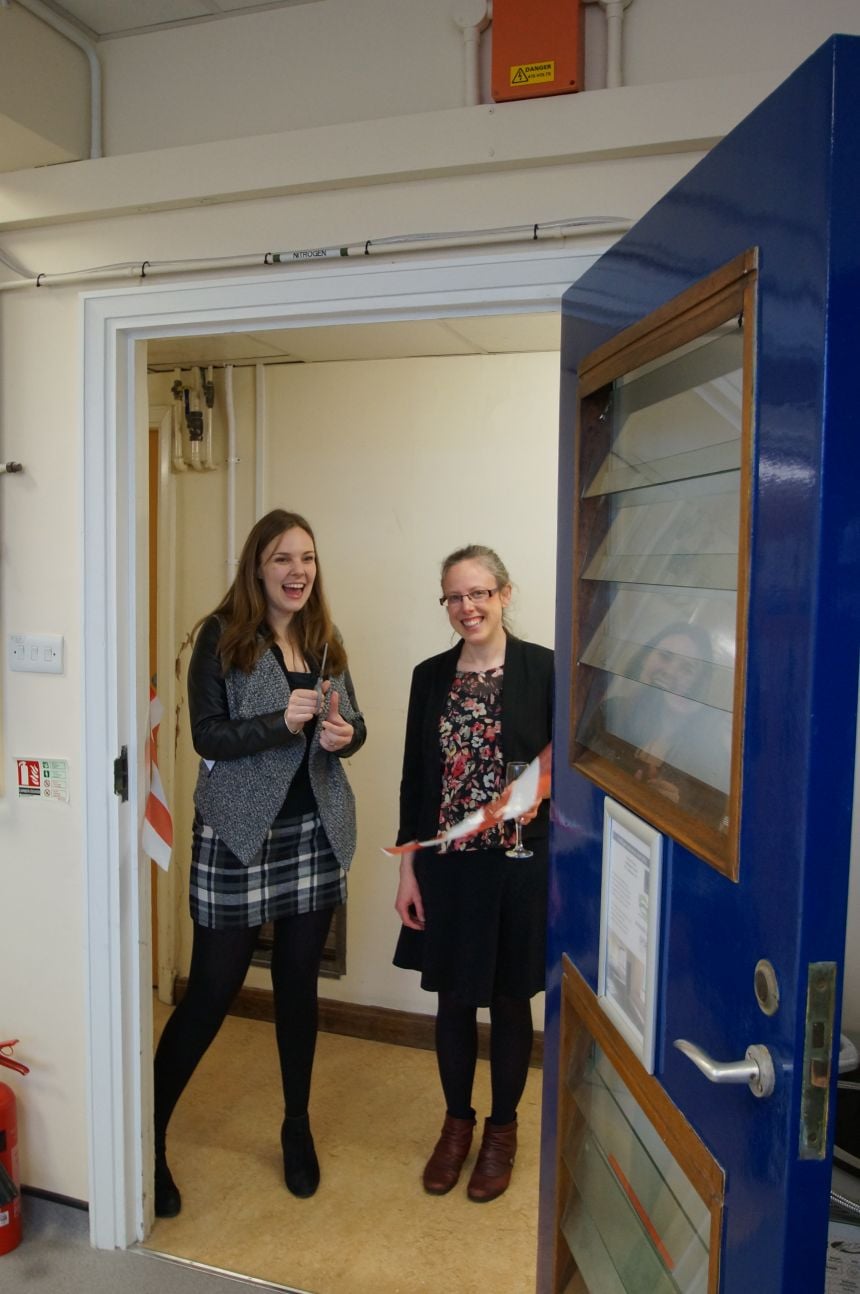 Dr Holly Reeve and Professor Kylie Vincent opening the HydRegen laboratory space at the Inorganic Chemistry Department, Oxford University.
What learning curves have you encountered building a start-up company?
I try to live as if HydRegen is already a spinout, and as if every decision I make could cost us money. This makes me think slightly differently (balancing the academic and commercial aims of the research) and means I try to present myself more professionally – you never know when you might meet a potential investor or partner company. I often spend the first few minutes of a meeting working out whether I need my academic or business hat on.
As scientists we get really used to interacting with people like us, but outside of the industry people communicate in different ways. A big lesson for me was going to a course in the business school which was a mixture of scientists and MBA (Master of Business Administration) students. The MBA students were more interested in the business potential of the project, rather than the scientific detail.
I learned to break the message right down, to make it quickly accessible to everyone. Even into snappy one liners that really underplay the science involved – which as an academic is quite unsettling, But at the same time necessary.
How do you think scientists could better engage with the public?
I think most academics know that our individual (highly specific) research projects are not easy for the public to digest, and are working on ways to present their work in a real world context. I’ve just made an animation with Oxford Sparks, about industrial biocatalysis, that explains the principles behind producing cleaner chemicals, by bringing biology and chemistry together. Hopefully, by zooming out and explaining the wider topic, you can then zoom back in on our new technology without it sounding quite so alien.
 Dr Reeve married her husband Sean at Oxford's Ashmolean Museum in March 2017
Image credit: Charlie Flounders
Dr Reeve married her husband Sean at Oxford's Ashmolean Museum in March 2017
Image credit: Charlie FloundersAre there any unique challenges to being a woman in science?
I personally do not feel that being a woman has held me back, or positively influenced my career, but equally I do respect that there are not enough women in the industry at high levels.
I don’t think that the traits you need to be a scientist - creativity, problem solving, persistence and passion - are exclusively male traits. I grow up on a farm, and there was never any gender discussion, I just did what everyone else did. I remember needing to carry 50kg bags of seed from one part of the barn to the other. They were so heavy! I carried one with everyone watching, and then I started to split the bags into two, and combined them again at the other end. It never occurred to me to say that they were too heavy, or that I couldn’t do it. I just found my own way of getting it done.
In general it doesn’t just come down to being male or female. I think managers need to try harder to treat people as individuals, and manage them accordingly. Everyone has their own strengths, weaknesses and background history that you might not be aware of. People learn in different ways, think in different ways and need different things from you; to get the best from them, you have to learn to take people as they are. It might be harder for line managers, but I think it is important.
When I came to choose my supervisor for my thesis I wanted a scientist of great calibre, but also someone that I could work with and feel comfortable approaching. Kylie turned out to be a perfect match for me. She has been a fantastic role model in a lot of ways.
What has been the most rewarding part of the project?
Interacting with completely different people and knowing that something that we dreamt-up in the lab, out of pure curiosity, could actually be useful to society. That feeling is indescribable and highly addictive.
Have there been any surprises – positive or negative along the way?
There is a lot more writing involved in science than I imagined, whether it is writing academic papers, blogs or grant applications.
I am slightly dyslexic and I used to always get half marks for my spelling, which was really demoralising. I was told that I wasn’t very creative or good with words, so I came to hate Art and English. Now that I have found a subject that I want to write about, that makes me feel creative, I’ve realised that I wasn’t bad at either, I just wasn’t interested.
Did you always want to be a scientist?
I was always fascinated by how things worked on the farm. My Dad and I would take engines apart and then put them back together. I got really fixated on the fuels in cars. He could always explain the differences between car engines, but not the fuels powering them, and that spurred my interest in Chemistry.
I also had a really inspiring teacher, Mrs Chapman, I don’t think I would have gone on to study Chemistry at Oxford if it hadn’t been for her encouragement. It is really important to have a role model that believes in you.
 Dr Reeve plays an active role in Oxford's community outreach work. As someone affected by dyslexia she feels strongly that scientists should learn to communicate with different audiences and present their work in a real world context.
What are your long-term goals?
Eventually I see myself involved with running a spin-out company, and just seeing how far we can take it.
One piece of advice that you would give to other would be scientists entering the field?
Find something that you enjoy and just do it. There is no way I could put as much energy or passion into my work if I didn’t love it. Don’t be scared to push yourself – with every challenge, you learn something new.

It has been claimed that the new £1 coin is 'forgery proof'. But Martin Kemp, professor of the history of art at Oxford University and an expert in art forgeries, is sceptical.
'In theory, any technological efforts to prevent forgery can potentially be overcome,' he says. 'It's all very well to have technological means to detect forgeries – it’s very much another matter to detect them in all the billions of transactions.'
The Royal Mint has released a new 12-sided ‘counterfeit-proof’ £1 coin after an influx of fake round £1 coins into the UK.
Professor Kemp is not a coin expert, but when it comes to forgery he knows what he is talking about – he is perhaps the world expert in detecting forged Leonardo da Vinci paintings, having spent 50 years in what he calls the 'Leo business'.
'I get sent lots of dodgy Leonardos,' he says. 'One was a very clever forgery of a mechanical which was going to be sold in one of the major London auction houses.'
What happened after Professor Kemp unmasked the painting as a forgery? 'It's now gone underground,' he says mysteriously.
Professor Kemp says there is more of an incentive for conmen to forge money rather than art. 'The potential number of forged coins is huge and the returns massive,’ he says. ‘With works of art, the question is whether it is worth the effort, given the difficulty, time, skill and costs,' he says.
Nor is all art equally difficult to forge. Modern art is much easier than the Old Masters. 'Older paintings were elaborately-made, layered structures using historic materials - very different from modern ones,' he explains.
'The old materials can be replicated to a degree but it is hard to get round all the modern methods of scientific examination. It’s easier to fake a more recent painting - say a Russian abstract work in oil paint from 1914.'
Arts Blog accepts no responsibility for any readers who now try to flog a Russian abstract painting at Christie’s.
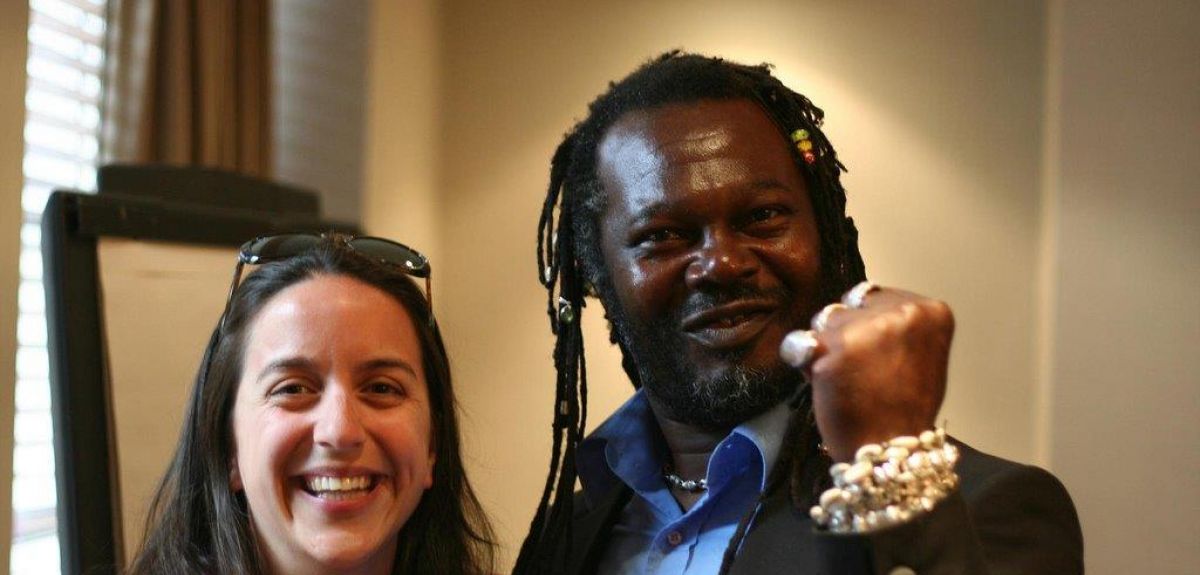
At Arts Blog, we love the BBC show Dragons' Den.
But we have never seen a historian, a classicist or a linguist going up before the panel of dragons.
And believe us, we have watched a lot of Dragons' Den.
But that could be about to change, as Oxford University has announced its own pitching competition to find the most innovative and entrepreneurial ideas from staff and students in the faculties of the Humanities Division.
Unfortunately, candidates for the Humanities Innovation Challenge will not be offered £200,000 by Peter Jones or Deborah Meaden.
But the winner will receive £1,000 to launch the idea and £5,000 of in-kind support to help it to grow.
Last year, the first Humanities Innovation Challenge was won by a startup company which is bringing the Mexican superfood pinole to the UK.
Azure, which was founded by Dr Alexandra Littaye, believes pinole will be popular with Latin Americans living in Europe, the rapidly growing gluten-free market, and the sports nutrition market.
Second place went to MSt Creative Writing student Josephine Niala, who is looking to develop an app which trains people in the skills necessary to attract funding for local projects aimed at tackling climate change.
Third place went to another app – Hippo – developed by Michael Plant, a doctoral student in the Humanities Division. The app aims to help users tackle anxiety and depression.
The competition is a collaboration between Oxford University Innovation (OUI) and The Oxford Research Centre in the Humanities (TORCH). Staff and students are invited to apply for the scheme by Monday 8 May.
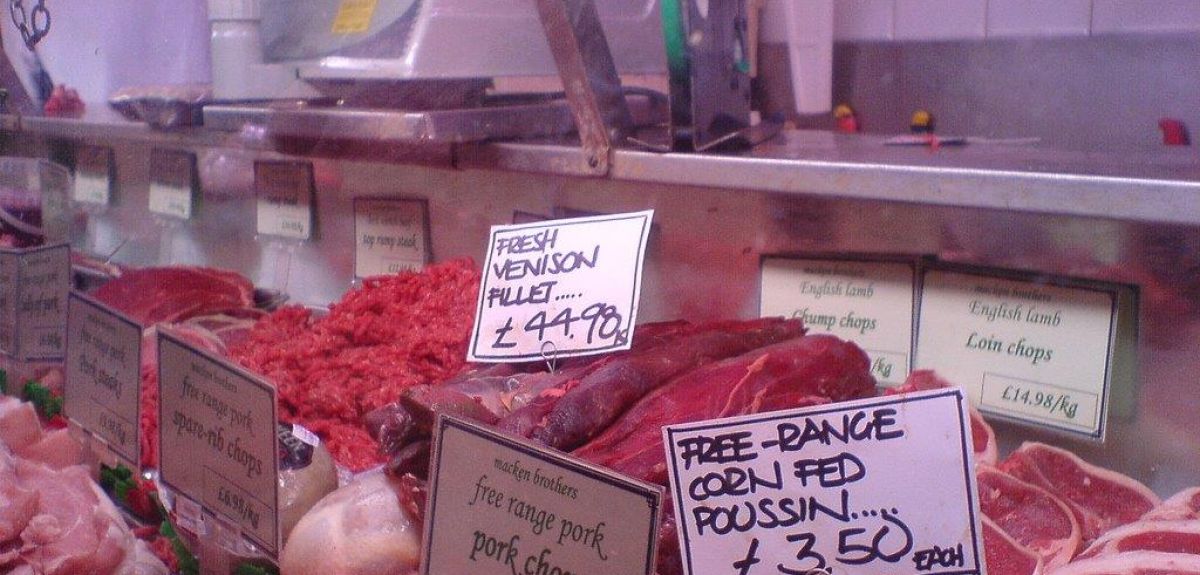
A recent BBC comedy written by Simon Amstell imagined life in 2067 when society has become vegan and people flock to support groups to cope with their guilt about their meat-eating past.
The premise might sound far-fetched to many viewers, but there an Oxford University philosopher says there are serious ethical arguments for giving up meat.
In a guest post, Julian Savulescu, the Uehiro Professor of Practical Ethics at Oxford, says that cutting down on our consumption of meat and animal products is "one of the easiest things we can do to live more ethically".
Here, he gives five ethical arguments for giving up meat:
1. The environmental impact is huge
'Livestock farming has a vast environmental footprint. It contributes to land and water degradation, biodiversity loss, acid rain, coral reef degeneration and deforestation.
Nowhere is this impact more apparent than climate change – livestock farming contributes 18% of human produced greenhouse gas emissions worldwide. This is more than all emissions from ships, planes, trucks, cars and all other transport put together.
Climate change alone poses multiple risks to health and well-being through increased risk of extreme weather events – such as floods, droughts and heatwaves – and has been described as the greatest threat to human health in the 21st century.
Reducing consumption of animal products is essential if we are to meet global greenhouse gas emissions reduction targets – which are necessary to mitigate the worst effects of climate change.
2. It requires masses of grain, water and land
Meat production is highly inefficient – this is particularly true when it comes to red meat. To produce one kilogram of beef requires 25 kilograms of grain – to feed the animal – and roughly 15,000 litres of water. Pork is a little less intensive and chicken less still.
The scale of the problem can also be seen in land use: around 30% of the earth’s land surface is currently used for livestock farming. Since food, water and land are scarce in many parts of the world, this represents an inefficient use of resources.
3. It hurts the global poor
Feeding grain to livestock increases global demand and drives up grain prices, making it harder for the world’s poor to feed themselves. Grain could instead be used to feed people, and water used to irrigate crops.
If all grain were fed to humans instead of animals, we could feed an extra 3.5 billion people. In short, industrial livestock farming is not only inefficient but also not equitable.
4. It causes unnecessary animal suffering
If we accept, as many people do, that animals are sentient creatures whose needs and interests matter, then we should ensure these needs and interests are at least minimally met and that we do not cause them to suffer unnecessarily.
Industrial livestock farming falls well short of this minimal standard. Most meat, dairy and eggs are produced in ways that largely or completely ignore animal welfare – failing to provide sufficient space to move around, contact with other animals, and access to the outdoors.
In short, industrial farming causes animals to suffer without good justification.
5. It is making us ill
At the production level, industrial livestock farming relies heavily on antibiotic use to accelerate weight gain and control infection – in the US, 80% of all antibiotics are consumed by the livestock industry.
This contributes to the growing public health problem of antibiotic resistance. Already, more than 23,000 people are estimated to die every year in the US alone from resistant bacteria. As this figure continues to rise, it becomes hard to overstate the threat of this emerging crisis.
High meat consumption – especially of red and processed meat – typical of most rich industrialised countries is linked with poor health outcomes, including heart disease, stroke, diabetes and various cancers.
These diseases represent a major portion of the global disease burden so reducing consumption could offer substantial public health benefits.
Currently, the average meat intake for someone living in a high-income country is 200-250g a day, far higher than the 80-90g recommended by the United Nations. Switching to a more plant-based diet could save up to 8 million lives a year worldwide by 2050 and lead to healthcare related savings and avoided climate change damages of up to $1.5 trillion.'
This article takes extracts from a longer article by Professor Savulescu and Francis Vergunst of the University of Montreal, which was first published in The Conversation.
- ‹ previous
- 98 of 253
- next ›
 What Louise Thompson’s campaign tells us about the national maternity crisis
 Celebrating 25 Years of Clarendon
  Learning for peace: global governance education at Oxford
  What US intervention could mean for displaced Venezuelans
  Setting the agenda for the next century of quantum
 10 years on: The Oxford learning centre making an impact
 Mapping the Moon: the world’s first lunar atlas goes digital
  Oxford and The Brilliant Club: inspiring the next generation of scholars
 New course launched for the next generation of creative translators
 The art of translation – raising the profile of languages in schools