Features

 Alessandra Enrico Headrington, COMPAS
The United States’ intervention in Venezuela on 3 January 2026 marks a critical moment not only for the country’s political trajectory, but also for the future of one of the largest displaced populations in the world.
The situation before US intervention
The United States’ intervention in Venezuela has ignited questions about its legality under international law and the principles set out in the United Nations Charter. This moment reflects a broader trend in which core legal principles appear increasingly subordinated to power politics. Beyond questions of legality, it also raises deeper uncertainties about Venezuela’s political future and what leadership change might mean for the possibility of return for nearly 8 million Venezuelans displaced since around 2015.
Of the majority of those displaced, around 6.9 million are hosted by countries in Latin America, with Colombia and Peru receiving the largest numbers, followed by Ecuador and Chile, and more recently by Brazil. Since 2015, governments have granted legal stay through the provision of over 5.1 million special, time-limited residence permits. These measures allowed Venezuelans to live and work legally and were initially conceived as rapid and flexible tools to manage large-scale displacement.
This moment reflects a broader trend in which core legal principles appear increasingly subordinated to power politics. Beyond questions of legality, it also raises deeper uncertainties about Venezuela’s political future and what leadership change might mean for the possibility of return for nearly 8 million Venezuelans displaced since around 2015.
However, the limitations of this interim solution have become increasingly visible. Access to temporary permits has grown more restrictive, with the enforcement of tighter eligibility requirements and the reintroduction of border controls. While these schemes have enabled a quick path to legal stay for many Venezuelans, their temporary and conditional nature offer limited certainty about long-term protection or settlement. This policy choice is particularly striking in Latin America, where many states have deliberately incorporated the Cartagena definition into their national frameworks. This regional standard broadens refugee protection to include people fleeing widespread violence, human rights violations and serious public disorder. Under this definition, a significant share of Venezuelans could, in principle, be recognised as refugees, accessing a stronger, rights-based form of protection with greater legal certainty over time in host countries.
Nevertheless, my ongoing doctoral research at the University of Oxford with Venezuelans in Colombia, Peru and Ecuador, points to a clear pattern: many Venezuelans prefer temporary permits, despite their precarious and uncertain nature, over seeking refugee status, which is a protracted and complicated process. Temporary permits are comparatively simple and predictable – even when they involve fees.
But as the political environment shifts, broader questions are likely to arise about the sustainability of temporary permits and about what may come next for the more than 5 million Venezuelans currently living under them.
Will displaced Venezuelans return to Venezuela?
Comparative experience from other displacement contexts, such as Syria, suggests that even significant political or economic shifts in countries of origin do not automatically translate into large-scale return.
For many displaced Venezuelans, recent events symbolise the end of a political era marked with widespread human rights violations, the erosion of the rule of law, and large-scale displacement. These perceptions matter: they shape expectations about the future, influence personal and family decisions, and frame narratives around the possibility of return, even in the absence of immediate material change.
However, while the changing political situation may shape displacement dynamics, return is unlikely to be immediate or uniform.
Comparative experience from other displacement contexts, such as Syria, suggests that even significant political or economic shifts in countries of origin do not automatically translate into large-scale return. International standards make clear that return must be voluntary, safe and dignified, and premised on effective guarantees of physical security, legal protection, access to livelihoods, and institutional stability. In the absence of these conditions, and drawing on comparative experience from other protracted displacement contexts, any return is likely to remain limited and selective rather than widespread.
What may come next for displaced Venezuelans
After more than a decade spent managing Venezuelan arrivals, the question for host countries is no longer how to extend short-term legal stay, but whether this model can meaningfully evolve, or whether a different approach is needed. For most Venezuelans, medium-to long-term stay in host countries across the region therefore continues to be the more realistic horizon. This evolving situation points to three likely scenarios:
- Temporary protection as the dominant response: Temporary permits may continue to define access to legal stay across Latin America, operating largely at governments’ discretion, while refugee protection plays an increasingly limited role. As country-of-origin assessments evolve, this may affect future asylum decisions and, in some cases, the review of existing refugee status under international refugee law.
- Tighter access to legal stay and rising irregularity: Temporary permit schemes could be adjusted, affecting eligibility, duration, and in some cases their continuation. Given their discretionary nature, such shifts could increase legal uncertainty and, over time, push more Venezuelans into irregular status and onward movement.
- Selective return alongside sustained mobility: Voluntary return is likely to remain limited rather than widespread, shaped by continued uncertainty in Venezuela and occurring alongside ongoing mobility, including new departures by groups that had previously stayed in the country, some of whom supported Nicolás Maduro.
The bigger picture
The future of protection for Venezuelans will be shaped both by events in Venezuela and by political and electoral shifts in host countries. Electoral cycles and shifting domestic agendas in countries such as Ecuador, Chile and Peru are likely to influence whether existing legal protections are maintained, progressively narrowed, or increasingly reoriented towards return-focused approaches.
The future of protection for Venezuelans will be shaped both by events in Venezuela and by political and electoral shifts in host countries. Electoral cycles and shifting domestic agendas in countries such as Ecuador, Chile and Peru are likely to influence whether existing legal protections are maintained, progressively narrowed, or increasingly reoriented towards return-focused approaches.
Beyond Venezuela, these dynamics carry broader significance. The Latin American response, marked by the large-scale use of temporary permits and a more limited reliance on refugee protection, offers a revealing case of how states manage protracted displacement with precarious tools and under political uncertainty.
What happens next will affect not only the future of Venezuelans, but also how large-scale displacement is managed in other regional and global contexts, with consequences for society as a whole.

Dr Zakiyya Adam, Research Associate at the Transport Studies Unit within the University of Oxford’s School of Geography and the Environment, outlines recommendations for the implementation of cycling-promoting initiatives in mid-sized European cities.
 Dr Zakiyya Adam, Research Associate, Transport Studies Unit
 When a city provides only cycle lanes, this comes with the implicit belief that individuals can attain a bike without any financial aid, are confident in their cycling proficiency, and that they have a secure location at which to store their bike.
This is not the case for many, especially those from lower socioeconomic backgrounds.
Truly inclusive policy should strive to remove barriers to cycling - both objective and perceived - for all segments of society.
Likewise, cycling provisions should not only focus on individuals; cargo bikes make it possible for businesses to swap out their car or van trips and for children to be transported around as passengers. To encourage this use, the larger profile and heavier frame of e-cargo bikes needs to be accounted for when designing cycle infrastructure.
Whilst it is admirable that many cities aspire to be cycle-friendly and encourage people to shift from car travel to bikes, good will and cycle lanes alone will not instigate behaviour change.
Research as part of the SPECIFIC project, led by the Transport Studies Unit (TSU), and conducted in collaboration with academics in Austria, the Netherlands, Poland and Switzerland, has sought to understand what exactly is needed to see this ambition be realised in mid-sized European cities.
Truly inclusive policy should strive to remove barriers to cycling - both objective and perceived - for all segments of society.
A thorough analysis of cycling-promoting initiatives was conducted in Bristol by TSU researchers as well as in Graz (AT), Maastricht (NL), Poznań (PL) and Bellinzona (CH) by the other teams.
In 2008, Bristol was the first city in the UK to gain Cycling City status, which secured significant investment for cycling schemes. Since then, Bristol has continued its commitment to increase the number of cyclists through the creation of dedicated cycle lanes, better cycling facilities, and more cycle training. Despite the hilly terrain, Bristol has a strong cycling culture and good infrastructure.
In each of the five cities, the researchers interviewed a comprehensive array of individuals from across local government, consultancy, advocacy groups and academia who were directly involved in such schemes, and also engaged with publicly available literature.
Policy briefs were produced for each of the five cities, highlighting the key factors that enabled or hindered pro-cycling initiatives and outlining learnings for governance and planning.
Common threads emerged across the five mid-sized cities spanning the UK, Switzerland, Austria, the Netherlands and Poland, with the following five recommendations for encouraging participation and long-term behaviour change.
1. Safe, Continuous, and Inclusive Infrastructure
If we want more people to cycle, we need to build for the bikes - and riders - we have now and want in the future.
Cycle lanes should be physically separated from other road users where possible.
Gaps, fragmentation, or poorly integrated cycle lanes are major deterrents to cycling due to safety concerns, especially for families and new riders. And all cycling infrastructure – including, for example, bollards and chicanes, and cycle parking - should be designed to be inclusive, ensuring accessibility for cargo bikes and e-bikes that are heavier and larger than conventional bikes.
If we want more people to cycle, we need to build for the bikes - and riders - we have now and want in the future.
2. ‘Cycling Support’ Beyond Paths
Cycle paths alone are not enough. Supporting infrastructure - such as secure parking, maintenance facilities, and cycle training - is essential.
Cycle paths alone are not enough. Supporting infrastructure - such as secure parking, maintenance facilities, and cycle training - is essential.
On-street cycle hangars are particularly important for people living in apartments or without access to home storage. And secure parking near mobility hubs and workplaces often determines whether people choose to ride – the risk of your bike not being there at the end of the day is not one many can afford to take.
Only by addressing the full range of rider needs does cycling become a viable and attractive option for all.
3. Community Engagement Early and Often
Public participation, especially in planning and prioritising investments, is essential. Cities that actively consult residents on infrastructure tend to see higher uptake and less resistance.
Public participation, especially in planning and prioritising investments, is essential. Cities that actively consult residents on infrastructure tend to see higher uptake and less resistance.
In Bristol, for example, cycle hangars that enable six bikes to be parked in the space of one car were heavily subscribed to at just the planning stage, and faced little public resistance as the locations were proposed and voted on by Bristolians. Citizen-led initiatives also help foster lasting behavioural change.
People back what they help to build.
4. Address Cultural and Behavioural Barriers
Campaigns, community rides, gamified apps, and ambassador programmes can play a key role in shifting perceptions and normalising cycling.
Even with adequate cycling infrastructure, social norms and personal habits can discourage people from making the switch.
Perceived safety risks, discomfort in bad weather, status quo bias, and deeply embedded car-centric mindsets all hinder uptake.
Campaigns, community rides, gamified apps, and ambassador programmes can play a key role in shifting perceptions and normalising cycling. In Bellinzona, for example, the Bellidea and Bikecoin mobile apps reward users with points redeemable for vouchers or discounts, reinforcing cycling as a socially approved and economically rewarding practice.
Changing streets is important but changing minds is essential.
5. Build Long-Term Capacity
In the UK, the spending review in June 2025 saw cuts to the level of funding for Active Travel England, who many local authorities are reliant on for delivering cycle schemes. Volunteer-led efforts are valuable, but they are not sustainable without institutional backing.
Projects must be properly resourced, with long-term investment in training, evaluation, and leadership.
In the UK, the spending review in June 2025 saw cuts to the level of funding for Active Travel England, who many local authorities are reliant on for delivering cycle schemes. Volunteer-led efforts are valuable, but they are not sustainable without institutional backing.
Cities also need robust monitoring and feedback systems in order to adapt and scale successful schemes. Only with long-term investment can promising initiatives become permanent solutions.
-
International best practice offers a clear roadmap for action: invest in connected infrastructure, provide inclusive cycling support, embed public engagement in planning, focus on encouraging behavioural change, and commit to long-term investment and leadership.
And it is important that we get this right, as cycling initiatives have the potential to not just change how we move, but transform how we feel and live.

Dr Emily Warner, from Oxford University’s Nature-based Solutions Initiative, discusses the challenges of measuring biodiversity and capturing its complexity. She introduces a new framework aiming to simplify this process for practitioners, which was developed in collaboration with Dr Licida Giuliani and Dr Grant Campbell from the University of Aberdeen as part of an Agile Sprint on scaling up nature-based solutions in the UK.
Biodiversity supports the very fundamentals of human life, but its multi-faceted nature means it is easy for aspects of it to be in decline without us even realising.
Biodiversity supports the very fundamentals of human life, but its multi-faceted nature means it is easy for aspects of it to be in decline without us even realising.
Across the UK, abundance of all species has declined by an average of 19% since 1970 and nearly one in six species are at risk of extinction. The July 2025 assessment of progress on the Environmental Improvement Plan highlights the many habitat-based measures being implemented to tackle UK biodiversity loss, from four new National Nature Reserves to planting over 5,500 has of new woodland in England.
To understand whether these efforts are supporting progress towards the apex goal of thriving plants and wildlife, we need to assess how biodiversity is responding. Thinking about how we monitor these changes might seem boring, but it is important, and we won’t solve the biodiversity crisis without it!
 Dr Emily Warner
Why measuring biodiversity is so hard
From an increasing interest in biodiversity credits to national and international commitments to reverse biodiversity loss, the need for effective biodiversity monitoring methods is clear.
The challenge is that measuring biodiversity is notoriously complex. The Convention on Biological Diversity’s definition of biodiversity highlights how expansive a concept biodiversity is: 'the variability among living organisms from all sources and the ecological complexes of which they are part; this includes diversity within species, between species, and of ecosystems'.
With an increasing need to demonstrate success from conservation projects, the question of how to measure biodiversity is increasingly at the forefront of practitioners’ minds.
For example, nature-based solutions projects, which work with nature to tackle societal challenges, such as restoring a wetland to mitigate flooding, must also deliver benefits for biodiversity at their core. Similarly, multiple biodiversity credit systems – which allow the trading of tokens representing improved biodiversity – are in development in the UK alone, emphasising the critical need to be able to document increasing biodiversity.
With the rush to come up with a simple, tractable method of measuring biodiversity there is a simultaneous risk of oversimplifying, and we need to ask whether measuring something inadequately could be worse than not measuring it at all.
UK invertebrates are declining faster than plants and birds, threatening the foundation of ecosystems and direct benefits they provide to humans, such as food security, which is underpinned by pollination and pest control.
For example, biodiversity net gain in the UK aims to ensure any habitat lost during development is replaced by more or better quality habitat. Biodiversity units are estimated based on habitat size, quality, location, and type, however, this approach overlooks many habitat attributes crucial to invertebrates, running the risk that invertebrate biodiversity will not be protected. UK invertebrates are declining faster than plants and birds, threatening the foundation of ecosystems and direct benefits they provide to humans, such as food security, which is underpinned by pollination and pest control.
In contrast to monitoring carbon sequestration associated with conservation projects, where the focal unit of measurement – a tonne of carbon – is unequivocally defined, biodiversity’s complexity requires a much more nuanced approach. It is perhaps unrealistic to expect to reduce biodiversity down to a single measurable variable, without acknowledging that doing so will inevitably lose a huge amount of information on changes in biodiversity.
A better way to measure what matters
To measure something diverse and complex we need to accept that the monitoring approach should reflect that diversity and complexity, while balancing this with feasibility. One way to increase the measurability of biodiversity is to structure the concept, breaking it down into component parts.
In contrast to monitoring carbon sequestration associated with conservation projects, where the focal unit of measurement – a tonne of carbon – is unequivocally defined, biodiversity’s complexity requires a much more nuanced approach.
In 1990, conservation biologist Reed Noss developed a hierarchical framework, organising biodiversity into three axes: composition, structure, and function, which can be assessed at four scales (genetic, population, community, landscape). If each axis represents a different aspect of biodiversity, then measuring metrics across the different axes should more widely capture biodiversity.
However, for each axis there are still many possible metrics that can be measured. Returning practitioners - or anyone else who wants to measure biodiversity - back to their original predicament of selecting the best metrics to effectively assess biodiversity.
Our recent research developed an ecological monitoring framework for nature-based solutions projects, seeking to overcome this problem.
We reviewed 71 possible biodiversity metrics, ranking them based on how informative they are and how feasible they are to measure. Of these, 30 metrics scored highly enough on both informativeness and feasibility to enter our framework. These metrics were grouped into Tier 1, Tier 2, and Future metrics.
Tier 1 are the highest priority metrics in terms of informativeness and represent all three axes of biodiversity. Future metrics are equally informative but currently too technically challenging or costly to measure. Tier 2 metrics are informative but often less widely applicable than Tier 1 metrics.
These metrics are now freely available in a searchable database, allowing practitioners to identify suitable metrics for their projects based on criteria such as cost, technical expertise required, and availability of a standardised methodology for data collection.
As assessing biodiversity requires investment of time, expertise, and money, we want its results to be as impactful as possible.
Our database will channel the energy put into biodiversity monitoring towards cohesive, effective data collection, that widely captures change across the complexity of biodiversity, encouraging measurement of the different axes and scales of biodiversity.
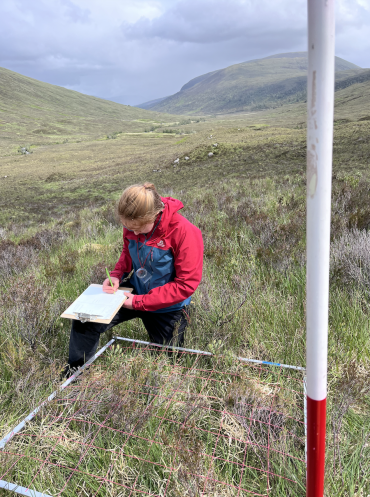 Dr Emily Warner measuring biodiversity in the field. Credit: Ella Browning
We hope our database will help to navigate the huge pool of possible biodiversity metrics, highlighting the most useful metrics for assessing biodiversity and giving a clearer understanding of what information they provide.
The next step in any biodiversity monitoring plan is then getting out and collecting the data, ideally in a standardised way that will allow comparison between projects or to existing datasets.
The 'how' of biodiversity monitoring unmasks another layer of complexity, as for most of the metrics in the database there are multiple potential methods for data collection and decisions need to be made about a sampling plan. In some cases, there are even different ways of calculating the final metric.
A large part of the research underpinning the development of our metrics database involved identifying existing standardised methodologies that could be used to collect data.
The increased interest in monitoring biodiversity could lead to a boom in biodiversity data, representing a huge opportunity to better understand the trajectory of biodiversity across a wider range of UK contexts, but also the potential risk of a missed opportunity to maximise the outcomes of this data collection effort.
By helping make these standardised metrics and methodologies available, we hope to encourage coordinated, large-scale biodiversity data collection to support effective biodiversity action and also highlight where more guidance is needed to support data collection on the ground.
Effective monitoring to turn the tide on biodiversity loss
Our monitoring tool aims to provide shortcuts to developing a monitoring approach, highlighting what different metrics tell us about biodiversity, connecting these to available methods and allowing practitioners to search these metrics based on key criteria.
If we want to bend the curve of biodiversity loss we need effective monitoring to understand how well our efforts to restore nature are working.
If we want to bend the curve of biodiversity loss we need effective monitoring to understand how well our efforts to restore nature are working.
We have been aware that biodiversity has been declining since before I was born and this continues to escalate. My hope is that I will see the transition to a positive trend in biodiversity over the rest of my career and that this monitoring tool could be one small step on this pathway.
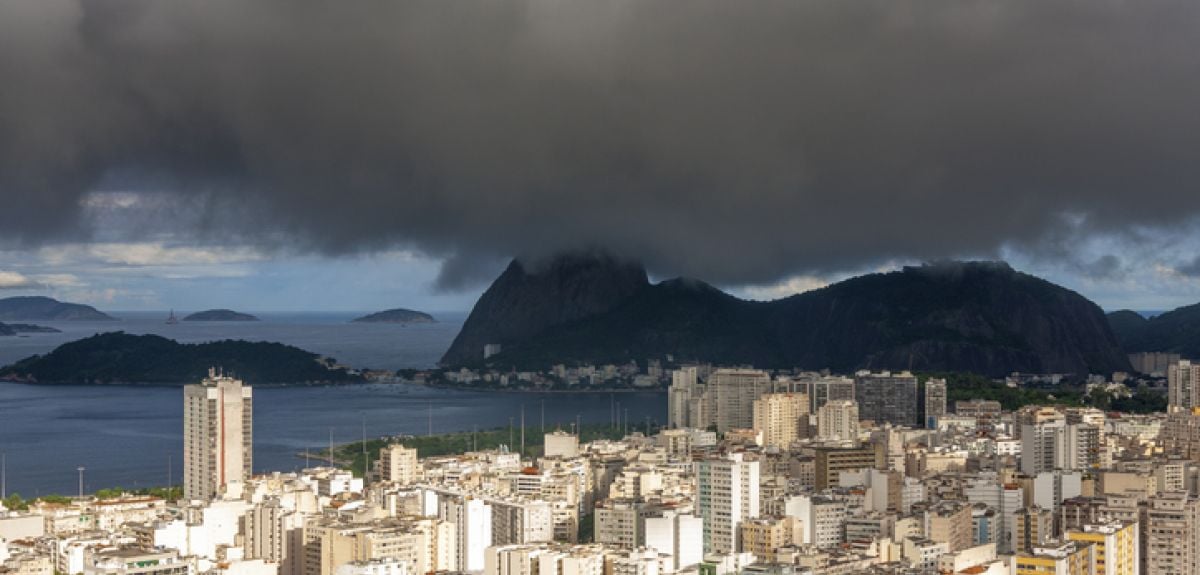
Dr Marcia Zilli, Postdoctoral Research Assistant in Climate Dynamics, and Dr Neil Hart, UKRI Future Leaders Fellow, School of Geography and the Environment, explore the likelihood of increases in intense rainfall events alongside heatwaves in Brazil.
It has been a little over one year since the devastating floods in Rio Grande do Sul. While Brazil has been spared a second flood of the same unprecedented scale, extreme rainfall events continue to hit.
Our results show that while the frequency of all tropical-extratropical cloud bands will reduce by a third, the most intense rain events - those ranked as a one-in-five event in the present climate - triple in likelihood by the end of the century for the highest greenhouse gas emissions scenario.
For example, on 11th October 2024 the city of São Paulo was hit by an intense rain storm with winds over 100km/h leading to an electricity outage effecting more than two million people.
The outage lasted for 35 hours, but parts of the city remained without power for more than three days.
The economic losses ranged from damaged household appliances and spoiled food to hospitals having to discard large amounts of medication that must be kept under refrigeration. The business and entertainment sector also faced large losses, with the financial impact of what was already a catastrophic event multiplied by the fact that the outage happened over the weekend. In total, the economic losses are estimated in more than BRL 1.65 billion (equivalent to £200 million).
Our latest paper, ‘Threefold increase in most intense South Atlantic convergence zone events by 2100 in convection-permitting simulation’, produced in collaboration with Ron Kahana and Kate Halladay, senior researchers from the Met Office, investigates changes in the frequency and intensity of the weather system responsible for these severe storms under continued planetary warming.
In a typical Brazilian summer, large bands of cloud develop across South America spreading from the tropical Amazon forest southeastwards into the southern Ocean. These are called tropical-extratropical cloud bands and produce up to two-thirds of annual rainfall across much of southeast Brazil.
However, intensely raining clusters of thunderstorms are embedded within these cloud bands. It is these embedded rainstorms which create the natural disasters such as the São Paulo storm mentioned above and the massive landslides in Rio de Janeiro state that took place in January 2011, killing more than 200 people.
In our paper, we evaluated future climate projections based on a high-resolution state-of-art climate model. Traditional climate models, such as those used in the latest IPCC report, have a spatial resolution of about 100km (think of these as pixels which the model can simulate) - too large to correctly represent intensely raining clusters of thunderstorms.
The new generation of models have a much finer spatial resolution - 4.5km - resulting in a more realistic representation of the localised heavy rainfall clusters. This improvement happens because the physical equations governing thunderstorm development can be explicitly used by the model rather than the statistical approximations of thunderstorms used in traditional 100km resolution climate models.
Our results show that while the frequency of all tropical-extratropical cloud bands will reduce by a third, the most intense rain events - those ranked as a one-in-five event in the present climate - triple in likelihood by the end of the century for the highest greenhouse gas emissions scenario.
Crucially, this cloud band intensification rate is far higher than that estimated in typical climate models, suggesting that this future rainfall risk has been underestimated in previous work. These results imply a greater risk of flooding events as the planet continues to warm.
Furthermore, the reduced total frequency of cloud band events could result in both more frequent droughts and more frequent heat waves.
Focusing on drought-heatwave risks is the next step in our research. Our team has recently started a new project under the Climate Science for Services Partnership – Brazil, managed by the Met Office, to diagnose the climate processes driving recent droughts in the northern Amazon and unprecedented compound drought-heatwaves extended across the eastern Amazon down to the coastal cities of Sao Paulo and Rio de Janeiro.
This work is being done in close collaboration with Brazilian national forecast and disaster warning agencies to support their crucial efforts to enhance forewarning and preparedness, with the goal of avoiding the devastation caused by growing risks in which weather flips from heatwaves to floods and back again.

Professor Sir Peter Horby, Director of Oxford’s Pandemic Sciences Institute, explains how building relationships across scientific disciplines, sectors and global regions are key to preventing and preparing for future pandemics.
The COVID-19 pandemic changed the world. Nowhere was left untouched, from bereaved families to personal freedoms and global economies.
But it also changed the interaction between science and the public in a way that caught some by surprise. Scientists who had previously existed in a world of research and academia were suddenly thrust into the public eye and being asked to provide solutions for a frightening and fast-moving global crisis.
We have learned a lot from the pandemic, not only about how diseases like COVID spread but also about our own capability and capacity to respond.
The rapid development of the Oxford AstraZeneca COVID vaccine, diagnostic tests, the RECOVERY trial, and contact tracing apps were only possible because of our extensive partnerships with other researchers, as well as with healthcare providers and industry partners across the UK and internationally. It was these existing relationships, as well as the significant depth of our prior research into diseases like MERS, Ebola and influenza, that made such fast development of responses to COVID possible.
This week the Pandemic Sciences Institute held its first annual International Pandemic Sciences Conference here in Oxford, where we welcomed more than 450 participants from 40 countries, representing scientists, ethicists, industry partners and funders who were deeply involved in developing the new approaches that were rapidly developed and deployed during the pandemic.
Getting people together to share the latest scientific breakthroughs is important, but just as crucial is providing an opportunity for people to meet face-to-face and build relationships. These relationships are the glue that will make the global response to the next pandemic faster, more efficient and more cohesive.
The theme of the conference was ‘Making the Exceptional Routine’, which was to emphasise the fact that there is no room for complacency about future epidemic and pandemic threats. It is important that we continue to learn from one another and ensure that the exceptional ways of working that we developed quickly and under pressure over the past few years can become the new business as usual in pandemic sciences.
For the Pandemic Sciences Institute this means not only generating new understanding but also translating this knowledge into practical, real-world interventions such as diagnostics, vaccines and medicines. It also means considering the social, ethical and policy dimensions from the outset to ensure pandemic responses are acceptable, equitable and minimally disruptive.
With sufficient determination and resources, we know we can radically accelerate the development and implementation of interventions that benefit humanity. But it is vitally important that we ensure that while encouraging academic excellence we also foster equitable partnerships to safeguard health and economic stability for future generations in every part of our world.
Watch video highlights of the International Pandemic Sciences Conference.
- 1 of 2
- next ›
 25-year Oxford study finds the effects of conflict last for generations
 What Louise Thompson’s campaign tells us about the national maternity crisis
 Celebrating 25 Years of Clarendon
  Learning for peace: global governance education at Oxford
  What US intervention could mean for displaced Venezuelans
  Setting the agenda for the next century of quantum
 10 years on: The Oxford learning centre making an impact
 Mapping the Moon: the world’s first lunar atlas goes digital
  Oxford and The Brilliant Club: inspiring the next generation of scholars
 New course launched for the next generation of creative translators