
MPLS Doctoral Training Centre
The MPLS Doctoral Training Centre hosts interdisciplinary centres for doctoral training and doctoral landscape and focal awards, established with UK Research Council funding or other funding sources.


Overview
Centres for Doctoral Training (CDT) courses or DPhils that are similarly structured are four-year courses providing structured training and research experience in the first year, and a research project leading to a DPhil in subsequent years. These courses are supported through external funding and links with industry and other partners, and personal and professional development is provided within a cohort. Funding covering fees and living costs is available for the courses listed below. Applications are welcome from prospective graduate students from all over the world.
Courses offered
The courses shown below are offered at postgraduate-level.
- ENAIBLE - Enabling Next-generation AI for a Bioscience Led Economy (full time)
- Intelligent Earth (UKRI CDT in AI for the Environment) (full time and part time)
- DPhil in Interdisciplinary Life and Environmental Science (full time and part time)
- Transformative Technologies in Pharmaceutical Science (BBSRC CDT) (full time)
Mathematical, Physical and Life Sciences (MPLS) Division
MPLS is proud to be home to some of the most creative and innovative scientific thinkers and leaders in academia, whose interdisciplinary research is tackling major societal and technological challenges.
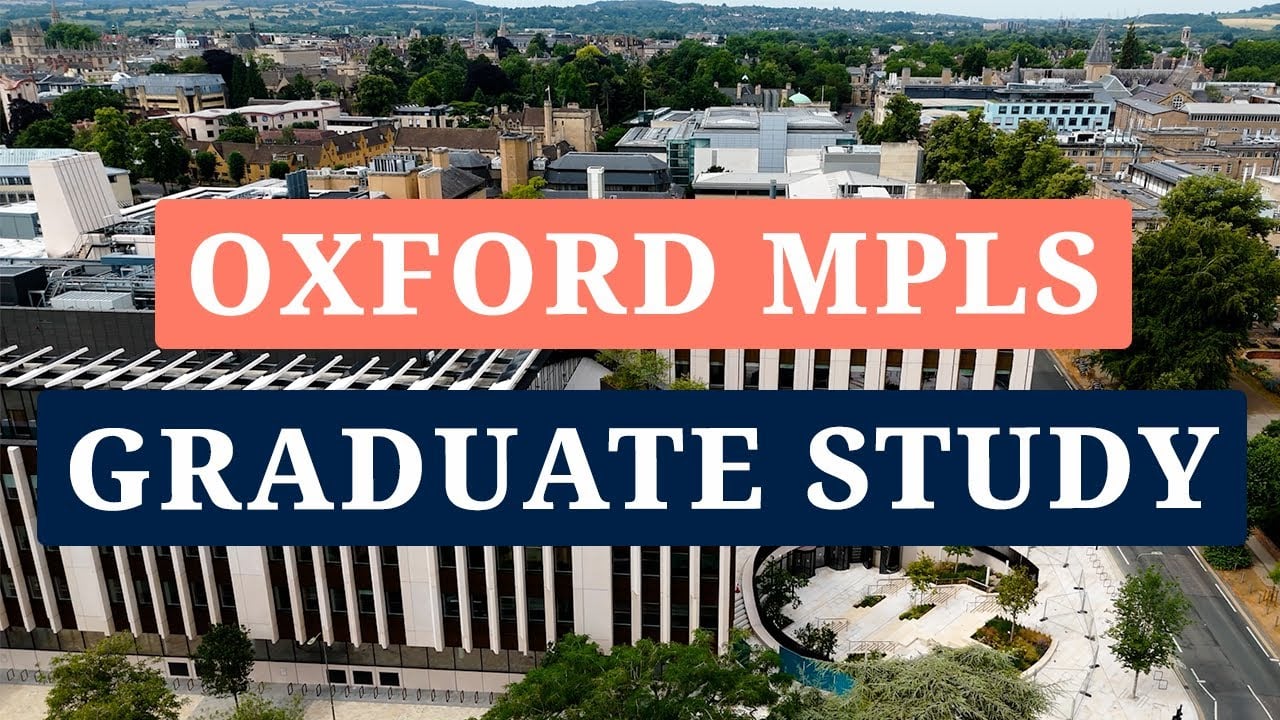
The quality and impact of the division's work have been recognised by successive rounds of the national Research Excellence Framework and Teaching Excellence and Student Outcomes Framework exercises, and its departments frequently top the major higher education league tables. Its research is also regularly identified as one of the most significant recipients of grant funding in Europe.
The division’s 9 departments and interdisciplinary doctoral training centre span the full spectrum of the mathematical, computational, physical, engineering and life sciences, and undertake both fundamental research and cutting-edge applied work.
The MPLS Division has a vibrant and exciting research environment, offering frequent opportunities to share your research and engage with scientists working across the research spectrum. It has extensive links with other leading universities, research institutes, public sector bodies, business and industry, in the UK and abroad. Research at the interface between disciplines is strongly encouraged, both within the mathematical, life and physical sciences, and within the medical and environmental sciences.
Teaching is a major part of the division’s activities. It teaches around 7,300 students (including around 3,400 graduate students) and is playing a key part in training the next generation of leading scientists.
The division is striving to create and sustain an inclusive culture where diversity is valued and equity prevails, so that individuals of all backgrounds can fully contribute to its scientific community in a safe and supportive culture. All academic departments in the division hold Athena Swan Awards. Diversity matters and benefits everyone. Scientific and technological innovations change the world and everyone should have access to participate and engage in that change.