Features
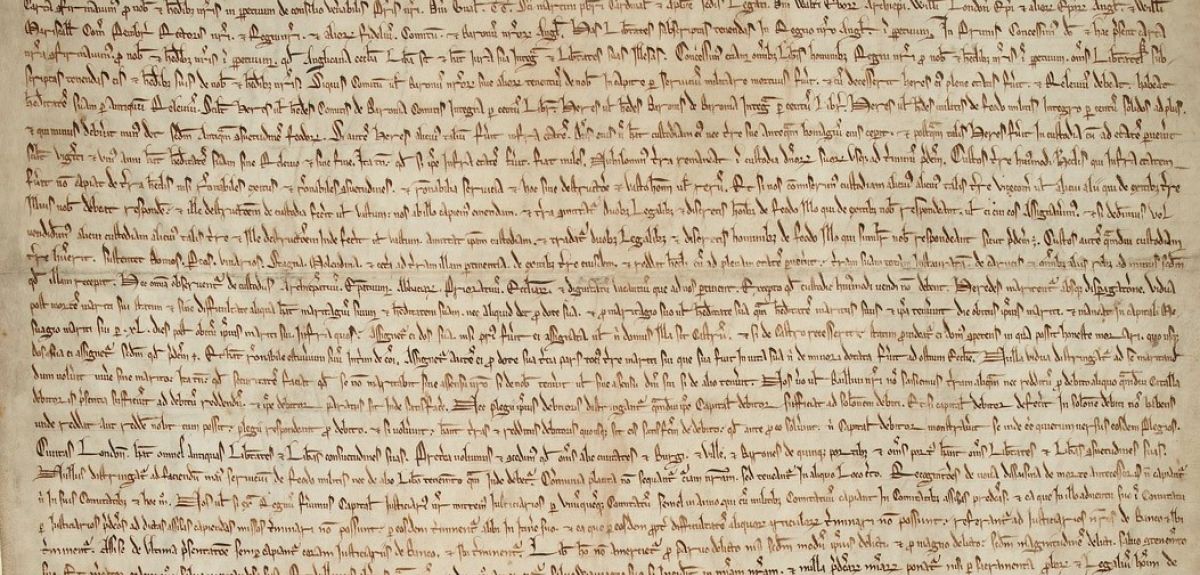
800 years ago, on 15 June 1215, King John sealed the Magna Carta at Runnymede. Over the next few years it was reissued a number of times. Of the versions reissued in the 13th century, only 17 originals remain and four of those sit in Oxford University's Bodleian Libraries.
This month members of the public have the chance to view three of these manuscripts in the Weston Library. A free exhibition called Magna Carta 800 that runs until 28 June has two charters from 1217 and 1225 and other documents from the Library's collections that help explain the political background to Magna Carta.
The 1217 'Gloucester Charter' is also on display as part of Marks of Genius, the inaugural exhibition at the new Weston Library which runs until 20 September.
Magna Carta 800 has been curated by Dr Hugh Doherty, now at the University of East Anglia and previously a British Academy Post Doctoral Fellow in Medieval History at Oxford. Dr Doherty says the 'Gloucester Charter' of 1217 is one of the finest Magna Cartas in existence.
'It is an important moment of the history of the kingdom,' he says. 'Here we have those around the boy king following the death of John seeking to use Magna Carta to bring their enemies back on side. We see different liberties confirmed to different constituencies of the kingdom at the specific moment of 1217. These liberties are different in detail from those guaranteed in 1215 and in 1225.'
The Magna Cartas are very well preserved, given their age. Dr Bruce Barker-Benfield, Medieval Manuscripts Curator at the Bodleian Libraries, explains why. 'In medieval times the charters would have been kept folded tightly into a small package with their seals preserved on the inside,' he says. 'So they have been nicely preserved and the seals have sometimes survived.'
In 2010 one of the Bodleian's 1217 Charters had an extended stay in New York after an ash cloud from an Icelandic volcano grounded international flights. Thousands of New Yorkers flocked to the Morgan Library for an impromptu five-day exhibition.
Also on 15 June, an artwork commissioned by the Ruskin School of Drawing and Fine Art will be discussed at the British Library. Artist Cornelia Parker, who has produced a 13 metre-long embroidery of the Wikipedia entry for Magna Carta, will be in conversation with Wikipedia founder Jimmy Wales and British Library chief executive Roly Keating.

A live harmonica performance from Bill Oddie brought the St Hilda's Documentary-Making Conference at the Jacqueline du Pré Music Building to an end last month.
The college has shared with us the video of the musician, ornithologist and TV presenter accompanying producer/director David Leach in a song called ‘Documentary Blues’.
But playing the harmonica was not Mr Oddie's only reason for attending the conference – he was also there to give advice to budding film-makers about producing wildlife documentaries.
The former Goodie was one of 16 industry experts who spoke to an audience of students, staff, alumni and others.
Other speakers included Simon Elmes, who stepped down as Creative Director of BBC Radio Documentaries Unit this year and alumna Anna Hall, a freelance series producer and director whose documentaries have included the ITV programme ‘Dunblane: Remembering Our Children’ and 'College Girls' about St Hilda's.
Alumna Ruth Fuller Session, director of operations at Atlantic Productions on the recent mini-series 'Inside the Commons', and Mike Brett, director of the film ‘Next Goal Wins’, who won a BAFTA Breakthrough Brit award last year, also spoke at the conference.
The sessions included ‘How to make a documentary: from commission to transmission’; ‘Feature-length documentary: creating factual movies’; ‘Wildlife documentary: always work with animals’; ‘Radio documentary: making pictures in sound’; and ‘Observational documentary: the bare naked truth’.
The conference was organised by the St Hilda's College Media Network as part of their regular programme of events bringing experts to Oxford to speak on writing and film-making. Nicolette Jones, Chair of the network and Children’s Book Editor at the Sunday Times, said: 'The hall was full, the audience engaged and lunch on the St Hilda’s College lawn made for an idyllic garden party atmosphere.'
The next event, a masterclass in editing, will take place on 13 October.
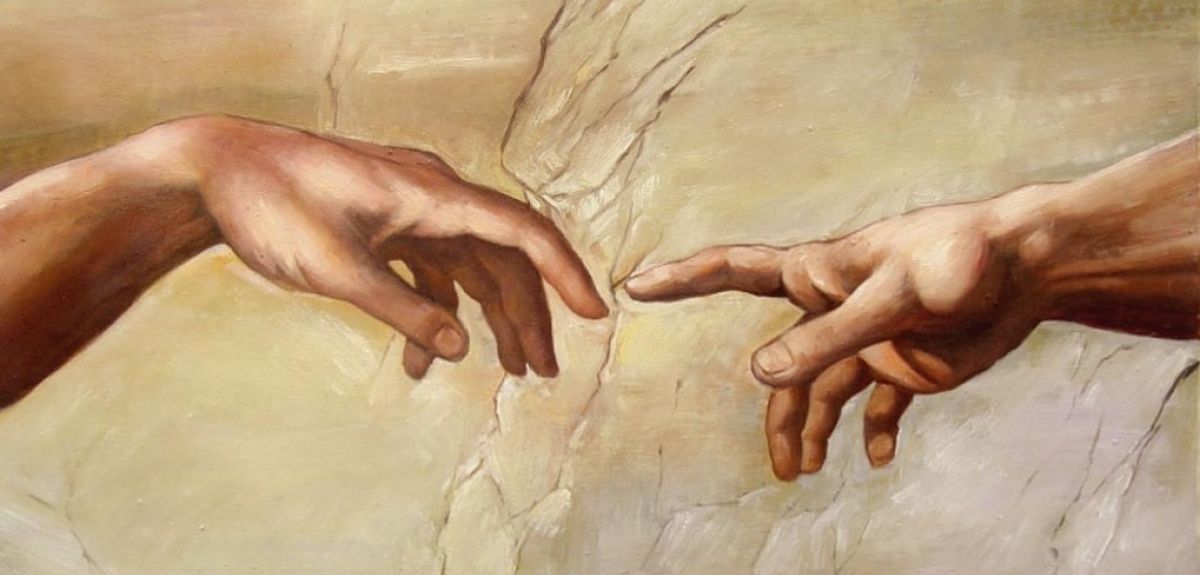
One of the most popular Arts Blog posts this year was a reproduction of the speeches by Marcus du Sautoy and Ben Okri at the launch of the Humanities and Science series at The Oxford Research Centre in the Humanities (TORCH).
Since then, there has been an exciting series of events featuring Oxford academics from backgrounds of both arts and sciences.
And this week, TORCH has announced a collaboration with the Science Museum in London to offer a Research Fellowship for an Oxford academic to carry out research on the Museum's collections.
The chosen fellow will contribute to the Museum’s forthcoming exhibition programme, which includes exhibitions on ‘The Wounded’, which marks the centenary of the First World War, and ‘Mathematics’, which tells the stories of mathematicians, their tools and ideas from the 17th century to the present. The fellowship will facilitate exchange by bringing Oxford academics into the Science Museum, and the Museum collection feeding back into the individual’s research.
'Research plays a vital role in deepening understanding of our collections, developing new approaches to our work, and in reaching new audiences,' says Dr Tim Boon, Head of Research & Public History at the Museum. 'We are delighted to be working with TORCH on this new fellowship, which will bring new perspectives to our collections.'
The Science Museum's new Research Centre opens in Autumn 2015 and fellows will be able in 2016 to take advantage of the facilities to consult the collections, library and archival material. Fellows will also be given dedicated space within the centre for their research.
The Humanities and Science series continues apace with three events this week. For more information, keep an eye on the TORCH website.

Social media, the Ebola epidemic, and World War I are just some of the things that have influenced British children's creativity and use of language over the last year, according a report published today by Oxford University Press (OUP).
OUP's analysis of 120,000 short stories that children submitted to the BBC's 500 WORDS competition 2015 revealed a wealth of fascinating insights into the lives of British children and the imaginative ways in which they use English.
Hashtag – and the symbol used to represent it '#' – is unmistakeably the 'Children's Word of the Year', due to its significant shift in usage by children writing in this year's competition.
The symbol is entering children's vocabulary in a new way, as they have extended the use from a simple prefix or a search term on Twitter, to a device for adding a comment in their stories.
The rise of mobile technology and social media is the predominant theme for 2015. Of the top 20 words which have significantly increased in use during the past 12 months, over half are inspired by youngsters' understanding and use of social media – youtube, Zoella, snapchat, selfie, vlog, blog, Instagram, emoji, and Whatsapp.
Young authors also demonstrate a keen interest in the world around them. International current affairs, particularly the more harrowing situations, are reflected in their stories. Ukraine, Syria, Malaysia Airlines, and peacekeepers all feature. However, one global event dominates over all others – the Ebola crisis in countries such as Sierra Leone and Guinea.
Events to mark the centenary of World War I have clearly had a big impact on children. Many historical and contemporary stories hone in on specific events surrounding the Great War, such as the assassination of Archduke Franz Ferdinand and, for this year, the sinking of the Lusitania (1915).
500 WORDS is the BBC Radio 2 Breakfast Show's short story writing competition for children aged 13 and under. Children were invited to compose an original work of fiction, using no more than 500 words.
OUP's analysis of the submissions was powered by the Oxford Children's Corpus – a large electronic database of real and authentic children’s language – the only one of its kind in the world. It is used by lexicographers and linguists as part of OUP's on-going language research and dictionary compilation programme.
Vineeta Gupta, Head of Children's Dictionaries at Oxford University Press said: 'Language is constantly changing and adapting. Children are true innovators and are using the language of social media to produce some incredibly creative writing. What impresses me most is how children will blend, borrow, and invent words to powerful effect and so enrich their stories.'
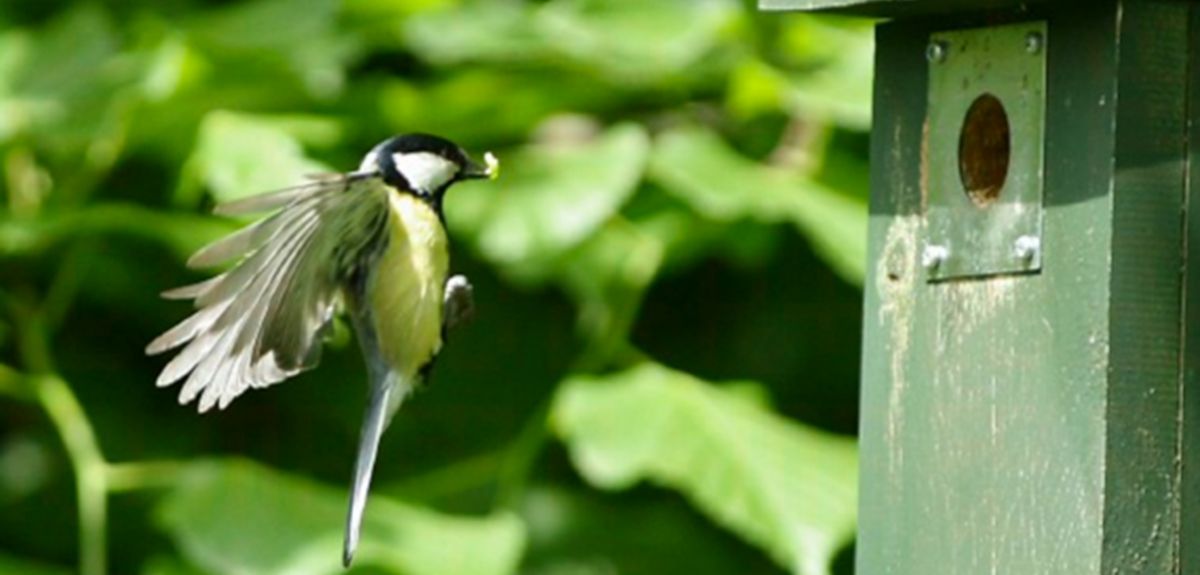
When oaks burst into life in spring populations of oak-leaf-eating caterpillars boom: this offers a food bonanza for caterpillar-munching birds looking to raise a family.
But, if you’re a bird, how do you time your breeding to exploit this seasonal food source? Understanding this is essential if scientists are to predict which species will be able to adapt to spring arriving earlier due to climate change.
Amy Hinks, Ella Cole, and Ben Sheldon, of Oxford University's Department of Zoology, looked into this question by studying great tits at Wytham Woods which feed on winter moth caterpillars which, in turn, feed on the newly-emerged leaves of oak trees.
The team monitored the bud development of all oak trees and the timing of egg laying of all great tits across 28-hectares of deciduous woodland. They also measured caterpillar abundance at a sample of oaks throughout spring.
The team report in American Naturalist that the timing of leaf emergence of a given oak is a reliable predictor of when caterpillars are most abundant on its foliage. However, individual oaks have their own sense of timing: when each tree buds is consistent over many years and does not tend to follow average temperature trends.
'We found that the laying date is best predicted by the timing of oak leaf emergence within the immediate vicinity, less than a 50 metre radius, of the nest,' said report author Ella Cole of Oxford's Edward Grey Institute.
'There is evidence to suggest that great tits use large-scale cues such as temperature and day length to time their breeding. The results from this study show that temperature cannot be the whole story: in addition to using these global cues, tits are able to fine-tune their breeding decisions based on information from their local environment.
'It is thought that female tits may be using information on the presence of early-stage caterpillars or the stage of development of tree buds. In early spring tits can be seen closely inspecting, and sometimes even eating, tree buds which may be how they collect this information.'
Although there is evidence from other bird species that vegetation cues are used to time egg laying, experiments on captive great tits that have tried to test this – by providing birds with either leafing or non-leafing branches – have been unable to influence laying date.
'However, as these experiments were done in captivity, it is not clear how much they reflect what birds do in the wild,' Ella tells me. 'Precisely what cues birds are using to synchronise their breeding cycle with their immediate environment remains a bit of a mystery, and we clearly need further work exploring this question.'
- ‹ previous
- 150 of 252
- next ›
 Learning for peace: global governance education at Oxford
  What US intervention could mean for displaced Venezuelans
  Setting the agenda for the next century of quantum
 10 years on: The Oxford learning centre making an impact
 Mapping the Moon: the world’s first lunar atlas goes digital
  Oxford and The Brilliant Club: inspiring the next generation of scholars
 New course launched for the next generation of creative translators
 The art of translation – raising the profile of languages in schools
  Opening a window into the quantum world
 Tracking resistance: Mapping the spread of drug-resistant malaria