Features
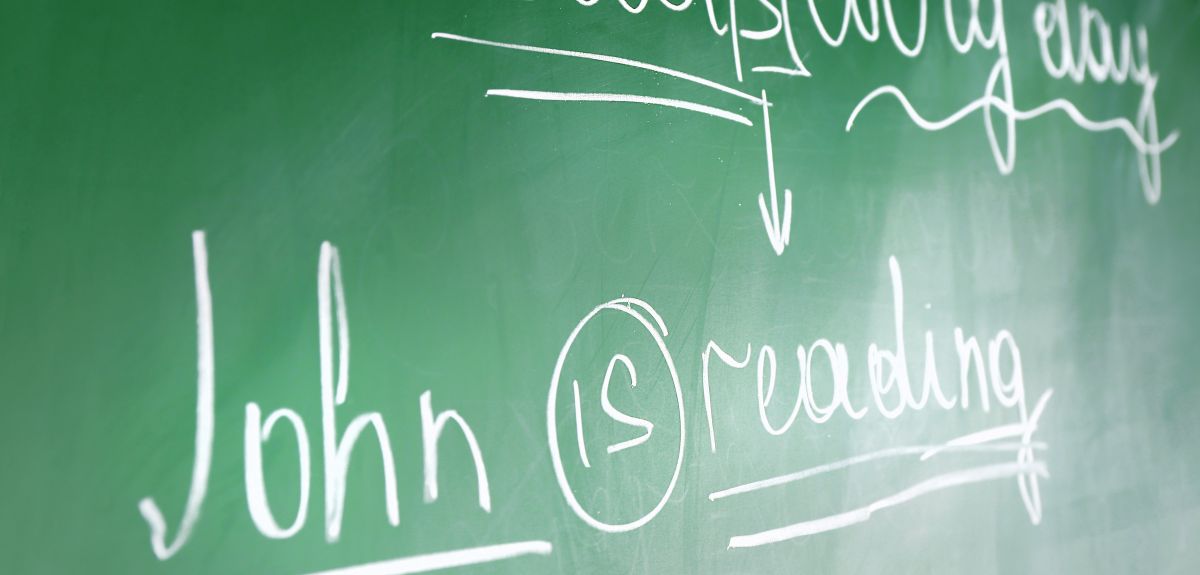
Teachers, linguists and academics will discuss the state of the English language at a one-day symposium today.
The symposium, called English Grammar Day, has been organised by Oxford University and UCL, and takes place at the British Library.
Professor Charlotte Brewer of the Faculty of English Language and Literature at the University of Oxford, who co-organised the event, said: "The National Curriculum now tests schoolchildren on English grammar, but sometimes these tests are at odds with how people actually speak. Part of the reason we organised this event is to support teachers as they implement the National Curriculum."
Changes in the English language have been criticised for hundreds of years, and certain features are often singled out as a sign of declining education, social standards or politeness.
"Language change is absolutely natural, as any linguist will tell you," said Professor Brewer. "But people often feel acute anxiety about these changes. For example, in the 1930s, the word 'finalise' was hotly debated on both sides of the Atlantic. Nowadays we would consider it standard English. Grammarians and lexicographers have to keep pace with this rate of change, by maintaining corpuses of English as it is really used."
Professor Brewer will give a talk called Monarchs and minnows vs. broadband and bungee jumping: what is the job of a children’s dictionary?, in which she will discuss recent research from Oxford University Press that shows how children's vocabulary has changed over the years, reflecting new technology and pop culture phenomena.
"It's good news that children innovate with language in this way," said Professor Brewer. "People's anxiety about language change often seems to reflect a generation gap: they're worried that children won't learn to 'speak properly'.
"But the test of speaking properly is if we're communicating what we want to communicate, which might mean speaking in one way with your friends, and another way with your parents or teachers. And all children learn to do this.
"Everybody uses language which identifies you as part of a social group, and everyone 'code-switches' in this way. Dictionaries and grammar books aim to describe the English language as it is used, rather than prescribing a particular way that it ought to be used."
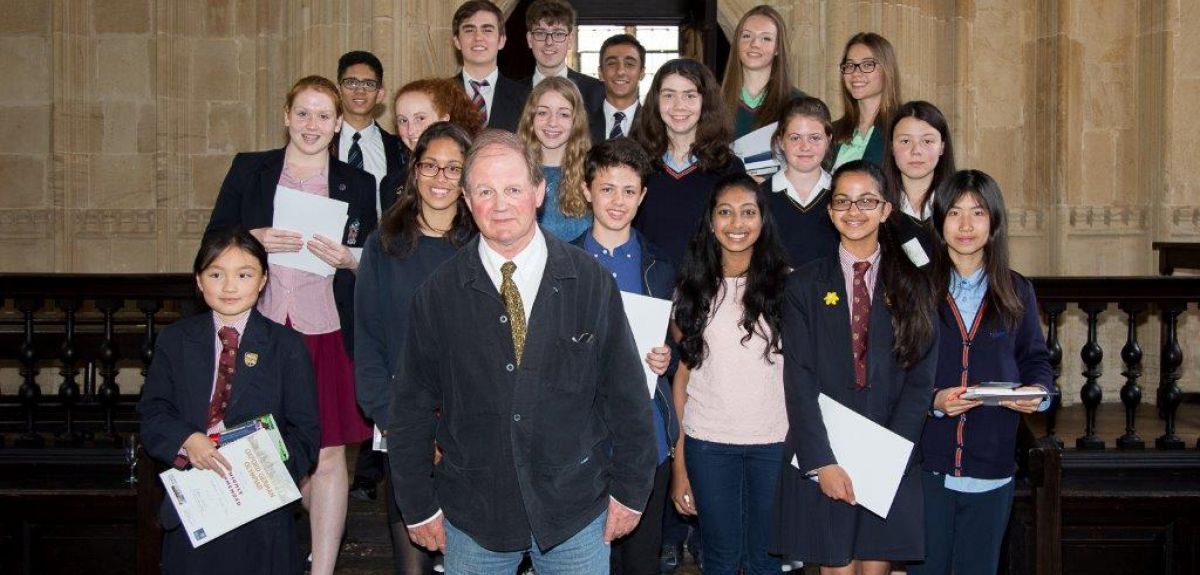
The Oxford German Network Fest took place in the Divinity School of the Bodleian Library yesterday evening (23 June).
Author Michael Morpurgo spoke at the event and awarded prizes to schoolchildren, undergraduates and postgraduates for their entries in the Oxford German Olympiad competitions.
Over 60 schoolchildren from Year 5 upwards attended to collect their prizes for poems, stories, raps, cartoons and films in German. One prize sponsored by the Wiener Library was awarded to undergraduates who translated a letter about the Dresden bombings into English and commented on it, while another was awarded to postgraduates for a book proposal which was judged by the publisher Camden House, who sponsored the prize.
The event's organiser, Professor Katrin Kohl of the Faculty of Medieval and Modern Languages at Oxford University, says she started the Oxford German Network to promote the teaching of German in schools and universities. The Oxford German Olympiad is now an annual competition attracting entries from across the UK.
'The teaching of German has really been suffering in schools, and indeed there is a crisis in modern languages teaching across the UK,' she says. 'The aim of the Oxford German Olympiad is to extend children’s experience of what modern languages is about, particularly showing them the cultural dimension of languages, which is neglected in the school syllabus.
'Since 2000 more than 40 university departments of modern languages have closed because there are simply not enough good applicants.'
Professor Kohl says the effects of the decline in modern languages teaching are already being felt in Britain. 'There is a shortage of linguists at all levels and in all sectors,' she says. 'Britain is under-represented in Brussels and diplomatic circles more generally because of a lack of language skills. This creates a security risk because there are not enough linguists to supply the necessary expertise.
'We are also losing the skills that language learning gives people who work in international business. You can do most of the work in English but when it comes to grass roots work, you need to be able to speak the language of the people you are dealing with.'
The Oxford German Network is the first university-led cultural network. Prizes were donated by Deutsche Bahn and the German Youth Hostel Association, business software company SAP AG, the Wiener Library, Camden House, OUP, Blackwell UK Ltd, and Penguin Books.
23 Oxford student artists will show their work to the public at the Ruskin School of Art's Degree Show this weekend.
The Degree Show is being installed in the Green Shed in Oxford and is available to view from 12pm to 6pm, 20 to 22 June.
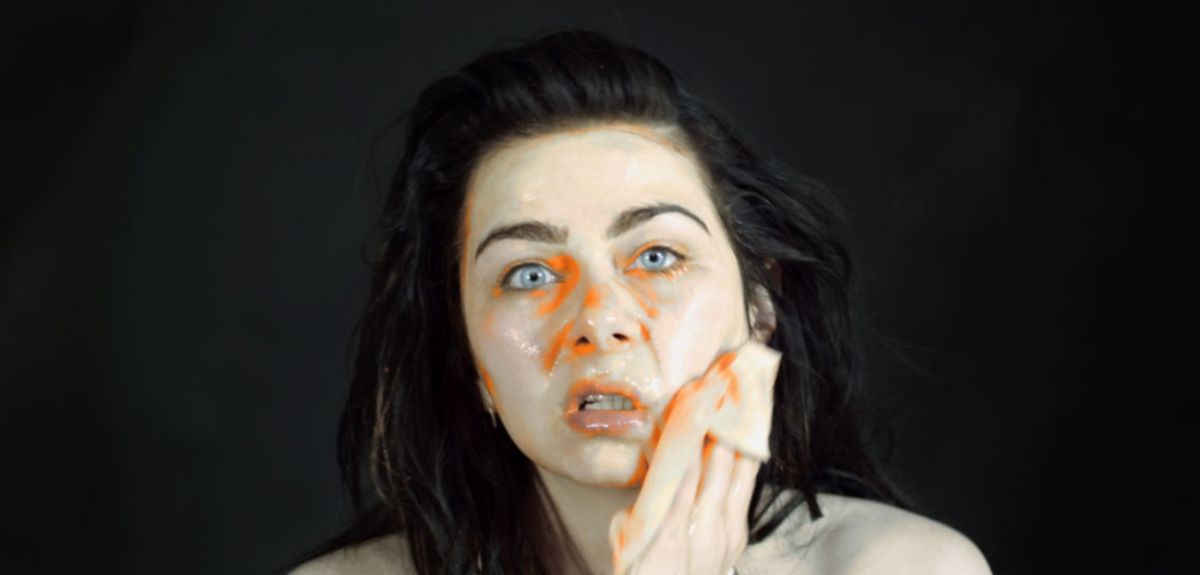
Pictured above is an image from Julia Sklar's portfolio. Miss Sklar says: 'My work explores the universality of facial expression and the differing ways people attempt to conceal them. I am interested in western notions of feminine beauty and self-presentation. I work primarily in film.'
The Degree Show is installed in The Green Shed in Oxford. The private view is on the evening of 19 June and it will be open to the public from 20 to 22 June from 12pm to 6pm.
You can preview the work of the individual artists on the Ruskin School of Art's website or on the Facebook page.
At time of writing, the only remaining soft tissue material of a dodo anywhere in the world is on the M4 motorway.
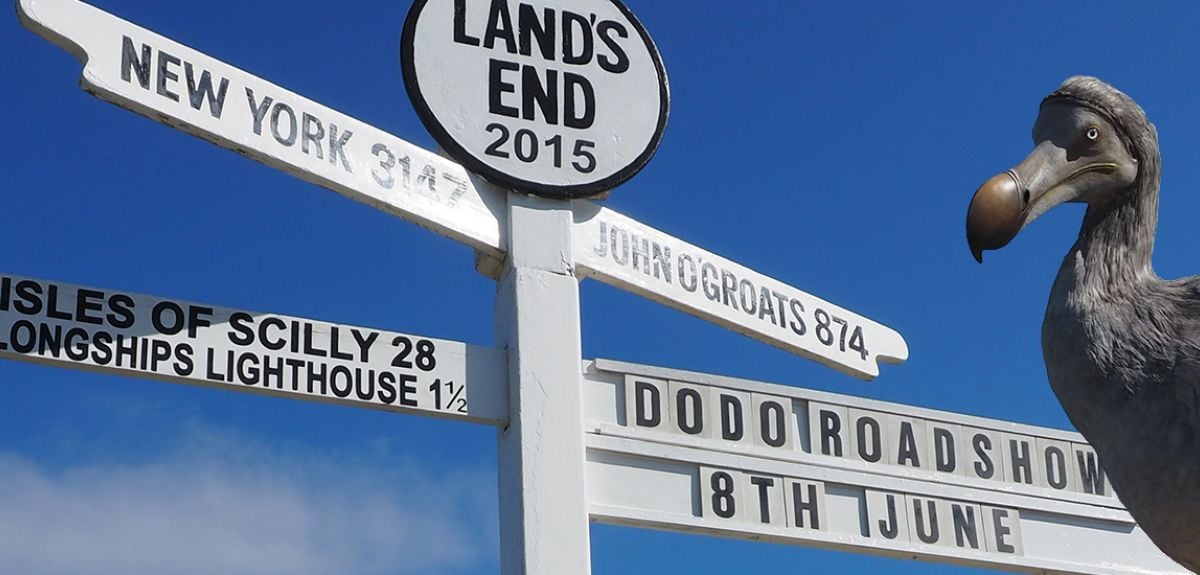
But fans of the Oxford University Museum of Natural History's iconic exhibit need not worry. The dodo is safe and touring the country to mark the Museum’s nomination in this year’s Art Fund Prize for Museum of the Year.
Museum staff are taking the dodo from Land's End to John O'Groats to 'meet' and 'interview' star objects from museums and galleries across the country, including Yorkshire Sculpture Park, National Museum Wales, Perth Museum & Art Gallery and Eden Project. The interviews are being published on the Museum's blog.
Staff are touring with the dodo model from the Museum’s displays, a cast of the head, and real foot bones from the same animal.
Getting out on the road to visit museums and galleries far and wide seemed like a great way to talk about the huge breadth of collections that we have in the UK, both in natural history and well beyond,’ says Museum director Professor Paul Smith.
This is a big week for the Oxford dodo, as it has been announced that Oxford University will host ‘The Oxford Dodo: Culture at the Crossroads’ as part of the Being Human festival, the UK’s only national festival of the humanities. The event will be in November and is a joint project between The Oxford Research Centre in the Humanities (TORCH) and the Museum of Natural History.
The University of Oxford has been awarded funding to hold the event during the festival week from 11 to 22 November. The grant from Being Human, which is supported by the AHRC, British Academy and Wellcome Trust, will allow the University to take part in the 11-day national programme of debates and activities for all ages.
Kirsten Shepherd-Barr, an English professor at the University of Oxford and the University’s Humanities Knowledge Exchange Champion, says: 'The dodo: an icon of extinction, and a powerful symbol of humanity's impact on the environment. It crosses disciplinary lines, encompassing literature, science, the arts, geography.
'It haunts our imagination, from Lewis Carroll's Alice in Wonderland to David Quammen's The Song of the Dodo to the Natural History Museum's very own exhibit on this extraordinary and elusive creative.
'What did it sound like? How did it really look? Why are we left to reconstruct, from a few bones, this creature that seems so real and touches us so immediately?'
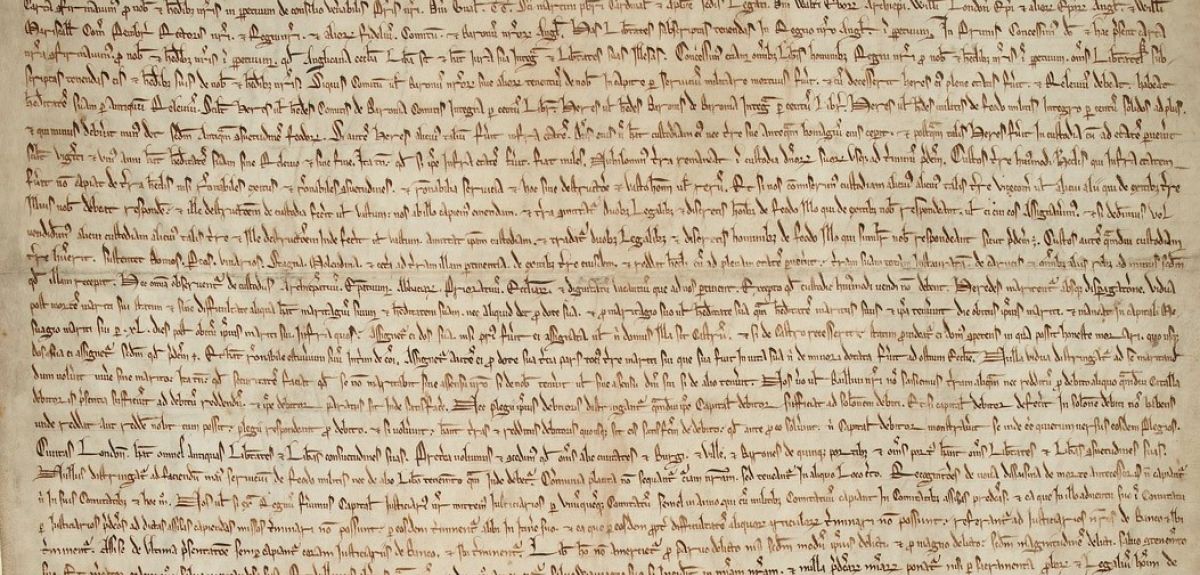
800 years ago, on 15 June 1215, King John sealed the Magna Carta at Runnymede. Over the next few years it was reissued a number of times. Of the versions reissued in the 13th century, only 17 originals remain and four of those sit in Oxford University's Bodleian Libraries.
This month members of the public have the chance to view three of these manuscripts in the Weston Library. A free exhibition called Magna Carta 800 that runs until 28 June has two charters from 1217 and 1225 and other documents from the Library's collections that help explain the political background to Magna Carta.
The 1217 'Gloucester Charter' is also on display as part of Marks of Genius, the inaugural exhibition at the new Weston Library which runs until 20 September.
Magna Carta 800 has been curated by Dr Hugh Doherty, now at the University of East Anglia and previously a British Academy Post Doctoral Fellow in Medieval History at Oxford. Dr Doherty says the 'Gloucester Charter' of 1217 is one of the finest Magna Cartas in existence.
'It is an important moment of the history of the kingdom,' he says. 'Here we have those around the boy king following the death of John seeking to use Magna Carta to bring their enemies back on side. We see different liberties confirmed to different constituencies of the kingdom at the specific moment of 1217. These liberties are different in detail from those guaranteed in 1215 and in 1225.'
The Magna Cartas are very well preserved, given their age. Dr Bruce Barker-Benfield, Medieval Manuscripts Curator at the Bodleian Libraries, explains why. 'In medieval times the charters would have been kept folded tightly into a small package with their seals preserved on the inside,' he says. 'So they have been nicely preserved and the seals have sometimes survived.'
In 2010 one of the Bodleian's 1217 Charters had an extended stay in New York after an ash cloud from an Icelandic volcano grounded international flights. Thousands of New Yorkers flocked to the Morgan Library for an impromptu five-day exhibition.
Also on 15 June, an artwork commissioned by the Ruskin School of Drawing and Fine Art will be discussed at the British Library. Artist Cornelia Parker, who has produced a 13 metre-long embroidery of the Wikipedia entry for Magna Carta, will be in conversation with Wikipedia founder Jimmy Wales and British Library chief executive Roly Keating.
- ‹ previous
- 149 of 252
- next ›
 What US intervention could mean for displaced Venezuelans
  Setting the agenda for the next century of quantum
 10 years on: The Oxford learning centre making an impact
 Mapping the Moon: the world’s first lunar atlas goes digital
  Oxford and The Brilliant Club: inspiring the next generation of scholars
 New course launched for the next generation of creative translators
 The art of translation – raising the profile of languages in schools
  Opening a window into the quantum world
 Tracking resistance: Mapping the spread of drug-resistant malaria