Features

On World Malaria Day 2023, the global fight against malaria has hit a critical point in Africa. Recent studies have confirmed that malaria parasites resistant to artemisinin have emerged in Rwanda, Uganda and the Horn of Africa.
Artemisinin-based combination therapies (ACTs) are the first line treatment for malaria and there is no immediate replacement available. The loss of ACTs will put millions of Africans, mostly children under the age of 5, at risk of drug-resistant malaria infection and death.
One possible solution?
Adding a third drug to current ACT drug combinations. These Triple ACTs or TACTs have been found in clinical trials in Asia to be highly efficacious even in places where ACTs were failing.
'It is so much easier to prevent antimalarial drug resistance than to try and contain it. We are in danger losing of our current antimalarial drugs to resistance,' said Professor Sir Nick White, University of Oxford Professor of Tropical Medicine based at the Mahidol-Oxford Tropical Medicine Research Unit (MORU), in Bangkok.
'Triple artemisinin combination treatments [TACTs] will protect against resistance and help ensure that these drugs remain effective until new drugs arrive in 5-10 years time,' said Professor White.
Before TACTs can be widely deployed in Africa, however, their efficacy, safety and tolerability must be confirmed in African populations, especially children.
To that end, the Development of Triple Artemisinin-based Combination Therapies (DeTACT) trial is studying in eight African and two Asian countries two new TACTs - Artemether+lumefantrine+amodiaquine and Artesunate+piperaquine+mefloquine - to generate evidence that they are safe and effective malaria therapies.
The DeTACT project has also conducted modelling, ethics and market positioning studies to support their use in Africa and thereby prevent or delay the emergence of artemisinin and multi-drug resistant malaria.
'The DeTACT project aims to provide the necessary evidence that TACTs can both delay antimalarial drug resistance to existing drugs, and be an effective treatment for multidrug resistant infections. DeTACT will also deliver a product to market, and engage with national and global policy makers and stakeholders to discuss the potential position of TACTs in the mix of antimalarial drugs,' said University of Oxford Professor Arjen Dondorp, DeTACT project Principal Investigator.
Led by University of Oxford-affiliated researchers based at MORU in Bangkok, and funded by UK Aid administered through the Foreign, Commonwealth and Development Office (FCDO), the DeTACT trial has recruited over ~1800 patients as of April 2023 , with recruitment and follow-up completed in Niger and Nigeria, and no major or unexpected safety signals detected.
Once recruitment and follow-up are completed at the end of 2023, DeTACT investigators will present results in April 2024. Prior to that, they aim to present interim findings at a DeTACT symposium in October 2023 at the American Society of Tropical Medicine and Hygiene (ASTMH) 72nd Annual Meeting in Chicago, USA.
The first modelling study to project the impact of TACTs in preventing or delaying artemisinin resistance, led by Associate Professor Ricardo Aguas, University of Oxford, and Associate Professor Maciej Boni, Pennsylvania State University, has been completed and will soon be published in the prestigious journal, Nature Communications.
'These DeTACT modelling studies and market positioning studies generate data that will be crucial in our efforts to effectively introduce TACTS and to project the impact and cost-effectiveness of TACTs in preventing the spread of artemisinin resistance. Along with the clinical trial, these studies constitute a comprehensive assessment of the expected advantages and potential barriers to the large-scale use of TACTs,' explained Dr Chanaki Amaratunga, DeTACT Project Coordinator.
The DeTACT project has engaged malaria stakeholder engagement officers to communicate directly with National Malaria Control Programmes (NMCPs) to present to them to the DeTACT project and TACTs in general. Presentations on DeTACT and TACTs have been made at the RBM Partnership to End Malaria Case Management Working Group and the Seasonal Malaria Chemoprevention (SMC) Alliance Annual meetings. These efforts have led to significant interest from all parties in participating in future research and exploring the roll-out of TACTs in their countries.
To make TACTs available as quickly as possible where they are most needed it is critical to work with the pharmaceutical industry on the co-formulation. MORU has signed a memorandum of understanding with Fosun Pharma, China, and the Medicines for Malaria Venture (MMV) to develop and pre-qualify fixed-dose combinations of artemether-lumefantrine-amodiaquine, prior to deploying them across Africa.
'The DeTACT trial will generate data not only on the efficacy and safety of TACTs but also on the pharmacokinetics of each of the drug components, including in malnourished children – a particularly vulnerable sub-population. In addition, there will be cutting-edge analyses, combining clinical trial data with that from whole genome and transcriptome studies, to improve our understanding of artemisinin and antimalarial drug resistance,' said Dr Mehul Dhorda, DeTACT-Africa Coordinator.
Further reading
Market Formation in a Global Health Transition.
Triple Artemisinin-Based Combination Therapies for Malaria - A New Paradigm?
Professor Chrystalina Antoniades of the Nuffield Department of Clinical Neurosciences explains how the COVID pandemic accelerated an innovation in one research project into Parkinson's Disease.
Parkinson’s is a progressive neurological condition, which affects around 145,000 people in the UK.
Symptoms start to appear when there isn’t enough of the chemical dopamine in the brain to control movement properly. People with Parkinson’s don’t have enough dopamine because some of the nerve cells that make it have died.
There are lots of symptoms, but the three main ones are tremor (shaking), slowness of movement, and rigidity (muscle stiffness).
Doctors typically diagnose and monitor the progression of Parkinson’s by assessing these symptoms using a ‘clinical rating scale’. This relies solely on the clinician’s own subjective impression of the person’s condition.
Since 2016, the NeuroMetrology Lab at the University of Oxford has been developing objective numerical measures to help doctors accurately diagnose disease and monitor the progression of Parkinson’s – which could lead to the provision of more targeted and timely treatment. Until recently this research team, based in the Nuffield Department of Clinical Neurosciences, has been carrying out their research via in-person clinics, attended by patients four times a year.
During the patient’s two-hour clinic visit, the researchers would measure subtle abnormalities in the speed and coordination of fast eye movements (known as saccades), hand movements, and gait. They would also assess cognitive performance using tasks on a tablet. Then they would try to work out whether these numerical measures could accurately and objectively quantify Parkinson’s, and track its progression over time.
The advent of home monitoring
One of the features of Parkinson’s symptoms is that they fluctuate both throughout the day and from day to day. So the research team always knew that they wanted to be able to monitor symptoms at home as well as in the clinic. They were aware that patients’ behaviour during short clinic visits every few months was probably not representative of the condition’s progression overall.
In 2020, the Covid pandemic put an immediate stop to research with human participants, making in-person clinics impossible. This apparent disaster in fact accelerated the researchers’ plans to roll out wearable technology and enable study participants to monitor their symptoms at home.
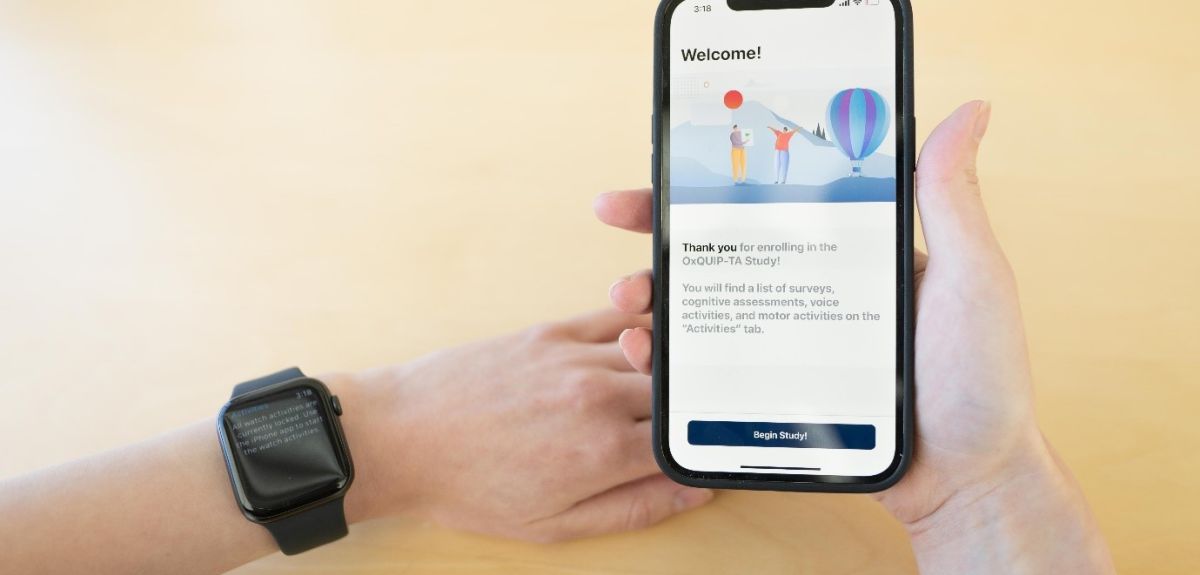
The biopharmaceutical company MSD is funding this new phase of the research project. The new grant has enabled the team, which I am leading, to work with MSD and the technology company Clinical Ink to capture data on participants’ symptoms at home. The wearable technology combines an Apple watch and phone to test a range of both motor and cognitive aspects of Parkinson’s.
I am delighted to be able to offer to our research patients the opportunity to be monitored so closely by such clever technology. My team has been working hard to make this a pleasant experience for all our patients and we are incredibly honoured to have such tremendous support from the Parkinson’s Disease community.
‘Digital health technologies offer tremendous opportunity to measure and objectively quantify the symptoms and progression of neurological disease,’ said Dr Marissa Dockendorf, Executive Director, Head of Global Digital Analytics and Technologies at MSD Research Laboratories. ‘MSD is excited to collaborate with the University of Oxford to further the development and characterisation of digital measures to support timely and reliable evaluation of potential new treatments for Parkinson's disease.’
How patients can monitor their symptoms at home
A member of the team sets everything up with participants remotely during a telemedicine appointment, explaining how to use the watch and the app on the phone. The participants receive instructions and the app gives step by step guidance on what to do. Participants are required to carry out testing at home once a month, performing tasks on the app such as reading, testing reaction times, and cognitive tasks.
David Williams, a participant in the study, said: ‘The wearable technology is very easy and comfortable to use. The instructions are very clear, the exercises are well explained and not at all difficult to accomplish. The staff are friendly, approachable people who always leave me with a sense of being valued as a contributor to what is obviously a very important research study. If you’re at all anxious about taking part, don’t be, just sign up. You won’t regret it!’
Kevin McFarthing, another participant, also stressed how easy it was to carry out home monitoring: ‘The OxQUIP team is very professional and thoroughly well organised, and are a pleasure to work with. They did a great job training me to use the remote devices’, he said.
The home monitoring does not replace clinic visits entirely; patients have a telemedicine appointment every four months, as well as the opportunity to come in to an in-person clinic if they wish.
Joan Severson, Chief Innovation Officer at Clinical Ink, said: ‘We are honored that our mobile and wearable technology plays an integral role in this study of Parkinson’s disease in Oxford. We are excited to collaborate with researchers who tirelessly work to increase objective numerical measures for diagnosing and monitoring disease progression.’
Looking to the future
The Covid pandemic was a dark period for many, and yet it accelerated this change in the way this research project is being carried out. The team is now able to gather richer, more nuanced and accurate data to feed into their analysis.
The outcomes of this project will improve the diagnosis, tracking and treatment of Parkinson’s. The insights gained about monitoring disease progression will make the assessment of clinical trials more efficient, leading to faster drug discovery not only for Parkinson’s, but potentially for a range of neurological conditions.
This work is part of the OxQUIP (Oxford Quantification in Parkinsonism) programme. If you’re interested in taking part in this study, please email [email protected].

Patient recruitment is on-track in the Oxford-led DeTACT trial of safe, effective drug combinations to prevent the spread of artemisinin and multi-drug resistant malaria in Africa.
The global fight against malaria is at a critical point. Overall progress has now stalled and even worsened in some countries in Africa, where most of the world’s 627,000 deaths from malaria occurred in 2020.
The situation is becoming grave with recent studies confirming the growing prevalence in Rwanda and Uganda of P. falciparum malaria parasites partially resistant to artemisinins, which are the most important frontline anti-malaria drugs.
No new antimalarial drugs are expected in the near future. If multi-drug resistant falciparum malaria becomes established in East Africa and spreads to other parts of Africa, it is soon likely to compromise the efficacy of artemisinin-based combination therapies or ACTs — putting millions of Africans at risk of drug-resistant malaria infection and death.
The WHO has said this 'independent emergence of artemisinin partial resistance in the African Region is of great global concern.'
One possible solution — new drug combinations with artemisinins and two other frequently used antimalarial drugs (Triple ACTs or TACTs) — was found in 2020 by the large multi-centre, multi-country TRAC2 study to be highly efficacious even in places where ACTs were failing.
Before TACTs could be widely deployed to control artemisinin-resistance in Africa, however, their efficacy, safety and tolerability would first need to be confirmed in African populations, especially children.
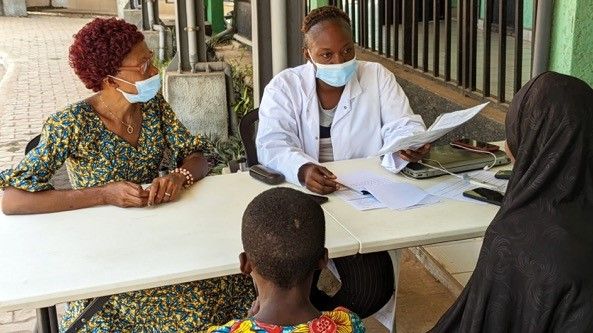 A child suspected to have malaria being screened for recruitment into the DeTACT Trial at the Centre National de Formation et de Recherche en Santé Rurale (CNFRSR), Maférinyah, Guinea. © MORU. Photographer: Mehul Dhorda.
Led by University of Oxford-affiliated researchers based in Bangkok at the Mahidol-Oxford Tropical Medicine Research Unit (MORU), the Developing Triple Artemisinin-based Combination Therapies (DeTACT) trial is currently studying in eight African and three Asian countries two new TACTs to generate evidence that they are effective first-line malaria treatments and support their deployment in Africa to prevent or delay the emergence of artemisinin and multi-drug resistant malaria in Africa.
Funded by UKaid administered through the Foreign, Commonwealth and Development Office (FCDO), DeTACT’s goals are ambitious.
'The emergence of artemisinin resistance in Africa is a serious concern, and its containment is paramount to avoid treatment failures in falciparum malaria in the future. TACTs can be an important contribution to this, both by delaying antimalarial drug resistance to the existing drugs, and by providing an effective treatment for multidrug resistant infections. DeTACT will provide the necessary evidence on TACTs, deliver a product that can be deployed, and will engage with national and global policy makers and other stakeholders to discuss the potential position of TACTs in the mix of antimalarial drugs,' says Professor Arjen Dondorp, the Principal Investigator of the DeTACT.
Besides comparing two existing ACTs (artemether-lumefantrine and artesunate-mefloquine) against two TACTs constituted of one additional drug added to each of these combinations (amodiaquine and piperaquine, respectively), DeTACT is conducting studies to forecast the impact of TACTs on controlling the spread or emergence of multidrug-resistant falciparum malaria leading to its elimination, and to examine the market readiness and ethical considerations of using TACTs across the malaria endemic world.
'The DeTACT Project includes modelling studies that will project the impact and cost-effectiveness of TACTs in preventing the spread of artemisinin resistance, explained Dr Chanaki Amaratunga, DeTACT Project Coordinator.'
'We are also conducting studies with all malaria stakeholders, starting from patients to researchers and policy makers, to elucidate the ethical and market aspects of their deployment. Along with the clinical trial, these studies constitute a comprehensive assessment of the expected advantages and potential barriers to the large scale use of TACTs,' said Dr Amaratunga.
Despite disruptions caused by the COVID-19 pandemic, DeTACT has already recruited over 700 patients, and aims to complete the recruitment of close to 4000 patients by early 2023.
The modelling, ethics and market positioning studies are well advanced and are expected to be completed by the end of 2022.
In addition, MORU has signed a memorandum of understanding with Fosun Pharma and Medicines for Malaria Venture (MMV) to collaborate with them to develop and pre-qualify fixed-dose combinations of TACTs prior to marketing them across Africa and the malaria endemic world.
'The DeTACT Trial will generate data not only on the efficacy and safety of TACTs but also on the pharmacokinetics of each of the drug components, including in malnourished children – a particularly vulnerable sub-population. In addition, there will be cutting-edge analyses, combining clinical trial data with that from whole genome and transcriptome studies, to improve our understanding of artemisinin and other antimalarial drug resistance,' said DeTACT-Africa Coordinator Dr Mehul Dhorda.
'We sincerely thank our partners conducting the field trials for maintaining their commitment to completing the trial in a difficult context,' Dr Dhorda added.
DeTACT is the third of three FCDO-supported multi-country, multi-site trials (TRAC and TRAC2) that have characterised artemisinin resistance and tested multi-drug resistant malaria treatments in South-East Asia. The work related to pharmacokinetics of antimalarials in malnourished children is supported by a grant from the Wellcome Trust.

Five graduate students currently studying at Oxford have been awarded £1,000 grants from the Vice Chancellor’s COVID-19 African Innovation Seed Fund for entrepreneurial projects aimed at addressing global challenges stemming from the pandemic.
Professor Louise Richardson, Oxford's Vice Chancellor, said, ‘I am proud to see how the five students have reimagined their research to address urgent global challenges created by the pandemic. Whilst completing their graduate courses in the midst of a global pandemic, they have unleashed their creativity and insight to support the most vulnerable in our societies.’
The COVID-19 African Innovation Seed Fund grants were awarded in partnership with the Oxford University Africa Society, during the 2021 Oxford Africa Conference. The five winners are reimagining their research and using their expertise to accelerate access to education, health services, and safe drinking water.
Held virtually in May this year, and introduced by Dr Tedros Adhanom, Director General of the WHO, the Conference highlighted innovations and progress in health, economics, climate and politics in Africa.
With their specific knowledge and engagement with the African context, they are uniquely positioned to tap into the vibrant Oxford innovation ecosystem to create purpose-focused solutions...The winners truly represent the explosion of talent that is in the African continent
Dr Watu Wamae
Dr Elisha Ngetich, President of the Africa Society, and a current DPhil candidate at Oxford said, ‘Innovation is the cornerstone of Africa’s future. It makes me extremely proud to see the cutting edge research and innovation being done by these students at Oxford and the potential this could have for the continent.’
Dr Watu Wamae, AfOx Health Innovation Platform lead, said, ‘The creativity and phenomenal ability of the five students to pivot their research to address real challenges in Africa is commendable. With their specific knowledge and engagement with the African context, they are uniquely positioned to tap into the vibrant Oxford innovation ecosystem to create purpose-focused solutions that will positively impact livelihoods. The winners truly represent the explosion of talent that is in the African continent.’
The Winners
Increasing access to Preterm care in a time of a pandemic
Josephine Agyeman-Duah

Josephine is a 3rd year DPhil candidate in the Nuffield Department of Women’s & Reproductive Health. Her research seeks to evaluate the effectiveness of a neurodevelopmental assessment tool for babies born pre-term. Such babies are at higher risk of neo-natal morbidity and developing mental health problems.
With the support received from the Vice Chancellor’s COVID-19 African Innovation Seed Fund, Josephine will be able to buy equipment and train more health assessors for the virtual platform.
She said, ‘My motivation for applying to the Oxford 2021 V-C COVID-19 African Innovation Seed Fund was to leverage the opportunity to promote a research idea by an African scholar at Oxford and to support an idea which will be a huge benefit to the African continent and globally. The availability of a platform for neurodevelopmental assessment in the time of a pandemic or where access to health centres is limited, will boost the possibility of scaling up neurodevelopmental screening.’
This innovation will have huge benefit even beyond the pandemic. Virtual screenings will allow health practitioners to reach more patients in a timely manner.
TGI career mobile app
Segun Afolaranmi

Segun is taking an MSc in Integrated Immunology. He is the co-founder of The Ganglion Initiative, an organisation supporting career development and entrepreneurship among secondary school students in Nigeria.
The pandemic significantly affected Nigeria’s already weak schools career counselling services. Segun’s team is building an innovative mobile app. It will allow The Ganglion Initiative to reach more students and schools digitally, providing comprehensive and tailored information on career and scholarship opportunities.
He said, ‘This award is in honour for the dedicated volunteers at The Ganglion Initiative who work tirelessly to achieve our vision, and the funding will support our efforts to reach more students by deploying the online tool.’
The app will simplify information on seemingly complex topics, such as choosing a career and applying to university, through explainer videos and puzzles. Users will also be able to chat with directly with volunteers enrolled in higher education.
Their aim is to reach at least 20,000 Nigerian students. The support from the Vice Chancellor’s COVID-19 African Innovation Seed Fund will help complete the product design of the app as well as online and offline publicity of the app.
Improving Water Pricing Strategies Amidst Ghana's COVID-19 Free Water Policy
Emmanuel Opoku

Emmanuel is taking an MSc in Water Science, Policy and Management. His innovation aims to ensure that the most vulnerable households in Ghana have access to safe drinking water amidst the pandemic.
Emmanuel aims to devise a strategy to subsidise water prices for the most vulnerable water users, by assessing their water affordability. Household water affordability is determined by finding the ratio of household’s expenses on water to their total expenditure/income. Based on the 2018 UN’s economic growth report, households whose water affordability is below 10% are considered vulnerable.
He said, ‘The Increasing Block Tariff water pricing strategy has been widely adopted by utilities in Sub-Saharan Africa, but it imposes differential affordability burden on low-income households and hinders utilities from fully recovering costs. This is a good opportunity for not only determining befitting subsidy beneficiaries but for developing cost reflective tariffs designs that could be adopted globally.’
Emmanuel has developed an innovative approach, calculating water affordability in 100 households over a 10-day period. From his analysis, households whose water affordability is below the 10% threshold will be marked as vulnerable. This will allow the Government to target vulnerable areas and provide proportionate subsidies on tariffs. .
His innovation has the potential to create long-lasting improvements in water-pricing techniques in Ghana. The support from the Vice Chancellor’s COVID-19 African Innovation Seed Fund will cover the travel and research costs.
Energy for Health Initiative
Godwin Nwangele

Godwin is taking an MSc in Energy Systems in Oxford’s Department of Engineering Science and his innovation aims to develop smart technology that connects solar power to hospitals.
One of the challenges facing the healthcare sector in Nigeria, and other African countries, is limited access to reliable electricity supplies. This challenge has been compounded by the pandemic, because the infrastructure needed to transport safely and store the vaccines requires steady supplies of power.
He said, ‘Winning the Vice Chancellor’s innovation award is a proud achievement for me. It is heartwarming to know that my idea is selected to build a resilient healthcare system in Africa. I am now motivated to work harder to complete this research, prototype it, and move to the implementation phase.’
This initiative seeks to conduct research using a Smart Sequential Loader (SSL) to provide solar power to hospitals, while cutting costs and achieving capacity optimisation. Not only will this be beneficial for vaccine equipment, but for the healthcare system and for those who depend on it.
Godwin will be using the Vice Chancellor’s COVID-19 African Innovation Seed Fund award to fund this research and obtain the device that will address this challenge. He also plans to partner with others on the African continent to roll out this solution beyond Nigeria.
The Right of Access to Educational Materials: International and Domestic Law
Sanya Samtani

Sanya is a final year DPhil student in Law. Her research offers constitutional tools to ensure access to educational material for people living in poverty and with disabilities in South Africa.
Despite the Bill of Rights in South Africa guaranteeing all people the right to education, the Copyright Act of 1978 prohibits people living in poverty and people living with sensory disabilities from access to educational materials such as textbooks.
She said, ‘Facilitating access to educational materials for all is key to knowledge generation and innovation, which in turn leads to a flourishing democratic society. South Africa's Copyright Amendment Bill is a positive step in the direction of inclusive access, grounded in constitutional values and the Bill of Rights.’
Sanya’s research highlights how these laws prevent millions of South Africans, who cannot afford a book, from accessing the material through photocopying. And that the law, which does not allow format shifting, precludes widespread use of assistive technologies, thus also denying access to people living with disabilities. As South Africa has entered into several lockdowns and tuition has been online, the copyright law, and the challenges it presents, have been exacerbated.
Sanya plans to use the grant to publish her research as an openly accessible monograph. This will be hugely valuable to those who are championing copyright reform and the access to education and learning materials in South Africa.

The law on marriage and civil partnerships, for both opposite and same sex couples, has been made equal – but not completely symmetrical; that is, concerning the option of converting one form of legal union into another, according to research by John Haskey, Associate Fellow at Oxford’s Department of Social Policy and Intervention published in Family Law.
Both same sex and opposite sex couples can become civil partners or they can marry. Consequently there are four possible ‘conversions’ of one form of legal union into another, only one of which is currently permissible - same sex civil partnerships can be converted to same sex marriages. The other three ‘conversions’ are not legally possible at present: same sex and opposite sex couples cannot convert from a marriage to a civil partnership, and opposite sex couples cannot convert from a civil partnership to a marriage.
One benefit of allowing all four conversions would be that couples could periodically reassess the form of their legal union and convert it to the alternative kind if they judged it appropriate. Such a review and reassessment might well be beneficial to the health of the relationship
John Haskey
An argument against two of these unavailable conversions is that the couples concerned did have the choice between the two legal unions: for example, opposite sex couples who formed a civil partnership did have the opportunity of marrying; similarly same sex couples who had married, could have opted instead for a same sex civil partnership, as the latter were introduced before the former.
In contrast, however, opposite sex couples who married earlier did not have the opportunity to have a civil partnership and there is the possibility that such conversions might be legislated. Other considerations and arguments might be deployed in favour of legislating the remaining two conversions.
According to John Haskey, ‘One benefit of allowing all four conversions would be that couples could periodically reassess the form of their legal union and convert it to the alternative kind if they judged it appropriate. Such a review and reassessment might well be beneficial to the health of the relationship.
'Undoubtedly perceptions about the characteristics of civil partnerships and marriages differ, and these differences may well vary for different age groups, so that conversions may be thought to allow some flexibility - a potential benefit - in the form of legal union with its associated expectations.’
He adds, ‘Another benefit of allowable conversions is that if a partner or spouse has a gender change, they can still remain married or as a civil partner with no disruption to their civil partnership or marriage - the union just changes for example, from an opposite sex one to a same sex one.’
The article reveals, the vast majority of same sex couples have not opted to convert their civil partnerships to marriages. John Haskey writes that, after December 2005, when same sex civil partnerships were introduced, 13,000 couples formed civil partnerships in the following nine months of 2006. After the initial rush, the monthly numbers fell to less than 1,000 a month and a seasonal pattern quickly emerged. Up to the end of 2017, he estimates, some 63,000 same sex partnerships had been formed.
Same sex marriage was introduced in March 2014, and the option to convert a same sex civil partnership to a same sex marriage in December 2014. The article estimates that up to the end of 2017, 23% (14,000) of civil partners had opted for conversion to marriage.
An important element in the argument for having, and retaining, civil partnerships has been that they avoid what many see as the paternalistic aspects of marriage, the couple preferring, it is claimed, to be equal partners, rather than husband and wife with their traditional roles
John Haskey
According to John Haskey, ‘The fact that a large proportion of civil partners have not converted their partnership may well reflect their contentment with the new status. Alternatively, they may have been unaware of the facility to convert, or even (erroneously) considered themselves either married or ‘as if married’.’
He adds, ‘An important element in the argument for having, and retaining, civil partnerships has been that they avoid what many see as the paternalistic aspects of marriage, the couple preferring, it is claimed, to be equal partners, rather than husband and wife with their traditional roles. (Inevitably, though, one wonders whether, had same sex marriage been legislated early and first, there would have been any civil partnerships on the statute book at all.)’
John Haskey concludes, ‘Overall, there has been extraordinary progress over the last two decades, and much of the advance can be attributed to the adherence to the principles of equality and non-discrimination, which, no doubt, will also play an important part in future reform. Three new legally recognised relationships in the space of less than two decades contrasts with centuries of having only marriage is remarkable, and may signify a new spirit of progressivism.’
The full article can be read here: Perspectives on civil partnerships and marriages in England and Wales: aspects, attitudes and assessments (familylaw.co.uk)
- ‹ previous
- 2 of 9
- next ›
 What Louise Thompson’s campaign tells us about the national maternity crisis
 Celebrating 25 Years of Clarendon
  Learning for peace: global governance education at Oxford
  What US intervention could mean for displaced Venezuelans
  Setting the agenda for the next century of quantum
 10 years on: The Oxford learning centre making an impact
 Mapping the Moon: the world’s first lunar atlas goes digital
  Oxford and The Brilliant Club: inspiring the next generation of scholars
 New course launched for the next generation of creative translators
 The art of translation – raising the profile of languages in schools