Features
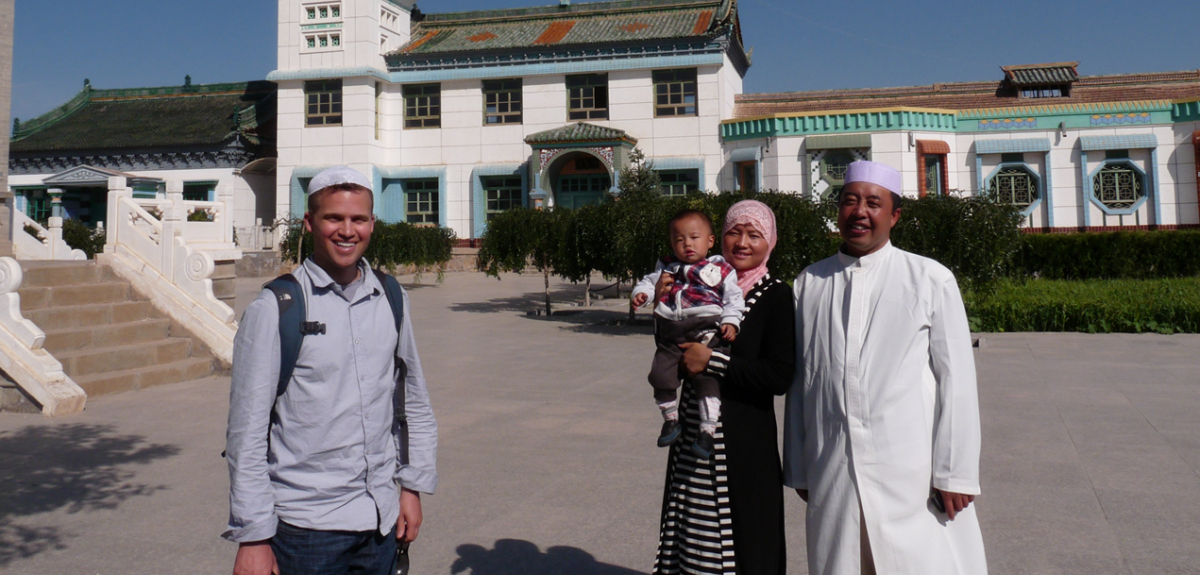
Dr Matthew S. Erie, who is Associate Professor of Modern Chinese Studies at the Oriental Institute, has been named a Public Intellectual Fellow by the National Committee on US-China Relations (NCUSCR).
The Public Intellectuals Program (PIP) was launched in 2005 to nurture the next generation of China specialists who have the ability to play significant roles as public intellectuals.
PIP Fellows gain access to senior policymakers and experts in both the United States and China, and to the emerging business and nonprofit sectors in China, as well as the media.
Dr Erie says: ‘I’m honoured to be named a PIP Fellow by the NCUSCR. As a PIP Fellow, I am fortunate to engage in a number of workshops in the U.S. and in China to create synergies between the academy and policy circles in the U.S. and China.
'There is a lot of work to do to increase education on and general awareness of Islam and China. The NCUSCR, and PIP in particular, provides a platform for scholars to hone their message to reach wider publics.
'One of the key priorities to me is to close the gap between those who either promote or fall prey to anti-Muslim or anti-Chinese sentiment, on the one hand, and those who work in the academy, on the other hand.'
Being named a PIP Fellow helps China scholars to broaden their knowledge about China's politics, economics, and society, and encourages them to use this to inform policy and public opinion.
Last year, Dr Erie published ‘China and Islam: The Prophet, the Party, and Law’, which looks at how shari'a (Islamic law and ethics) is implemented among the Hui, who are one of 10 officially recognised ethnic groups in China. Being a PIP Fellow could help him to get his research across to broader audiences in China and the US.
'Islamophobia, in particular, has emerged as one of the defining social pathologies of the twenty-first century,' he says. 'We can see its impacts from Brexit to Trump’s America to the ascendance of nationalist political parties in Western Europe. Islamophobia is not just a “Western” phenomenon but over the past year or so has intensified in places like China.
'One common misperception fuelling Islamophobia is that shari’a (a term heavily debated by Muslims but which generally means “Islamic law and ethics”) is somehow creeping into state law. In my book, I argue that Chinese Muslims (Hui) practice a form of shari’a with soft edges, and that the very informality of shari’a in China allows for both Hui and state actors to make arguments based on shari’a for their notion of the “good”.
'In other words, Hui do not impose shari’a over non-Muslims, but rather, Hui and the state alike make use of the authorities, texts, and symbols of shari’a as material to fashion their ideas of society. While such constructions create conflicts, the book illustrates that shari’a can also provide a “middle ground” between Muslims and non-Muslims.
'By focusing on the case of China, a country that is commonly perceived as either “authoritarian” or “lawless,” I hope to demonstrate the adaptability of shari’a. While it can create conflicts with state law, it can also facilitate economic development, contacts with other developing states, and ethical action."
Dr Erie explained his research in more detail in an interview with the New York Times last year.
More information about the programme can be found here.
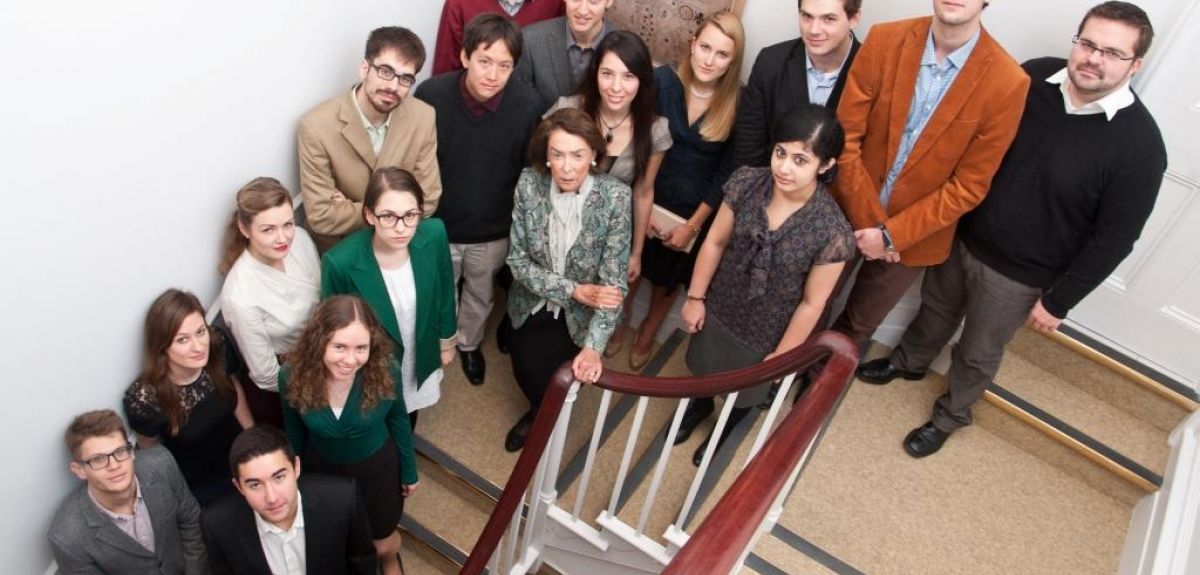
Mrs Mica Ertegun has been made an honorary Commander of the Most Excellent Order of the British Empire (CBE), an award conferred by HM The Queen for her services to philanthropy, education, and British-American cultural relations.
The award recognises Mrs Ertegun’s support for humanities postgraduate education in the UK and in particular her establishment of the Mica and Ahmet Ertegun Graduate Scholarship Programme in the Humanities - open to students worldwide - at Oxford University in 2012.
Mrs Ertegun has endowed the university with substantial funding for post-graduate research in the humanities, under the Ertegun Programme, which will include the endowment of graduate scholarships in perpetuity. This is the single largest philanthropic gift for the humanities at the University of Oxford.
Since 2012, Mrs Ertegun’s gift of £26 million has enabled 45 leading humanities scholars from 16 countries around the world to study and research at Oxford University. Among those Ertegun Scholars who graduated in 2015, 80% received distinctions. Ertegun Scholars’ research areas have included literature, history, music, archaeology, art history, ancient history, Asian studies, Middle Eastern studies, and medieval and modern languages.
Born in Romania, Mrs Ertegun is a citizen of the USA, and received her CBE in a special ceremony in New York. Antonia Romeo, British Consul General New York and Director-General Economic and Commercial Affairs USA, said, “The awarding of Mica Ertegun’s CBE recognizes her exceptional transatlantic philanthropic activities, and her major contributions to British-American cultural relations. These charitable efforts and initiatives, especially via the Mica and Ahmet Ertegun Graduate Scholarship Programme in the Humanities at Oxford University, are key to the growth of generations of future global academic leaders.”
Established in 2012, the Mica and Ahmet Ertegun Graduate Scholarship Programme in the Humanities at Oxford University provides recurrent annual funding for a population of 15 – 30 graduate students, known as Ertegun Scholars. In addition, Mrs Ertegun has overseen the conversion of an Oxford University building into an academic base for the students, Ertegun House, and established an annual lecture programme.
More information on this story can be found here.
More information about the Ertegun Scholarships and life at Ertegun House can be found here.

Although women in science continue to be underrepresented at the highest level, things are slowly changing. In a complex but changing culture, many have built highly successful, rewarding careers, carving out a niche for themselves as a role model to budding scientists, regardless of gender.
In honour of the forthcoming International Women’s Day (March 8th 2017), over the next few weeks, ScienceBlog will be turning the spotlight on some of the diverse and accomplished women of Oxford. Women who, in influencing and changing the world around them with their work, are inspiring a new generation of young people to follow in their footsteps.
Bushra AlAhmadi is a DPhil student in the Department of Computer Science, specialising in cyber security. In 2016 she was awarded the prestigious Google Anita Borg scholarship for women in technology and co-founded the community outreach initiative, InspireHer. The initiative aims to build on young girls’ interest in computer science, by engaging both parent and child with a fun and interactive coding workshop.
How did you come to choose computer science as your field of expertise?
I had a head full of ideas and naturally really enjoyed computer programming; building something from scratch and teaching it to do things. Being able to make something do what you want is both useful and powerful – and that is all coding is. People are just starting to realise that as a skill, it can be useful in lots of areas - not only science areas like engineering, robotics, website development and computing, but also business, law and even retail. It has allowed me to work in multiple fields: programming, security, network security and now cyber security. The freedom of variety to do what you want is really appealing.
What are you currently working on?
My research involves designing malware detection systems, specifically in Software Defined Networks (SDN). Day to day, it involves a lot of coding and testing, trying to find ways to detect and prevent malware. At the moment I am working with external security operation centres' (SOCs) and analysts to understand how they detect malicious activities on the network.
What do you find most challenging about being a woman in science?
As a Saudi Arabian, who completed her master’s degree in California and now lives here in Oxford, I think being a woman in science depends on where you are. Saudi Arabia is actually the place where I feel least aware that I am a 'woman in science'. My university, King Saud University, is divided into single sex campuses, and we actually have an equal number of female and male students studying computer science, if not more. There are around 1,000 female computing undergraduates as well as Master's and PhD students, so we don’t see ourselves as female scientists, just scientists. But, both in the USA and UK, I was always aware of being a minority in my field. Often you are the only woman in your study group.
We need more women and ethnic minorities working in tech, so don’t be afraid to apply just because you are different. In my case it has only been an asset.
In the early stages of my pregnancy, I didn’t want people to think I was less capable of doing my work, so didn’t tell anyone at first and became quite isolated and homesick. But, when I did tell my tutors, the support I got from the university was great, and made me wish I had done so sooner. Everyone from my supervisors to the administrators, went out of their way to make me feel comfortable. Female professors are still a minority at Oxford, but they openly talk about their experiences as women. It’s so important to have relatable role models who talk about motherhood, rather than hiding it away like it is wrong, or that in doing so they are making excuses.
When I attended my first seminar after having my son, I was really nervous. My professor pulled me aside and said: 'if you need to bring your child to a lecture or a meeting, just do it – I have.' It instantly put me at ease and made me realise, it didn’t matter. She was a mum too, like lots of other female scientists. They do not let it hold them back, so I never have either. As a woman and an international student, you feel very welcome and safe here. With everything happening in the world at the moment, I feel very lucky to be here.
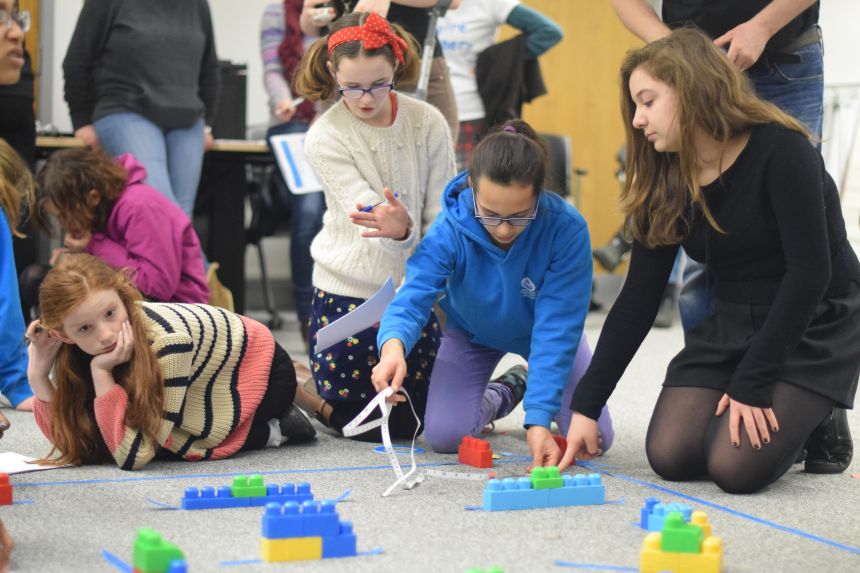 The family focused initiative supports children and their parents to learn more about coding.
What accomplishments are you most proud of to date?
Winning a place on the Google Women Techmakers Scholars Programme, which was formerly known as the Anita Borg Memorial Scholarship Programme (offering financial support to people studying computer science at under graduate or graduate level) was a great honour. On a personal level, doing a PhD while pregnant and having my son in my first year of study is something I am very proud of.
What led you to set up InspireHer?
Female professors are still a minority at Oxford, but they openly talk about their experiences as women. It’s so important to have relatable role models who talk about motherhood, rather than hiding it away like it is wrong, or that in doing so they are making excuse.
As part of my scholarship we were asked to come up with outreach ideas and as a mum, I wanted to engage parents as well, so that they can support and encourage their child’s interest in computer science.
InspireHer is a programme for young girls, who with their parents can become inspired through coding. Through the programme, I often meet parents who think that exposure to technology is bad for their child's development. There are lots of computer and smart tech games that can help children with their maths and science skills development.
Programmes like SCRATCH encourage children to create their own stories, animations and videos.
What can be done to encourage more young girls to choose a career in STEM?
Research suggests that if we want to see more women working in the STEM sciences, we have to engage them at an early age. Having a parent to help and guide them helps feed a child’s interest and boost their confidence. If parents do not understand or value computer science, then their children are not likely to either.
Strong, encouraging role models are really important, especially for younger children (under five) who would not know where to look for coding activities on their own. I am very proud to be a woman in science. There are some great female computer scientists, but to stay that way, we need a new generation to follow suit and a generation after that and after that. Workshops like InspireHer allow young girls to build on their interest in computing, practice activities and then decide for themselves if it is the right career for them.
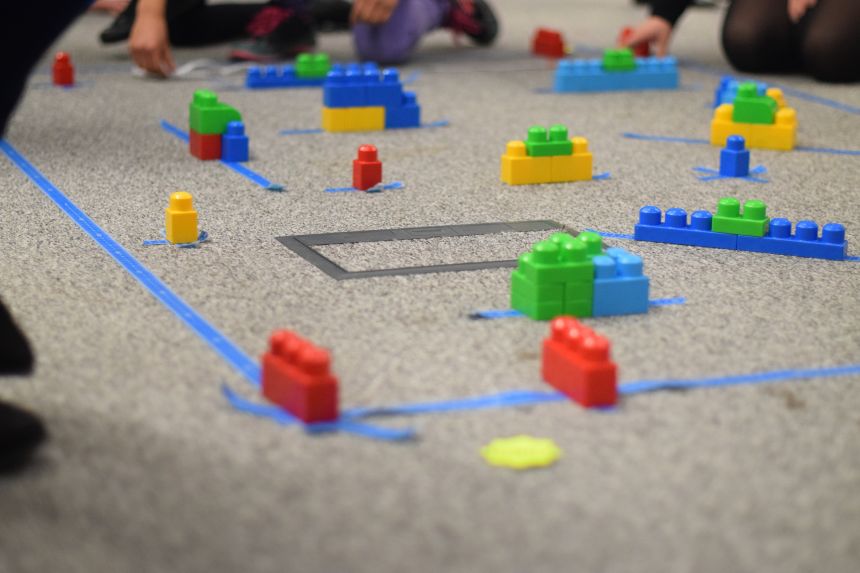 Through the InspireHer programme young girls and their parents gain the skill of coding. The exercises used are methodical and build a step by step approach to problem solving, in much the same way as LEGO and building blocks.
How can schools better support children interested in science?
Some of the girls attending InspireHer events say they love science, but find school boring. Coding is an interactive and fun way to learn as it is multi-disciplinary and a good skill to develop, whatever field you decide to go into. Teachers could use the robotic ball exercise to make maths and science lessons more hands on. We use it a lot at InspireHer events and the children respond well to it. They learn to code and control the ball, coordinating its movements by using drag, drop and pause options. The game encourages the same step by step approach and problem-solving skills as playing with LEGO or building blocks.
What are your goals for the future?
I am participating in the first Saudi Arabian Cyber Security Contest, which in light of the recent cyber-attacks on Saudi Arabia, is a big deal in my country. Twenty finalists were chosen out of 500 entrants.
When I complete my scholarship in 2018, I will return to Saudi Arabia and teach coding to undergraduates. I am also preparing to launch my own cyber security consultancy business, which I hope will support government and private organisations to develop and build their cyber security capabilities.
What advice would you give to anyone considering a career in computer science?
Believe in yourself and you can make a great impact in any field, especially tech and computing. Don’t be afraid to take the lead, firsts only happen because someone makes them happen. When I started at King Saud University, the only student society was for male law students, (there was nothing for women). I started the first IT Society for Women, organising coding workshops and tech talks. I’ve also been involved with Oxford Women in Computer Science since I arrived at the University in 2014, and was President of the group from 2015 - 2016. We organised the second Oxbridge women in computer science conference, bringing together female researchers from Oxford and Cambridge. Of all the sciences, computing really benefits from and needs diversity. We need more women and ethnic minorities working in tech, so don’t be afraid to apply just because you are different. In my case it has only been an asset.

The doctor who created Frankenstein’s monster has been played on stage by a woman, for what is believed to be the first time.
A new play at the Northern Stage in Newcastle, features one Dr Victoria Frankenstein as the lead role in Selma Dimitrijevic's adaptation of Mary Shelley's iconic novel.
It's a fascinating idea, according to two of Oxford University’s experts on Mary Shelley.
‘The original novel is about a perverse, lone, male scientific kind of creativity, embodied in the character of Victor Frankenstein,’ says Professor Karen O’Brien, an expert in eighteenth-century literature and Head of Oxford’s Humanities Division.
‘Victor's creativity cuts him off from the normal, domestic world of women and female fertility. He gives life to the monster, not coincidentally, shortly after the death of his own mother.
‘So a female Frankenstein is a fascinating idea. How might the female fertility and genius be linked? In the novel, the Creature, or Monster, actually resembles the female heroines in Mary Shelley's mother's novels - isolated, sensitive, forever excluded from mainstream society by their inability to find happiness on the unequal terms offered by men.
A female Frankenstein is a fascinating idea
Professor Karen O'Brien
‘This adaptation transfers that outsider role to the scientist character. So how are we to interpret the Creature?’
Fiona Stafford, Professor of English Language and Literature at Oxford University, was interviewed about the casting on BBC Radio 4’s Today programme.
She says: ‘Mary Shelley would have been aware growing up in an unusual, avant garde household that, although she was a very intelligent woman, there was no opportunity for her to train as a doctor or to go to university.
‘In many ways you can read Frankenstein as a critique of male obsessive pursuit and of not thinking through the consequences of his actions, so it is interesting to see how that translates into Victoria Frankenstein.’
‘You can read the book in many different ways and I think that is part of the secret of its enduring success, it is extraordinary that a novel that was published in a fairly modest form in 1818 should still have this afterlife.
'In a way that is something that Mary Shelley’s myth is visiting, the idea that you can create something and then you don’t actually have control of it, it has a life of its own.
‘In some ways you can see a parallel between Mary Shelley the novelist and Frankenstein. Although we tend to think of him as a scientist, she too is bringing together something and bringing it to life, and then it has taken on a life of its own to the extent that the Creature is often thought of as Frankenstein.’
Professor Stafford's interview can be heard here.
Professor O'Brien will also be interviewed by BBC World Service's The Forum on Saturday 18 February. The recording will be found here.
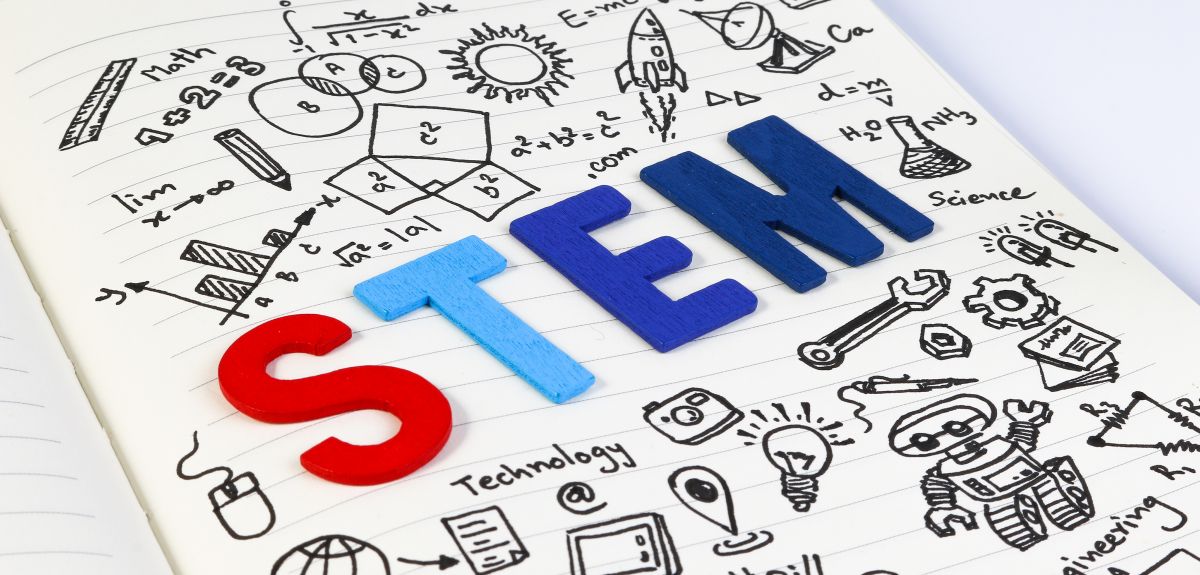
From Bob Dylan, to today's post-disciplinary world, Alain Goriely, Professor of Mathematical Modelling, Oxford Mathematics, University of Oxford, gives a brief introduction to applied mathematics. Discussing its role and evolution in society, he shares how maths defies simple categorisation, underpinning all STEM (science, technology, engineering, maths) specialisms.
In an interview with Rolling Stone Magazine in 1965, Bob Dylan was pushed to define himself: Do you think of yourself primarily as a singer or a poet? To which, Dylan famously replied: Oh, I think of myself more as a song and dance man, y’know. Dylan’s attitude to pigeonholing resonates with many applied mathematicians. I lack the coolness factor of Dylan, but if pushed about defining what kind of mathematician I am, I would say: Oh, I think myself more as an equation and matrix guy, y’know.
One of the greatest strengths of applied mathematics is that it has established itself by defying simple categorisation. Applied mathematics, be it an art, a craft, or a discipline, is not bound to a particular scientific application, a particular mathematical universe, or a well-defined university department. The drawback is that applied mathematics usually gets no mega-funding or the limelight associated with big scientific breakthroughs. But its biggest advantage is that it can insert itself into all scientific disciplines and easily reinvent itself by moving fluidly from one field to the next, guided only by methods, theory, and applications: it is all equations and matrices. Many applied mathematicians see new challenges as an opportunity to expand their mathematical horizons, and in our rapidly changing modern new society such new challenges abound. Here are three of these:
Major scientific efforts are required for major society challenges. These include fighting climate change, optimising new renewable energy sources, developing new medical treatments, and understanding the brain. Traditionally, applied mathematicians involved with these collaborative efforts were considered a useful but small cog in a huge scientific machine, but it is now appreciated that quality science requires clever modelling, state-of-the-art numerical methods, and fundamental theoretical insights from simplified models. This is the realm of applied mathematics, and accordingly our role in these endeavours is bound to increase. By the end of the day, we may not get the fame, but we’ll certainly have the fun.
A second relatively recent development of applied mathematics is the theory of networks. Networks represent connections between multiple physical or virtual entities. They are found in information theory (web links, social connections), biological systems (gene regulatory networks, metabolic networks, evolutionary trees), and physical systems (axon connections, electric grid). Regardless of their origin, these networks share common mathematical features. Their analyses span many different fields of study, and network theory has now established tentacular connections to various parts of pure and applied mathematics, a network of its own.
For about five years there has been much excitement about BIG DATA. The initial hope was that one could go straight into data and use empirical methods to unravel the mysteries of the universe. Quite the opposite is happening. The success of many methods has shed a bright light on the need to understand the underlying mathematical structure of both data and methods. The subject now presents a rich field of study that brings all mathematical sciences together, including statistics and computer science.
Applied mathematics, be it an art, a craft, or a discipline, is not bound to a particular scientific application, a particular mathematical universe, or a well-defined university department.
These examples share a common thread that highlights a new trend in mathematical and scientific discoveries: beyond inter-, multi-, and supra-disciplinarity, we live in a post-disciplinary world. Things have changed, and Oxford University with its collegiate system, and the Mathematical Institute with its collegial atmosphere, are particularly well equipped to thrive in this new scientific world. But despite all the hype, we’re also fully aware that there’s nothing wrong with the old world, the old problems, or the old conjectures. We have an intellectual responsibility to promote and cherish these areas of knowledge defined by the great thinkers, past and present, especially if they are believed to be useless or irrelevant.
Bob Dylan in the same interview, foresaw yet another possible application of mathematics: What would you call your music? His reply: I like to think of it more in terms of vision music – it's mathematical music.
For more discussion around understanding applied mathematics, you can watch the author’s video via the Oxford Mathematics YouTube page.
Alain Goriely is the author of the forthcoming book: 'Applied Mathematics: A Very Short Introduction,' which will be published by Oxford University Press later this year.
- ‹ previous
- 104 of 253
- next ›
 What Louise Thompson’s campaign tells us about the national maternity crisis
 Celebrating 25 Years of Clarendon
  Learning for peace: global governance education at Oxford
  What US intervention could mean for displaced Venezuelans
  Setting the agenda for the next century of quantum
 10 years on: The Oxford learning centre making an impact
 Mapping the Moon: the world’s first lunar atlas goes digital
  Oxford and The Brilliant Club: inspiring the next generation of scholars
 New course launched for the next generation of creative translators
 The art of translation – raising the profile of languages in schools