Features
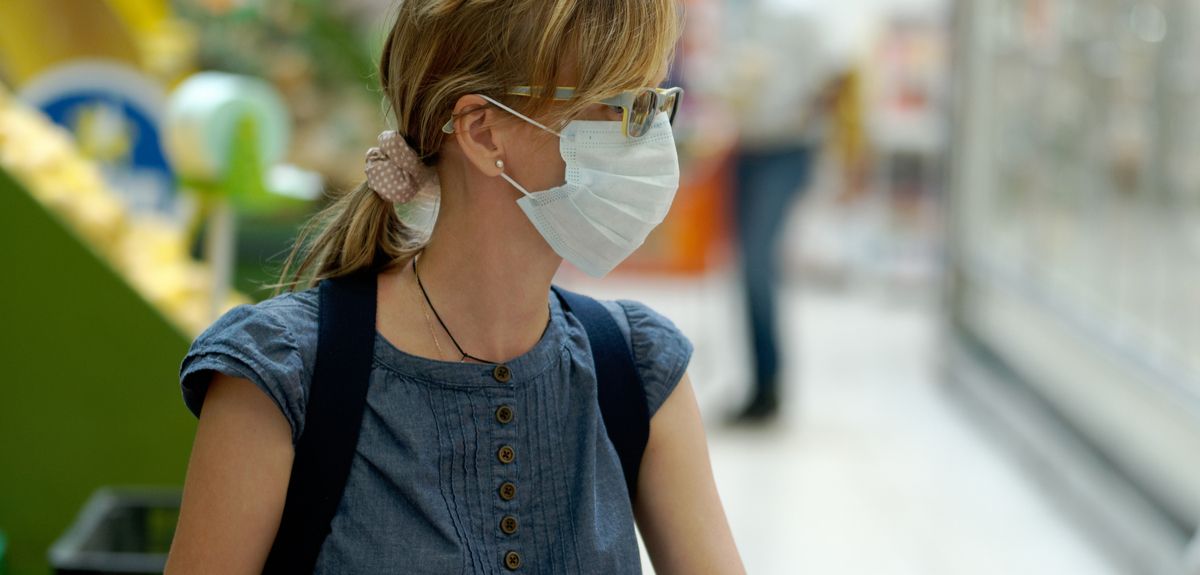
Face coverings in shops will be made compulsory from 24 July, and the prohibition may be extended to other indoor spaces. The move follows last week’s COVID-19 face coverings study from Oxford’s Leverhulme Centre for Demographic Science on behalf of the Royal Society and British Academy.
The announcement was made this morning, and comes after Prime Minister Boris Johnson was pictured over the weekend publicly wearing a face covering. The Prime Minister described face coverings yesterday as offering a ‘great deal of value’ in controlling the spread of the coronavirus and giving people confidence to go back to shops and workplaces. But this morning came the news that, from 24 July, shoppers face a £100 fine, if they enter a shop without a face covering.
There is a general assumption that countries such as the UK, which have no culture or history of mask wearing, will not rapidly adopt them or that people will be put off going to shops if they have to wear a face covering. But this just doesn’t reflect the data from similar countries
Professor Melinda Mills, Director of the Leverhulme Centre and lead author of the study on the effectiveness of face coverings, says, ‘It is great news that face coverings are to be made compulsory in shops in England. More than 120 countries around the world have introduced recommendations or regulations and the report last week contains clear evidence that face coverings are effective in respect of COVID-19.’
She maintains, ‘There is a general assumption that countries such as the UK, which have no culture or history of mask wearing, will not rapidly adopt them or that people will be put off going to shops if they have to wear a face covering. But this just doesn’t reflect the data from similar countries. As of late April, mask-wearing was up to 84% in Italy, 66% in the US and 64% in Spain, which by June was over 90%, increasing almost immediately after clear policy recommendations and advice was given to the public.’
As early as April, a report in the British Medical Journal was advising people to wear face coverings. Professor Trisha Greenhalgh, Oxford’s professor of primary health care sciences, was among experts who urged the adoption of face coverings, 'It’s time to encourage people to wear face masks as a precautionary measure on the grounds that we have little to lose and potentially something to gain.'
They maintained in their report that, despite limited evidence, masks ‘could have a substantial impact on transmission with a relatively small impact on social and economic life’.
Face coverings have not been widely worn in the UK, in spite of the pandemic. The Leverhulme-led study shows cloth face coverings, even homemade masks of the correct material, are effective in reducing the spread of the virus – both for the wearer and those around them
Speaking today about the announcement, Professor Greenhalgh says, 'I very much welcome this news. It made no sense to mandate face coverings on public transport while not requiring them in other crowded and poorly-ventilated indoor spaces such as shops and supermarkets. What we now urgently need is proactive use of behavioural science techniques to inform a public information campaign to overcome weeks of mixed messages and shift the ethos of this policy from something that is 'enforced' and 'policed' to an exercise in common sense and social solidarity. Masking is a symbolic practice as well as a public health intervention. My own team and also Melinda Mills in Demography (among many others) have done research on this topic; we’d be happy to help make this policy a success.'
Face coverings have not been widely worn in the UK, in spite of the pandemic. The Leverhulme-led study shows cloth face coverings, even homemade masks of the correct material, are effective in reducing the spread of the virus – both for the wearer and those around them. And the study reveals that, once the WHO announced there was a pandemic in mid-March, within days many countries around the world had already recommended wearing face masks. Nations including South Korea, Japan and a series of African countries, experienced in handling previous epidemics including SARs and Ebola, have experienced very low numbers of deaths and transmission.
It is ‘far more invasive’ to tell people to stay at home than to wear a mask
Professor Mills, insists that face coverings should be recognised as a public health issue as part of a package of policies alongside hand hygiene and social distancing, not a matter of civil liberties.
She maintains, it is ‘far more invasive’ to tell people to stay at home than to wear a mask, with the report revealing that in order to increase compliance of the general public, it is important that they understand how the virus and coverings works to protect both themselves and others. The study reveals, ‘Next to hand washing and social distancing, face masks and coverings are one of the most of widely adopted non-pharmaceutical interventions for reducing the transmission of respiratory infections.’
Refuting claims that there is no or weak scientific evidence, Professor Mills finds that there has been an over-reliance on medical studies and specifically ‘randomised control trials’ – while high quality behavioural studies have been discounted. But she says, ‘The evidence is clear that people should wear face coverings to reduce virus transmission and protect themselves, with most countries recommending long ago that the public should wear them, particularly in enclosed indoor spaces and crowded areas.’
The evidence is clear that people should wear face coverings to reduce virus transmission and protect themselves, with most countries recommending long ago that the public should wear them, particularly in enclosed indoor spaces and crowded areas
The study calls for clear and consistent policies and public messaging on the wearing face masks and coverings by the general public. Professor Mills says, ‘The public is confused about wearing face coverings because they have heard the scientific evidence is inconclusive and advice from the WHO and others has changed.
‘But where are randomised control trials about coughing into your elbow or social distancing?’ And she adds ‘People need to know what to wear, when and where to wear it, how to wear it and who cannot wear it.’
Professor Mills says, ‘What to wear is high quality multi-layer cloth coverings and not surgical masks or respirators and people need to ensure there are no gaps. For instance, combining cotton and silk or flannel provide over 95% filtration, so wearing a mask can protect others.
The public is confused about wearing face coverings because they have heard the scientific evidence is inconclusive...But where are randomised control trials about coughing into your elbow or social distancing?
‘When and where includes crowded shops, where you cannot often keep social distance, are places where face coverings would be valuable, but you don’t need to wear one while outside, walking or jogging, in a socially distanced way. And in restaurants, you need to wear one, until you are sitting down at your table. We also need to acknowledge who cannot wear them such as those with disabilities, breathing difficulties or young children.
Just as the WHO gathered evidence and changed its advice in early June, it is now time to re-evaluate the evidence and make clear recommendations to the public and those who need to re-open their businesses
'By learning from mask-wearing experiences from previous epidemics, such as SARS, H1N1 and MERS, the systematic review revealed key behavioural factors underpinning the public’s compliance to wearing a mask. People need to understand virus transmission and how masks protect them and others. And they need to understand how to reduce the barriers of wearing them related to practical aspects such as comfort or what to do in a restaurant or shop.’
She says, ‘We learned from previous pandemics that individuals underestimate their own risks of contracting the virus or transmitting it to others and think that ‘it won’t happen to me’.’
But, she adds, ‘Just as the WHO gathered evidence and changed its advice in early June, it is now time to re-evaluate the evidence and make clear recommendations to the public and those who need to re-open their businesses.’
The full text of ‘Face masks and coverings for the general public: Behavioural knowledge, effectiveness of cloth coverings and public messaging’, on behalf of the Royal Society and British Academy can be found here.
See also
COVID Conversations
Face masks work!
Join Professor Melinda Mills to hear more about the effectiveness of different face mask types and coverings and ask any questions you have.
Wednesday 22 July, 1.15pm–1.45pm
This talk will be broadcast here on YouTube, and on our main Facebook & Twitter channels.

By Jesús Aguirre Gutiérrez, researcher at the Environmental Change Institute, School of Geography and the Environment, University of Oxford, and the Naturalis Biodiversity Centre, The Netherlands.
The tropical forest canopy is one of the Earth’s underexplored frontiers. To understand how these unique environments respond to climate change a team from the Ecosystems Lab at the University of Oxford and partner institutes in Ghana gathered evidence from the treetops, finding drier forests are at greater risks.
Our natural world is facing unprecedented changes in the distribution of biodiversity – the variety of life on earth – at local and global scales. Around one million species are threatened with extinction, posing an imminent threat to the functioning of ecosystems and to human wellbeing.
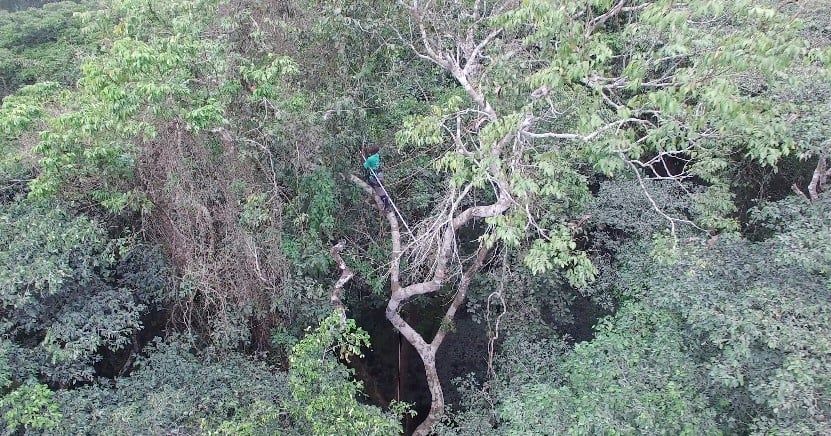
Image: A tree climber collecting leaf samples 30 m up a rainforest tree (Ankasa, Ghana). © Yadvinder Malhi.
In our new study, recently published in Nature Communications, we investigate if and how climate change has affected the diversity of tropical ecosystems in West Africa over the last decades. In particular, we wanted to understand if wetter and drier tropical forests responded in different ways to the same drivers of change.
For this study we conducted fieldwork in Ghana over six months. The field campaign was led by Dr Imma Oliveras and Dr Stephen Adu Bredu and coordinated by co-authors Theresa Peprah and Agne Gvozdevaite. It formed part of a global effort. More than 25 research assistants from KNUST University and Forestry Institute of Ghana (FORIG) participated in the field campaign and were trained in the sampling techniques and scientific protocols for undertaking the research.

Image: Albert Aryee labels plastic bags for collecting samples of leaves. All bags must be labelled with a unique code so that each leaf can be tracked to a branch, tree, and site. © Imma Oliveras
During the campaign we visited clusters of sample plots at three sites, stretching along a climate gradient from humid ancient rainforest through to parched try forest and savanna. We sampled leaves and branches from 299 trees. These were very long days, usually starting at 4.30 am with a group breakfast and by 6 am we would be already working in the field. We would finish the fieldwork at around 3 pm and then work in the field laboratories until 10 pm. Some of the research assistants – who were masters and undergraduate students at the time – have pursued further postgraduate studies after the experience and successfully found scholarships in Ghana, Europe and the US.
 Image: Working in the field laboratory. © Imma Oliveras
When starting this research, we expected that a drying trend would be reflected in overall diversity decreases for all tropical forests. However, we found that forest communities in drier sites experienced on average stronger declines in functional, taxonomic and phylogenetic diversity across time than forest communities in wetter areas.
This means that drier forests are transitioning towards increasingly more homogenous forest communities, diverging further from wetter forests in functional, taxonomic and phylogenetic diversity. In contrast, wetter forests showed on average increases in functional and taxonomic diversity, which could be the result of their higher atmospheric and ground water availability in comparison to that available for drier forests. Overall, climatic and soil conditions partly explained the changes in diversity and differences in responses between drier and wetter tropical forests in West African.
Stephen Adu-Bredu and Theresa Peprah from CSIR-Forestry Research Institute of Ghana, described that some of the most challenging things to do during the fieldwork were waking up daily at 3am in order to get to the field around 4am for predawn water potential measurements, as well as climbing of the trees at this hour of the day. They say: ‘The dry season CO2 exchange measurement was difficult and frustrating. One can spend over an hour or even a day on a single leaf, and the measurements are to be carried on three leaves per branch, as the protocol demands.’
Dr Imma Oliveras, senior study author and Deputy Programme Leader on Ecosystems at the Environmental Change Institute, University of Oxford, reflects on the field campaign: ‘To me this field campaign was an incredible enriching experience. These were busy days of knowledge exchange. I would be training local students on scientific methodologies, and they were teaching me about the local flora as well as about the local forests and of the Ghanaian culture and traditions.
‘Some forests had taboo days in which we were not allowed to go to the forest and we would use for catching up on lab work. We would also exchange knowledge in other aspects, such as cuisine. I learned to make fufu and I taught them to cook Spanish omelets. Scientifically, I enjoyed training the research assistants in both data collection, data curing and data analyses, and most participants are now co-authors of other related research.’
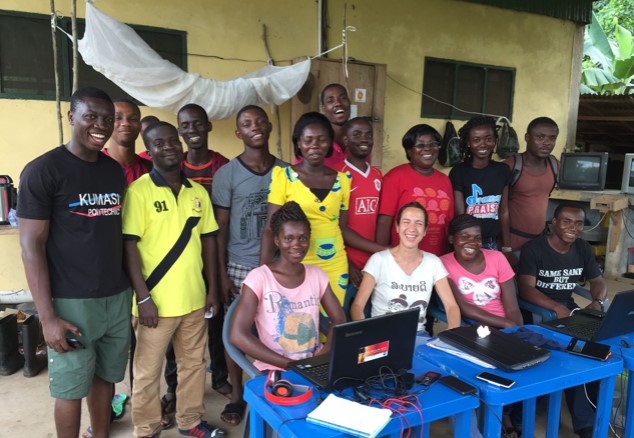 Image: Part of the team at base camp. © Yadvinder Malhi.
In our study we did not assess on how diversity changes affect ecosystem functioning. However, there is ample evidence showing that decreases in functional, taxonomic and phylogenetic diversity could cause loss of forest functions, such as resources uptake, cycling and biomass production and resilience to a changing climate. Therefore, the ecosystem functions of communities that show decreases across all three facets of diversity could be especially vulnerable under a drying climate.
Overall, our study found that drier forest communities have undergone biodiversity homogenisation due to a warming and drying climate, which could ultimately have negative impacts not only on the functioning of ecosystems but also on their contribution to people’s wellbeing and livelihoods.
 Image: Heading into the field. © Yadvinder Malhi.
The work was funded through a European Research Council Advanced Investigator Grant to Prof Yadvinder Malhi, coupled with a Royal Society Africa Capacity Building Award. The transects of field sites where this work was conducted were established with the support of a NERC Standard Grant.
Citation: Aguirre-Gutiérrez, J., Malhi, Y., Lewis, S.L. et al. Long-term droughts may drive drier tropical forests towards increased functional, taxonomic and phylogenetic homogeneity. Nat Commun 11, 3346 (2020). https://doi.org/10.1038/s41467-020-16973-4
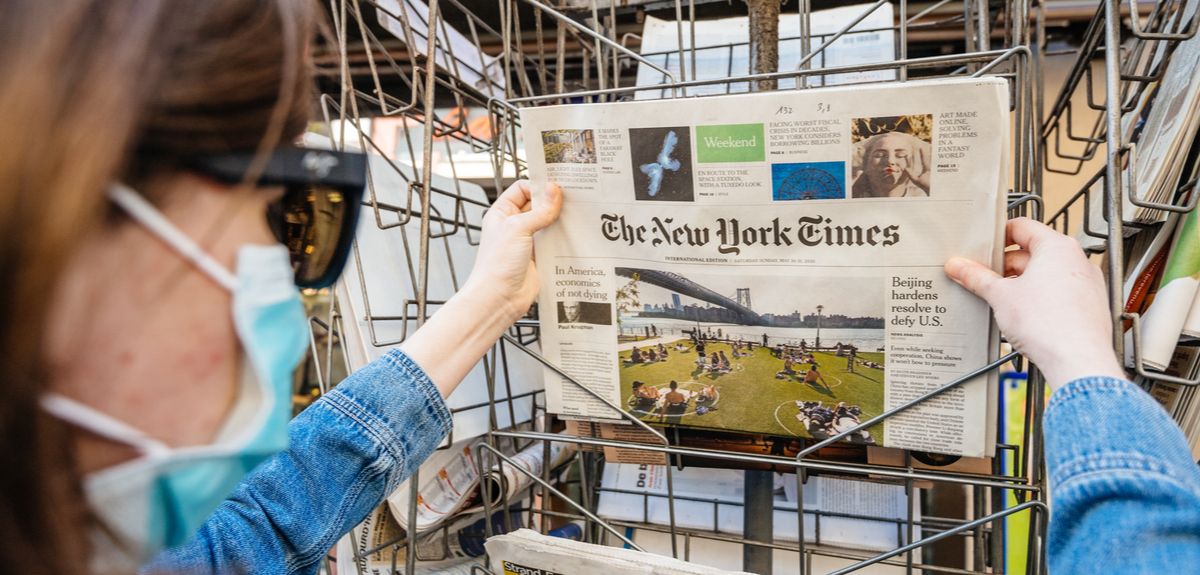
COVID-19 sent the global public back to more trusted news sources and more people than ever are paying for news from leading organisations, according to this year’s Digital News Report from Oxford’s Reuters Institute. But, the Institute believes, a shift to social media and mobile platforms remains the underlying trend in news consumption.
Based on research in 40 markets around the world, the Reuters’ report gives a snapshot of the state of news before and during the pandemic. The Institute found that COVID-19 saw a major increase in all age groups watching TV news, as people sought reliable information. The report shows, social media and online sites also saw significant increases, although newspaper sales – adversely affected by the lockdown have declined. But trusted brands have done ‘disproportionately well’ online.
According to the Institute, ‘The change of underlying preferences is even more clear when we ask people to choose their main source of news. The UK shows a 20-percentage-point switch in preference from online to TV between the end of January and the start of April.’
The report reveals, ‘Industry data also indicate strong traffic increases for online news with the most trusted brands often benefiting disproportionately. The BBC reported its biggest week ever for UK visitors, with more than 70 million unique browsers as the lockdown came into effect.’
Although most surveying was done at the beginning of the year, the Institute carried out additional research in April, to see the impact of the pandemic. It reveals, ‘At around the peak of the lockdowns, trust in news organisations around COVID-19 was running at more than twice that for social media, video sites and messaging applications where around four in ten see information as untrustworthy.’
However, the Institute found, subscriptions soared to well-known news organisations, which have gone behind ‘paywalls’, even before the virus. In the US, during 2019, there was a 4% increase to 20% of people paying for online news, while in Norway there was an 8% rise to 42%. On average, some 26% in Nordic countries now pay for news subscriptions.
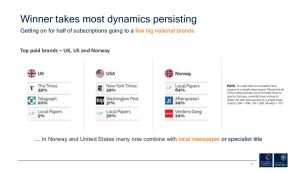
In the UK, the biggest subscription brand is The Times, which was first to go behind a paywall, with 39% share of the subscription market. The Telegraph has a 20% share. Meanwhile, in the US, where local papers are important players in the news market, the New York Times has a 39% share of the market and the Washington Post holds 31%, just ahead of local papers on 30%.
In the UK, the biggest subscription brand is The Times, with 39% share of the subscription market. The Telegraph has a 20% share. Meanwhile, in the US, the New York Times has a 39% share of the market and the Washington Post holds 31%
But, according to the report, ‘A large number of people remain perfectly content with the news they can access for free and we observe a very high proportion of non-subscribers (40% in the US and 50% in the UK) who say that nothing could persuade them to pay.’
Rasmus Nielsen, the report co-editor, says, ‘We see clear evidence that distinct, premium news publishers are able to convince a growing number of people to pay for quality news online. But most people are not paying for online news, and given the abundance of freely available alternatives, it is not clear why they would. In such a competitive market, only truly outstanding journalism can convince people to pay.’
Nic Newman, senior research associate, at the Reuters Institute, writes ‘Journalism matters and is in demand again. But one problem for publishers is that this extra interest is producing even less income...it is likely we’ll see a further drive towards digital subscription and other reader payment models which have shown considerable promise in the last few years.’
Journalism matters and is in demand again
He adds, ‘Looking to the future, publishers are increasingly recognising that long-term survival is likely to involve stronger and deeper connection with audiences online.’
A major concern among the Institute’s responders was misinformation, but while Facebook was seen as unreliable by a third, accredited journalists are not generally perceived to be the problem. Before the peak of the pandemic, more than half of Reuters’ global sample said they were ‘concerned about what is true or false on the internet’. Globally, journalists were seen as unreliable by 13%, but at the top of the list were politicians, with 40% believing they provide false or misleading information. And Facebook aroused concern among 29%.
Trust is a major issue. According to the report, ‘In our January poll, across all 40 markets, less than four in ten (38%) said they trust ‘most news most of the time’
Trust is a major issue. According to the report, ‘In our January poll, fewer than four in ten (38%) said they trust ‘most news most of the time’ – a fall of four percentage points from 2019. Less than half (46%) said they trust the news they use themselves while trust in search (32%) and social media (22%) is even lower.’
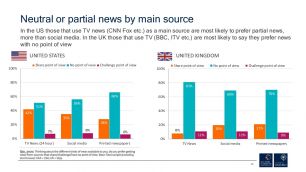
Finland is most trusting, with some 56% saying they trust most news most of the time. Ireland registers 48% trust, Germany 45% Australia 38%. But US responders registered news trust levels of less than 30% and the UK, following Brexit and a bruising General Election, registered 28% – with trust levels in France at just 24%. According to the Institute, ‘Our survey shows that the majority (60%) still prefer news that has no particular point of view.’
A significant minority (28%) prefer news that shares or reinforces their views
But it found a significant minority (28%) prefer news that shares or reinforces their views, ‘Partisan preferences have slightly increased in the United States since we last asked this question in 2013 but even here a silent majority seems to be looking for news that at least tries to be objective.’
In the US, ‘Both politics and the media have become increasingly partisan over the years, we do find an increase in the proportion of people who say they prefer news that shares their point of view – up six percentage points since 2013 to 30%. This is driven by people on the far-left and the far-right who have both increased their preference for partial news sources.
Initially at least, COVID-19 did provide a boost for news but this fell away, once news organisations turned to more critical reporting, ‘Subsequent polling...shows that the COVID-19 crisis did temporarily increase trust levels in the news media in the early stages of lockdown...this has fallen almost as quickly as the media has stepped up its criticism of government and official handling of the pandemic.’
The report emphasises, ‘While the COVID-19 crisis has reinforced the need for reliable and trusted news, the report argues that the next 12 months are likely to see significant changes in the media environment as severe economic pressures combine with political uncertainty and further consumer shifts to digital, social and mobile environments.’
But it concludes, ‘The COVID-19 lockdown has reminded us both of the value of media that bring us together, as well as the power of digital networks that connect us to those we know and love personally....’
The COVID-19 lockdown has reminded us both of the value of media that bring us together, as well as the power of digital networks that connect us to those we know and love personally
However, ‘The biggest impact of the virus is likely to be economic...The coronavirus crisis is driving a cyclical downturn in the economy hurting every publisher, especially those based on advertising, and likely to further accelerate existing structural changes to a more digital media environment...Reader payment alternatives such as subscription, membership, and donations will move centre stage, but as our research shows, this is likely to benefit a relatively small number of highly trusted national titles as well as smaller niche and partisan media brands....
‘Despite this, there are some signs of hope. The COVID-19 crisis has clearly demonstrated the value of reliable trusted news to the public but also to policymakers...and others who could potentially act to support independent news media. The creativity of journalists has also come to the fore...Fact-checking has become even more central to newsroom operations, boosting digital literacy more widely and helping to counter the many conspiracy theories swirling on social media and elsewhere.’
The figures are from a YouGov online survey conducted at the end of January, early Feburary in 40 countries of 80,155 adults (around 2,000 per country).
The COVID-19 pandemic has increased public awareness of the extent to which society - from farms to care homes - relies on the availability of a low-wage workforce.
The COVID-19 pandemic has increased public awareness of the extent to which society - from farms to care homes - relies on the availability of a low-wage workforce
Media coverage during the coronavirus crisis has, in many cases, highlighted the risks to which these workers are exposed, alongside the low pay and difficult working conditions they endure (such as lack of personal protective equipment). In recent months, delivery drivers, food producers, and supermarket staff have been recognised as ‘key’ workers. Many of those lower-waged occupations, which have been acknowledged as essential in the crisis, are heavily dependent on migrant workers.
Many of those lower-waged occupations, which have been acknowledged as essential in the crisis, are heavily dependent on migrant workers
In this context, it is important to ask if, and how, future immigration policies should take account of the lessons from the COVID-19 pandemic? This question is important for countries around the world but, at the moment, it is particularly relevant for the UK.
The COVID-19 emergency comes at a time when the UK is on the verge of shifting to a new immigration system, when the Brexit transition period comes to an end.
The selection process of immigration systems and essential workers
Immigration systems in high-income countries are typically more open towards workers in higher-paid jobs, while imposing restrictions on those coming to work in lower-paid occupations.
For example, work visas for high-skilled jobs are less likely to be restricted by numerical caps and requirements to look locally first for workers. They will often have a path to permanent residence and citizenship. By contrast, employers recruiting migrant workers in low-skilled jobs will face more complex bureaucracy, such as detailed regulations on pay and working conditions. There may be a maximum stay and no path to permanent status. So, in many cases, immigration into ‘essential’ but low-pay jobs is strongly restricted.
In many cases, immigration into ‘essential’, but low-pay jobs, is strongly restricted
Currently, the UK imposes strong restrictions on immigration for work purposes from outside the European Union, while EU nationals enjoy free movement for work purposes. As a consequence, during the pandemic, EU nationals have played major roles in ‘essential’ low wage sectors of the economy. For example, a large majority of seasonal harvest workers in the UK come from the EU. This workforce is essential, since significant labour shortages in the sector could threaten the UK food supply.
However, free movement will soon end and the UK Government is proposing to restrict substantially the immigration of EU nationals into jobs that are not considered high-skilled.
How would this affect the supply of essential workers in the UK?
Many essential workers from the EU, including NHS nurses and doctors, are likely to be eligible for visas under the proposed immigration system. Obviously, there is a question of whether as many would still be interested in living in the UK, given the different immigration status conditions. We will soon find out. But many other essential workers from the EU, such as those in social care or food manufacturing, are less likely to qualify for a visa.
Many essential workers from the EU, including NHS nurses and doctors, are likely to be eligible for visas under the proposed immigration system...But many other essential workers from the EU, such as those in social care or food manufacturing, are less likely to qualify for a visa
Estimates vary of the share of current workers in essential occupations who do not meet the proposed post-Brexit visa requirements. The discrepancy comes, in part, because there is no unique definition of an ‘essential’ worker.
In a recent paper, I wrote with colleagues Madeleine Sumption and Marina Fernandez-Reino, we find that 53% of EU-born and 42% of non-EU-born full-time employees, in essential occupations in the UK, do not meet the proposed requirements for a work visa. The Migration Observatory updated these numbers using a slightly different definition provided by the UK’s Office for National Statistics and found similar shares: 58% for EU-born and 49% for non-EU-born workers.
Will the pandemic change UK policymakers’ views about how essential workers should be treated in the post-Brexit immigration system?
The current pandemic might convince some policymakers that some industries have strategic value and need special access to a sufficient workforce - so they are in a position to provide essential goods and services in case of a new pandemic or a second wave.
The current pandemic might convince some policymakers that some industries have strategic value and need special access to a sufficient workforce - so they are in a position to provide essential goods and services in case of a new pandemic or a second wave
This could see support for that rationale in post-Brexit immigration policy planning. But the current pandemic provides little guidance on more fine-grained questions, such as which industries should be considered ‘strategic’, in terms of the immigration system.
Others might point out that the current emergency has led to worker lay-offs in other industries – so there is more potential than usual to hire within the domestic labour market. But, while this sounds like a straightforward solution, in the past, even in periods of high domestic unemployment, many employers have still preferred to recruit from abroad. The reasons behind those preferences are complex, but there is evidence that migrants are particularly targeted for jobs that are riskier or require greater physical intensity.
Deciding between these, and other options, is not straightforward and involves a major degree of subjectivity. Expect much more debate on these issues over the next few months.
Carlos Vargas-Silva, Director and Associate Professor, Centre on Migration, Policy and Society (COMPAS), University of Oxford
A collaboration between Oxford scientists and a distillery has produced a special gin called Physic Gin. Based on 25 ingredients found in the Oxford Botanic Garden, the history of this new spirit stretches back 400 years to the garden’s creation in 1621. With this week’s reopening of the Oxford Botanic Garden following months of closure during lockdown, it would seem there are several reasons to raise a glass.
Oxford Sparks’ caught up with Professor Simon Hiscock, Director of the Oxford Botanic Garden for their latest podcast. He tells Sparks how he came up with the idea for Physic Gin from the moment he started in his new role. He says: ‘I wanted to commission a gin because of the great botanicals we have here and the history of the garden.
The intention was for it to grow herbal, medicinal plants, that would then be used in the teaching of herbal medicine for the medical students of Oxford. Gin was also a medicine in its own right, created in the 17th century in Holland and Belgium, for the treatment of fever.
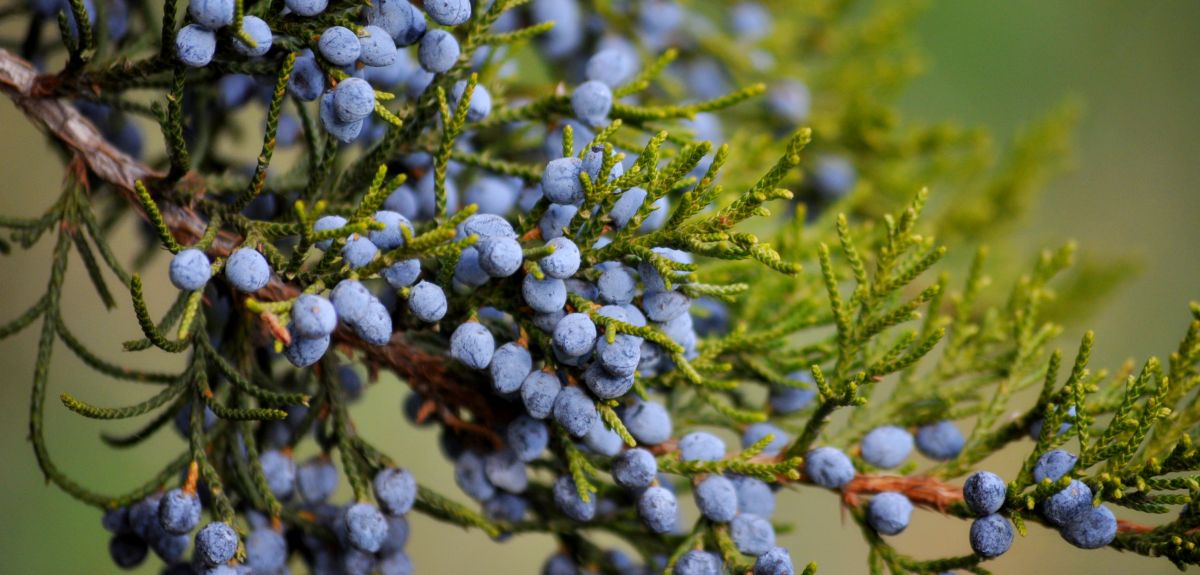
‘The garden was founded in 1621 by Henry Danvers, 1st Earl of Danby, but it wasn’t planted up until the 1640s. Jacob Bobart, the garden’s first director, was an excellent gardener and also ran The Greyhound Tavern just across the road from the Botanic Garden. He started planting the garden and by 1648 he had about 1600 plants here and he made a list – a Catalogus Plantarum – almost like a field notebook, and this little notebook is the inspiration for Physic Gin. Among those 1600 plants are many botanicals that we would use to flavour gin today and importantly juniper because juniper is the base fruit ingredient for flavouring the alcohol.’
The name Physic Gin derives from the fact that the garden was founded originally as a physic garden; a medicinal garden, as Simon explains: ‘The intention was for it to grow herbal, medicinal plants, that would then be used in the teaching of herbal medicine for the medical students of Oxford. Gin was also a medicine in its own right, created in the 17th century in Holland and Belgium, for the treatment of fever.’
After chatting to his local pub landlord about the idea, Simon was put in touch with The Oxford Artisan Distillery, and the collaborative mixing of spirits and minds began.
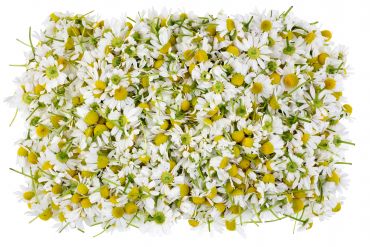 Dried chamomile flowers
The team of scientists and distillers worked closely together on the recipe for two months to ensure that that the history of the garden went into the bottle with the optimum flavour preserved.
Francisco says: ‘We are always playing. We use spices, fruits, flowers and fresh herbs. There’s a base distillation and some of the botanicals need to be distilled separately.’
Incredibly, 25 botanicals have gone into the Physic Gin. They have an almost poetic sound when read aloud: ‘Juniper, coriander seed, angelica root, lemon peel, liquorish root, angelica seed, Japanese bitter orange peel, Grapefruit peel, key lime peel, sweet fennel seed, almonds, poppy seed, wild hops, chamomile flower, wormwood, artichoke leaf and bayleaf...’
 Black pine in Oxford Botanic Garden
As we start to emerge from lockdown, it’s now possible to start to explore the sources of these inspirations in person as The Oxford Botanic Garden reopens on 22 June, and for those in need of a medicinal tonic, Physic Gin is available to order now.
Listen to ‘Why is Oxford’s Botanic Garden Making Gin?’ on Oxford Sparks.
Find out more about Physic Gin from The Oxford Artisan Distillery.
The Oxford Botanic Garden is now open to visitors. Find out more and book a ticket.
Discover more episodes of the Oxford Sparks ‘Big Questions’ podcast.
- ‹ previous
- 41 of 252
- next ›
 Learning for peace: global governance education at Oxford
  What US intervention could mean for displaced Venezuelans
  Setting the agenda for the next century of quantum
 10 years on: The Oxford learning centre making an impact
 Mapping the Moon: the world’s first lunar atlas goes digital
  Oxford and The Brilliant Club: inspiring the next generation of scholars
 New course launched for the next generation of creative translators
 The art of translation – raising the profile of languages in schools
  Opening a window into the quantum world
 Tracking resistance: Mapping the spread of drug-resistant malaria