Features
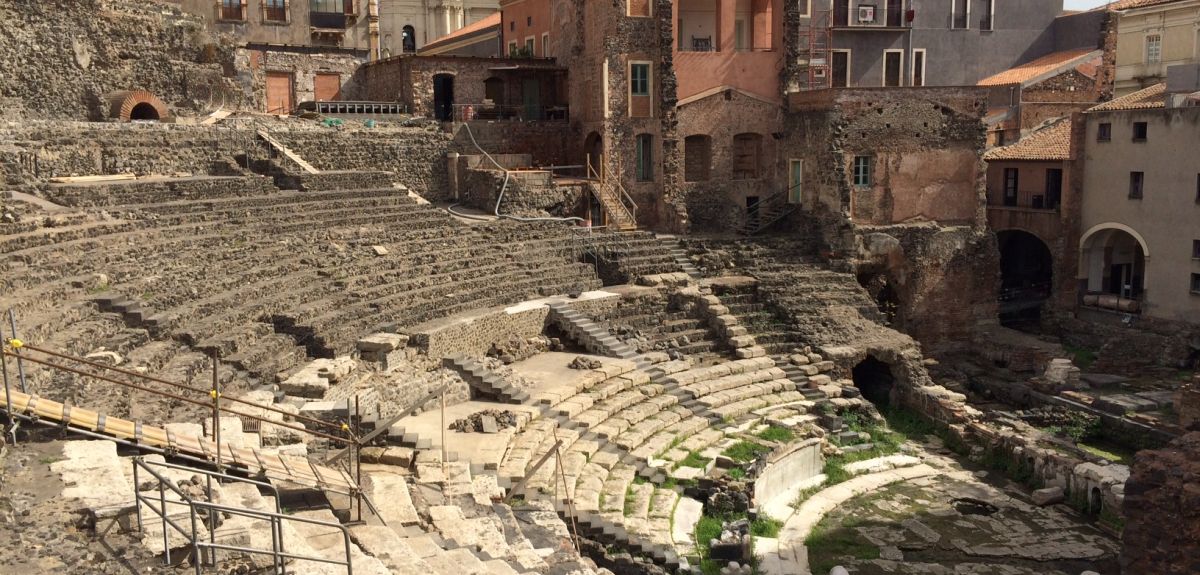
An Oxford classicist has worked with Italian secondary-school students to create an award-winning new exhibition in Sicily, cataloguing stone inscriptions from the Roman period.
Dr Jonathan Prag, of Oxford’s Faculty of Classics, worked in collaboration with students from the Liceo Artistico Statale M.M. Lazzaro in Catania, Sicily, to create the exhibition, entitled ‘Voci di Pietra’ (‘Voices of stone’).
The exhibition, which is housed in the Norman castle that now serves as Catania’s civic museum, features artefacts between 1500 and 2500 years old, including funerary inscriptions, sculptures, and fragments of buildings, as well as video installations created by the students.
These texts are important because they are contemporary documents. They very often provide information about specific events and private individuals, of a type that is not recorded elsewhere. Inscriptions provide a vast body of information on religious beliefs, naming practices, language, and much more.
Dr Jonathan Prag
Catania was originally a Greek city, and was re-founded as a Roman colony, so the inscriptions are in a mixture of Greek and Latin. The inscriptions provide valuable information both about economics and diplomacy in ancient Catania, and about the private lives of individuals in the city.
One intriguing item is a funeral inscription for a Jewish Roman citizen called Aurelius Samohil (i.e. “Samuel”), from 383 AD (pictured below). This is written in a mixture of Latin and Hebrew, and constitutes the longest Latin text from the ancient Jewish diaspora in the Roman world. The inscription contains a triple warning to posterity not to break into the tomb where Aurelius Samohil and his wife Lassia Irene were buried. This and other texts suggest there was a strong Jewish community in Catania.
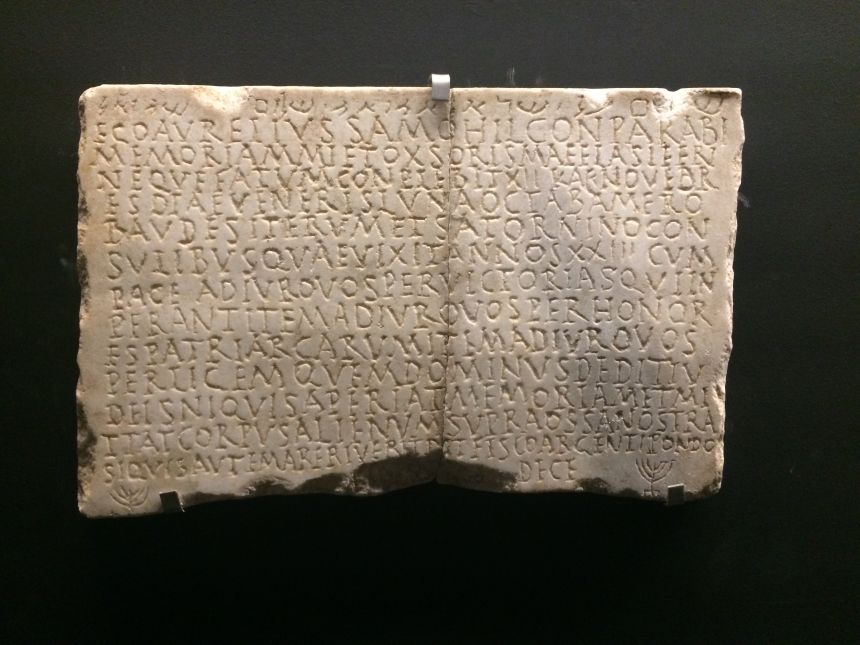 "The warning against breaking into or reusing the tomb is particularly nice and unusual because it appeals simultaneously to the authority of the Roman emperors, the Jewish patriarchs, and Talmudic law." - Jonathan Prag
The students, who won a prize for their work from the Italian Ministry of Education, worked on the exhibition between 2015 and 2017. They were involved in locating, cleaning and recording the exhibits, as well as presenting them in novel ways – for instance, they designed a reconstruction of a columbarium, a type of Roman tomb. They will use the prize to visit Oxford this autumn.
“The enthusiasm and engagement of the students went well beyond anything I had seen elsewhere or expected,” said Dr Prag, who undertook the project as a Knowledge Exchange Fellow at the Oxford Research Centre for the Humanities (TORCH). “They did not have a background in classical studies, but they brought serious artistic flair and a very high level of observation and skill. The end result – a highly professional permanent exhibition – is certainly beyond my original expectations.”
He adds that one of his favourite exhibits is “the rather wonderful video of a very elderly retired stone mason from Catania whom the students found and interviewed, in order to learn about the actual practicalities of engraving on stone”. The students used what they learned from him to create their own inscription as a record of the exhibition.
Dr Prag is now working on a larger project called I.Sicily, which aims to create an online archive of Sicilian inscriptions, reflecting the diverse languages spoken on the island in ancient times.
One dinosaur, free to a good home.
This was the call from Oxford University's Museum of Natural History last year, when they asked the public for suggestions for where they should relocate their four-metre long model of a Utahraptor.
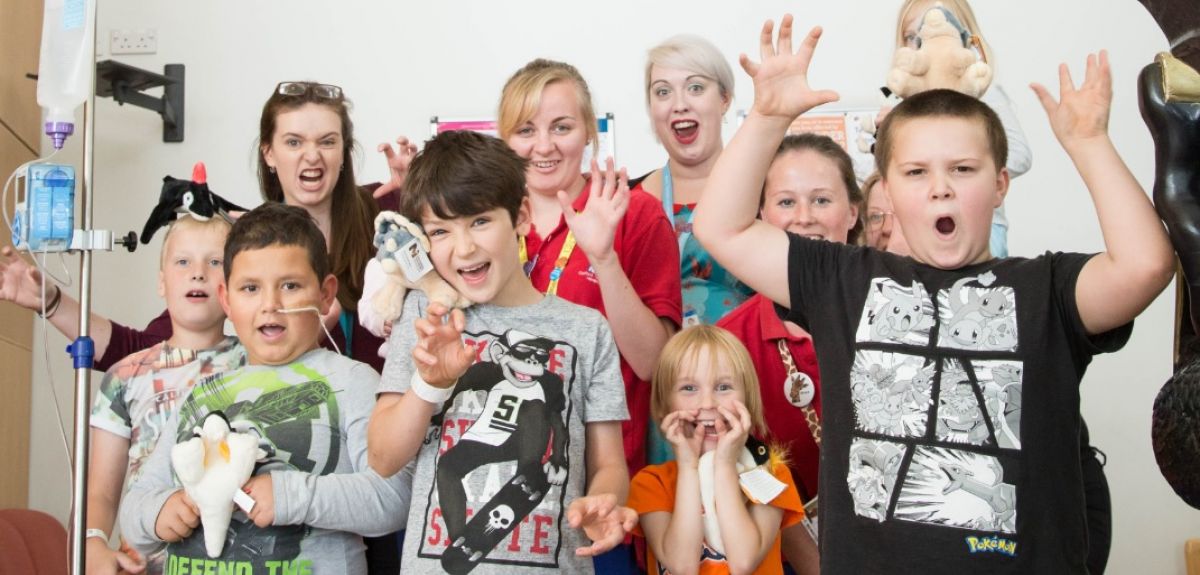
The dinosaur has definitely found a good home: it has now been installed at the Children’s Hospital at Oxford’s John Radcliffe Hospital.
The Museum acquired the model in 2000, and it spent time terrorising shoppers at Blackwell’s book shop as part of the Museum’s Goes To Town project in 2014.
But following a reorganisation of the Museum’s collections, it asked for nominations for somewhere to send the dinosaur.
200 venues around the world put in their bids, but the winning one came from Sarah Fletcher, who thought the dinosaur could amaze and inspire the young patients at the hospital.
“The idea of having a model Utahraptor in the hospital seemed like a lot of fun,” she said.
“Having been through the Children’s Hospital with my family, I knew that it would make such a difference to everyone who walks through those doors.
“But I never thought in a million years that we would win it – I am thrilled!”
Hannah Allum, Project Manager at the Museum, is delighted with the outcome. “I hope that the Utahraptor will delight patients and visitors,” she said.
“It’s a nice thought that this Cretaceous character will bring a little piece of the Museum into the hospital environment.”
The dinosaur is now in place, looking down on the entrance to the Children’s Hospital.
Faith Fordham is on a journey.
After serving almost seven years as a Royal Navy medic, in Afghanistan, she was discharged from service in 2011. Faith left the military with a number of physical injuries and a Post Traumatic Stress Disorder (PTSD) diagnosis.
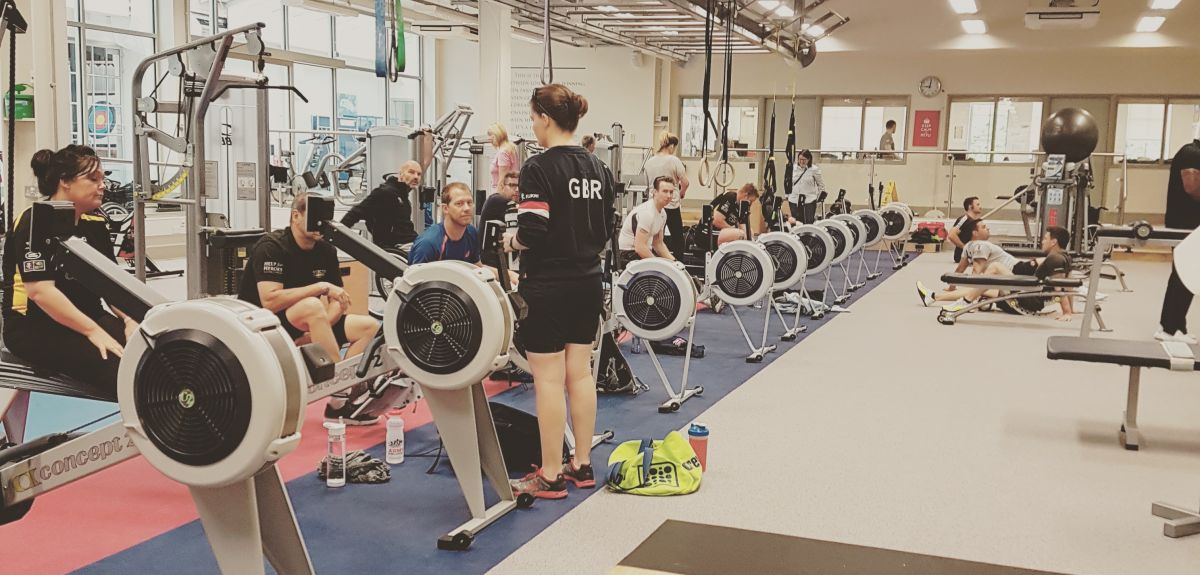
Despite the challenges she has faced, Faith has just successfully completed a PGCE qualification in Chemistry at Pembroke College, and will soon take part in the Invictus Games Toronto 2017. Canadian-born Faith is set to compete in the rowing, powerlifting, athletics and swimming events at the international sporting competition for wounded, ill and injured military personnel and veterans.
She talks to Scienceblog about going from the military frontline to the classroom, and what taking part in the Games’ means to her.
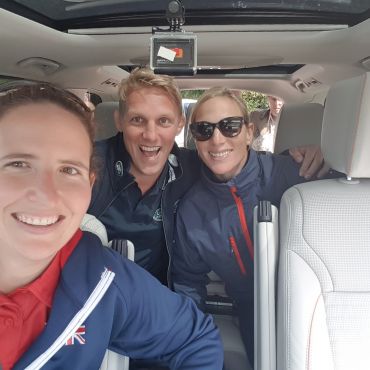 Image credit: Faith Fordham
Faith grabs a selfie with Zara Tindall and Lewis Moody, former England Rugby Captain.
What inspired you to become a science teacher?
When I left the military my world was torn apart. It was my life and all that I wanted my life to be.
I lost my identity and in searching for a new one, applied for a science PGCE. I got offered a place and with a lot of encouragement from friends and military peers, I decided to accept it. I’ve not looked back since.
My depression always clouded my future, which made it impossible to set any goals. Invictus has given me an escape and allowed to me to maintain bonds with my military peers. Having something to focus on has shown me that I do not need to be defined by my illness.
How has living with a mental health condition affected your studies?
A mental health condition changes your entire life outlook.
When I left the military I became severely depressed. There have been long periods of time where I have been unable to leave my house and at one point even attempted to take my own life. Over the last few years’ things have improved - but I still have dark days and always will.
My depression always clouded my future, which made it impossible to set any goals. However, having something to focus on has shown me that I do not need to be defined by my illness.
Pembroke College have always been supportive, giving me an extension when needed and acknowledging the needs of my condition even when I did not. I do not want my mental health to define me, so sometimes push myself to do things, like go to college, when I’m not in the right frame of mind. My Disability Mentor and I had a great relationship and at those times they would tell me that I shouldn’t be there, and to go home and take care of myself.
How has training and preparing for the Invictus Games supported your recovery?
Since starting training, my confidence has risen and I have found a reason to get up in the morning. I am slowly figuring out who I am and where I belong.
When I first started training my goal was to lose weight. But I hit my target and needed another goal to aim for, so decided to apply for the Games’.
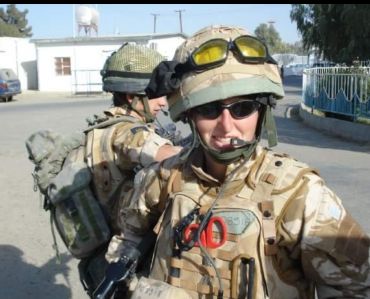 Image credit: Faith Fordham
Faith on active duty in Afghanistan
What does taking part in the Invictus Games mean to you?
My Invictus experience has given me an escape and allowed to me to maintain bonds with my military peers. It was hard to adjust to society after active duty, but through the event I can get my fix and then come back to the real world.
Since leaving the Royal Navy I have had a number of surgeries, but when training for the Games’ I forget about it all. One of my rowing teammates has lost three limbs. But when we are competing you don’t notice his injuries, only his strength. When we are out in public I see how others look at him though, they fixate on his injuries. But that is not how he - or any of us, see ourselves.
Lots of my students are from disadvantaged backgrounds, I want them to hear my story and know that if you keep going and pushing, you can always turn a corner.
How have your experiences influenced your teaching style?
I’m definitely more understanding of their experiences.
Because of my hardships students find it very easy to relate to me. During my school teaching placement I noticed that being able to relate to a mentor is really important to young people. Lots of their role models, like the musician Eminem, have overcome their own circumstances.
I’m not afraid to open up to them or share my experiences. Lots of my students are from disadvantaged backgrounds - some are young carers etc. I want them to hear my story and know that if you keep going and pushing, you can always turn a corner. Even if you lose something you can progress and make something of your life in other areas.
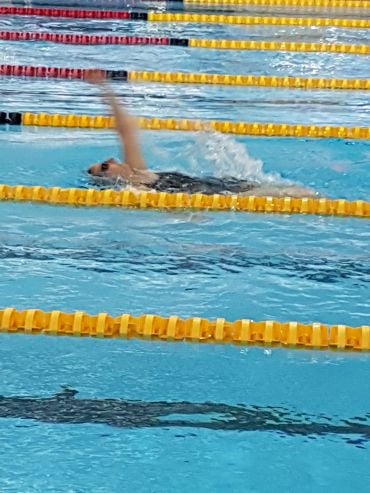 Image credit: Oxford University
Faith will compete in the swimming, rowing, athletics and powerliftng heats at next month's Invictus Games.
Why did you choose to teach chemistry?
I always liked science as a child and chemistry was actually my worst subject. But the experimental side of things has always appealed to me.
What do you like most about teaching?
I enjoy helping young people to expand their horizons and discover new things - particularly young girls. I did my teaching placement at a mixed school and an all girls’ school, and noticed that in mixed science class rooms, girls seem to say less.
Young girls need to know that stereotypes do not matter. Science – particularly physics and chemistry, is for them too. I loved my time at Oxford University, and think their community outreach work, visiting schools and showing students what a career in science looks like, really helps in this area.
Faith celebrating a rowing victory with Lewis Moody, former England Rugby Captain. Image credit: Faith Fordham
What is next for you?
In early September I start my Newly Qualified Teaching Year (NQT) at Rye Saint Anthony School, Oxfordshire, and of course have the Invictus Games in Toronto at the end of the month.
Long-term, I want to focus on my teaching career and hopefully progress to Head of Department one day. I also want to complete a Masters Degree in teaching and science – I’m just deciding which to do first.
Like anyone who has been in the military, I can never sit still for too long.
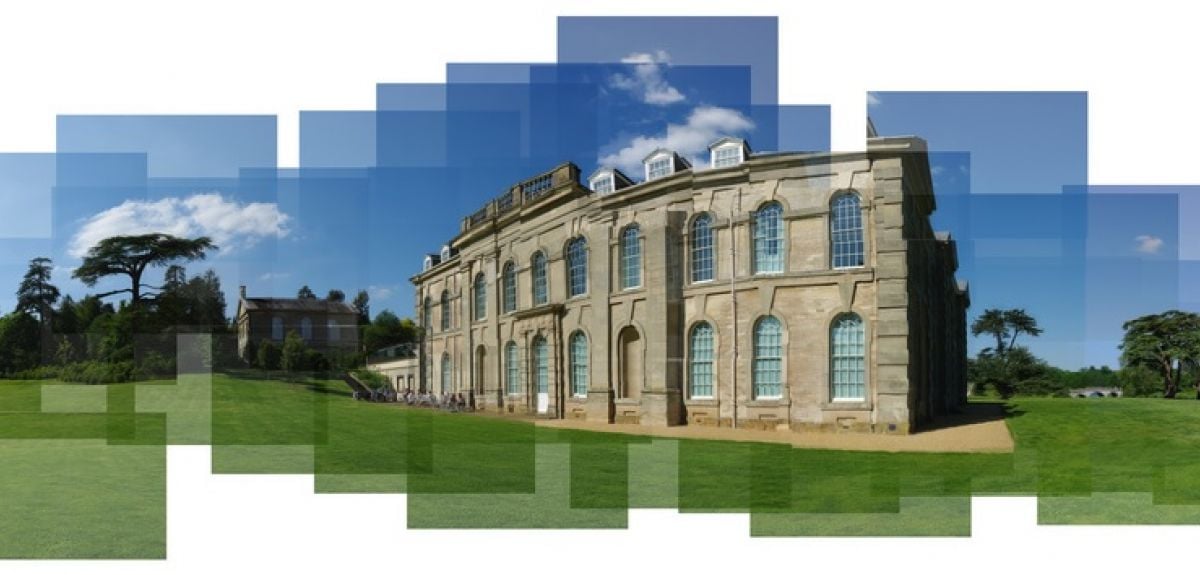
A Victorian woman’s political statement has inspired a diverse group of contributors, from prison reading groups to UN ambassador Emma Watson, to come together in an exhibition celebrating the value of reading.
‘Unsilencing the Library’, the award-winning latest exhibition at Warwickshire stately home Compton Verney, began life with a mystery: who had created the unusual false bookshelf which forms part of the original decoration in the so-called Women’s Library?
False bookshelves, used to disguise the door to a library, are often associated with Victorian whimsy.
But the Compton Verney example, which is composed exclusively of female authors and shows a deep concern with self-improvement, seems to be saying something rather serious.
Puzzled by this, the curators of the stately home called in Dr Sophie Ratcliffe of Oxford's English Faculty and Lady Margaret Hall to help figure out who might have commissioned it.
According to Dr Ratcliffe and her team, Dr Ceri Hunter and Dr Eleanor Lybeck, everything points towards Georgiana Verney, Lady Willoughby de Broke, who was mistress of Compton Verney in the 1860s.
She was a noted local philanthropist and anti-poverty campaigner and was later described by one of her descendants as having ‘notions of progress’ and being in favour of women’s suffrage.
Dr Ratcliffe describes the bookshelf as a ‘quiet feminist statement’ announcing something profound about Georgiana’s self-image.
Georgiana’s ‘shelfie’ inspired the Oxford team, together with Professor Steven Parissien, director of Compton Verney, to invite a group of ‘guest curators’ to fill out the library by choosing the books that mean something to them.
The shelves make a statement about a range of political issues as well as the importance of reading.
Among these curators is UN Ambassador Emma Watson, herself a visiting fellow of Lady Margaret Hall.
She has chosen feminist classics such as Margaret Atwood’s The Handmaid’s Tale and Persepolis by Marjane Satrapi for her collection. She is joined by writers Margo Jefferson and Alys Fowler, as well as members of reading groups from several local prisons, and students from the nearby Kineton High School.
Inspired by the schoolchildren’s feedback that ‘we don’t like exhibitions we can’t touch’, the installation will be fully interactive.
Visitors will be free to take the books off the shelves and examine the bookmarks placed inside them, explaining why these titles were chosen.
For the technologically-minded, there will be tablets to consult about the history of the room and the guest curators.
Books were chosen for many reasons; Margo Jefferson’s bookshelf focusses on race and coming of age, while Alys Fowler uses her shelf to make a statement about the environment.
Prisoners tended to choose escapist narratives, with swashbuckling adventure stories such as Dumas’ The Three Musketeers and fantasy classics such as Tolkien’s The Lord of the Rings proving popular.
But there was also a turn towards the practical; self-help books or funny books such as Bridget Jones’ Baby to help cope with the everyday realities of prison life.
One prisoner describes how James Clavell’s Shogun, which describes an English sailor’s adventures in feudal Japan, helped him with its description of a stranger adapting to a culture entirely unlike his own.
‘I see it as a kind of How-To Guide in dealing with some of the problems prison can generate,’ he says.
Books were also chosen for sentimental value. One particularly moving account relates how Roald Dahl’s Danny the Champion of the World, a book he remembered his teacher reading to him in school, helped one reader in HMP Bullingdon to connect with his young son.
‘I think one of the surprises about this exhibition is how similar all the shelves are, and I think that shows how much we’ve got in common,’ Dr Ratcliffe says.
The project, partially funded by a Knowledge Exchange Fellowship from TORCH (The Oxford Research Centre in the Humanities), has also brought together a small army of local artisans and academics.
Bookbinder John Richards helped recreate two missing panels of imitation books, while fabric makers Rapture and Wright designed a special fabric to decorate the room, inspired by Georgiana’s patronage of the Coventry ribbon weaving trade.
Important supporting research was done by art historian Pip Shergold and local historians Peter and Gill Ashley-Smith.
According to Dr Ratcliffe, the project’s success (‘Unsilencing the Library’ recently won a Vice Chancellor’s Public Engagement with Research Award) has been entirely down to the cooperation and generosity of many different people.
‘I see myself very much as the curator of other people’s brilliance; their knowledge, their expertise and the precious things they’ve shared with me.’
‘I think of this project as a celebration of the small things. Just one small detail in one room in the 1860s has sort of rippled out.
'It has gone to the heart of UK prisons, and to an academic in America, who we consulted with on the project. What’s surprising about this story is how you can unfold a really fascinating narrative from something small.’
‘Unsilencing the Library’ is now open at Compton Verney. You can find out more about the exhibition, and read the guest curators’ reasons for choosing their books, here.
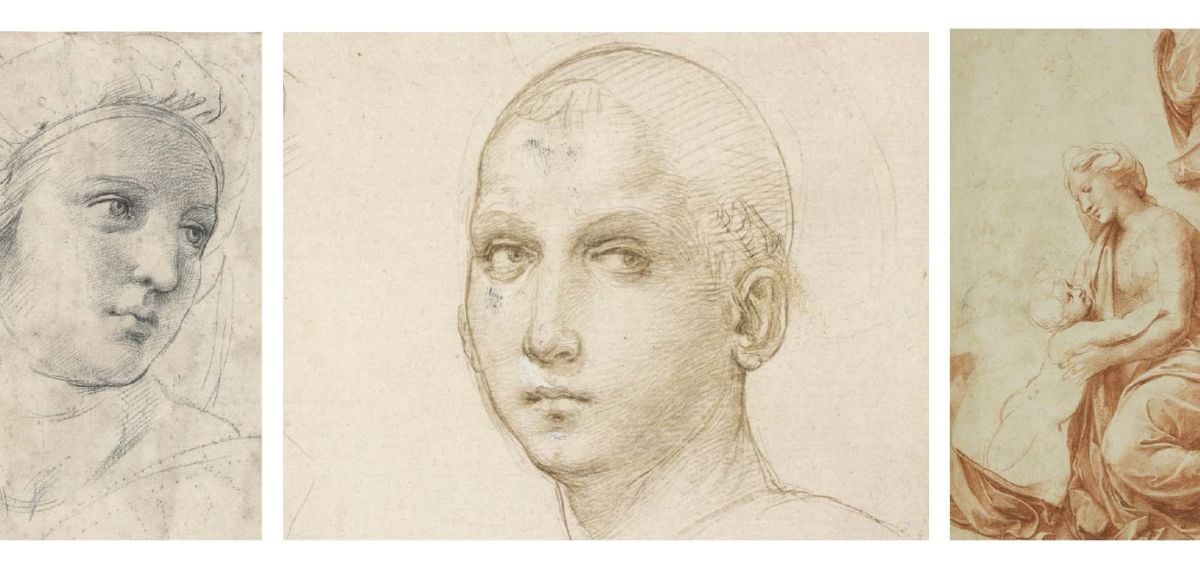
In a way, they are all right.
‘Raphael: The Drawings’ is a collection of 120 works by the Renaissance artist. The Ashmolean owns fifty of these, which are considered the largest and most important group of Raphael drawings in the world.
Add to that 25 works from the Albertina Museum in Vienna and dozens of portraits from international collections, and you have what Ashmolean director Dr Xa Sturgis calls “an extraordinary gathering” of Raphael drawings.
Raphael was one of the best-known Renaissance artists – and yes, he was one of the four artists who inspired the popular ‘Turtles’ cartoon.
Curator Dr Catherine Whistler says the exhibition shows a different side of Raphael.
‘We often think of Raphael as an artist who is quite idealising and graceful and possibly a bit bland,’ she says. ‘But if you start looking at the drawings, a very different Rafael emerges.
‘If we look at Raphael’s art, it is full of human emotion, it is devoted to the human body in all of its heroism and in all of its tenderness and expressiveness.
‘He manages to fuse a sense of naturalism and the real thing with a sense of grandeur, and what he is doing in his early drawings is very much inject them with a kind of gestural force determined to put energy into everything he is doing and drawing.
‘Of all of the artists of his day, he is the one who had the greatest impact on European art from his own time right down to the 20th Century.’
The exhibition has been so popular that the museum has announced additional opening hours in August to accommodate demand.
The museum is usually closed on Mondays but it will now open on Monday August 7, 14 and 21.
The museum will also stay open until 8pm on August 25 and September 2. The exhibition will close on September 3.
- ‹ previous
- 92 of 252
- next ›
 What US intervention could mean for displaced Venezuelans
  Setting the agenda for the next century of quantum
 10 years on: The Oxford learning centre making an impact
 Mapping the Moon: the world’s first lunar atlas goes digital
  Oxford and The Brilliant Club: inspiring the next generation of scholars
 New course launched for the next generation of creative translators
 The art of translation – raising the profile of languages in schools
  Opening a window into the quantum world
 Tracking resistance: Mapping the spread of drug-resistant malaria