Features
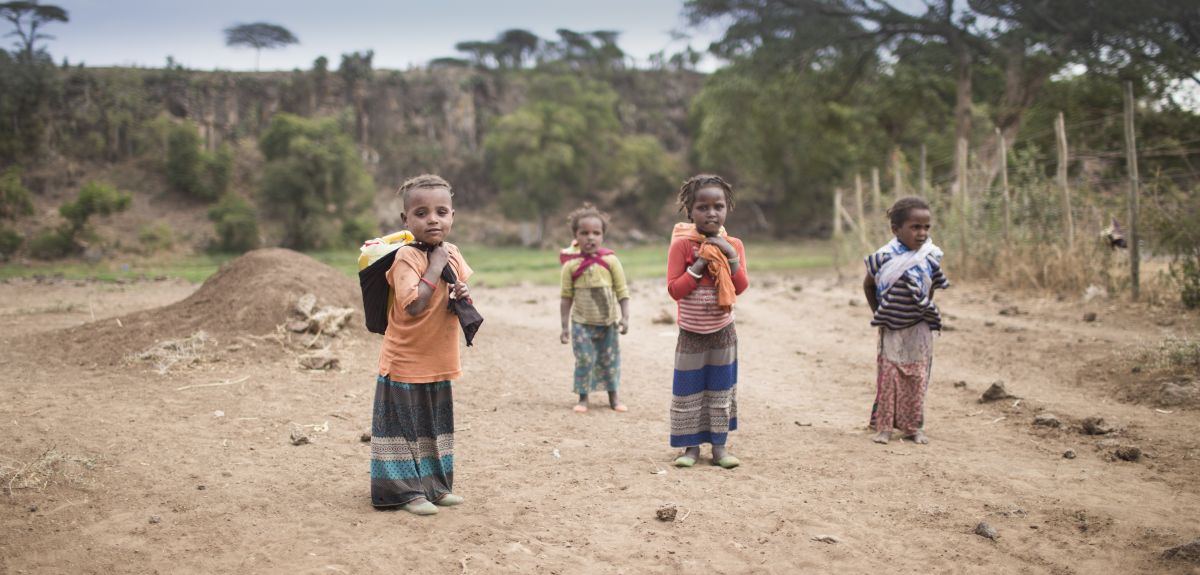
The challenge of providing a rapid response to environmental disasters as varied as flooding, drought, illegal logging and oil spills is the focus of two new projects in which the University of Oxford is a key partner. Dr Steven Reece, data processing and machine learning lead at Oxford’s Department of Engineering Science explains how the project will work in action and the role that machine learning technology will play in it.
Preparing for a potential environmental threat is highly challenging and when it comes to identifying hazards, some data can be more useful than others.
Compared to other forms, satellite data, can quickly recognise small changes on the surface of the earth or sea that may be indicators of a larger problem in the making. For example, a new ‘hole’ appearing in a forest can provide evidence of illegal logging, or a slight colour change in crops may show the early effects of drought. Combining data from these images with other sources has the potential to create powerful information for governments and other actors.
Satellite imagery is very useful for quickly generating independent data from a wide variety of events on the earth as they unfold. The difficulty is how to organise and process this vast quantity of data and to combine it with other insights from the earth’s surface so that it can be used to inform decision-makers in the most effective way. There may also be gaps in the data, or some of it may be unreliable, and this is where machine learning technology can be really useful.
Machine learning is having a positive impact on many walks of life, supporting evidence-based decision making across a wide range of different application domains, and truly ground breaking data-centred solutions to key societal problems.
The Oxford University Department of Engineering Science are world leaders in the field. Our machine learning solutions, include tools that are capable of automating and processing large quantities of data from satellite images. This specialist knowledge will be key to a new international collaboration that will use machine learning enabled satellite imagery to make a real difference to people’s lives; improving emergency response to environmental disasters in Malaysia, Ethiopia and Kenya.
UK Space Agency funded projects led by the Satellite Applications Catapult and Airbus Defence and Space will provide a more-timely, accurate and detailed understanding of an environmental crisis than is currently available. The data gathered will be used as a starting point to create information for key decision makers in countries affected by environmental disasters, so that they are able to intervene as early as possible to protect local people and the planet.
Both projects: Earth and Sea Observation System (Malaysia) and Earth Observation for Flood and Drought Resilience in Ethiopia and Kenya, are supported through the UK Space Agency's International Partnership Programme and have attracted a total investment of £21 million.
The objectives of the work are directly relevant to many of the United Nation’s Sustainable Development Goals:
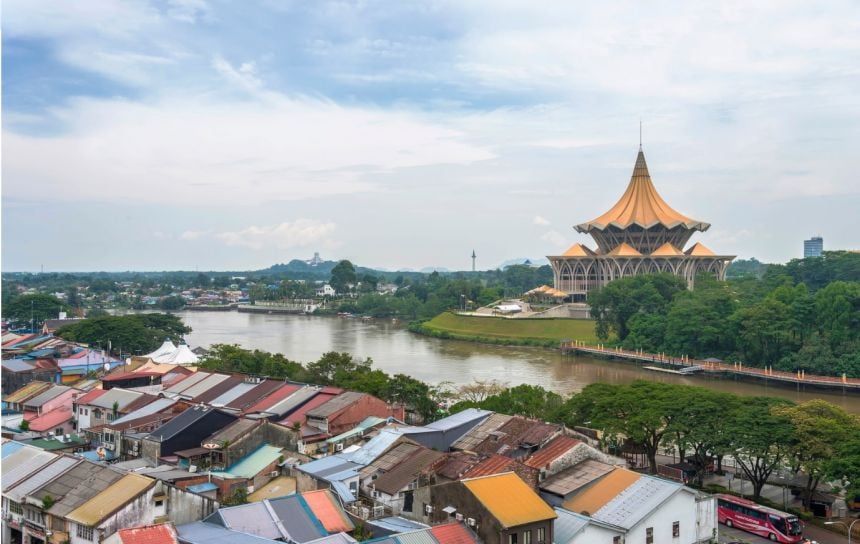
In Malaysia we will be working with government agencies to tackle flooding, oil pollution and illegal logging, all of which pose serious social and economic threats to Malaysian people. Monsoon flooding is a major annual issue, and the project aims to enable evacuation plans and flood defences to be activated much faster. It will also generate data that will help the authorities to quickly identify and track oil leaks from shipping which are causing irreparable damage to Malaysia’s mangrove swamps, and to locate areas where illegal logging is taking place.
In Ethiopia and Kenya the focus will be on creating an improved understanding of flood and drought risk, thus helping to build local people’s resilience to these natural disasters and alleviate poverty. The intention is to use the same data to provide an emergency response where needed and to help develop longer-term strategies and solutions to drought and flood. In Kenya the project will also be generating tools to support the micro-insurance market, which is of key importance to farmers who have little or no access to insurance, by providing independent data about crop damage to verify farmers’ claims.
Our software can reconcile inconsistent data, filter out unreliable sources, and integrate information derived from other sources such as social media. It is even able to interpolate what may lie in the data ‘black spots’ between known observations, thus ‘filling in the gaps’ in the overall picture.
In collaboration with several other partners with different types of expertise, we will be bringing our specialist knowledge to bear on the real-world problems identified in Malaysia, Ethiopia and Kenya, and working out how they can be applied most effectively in these different contexts. In the drought-response work in Ethiopia and Kenya, for example, our engineers will be working with colleagues from the School of Geography and the Environment who specialise in hydrology. We will work together with partners from industry, to investigate how to use machine learning to integrate data from satellite imagery of crops with information of both surface and subterranean water resources. Combining views from above and below in this way is more powerful than looking at each one individually, and will create a much more accurate early warning of drought.
We hope that the lessons learned from this work will be used to better understand environmental threats in other areas of the world, and prevent their impact in the future.

There are over 6,000 languages spoken in the world. But did you know that, like the Indian elephant and the Bengal tiger, some of them are in danger of dying out?
From Dusner (three speakers) to Kelabit (five thousand) to Yiddish (1.5 million), these languages are sprawled across the globe, but they all have one thing in common: unless we act soon, they could become extinct.
Researchers at Oxford University are meticulously studying these languages. And Dr Johanneke Sytsema, who has organised a popular seminar on endangered languages, thinks there could be a novel way to keep minority languages alive: social media.
“Social media could help save a language,” Dr Sytsema says. “Because young people text each other how they speak, even if they don’t know how to spell it.”
Minority languages are often at risk of being drowned out by the louder voices of the bigger languages, which are spoken at school and in the media. But, with social media handing control over to the users, the advent of Facebook and Twitter might just have the reverse effect.
Dr Sytsema has first-hand experience: she speaks Frisian. Frisian, spoken in a province in the Netherlands called Friesland, has 350,000 speakers. Interacting with her own language has given Dr. Sytsema food for thought about how languages could be saved in the future.
“In Friesland, young people who don’t learn much Frisian writing at school send each other messages on social media in Frisian,” she says. In this way, a new generation of Frisian speakers keeps the language alive.
But how do languages become endangered in the first place?
“6% of the world’s population speak 94% of the world’s languages,” Dr. Sytsema explains. “That means that many of these languages only have a handful of speakers.”
But it’s not just a small number of speakers that makes a language endangered. Some languages were once widely spoken, but lost speakers over time. This can happen for many reasons.
“It can be for political reasons - governments decide that only one language can be spoken in schools, for example. Or people move away from their home and lose their language, or communities are broken up.”
Tweeting and texting in Frisian (or Sorbian, or Breton) is not enough in the long-term, though. Dr Sytsema says there are many other things we need to do.
“Government policy is important,” she says. “To support the language, provide teaching in that language, and subsidise radio, television, and printing.”
If we do all of these things, Dr Sytsema argues, we can preserve the thousands of languages that people are chattering in across the globe.
But there’s an (endangered) elephant in the room. Why is a language worth saving in the first place?
Dr Sytsema is unequivocal. It’s vital: because, like our wildlife, our languages are natural creations.
“Natural beauty needs to be protected. Once languages die, you don’t get them back, because they’ve grown over thousands and thousands of years,” Dr Sytsema explains.
“Every language has its own beauty. And that’s why it’s so important.”
You can listen to some Frisian for yourself by watching a weather forecast or exploring an interactive map of endangered languages.
Oxford feels different over the summer. The High Street is devoid of undergraduates streaming in and out of lectures. They are replaced by tourists who are in much less of a rush.
The pace of academic life changes, too. Although graduate teaching continues, academics have more time to focus on their research or write their next book.
But many academics in the Humanities Division found their research interrupted by a knock on the door from Bethany White.
Bethany is a DPhil student in the Faculty of History and Trinity College, and she was given artistic license to roam the various departments in the Humanities Division and write a series of articles on some of the most exciting and unusual research going on.
The results are thrilling - keep your eyes peeled for her article about medical remedies in medieval England. Did you know that medieval doctors recommended applying heated eight-day old urine to your face to cure acne? If you didn’t, please don’t now try it at home.
Bethany has also written a series of profiles about students in the humanities doing interesting things – from the student balancing literature lectures with running a campaign to help refugees, to the aspiring historian helping her classmates to fight procrastination.
“I learnt more than I imagined I would - about graffiti, bilingualism, Qawwali music, medieval medicine and so much more,” says Bethany.
“It struck me just how much research is being done in Humanities, and what a range and depth there is. It was exciting to think that this is all going on at once, and that you can learn so much from a quick chat with anyone in Oxford.”
Today, we release the first article in the series: could social media save endangered languages?
You can find out more about Bethany's own research into working-class women and higher education in Britain from 1965 - 1975 here, and follow her on Twitter here.
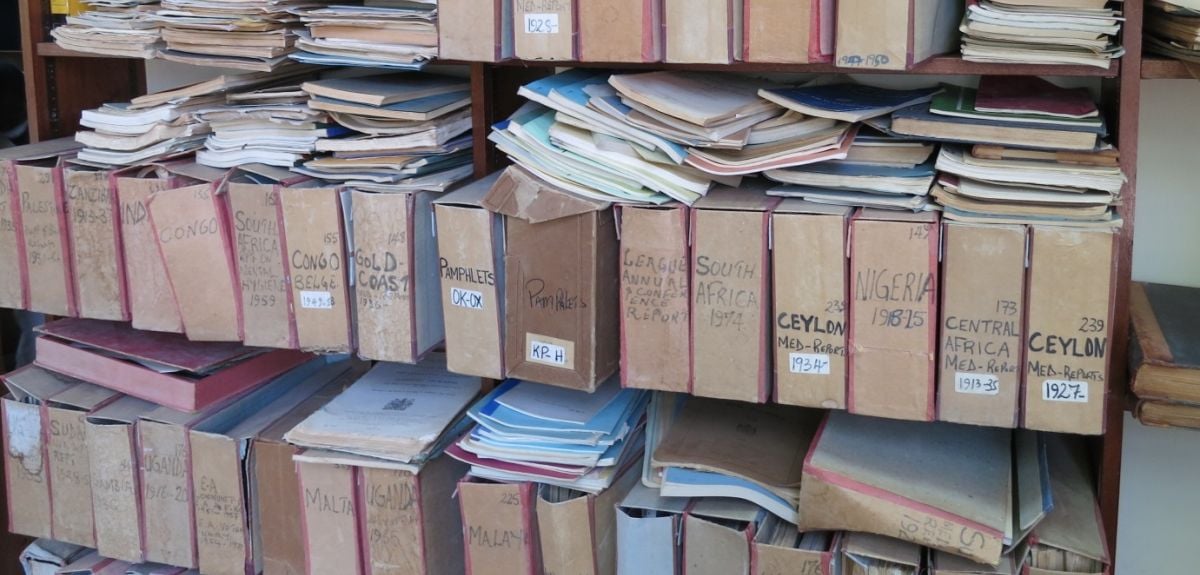
The largest repository of any parasitic disease in the world - a collection of malaria survey data in Africa – has been unveiled by researchers at the Kenya Medical Research Institute and the Wellcome Trust. The collection covers more than 50,000 surveys spanning 115 years since 1900, each documented by date, geolocation, number of people, and the proportion positive for Plasmodium falciparum infection.
The researchers analysed the data to estimate malaria infection prevalence for each of 520 administrative units of Sub-Saharan African Countries and Madagascar for 16 time periods since 1900 through to 2010-2015.
The biggest historical drops in malaria followed the Second World War with the discovery of DDT and chloroquine, and later in 2005 with the rolling out of insecticide treated bed nets and new drugs to treat malaria.
Malaria prevalence was low during the late 1960s, through the 1970s and early 1980s. This was a period when, despite the international community abandoning investment in malaria control in Africa, chloroquine use was widespread with repeated dosing available to the general population. Together with drought across the Sahel, this produced the perfect lull in malaria transmission.
‘People often focus on recent history in tracking malaria in Africa, to inform donors and control programmes on recent actions,’ says the study’s lead author Professor Bob Snow of Oxford’s Centre for Tropical Medicine and Global health. ‘The longer history of malaria in Africa allows us to put into context the recent decline.’
Chloroquine resistance expanded across Africa in the 1980s, and in the late 1990s unprecedented rainfall led to flooding and major malaria epidemics. Ministries of Health across the continent woke up to the perfect storm without any significant mosquito vector control in place. Malaria prevalence returned to the levels seen before the Second World War.
It took a further five years for the international community to provide free insecticide treated bed nets and effective malaria treatments. The financial response by the Global Fund and the technical revisions to policy by the World Health Organisation after 2005 led to one of the largest drops in malaria infection prevalence witnessed since 1900.
Co-author, Abdisalan Noor of the Kenya Medical Research Institute/Wellcome Trust Research Programme (KEMRI-WTRP), adds: ‘Shown in context, the cycles and trend over the past 115 years are inconsistent with explanations in terms of climate or deliberate intervention alone. The role of socio-economic development, for example, remains poorly understood.’
The current prevalence of infection, 24%, is at its lowest in 115 years but gains have stalled since 2010 and 240 million infected individuals remains a substantial burden. Little has changed in the high transmission belt across West and Central Africa. Emerging insecticide and drug resistance remain a threat, along with growing international ambivalence to funding control.
‘The history of malaria risk in Africa is complex, there have been perfect lulls when drugs worked and droughts prevented mosquito’s transmission infection; there have been perfect storms when drugs stopped working and flooding affected large parts of Africa,’ adds Snow. ‘It has been a history of long term cycles and predicting the future of malaria in Africa based on climate or intervention coverage alone is difficult.’

A new website, writersmakeworlds.com, has been launched at Oxford today (16 October).
Postcolonial Writers Make Worlds asks how our reading of British literature shapes our sense of identity in Britain today. It focuses in particular on how Black and Asian writing in Britain might give us new ways to think about Britain in the world.
In a guest post, the project leaders Elleke Boehmer (Professor of World Literatures) and Erica Lombard (Postdoctoral Research Fellow) explain their research:
Recent global developments have sharply polarised communities in many countries around the world. A new politics of exclusion has drawn urgent attention to the ways in which structural inequality has marginalised and silenced certain sectors of society. And yet, as a recent report shows, diversity and inclusion in fact “benefit the common good”. A more diverse group is a stronger, more creative and productive group.
In the world of literary writing, we find similar gaps and exclusions. But these are counterbalanced in some respects by new positive initiatives.
In 2015, a study revealed that literature by writers of colour had been consistently under-represented by the predominantly white British book industry. Statistics in The Bookseller show that out of thousands of books published in 2016 in the UK, fewer than 100 were by British authors of a non-white background. And out of 400 authors identified by the British public in a 2017 Royal Society of Literature survey, only 7% were black, Asian or of mixed race (compared to 13% of the population).
A similar marginalisation takes place in the curricula in schools and universities, mirroring exclusions in wider society. In most English literature courses of whatever period, the writers taught are white, largely English and largely male.
A fundamental inequality arises in which, though British culture at large is diverse, syllabuses are not. Indeed, many British readers and students find little to recognise or to identify with when they read and study mainstream British literature.
But it’s not just a case of under-representation. It’s also a case of misrepresentation.
Black and Asian writers who have been published within the mainstream British system describe the pressure they have felt to conform to cultural stereotypes in their work. Their books are often packaged and presented in ways that focus on their ethnicity, regularly using cliches.
At the same time, more universal aspects of their writing are overlooked. For example, the covers of novels by Asian British writers usually stick to a limited colour palette of yellows, reds, and purples, accented by “exotic” images.
These writers bristle at the sense that they are read not as crafters of words and worlds, but as spokespeople for their communities or cultures. At its worst, this process turns these writers and their books into objects of anthropological curiosity rather than works inviting serious literary study or simply pleasurable reading. The message is that black and Asian literature is other than or outside mainstream British writing.
Against these exclusions, leading British authors such as Bernardine Evaristo and others have urged for a broader, more inclusive approach. They recognise that what and how we read shapes our sense of ourselves, our communities and the world.
The Postcolonial Writers Make Worlds research project, based in the Oxford English Faculty and The Oxford Research Centre in the Humanities, set out to ask what it means to read contemporary fiction as British readers. Working with reading groups and in discussion with writers, we found that readers of all ages entered the relatively unfamiliar worlds created by BAME authors with interest.
For many, finding points of familiarity along gender, age, geographical or other lines was important for their ability to enjoy stories from communities different from their own. Identifying in this way gave some readers new perspectives on their own contexts.
At the same time, unfamiliarity was not a barrier to identification. In some cases, universal human stories, like falling in love, acted as a bridge. This suggests that how literature is presented to readers, whether it is framed as other or not, can be as significant as what is represented.
Contemporary black and Asian writing from the UK is British writing. And this means that the work of writers such as Evaristo, Nadifa Mohamed and Daljit Nagra be placed on the same library shelf, reading list and section of the bookshop as work by Ian McEwan, Julian Barnes and Ali Smith – not exclusively in “world interest” or “global literature”.
Equally, much can be gained by thinking of white British writers like Alan Hollinghurst or Hilary Mantel as having as much of a cross-cultural or even postcolonial outlook as Aminatta Forna and Kamila Shamsie.
There are positive signs. A new EdExcel/Pearson A-level teaching resource on Contemporary Black British Literature has been developed. The Why is My Curriculum White? campaign continues to make inroads in university syllabuses. And the Jhalak Prize is raising the profile of BAME writing in Britain. Against this background, the Postcolonial Writers Make Worlds website offers a multimedia hub of resources on black and Asian British writing, providing points of departure for more inclusive, wide-ranging courses. Yet there is still much to be done.
All literature written in English in the British Isles is densely entangled with other histories, cultures, and pathways of experience both within the country and far beyond. Its syllabuses, publishing practices, and our conversations about books must reflect this.
This article has also been published on The Conversation.
- ‹ previous
- 89 of 252
- next ›
 Learning for peace: global governance education at Oxford
  What US intervention could mean for displaced Venezuelans
  Setting the agenda for the next century of quantum
 10 years on: The Oxford learning centre making an impact
 Mapping the Moon: the world’s first lunar atlas goes digital
  Oxford and The Brilliant Club: inspiring the next generation of scholars
 New course launched for the next generation of creative translators
 The art of translation – raising the profile of languages in schools
  Opening a window into the quantum world
 Tracking resistance: Mapping the spread of drug-resistant malaria