Features
Just over a year ago, the UK government announced an investment of £270m over five years to help get quantum technology out of laboratories and into the marketplace.
Oxford was chosen to lead one of four EPSRC-funded 'Hubs' looking at different aspects of quantum technology – in Oxford's case, shaping the future of quantum networking and computing, towards the ultimate goal of developing a functioning quantum computer.
Since then, the Networked Quantum Information Technologies (NQIT – pronounced 'N-kit') Hub, based at Oxford but involving nearly 30 academic and industrial partners, has been focusing on developing quantum technologies that could dwarf the processing power of today's supercomputers.
A new paper by Oxford researchers, published in the journal Nature, demonstrates how the work of the Hub is progressing.
Professor David Lucas of Oxford's Department of Physics, co-leader, with Professor Andrew Steane, of the ion trap quantum computing group, explains: 'The development of a "quantum computer" is one of the outstanding technological challenges of the 21st century. A quantum computer is a machine that processes information according to the rules of quantum physics, which govern the behaviour of microscopic particles at the scale of atoms and smaller.
'An important point is that it is not merely a different technology for computing in the same way our everyday computers work; it is at a very fundamental level a different way of processing information. It turns out that this quantum-mechanical way of manipulating information gives quantum computers the ability to solve certain problems far more efficiently than any conceivable conventional computer. One such problem is related to breaking secure codes, while another is searching large data sets. Quantum computers are naturally well-suited to simulating other quantum systems, which may help, for example, our understanding of complex molecules relevant to chemistry and biology.'
One of the leading technologies for building a quantum computer is trapped atomic ions, and a principal goal of the NQIT project is to develop the constituent elements of a quantum computer based on these ions.
Professor Lucas, of Balliol College, says: 'Each trapped ion (a single atom, with one electron removed) is used to represent one "quantum bit" of information. The quantum states of the ions are controlled with laser pulses of precise frequency and duration. Two different species of ion are needed in the computer: one to store information (a "memory qubit") and one to link different parts of the computer together via photons (an "interface qubit").'
The Nature paper, whose lead author is Chris Ballance, a Junior Research Fellow at Magdalen College, demonstrates the all-important quantum 'logic gate' between two different species of ion – in this case two isotopes of calcium, the abundant isotope calcium-40 and the rare isotope calcium-43.
Professor Lucas says: 'The Oxford team has previously shown that calcium-43 makes the best single-qubit memory ever demonstrated, across all physical systems, while the calcium-40 ion has a simpler structure which is well-suited for use as an "interface qubit". The logic gate, which was first demonstrated for same-species ions at NIST Boulder (USA) in 2003, allows quantum information to be transferred from one qubit to another; in the present work, the qubits reside in the two different isotopes, stored in the same ion trap. The Oxford work was the first to demonstrate that this type of logic gate is possible with the demanding precision necessary to build a quantum computer.
'In a nice piece of "spin-off science" from this technological achievement, we were able to perform a "Bell test", by first using the high-precision logic gate to generate an entangled state of the two different-species ions, then manipulating and measuring them independently. This is a test which probes the non-local nature of quantum mechanics; that is, the fact that an entangled state of two separated particles has properties that cannot be mimicked by a classical system. This was the first time such a test had been performed on two different species of atom separated by many times the atomic size.'
While Professor Lucas cautions that the so-called 'locality loophole' is still present in this experiment, there is no doubt the work is an important contribution to the growing body of research exploring the physics of entanglement. He says: 'The significance of the work for trapped-ion quantum computing is that we show that quantum logic gates between different isotopic species are possible, can be driven by a relatively simple laser system, and can work with precision beyond the so-called "fault-tolerant threshold" precision of approximately 99% – the precision necessary to implement the techniques of quantum error correction, without which a quantum computer of useful size cannot be built.'
In the long term, it is likely that different atomic elements will be required, rather than different isotopes. In closely related work published in the same issue of Nature, by Ting Rei Tan et al, the NIST Ion Storage group has demonstrated a different type of quantum logic gate using ions of two different elements (beryllium and magnesium).
The Oxford experiments were designed and carried out by graduate students Chris Ballance and Vera Schäfer, following a proposal of Jonathan Home and David Lucas, using an apparatus developed by all members of the research team.
See also Chris Ballance’s DPhil thesis, available online.

When you look at a spider web in the garden, one thing is often noticeably absent: the spider. This may be because it is lurking away from the web in a 'retreat', where it can monitor web vibrations through a proxy known as a signal thread.
A new Oxford study published in Journal of the Royal Society Interface looks in more detail at the composition and structure of these signal threads, which spiders can use to tell whether they've caught new prey.
Dr Beth Mortimer from the Oxford Silk Group, based in the Department of Zoology, spoke to Science Blog about the research.
How much do we already know about signal threads?
'The sector web spider is a very common spider in the UK – even at this time of year you can see their two-dimensional orb webs that have a top corner with a free sector (there is no 'capture spiral' in this section). What you won't notice necessarily is the spider – they will sit away from the web in a retreat and use a signal thread (a single line of silk fibres) to remotely monitor web vibration by proxy.
'We know that the signal threads are made from silk and are likely to be made of the same material as the other radial threads in the web – a silk called spider dragline silk, known for its strength and toughness. These signal threads are the last part of the web to be built. The signal threads are multipurpose: they function not only to transmit vibrations from the web to the spider in the retreat, but also as a tightrope for the spider as it moves from the retreat to the web and back again. The spiders that employ signal threads seem to make the most of the added protection from a retreat, while still being able to detect the important web vibration signals from afar.'
What does this new study tell us?
'This paper reveals the structure of the signal threads and gives insights into how they are able to achieve their multi-purpose functions. Firstly, the signal thread structure is surprisingly variable: while some had only four fibres in their signal thread rope, others had up to 16 fibres. The number of fibres and the load-bearing capacity of the signal threads varied with the movement of the spiders – each time they ran from the retreat to the hub, more silk fibres were added to the signal thread, which was then able to sustain more weight.
'The implications of the variable structure of the signal threads are carefully controlled by the spider. As more fibres are added to the signal thread, the spider carefully tensions each one to simultaneously increase the overall tension of the signal thread. This is important, as the vibrational properties of the signal thread remain constant across many different signal thread sizes. We also show that these fibres closely interact with each other to form a signal thread that behaves as one unit – which gives a comparatively simple vibration signal to the spider.
'Overall, the signal thread structure and properties give freedom to the spider to move along the signal thread to and from the web as opportunities for prey capture arise.'
What are the potential applications of this knowledge?
'Learning from nature, signal threads could provide inspiration for the development of new remote sensing technologies. Firstly, the signal thread structure enables consistent signalling across a range of cable sizes – so it could be employed in contexts where passive monitoring is required. Secondly, the system would be well suited to active sensing of vibrations – the combination of the signal thread's structure and piezoelectric coatings could provide new systems for small-scale energy harvesting, where vibrations could be turned into electricity. These types of systems could be useful in micro-electronic-mechanical systems, but also in large-scale civil applications. The variability of the natural system therefore gives insights into how this simple system can be tuned for a range of different size scales.'
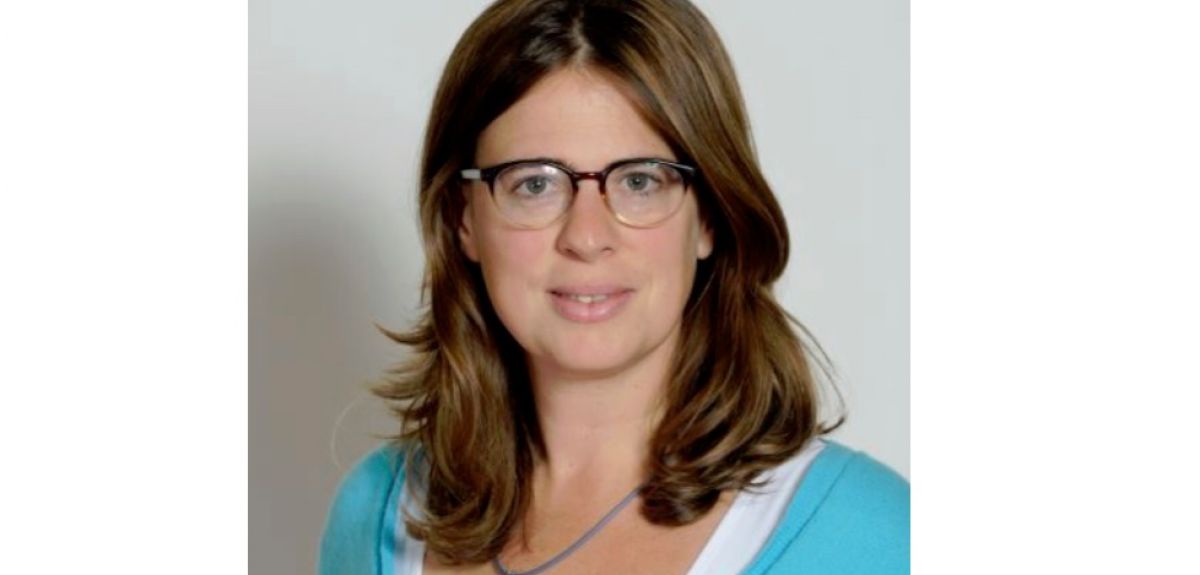
The Pitt Rivers Museum at Oxford University has today announced its new director.
Dr Laura Van Broekhoven will take up the directorship on 1 March 2016, following the retirement of Professor Mike O’Hanlon in September.
Dr Van Broekhoven is currently Head of the Curatorial Department and Curator of Middle and South America at the Nationaal Museum van Wereldculturen (encompassing the Tropenmuseum, Volkenkunde and Afrika Museum) in the Netherlands and Assistant Professor of Archaeology at Leiden University.
She said: 'It is both an honour and a delight to be joining the Pitt Rivers Museum. The Museum enjoys the highest reputation internationally for the quality of its curatorial expertise, its extraordinary collections and galleries and as a centre of scholarship.
'This is thanks in particular to the outstanding leadership of Professor O’Hanlon. I am greatly looking forward to working with colleagues in the museum and also with academic colleagues across the University.'
Professor Anne Trefethen, Pro-Vice-Chancellor for the Academic Services and University Collections at Oxford University, said: ‘I am delighted that Dr Van Broekhoven will be joining us at what is a pivotal moment, both for the Pitt Rivers for the University's other museums and collections.
'All of these outstanding collections are now working – individually and collectively – to extend their contribution to the delivery of the University’s strategic aims and I greatly look forward to Dr Broekhoven joining us in this shared endeavour.'
The Pitt Rivers Museum holds one of the world’s finest collections of anthropology and archaeology, from around the world and throughout human history. It welcomes thousands of children from schools in Oxfordshire every year, and carries out world-leading conservation and research in the museum. It is free to visit.
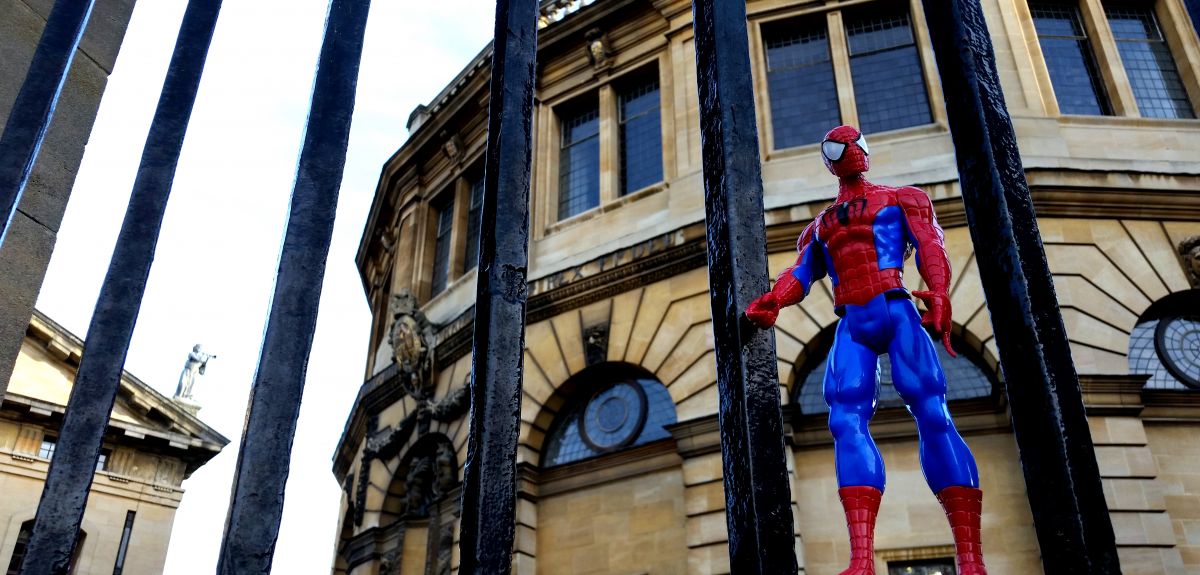
We marvel at their exploits in comic books and on the big screen – but how many of our favourite superheroes' skills and powers have a basis in science?
In a special 'on-screen' edition of The Biochemist, the Biochemical Society's magazine, Professor Fritz Vollrath of Oxford's Department of Zoology attempts to separate the fact from the fiction and explain the mysteries behind the amazing adventures of Spider-Man.
Professor Vollrath, whose research team specialises in the properties of spider silk, writes: 'Seeing Spider-Man swing through New York City tingles the spine and exercises the brain. His ease in making and manipulating gossamer filaments for aerial stunts is truly breath-taking and awe inspiring – which, for materials biologists with decades of experience analysing the stuff, is humbling, to say the least, as totally unforeseen and novel capabilities and capacities emerge.'
Professor Vollrath begins his investigation by explaining the scientific context for Spider-Man's impressive powers, noting that the use of silks by arthropods began approximately 400 million years ago and has undergone significant evolution since then.
Puzzled and impressed by Spider-Man's ability to manufacture vast quantities of silk in the blink of an eye, Professor Vollrath states: 'In-depth analysis of an extensive online database of video imagery, as well as background visual literature (commonly called comic strips), confirms that Spider-Man seems to shoot filaments from the wrist. This immediately raises a number of questions. Firstly, where are the silk glands situated?'
This question is tackled during the course of the article, along with other mysteries such as the immense strength of Spider-Man's silk – as demonstrated in the film Spider-Man 2, in which he uses his web to stop a runaway train.
Professor Vollrath adds: 'It is important to note that Spider-Man, like spiders, has bilateral symmetry – and, in consequence, the ability to produce a double thread. However, unlike spiders, which always produce a double thread (each with the ability to singly hold the animal's weight, as an extra safety feature), Spider-Man more often than not shoots only from one wrist. This behaviour, to me, appears to be highly cavalier.'
And, says Professor Vollrath, Spider-Man's novel technology could have important applications to human industry: 'Unlike spiders, Spider-Man has mutated (or evolved in the relatively short time span of one generation) a spinning system unlike any other found in his spidery lineage.
'This could be important, since Spider-Man's way seems most energy efficient – probably even more so than natural silk spinning, which in itself is 1,000 times more efficient than man's spinning of high-density polyethylene (HDPE).'
It's an impressive set of skills – but, as Professor Vollrath concludes, we may never know the truth: 'I don't think my group will attempt to secure the funding to collect a Spider-Man specimen for study. Instead, we will have to continue to rely for our research on second and third-hand reports and films – which may, of course, have been doctored.'
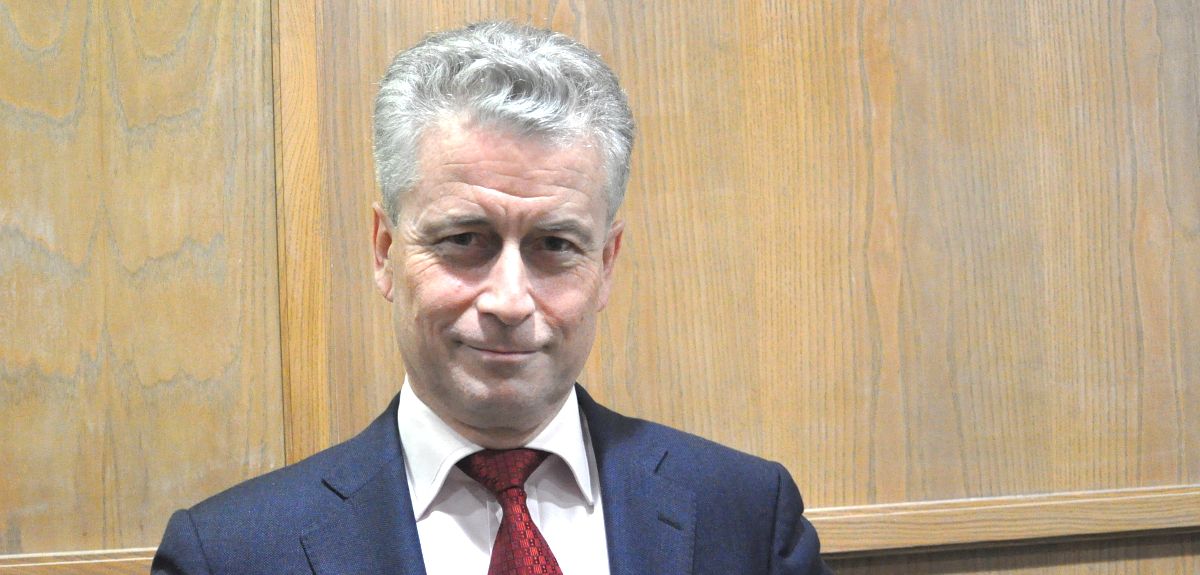
'I am coming here to listen to you.'
It's an odd comment to hear at the start of what is billed as a talk by the European Commission's senior advisor on innovation. Surely we are there to listen to Robert Madelin, Magdalen College graduate, twenty-two year veteran of the European bureaucracy, currently in the European Political Strategy Centre, the Commission presidency's think tank?
But as the event at Oxford's Department of Pharmacology progresses, it becomes clear that Robert Madelin is a man on a mission. That's literally true: he has been instructed to prepare a report on European and EU member state innovation policy and ask should more or different things be done. And while he is happy to share his views, he also wants to know what the Oxford audience has to say in answer to a few questions.
We will come to those questions in a moment, because with his last five years spent in science, technology and innovation. Mr Madelin's own views should not be discounted – they will doubtless shape the report as much as those of the many people he will consult.
He begins by noting that at a time of profound disruption, none of us know what the future will hold. The answer, he suggests, is not to run for the high ground but to think about how we embrace change while defending our values. In the face of this change, innovation is key:
Wealth in the 21st century depends for Europe on continuing to invent.
Robert Madelin, Senior Adviser for Innovation, European Political Strategy Centre
'The sophistication of our societies, which is what we call civilisation, depends on wealth and wealth in the 21st century depends for Europe on continuing to invent. I also think that inventiveness and innovation are an intrinsic part of Western European civilisation and if we lose the ability to create the new tools for the world as a whole, which Europe has been doing for hundreds of years, it will be a different Europe.'
He says that the way in which we approach innovation is itself changing; innovation now depends on networks far more than previously. Mr Madelin counsels that innovation is at a dangerous stage: is understood enough that people – especially politicians – have grasped the label and use it, but not enough that we have grasped the reality. There are still questions about the size, the shape and the dynamics that best foster innovative networks.
On size and shape, Mr Madelin advises that academics should not be constrained by the boundaries of their discipline – discoveries will come at the crossovers of traditionally separate subjects – or by thinking in terms of individual towns or institutions. Oxford, he notes, is, in global terms, no great distance from London or even Cambridge. To focus solely on the innovation cluster around any one of those towns may be to miss an opportunity.
Yet, it is the dynamics of innovation that most appear to occupy him and it is here he asks his three questions, after beginning with some warnings.
There are fewer instinctive believers than you think
He cautions that just one in five people are instinctive supporters of science research funding. Trying to sell science simply by describing science only works for that 20%. The other 80% need to be convinced.
That affects private funding for science: Mr Madelin observes that there is plenty of money in Europe searching for an investment opportunity but people tend not to invest in things they do not understand. The onus, he adds, is on scientists to make credible and well-presented requests for funding.
If we had twice as much risk capital would inventions happen twice as fast, and if so, what tax and other regimes would help to make that happen?
Is it possible from an invention point of view to argue in favour of a more accommodating regulatory regime?
Robert Madelin, Senior Adviser for Innovation, European Political Strategy Centre
And so his first question is about investment. Noting that – per head – the US and Israel spend around twice what Europe does in terms of risk capital he muses: 'If we had twice as much risk capital would inventions happen twice as fast, and if so, what tax and other regimes would help to make that happen?'
That lack of instinctive support also affects public science policy – not just in terms of funding, but also regulation: 'Is it possible from an invention point of view to argue in favour of a more accommodating regulatory regime?'
A more permissive regime might allow innovations to be used for a period, gauge their impact and then create regulation in response to that, The suggestion seems to be that rather than waiting for regulators to say yes, we should instead create a regulatory environment where new ideas can go ahead until there is a reason to say no. That approach to risk similarly should apply to funding: public funders need to accept failures if they are to fund truly innovative ideas. It is here that the researchers in the audience are most forthright in giving their views – wanting less complexity on the path from discovery to delivery.
Talking to me afterwards, Robert Madelin clearly agrees: 'What I heard there is that it's pretty awful at the moment if you want to get innovation to market. What's standing between us and continued success today is not inventiveness, it's the ability to incentivise and to bring to market in good condition the great stuff we're doing.
'We have a lot to do to become more accommodating so that researchers who invent things get real incentives to acquire their rights to use the IP, to get investment help without too many strings attached, and to get the goods out into the market.'
Citing experiences in the US, Switzerland and Italy, he points to the additional benefit of that approach: 'If you let your inventors invent and you let them profit from their invention they are extremely grateful – they come back with hundreds of millions of pound of gifts to the foundation.'
Everyone has a vote
His final warning is about applications for research funding in the EU. The thirteen most recent members of the EU are all applying for and receiving a declining portion of its science funds. In fact, since 2009, their share has declined by a fifth. While there may be a number of reasons for this, Mr Madelin is concerned that around half the EU appears to be losing faith in science and research.
What is the collective responsibility of universities that are highly successful – such as Oxford – to help lagging regions and universities across the continent to catch up and feel they are potential winners in the innovation game?
Robert Madelin, Senior Adviser for Innovation, European Political Strategy Centre
If you think that just means more research money for everyone else, think again: each of those nations has a vote on the EU budget. If they do not see science funding as having a benefit for them they are more likely to support cuts to the science budget – less research money for everyone.
So the third question is about partnership: 'What is the collective responsibility of universities that are highly successful – such as Oxford – to help lagging regions and universities across the continent to catch up and feel they are potential winners in the innovation game?'
Such mutual support may be better for everyone in the longer term by bringing more people into what he calls the tissue of innovation, and so demonstrating the importance of science to governments and publics.
But as the interview ends, the man with the mission to keep Europe innovating wants to make clear that he is asking the questions because he does not have all the answers:
'I’m only at the beginning of my journey. I can’t lay down the law as to what I think.'
- ‹ previous
- 136 of 252
- next ›
 Learning for peace: global governance education at Oxford
  What US intervention could mean for displaced Venezuelans
  Setting the agenda for the next century of quantum
 10 years on: The Oxford learning centre making an impact
 Mapping the Moon: the world’s first lunar atlas goes digital
  Oxford and The Brilliant Club: inspiring the next generation of scholars
 New course launched for the next generation of creative translators
 The art of translation – raising the profile of languages in schools
  Opening a window into the quantum world
 Tracking resistance: Mapping the spread of drug-resistant malaria