Features

As conflicts continue to escalate in the Middle East and around the world – including rising tensions in northern Ethiopia – new evidence from the University of Oxford shows that, beyond the immediate devastation, the impact of war on young people can last for decades, affecting mental health, education, employment and even the next generation.
Based at the University of Oxford, Young Lives is a unique longitudinal study of poverty and inequality. Since 2001, the Young Lives Study has followed the lives of 12,000 young people – from infancy to adulthood – in Ethiopia, India, Peru and Vietnam. In Ethiopia, researchers have collected rare long-term data in the conflict-affected areas of Tigray and Amhara.
 Dr Marta Favara, Director, Young Lives
What conflict means for young people
Through in-person surveys and qualitative interviews – alongside an innovative phone survey conducted in 2021 and 2022 during the COVID-19 pandemic and the start of conflict in Ethiopia – as well as audio computer-assisted self-interviews (read more here: 'Caught in the Crossfire'), the Young Lives study has captured in-depth first-hand accounts and lived experiences, demonstrating how conflict affects nearly all aspects of young people’s lives:
- Early marriage – Conflict and economic hardship are reshaping marriage practices, sometimes delaying marriage but also increasing early marriage in some areas, risking a reversal of recent declines. In Tigray, conflict has led some families to encourage early marriage or childbearing to offset lives lost during the war and to deter daughters from migrating.
- Maternal and child health – Damaged facilities, healthcare worker absences and financial constraints have led to a reduction in hospital deliveries, ambulance services and vaccinations.
- Sexual and reproductive health (SRH) – Services have been severely disrupted, limiting access to free contraceptives, implant removals and SRH education. Many young people have had to rely on expensive private clinics or go without altogether.
- Disabilities - War has increased disabilities through injuries and delayed medical treatment, compounded by additional economic pressures and long-term psychological trauma and emotional distress.
- Mental Health – Young people are reporting high levels of stress, anxiety and depression. In 2023-2024, 41% of participants from Tigray reported anxiety and 32% reported depression, while in Amhara, 32% reported anxiety and 19% reported depression. Young women face additional mental health issues due to excessive caregiving responsibilities and heightened risks of sexual violence. Psychological trauma continues long after the fighting ends, with high levels of reported post-traumatic stress disorder symptoms in conflict-affected areas.
- Food insecurity - Although food insecurity has remained persistently high over the last decade, Ethiopia reported particularly alarming levels in 2023-24, with 74% of Young Lives households reporting they were either worried about running out of food or did not have enough food due to financial constraints. Food insecurity was especially acute during the conflict period and further exacerbated by severe drought in the southern regions and crippling inflation, particularly in urban areas
- Education – Prolonged conflict has severely disrupted schooling, undermining learning outcomes and reducing young people’s ability and motivation to continue their studies.
- Work and Employment – Destroyed livelihoods and increased youth unemployment have left young people who dropped out of school - and even university graduates - in poor-quality jobs that fail to match their skills and expectations.
- Migration – Conflict and the associated economic hardships and disruption of education have displaced many young people in search of safer environments. Young women, who typically migrate for domestic work in the Middle East, are particularly vulnerable to exploitation, sexual harassment and deception.
Conflict’s long shadow
Events in Ethiopia and the Middle East show how quickly conflict can destabilise communities, heighten anxiety, disrupt services and destroy infrastructure. Young Lives’ longitudinal evidence suggests that without coordinated action, the consequences of conflict can echo across generations. Furthermore, beyond the immediate social and economic costs, the study shows that conflict also leads to an erosion of trust – an essential foundation for peacebuilding, as well as post-conflict stabilisation and reconstruction.
A call for action
Young Lives’ Qual 6 policy brief presents emerging recommendations based on our findings and calls for government ministries and agencies, donors, international organisations, local NGOs and community groups to:
- restore disrupted reproductive, maternal and child health services;
- expand mental health care to help address widespread psychological trauma;
- ensure targeted support to people with disabilities who are often disproportionately affected by disrupted services;
- support young people to return to education;
- create economic opportunities and expand access to decent work;
- mitigate increasing migration driven by insecure livelihoods and a growing sense of hopelessness among young people.
 Kath Ford, Deputy Director, Young Lives

Frances Hand is a DPhil Candidate in the University of Oxford’s Faculty of Law. She has spoken at the Mexican Supreme Court and the Royal College of Obstetrics and Gynaecology World Congress about the impact of childbirth experiences on women in NHS maternity wards. Here she reflects on the campaign by TV star Louise Thompson to appoint a UK Maternity Commissioner and what this could mean for the thousands of women who give birth in the NHS every year.
A new Maternity Commissioner?
On average, a woman gives birth in the UK every 56 seconds - many for the first time. In 2021, one of these women was Louise Thompson, a reality TV star best known for appearing in Made in Chelsea. Thompson has spoken extensively about her traumatic birth experience and the serious, life-changing complications that she continues to suffer with. Last month, Thompson launched a campaign, alongside former Conservative MP and chair of the first parliamentary inquiry into birth trauma, Theo Clarke, petitioning the government to appoint a Maternity Commissioner.
A Maternity Commissioner would play a vital strategic role in improving maternity care in the UK. They would oversee maternity and neonatal services, work to improve safety and quality of care, and manage important budget decisions. Advocates suggest that a Maternity Commissioner would help restore public confidence in NHS maternity services and ensure accountability.
 Frances Hand - Faculty of Law
The national birth trauma crisis
While Louise Thompson is the headline name of the campaign, she is just one of the thousands of women who are part of what can now be described as a national maternity crisis. One in three women in the UK describe their childbirth experience as ‘traumatic,’ with approximately 4% (or 30,000 women) developing postnatal PTSD annually as a consequence. Moreover, maternal mortality has risen by 20%, rather than reduced, over the past 15 years.
Women describe a broad range of harms that they have experienced, including not being listened to, being convinced to give birth in a manner that they didn’t want or believe was necessary, being asked for consent in ways that make true choice difficult, being shamed or laughed at, and being abandoned.
These harms can have lasting and long-term emotional and psychological ramifications for women and birthing people, including impacts on relationships between all family members and the making of future healthcare decisions. As Thompson highlights from her own birth experience: 'I had no relationship with my son for the first year, year and a half.'
During my doctoral research, a number of national and regional reports have been published detailing thousands of stories of harm experienced by women in NHS maternity wards. This not only underlines the sheer scale of the problem, but the timeliness of this research. The reports produced from these testimonies, however, have been criticised for framing the issues as isolated incidents of a ‘lack of kindness’, or attributing the harms to poorly performing individuals or NHS trusts, rather than identifying the overarching themes that unite these narratives. This risks hiding a much bigger story. Theo Clarke recently told Good Morning Britain that there are more than 700 policy recommendations yet to be implemented from previous reports. My doctorate aims to create a national picture of this crisis, demonstrating that these are not one-off incidents but reflect far deeper issues embedded within maternity care - and more broadly related to how society treats women.
Implications for international human rights law
Many of the causes and consequences of maternity harms in the UK that I have identified within my doctoral work align closely with global conversations on ‘obstetric violence’. Originating in Latin America, this terminology has gained global recognition as a more nuanced and accurate way of describing maternity harms. Obstetric violence is useful because it places maternity harms within the broader continuum of violence against women, showing how these harms replicate and uphold traditional attitudes about women as mothers and wives.
Equally, this terminology is crucial in clarifying that the issues experienced are a result of obstetrics - the medical discipline, culture and healthcare system - rather than necessarily the individual practitioners. Framed in this way, obstetric violence is also understood as a term with human rights implications, as demonstrated by the UN Special Rapporteur 2019 report on a human rights-based approach to mistreatment and obstetric violence during childbirth. Experiences of obstetric violence violate a broad range of rights, such as freedom from discrimination, right to privacy and bodily integrity, and freedom from inhumane treatment and torture. This framework offers a new way of understanding the harms experienced in the UK - not as a series of isolated failings in individual care, but as symptoms of a broader systemic problem with legal, social and educational dimensions.
To date, governmental enquiries have been reluctant to characterise the maternity crisis in the language of obstetric violence. Critics of this approach have highlighted how the national birth trauma inquiry report suggested that while lessons could be learned from other countries where ‘obstetric violence’ was explicitly recognised, harms in the UK were instead described as a ‘lack of kindness’ or ‘lack of compassion’, minimising their severity. My research suggests that this attitude is hampering the ability of the UK to reform. By avoiding the language of gender-based violence and human rights, the UK limits the applicability of international human rights law and its obligations to take positive steps to protect women from harm. The proposal to appoint a Maternity Commissioner is one example of an important strategy to reduce the structural harms inherent within the NHS. Yet, it is unlikely that this will be acted upon when the harms continue to be framed as interpersonal.
What’s next?
At the time of writing, Thompson and Clarke’s government petition sits at more than 140,000 signatures - well over the 100,000 required to trigger a parliamentary debate. The government responded last month, suggesting that there are currently no plans to appoint a Maternity Commissioner, but that it had commissioned an independent investigation into maternity and neonatal care, which would make its recommendations in spring of this year.
While it is commendable that the government continues to investigate maternity care as a national issue, the 700 previous recommendations that are still to be enacted suggests it is time for action rather than further investigation. Likewise, there is a risk that these inquiries may only be highlighting further symptoms instead of identifying and responding to the causes of these harms.
Louise Thompson’s story is painful to read, and yet it is merely the headline of a much wider crisis - a crisis that will continue to impact thousands of women in the years to come without a significant change of strategy.
This academic year marks a significant milestone for Oxford’s largest and most prestigious scholarship programme.
For 25 years, the Clarendon Fund has supported exceptional graduate students from around the world to join the University’s research, teaching and learning community. What began with a cohort of 71 partially funded students has grown into one of the UK’s largest graduate scholarship schemes. Today, Clarendon provides fully funded scholarships to over 200 new graduate students each year.
The Clarendon Fund has played a vital role in bringing academically outstanding graduate students to Oxford.
Professor Freya Johnston, Pro-Vice-Chancellor (Education), University of Oxford
Highly competitive, Clarendon scholarships are open to all applicants to degree bearing graduate courses at Oxford, across every department and division. Awards are made on academic merit and potential.
Such an initiative is crucial in enabling Oxford to attract and support the very best graduate students, says Professor Freya Johnston, Pro-Vice-Chancellor (Education) at the University: ‘From its inception and throughout the past 25 years, the Clarendon Fund has played a vital role in bringing academically outstanding graduate students to Oxford. It sits right at the heart of the University’s teaching and research mission.’
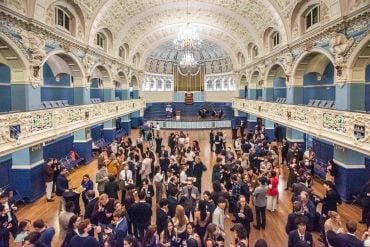 An anniversary event at Oxford Town Hall
The Clarendon Fund was established in 2001-02 following a commitment by Oxford University Press (OUP) to provide funding of £2 million per year for three years. Its founding purpose was clear: to support academically outstanding overseas graduate students through their studies at Oxford. Fast forward to 2025-26 and Clarendon has to-date provided £94 million in support of more than 3,500 outstanding scholars from around the world.
‘Supporting the Clarendon Fund reflects our mission to further the University’s objective of excellence in research, scholarship, and education by publishing worldwide,’ says Christine Richardson, OUP Group Communications Director and member of the Clarendon Fund steering group. ‘It is a powerful example of how education and research can transform lives, and we at Oxford University Press are proud to support the very best minds through the programme.’
From 2001-02 the scheme expanded rapidly and by its tenth anniversary, with increased core funding and growing partnership support from colleges, and departments and divisions across the University, all Clarendon scholars received full awards covering both course fees and a grant for living costs. Around 100 scholarships were offered each year and the programme was opened to both Home and Overseas students.
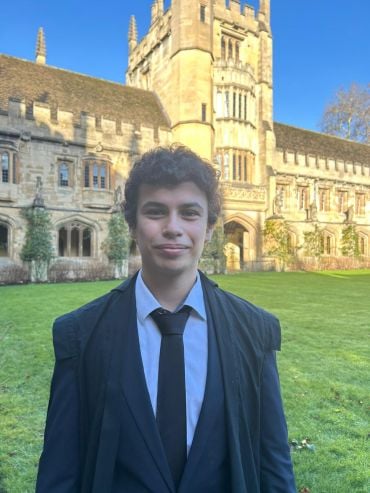 Anouar El Moumane is President of the Clarendon Scholars' Association
The community is a true highlight of my Oxford experience.
Anouar El Moumane, Clarendon scholar
In Michaelmas term 2025 the University marked Clarendon’s anniversary year with a reception at the Oxford Town Hall, bringing together around 350 master’s, MPhil and DPhil scholars, alongside supporters and partners from across the collegiate University and OUP. For many attending, the event captured one of Clarendon’s defining features: a sense of connection that extends beyond individual subject areas, and a global community that is thriving, vibrant, and diverse.
Anouar El Moumane, originally from Germany, is studying for a DPhil in Chemistry and is the current President of the Clarendon Scholars' Association. He says that Clarendon made it possible for him to attend Oxford as an international student. ‘Oxford is leading the UK in making world-class education accessible for students from all over the world. Apart from the generous financial support, Clarendon also offers a variety of academic and social events that many of our scholars frequently attend - the community is a true highlight of my Oxford experience.’
Find out more about Clarendon here.
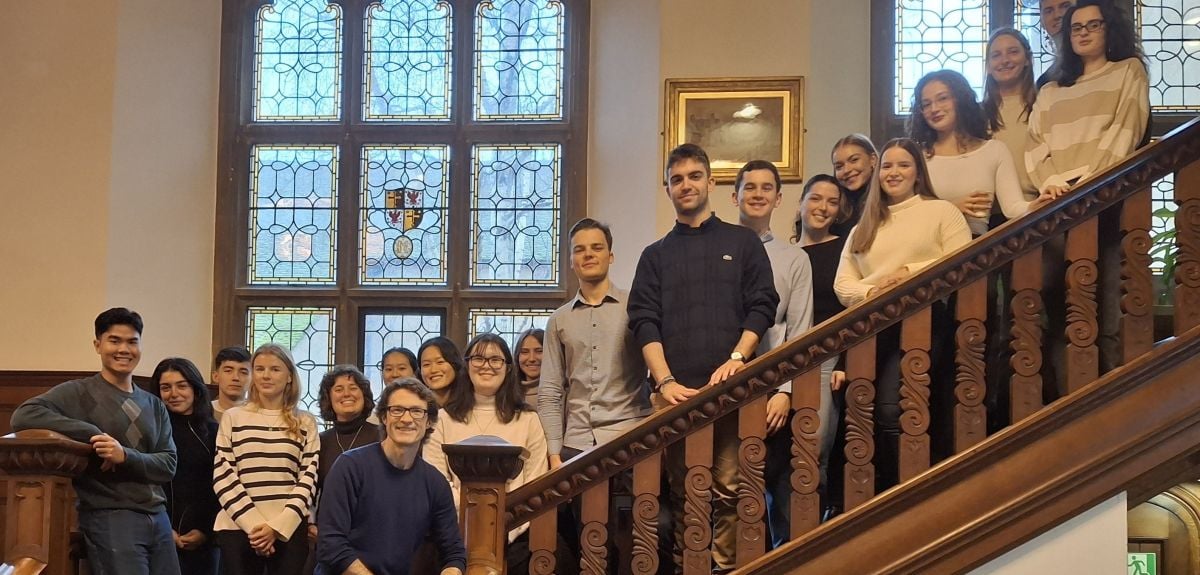
In Oxford’s Department of International Development (ODID), graduate students are grappling with pressing questions in the field of global governance at a time of growing international uncertainty and geopolitical complexity.
Associate Professor John Gledhill, originally from Australia, has been with ODID since 2011. He teaches on the MSc in Global Governance and Diplomacy, a nine-month master’s degree that examines questions of governance at international, transnational, state and domestic levels.
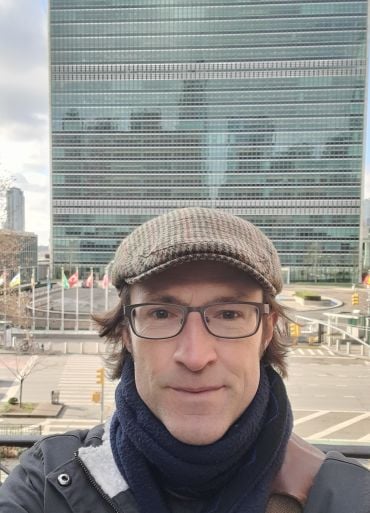 Professor Gledhill in front of the UN headquarters, New York, during a fieldwork research trip
Each year, up to 10 students take Professor Gledhill’s course, 'Peacebuilding and Statebuilding'. The seminars are deliberately small and discussion-driven, he explains, allowing students to bring their own experiences, insights and professional backgrounds directly into the classroom.
The course attracts students from around the world and from a wide range of personal and professional backgrounds. Some have lived in conflict-affected regions or have worked in the UN system or for NGOs, while others approach the subject primarily from an academic perspective.
The resulting diversity of viewpoints, says Professor Gledhill, is one of the privileges of teaching at Oxford and it fundamentally shapes the depth and quality of discussion. ‘I am a student of the students as much as they are of me – they learn from each other and draw on each other’s expertise.’
Current DPhil student, Rachel Nguyen-Morrow, has returned to Oxford after completing the MSc in Global Governance and Diplomacy in 2014 and then working for NGOs in Jordan and Afghanistan, followed by a role at the UAE Ministry of Foreign Affairs.
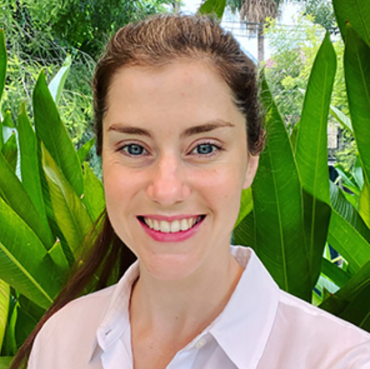 Rachel Nguyen-Morrow has returned to Oxford after several years working in the field
Reflecting on her time as a master’s student in ODID, she agrees that the depth of analysis and thinking of the cohort makes Oxford stand out. ‘It was so intense’, she says, ‘and it opened my world so much. A lot of people say Oxford changes how you think.’
Grounded in the post-Cold War experience of international peacebuilding, the course examines the evolution of international support for peacebuilding – from managing conflict during the Cold War, through fostering ‘positive peace’ by rebuilding state institutions and creating economic opportunities under the auspices of multidimensional peacekeeping in the 1990s and 2000s, and on to recent trends in an increasingly fragmented international peacebuilding landscape.
While the course structure has remained largely consistent over time, Professor Gledhill notes that in recent years the nature of classroom discussions has evolved in response to a world that has seen an increasing number of international and internationalised conflicts.
‘Peacebuilding and international contributions to peacebuilding are at a point of inflection,’ says Professor Gledhill, pointing out that there have been no new UN peacekeeping missions since 2014. As established, UN-led models of peacekeeping decline, and actors
such as Qatar and Turkey become more active in brokering peace, new contexts are reshaping the field.
Education is about critical thinking and understanding other people’s perspectives...If education can build empathy, it can contribute to sustaining peace.
John Gledhill, Associate Professor in Oxford's Department of International Development
‘Peacebuilding is phenomenally complex. There are no clear answers,’ Professor Gledhill says; and this uncertainty is central to the course. ‘Ultimately, the aim is to equip students with a way of thinking — a framework to ask critical questions, think about alternative perspectives, and recognise the potential consequences of decision-making — that they can carry into whatever roles they take on next.’
Students are encouraged to consider dilemmas such as the timing of elections in post-conflict contexts and management of the distribution of humanitarian aid in insecure environments, as well as broader questions about power and the international community’s role in peacebuilding – and whether it should have one at all.
The opportunity to engage with interdisciplinary research tackling complex issues, and to think more deeply about questions that emerged during her work, was a key reason behind Rachel’s decision to return to academic study and ODID. Her doctoral research examines how aid can exacerbate inequalities between groups, increasing the risk of conflict – an issue close to her heart.
‘Keeping up to date on the research is an important part of continual learning in the field,’ says Rachel. ‘I want to read and understand the research and effectively convert that into policy and practice in my next role.’
For Professor Gledhill, the connection between education and peacebuilding is fundamental. ‘Education is about critical thinking and understanding other people’s perspectives. Ultimately, that is also what peacebuilding is about. If education can build empathy, it can contribute to sustaining peace.’
Find out more about the work of the Department of International Development (ODID) here.

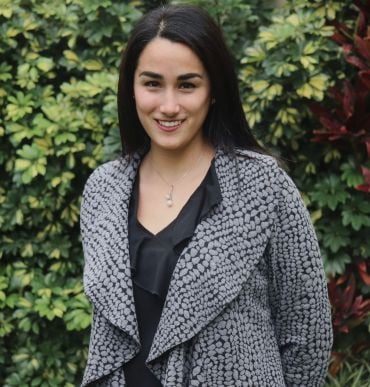 Alessandra Enrico Headrington, COMPAS
The United States’ intervention in Venezuela on 3 January 2026 marks a critical moment not only for the country’s political trajectory, but also for the future of one of the largest displaced populations in the world.
The situation before US intervention
The United States’ intervention in Venezuela has ignited questions about its legality under international law and the principles set out in the United Nations Charter. This moment reflects a broader trend in which core legal principles appear increasingly subordinated to power politics. Beyond questions of legality, it also raises deeper uncertainties about Venezuela’s political future and what leadership change might mean for the possibility of return for nearly 8 million Venezuelans displaced since around 2015.
Of the majority of those displaced, around 6.9 million are hosted by countries in Latin America, with Colombia and Peru receiving the largest numbers, followed by Ecuador and Chile, and more recently by Brazil. Since 2015, governments have granted legal stay through the provision of over 5.1 million special, time-limited residence permits. These measures allowed Venezuelans to live and work legally and were initially conceived as rapid and flexible tools to manage large-scale displacement.
This moment reflects a broader trend in which core legal principles appear increasingly subordinated to power politics. Beyond questions of legality, it also raises deeper uncertainties about Venezuela’s political future and what leadership change might mean for the possibility of return for nearly 8 million Venezuelans displaced since around 2015.
However, the limitations of this interim solution have become increasingly visible. Access to temporary permits has grown more restrictive, with the enforcement of tighter eligibility requirements and the reintroduction of border controls. While these schemes have enabled a quick path to legal stay for many Venezuelans, their temporary and conditional nature offer limited certainty about long-term protection or settlement. This policy choice is particularly striking in Latin America, where many states have deliberately incorporated the Cartagena definition into their national frameworks. This regional standard broadens refugee protection to include people fleeing widespread violence, human rights violations and serious public disorder. Under this definition, a significant share of Venezuelans could, in principle, be recognised as refugees, accessing a stronger, rights-based form of protection with greater legal certainty over time in host countries.
Nevertheless, my ongoing doctoral research at the University of Oxford with Venezuelans in Colombia, Peru and Ecuador, points to a clear pattern: many Venezuelans prefer temporary permits, despite their precarious and uncertain nature, over seeking refugee status, which is a protracted and complicated process. Temporary permits are comparatively simple and predictable – even when they involve fees.
But as the political environment shifts, broader questions are likely to arise about the sustainability of temporary permits and about what may come next for the more than 5 million Venezuelans currently living under them.
Will displaced Venezuelans return to Venezuela?
Comparative experience from other displacement contexts, such as Syria, suggests that even significant political or economic shifts in countries of origin do not automatically translate into large-scale return.
For many displaced Venezuelans, recent events symbolise the end of a political era marked with widespread human rights violations, the erosion of the rule of law, and large-scale displacement. These perceptions matter: they shape expectations about the future, influence personal and family decisions, and frame narratives around the possibility of return, even in the absence of immediate material change.
However, while the changing political situation may shape displacement dynamics, return is unlikely to be immediate or uniform.
Comparative experience from other displacement contexts, such as Syria, suggests that even significant political or economic shifts in countries of origin do not automatically translate into large-scale return. International standards make clear that return must be voluntary, safe and dignified, and premised on effective guarantees of physical security, legal protection, access to livelihoods, and institutional stability. In the absence of these conditions, and drawing on comparative experience from other protracted displacement contexts, any return is likely to remain limited and selective rather than widespread.
What may come next for displaced Venezuelans
After more than a decade spent managing Venezuelan arrivals, the question for host countries is no longer how to extend short-term legal stay, but whether this model can meaningfully evolve, or whether a different approach is needed. For most Venezuelans, medium-to long-term stay in host countries across the region therefore continues to be the more realistic horizon. This evolving situation points to three likely scenarios:
- Temporary protection as the dominant response: Temporary permits may continue to define access to legal stay across Latin America, operating largely at governments’ discretion, while refugee protection plays an increasingly limited role. As country-of-origin assessments evolve, this may affect future asylum decisions and, in some cases, the review of existing refugee status under international refugee law.
- Tighter access to legal stay and rising irregularity: Temporary permit schemes could be adjusted, affecting eligibility, duration, and in some cases their continuation. Given their discretionary nature, such shifts could increase legal uncertainty and, over time, push more Venezuelans into irregular status and onward movement.
- Selective return alongside sustained mobility: Voluntary return is likely to remain limited rather than widespread, shaped by continued uncertainty in Venezuela and occurring alongside ongoing mobility, including new departures by groups that had previously stayed in the country, some of whom supported Nicolás Maduro.
The bigger picture
The future of protection for Venezuelans will be shaped both by events in Venezuela and by political and electoral shifts in host countries. Electoral cycles and shifting domestic agendas in countries such as Ecuador, Chile and Peru are likely to influence whether existing legal protections are maintained, progressively narrowed, or increasingly reoriented towards return-focused approaches.
The future of protection for Venezuelans will be shaped both by events in Venezuela and by political and electoral shifts in host countries. Electoral cycles and shifting domestic agendas in countries such as Ecuador, Chile and Peru are likely to influence whether existing legal protections are maintained, progressively narrowed, or increasingly reoriented towards return-focused approaches.
Beyond Venezuela, these dynamics carry broader significance. The Latin American response, marked by the large-scale use of temporary permits and a more limited reliance on refugee protection, offers a revealing case of how states manage protracted displacement with precarious tools and under political uncertainty.
What happens next will affect not only the future of Venezuelans, but also how large-scale displacement is managed in other regional and global contexts, with consequences for society as a whole.
- 1 of 253
- next ›
 25-year Oxford study finds the effects of conflict last for generations
 What Louise Thompson’s campaign tells us about the national maternity crisis
 Celebrating 25 Years of Clarendon
  Learning for peace: global governance education at Oxford
  What US intervention could mean for displaced Venezuelans
  Setting the agenda for the next century of quantum
 10 years on: The Oxford learning centre making an impact
 Mapping the Moon: the world’s first lunar atlas goes digital
  Oxford and The Brilliant Club: inspiring the next generation of scholars
 New course launched for the next generation of creative translators