Features

Oxford academics will discuss major ethical issues in a series of free podcasts released over the next two months.
The Practical Ethics Bites Podcasts cover subjects such as war, euthanasia and abortion and are aimed at schools. Podcasts will be released every Wednesday until 5 November.
The podcasts will feature leading academics in the Oxford Uehiro Centre for Practical Ethics, which is part of the Faculty of Philosophy. They are professionally produced by the team behind the Philosophy Bites podcasts.
Dr Dominic Wilkinson, director of medical ethics at the Uehiro centre, is interviewed in the first podcast titled 'Should euthanasia be legal?' He said: 'These podcasts will bring ancient and modern philosophical thinking to bear on some of the most important ethical issues facing humanity today, and we hope it will engage students in philosophy, as well as a wider audience.'
Full list of podcasts:
Dr Dominic Wilkinson: should euthanasia be legal?
Professor Roger Crisp: what is virtue ethics? (release date 24 Sep)
Professor Neil Levy: free will, and its connection to moral responsibility (release date 01 Oct)
Professor Julian Savulescu: choosing the sex of your child (release date 08 Oct)
Dr Rebecca Roache: the rights and wrongs of abortion (release date 15 Oct)
Professor Jeff McMahan: is there such a thing as a just war? (release date 22 Oct)
Professor Janet Radcliffe Richards: the ethics of homosexuality (release date 29 Oct)
Dr Tom Douglas: should we allow genetic engineering on embryos? (release date 05-Nov)

With each passing day it seems that the torrent of data generated by devices such as computers and smart phones grows ever greater.
If we humans are struggling to cope with this 'information overload' then spare a thought for the machines tasked with trying to improve web searches, understand the content of video and images, translate speech, and even analyse genomes.
Machine learning, where computers figure out 'for themselves' how to perform data analysis, modelling and inference, and optimisation, finding the best solution to a problem from a set of alternatives, can help us to manage our data-rich lives. But there's a problem:
'Machine learning and optimisation are important, but they are hard for conventional computers,' Simon Benjamin of Oxford University's Department of Materials tells me. 'The tasks don't scale well. Suppose that you can 'just about' handle some particular task, but then you instead try to handle a task that is twice as complex. Then it can be vastly more difficult for the computer, practically impossible, even if you bring in lots more computers to help.'
Now a new project starting this month called Quantum Optimisation and Machine Learning (QuOpaL), jointly supported by Oxford University, Nokia, and Lockheed Martin, is setting out to explore the potential for quantum technology to enhance optimisation and machine learning tasks.
'The hope is that by harnessing quantum effects, we can tackle things in a fundamentally different way and then the learning process will scale better – allowing us to get to the really tough tasks that reach far beyond human capabilities,' explains Simon, who is leading the Oxford side of the project with Steve Roberts of the Department of Computer Science.
From search engines such as Google to the speech recognition software powering Apple's Siri, machine learning and optimisation are already part of our everyday lives but they are also at work behind the scenes in service industries and manufacturing:
'Another example is predicting things, like anticipating the supply needs of a big supermarket chain based on analysing loads of sales data from previous months,' adds Simon. 'But the applications go even further including finding the 'best way' to solve problems. For example, Intel researchers were able to show that improved computer optimisation of the design of silicon chips can reduce power consumption by 38%. These, and many other applications, are potentially areas where quantum machine learning and optimisation can help.'
QuOpaL will examine a range of approaches being developed as part of research into quantum information processing – using effects in the quantum world to store and manipulate information. One of the most promising is adiabatic quantum optimisation (and the closely related phenomenon of quantum annealing). Here, a system is initialised to a simple state and then the conditions are slowly ('adiabatically') changed to reach a complex final state that describes the solution to a computational problem. Many believe that this approach is the best way to start using quantum effects for accelerated machine learning.
'The idea that harnessing quantum physics can help with hard computing tasks has been around for nearly thirty years, and has driven a worldwide race to develop the necessary hardware,' Simon tells me. 'The exciting news is that the hardware is nearly ready! What we can now do in Oxford and in other leading labs elsewhere in the world, is to make components that meet and exceed the necessary performance figures for a real working device. Now, we have to build it!
'For machine learning in particular there is also some important theory that needs to be worked out to fully understand the best way to exploit the quantum effects for the different kinds of application. It's very timely to be starting QuOpaL - the project is up and running and we're recruiting, looking at people from all sorts of backgrounds to join this interdisciplinary project. I'm very excited about it!'
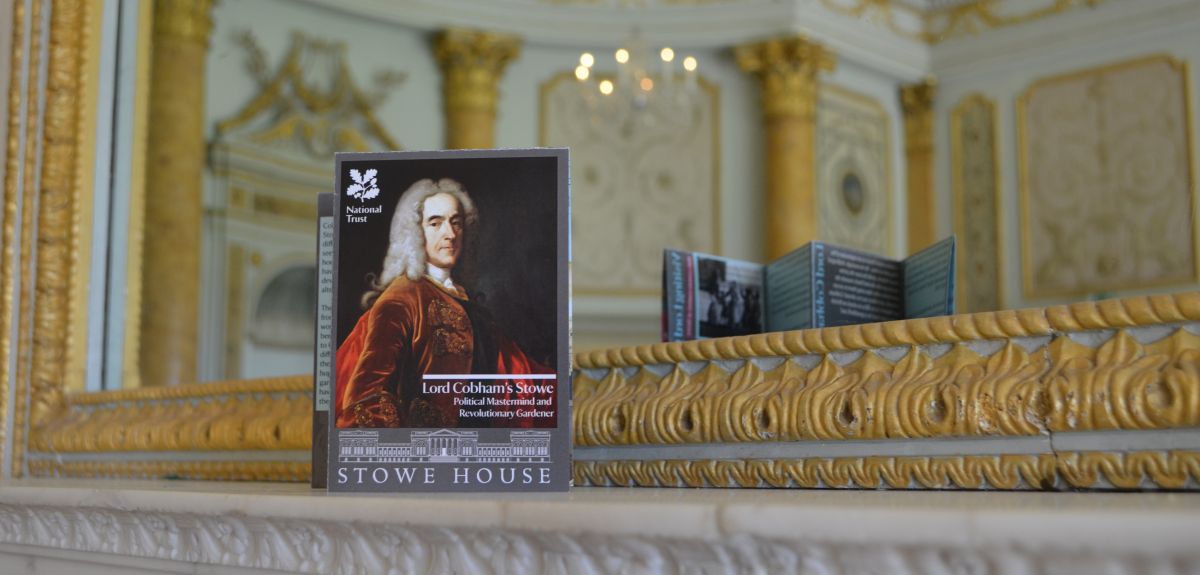
A visitor leaflet about Stowe House and Gardens compiled by two Oxford students will be launched at the historic property on Bank Holiday Monday (25 August).
Alice Holohan and Eleanor Bland, who have recently completed undergraduate degrees at the University in English and History respectively, produced the leaflet while on internships in the Thames Valley Country House Partnership scheme (TVCHP), which is a collaboration between Oxford University and some of Britain’s great country houses.
The leaflet will be available for free to visitors to Stowe and tells the story of the House and Gardens in the 18th Century, while they were owned by the soldier and Whig politician Richard Temple, Lord Cobham, who developed the estate to reflect his political views. Alice and Eleanor used a variety of sources to research the history of Lord Cobham and Stowe and they have come up with an educational and interesting account of the property.
Although there are other guidebooks and leaflets about Stowe, this leaflet is the first to connect the House and Gardens. The House is owned by the Stowe House Preservation Trust and the Gardens are owned by the National Trust.
Alice and Eleanor say: 'The leaflet lets visitors see Stowe in a new light and explore the fascinating history of this glorious place.
'We're hoping this leaflet will appeal to both Stowe veterans and newcomers alike, and will help to uncover the hidden histories of political intrigue at Stowe. Although the house and gardens have evolved dramatically over the last few centuries, you may discover that the 18th Century political scene is not so far removed from the politics of today after all.'
Dr Oliver Cox, a historian and Knowledge Exchange Fellow in the Humanities Division, set up the TVCHP scheme in 2013. He explains: 'According to an October 2013 report from VisitBritain, almost one in three tourists to the UK visited an historic house or castle, which could, in part, reflect the popularity of British costume dramas seen worldwide. Even the Oxfordshire village of Bampton has found itself the centre of global fascination as the location for some of the village scenes in the hit television programme Downton Abbey.
'The challenge is to make these properties, and the stories they contain, more accessible and relevant to a broader section of Oxford’s population. We are working with partner organisations including the National Trust, Historic Houses Association, English Heritage, Society of Antiquaries and Visit Oxfordshire, on a number of exciting, innovative and engaging projects.'
Although we encourage Arts Blog readers to visit Stowe in person, here are a few extracts from the leaflet:
Palladian Bridge
The Palladian Bridge actively demonstrates Cobham’s strong belief in free trade and empire. As the bridge crosses water, it shows the importance of expansion and exploration. This idea was strengthened by the (now lost) murals of Walter Raleigh painted inside the bridge.
 Palladian Bridge (Sally Fields, Flickr)
Gothic Temple
By building the Gothic Temple, Cobham made a clear statement about the need to create a new Britain by looking back to the past, and he put himself at the centre of this vision. This style of architecture was associated with the Anglo-Saxons, who were remembered for bringing liberty and fair government to England.
On the ceiling of the temple are heraldic shields which trace Cobham’s ancestry back to the Anglo-Saxons. This, therefore, was a bold gesture which directly aligned Cobham with those who first brought liberty to England, and strengthened the weight of his ideas.
 The Gothic Temple, by Nick (puritani35 on Flickr)
Elysian Fields
The Elysian Fields was an important part of Cobham’s political nursery, as it explores his frustration with contemporary politics. The Temple of British Worthies contains noble figures from Britain’s past, and these great historical rulers highlighted the failings of contemporary leaders.
The Temple of Ancient Virtue was placed opposite the Temple of British Worthies on much higher ground, showing that British leaders should always look up to and be inspired by ancient Greece. Next to Ancient Virtue are the remains of the Temple of Modern Virtue. Built as a ruin, this signified the crumbling nature of the modern state.
 The Temple of British Worthies in the Elysian Fields (Flickr: Stuart Dootson)

The latest crop of new words added to Oxford Dictionaries Online, from 'amazeballs' to 'zonkey', has been making headlines this month. Commentators have been amused, intrigued and even enraged by the addition of 'clickbait', 'side-eye', 'neckbeard', 'mansplain" and others.
Some of the new additions, like 'bedroom tax', have become a part of public discourse in the UK, while others reflect scientific discoveries: the 'olinguito' is a South American mammal first described in 2013.
But when it comes to more informal and unusual terms like 'air punch' and 'YOLO', how does the Oxford Dictionaries team track down new words, and how do they decide which ones to preserve?
Allison Wright, Editor at Oxford Dictionaries, explains: 'We never leave words out of dictionaries on the grounds that they aren't 'good English'. Similarly, if a word is used only in very informal contexts, or only by specific groups of people, or if it is offensive in some way, we make this clear in the dictionary entry.'
Oxford University Press operates two major language research programmes which serve as its hunting ground for new words: the Oxford English Corpus and the Oxford Reading Programme. The Corpus is made up of full-length documents, while the Reading Programme relies on an international network of volunteers, who submit shorter extracts. These are drawn from a variety of sources in English, from song lyrics to academic journals, and enable researchers to keep an eye on new words and meanings.
Once a new word has been identified, evidence is needed to prove that the word has been used in a variety of different sources, by more than one writer, before it can be considered for inclusion in one of the dictionaries. Evidence for new words must be recorded in writing, whether that means print books and newspapers, online sites and message-boards, or scripts for film and television.
In the past, a word needed to be in use for two or three years before it could be considered. The rapid pace of change in our digital world means that new terms can gain ground very rapidly, so this is no longer the case. But it does present another challenge to the lexicographers, since they now need to judge whether a new word is likely to stay with us or quickly fall out of usage. Once all these criteria have been considered, a word may be added to one of the dictionaries.
This recent crop of words was added to Oxford Dictionaries Online (ODO), a resource which aims to provide a snapshot of the ways in which English is used by people around the world today. Words are removed when they become obsolete, and entries are arranged so that the most common definitions are listed first: the first definition of 'car' is 'a road vehicle, typically with four wheels, powered by an internal-combustion engine and able to carry a small number of people'.
In June this year, we heard that 'selfie', 'flexitarian' and 'citizen science' - among more than 1000 others - were added to the Oxford English Dictionary. Unlike the ODO, the OED is a historical dictionary, which records the origins and development of each word, tracking hundreds or even thousands of years of etymological history.
Definitions are ordered chronologically, so the first definitions of 'car' include references to horse-drawn carriages, sledges and ceremonial chariots. The criteria for inclusion are more stringent: a word must reach 'a level of general currency where it is unselfconsciously used with the expectation of being understood' - if the writer always feels the need to gloss the word for the reader’s benefit, this indicates that word has more work to do. However, once a word has made it into the OED, even if it becomes obsolete, it will never be removed.
Only time will tell if 'YOLO', 'clickbait' and 'mansplain' develop the same staying power.

Romance isn't dead, but it might be nine centuries old, according to an Oxford University academic. Laura Ashe, Associate Professor of English at Worcester College and the Faculty of English has described the invention of romantic love in the literature of the Middle Ages.
'It's important to bear in mind that I don't think people have changed,' said Professor Ashe. 'People in every time and culture have fallen in love, but not every culture has written about love or valued it in the same way.
'In the 12th century, romantic love became something that was worth celebrating and exploring in songs and stories - and you only have to look at modern film and music to see that legacy is still with us.'
Before the Norman conquest of England, Anglo-Saxon literature had a very different focus, said Professor Ashe.
'The world of the Anglo-Saxon warrior, at least in poetry, was based on the bond of loyalty between fighting men. Love in this world means love for your fellow warriors, and the idea of sacrificing yourself for the group.
'In this setting, it's absurd that you might pursue personal happiness, because that could mean running away and abandoning your companions.'
In Classical literature, too, heroism leaves no time for a personal life. 'Of course the heroes of the Greek and Roman epics manage to do great deeds, but they still have to die heroically, or sacrifice themselves in other ways to a heroic destiny,' said Professor Ashe.
So what changed in the Middle Ages? 'There was a transformation in culture,’ said Professor Ashe. ‘A series of church reforms in the 12th century took Christianity from a rather austere view of God the Father to a new focus on Christ's humanity.
'The spiritual lives of ordinary people were recognised, and people were encouraged to have a more emotional and personal relationship with God as individuals. And romantic love - giving yourself to another person - provides a justification, in the medieval moral compass, for the pursuit of self-fulfilment as an individual.
'Even tragic love stories are based on the idea that the living individual is to be celebrated and that it might be better to stay alive after all.'
Professor Ashe explained that changing attitudes towards the roles of men and women may have played their part. 'These church reforms codified that marriage is a sacrament requiring free consent from both parties: the woman's choice was actively required,' she said.
'In addition, the rise of the aristocracy and a culture of conspicuous consumption created a courtly audience for romance literature, with many wealthy female patrons. Where once literature had been produced – and largely read – by monks, now the patrons and audience of literature were increasingly lay people, and women as well as men.'
In the years after the Norman conquest, most English writers worked in French or Latin. Professor Ashe's forthcoming book, Early Fiction in England (Penguin, 2015), will provide translated selections from the most important of these works.
'A lot of the 11th-12th century work has been neglected because it's not in English,' said Professor Ashe. 'Or else people make too much of the choice of language. I don't believe it's a political choice so much as a pragmatic one.
'It's only recently that we've begun to recognise these works as 'English' literature, and to acknowledge the impact that they had on the better-known later English writers, such as Geoffrey Chaucer.'
Love is still ubiquitous in the English literature of today. But why is it such a lasting preoccupation for us?
'The tragic love story sometimes seems like a contradiction in terms,' said Professor Ashe, 'Why is it enjoyable to read sad stories? There are many possible explanations, but I think one factor is that in a tragic story, sorrow is made into a meaningful pattern, even into something beautiful.
'If you allow that pain can be profound in literature, it creates a space for your own emotions to seem meaningful rather than chaotic. In the Middle Ages, the idea that suffering was in some way productive was very widespread.
'Our understanding of suffering has changed, but tragic stories still exist. Perhaps it's because there is some pain which we can't alleviate, and these stories make that more bearable.'
Professor Ashe presented a programme on this topic on BBC Radio 4 yesterday.
- ‹ previous
- 163 of 252
- next ›
 Learning for peace: global governance education at Oxford
  What US intervention could mean for displaced Venezuelans
  Setting the agenda for the next century of quantum
 10 years on: The Oxford learning centre making an impact
 Mapping the Moon: the world’s first lunar atlas goes digital
  Oxford and The Brilliant Club: inspiring the next generation of scholars
 New course launched for the next generation of creative translators
 The art of translation – raising the profile of languages in schools
  Opening a window into the quantum world
 Tracking resistance: Mapping the spread of drug-resistant malaria