Features

From fragrances and food flavourings to the building blocks of pharmaceutical drugs, fine chemicals – complex chemicals produced in small quantities to a high degree of purity – play a major role in our daily lives.
But producing these chemicals can come at a cost, both in monetary terms and the large amount of waste generated.
A new technology called HydRegen is being developed by Professor Kylie Vincent and her team in the Department of Chemistry at the University of Oxford that promises to make the production of fine chemicals 'cheaper, faster, safer and cleaner'.
The project was recently awarded an Innovate UK/EPSRC grant worth £2.9 million and was the overall winner of the Royal Society of Chemistry's Emerging Technology competition in 2013.
Dr Holly Reeve, co-investigator and manager of the HydRegen project – which takes its name from the use of hydrogen to regenerate a key molecule involved in the process – told Science Blog about this award-winning technology.
In a nutshell, what is HydRegen?
'The HydRegen technology has the potential to make the production of fine chemicals such as pharmaceuticals, flavours and fragrances cheaper, faster, cleaner and safer. Chemists increasingly turn to nature to find clever ways of making complex chemicals using enzymes isolated from the cells of bacteria and other organisms. The HydRegen technology offers a completely new way of harnessing the incredible selectivity of these enzymes and will allow enzyme pathways to be implemented into existing chemical synthesis strategies much more easily.'
What are some of the problems with manufacturing fine chemicals at present?
'Many of the traditional methods for making fine chemicals suffer from a lack of selectivity and generate large quantities of waste. These problems mean that expensive purification strategies are usually required to obtain the desired chemical with the level of purity required by the fine chemicals industries.
'One method for increasing the selectivity and decreasing the waste associated with a chemical processes is using a catalyst which not only speeds up a reaction but, if designed correctly, allows generation of only the desired product. In industry, metal catalysts are often used; however, these metals tend to be very expensive, highly toxic and are in finite supply. Tuning the selectivity of these metal catalysts is still a considerable challenge for this area of research.
'Fine chemicals companies are starting to rely on biological catalysts (enzymes), which can be extracted from cells grown in the laboratory and which catalyse reactions with near-perfect selectivity. Enzymes catalyse these reactions under mild, and therefore less energy intensive, conditions.
'However, complicated strategies are required to allow enzymes to function outside of cells because they often require an additional biological "helper" molecule to be able to work. At present, carbon-intensive methods are required to sustain enzyme catalysis by recycling the expensive helper molecule.'
How does the HydRegen technology aim to solve these problems?
'HydRegen uses hydrogen gas to regenerate the helper molecule required for biocatalysis. The technology allows enzymes to be handled in a similar way to the metal catalysts which are currently used for hydrogen addition reactions (hydrogenations). The overall reactions are 100% atom efficient, meaning that there is almost no waste produced.
'We can carry out these reactions in pure water and therefore avoid using harsh solvents. We also use the enzymes immobilised on carbon supports, which means they can be easily removed from solution and re-used, both increasing product purity and decreasing costs associated with enzyme production.'
What types of chemicals are you focusing on?
'We are focusing developments of the HydRegen technology towards the fine chemicals industries (pharmaceuticals, flavours and fragrances) as these industries benefit most from an increase in selectivity and highly pure products.
'In particular, the HydRegen technology facilitates the addition of dihydrogen to a molecule to generate a "reduced" product. These kinds of reactions are essential to the production of the active ingredients in pharmaceuticals. We have also demonstrated other reaction classes of interest to the flavour and fragrance industries.
'Overall, this technology will play a part in making the fine chemicals industry more environmentally and economically sustainable.'
What are the next steps for HydRegen?
'The technology has been demonstrated for a range of key reaction steps, but only on a very small scale (<1 mL).
'We have now been awarded £2.9 million from EPSRC via the Innovate UK Industrial Biotechnology Catalyst scheme. This funding is for a five-year research project to tackle the academic challenges associated with scaling up production of the enzymes we utilise; to demonstrate the technology for scale-up of an industrially relevant reaction; to investigate methods for implementing the technology in industry-standard reactors; and to evaluate how the technology performs in comparison to existing chemical and biochemical synthesis routes. The planned work should bridge the so-called "valley of death" which often stops early-stage technologies making it to market.'

The opening dramatic performance of a festival to celebrate Russian composer Igor Stravinsky was met with a standing ovation last weekend.
Standing in the wings of London's packed Royal Festival Hall was series consultant Jonathan Cross, who is Professor of Musicology at Oxford University.
Four years earlier, he had been approached by the Philharmonia Orchestra with the idea of a Stravinsky series.
Professor Cross was an obvious choice for the role of series consultant – he wrote a highly-regarded book on the composer in 1998 and was in the final stages of writing a biography of Stravinsky which was published last year by Reaktion.
He says his role in the festival, called Stravinsky: Myths & Rituals, was a refreshing change from his usual academic pursuits.
'As a scholar, it was great fun to have a direct engagement with the professional musical world,' he says.
'Working alongside the Philharmonia and their principal conductor Esa-Pekka Salonen has been a huge privilege. It's rare one has the opportunity to influence concert programming in this kind of way.
'The Philharmonia Orchestra was also keen to surround its concerts with all kinds of other materials, so I found myself advising them on films and other digital materials for their interactive website. I also oversaw and contributed the bulk of the 80-page programme book. I am now leading study days and giving talks before their concerts.'
Professor Cross is particularly excited by the challenge of encouraging audiences to listen to some of Stravinsky’s lesser-known works.
'Although he is such a well-known name, actually only a handful of his works are ever played – even I have not heard all of them live before,' he says.
'It is still challenging to audiences to hear these pieces they are not familiar with, so I’ve had to think of ways to get an audience to take a risk and give them a go. I hope that in some way they are changed by what they encounter.'
One of Professor Cross' aims for the festival is to help people to put Stravinsky into context.
'I want people not just to hear Stravinsky's pieces as abstract music, but to think of the composer whose life was affected by two World Wars, Revolution, emigration and tragedy, and how that context left its mark on his music, and how his music in turn left its mark on the 20th Century,' he says.
The research that went into Professor Cross' biography of Stravinsky has informed the planning of the festival. Critics praised the book for offering a fresh perspective of Stravinsky in a number of ways.
'The idea of loss and lament in his music is a key and under-explored issue,' says Professor Cross.
'A lot of his music seems playful and fun on the surface, but I hear a sense of distance and exile running deep through his music. Though he spent most of his life living elsewhere, he always seems quietly to be lamenting the loss of his native Russia. It's a key theme.
'My book also attempts to place the composer in Art Deco Paris, where he worked for twenty years. I believe it shaped his music, and in turn contributed to that environment.'
There are still tickets available for all remaining performances in May, June and September, and all the concerts are being broadcast on BBC Radio 3. In the meantime, Professor Cross encourages music students at school or university, or indeed any interested members of the public, to explore a dedicated interactive website on Stravinsky set up specially for the festival.

Oxford University's Museum of Natural History has been named 'best of the best' of all UK museums at the Museums + Heritage Awards for Excellence 2016.
This was the top category in the awards which are likened to the 'Oscars of the heritage sector'.
The Museum also won best 'project on a limited budget' for its Dodo Roadshow, which saw the Museum’s dodo specimen travel from Land's End to John O'Groats in just eight days, touring 24 museums and galleries on the way.
The Museum shows no sign of resting on its laurels. Next Friday it will open its latest exhibition, Microsculpture: The Insect Portraiture of Levon Bliss.
It features tiny insect specimens from the Museum's collections, which have been photographed by photographer Levon Bliss and transformed into large-format, illuminated installations.
The exhibition opens on 27 May and, in the meantime, readers can browse its interactive website.
The Bodleian Libraries also scooped the best marketing award for their campaign around the acquisition of their 12 millionth printed book, Percy Bysshe Shelley's 'Poetical Essay'.
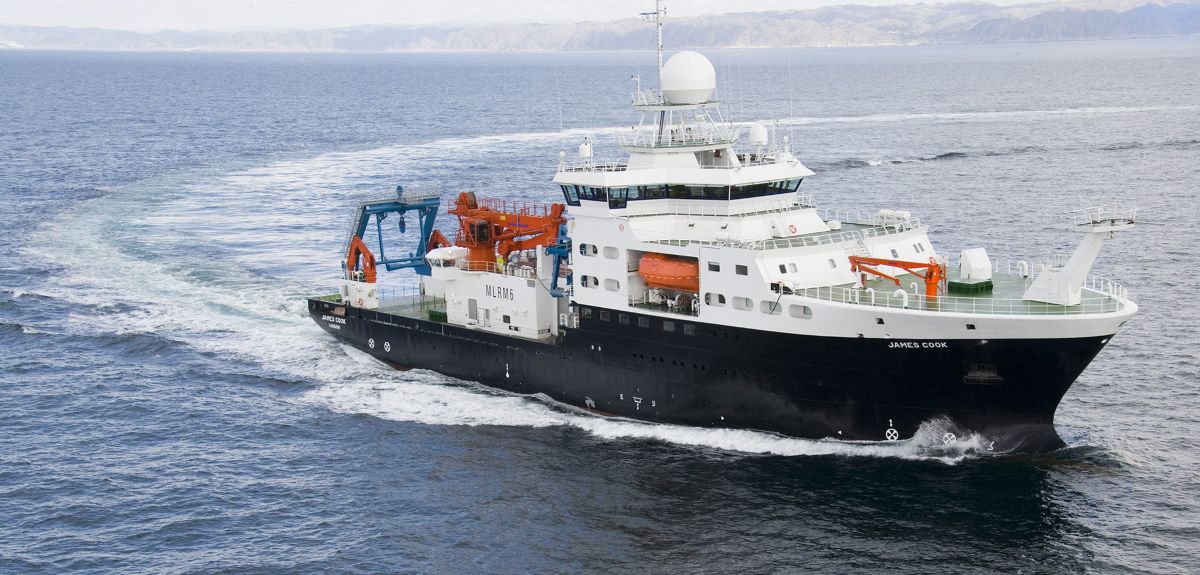
A team from Oxford University has teamed up with colleagues at Plymouth for a six week voyage of discovery around the North Atlantic on UK research ship RRS James Cook.
the James Cook will visit seamounts across the Northeast Atlantic so that the researchers can use a remotely operated vehicle to collect corals, sea urchins and sea cucumbers to try to find out what drives genetic variation across this area at different depths.
The map below shows the latest position of the ship so that you can where the Deep Links team are carrying out their research.
A team from Oxford University has teamed up with colleagues at Plymouth for a six week voyage of discovery around the North Atlantic on UK research ship RRS James Cook, as the Science Blog found out.
Until the fuss around #BoatyMcBoatface, the UK's fleet of Royal Research Ships (RRS) has been little known beyond the scientists who use them and the odd maritime enthusiast. But they are a vital part of understanding our oceans and much in demand.
Very little is known about how well connected deep-sea organisms are over depth and across local, regional and oceanic distances.
Dr Michelle Taylor, Ocean Research and Conservation Group, Department of Zoology
The opportunity to make a sea-going expedition is therefore rare, explains deep sea ecologist Dr Michelle Taylor, one of those leading the 16-strong team, which set sail on 14 May. Amidst final preparations, she notes that the last sea-going expedition her lab undertook was a NERC-funded expedition on the same vessel, the RRS James Cook, to the South West Indian Ocean in 2011.
This year's opportunity may, on the face of it, seem a little less exotic. The Northeast Atlantic is closer to home for starters. But look beneath the surface - literally in this case - and things get more interesting.
The expedition is part of the Deep Links project, as Dr Taylor explains: 'Very little is known about how well connected deep-sea organisms are over depth and across local, regional and oceanic distances. Species populations are connected to each other through both movement of adults – migration – and the movement of eggs, larvae, and juveniles – dispersal. If populations become isolated from one another so they are no longer connected, then through genetic mutation, drift and natural selection, they may become so different that they evolve into new biological species, a process called speciation.
'Understanding how populations become isolated is critical to understanding the process of speciation. In the marine environment, many species, such as corals, do not move as adults or move very slowly, sea urchins for example. This means that for different adult populations to remain connected they rely on dispersal of early life history stages. Most marine species have a larval stage that lives in the water column for a period of time, moving with the currents, before settling in a new area. It is larval dispersal that keeps distant populations connected. So understanding patterns of larval dispersal is important for understanding connectivity.'
The practical upshot of that ambition is that the James Cook will visit seamounts across the Northeast Atlantic so that the researchers can use a remotely operated vehicle to collect corals, sea urchins and sea cucumbers to try to find out what drives genetic variation across this area at different depths.
'Such information is important in defining the size of and specific areas that should be targeted for conservation or closed to destructive activities,' says Dr Taylor.
Even a few years ago that might have been a less pressing question but the move towards more and more use of the sea, especially for deep sea mining, means that we can no longer take for granted that these areas of the ocean will be undisturbed.
'Governments all over the world are setting up networks of Marine Protected Areas (MPAs) to protect against serious ecosystem disturbance. There are many questions to be answered when trying to set up an MPA network, but one important question is where to put them to make sure that the populations that live within them are not isolated from each other but are connected. This research will help answer this question in the deep sea, and so help us ensure the long-term health of the ocean.'
Life on board
The aim is to gather as much information as possible during the six weeks, so every member of the science crew will be on a 12 hour shift, a necessity when undersea surveys can be 18 hours long.
Depending on if you are on days of nights you will wake for breakfast or for the evening meal, which makes for an unusual array of breakfast choices.
Dr Michelle Taylor
Dr Taylor says: 'Depending on if you are on days of nights you will wake for breakfast or for the evening meal, which makes for an unusual array of breakfast choices in addition to the usual cereal options.
'Both shifts will have similar responsibilities. These include watching the live video feeds from the remotely operated vehicle, Isis, recording animal locations as well as selecting which organisms will be sampled and, at the end of the survey, brought back to the surface.
'We therefore also have scientists to sub-sample the organisms on the ship – work that is undertaken in a 4 degree cold room, the temperature of the deep-sea. They record images of the organisms and curate them. There is always a lot of computer based curation too for the images and data from each animal. Taxonomists on board will also be doing a lot of identifications.
'There is lots to do and no day is likely to be the same.'
Once back on dry land, the team will analyse their results and what they have gathered. Overall, Deep Links is a three year project.
You can follow the voyage on the Deep Links website or by using any of the links on the right.
- ‹ previous
- 126 of 253
- next ›
 Celebrating 25 Years of Clarendon
  Learning for peace: global governance education at Oxford
  What US intervention could mean for displaced Venezuelans
  Setting the agenda for the next century of quantum
 10 years on: The Oxford learning centre making an impact
 Mapping the Moon: the world’s first lunar atlas goes digital
  Oxford and The Brilliant Club: inspiring the next generation of scholars
 New course launched for the next generation of creative translators
 The art of translation – raising the profile of languages in schools
  Opening a window into the quantum world