Features

Tatjana Gibbons, a DPhil student at Oxford’s Nuffield Department of Women's & Reproductive Health, talks about research to develop a new 20-minute diagnostic test for endometriosis.
Around one in ten women will develop some form of endometriosis in their lives, a disease that affects more than 190 million women worldwide.
Yet despite its common occurrence, it typically takes eight years for a diagnosis – a figure that has shown no sign of improving in the past decade. The problem is that it typically involves several visits to the GP and hospital referrals, multiple scans and often surgery to diagnose.
Not only does this leave patients suffering for a significant period of time, but it can also require unpleasant and invasive procedures.
Aside from the pain, discomfort and worry about an ongoing undiagnosed condition, an important issue is its effect on fertility when left unchecked. A national questionnaire we conducted with over 1000 respondents with confirmed or suspected endometriosis found that 88% of respondents had experienced a delay in diagnosis, and 72% felt that an earlier diagnosis would have changed their life choices with regard to decisions such as fertility planning. With earlier diagnosis, it is possible to treat both the pain and discomfort as well as to begin to consider fertility options such as freezing eggs for the future.
The problem with diagnosing endometriosis is that small lesions in the pelvis are not detected on ultrasound and often need surgery to detect. This is why we are assessing alternative ways of looking inside the body without being invasive.
Our research group is conducting the DETECT (Detecting Endometriosis expressed inTEgrins using teChneTium-99m) imaging study, to investigate whether an experimental image marker (⁹⁹ᵐTc-maraciclatide) that binds to areas of inflammation can be used to visualise endometriosis using a 20-minute scan. In endometriosis, small parts of the lining of the uterus – the endometrium – are found in the fallopian tubes, ovaries or in the pelvis (for example, attached to bowel). The presence of the endometrium outside of the uterus leads to inflammation in the pelvis, which this test will aim to highlight.
If this is successful, it will give us a fast and effective way to identify any case of endometriosis, as well as assessing how serious the patient’s individual condition is and may even be able to distinguish between old and new disease.
Professor Christian Becker, who is Co-Director of the Endometriosis CaRe Centre in Oxford together with Professor Krina Zondervan, Head of Department at the Nuffield Department of Women’s and Reproductive Health, University of Oxford, will lead this initial study on women due to have planned surgery for suspected endometriosis.
Two to seven days before their operation, the participants will be invited for an imaging scan which will compare the suspected locations of disease detected on the scan and in surgery to confirm whether this imaging test matches what is found.
The beauty of this approach is that, if successful, it will provide a quick, painless and affordable option for tens of millions of women worldwide.
To read more about this research project and the partners involved, please visit https://www.wrh.ox.ac.uk/news/new-imaging-study-could-make-diagnosing-endometriosis-quicker-more-accurate-and-reduce-the-need-for-invasive-surgery
The study is being carried out in partnership with Serac Healthcare, a UK-based developer of breakthrough imaging technology.
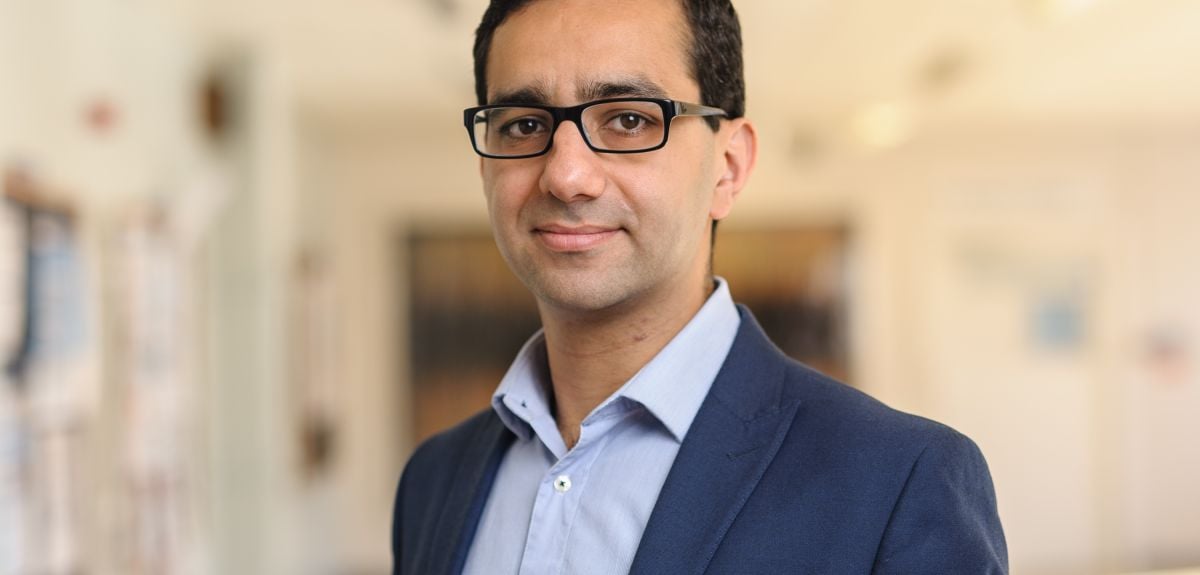
Professor Sarosh Irani of the Nuffield Department of Clinical Neurosciences
Today – Wednesday, 22 February – is World Encephalitis Day.
Encephalitis is a brain condition which I have encountered many times throughout my career, witnessing first-hand the devastating impact that it can have on patients and their family and friends.
My team in Oxford work to improve the diagnosis, treatment and after-care for patients with autoimmune forms of encephalitis. Discoveries to improve patient care is what drives everyone in my research group and clinic, and is what led me to become a member of the Encephalitis Society’s Scientific Advisory Panel.
Our work has focused on the autoimmune forms of encephalitis, where one’s own immune system attacks the brain in error, leading to brain swelling. We work hard, with our patients and their carers, to better understand diagnosis, the underlying cause of the diseases and patient outcomes. We have over 150 publications in this area, and aim to produce many more over the next few years.
Another key aspect of my work is improving awareness of encephalitis among the general public and fellow healthcare professionals in the hope that it can eventually lead to a quicker pathway for patients to get the care they need.
Shockingly, a YouGov poll commissioned by the Encephalitis Society has found that around 8 out of 10 people do not know what encephalitis is, which is why I would like you to spare a few moments and read the following facts:
1. Encephalitis is an inflammation of the brain
2. It is caused by an infection or through the immune system attacking the brain in error
3. Anyone can be affected by encephalitis, irrespective of age, gender or ethnicity
4. It can have a high death rate and survivors might be left with an acquired brain injury and life-changing consequences
5. In some cases, encephalitis can impact mental health, causing difficult to deal with emotions and behaviours, and can lead to thoughts of self-harm and even suicide
To add our support to this very important day on the calendar, my colleagues and I have been wearing red today as part of the Encephalitis Society’s #Red4WED social media campaign and, this evening, I am delighted to say that the University of Oxford’s Ashmolean Museum will be among 200 global landmarks, including Niagara Falls, Piccadilly Lights, and the CN Tower in Toronto, lighting up red for World Encephalitis Day.
Finally, if you are a social media user, I urge you to take some time this evening and search for the hashtags #WorldEncephalitisDay, #Red4WED and #encephalitis for a wonderful example of what can be achieved when a community comes together with a special goal in mind – to shine a light on encephalitis.
For more information, visit www.worldencephalitisday.org
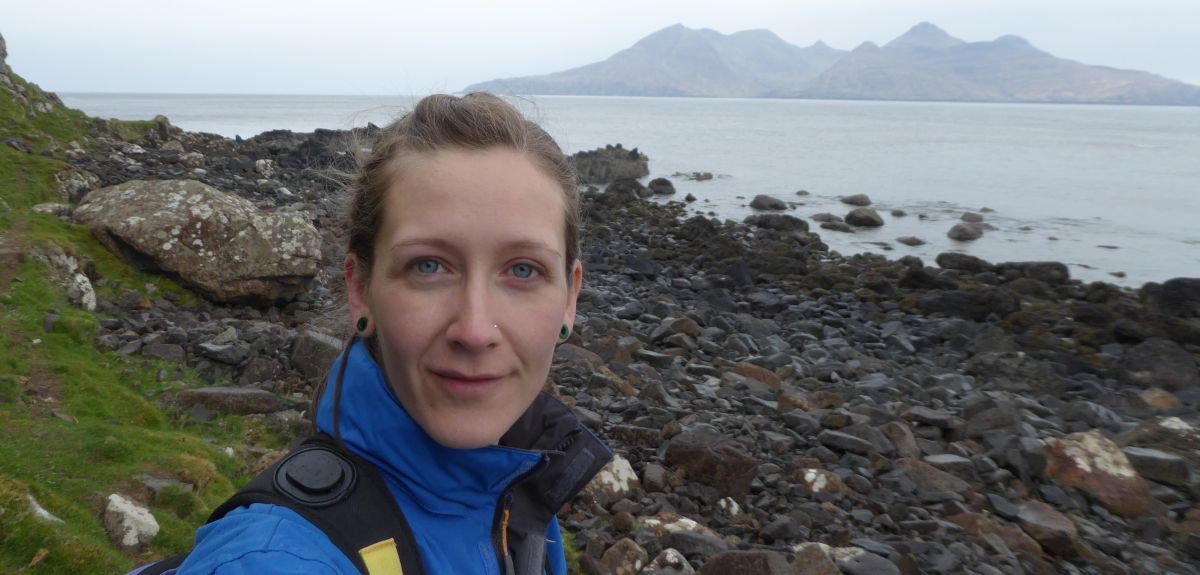
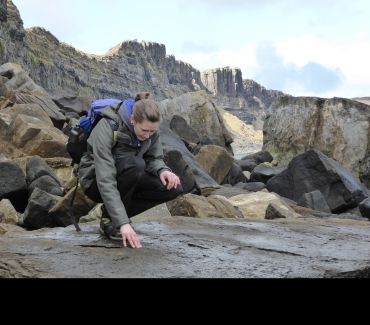 Dr Elsa Panciroli during fieldwork on the Isle of Skye. Credit: Elsa Panciroli/Davide Foffa
I am a palaeontologist who uses X-ray tomography and digital visualisation to understand the anatomy and growth of the first mammals and their closest relatives. My work focuses on mammals from the Mesozoic, the era of Earth’s history lasting from about 252 to 66 million years ago, comprising the Triassic, Jurassic, and Cretaceous Periods.
Of course, this includes giant dinosaurs, but it is also when the foundations were laid down for all the modern groups of animal life, including mammals, birds, reptiles, amphibians, and lizards.
People often assume mammals only appeared after the asteroid wiped out the non-bird dinosaurs, but that is not the case. Mammals appeared in the Triassic, at the same time as the dinosaurs, they were diverse and exploited a variety of different ecological niches. The group to which mammals belong stretches back even further in time, and is much more exciting than most people realise.
In traditional school text books, the dinosaurs are shown as the dominant species and the mammals as tiny things, almost an afterthought, scurrying away in the background. But these early mammals were actually highly successful?
Yes indeed – mammals may have been small during the Mesozoic but they were undeniably successful little animals. Many were insect-eaters, but there were also herbivores and carnivores. They were playing a fundamental role in the wider ecosystem. Some could glide like flying squirrels, others could dig like moles or were semi-aquatic. Furthermore, they were also doing something really exciting by forming a new, unique type of organism: one with warm-blood and fur that gave birth to live young. This had never been done before.
You have carried out a lot of fieldwork on the Isle of Skye. What makes this site so special?
The Kilmaluag Formation on the Isle of Skye, Scotland, provides one of the richest Mesozoic vertebrate fossil assemblages in the UK, and is emerging as one of the most important globally for Middle Jurassic tetrapods. It compares with localities such as Morrison Formation in North America, or the Yanliao Biota in China. Fewer species have been found on Skye, but they are exceptionally complete and well preserved. I have been doing fieldwork there since 2016, but I grew up in the Highlands and Islands, so the area is very special for me. As someone who loves the mountains, being able to work in sight of the Cuillin always feels special.
What is it like doing fieldwork there?
I mainly work on the southern part of the island, where rocks from the Middle Jurassic are exposed on the seashore and eroded very slowly by the waves. Normally we only have time to visit one site each day and this will be dictated by the tide times. The area is a Site of Special Scientific Interest (SSSI), as well as falling under Scotland’s new Nature Conservation Order (NCO) designation, for its geology, including fossils.
We do not just collect anything on the off-chance it contains a fossil. We make a judgement call on which rocks look the most promising, and only collect those. Usually, only a tiny fragment of fossil is visible on the rock surface and it is often obscured by seaweed and limpets. So it can be hard to tell how much more may be hidden inside.
Tell us about your work at the Oxford University Museum of Natural History (OUMNH)
The OUMNH has an impressive collection of Mesozoic mammal fossils collected locally at Stonesfield and at Kirtlington. They come from the same age rocks as Skye, so I use them to compare with the new Scottish fossils we find. The Stonesfield specimens are the first Mesozoic mammals fossils ever identified, back in the early 19th Century, making them historically important as well as scientifically invaluable. The specimens from Stonesfield are almost entirely individual teeth – no bigger than grains of cous cous. But we can still work out an incredible amount from these, especially using new techniques such as synchrotron scanning to examine the microstructure. From this we can work out their age and how quickly they grew.
Tell us about your book Beasts Before Us - The Untold Story of Mammal Origins and Evolution. How did that come about?
Most books about mammalian evolution start at the end of the Cretaceous, but their evolution stretches right back over 300 million years. I write about the incredible creatures related to mammals that lived long before the dinosaurs. The book also tells untold human tales; of indigenous people who knew about these fossils long before European settlers appeared, and pioneering female scientists who ought to be household names.
I first started writing about these amazing things when I was a Masters student. Eventually, I realised I had more than enough material to write a book. I pulled together all my blogs, published articles and notes, then organised two months to write the book. Then there was a global pandemic… so I ended up with a lot of free time to finish the manuscript. It was published in June 2021, and the feedback has been so positive. I was so excited when The New York Times review called it ‘smart, passionate and seditious’ - I don’t think many books about fossils can claim to incite rebellion! It also led to lots of talks and outreach work.
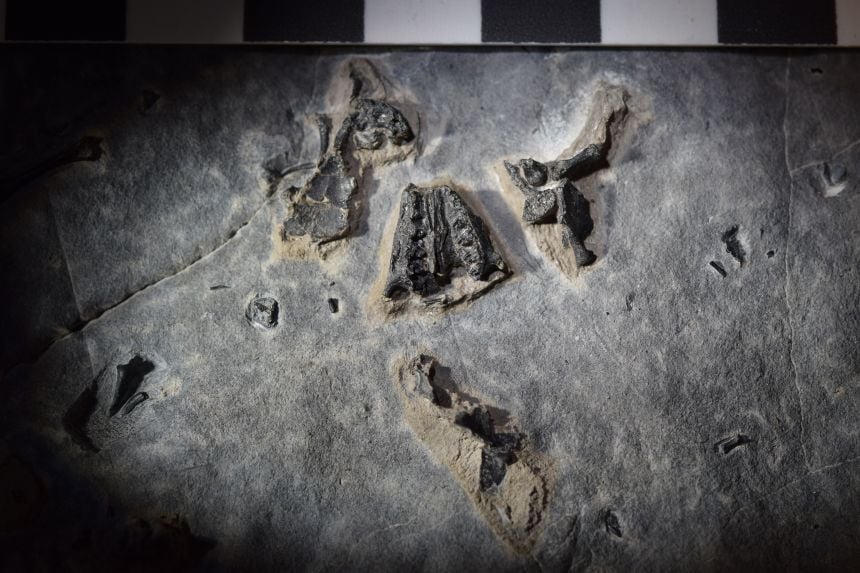 Skull bones of the Jurassic mammal Borealestes serendipitus from the Isle of Skye. Credit: Elsa Panciroli
And you have a new book out too?
Yes, The Earth: A Biography of Life came out in April 2022. It uses a series of different organisms – including plants, single-celled organisms and animals – to take you through the great events and evolutionary innovations in earth’s history. It is very visual too, with stunning illustrations, including some by the talented palaeoartist Grace Varnham. There are so many amazing stories in evolutionary research I could write a book every year and I still would not tell everything. The book has inspired the upcoming exhibition Connected Planet at the University of Oxford Museum of Natural History; it will explore the oceans, land, and air around us to witness this dynamic connection and see what happens when the balance tips.
You are also quite an artist…
I don’t think of myself as an artist, but I do enjoy creating visual interpretations of the fossil specimens we discover. The art world can be a bit dismissive about palaeoart, and it is sometimes portrayed as just drawing dinosaurs for children. But modern palaeoart is a dynamic and cutting-edge specialism that just happens to depict extinct animals.
Really good palaeoartists need to know a lot about the science of palaeontology, besides animal anatomy and behaviour. These artworks serve a really important purpose in acting as a bridge between scientists and the public.
Were you always interested in geology and ancient mammals?
As a child, I was absolutely fascinated by rocks and used to collect them everywhere I went. But, growing up in the rural highlands (my primary school only had about 15 pupils), I didn’t have access to libraries and museums and I couldn’t learn much about the science of geology, so I would just make up my own names for the rocks I collected. After finishing secondary school, I didn’t know what I wanted to study, so I just started working and did all sorts of jobs from working in garment factories to cleaning houses. I travelled to various countries and in my late 20s I realised the one thing that always interested me was the natural world. So I enrolled at the University of the Highlands and Islands as a mature student to study Environmental Sciences.
At first, I expected to go into conservation, but in one class we looked at palaeoclimatology, and that got me thinking about deep time and the study of rocks and fossils – stuff that was properly old, millions of years. And that was it, my course was set.
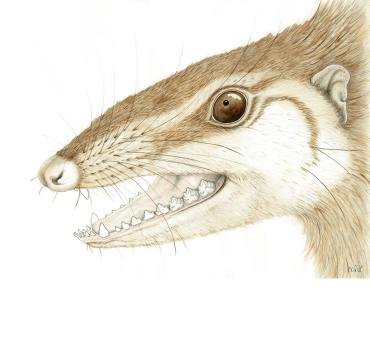 Palaeoart reconstruction of the Jurassic mammal Wareolestes rex. Artist: Elsa Panciroli
From there, I did an MSc in Palaeobiology at the University of Bristol, studying ankle bones in fossil mammals. The shape of the ankle is linked to how an animal moves, so I used them to predict whether a fossil species was a digger, a climber, and so on. It is amazing what you can tell about a species’ lifestyle from a single tiny bone.
In 2015 I started a PhD at National Museums Scotland on Scottish mammal fossils from the Middle Jurassic, which is when I started working on the Kilmaluag Formation on Skye. And I have pretty much continued this work up to today, joining Oxford University’s Department of Earth Sciences in 2019. I took up my current role as a Leverhulme Early Career Research Fellow at Oxford University Museum of Natural History in 2020.
What would the young Elsa think of your work now?
I think she would be amazed I was spending my time studying really cool fossils in Scotland. When I was a child, I always wished experts would visit our school and teach us more about rocks and fossils. Remembering this inspired me to create the Scottish Fossil Workshops programme, which was a two-hour workshop I created in 2019. It was specifically designed for primary schools in rural parts of Scotland – places that don’t usually get school visits because they are hard to get to, or don’t have very many pupils. I even returned to my own school.
What is next? Where do you see yourself in the future?
I am not the sort of person who makes 10 or even five year plans, I like to take opportunities as they come. I will definitely keep writing books, and I feel there are so many exciting niches within palaeontology and questions to ask, I could dedicate my entire career to answering them, funding permitting!

By Dr Louise Dalton and Dr Elizabeth Rapa of Oxford's Department of Psychiatry.
Every day, thousands of parents and grandparents are diagnosed with serious health conditions such as cancer, lung or heart disease. They are then faced with the unenviable task of sharing this information with the children they love.
Research has shown that effective communication with children about parental illness has long term benefits for children and their family’s physical and mental health. These include better child psychological well-being, as well as lower reported symptoms of depression, anxiety and behavioural problems. It also has benefits for parental mental health, adherence to treatment (such as following the prescribed drug regime) and family functioning.
However, adults find sharing a diagnosis with children one of the most difficult experiences. Understandably, they want to protect children from distress and many feel uncertain about whether children need to be told, or when and how to navigate these sensitive conversations. Yet, children are “astute observers” and are often acutely aware of changes within the family. Silence about what is happening risks children misinterpreting the situation and worrying alone, without access to the emotional support they need.
Previous research has found that patients want help from their clinical team to think about what, how and when to share their diagnosis with children, or how to answer questions such as “Are you going to die?” – but often report finding this support difficult to find. However, few studies have asked healthcare professionals about how they perceive their role regarding the needs of patients’ wider families. A team from the Department of Psychiatry interviewed 24 NHS clinicians from different professional backgrounds and working across a range of specialties to find out more about their views and experiences regarding the needs of patients’ children.
Our latest study, published in PLOS One, found that although patient’s family details were often recorded, this information was not routinely used to help patients share their diagnosis with children. In other situations, patients’ relationships with children were rarely or never identified.
The NHS healthcare professionals who took part reported feeling uncertain about asking patients about what children understand. They feared that they would make the situation worse or upset their patients.
“What can I say, what if they are in pieces, what do I do with that at that time of day? It seems a bit crass to enquire about something you aren’t in a position to help with.” GP
“Your worst fear is saying the wrong thing” Oncology
It was also frequently assumed that someone else in the clinical team would talk to the patient about their children, but often this meant opportunities for these conversations were missed.
“How that is dealt with, I am not really in the loop. […] So you don’t really know what happens to those children in terms of who says what to them. Someone might, but not me.” Surgery
Because you are talking to them [adult patient] directly, you tend to leave it to them to approach that [talking to their children]. Not that that is necessarily right, but it is the way it tends to happen.”
Others recognised their vital role and the importance of “thinking about the children and the family as whole” and being honest about the reality of the patient's situation.
“Don’t ever tell your child an untruth, don’t say ‘It’s all going to be fine, I am going to live forever’. Be truthful.” Neurology
While acknowledging the multiple demands on healthcare teams, the authors recommend a culture shift in recognising that talking to children about their parent's illness improves family relationships and mental health. Sharing patients’ desire for support from their clinical team around these issues may reassure healthcare professionals that initiating a conversation about children will be welcomed. Indeed, clinicians can play a key part in reassuring and guiding families to open up this sensitive topic with children. Working in partnership, healthcare professionals and families can protect the psychological well-being of children who are affected by the illness of an adult they love.
This is an important area to get right and a programme of research led by Dr Louise Dalton, Dr Elizabeth Rapa and Professor Alan Stein focusses on facilitating family centred conversations with clinical teams in every discipline. The team are currently developing a resource for all healthcare professionals to help them identify children who are important to their adult patients irrespective regardless of their patients’ diagnosis or age. This will be freely available to everyone and show professionals how four short steps during a consultation could have huge benefits for their patients and loved ones, with a lasting legacy for children’s psychological wellbeing.
The study, 'Exploring healthcare professionals’ beliefs, experiences and opinions of family-centred conversations when a parent has a serious illness: A qualitative study', can be read in PLOS One.
By Maria Czepiel, who has recently submitted her doctorate and is a stipendiary lecturer at Brasenose and Balliol colleges. Her DPhil was in the Faculty of Medieval and Modern Languages and funded by the Open-Oxford-Cambridge Doctoral Training Partnership.
Garcilaso de la Vega (1501-1536), Spain’s greatest Renaissance poet, was in equal parts man of action and bard: as he writes in one of his poems, his life consisted of taking up ‘now the sword, now the pen’ (‘ora la espada, ora la pluma’).
He was part of the court of the Habsburg king and Holy Roman Emperor Charles V, and took part in battles and campaigns in Europe and North Africa. However, his career was not without hiccups; in 1532, he was condemned to exile by the king for having participated in the wedding of his nephew (which did not have the king’s approval). He spent some months confined to an island on the Danube near Ratisbon, before being sent to Naples in the service of the Spanish viceroy. In the years that followed, he reported to the king on various sensitive political and diplomatic issues, which seems to have earned him back the monarch’s good graces. He died of wounds received in battle in 1536.
While I was studying for my DPhil, I came across a 16th century printed book of Latin poetry...I was excited to find previously unidentified copies of the three Latin odes by Garcilaso.
As a poet, he is particularly famous for introducing classical and Italian forms such as eclogues, elegies and odes into Spanish poetry. As well as writing in Spanish, in his day, Garcilaso was also praised for his poetry in Latin. Unfortunately, until recently only three of his Latin odes were extant. We also knew, from a letter by the Italian humanist and poet Pietro Bembo, that Garcilaso had dedicated an ode to him, and that Bembo was especially pleased by it, but no copies of it survived.
While I was studying for my DPhil, I came across
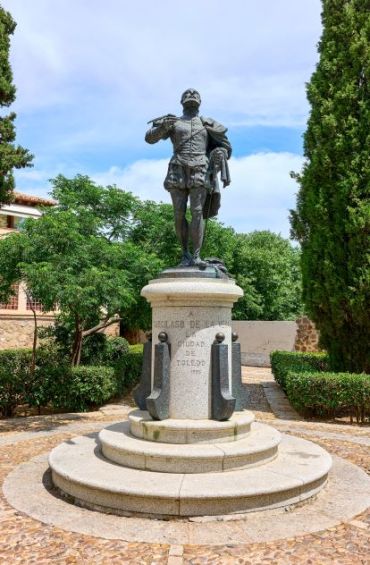 A statue of the renowned Garcilaso de la Vega in his home town of Toledo.
Credit: Shutterstock
A statue of the renowned Garcilaso de la Vega in his home town of Toledo.
Credit: ShutterstockIn his ode to the Italian, Garcilaso modestly claims he is not a very good poet, but that if he were, he would use his gifts to extol Bembo. He then goes on to do exactly that and praise Bembo’s poetry and work as an historian of Venice. Part of the aim of Garcilaso’s poem must have been to gain the approval of the older poet, which would admit him into the most elite literary circles of the period. (The strategy worked: Bembo wrote back to Garcilaso saying that he not only exceeded all Spanish poets, but even gave the Italians a run for their money.)
I was even more excited to notice the poems were followed by two more poems attributed to Garcilaso, and one of them was the poem dedicated to Bembo which had been lost for almost 500 years
The second poem is addressed to a German poet called Johann Alexander Brassicanus, who was not previously known to have a connection with Garcilaso. The poem describes tents and armies on the banks of the Danube, which suggests it refers to the period of exile. Until now, we have only had negative impressions of Garcilaso’s time in Germany, when he says he was ‘imprisoned […] in a foreign land’ (‘preso […] en tierra ajena’) and separated from his wife and family.
Now we have a more positive view, since in this poem Garcilaso speaks warmly of a friendship he made during that time: Brassicanus is ‘Among the first of my companions, bonded | To Lassus by undissolvable law | To the end of my life’ (‘sodalibus | In primis habite, indissociabili | Lasso lege revincte | Vitae tempora ad ultima’, 1–4). In short, these two poems give us new insights both into Garcilaso’s aspirations as a poet, as well as into parts of his fascinating life as a man of action.
I wrote an article about my discovery which has just come out in the Bulletin of Spanish Studies (https://www.tandfonline.com/doi/full/10.1080/14753820.2022.2122386). I hope the find will stimulate more interest in Garcilaso’s life and Latin poetry, and perhaps more odes will turn up when we least expect it.
- ‹ previous
- 12 of 252
- next ›
 Learning for peace: global governance education at Oxford
  What US intervention could mean for displaced Venezuelans
  Setting the agenda for the next century of quantum
 10 years on: The Oxford learning centre making an impact
 Mapping the Moon: the world’s first lunar atlas goes digital
  Oxford and The Brilliant Club: inspiring the next generation of scholars
 New course launched for the next generation of creative translators
 The art of translation – raising the profile of languages in schools
  Opening a window into the quantum world
 Tracking resistance: Mapping the spread of drug-resistant malaria