Features
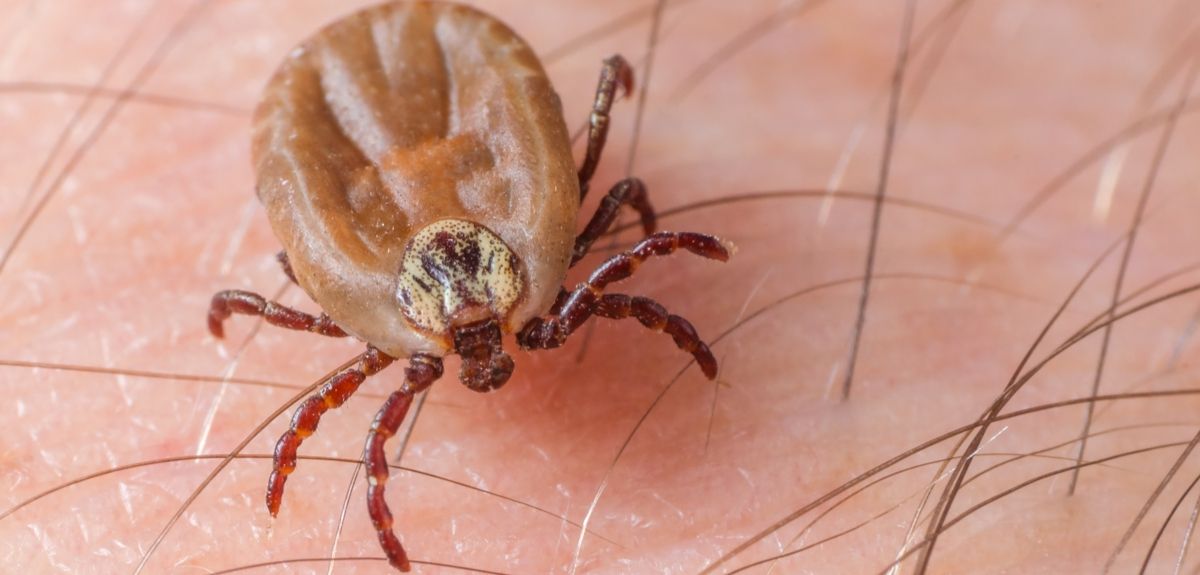
A new study led by Prof Shoumo Bhattacharya has decoded the structure of unique proteins found in tick saliva and created new ones not found in nature, paving the way for a new generation of ‘Swiss-army knife’ anti-inflammatory drugs, with customised extensions to block different inflammatory pathways.
Previous research by Prof Bhattacharya underlines that tick saliva can be a pharmacological gold mine, potentially yielding many new drugs which could treat disorders ranging from cardiovascular diseases and stroke to arthritis. This previous work identified a group of tick saliva proteins called evasins, which bind to and neutralise chemokines, a group of chemicals key to causing inflammation in the body.
Now the researchers have worked out the structural trick that enables tick evasins to block a complex pathway that has multiple routes to the same response. What’s more, they can now manipulate this structure to make new, custom-made proteins based on tick evasins.
But why ticks?
'Ticks have been around since before the time of dinosaurs, and they’ve have a few million years to evolve ways of biting and feeding off animals without triggering their inflammatory cascade,’ says Professor Bhattacharya. 'If you’re walking through a tick-infected field and get bitten by a tick, you’re unlikely to even notice.'
Once attached to an animal, ticks can feed for 8-10 days, successfully blocking pain, clotting and the body’s normal inflammatory response to injury.
This inflammation is part of the body’s standard immune response: when tissues are damaged by for example, an infection, they send out distress signals, in the form of the chemokine proteins. White blood cells response to these signals and appear at the scene of infection or injury, to clear up damaged tissues and fight any infection.
Going rogue
“This process is usually helpful, but sometimes, the white blood cells basically lose the plot and cause further damage,’ says Professor Bhattacharya.
This runaway, damage-causing inflammation is a key player in many diseases, including the aftermath of a heart attack, myocarditis (where the heart muscle becomes inflamed, resulting in sudden cardiac death in otherwise healthy young adults), strokes, arthritis, psoriasis, tumour inflammation, and inflammatory bowel disease.
So researchers have been looking for ways to block inflammation, as a way to treat these diseases or at least reduce the severity of painful symptoms in patients.
This turns out to be a more difficult problem than it seems, because the inflammatory pathway has multiple, redundant pathways, and blocking just one or even several receptors has little effect.
Professor Bhattacharya says: 'The chemokine pathway evolved as a way to fight infections and foreign pathogens, so it’s evolved to be very hard to knock down.
'The complexity of the network is hard to communicate: there are 47 different chemokines, which bind to 19 different receptions, and there are over 24 different white blood cell types. There is not a single available drug that blocks the chemokine network.'
Changing research focus
Professor Bhattacharya is the British Heart Foundation Professor of Cardiovascular Medication at the Radcliffe Department of Medicine – his main research interest lies in cardiovascular research, where rogue inflammation such as myocarditis was proving to be a vexing problem.
'But there are no effective anti-chemokine drugs in the clinic.' Says Professor Bhattacharya. 'What we did know is that blocking a single receptor or chemokine in the complex chemokine network has minimal effect.'
The idea of the studying ticks came from a Google search highlighting the tick’s abilities to evade the inflammatory response, something that the world’s leading researchers haven’t been able to recreate independently in the lab. Aided by the Radcliffe Department of Medicine pump priming awards, which aim to foster new ideas, Professor Bhattacharya repurposed his lab’s skills to identify some of the 1,500-3,000 proteins found in a tick’s saliva that would block chemokines.
The result of this work was the discovery of 40 chemokine binding proteins that could do what no other anti-chemokine drug can do: take down the entire chemokine pro-inflammatory network.
Studying the pharmacological goldmine in tick saliva is now the main focus for Prof Bhattacharya’s lab, and his team have developed a new method for finding and isolating new tick proteins.
Dr Angela Lee, the first author on the group’s latest study, explains: 'We synthesise the tick genes chemically and insert them into yeast cells to make a tick protein ‘library’ of sorts. The yeast cells now display tick peptides on their surface, and we then ‘bait’ them: we mix the yeast with a fluorescent chemokine, and the yeast cells that take the chemokine bait now glow. We can then pull out the glowing yeast, find out the DNA sequence of the new evasins, and grow large amounts of these new evasins in kidney cells in a petri-dish.'
Using this method, the research team has cloned over 40 new tick evasin genes over the last two years, and found two distinct types of tick evasins that block the two major different groups of chemokines.
Unique structure
But how does tick evasins bind so many different chemokines at once? This is the question that the group’s latest study tackled, as it decodes the structure of the new tick evasins that bind to the CXC group of chemokines. Dr Angela Lee says: 'We found that the EVA3 evasin has a ‘knotted’ structure, with each loop of the knot creating a surface that can bind a different chemokine. This is how tick evasins can bind to so many different chemokines.'
The team also went one step further, by transplanting the loops from one type of tick evasin into another type, to create a new hybrid protein with properties of both types. The hope is that these customized proteins could be used to treat a variety of inflammatory illness, from heart disease to arthritis to inflammatory bowel disease.
'We’re still a very long way from getting drugs based on their tick proteins to patients', says Professor Bhattacharya, who is currently working with Oxford University Innovation to develop the research further, 'But tick evasins have been 300 million years in the making, and we do hope to get drugs based on evasins into clinics quicker than that!'

By Mariña Fernández-Reino
Despite their different migration histories, the US and Spain have become the most preferred destinations for Latino migrants, who are among the largest migrant minorities in the two countries. There have been some studies about Latinos’ employment discrimination in the US, but there is virtually no research about the discrimination of Latinos in the Spanish labour market.
During the years 2017 and 2018, we conducted a field experiment to measure discrimination against Latinos in the US and the Spanish labour market. We sent hundreds of applications (1,547 in Spain, 804 in the US) from fictitious candidates to real job vacancies. Half of the applications were from majority group applicants (US born white applicants in the US, Spanish born applicants in Spain) and the other half was from Latino job applicants. The candidates’ Latino origins were signalled in their CVs with their names and with a reference to their country background in the cover letter (Spanish and Latin American forenames and surnames can be distinguished and we made sure that that was the case in the Spanish experiment). We measured employers’ response to each job application, which could be either positive – when calling back for an interview-, or negative - ignoring or turning our applicants down for the job.
Our research shows that there is an intersection between ethnicity and gender with regard to employers’ discrimination. In the US, only Latino men were discriminated and their probability of receiving a positive response from employers was 13 percentage points lower than for white male applicants. By contrast, only Latino women were discriminated against in Spain, with a positive call-back rate that was 12 percentage points lower than for Spanish-born women.

Intersection between ethnicity and gender in employers’ discrimination patterns
Ethnic minority stereotypes are country specific, as they are shaped by the majority-minority relations and history of each minority in a particular context. In the US, Latino men are frequently portrayed in the media as illegal migrants and perceived as threatening and aggressive, while it is not clear that this is the case in Spain. On the other hand, Latino women are seen in the US as docile, traditional and not career-oriented. In Spain, Latinas have very high employment rates though they are often stereotyped as unskilled workers due to their high presence in care work.
Our research examines whether these ethnic and gender stereotypes are behind the different levels of discrimination against Latino men and women in the US and Spain. In order to do that, some applications included information of applicants’ cooperative and friendly personality and/or about their competence and productivity in their current job. Information about candidates’ friendly personality could soften the stereotype of the threatening Latino men, while adding information about applicants’ competence could counteract the Latino women stereotype as unskilled and not career oriented. We also sent applicants to low, medium and high skilled jobs (cooks, payroll clerks, receptionists, sales representatives, IT developers and store assistants).
The discrimination against Latino men in the US disappears when their application includes information about their friendly personality, which underscores that their discrimination is probably driven by employers’ stereotyping of Latino men as threatening and aggressive. Surprisingly, and in contrast to the US, including information about applicants’ warm and friendly personality leads to lower call-back rates for both Latino men and women in Spain.
The discrimination against Latino women in Spain could be shaped to a large extent by their structural position in the Spanish labour market. Employers may stereotype Latinas as domestic workers, which has a negative impact on the labour market prospects of high skilled Latino women. Surprisingly, indicating high levels of competence in their application documents does not soften the discrimination against them. However, Latino women were indeed more discriminated in medium-high and high skilled jobs such as payroll clerks, sales representatives and IT developers.
In the US, discrimination against Latinos is, above all, a male phenomenon, driven by the portrayal of Latino men as ‘threatening foreigners’. The Trump era may have reinforced these negative stereotypes of Latinos, particularly those attributed to Latino men. This stands in stark contrast to the Spanish case, where only Latino women face discrimination, mainly due to employers’ preference for Spanish native women in medium- and high-skilled occupations.
Mariña Fernández-Reino is a researcher at the Centre of Migration, Policy and Society (COMPAS).
This research was part of the H2020 research project Growth, Equal Opportunities, Migration and Markets. For more information, visit www.gemm2020.eu. The paper 'Latinos in the United States and in Spain: The impact of ethnic group stereotypes on labour market outcomes' was published in the Journal of Ethnic and Migration Studies.

Analía Isabel Gerbaudo, Professor of Literary Theory and Didactics of Language and Literature at the National University of Litoral, Argentina, has been appointed as Global South Visiting Fellow at TORCH (The Oxford Research Centre in the Humanities).
The Global South visitor scheme, which sits in TORCH, is part of a wider aim to diversify the curriculum in Oxford’s humanities departments. The scheme is funded by the Andrew W. Mellon Foundation and is part of TORCH’s ‘Humanities & Identities’ series.
Dr Gerbaudo’s work tackles the difficult, charged and extremely topical question of the relationship between literary studies and political activism. The belief that practising criticism constitutes an important form of activism shapes the mission of the online literary journal that Gerbaudo founded in 2014, El Taco en la Brea, of which she remains the chief editor. It is also reflected in her most recent work as director of the independent publishing house Vera cartonera, linked to the ‘cartonero’ publishing movement which promotes literacy, diversity and social integration in Latin America by providing books at affordable prices. Dr Gerbaudo’s academic and professional work is produced outside the metropolitan context of Buenos Aires and is committed to geographical and social inclusion. She is currently researching the circulation of literary theory and Argentine literature during the last dictatorship and in the post-dictatorship period, especially with regard to questions of censorship, clandestine circulation and translation of texts, and underground reading practices. Gerbaudo is also an active translator and a committed mediator of Argentine literature and cultural politics in the global sphere.
Dr Gerbaudo said: ‘I would like to express my gratitude to those who have helped me develop and draw attention to a topic that I have been researching since 2006, the year I was admitted to the National Council of Scientific and Technical Research (CONICET). I study how Argentine literature and literary theory were taught in public universities in the years following the end of the military dictatorship. More specifically, I am concerned with the “fantasies of nano-intervention” that inspired the practices which my research has contributed to highlighting. Thanks again to all the people involved in the TORCH project for this opportunity.’
Dr Stefano-Maria Evangelista (English), Professor Laura Marcus (English) and Professor Benjamin Bollig (Medieval and Modern Languages) are sponsoring Dr Gerbaudo’s term at the University. While Dr Gerbaudo’s research has recently been published in the Journal of World Literature, her stimulating work remains very little known in Britain. This Global South Visiting Fellowship will provide her with a platform to share her work with English-speaking audiences both within Oxford and more widely, and to engage in ongoing debates in Oxford's Humanities faculties concerning disciplinary and interdisciplinary formations, literary translation, dissemination and the widening of the canon. Dr Gerbaudo’s expertise challenges the Eurocentric model of comparative literature by concentrating on Argentina as a key player in the global transmission of ideas and texts.
Dr Gerbaudo will be based at Oxford’s Faculty of Medieval and Modern Languages and Trinity College during Michaelmas Term 2019.

Magnetic monopoles are fundamentally important but highly elusive elementary particles exhibiting quantised magnetic charge. The prospect for studying them has brightened in recent years with the theoretical realisation that, in certain classes of magnetic insulators, the thermally excited states exhibit all the characteristics of magnetic monopoles.
Now, a collaboration led by Professor JC Séamus Davis and Professor Stephen J Blundell of the University of Oxford’s Department of Physics has developed a new approach to detecting and studying these ‘emergent’ magnetic monopoles – including the discovery that, when amplified, the noise they make is audible to humans. The findings are published in the journal Nature.
In 2018, Professor Blundell and his colleagues Dr Franziska Kirschner and Dr Felix Flicker predicted that the random motion of magnetic monopoles inside these compounds would generate a very specific kind of magnetisation noise.
This means that a crystal of one of these magnetic insulators should spontaneously generate wildly and randomly fluctuating magnetic fields both internally and externally, as the monopoles move around. The catch was that these fields vary rapidly and randomly at every point, so that the net fluctuating field through a sample was predicted to be near one billionth of the Earth’s field.
In response, Professor Davis and colleague Dr Ritika Dusad built an exquisitely sensitive magnetic-field-noise spectrometer based on a superconducting quantum interference device – a SQUID.
Professor Davis said: “Virtually all the predicted features of the magnetic noise coming from a dense fluid of magnetic monopoles were then discovered emerging from crystals of Dy2Ti2O7. Extraordinarily, because this magnetic monopole noise occurs in the frequency range below 20kHz, when amplified by the SQUID it is actually audible to humans.”
Professor Blundell added: “What makes magnetic monopoles fascinating is that they ‘emerge’ from a dense lattice of magnetic monopoles, and this makes their motion highly constrained – very different from a typical gas of charged particles. This observation led us on a search for the signature of this constrained motion in the magnetic noise spectrum. These exciting results open up the possibility of using magnetic noise to study many other exotic magnetic systems containing different species of emergent particles.”
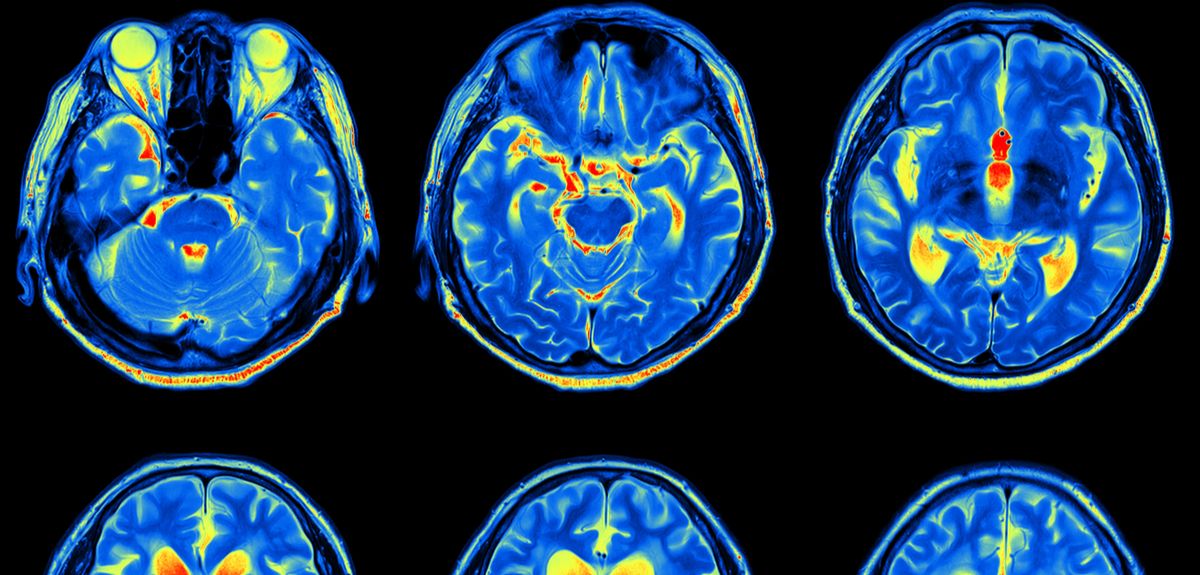
Researchers from the University of Oxford have been sharing their work with the public at the Royal Society Summer Science Exhibition (1-7 July 2019).
Breathe Oxford is a diverse group of neuroscientists, psychologists and clinicians studying the neuroscience of breathlessness. Their work shows that breathing is about more than just the lungs. In fact, the brain has a powerful influence on our experiences. This explains why some people still feel out of breath, even when they have been provided with medical care.
They explore how the brain controls our feelings of being out of breath using cutting-edge brain imaging technology. Understanding this control system could lead to revolutionary, personalised treatments for breathlessness.
Their exhibit at the Royal Society Summer Science Exhibition will bring the topic of ‘Breathing with your Brain’ to life, helping visitors to understand the how the brain controls our feelings of being out of breath.
Researcher and lead organiser Dr Sarah Finnegan said: 'Our research has shown the power of the brain-body interaction in influencing how we perceive our breathing.
'This is a relationship that we are only now just beginning to understand, and we hope eventually to develop target treatments for individuals, helping millions of people who are limited by their breathlessness.
'We are thrilled to be able to share some of the cutting-edge neuroscience that takes place at Oxford with visitors to the Royal Society, and hopefully we can inspire some future scientists!'
It is estimated that one in nine people experience some form of breathlessness, which is most common in conditions such as heart failure, lung disease, panic disorder and Parkinson’s. But there are also significant numbers of people who have unexplained breathlessness, which Breathe Oxford hypothesise might be driven by the networks in the brain.
Breathe Oxford has examined breathlessness in athletes, healthy individuals and people with chronic lung disease, seeking clues as to why some individuals become disabled by their breathlessness, while others, with the same lung function, live normal lives.
Visitors to the exhibit will be able to simulate living with chronic breathlessness by exercising on the ‘Steppatron’ with a straw in their mouth and a clip on their nose. They will also be able to witness the brain’s relationship with breathing on a 3D-printed scale model of a human torso with breathing lungs and LED lights which will highlight the neural pathways between the brain and the lungs. A specially commissioned animation will also reveal more about the background to the science.
Other stalls at the Summer Exhibition this year that involve Oxford research are:
Robots in the Danger Zone - Dr Maurice Fallon and others from the Department of Engineering Science's Oxford Robotics Institute will be demonstrating their research into robotics for inspection of dirty, dull and dangerous places, specifically with walking robots, such as their quadruped ANYmal. The stand is being presented by the ORCA Robotics Hub. See a video of the group's work here.
Living on the Moon! - an interactive experience highlighting the progress of lunar science since the Apollo 11 Moon landings 50 years ago. The exhibit illustrates the journey from Moon landing, to Lunar sample science, to the current generation of Moon rovers looking for water on the Moon, and provides a look forward to the next 50 years and a vision of a permanent human presence on the Moon. (Researcher: Dr Neil Bowles from the Department of Physics.)
In Your Element - 150 years of the periodic table: Investigating the elements that are essential to life. Biogeochemists from the Department of Earth Sciences' OceanBug team are presenting the journey of elements from the earth’s crust through the ocean and ultimately to feed life throughout Earth’s history. The exhibit is led by the University of Warwick.
- ‹ previous
- 54 of 253
- next ›
 What Louise Thompson’s campaign tells us about the national maternity crisis
 Celebrating 25 Years of Clarendon
  Learning for peace: global governance education at Oxford
  What US intervention could mean for displaced Venezuelans
  Setting the agenda for the next century of quantum
 10 years on: The Oxford learning centre making an impact
 Mapping the Moon: the world’s first lunar atlas goes digital
  Oxford and The Brilliant Club: inspiring the next generation of scholars
 New course launched for the next generation of creative translators
 The art of translation – raising the profile of languages in schools