
Mathematical Institute
Mathematics has been studied in Oxford since the University was first established in the 12th century. The Mathematical Institute aims to preserve and expand mathematical culture through excellence in teaching and research.

Students at the Mathematical Institute. Credit: Oxford University Images / John Cairns Photography

Overview
The Mathematical Institute offers a wide range of graduate courses, including both taught master’s courses and research degrees. Research and teaching cover the spectrum of pure and applied mathematics with researchers working in fields including:
- Algebra
- Combinatorics
- Functional analysis
- Geometry
- History of mathematics
- Logic
- Machine learning and data science
- Mathematical and computational finance
- Mathematical biology
- Mathematical physics
- Number theory
- Numerical analysis
- Industrial and applied mathematics
- Nonlinear partial differential equation
- Stochastic analysis
- Topology
Graduate students are an integral part of the department, interacting with each other and with academic staff as part of a vibrant community that strives to further mathematical study. As a graduate student at Oxford you will benefit from excellent resources, extensive training opportunities and supportive guidance from your supervisor or course director.
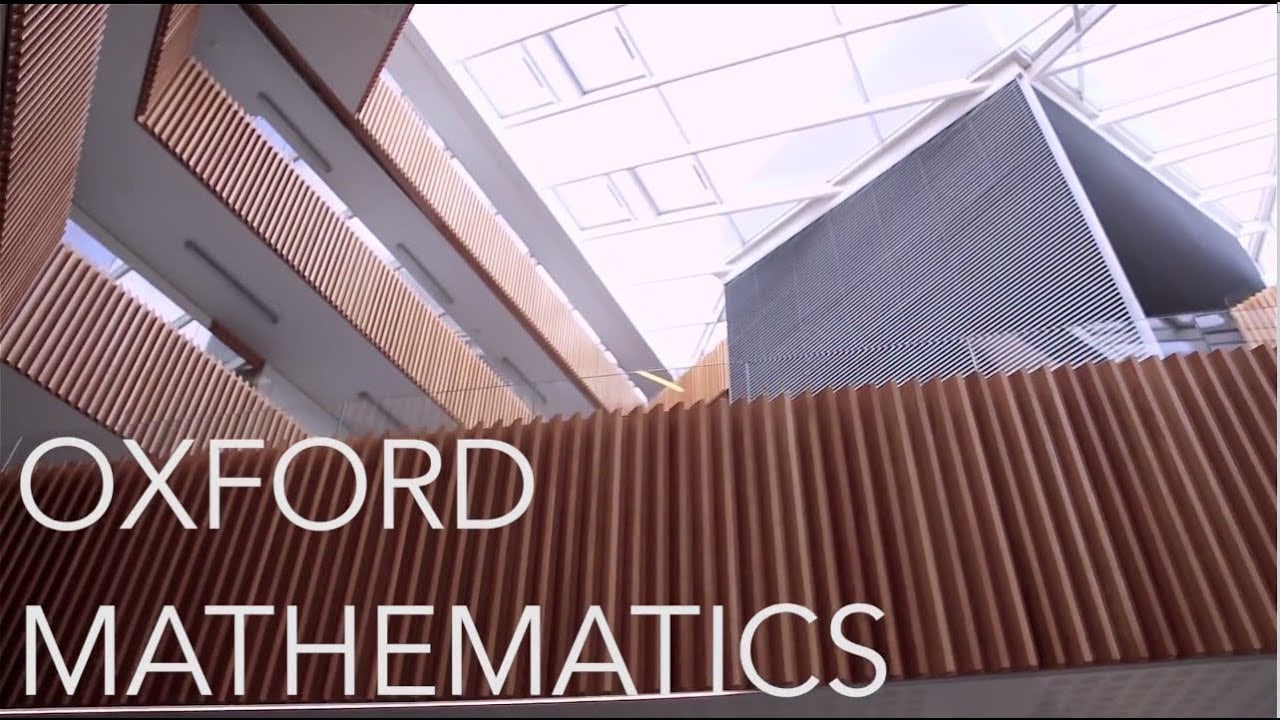
The Mathematical Institute’s home is the purpose-built Andrew Wiles Building, opened in 2013. The building has ample teaching facilities for lectures, classes and seminars. The mezzanine level also houses a café. Graduate students on courses of over nine months' duration have access to the department common room, where members of the department regularly gather for coffee and other social occasions.
The Mathematical Institute has close ties with other University departments including Computer Science, Statistics and Physics, teaching some courses jointly. Strong links with industrial and other partners are also central to the department.
The Mathematical Institute is proud to have received an Athena SWAN silver award renewal in 2021, reflecting its commitment to promoting diversity and to creating a working environment in which students and staff alike can achieve their full potential.
Courses offered
The courses shown below are offered at postgraduate level.
- MSc in Mathematical and Computational Finance (full time)
- MSc in Mathematical and Theoretical Physics (full time)
- MSc in Mathematical Modelling and Scientific Computing (full time)
- MSc in Mathematical Sciences (full time)
- DPhil in Mathematics (full time)
- MSc by Research in Mathematics (full time)
- MSc in Mathematics and Foundations of Computer Science (full time)
Mathematical, Physical and Life Sciences (MPLS) Division
MPLS is proud to be home to some of the most creative and innovative scientific thinkers and leaders in academia, whose interdisciplinary research is tackling major societal and technological challenges.
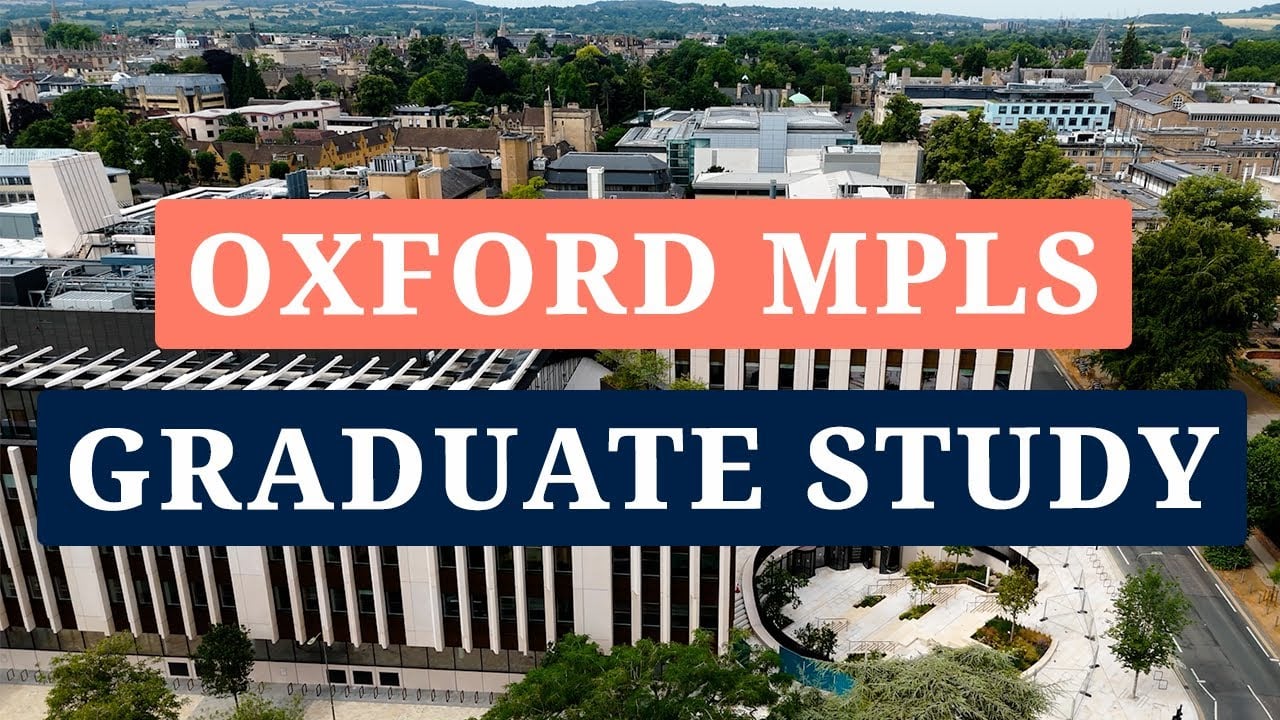
The quality and impact of the division's work have been recognised by successive rounds of the national Research Excellence Framework and Teaching Excellence and Student Outcomes Framework exercises, and its departments frequently top the major higher education league tables. Its research is also regularly identified as one of the most significant recipients of grant funding in Europe.
The division’s 9 departments and interdisciplinary doctoral training centre span the full spectrum of the mathematical, computational, physical, engineering and life sciences, and undertake both fundamental research and cutting-edge applied work.
The MPLS Division has a vibrant and exciting research environment, offering frequent opportunities to share your research and engage with scientists working across the research spectrum. It has extensive links with other leading universities, research institutes, public sector bodies, business and industry, in the UK and abroad. Research at the interface between disciplines is strongly encouraged, both within the mathematical, life and physical sciences, and within the medical and environmental sciences.
Teaching is a major part of the division’s activities. It teaches around 7,300 students (including around 3,400 graduate students) and is playing a key part in training the next generation of leading scientists.
The division is striving to create and sustain an inclusive culture where diversity is valued and equity prevails, so that individuals of all backgrounds can fully contribute to its scientific community in a safe and supportive culture. All academic departments in the division hold Athena Swan Awards. Diversity matters and benefits everyone. Scientific and technological innovations change the world and everyone should have access to participate and engage in that change.