Features

The "cradle of civilisation" is further east than you might have read in history textbooks at school, according to a new book by an Oxford academic.
The Silk Roads: A New History of the World, which is published this month by Bloomsbury, has been written by Peter Frankopan, Director of the Centre for Byzantine Research in the University's History Faculty.
Described as a "major reassessment of world history", Dr Frankopan’s book shows the importance of the 'east' (i.e. the region between eastern Europe and China and India) in developing the world's civilisation and religions.
He looks at countries which were crossed by the 'Silk Roads', which were trading networks that connected the West to East and spread led to cultural transmission between the two areas.
He says countries along this route have been overlooked by history, such as Kazakhstan, Uzbekistan, Mongolia, and Nepal. Even the role of India and China has been downplayed.
'While such countries may seem wild to us, these are no backwaters, no obscure wastelands,' he says. 'They are the very crossroads of civilisation. Far from being on the fringe of global affairs, these countries lie at its very centre — as they have done since the beginning of history.
'The Silk Roads were no exotic series of connections, but networks that linked continents and oceans together. ‘Along them flowed ideas, goods, disease and death. This was where empires were won – and where they were lost.'
Dr Frankopan says the prominence of western Europe since the 16th century caused this 'rewriting' of the past. 'Ancient Greece begat Rome, Rome begat Christian Europe, Christian Europe begat the Renaissance, the Renaissance begat the Enlightenment, the Enlightenment political democracy and the Industrial Revolution,' is how he describes this traditional assumption.
But in fact, it is actually western Europe, and Britain at its periphery, which was a relative 'backwater', he says. The Greeks and Romans had little interest in Europe, and letters sent home by Roman soldiers reveal that being sent to Europe or even Britain was an unwelcome prospect.
'The Greeks and Romans looked to the East,' says Dr Frankopan. 'Riches from the East paved the way for Rome's grandeur and the Silk Roads were the conduit for Eastern commerce, wealth, enlightenment and technology.'
The Silk Roads: A New History of the World can be ordered from Bloomsbury.
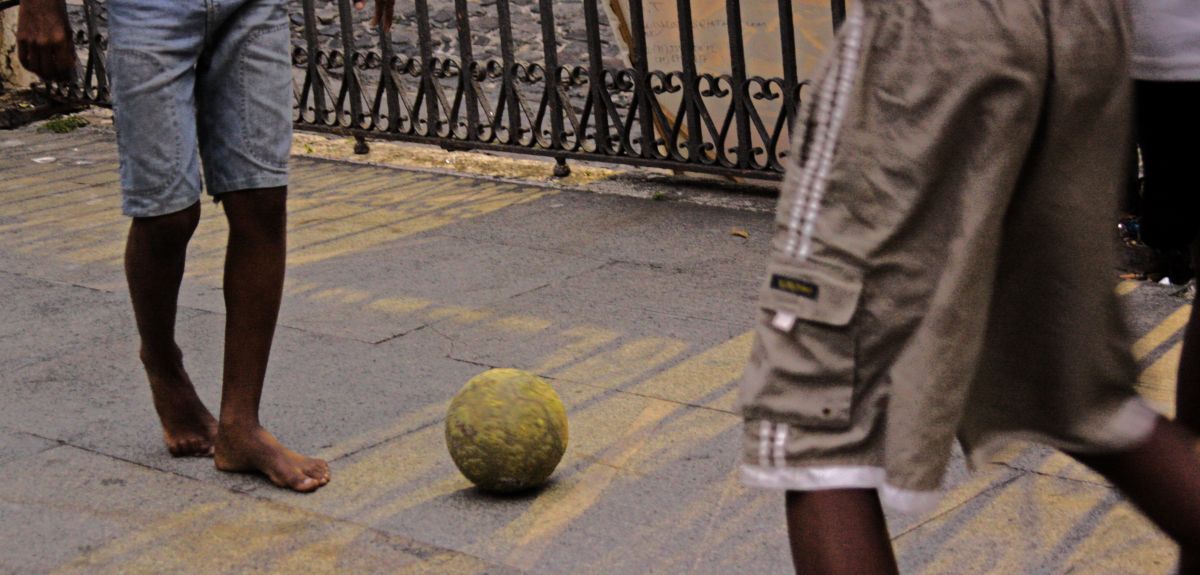
The packed stadiums across Brazil during the World Cup – and the public outpouring of grief after their 7-1 defeat by Germany – confirms just how popular football is in Brazil. It is less well known that football was brought to Brazil by an Englishman – or was it a Scotsman?
Simão Valente is a Portuguese Lector in the Faculty of Medieval and Modern Languages, whose research focuses on crime fiction in Portuguese. To engage his students, Simão uses the stories of key figures in Brazilian history and culture.
In the following blog post he explores the origins of football in Brazil.
'Charles Miller is widely regarded as the man responsible for introducing football in Brazil. The son of a Scottish railway engineer, John Miller, and a Brazilian of English descent, Carlota Fox, Miller was born in the upper echelons of São Paulo society.
Sent to school in Southampton at age ten, he remained there until February 1894, when he returned to São Paulo bringing two footballs and the book of rules of Association Football. Teams and matches were organized, drawing largely from the overwhelmingly white and British managers of local companies, factories and farms. Football in Brazil, as in most countries, was first a genteel activity.
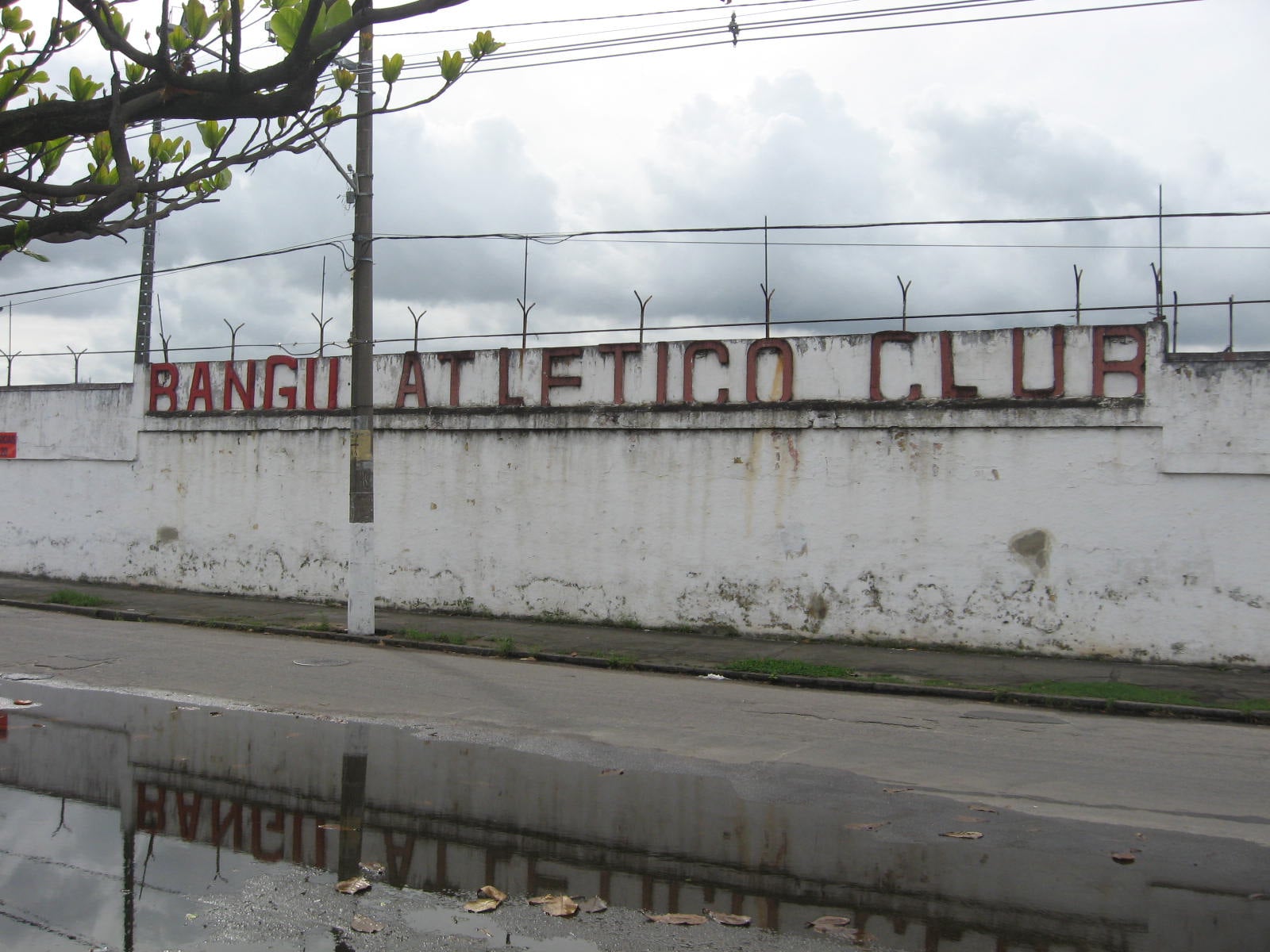
But in April of that same year, Thomas Donohue, a Scottish dye worker in a textile factory in the gritty Bangu district of Rio de Janeiro, organized a match among fellow workers. Some of the players, reflecting the makeup of the factory, were black.
The first eleven-to-eleven match following the rules still accepted today was indeed arranged by Miller in April 1895, but the match that Donohue organized was the first to field working-class and black players in Brazil, according to historian Carlos Molinari.
In 1905, Bangu Atlético Clube became the first football team to field a black player at national competitions in Brazil, Francisco Carregal. This past June, a statue of Thomas Donohue was inaugurated in front of the headquarters of Bangu, as part of the reassessment of his part in shaping Brazilian football.
The history of Brazil is marked by sharp social inequalities grounded on class and race, an inheritance of colonialism and slavery. The more inclusive version of football practiced by Donohue in Rio has a deep resonance with the development of the game in Brazil and the role it has to this day in Brazilian society.
It paved the way for the rise to stardom of Pelé, from the 1958 World Cup onwards. The Brazilian victory at that Cup brought unprecedented global visibility to a young black Brazilian, who had grown up in poverty, famously learning how to play by kicking about socks stuffed with newspapers. Millions of underprivileged Brazilians had found a hero.
The widely covered demonstrations in Brazil in the months leading up to the World Cup were primarily directed against government corruption and mismanagement. Part of this mismanagement, protesters argued, was the overspending in a sports event that, due to the prohibitive prices of tickets and the industry set around the matches, would not be enjoyed by common Brazilians, 20% of whom live below the poverty line.
It was a reaction against the gentrification of a sport whose character is so intimately tied to the national self-image, a connection to which Donohue greatly contributed.
The spectacular end of the Seleção in the Cup led to the current period of self-reflection in Brazil, commentators arguing that it may contribute to rekindling discontent as elections loom in October.
While their pride may have been hurt, the swiftness with which Brazilians turned to self-effacing jokes after the 7-1 loss to Germany is a sign of their evolving relationship with football. The devotion and enjoyment will still be there, but the cultural politics of the game cannot be ignored.'
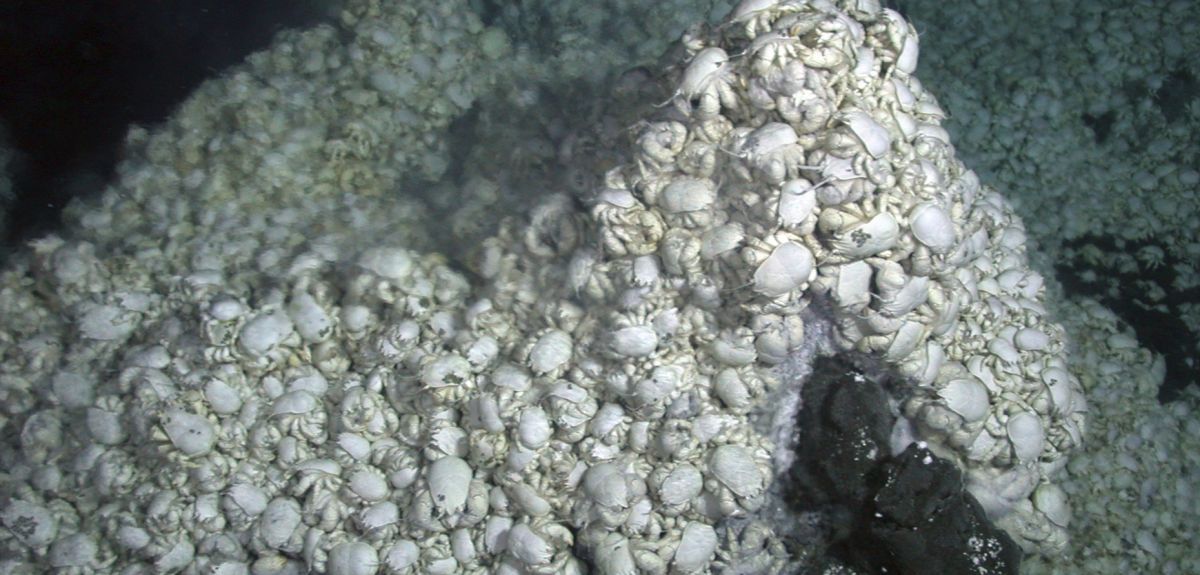
Our oceans aren’t just pretty to look at, they are doing a vital job storing away millions of tonnes in carbon emissions and mitigating climate change.
That’s the headline from a new report published by the Global Ocean Commission, co-authored by Alex Rogers of Oxford University’s Department of Zoology and Somerville College. I asked Alex how the report’s authors assessed the many ways we benefit from ocean ecosystems – benefits known collectively as ‘ecosystem services’ – and what more we can do to preserve them…
OxSciBlog: How do the oceans help to store our carbon emissions?
Alex Rogers: The oceans have taken up about 25-30% of all human carbon emissions and about 50% of those from the burning of fossil fuels. There are several routes by which this carbon enters the ocean. The primary one is the ‘solubility’ carbon pump by which CO2 dissolves into the ocean and is transported via ocean circulation into the deep sea. There is also the biological carbon pump whereby phytoplankton, microscopic organisms that use photosynthesis to fix carbon and convert it to tissue, take up CO2.
These microscopic organisms form the basis of the food chains of most of the ocean. As they die and sink into the deep sea or are eaten and their carbon is transported into deep water through the movement of animals or the sinking of their faecal material the carbon is transported downwards.
A small proportion of the surface derived carbon is stored in the deep sea. In our report we only looked at the biological carbon pump to look at how much CO2 is potentially sequestered through the actions of living organisms. This only represents a fraction of the CO2 sequestered in the oceans (total amount is estimated to be ~2.5 billion tonnes of carbon).
OSB: What impact could mining and other high seas industry have on their ability to store carbon?
AR: One of the fascinating things we found in our research was the evidence for the intimate connection of the activities of living organisms to nutrient cycling in the oceans. Fish, whales, gelatinous zooplankton all carry out a multitude of functions in ecosystems from feeding on other organisms and controlling their abundance to influencing the concentration of nutrients, such as iron, in surface waters and even stirring the oceans through their vertical and horizontal movements. When parts of the ecosystem are damaged by, for example, overfishing, then some of these functions are degraded with knock on effects to the rest of the ecosystem.
OSB: Why is it so hard to put a value on high-seas ecosystem services?
AR: We identified about 15 types of ecosystem service provided by the high seas but could only put a monetary value on a few of them. These services, which benefit humankind, range from the provision of food (i.e. fish) to the regulation of atmospheric gases (such as CO2).
Many of them cannot be quantified at present. This is for a variety of reasons but the main one was simply insufficient scientific knowledge of how the ocean works and the complex relationships between its biological and physical (or biochemical) components. Another reason was that even where values could be identified we could not ascertain what share of a particular service was attributable to the high seas.
An example of this is fishing (or mining!) of precious corals, where a significant component of global catch comes from the high seas but because of poor documentation of catches we do not know how much. In other cases the high seas contribute to ecosystem services that are in fact derived in coastal waters, examples including many fish species which might feed for part of the time in the high seas but which are caught in coastal waters.
OSB: How will these findings feed into your future research?
AR: The study has made us much more aware of the enormous knowledge gaps in terms of how the ocean works. For example, although our examination of carbon sequestration could estimate the rate of sinking of phytoplankton into the deep ocean there was little knowledge of active transport of carbon into the deep sea. This is where large numbers of organisms feed in surface waters, especially at night, and then dive into the deeps by day to avoid predators. These animals transport carbon into the deep sea but we do not even know how many there are, even, in some cases to orders of magnitude. Our research on deep-sea ecosystems will focus more on these questions in the future.
OSB: What could governments do to save high-seas ecosystems?
AR: Clearly there are problems with the management of human activities on the high seas. Overfishing and illegal fishing are two serious issues in a world of increasing human population and a resultant increasing need for fish protein.
At present governance of the high seas is very fragmented. Management of different industrial sectors is undertaken by different bodies, some of which are ineffective and do little more than divide up the proceeds from extracting ocean resources. These organisations often operate in isolation of international agreements on the protection and sustainable use of the environment.
Clearly a more joined up approach to ocean governance is required with increased transparency of decision making and assessment of institutional effectiveness. Where these organisations are failing, this must be identified and corrected. Policing the oceans must also be improved and we now have the technology to monitor much more closely what various parties are doing on the oceans. Some of these measures can be incredibly simple and cost effective. For example, insisting that all fishing vessels on the high seas, like other shipping, must carry an internationally registered identification number would help us identify those not following regulations.

These drugs were handed out via a phoneline during the swine flu pandemic of 2009 as part of a wider public health strategy.
Professor Carl Heneghan of Oxford University's Department of Primary Care Health Sciences and colleagues in the independent Cochrane Collaboration are clear that the money was wasted. They argue that the decision to stockpile the drugs might have been different had we had access to all the clinical data on their effectiveness.
Now we do have that evidence, and Carl says: 'There is no credible way these drugs could prevent a pandemic.' Speaking at a media briefing at the Science Media Centre in London, he said the money spent on stockpiling had been 'thrown down the drain'.
Since 2009, the Cochrane researchers have had a long running battle with the drug firms that manufacture Tamiflu and Relenza (Roche and GSK, respectively) to get unconditional access to their full data. They finally received everything last year, after first GSK then Roche said they would provide the materials – a significant development in the campaign to increase openness and accessibility of complete trial data.
The Cochrane group has been significant players, along with the AllTrials campaign, the BMJ medical journal, Ben Goldacre and others, in changing the whole approach to this issue among researchers, journals, drug firms and regulators. The simple argument is that if we are to make the right decision on what are the best drugs – considering their safety, effectiveness and the balance of benefits they offer in treating conditions over their side-effects – we need to have all the evidence available.
The researchers have now made that assessment for Tamiflu in the prevention and treatment of flu. They have reviewed a phenomenal amount of material, and with the BMJ and the Cochrane Collaboration, have published their conclusions today. They call on government and health policy decision makers to review guidance on the use of Tamiflu in light of their new evidence.
They found that Tamiflu is effective – but it shortens symptoms of flu by only around half a day on average. And importantly, they say, there is no good evidence to support claims that it reduces complications of influenza or admissions to hospital.
Then there are the side effects. Using Tamiflu to treat flu, the evidence confirms an increased risk of suffering from nausea and vomiting.
When Tamiflu is used to prevent flu, the drug can reduce the risk of people suffering symptomatic influenza. But there was an increased risk of headaches, psychiatric disturbances, and kidney events.
The review authors, Drs Tom Jefferson, Carl Heneghan and Peter Doshi, conclude that there are insufficient grounds to support the stockpiling of Tamiflu for mass use in a pandemic. From the best conducted randomised trials, there just isn’t enough evidence on the crucial elements of reducing serious complications of flu that can lead to hospitalisation and death, and the prevention of spread of flu. On the other hand we know there would be side-effects.
Not all scientists agree on the assessment of the balance of benefits of these antivirals versus their side-effects. Virologist Professor Wendy Barclay at Imperial College London believes the shorter time that symptoms last is important: 'Although one day does not sound like a lot, in a disease that lasts only 6 days, it is…We have only two drugs with which we can currently treat influenza patients and there is some data to suggest they can save lives. It would be awful if, in trying to make a point about the way clinical trials are conducted and reported, the review ended up discouraging doctors from using the only effective anti-influenza drugs we currently have.'
Roche, the manufacturers of Tamiflu, fundamentally disagree with the overall conclusions of the Cochrane review and criticised some of the report’s methodology. In media reports, UK Medical Director Dr Daniel Thurley has said: 'Roche stands behind the wealth of data for Tamiflu and the decisions of public health agencies worldwide, including the US and European Centres for Disease Control & Prevention and the World Health Organisation.'
Indeed, Roche have pointed to a large observational trial in the Lancet Respiratory Medicine that they funded which recently reported a reduction in deaths among those hospitalised with swine flu H1N1, though there are some who disagree with that analysis too.
So what to make of all of this? An editorial in the Guardian concludes: 'The only way to resolve the argument is proper science. That means transforming clinical trials, harmonising the way they are carried out. It has happened with malaria drugs, and it is happening with HIV. The industry must allow access to their data. Confident that like is compared with like, trials can then be subjected to meta-analysis, allowing statisticians to drill down into sub-populations to establish when a drug performs most effectively.'
The editorial points to the need to be able to react swiftly and carry out good research actually during pandemics, as former Oxford University professor and now director of the Wellcome Trust, Jeremy Farrar, argued in the paper last month.
What has really changed is the ability to have these discussions based on all of the evidence. There is a real shift in the level of scrutiny and the analyses that are now possible with access to all clinical trial data (although dealing with all these reams of data also brings new challenges too). That is a phenomenal change and a real achievement by the Cochrane researchers.
David Spiegelhalter, Winton Professor of the Public Understanding of Risk at the University of Cambridge, comments: 'This is a ground-breaking review. Since important studies have never been published, the reviewers have had to go back to clinical trial reports comprising over 100,000 pages: the effort to obtain these is a saga in itself. The poor quality of these reports clearly made extracting relevant data a massive struggle, with many pragmatic assumptions having to be made, but the final statistical methods are standard and have been used in hundreds of Cochrane reviews. Let’s hope that in future high-quality data can be routinely obtained and this type of review becomes unnecessary.'
Michelle Lee first set foot in Gabon in 2001: 'I went with just a backpack expecting to stay three weeks, but ended up being the project manager there for six years,' she tells me.
Now a DPhil student at Oxford University's WildCRU, working on land-use and conservation planning, back then Michelle gave up her desk job at the Smithsonian Institute in Washington to fly out and take over after the manager of the Institute’s Gabon biodiversity project quit.
Gabon is a haven for wildlife and a hotspot of global biodiversity. Its small and highly urbanised population, along with its substantial petroleum and mineral deposits, have reduced typical pressures on land conversion. Consequently, Gabon boasts some of the largest remaining tracts of pristine tropical forest in the world.
During her time spearheading the Smithsonian project, Michelle became acutely aware not only of Gabon's significance for conservation but also of the sparse ecology and land-use data that was crippling conservation efforts. 'When I started my doctoral studies there wasn't even a national bird or mammal list compiled, let alone any species-distribution maps,' she recalls. 'There were also no maps of existing land uses, and the latest habitat maps were from the 1970s.'
Over the past four years, Michelle has worked with local experts to gather this vital data. In a process similar to that used by the IUCN's for their Red List threat assessments, she has completed a prioritization analysis of Gabon's terrestrial vertebrates and produced distribution maps for the top priority species. She has also updated the nationwide habitat maps for the country and assessed how different habitat types are allocated across different land uses throughout Gabon.
Her research is providing a foundation for science-based land use planning and policy development in Gabon, whose government is unusual amongst its neighbours in its strong commitment to fostering biodiversity preservation and ecotourism, alongside economic expansion.
'The slow and painstaking task of prioritisation and mapping allowed me to identify key habitats that were poorly represented in Gabon's national reserve system and to propose improvements to the current protected area network,' she tells me.
Michelle has presented her scientific findings directly to the head of National Parks, and is working with the government to identify areas that require more field verification. 'As a signatory to the International Convention on Biological Diversity, Gabon is legally required to meet certain targets for habitat and wildlife protection,' she explains. 'My research enabled the government to see where they fell short of these targets, and together we are planning scenarios to address these shortfalls and improve the efficacy of the reserve design.'
A large part of Michelle's success at conveying her research findings and expert opinion to Gabon's policy-makers comes from the fact that she drew together the many disparate sources of data needed for the planning process.
'I think that being in-country helped me figure out what would be helpful for us to know, and then I tried to address this.' However, as she is quick to point out, the process of being heard required more than just researching the right questions and a government willing to listen. 'My involvement would probably have been impossible without my history of working in the country and my understanding of the context on the ground,' she says. 'This has helped me gain the confidence of the people involved. So I am able to present conservation options that I think might be both internationally appreciated and politically palatable.'
What she only casually alludes to though, is the importance of persistence, perseverance, and passion. 'For a long time I carried around these big maps of mineral depositions and habitat and wildlife distributions wherever I went,'she remembers, smiling. 'I would unroll them at any opportunity and encourage people to see how conservation and development could be accommodated and planned for together in a spatially-structured scientific process. I guess I eventually got my message through. Or perhaps they just got sick of seeing me carrying them around!'
When I ask Michelle for her advice to other conservation scientists, she replies that patience, flexibility and the ability to compromise are critical for negotiating the path from science to policy.
'Trying to do conservation science in a developing nation, even one as environmentally aware as Gabon is a balancing act. I realised early on that I could not adopt a 'conservation agenda' if I wanted to achieve the greatest outcomes for environmental sustainability,' Michelle says. 'Gabon is trying hard to balance job creation, food security, and economic development alongside biodiversity retention and carbon sequestration. At some point, detrimental impacts are unavoidable and you have to make difficult decisions. Conserving 50% of elephant habitat is great, but it also means that you are prepared to lose 50% of their habitat.'
This means that transcending the divide between research and policy requires a slightly different breed of scientist. One who is willing to adapt their focus and adjust their expectations of outcomes, one who can balance the analytically correct answer with what makes real-life sense, and one who views science as a means of solving a problem rather than an end in itself.
As Michelle notes: 'Applied science is an entirely different process to research science, as it should be. Because of my background, I am able to wear both hats, and operate as research scientist in my doctoral studies and as applied scientist when I interact with the Gabonese government. Ultimately, though, we need both.'
Shelly Lachish is a Research Fellow in Oxford's Department of Zoology and a freelance writer.
- ‹ previous
- 7 of 9
- next ›
 What US intervention could mean for displaced Venezuelans
  Setting the agenda for the next century of quantum
 10 years on: The Oxford learning centre making an impact
 Mapping the Moon: the world’s first lunar atlas goes digital
  Oxford and The Brilliant Club: inspiring the next generation of scholars
 New course launched for the next generation of creative translators
 The art of translation – raising the profile of languages in schools
  Opening a window into the quantum world
 Tracking resistance: Mapping the spread of drug-resistant malaria