Features

With churches and places of worship closed, this would seem a very unholy Holy Week. Palm Sunday got it off to a modest start, with a video of a lonely-looking Pope Francis holding a massive palm, to remind us that this is the most important week of the Christian year. Processions of hooded penitents are absent from Coronavirus-hit Spanish squares and, around the world, even Easter Sunday will see pews empty and peals un-rung. Meanwhile, in the Jewish world, Passover meals, which take place this evening [Wednesday 8 April] will not be the usual large family gatherings. And all because of Covid-19.
Oxford Professor Diarmaid MacCulloch dismisses the Papal Interdict of 1208 as utterly different [from the Covid-19 closures]: a ‘political’ move by the papacy, not intended to protect churchgoers
A vocal group of angry churchgoers has maintained that, not since King John have the churches of England been shut. But Oxford Professor Diarmaid MacCulloch, professor of the History of the Church, dismisses the Papal Interdict of 1208 as utterly different: a ‘political’ move by the papacy, not intended to protect churchgoers. Nevertheless, more than a few people have asked where God is in this crisis and why churches are closed during the time of Covid-19.
In the United States, some churches have remained defiantly open, while others have followed medical advice and closed their doors. In the UK, it has become a controversial matter in church-going circles, although not in general and one letter to the Daily Telegraph pointed out that pubs were closed, so why not churches – likening religious life to a form of leisure activity.
According to Professor MacCulloch, social attitudes about church going changed in the late 1950s, when it ceased to be seen as a likely criterion for middle-class respectability: ‘There was a remarkable move away in the 1960s...followed by the collapse of the Sunday School movement...Church attendance was no longer a component of respectability.’
Yet the author of Reformation - Europe's House Divided 1490-1700 says, the current debate over church closures has a lot to do with Protestantism – which thrives on large-scale, noisy worship and does not have any history of silent spirituality. This, he says, was dispensed with, along with the monasteries at the time of the Reformation. Professor MacCulloch maintains: ‘Historically, Protestants do not have many spiritual resources to deal with spiritual isolation...sixteenth century Protestant churches were all about crowds getting together to hear sermons and to sing, especially metrical psalms.’
It is noticeable, he says, that in the US the divide on staying open has been very much along political party lines, with large Protestant mega-churches trying to remain busy: ‘There is a cultural chasm...mainstream churches such as the Episcopalians have closed, as the right thing to do.’
Once the monasteries were closed in the sixteenth century, Protestant churches lost spiritual resources associated with them
Professor MacCulloch, who also wrote Silence – A Christian History, adds: ‘Once the monasteries were closed in the sixteenth century, Protestant churches lost spiritual resources associated with them. The only Protestant Church to include silence in worship was Zwingli’s in Zurich and it wasn’t long before congregations got bored with it.’
He maintains: ‘It’s a long catch-up for the Protestants on silence. In the 20th century they started to realise this and ceased to be averse to monasticism.’
But, he points out, attempts to recreate such spirituality is a bit like trying to reinvent the wheel.
This Holy Week, though, Covid-19 social distancing means that many churchgoers in the UK and around the world have a chance to experience contemplation and meditation more commonly found in the cloister.

It’s not every day that the FBI takes a close interest in a senior Oxford academic’s blog. But, then again, a million television programmes suggest maybe it is. Whatever the case, Professor Bill Dutton’s recent blog about the conferencing platform, Zoom, preceded a lively international debate – and interest from the Feds in his native US.
Ahead of the curve, Professor Dutton, who was a founding director of Oxford’s Internet Institute and is currently a senior fellow, wrote a blog with colleague, Arnau Erola, highlighting the potential problems and issues around video-conferencing: Zoom-bombing the Future of Education.
Since the beginning of the Covid-19 crisis, the highly-accessible provider, Zoom had gone from geek-obscurity to household name and in a matter of days the number of its users increased from 10 to 200 million, as people around the world tried to overcome social distancing to connect with colleagues, friends and students.
But, as Professor Dutton, who is also a fellow of the Global Cyber Security Capacity Centre (GCSCC) of Oxford’s Department of Computer Science, says, problems were not far behind: ‘It took about a week.’
With the increased use of Zoom and other platforms, came issues. In his blog, he wrote: ‘One particular challenge that has risen in prominence is efforts of malicious users to sabotage classrooms and discussions, such as by what has been called Zoom-bombing (Zoombombing). Some have defined it as ‘gate-crashing tactics during public video conference calls’ that often entail the ‘flooding of Zoom calls with disturbing images’.’
And, since the 26 March publication, the topic has hit the headlines in the UK and around the world, as ‘bombers’ have interrupted and disturbed video-conferencing events from Jewish religious services to corporate meetings, often with malicious intent. News stories have appeared, voicing concerns about the security and protection of video-conferencing. Blame has been levelled against key providers. But, many of the issues are actually related to the users moderating the conference, rather than the software, says Professor Dutton.
He maintains, there are numerous ways in which meetings and events can be safeguarded from malicious intent. He says: ‘There has been exaggerated coverage of the problems. It’s not usually a problem with the software. Many of these issues can be addressed by the moderator.’
It’s the job of the moderator to set up the meeting...Zoom is incredible, it’s brilliant technology
Professor Dutton adds: ‘It’s the job of the moderator to set up the meeting...Zoom is incredible, it’s brilliant technology.’
A main issue is the overnight success with new users, who are unfamiliar with the technology and failing to use the safety and security measures that are available. Professor Dutton maintains: ‘Part of the problem is that Covid-19 moved so many people online so quickly. Teachers and people with no background are using [this technology] because it is so simple. But it made them vulnerable to malicious intent [because they did not take the security measures that were available].’
But, says Professor Dutton, there are ‘all sorts of settings’ that could be used by the moderator [or organiser of the meeting], from using passwords, only accepting participants with known email addresses or invitations and control of visuals and audio. These can prevent unauthorised persons gaining access to private meetings and provide the safe space that organisers and legitimate participants seek. As well as commending guidance and training for novice staff, Professor Dutton made six key recommendations in his blog, aimed at ensuring safety:
- Authentication – limit the connection to specific users;
- Authorisation – restrict the technical facilities of participants, so they can’t disrupt or show offensive material;
- Monitoring – although a laborious process, participants should be reviewed to prevent gate-crashers;
- Moderation – participants’ activities can also be reviewed – particularly useful in an educational context;
- Policies – each institution using such technology needs to have set-down policies of acceptable and unacceptable behaviour;
- Procedures – anyone breaching the rules could lose authorisation or be dealt with using laid-down procedures.
Not long after the blog was published, the FBI launched its own recommendations – which are very similar to those from Professor Dutton’s team.
Not long after the blog was published, the FBI launched its own recommendations – which are very similar to those from Professor Dutton’s team
‘They pretty much aligned with our recommendations,’ he says, clearly amused.
With so much official and corporate business being conducted online, it is evidently a high-priority for the Bureau, which only yesterday threatened ‘zoom-bombers’ with ’jail time’.
Professor Dutton’s blog, meanwhile, saw particular problems for educators, he wrote: ‘It is clear that zoom-bombing has become an issue for schools and universities, threatening to undermine the vitality of their teaching and relationships with faculty, students, and alumni of their institutions.’
Reflecting on the need for security, he says: ‘It undermines the whole culture of education, which should be open and accommodating.’
The Professor points out that, in usual times, lectures can be open to any student. But these are not usual times and when setting up a class remotely, it will be necessary for the moderator to take steps which they would not otherwise consider. He recognises that this will not come naturally to all. Professor Dutton says: ‘Universities need to provide the resources for IT staff to brief academics and do some hand-holding.’
The University’s preferred video conferencing tool is Microsoft Teams but we have issued guidance to staff members on the usage of Zoom at https://www.infosec.ox.ac.uk/article/guidelines-for-using-zoom
The blog was written by Professor Dutton and Arnau Erola and was based on their discussions with Louise Axon, Mary Bispham, Patricia Esteve-Gonzalez, and Marcel Stolz

Considerable uncertainty surrounds Covid-19 - how long it will take before a vaccine is developed, the death rate amongst cases and even how many cases there have been so far. But there is one thing of which we can be sure: social distancing works, according to a mathematical modelling expert from Oxford University.
Dr Robin Thompson, a junior research fellow in mathematical epidemiology, has crunched the numbers and found social distancing can reduce pass-on rates of Covid-19 substantially. His mathematical modelling, based on measures now in place to reduce person-to-person contact, reveals a scenario in which case numbers could be reduced by almost 90%:
- Without social distancing, one coronavirus sufferer could, in six weeks, have started chains of transmission with 1,093 cases;
- With social distancing, the same sufferer could, in six weeks have started chains of transmission with 127 cases.
Without social distancing, one coronavirus sufferer could, in six weeks, have started chains of transmission with 1,093 cases. With social distancing, the chains of transmission [would involve] 127 cases.
Dr Thompson’s work is based on the reasoning that one individual with Covid-19 will pass it onto three other people over the course of their infection. In a further week, each of the three will have passed it onto another three people. Each week, each person will infect three more people, so that, after six weeks, the initial individual will have started a chain of transmission leading to more than 1,000 cases, says Dr Thompson.
But, the mathematician says, introduce social distancing and the picture is very different. If we are all able to reduce our effective contacts by one third, there is a dramatic difference in the numbers of infections. On this basis, after six weeks, there would be 127 cases in total.
Social distancing, he maintains, removes any question of people wondering whether they or a particular individual has the infection. Dr Thompson says: ‘Social distancing is of clear public health importance. It involves all of us reducing our contacts, irrespective of whether or not we think we are carrying the virus. It means that infected individuals are less likely to transmit the virus, and healthy individuals are less likely to contract it.’
Dr Thompson points out it is particularly relevant to Covid-19: ‘It’s very hard to self-determine whether or not we’re infected. Even if we are carrying the virus, we may have no or very few symptoms. We could therefore be spreading the virus without even knowing it.’
It’s very hard to self-determine whether or not we’re infected. Even if we are carrying the virus, we may have no or very few symptoms. We could therefore be spreading the virus without even knowing it
He says most people are following the social distancing measures and reducing their social contacts. But he says: ‘We all need to go shopping sometimes. However, by following social distancing, we can all make a difference.’
He insists: ‘It’s all of our responsibility to avoid going on a hike where lots of people group together...Social distancing works.’
Dr Thompson also notes that, while social distancing is currently necessary, it is not required for outbreaks of other diseases: ‘For SARS, social distancing measures were not required because infectious individuals displayed clear symptoms. As a result, the outbreak could be controlled by finding and isolating symptomatic cases. That appears not to be the situation for Covid-19, due to the wide spectrum of symptoms.’
The results of social distancing may not be seen immediately, according to Dr Thompson, because of the time lag between transmissions and individuals becoming infected and displaying symptoms. However, as his calculation demonstrates, measures implemented now can be expected to have substantial effects on future case numbers.

By Sarah Whitebloom
A surge in interest in language learning has emerged as a phenomenon of the current social distancing. One popular language learning apps has claimed increased usage of more than 200%, while others are reporting new sales up more than 50%.
Academics maintain it shows a pent-up interest and wish to study languages. For a nation supposedly averse to speaking other languages, the British have been turning in numbers to foreign tongues as a first resort – in the absence of more traditional forms of entertainment.
For a nation supposedly averse to speaking other languages, the British have been turning in numbers to foreign tongues as a first resort
‘It shows there are a lot of people who want to learn a language,’ says Oxford Professor Katrin Kohl. ‘It’s surprising how often you meet people in all walks of life who are taking language courses.’
But, she maintains, many people have been put off by unrealistically difficult exam syllabuses at school: ‘GCSE and A level papers are too demanding and grading is too harsh when compared to other subjects.'
‘The exam system conspires against language learners...they’re discouraged on all fronts.’
Professor Kohl says that, while many people therefore believe they are ‘rubbish at languages’, there is clearly interest. She also highlights that there is a huge pool of talent for languages in the UK. In England, for more than one in five primary school children and almost one in six students at secondary level, English is a second language. ‘This means they already have well-developed language learning skills, a benefit that isn’t sufficiently valued at present.’
It might seem that, with globalisation, everyone speaks English. But Professor Kohl says: ‘That simply isn’t the case. The world isn’t just culturally diverse, it’s also linguistically diverse. People care about their distinctive languages, as we can see in Wales and Ireland.
'Developments such as this surge in interest shows that people see language learning as a fruitful way to spend time.’
Apps have revolutionised what’s on offer for learners. You can get quite a long way with apps and they can continue to support your learning, even if you later join a class
She dismisses the idea that online and app learning will not assist people to take up classes in future: ‘Apps have revolutionised what’s on offer for learners. You can get quite a long way with apps and they can continue to support your learning, even if you later join a class. They incentivise you, send you reminders and introduce competition, allowing you to test yourself.’
Professor Kohl insists: ‘Language learning thrives on variety of learning styles and options.’
She recommends:
- Don’t set the bar too high
- Set a modest minimum per day, and do more if you’re feeling energetic
- Vocabulary learning can be fun with a helpful app, and you can measure your progress
- Practice pronunciation – find how a word is pronounced online by typing in the word and ‘pronounce’
- Read a novel in the language with a strong plot, e.g. a Georges Simenon thriller if you’re learning French, and refer to a translation. Or read a translated Agatha Christie and refer to the English original (Set yourself very short sections to begin with). There again, La Peste by Albert Camus is currently proving very popular.
- Watch ads and kids’ stuff on YouTube.
- Watch a non-serious film with subtitles, then watch it without, in very short sections.
- Follow news stories – e.g. developments with the coronavirus crisis. Compare the reporting.
- Research information about a hobby in a country where the language is spoken. Find a blog that’s relevant.
- What place might you go to where the language is spoken? Explore local websites to find out what there is to see and do using local websites, and involve Google Translate to help you along.
- Try your hand at translating a very simple text, with a dictionary and Google Translate·
- Find a language learning buddy. It’s much easier to learn a language and keep it going if you’re doing it with someone else or in a class.
If you give up because it’s hard work and progress is slow, remember that’s normal. Start again and set the bar lower. The effort won't be wasted!
It’s a great way to keep your brain in trim – studies have shown that using more than one language can delay the onset of dementia by four to five years, and language learning has similar benefits.
By Sarah Whitebloom
People need simple choices, not suggestions, in the Covid-19 crisis - so they do things that are good for them and for the community by default, according to Dr Kate Orkin, senior research fellow in behavioural economics with Oxford’s Blavatnik School of Government.
Dr Orkin points out that, in Choice Architecture, Richard Thaler and Cass Sunstein highlight that people have limited attention or ‘headspace’ and can be nudged to make better choices (as judged by themselves) without forcing them to act. But nudging in the current context does not mean making suggestions as to whether people should stay at home. They need to be given simple choices, she says: ‘The famous example of this was when it became the default option to save in pensions in the US - more people saved,’ she says.
To encourage cooperation, basic game theory suggests, you need to have some sanctions to get people to cooperate, says Dr Orkin. This can include fines but also social pressure. Dr Orkin maintains: ‘Statistics show that 82 per cent of Britons would support the police being able to arrest or prosecute anyone who should be self-isolating but isn’t.’
Statistics show that 82 per cent of Britons would support the police being able to arrest or prosecute anyone who should be self-isolating but isn’t
But, key to encouraging people is to highlight that the majority is doing the right thing, not that the minority is doing the wrong thing. According to Dr Orkin: ‘Research shows that, if you highlight people doing a bad thing, it suggests it isn’t that bad and they do it more.
‘It is much more effective to highlight positive behaviour or ask people to do the right thing.’
Dr Orkin says: ‘These Italian mayors all over social media scolding their constituents for doing the wrong thing may be funny, but evidence suggests it isn’t actually very helpful.’
People learn socially, she says, they watch what others around them do and they’re very influenced by people like them.
‘Evidence from smoking cessation, exercise, diabetes management programmes show people are very influenced by hearing from others like them who have managed to make a positive change. And it helps if it is relatable: if people who can talk about how they’ve struggled and overcome those struggles.’
But will it be a problem to start with three weeks social-distancing, if it then has to be extended? Will it be less likely that people less likely to stick to it?
‘I don’t think so,’ says Dr Orkin. ‘It is true that people tend to set reference points or targets and stop when they reach their goals. But that’s instinctive behaviour – it is not difficult to overcome. ‘
She adds: ‘There is this sense are hard and fast rules about human behaviour. But we are agents, we can control our actions. We can also be quite easily guided.’
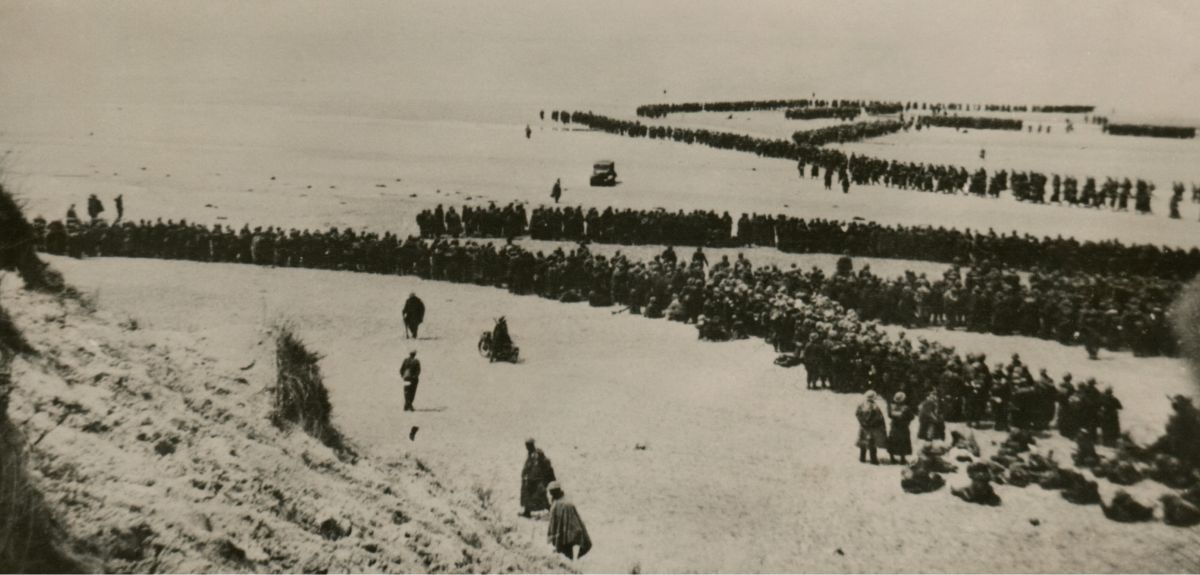
Appropriate wartime analogies might be...in Dunkirk where the big transport ships are being overturned in the channel they send in all the little boats: everyone needs to play their part.
Dr Orkin points out that the renowned psychologist Daniel Kahneman uses this idea of System 1 and System 2 - we almost have two brains. System 1 is automatic thinking, almost by instinct. We are guided by emotions, we use rules of thumb, we overinterpret cues. This particularly kicks in when we’re tired, hungry or anxious. System 2 is more considered and rational.
In the current crisis, Dr Orkin says, public health action should have simple structures to guide people when they’re using system 1.
‘So just set the default: don’t go out the house. Or – you can only buy two packets of loo roll.’
But, she says: ‘If you need people to make an active choice, you want to help people switch into system 2. And you want to give them motivation to do the right thing.’
This can be used by everyone – supermarket managers managing queues, local councils managing parks. As for whether it would be appropriate for the authorities to put people on a ‘war footing’, using analogies from wartime to encourage ‘good’ behaviour, Dr Orkin says that, in her opinion: ‘Appeals to do the right thing are effective, appeals to civic duty are effective. I personally think you want a message which emphasises that everyone has to play a role and it isn’t going to be fixed by one grand plan.’
Appropriate wartime analogies might be: Your actions have consequences for others. Don’t leave your black-out curtains open, the whole street will get bombed, not just you. Or, she says, there’s the scene in Dunkirk where the big transport ships are being overturned in the channel and then they send in all the little boats: everyone needs to play their part.
- ‹ previous
- 45 of 253
- next ›
 What Louise Thompson’s campaign tells us about the national maternity crisis
 Celebrating 25 Years of Clarendon
  Learning for peace: global governance education at Oxford
  What US intervention could mean for displaced Venezuelans
  Setting the agenda for the next century of quantum
 10 years on: The Oxford learning centre making an impact
 Mapping the Moon: the world’s first lunar atlas goes digital
  Oxford and The Brilliant Club: inspiring the next generation of scholars
 New course launched for the next generation of creative translators
 The art of translation – raising the profile of languages in schools