Features

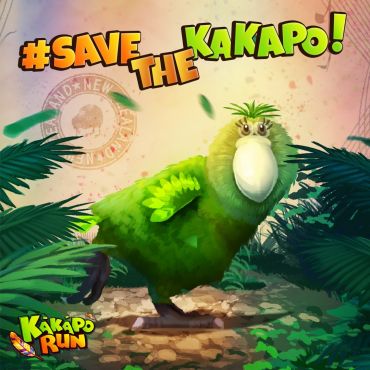 Save the Kakapo
Mobile games have never been more popular. Some now count their number of players not in the thousands or millions but in the billions, given them a reach that few other channels can compete with. But most of these games have as the main goal to generate revenue. What if we could harness the power of games for something more meaningful?
That is why I have been working with On The EDGE Conservation (OTEC), with game developer Quantum Shift Studios and publisher Playstack to launch ‘Kakapo Run’. This is the first in a series of games to gather support for Evolutionarily Distinct and Globally Endangered (EDGE) species, creatures that have no close relatives and thus represent a big slice of our natural heritage, which are in real risk of disappearing forever. The game is available for download on App Store and Google Play Store, and has no adverts or in-app purchases.
Only around 200 kakapos remain in New Zealand today – invasive mammalian predators, such as the stoat, brought to the islands by European settlers, have wiped out this Critically Endangered species on the mainland. These flightless, nocturnal parrots exist only on heavily controlled island conservation areas.
Only around 200 kakapos remain in New Zealand today
In the game, players must get the kakapo to safety to Sanctuary Island. Each level starts with the cry of the Haast’s Eagle, a huge raptor that used to be the main natural predator for kakapo, but is now extinct. The kakapo freezes in place, a behavioural response to avoid being seen by predators. Soon however, a cloud of dust rises in the horizon, and the kakapo must run for its life. To stay alive, players have not only to dodge the different obstacles on their path but also to knock out, or evade, predators like rats and stoats, brought to New Zealand by European settlers and which now alongside dogs and cats are key predators for the kakapo and its chicks.
We wanted to use this “infinite runner” style gameplay to showcase how species like the kakapo have to continuously dodge a myriad of threats to stay alive. That is why conservation actions to help this and other EDGE species are so crucial.
We wanted to use this “infinite runner” style gameplay to showcase how species like the kakapo have to continuously dodge a myriad of threats to stay alive
The game is, of course, heavily inspired in the unique and varied natural landscapes of New Zealand, the kakapo’s only home: from dense forests to idyllic coastlines; players can even run through the city dodging trams and traffic. It also features the rumi fruit, a red berry-like fruit that is one of the kakapo’s favourite foods.
But does the game make a difference? Initial research revealed that playing the game has important impacts on the players support for environmental conservation. In an experiment, we compared 100 people who played Kakapo Run with 100 people who played Subway Surfers, one of the world most popular mobile game. Our results showed not only that players knowledge increased while playing the game but also that they increasingly perceived their actions as having an impact on the environment and were more likely to volunteer for a conservation organization.
These are very encouraging results and a first for a game focused on wildlife conservation. Our goal is now to get this game in as many mobile phones as possible, not only in New Zealand, but across the globe. Could we make Kakapo Run the next Candy Crush or Subway Surfers?
We are already working on our next game, which will feature another weird and wonderful EDGE species… But for now, we want to hear what the world thinks of our latest release. Go on, have a play!
Diogo Veríssimo, PhD, is a Research Fellow, University of Oxford and Director of Conservation Marketing, On the Edge Conservation
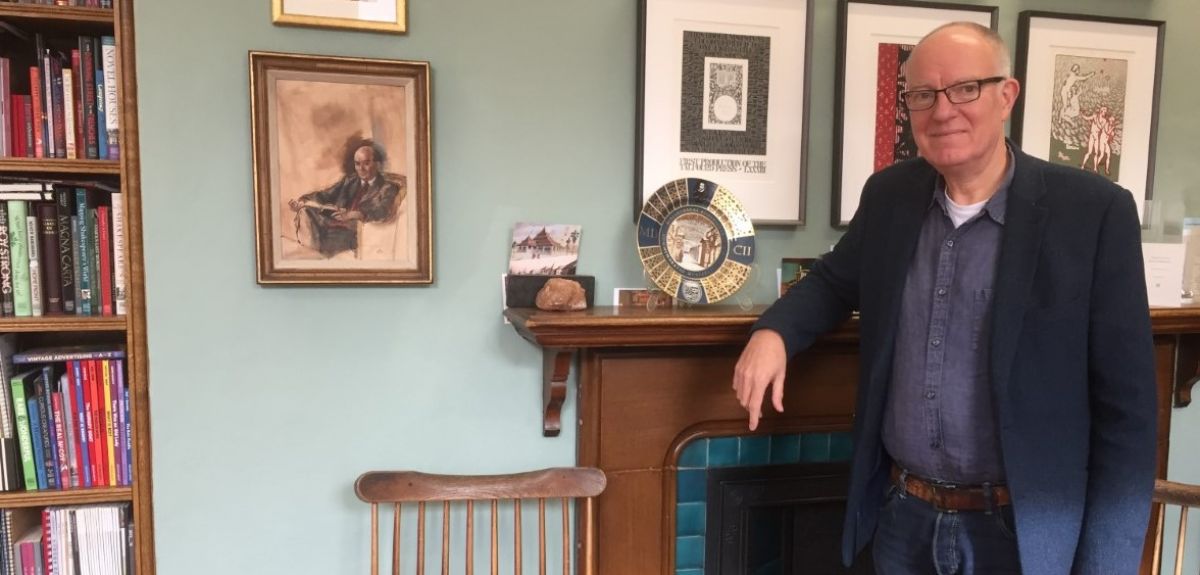
In a wood-panelled office with an enviable view of Oxford’s most iconic sights, Richard Ovenden might seem an unlikely cyber campaigner. But the latest holder of the historic post of Bodley's Librarian (chief librarian of the Bodleian) fears ‘knowledge is under attack’ from the impact of the online world on public discourse and decision-making. And preserving such knowledge is very much Professor Ovenden’s business.
Listen to Richard Ovenden's frank interview here:
In his recent work, Burning the Books: A History of Knowledge Under Attack, he has taken to the metaphorical barricades over the challenges of ephemeral digital discourse to the work of libraries and archives. But his concerns go far wider – and he warns of the impact on society more broadly of digital communication. One aspect in particular is a current concern: when communications between Cabinet Ministers and civil servants and special advisers take place on digital platforms, with end-to-end encryption, where, he fears, will the checks and balances be?
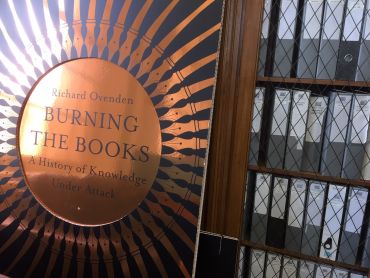 Burning the Books marketing material leaning against book shelf in Richard Ovenden's office
What will it mean for accountability, when public figures act with a sense of impunity given by secret digital platforms? Will the only sources available to future historians be self-serving memoirs?
As Bodley's Librarian, the 25th in the library’s 420 years, he takes a long view of such things. Tech may be a very modern threat, but Richard sees it as the latest in a long line of attacks on knowledge. He notes this included the destruction of Oxford’s University library at the time of the Protestant Reformation, which led to the creation of the Bodleian - an ‘Ark’ to save knowledge from the ravages of the era.
To restore accountability – and to ensure libraries such as the Bodleian can carry out their historic record-keeping role – Richard argues new measures are urgently needed to preserve communications, many of which are currently only available to big tech firms. It is a massive task. We are writing more than ever – with email and social media often replacing conversation and more formal correspondence.
Richard argues new measures are urgently needed to preserve communications, many of which are currently only available to big tech firms. It is a massive task. We are writing more than ever
Not everything needs to be kept, though. Libraries are already maintaining huge amounts of data, but many records are being lost – because they are undertaken on platforms controlled by the commercial tech industry. Considerable extra resources and a combined effort from libraries and archivists will be needed, and Richard has mooted a ‘memory tax’ on the tech firms, to pay for it. But, it is essential if we are to preserve knowledge that is now created and managed on digital platforms. Many of these are currently set to be lost to posterity – along with all those family photos on smart phones.
It will not be possible, or desirable, to keep everything, says Richard. But, in addition to communications between government officials, there is a real purpose in maintaining samples of communication on social media platforms. Just as the public records today include fascinating insights into the lives of people in the past, because of chance remarks on the margins of official documents, social media provides insight into 21st century life – warts and all.
Richard Ovenden was in conversation with Sarah Whitebloom; audio recorded and edited by Ruth Abrahams
What’s the rudest thing you can say to an award-winning translator? Probably, ‘What’s the point, I’ve got Google Translate?’ It’s got to be in the top 10. As an opening gambit, it is unlikely to impress someone who spends hours each day, carefully reworking a text for an English-speaking audience. But translators are nothing if not patient and indulgent.
Indeed, despite the advance of technology, translators are now (belatedly) receiving greater attention in their own right. The International Booker prize now recognises the ‘vital work’ of the translator, dividing cash prizes between the author and the translator. But the Oxford-Weidenfeld Prize for translation is in its 21st year – and recently announced a strong and diverse 2020 eight-book short list of European language literary translations - from German to Greek, Slovene and Finnish into English.
What’s the rudest thing you can say to an award-winning translator? Probably, ‘What’s the point, I’ve got Google Translate?’ It’s got to be in the top 10.
‘Google Translate might be becoming more accurate and efficient,’ says Dr Eleni Philippou, of Oxford’s Comparative Criticism and Translation research centre. ‘But translation has a human element to it, which cannot be replaced by a machine.’ She adds, ‘A machine (at least for now) cannot discern tone, nuance or humour. Jane Austen would fall flat, with a machine translation, because it would fail to catch her ironic wit. You need a human translator for that.’
Previously, translations would find their way into tourist shops overseas, hoping to capture the interest of travellers. But, increasingly, translations are being published further afield. In reality, translation is going through something of a renaissance, with writers such as Elena Ferrante, author of the ‘Neapolitan Quartet’, and Han Kang, who won the 2016 Man Booker prize for The Vegetarian, becoming global literary sensations. Translation is a very small part of the British book market, though, just some 3-3.5%, but translations have featured on best seller lists in the last few years and publishers cannot afford entirely to ignore them.
Jane Austen would fall flat, with a machine translation, because it would fail to catch her ironic wit
No-one knows this better than Dr Philippou, who has administered the Oxford-Weidenfeld Prize for almost five years, and has seen a range of translation submissions from publishers, both big and small. ‘Over the years, I’ve enjoyed cataloguing literary texts from the most commonly translated European languages – Spanish, French, German, Italian, and Russian – in addition to books from less-commonly translated languages, such as Modern Greek. It has also been interesting to track fashions or trends when it comes to translations. For example, Nordic Noir is currently in vogue: it has been popularised by various Scandinavian television series.’
It’s a bit like writing a book from scratch...there is no way a computer could do that. It’s very personal and it is necessary to match the tone of the original...translators have a significant role
Creativity is very much part of the translation process, according to Oxford Classics graduate, Joshua Barley. With David Connolly, he co-translated a poetry collection from leading Greek author Michális Ganás’s, A Greek Ballad. Joshua, who has lived in Greece for eight years, was delighted to be among the 2020 Oxford-Weidenfeld short list.
‘It’s a bit like writing a book from scratch...there is no way a computer could do that. It’s very personal and it is necessary to match the tone of the original...translators have a significant role,’ he says. ‘It’s really rewarding.’
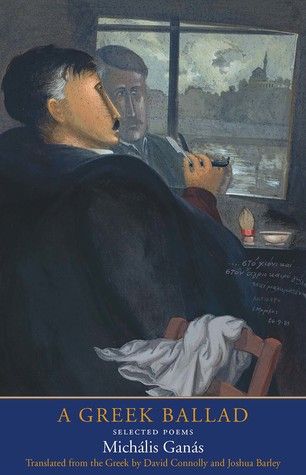
The Prize’s judges said of their translation, ‘It is a jointly translatorly and poetic tour de force that proves to be a mesmerising exploration of genres and styles. Connolly and Barley’s pioneering enterprise responds effortlessly to the range of challenges Ganás’s oeuvre presents for the translator: their renditions are inventive and formally exact when needed and stripped back when the original is elegantly succinct.’
Like Joshua, the winner of this year’s Prize, David Hackston, lives abroad and brings the literature of his adopted home to an English-speaking audience. A foreign languages graduate of UCL, he has lived in Finland for 20 years. Finnish was a minor subject for him, but David now finds himself a Finnish translator.
‘There are a lot of people translating from Swedish...Finnish is a smaller field,' he muses. ‘I'm glad my degree [in Scandinavian languages] didn’t go to waste.
You need to create a context and a voice. A passing comment might just need one extra word to make it understandable to a reader in another language. The words are only the starting point
His translation, Crossing, by Pajtim Statovci was highly-praised by the judges, ‘David Hackston’s impeccable translation never falters in the voices he gives to the characters. He switches effortlessly from Bujar’s father’s idiom of legends and fairytales to the obsessive, runaway sentences of the protagonist’s inner reflections. This is a heartbreaking novel that addresses some of the most urgent questions we face, but refuses to give any simple answers.
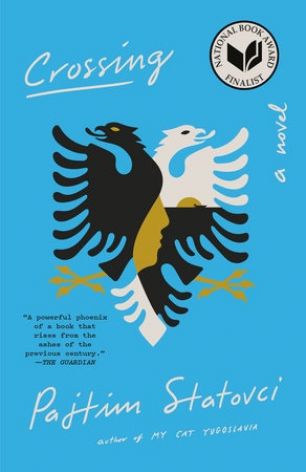
The judges’ praise points to David’s attention to detail; he does not underestimate the translator’s art, ‘You need to create a context and a voice. A passing comment might just need one extra word to make it understandable to a reader in another language. The words are only the starting point.’addresses some of the most urgent questions we face, but refuses to give us any simple answers.’
Does he choose the books he translates? Not really but, he says, publishers do take advice.
‘You have to know what will work in English. It must have universal themes. It doesn’t matter where it is set, if the story is relatable,’ he says. ‘Publishers may have never translated a Finnish book before, so they have listen to people they trust. Translators have read more literature in their respective working languages than publishers have, and our perspectives can be valuable.’
Of course, Pushkin Press, which published Crossing, was founded with the explicit aim of bringing literature in translation to the UK, and could not be happier about the win. As for David, he was delighted to win the prize – and also to translate Crossing. David says, 'It was a novel in Finnish, about events in the Balkans [where he has travelled extensively] and with LGBT themes. It was the jackpot.’
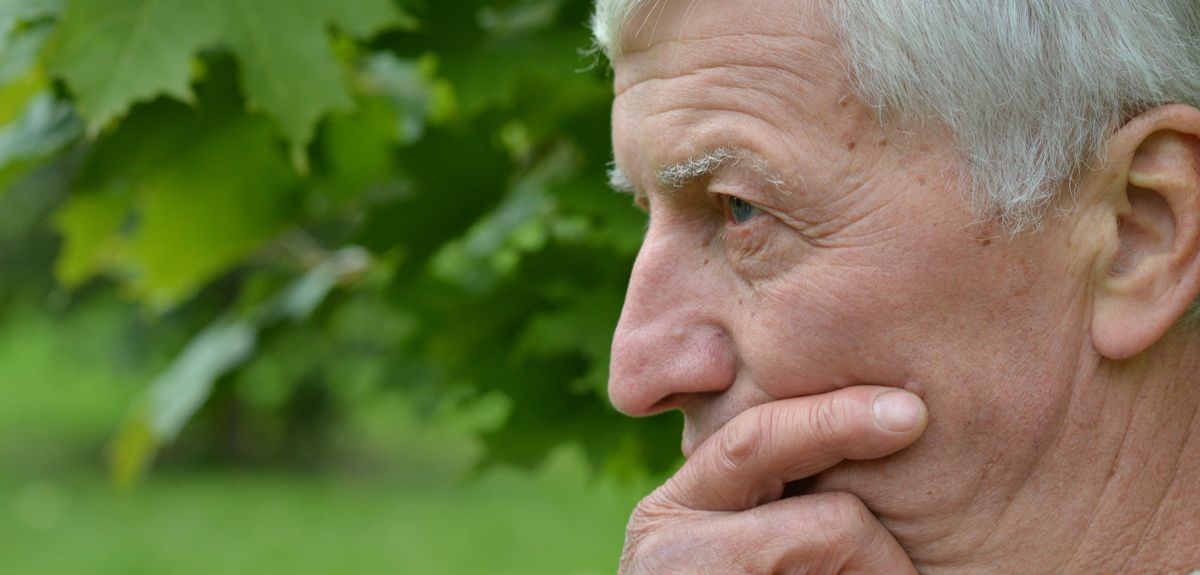
Around the world, people are living longer lives. Figures show that global life expectancy increased by five years between 2000 and 2015. In the UK, lifespans were extended by 4.2 years for men and 1.9 years for women between 1990 and 2010.
Crucially, though, our ‘healthspans’ – the healthy proportion of our lives – have not kept up. For men in the UK, only 2.7 of those extra 4.2 years have been spent in good health; for women, the figure is 1.1 out of 1.9.
As a result, an average of 16-20% of later life is spent in ill health, with many older people managing multiple chronic age-related diseases: arthritis, cancer, diabetes, cardiovascular or neurodegenerative conditions, to name a few.
How do we ensure that people can enjoy their increased lifespans in the 21st century, and ease the burden on health and care systems?
This coexistence of conditions – known as multimorbidity – has become the norm: in the US, 80% of Medicare users have at least two chronic conditions, while multimorbidity affects at least 50 million people in the EU. There are implications for quality of life, and for healthcare systems around the world. Evidence also suggests that multimorbidities develop substantially earlier in people from socially disadvantaged communities, and that polypharmacy – the taking of multiple medications concurrently – can leave patients at risk of adverse effects.
So how do we tackle this growing problem? How do we ensure that people can enjoy their increased lifespans in the 21st century, and ease the burden on health and care systems?
An Oxford University-based programme called UK SPINE was set up with government funding to accelerate innovations in healthy ageing by facilitating the free flow of knowledge between academia, industry, clinicians and investors.
There is growing evidence that targeting ageing mechanisms could reduce or delay age-related diseases
Underlying UK SPINE’s mission is the idea that targeting the ageing process itself – rather than individual conditions – may be a fruitful new approach to pharmaceutical discovery for multimorbidity. In a new paper published in the journal Drug Discovery Today, UK SPINE researchers say there is growing evidence that targeting ageing mechanisms could reduce or delay age-related diseases. Work is under way to identify drugs with the potential to be repurposed in healthy ageing, and to find new targets and biomarkers for the ageing process.
UK SPINE’s annual conference – reimagined as a series of online events taking place between 11 and 20 November – will explore this emerging area of research. Conference organiser Dr Bryan Adriaanse, UK SPINE’s knowledge exchange officer, said: ‘The UK government has set the challenge of ensuring people can enjoy an extra five years of healthy, independent life by 2035. Our conference addresses the question of how that can be achieved, covering topics including animal models of ageing, biomarkers for predicting multimorbidity, and how ageing science can improve outcomes for older people in the context of COVID-19.’
By learning more about the ageing process we can delay the onset of the conditions that do affect us as we age
Professor Chas Bountra, Oxford University’s Pro-Vice-Chancellor for Innovation, is Director of UK SPINE and will be speaking at the conference on the subject of ‘five extra healthy years’. He said: ‘The government has set a clear challenge to the research and innovation community of helping older people in the UK to live healthier lives as well as longer lives. Too many people now spend their later years taking a host of medications for a variety of co-occurring conditions – whether that’s heart disease, respiratory problems, musculoskeletal conditions like osteoarthritis, or dementia. We don’t go to our GPs because we’re getting older, but by learning more about the ageing process we can delay the onset of the conditions that do affect us as we age.
‘To achieve all this, we need to bring together the scientific, industry and clinical expertise that will enable the faster development of treatments that target not just the individual conditions associated with ageing, but the ageing process itself. UK SPINE was set up to do just that, fostering a culture of collaboration and determination to improve quality of life and reduce reliance on medication for our older citizens.’
Find out more about UK SPINE’s conference series, and sign up for individual events: https://www.kespine.org.uk/events/conference-2020-free-flow-knowledge-accelerate-innovation-healthy-ageing
UK SPINE is a national knowledge exchange network funded via Research England’s Connecting Capability Fund. It is led by the University of Oxford, in partnership with the University of Birmingham, the University of Dundee, the Medicines Discovery Catapult, and the Francis Crick Institute.

By Heloise Ardley
As we celebrate Black History Month and reflect upon the hopefully long-lasting impact of Black Lives Matter, the team behind Oxford University Business Economics Programme (OUBEP) wanted to address the issues of discrimination, race, economic opportunities and inequalities by hosting impactful conversations, enriched with data from our research.
We are very excited by the agenda for The Economics of Discrimination series as it will bring together economists, researchers, policy makers, business leaders, students and journalists together to tackle the issues of the economic impact of discrimination.
To introduce the first session, Race and Economic opportunities, I brought together David Williams from Opportunity & Insights at Harvard University and Amgad Sahli, Economics and Management Student at Exeter College, and co-founder of The Black Excellence Network in a short conversation.
Some of the other questions in the series we will discuss include:
- How parental income or the lack of affects a person’s chances of future success?
- Do banks discriminate when lending?
- How is Technology impacting changes in the labour market and could contribute to reducing gender gaps or inequalities in access to employment?
We will explore the findings from our latest research - including how policies translate to strategies and actions - and share real-world accounts of organisations and individuals effecting positive change.
- ‹ previous
- 36 of 253
- next ›
 25-year Oxford study finds the effects of conflict last for generations
 What Louise Thompson’s campaign tells us about the national maternity crisis
 Celebrating 25 Years of Clarendon
  Learning for peace: global governance education at Oxford
  What US intervention could mean for displaced Venezuelans
  Setting the agenda for the next century of quantum
 10 years on: The Oxford learning centre making an impact
 Mapping the Moon: the world’s first lunar atlas goes digital
  Oxford and The Brilliant Club: inspiring the next generation of scholars
 New course launched for the next generation of creative translators