Features
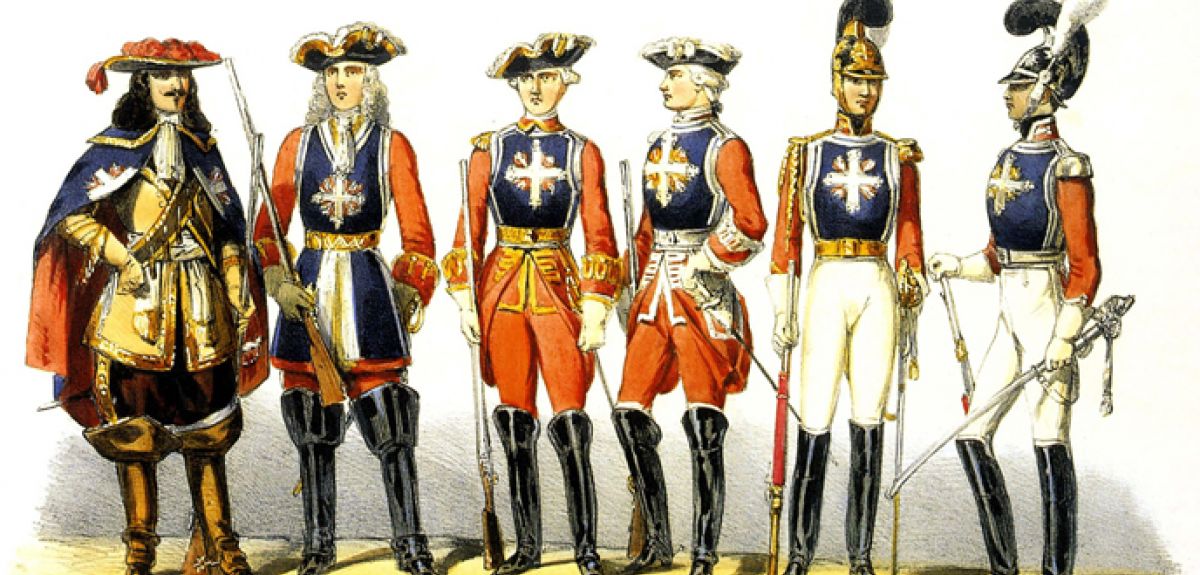
The BBC's new drama series The Musketeers – adapted from Alexandre Dumas' novel Les Trois Mousquetaires – made its debut on Sunday evening. Ahead of the screening, Dr Simon Kemp, Oxford University Fellow and Tutor in French, tackled the curious question of why the musketeers appear to have an aversion to muskets...
"So here it comes. Peter Capaldi – Malcolm Tucker as was, Doctor Who as shortly will be – is twirling his moustache as Cardinal Richelieu in trailers for the much-heralded BBC adaptation of Alexandre Dumas' Les Trois Mousquetaires (1844). It's always good to see British TV take on French literary classics. Let's hope The Musketeers has a little more in common with its source material than the BBC's other recent effort, The Paradise, for which I'd be surprised if the producers were able to put up the subtitle 'based on the novel by Émile Zola' without blushing.
"At any rate, the Dumas adaptation looks exciting, with plenty of cape-swishing, sword-fighting, smouldering looks and death-defying leaps. Plus one element that is markedly more prevalent than in the book itself: gunfire. One of the odder things about Dumas' novel for the modern reader is its singular lack of muskets.
"In the mid-1620s, when the story is set, the Mousquetaires are the household guard of the French king, Louis XIII, an elite force trained for the battlefield as well as for the protection of the monarch and his family in peacetime. They are named for their specialist training in the use of the musket (mousquet), an early firearm originally developed in Spain at the end of the previous century under the name moschetto or 'sparrow-hawk'. Muskets were long-barrelled guns, quite unlike the pistols shown in the trailer, and fired by a 'matchlock' mechanism of holding a match or burning cord to a small hole leading to the powder chamber. By the 1620s they were not quite as cumbersome as the Spanish originals, which needed to have their barrels supported on a forked stick, but they were still pretty unwieldy devices.
"There are lots of weapons in the opening chapters of Les Trois Mousquetaires, where D'Artagnan travels to the barracks and challenges almost everyone he meets along the way to a duel (including all three of the musketeers). Lots of sword-fighting, but no muskets in sight. One of the musketeers has nicknamed his manservant mousequeton, or 'little musket', and that is as near as we get to a gun until page 429 of the Folio edition, when an actual mousqueton makes its first appearance. A mousqueton is not quite a musket, though, and in any case it's not one of the musketeers who is holding it.
"The siege of La Rochelle in the later part of the story seems a more propitious setting for firearms, and indeed, as soon as he arrives at the camp, D'Artagnan spies what appears to be a musket pointing at him from an ambush and flees, suffering only a hole to the hat. Examining the bullet-hole, he discovers 'la balle n'était pas une balle de mousquet, c'était une balle d'arquebuse' ('the bullet was not from a musket, it was an arquebuse bullet', arquebuse being an earlier type of firearm). We are now 586 pages into the story, and starting to wonder if Dumas is playing a game with us.
"The suspicion is heightened when the musketeers take a jaunt into no man's land for some secret scheming away from the camp: 'Il me semble que pour une pareille expedition, nous aurions dû au moins emporter nos mousquets,' frets Porthos on page 639 ('It seems to me that we ought to at least have taken our muskets along on an expedition like this'). 'Vous êtes un niais, ami Porthos; pourquoi nous charger d'un fardeau inutile?' scoffs Athos in return ('You're a fool, Porthos, my friend. Why would we weight ourselves down with useless burdens?').
"The key to the mystery of the missing muskets is in these lines. Their absence from the novel up to this point is simply for the historical reason that the heavy and dangerous weapons were appropriate for the battlefield, not for the duties and skirmishes of peace-time Paris. Even when his heroes are mobilized, Dumas remains reluctant to give his musketeers their muskets. Remember that, writing in the 1840s, Dumas is closer in time to us today than he is to the period he's writing about, and his gaze back to the 17th century is often more drawn to romance than historical accuracy (as the cheerfully pedantic footnotes in my edition point out on every other page).
"For Dumas, the charm of his chosen period lies in the skill and daring of the accomplished swordsman, and his breathless narrative can wring far more excitement from a well-matched duel of blades than it could from a military gun battle. Heroism in Dumas is to be found in noble combat, staring your opponent in the eye as you match his deadly blade with your own, not in the clumsy long-range slaughter of unknowns. Musketeers his heroes must be, in order that they might belong to the royal guard and thus play a role in the dark conspiracies hatched around the King, the Queen and her English lover by Cardinal Richelieu, the power behind the throne. But the muskets themselves are surplus to requirements.
"Dumas does relent a little on his musket-phobia by the end of the novel. On page 645, the musketless musketeers fire at their enemies using weapons grabbed from corpses. And finally, on page 705, when Richelieu catches the four friends conspiring on the beach, we are at last granted a glimpse of the soldiers' own guns: '[Athos] montra du doigt au cardinal les quatre mousquets en faisceau près du tambour sur lequel étaient les cartes et les dès' ('He pointed out to the cardinal the four muskets stacked next to the drum on which lay the cards and dice').
"As far as I can make out, this is the only point at which we see the musketeers with their muskets in the whole story, and it seems a fitting way to present them to the reader: lying idle while the musketeers are occupied with other, more important amusements."
This post originally appeared on the outreach blog of the French sub-faculty at Oxford University.

Luminous galaxies far brighter than our Sun constantly collide to create new stars, but Oxford University research has now shown that star formation across the Universe dropped dramatically in the last five billion years.
The research, co-led at Oxford by Dr Dimitra Rigopoulou and Dr Georgios Magdis from the Department of Physics, showed that the rate of star formation in the Universe is around 100 times lower than it was five billion years ago. They also showed that some luminous galaxies could create stars on their own without colliding into other galaxies.
The findings, published in the Astrophysical Journal, suggest that most of the stars in our universe were born in a 'baby boom' period five to ten billion years ago. The observations were made using the European Space Agency's Herschel Space Observatory.
I asked lead author Dr Rigopoulou to explain the research and what it tells us about the birth of stars.
OxSciBlog: What has changed in the last five billion years?
Dimitra Rigopoulou: There is clear evidence that the galactic-scale physical processes that initiate the formation of stars in the most luminous galaxies in the Universe have changed. Locally, luminous galaxies that produce a large volume of stars are almost always associated with galaxy interactions or merging. When galaxies collide, large amounts of gas are driven into small, compact regions in the galaxies causing stars to form. This process results in a highly efficient conversion of gaseous raw materials into stars. However, we found that many galaxies were able to form stars without colliding a few billion years ago.
OSB: Why is this important?
DR: We know that the majority of the stars in our Universe were born in massive, luminous galaxies. Our results change our understanding about how stars were formed in these systems. Consequently, our view about the way the majority of stars formed in our Universe must change.
OSB: Why is it surprising that non-colliding disk galaxies can create stars?
DR: Normal disk galaxies are unperturbed systems that undergo a slow and steady evolution. So, by discovering normal disks with very high star formation rates we have uncovered a fundamental change in the galactic-scale process of star formation in the most efficient star-forming galaxies of our Universe.
OSB: What results surprised you the most and why?
DR: Over the last decade there have been various lines of evidence suggesting that in the early Universe around ten billion years ago, luminous galaxies were quite different from what we observe in the present day.
To our surprise, we found that this change already occurred less than five billion years ago, suggesting that the changes were very rapid and did not happen over long timescales. We measured ionised carbon, which is produced when the gas in the galaxy cools down and collapses initiating the formation of stars. The ionised carbon levels from luminous galaxies five billion years ago were very similar to those from ten billion years ago but completely different to today's galaxies. Something important must have happened to change galaxies' behaviour to what we see today.
OSB: Do we know why galaxy behaviour is changing?
DR: We think there are two main factors responsible for the change in the behaviour of galaxies: one is the amount of gas that is available to them and the other is the gas 'metallicity', the proportion of matter made up of chemical elements other than hydrogen and helium . As galaxies get older, they use up their gas to make stars so they run out of the raw material needed to create more stars. The availability of large gas reservoirs means that some galaxies can make stars efficiently without the need of interactions to trigger the star forming activity, as happens in local galaxies. Metallicity, on the other hand, is very closely related to star formation so a change in the specific make up of the gas can have a huge impact on the way star formation proceeds and hence affect a galaxy’s behaviour.
While our results have highlighted these important changes in the way galaxies form their stars as they turn older we now have to follow these leads and firmly establish these points of change in the fascinating lives of these luminous infrared galaxies.
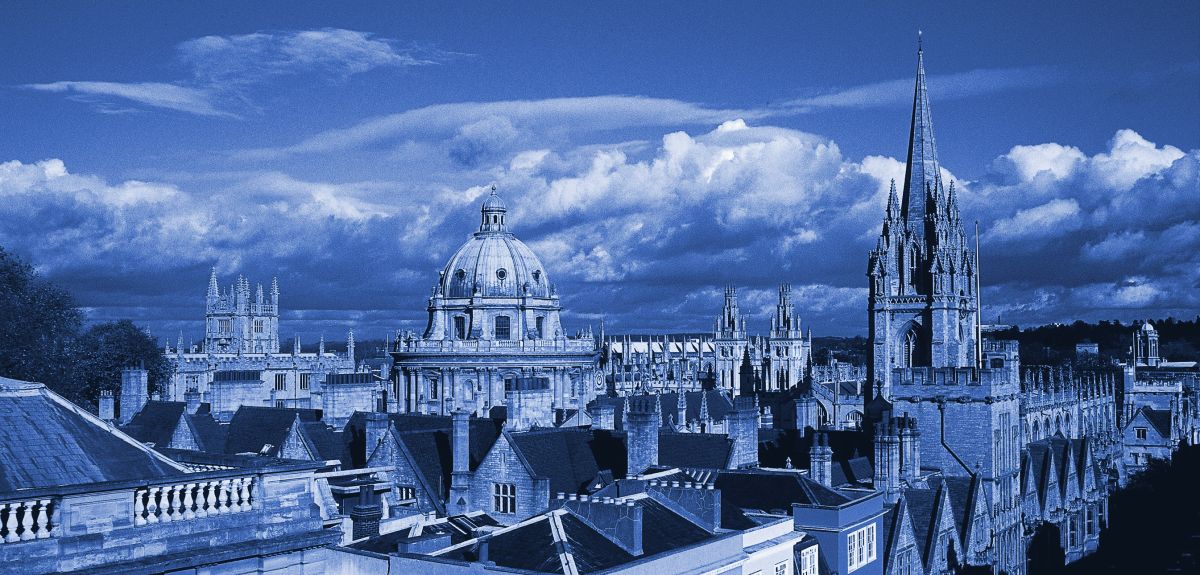
Dr Rowan Williams, the former Archbishop of Canterbury, is among this term's Humanitas Visiting Professors at Oxford University.
Dr Williams will be giving two lectures in his capacity as Humanitas Visiting Professor in Interfaith Studies, as well as taking part in an 'in-conversation' event with Jon Snow.
Acknowledged internationally as an outstanding theological writer, scholar and teacher, Dr Williams has been involved in many theological, ecumenical and educational commissions. He has written extensively across a wide range of related fields of professional study, including philosophy, theology (especially early and patristic Christianity), spirituality and religious aesthetics. He has also written throughout his career on moral, ethical and social topics and, after becoming archbishop, turned his attention increasingly on contemporary cultural and interfaith issues.
Dr Williams' programme begins on 24 January with his first lecture ('Faith, Force and Authority: does religious belief change our understanding of how power works in society?') followed by the in-conversation event. He will then give his second lecture ('Faith and Human Flourishing: religious belief and ideals of maturity') on 29 January.
Also visiting Oxford this term is General Michael Hayden, as Humanitas Visiting Professor in Intelligence Studies.
General Hayden is the former director of the National Security Agency and Central Intelligence Agency (CIA). As director of the CIA, General Hayden was responsible for overseeing the collection of information concerning the plans, intentions and capabilities of America's adversaries; producing timely analysis for decision makers; and conducting covert operations to thwart terrorists and other enemies of the United States.
Before becoming director of the CIA, General Hayden served as the country's first Principal Deputy Director of National Intelligence and was the highest-ranking intelligence officer in the armed forces. He currently serves as a principal at the Chertoff Group, a security and risk management advisory firm, and as a Distinguished Visiting Professor at George Mason University.
General Hayden will be lecturing on 10 and 12 February with talks titled 'My Government, My Security and Me' and 'Terrorism and Islam's Civil War: Whither the Threat?' respectively.
Humanitas is a series of Visiting Professorships at the Universities of Oxford and Cambridge intended to bring leading practitioners and scholars to both universities to address major themes in the arts, social sciences and humanities.
Created by Lord Weidenfeld, the programme is managed and funded by the Institute for Strategic Dialogue with the support of a series of generous benefactors and administered by the Oxford Research Centre in the Humanities (TORCH).
What's behind the engines that keep planes in the air?
In a new animation launched today, Oxford University engineers take viewers on a tour around the modern jet engine, exploring the qualities that enable fast and efficient air travel.
The animation, 'Jet Plight', is the latest in a series of videos from Oxford Sparks, a web portal giving people access to some of the exciting science happening at Oxford University.
It follows the adventures of Ossie, a friendly green popsicle who has previously been on a spin around the brain, met a rogue planet and negotiated a volcano's plumbing system, as well as investigating heart attacks, the coldest things in the universe, and the Large Hadron Collider.
I caught up the project's scientific adviser, Professor Peter Ireland of Oxford University's Department of Engineering, to find out more about the science behind the animation.
OxSciBlog: What makes jet engines such a fascinating area of research?
Peter Ireland: Many things - for example, the way in which engines are designed to deal with extremes of pressure, temperature and rotational speeds. The gas flow inside the turbine needs to be precisely controlled and this means we need to understand the way it behaves. We use sophisticated computer models to predict these flows and experiments to understand the flow physics.
OSB: What made you decide to get involved with Oxford Sparks?
PI: I want people to see that engineering is an exciting, important subject and to encourage more schoolchildren to consider it as a career. There’s a real shortage of women going into engineering, so if this animation causes even one girl to consider a career in engineering then I’d consider it a success. There are fantastic opportunities for young people in this country, with a great demand for engineering graduates. Aerospace manufacturers are always looking to recruit new engineers to fulfil their ever-growing order books.
OSB: Why is it so important to make blades from a single crystal of metal?
PI: If you steadily try to stretch most metals, over time they extend slowly - or creep. Creep gets much easier at high temperatures, and the way a blacksmith works high temperature steel is a good example of how metal deformation gets easier with heating. Most metals are made of tiny individual crystals, and creep often occurs at the boundaries between crystals. Creep is reduced if the metal part is made of a single crystal.
OSB: What makes Oxford's turbine test facilities so special?
PI: Our research has focussed on understanding the way in which engine parts perform - especially the turbine. Over the last 40 years, we have perfected computer methods and experiments to understand and predict the performance of this amazing part of the engine. Our facilities allow us to study the heat transfer in great detail and to simulate real conditions using scale models. There are special equations in what we call ‘dimensionless groups', where certain parameters behave the same at all scales. For example, you could put an Airfix-size Concorde in a Mach 2 wind tunnel and see the same patterns of pressure and shock structures that you would see in the real thing – although you might need to strengthen the model if it’s made from thin plastic!
OSB: What impact might your group's work have on making 'greener' engines?
PI: We have helped to make the engine more fuel-efficient by reducing inefficiencies caused by aerodynamic losses and cooling air. The ultimate aim of most of our research is to reduce CO2 emissions from jet engines.
OSB: Do you expect to see any major changes in jet engines over the next few decades?
PI: Yes. The engine architecture used for passenger Civil Aircraft, such as the Boeing 787 and Airbus 380, has been stable for many years. I think engine configuration will change significantly for future generations of aircraft. We can make engines more efficient by increasing the proportion of air passing through the propellers outside of the core jet intake, called the ‘bypass ratio’. However, these efficiency gains are reduced as we need to build ever-larger casings, called ‘nacelles’, around the propellers that add weight and drag. A new generation of engines called ‘open rotor’ are designed to work without needing nacelles, offering greatly improved efficiencies. I look forward to seeing these technologies develop in years to come.
Reviving a gene which is 'turned down' after birth could be the key to treating Duchenne muscular dystrophy (DMD), an incurable muscle-wasting condition that affects one in every 3,500 boys.
Boys with DMD have difficulty walking between the ages of one and three and are likely to be in a wheelchair by age 12. Sadly, they rarely live past their twenties or thirties.
For the past 17 years, Professor Dame Kay Davies and Professor Steve Davies at Oxford University have been working on treatments for the condition, which is caused by a lack of the muscle protein, dystrophin.
In recent months they have found a number of new groups of molecules which can increase the levels of utrophin, a protein related to dystrophin. Greater levels of utrophin can make up for the lack of dystrophin to restore muscle function. They have worked with Isis Innovation, Oxford’s technology transfer arm, to strike a deal with Summit, a drug development company with a focus on DMD.
'Duchenne muscular dystrophy is a devastating muscle wasting disease for which there is no known cure,' said Professor Kay Davies. 'These boys all still have the utrophin gene – and that’s what we’re taking advantage of. In adult muscle, utrophin is present in very low amounts, and we aim to increase the amount to levels which will help protect the muscle in these boys.
'If this approach, called utrophin modulation, really works as we hope, we could treat these boys very early on, increase their quality of life and length of life. They would walk for longer.
'This is a disease that really needs effective treatment – it takes many families by surprise because of the high new mutation rate which occurs in dystrophin protein such that boys with no family history of the disease can be affected.'
The Oxford team have been working with Summit, an Oxford spin-out company, to develop their first drug for Duchenne Muscular Dystrophy, SMT C1100. In 2012, SMT C1100 successfully completed a Phase 1 trial which showed the drug could safely circulate through the bloodstreams of healthy volunteers. It is now about to enter clinical trials in people with DMD.
Professor Kay Davies said: 'In our ideal world the first molecule we developed with Summit plc, SMT C1100, will have a beneficial effect in these patients. But although SMT C1100 looks promising, we asked ourselves - can we find other drugs that might do even better?'
The new deal will see a research collaboration formed between the University of Oxford and Summit to further the development of the new set of molecules.
Professor Steve Davies said: 'We want to ensure that this utrophin modulation therapeutic approach has the best chance of success in the shortest time for treating Duchenne Muscular Dystrophy. We are delighted to join forces with Summit plc in developing, alongside first in class SMT C1100, these back-up and potentially best in class candidates.'
Tom Hockaday, Managing Director of Isis Innovation, said: 'Isis is delighted to support Professors Kay Davies and Steve Davies in this vital work. Having a number of potential drug candidates in development greatly increases the chances of reaching the ultimate goal, which is to successfully treat this incurable disease.'
Glyn Edwards, Chief Executive Officer at Summit, said: 'The alliance provides access to differentiated classes of utrophin modulators, potentially with new mechanisms, to complement our clinical candidate SMT C1100 while also establishing a strong drug pipeline for the future. Importantly, the alliance cements our long-term relationship with two scientific leaders at the University of Oxford.'
- ‹ previous
- 176 of 252
- next ›
 Learning for peace: global governance education at Oxford
  What US intervention could mean for displaced Venezuelans
  Setting the agenda for the next century of quantum
 10 years on: The Oxford learning centre making an impact
 Mapping the Moon: the world’s first lunar atlas goes digital
  Oxford and The Brilliant Club: inspiring the next generation of scholars
 New course launched for the next generation of creative translators
 The art of translation – raising the profile of languages in schools
  Opening a window into the quantum world
 Tracking resistance: Mapping the spread of drug-resistant malaria