Features

Oxford is making waves, economically and academically. Thanks to the thriving Oxford ecosystem, 2016 was a great year for both the city and the University of Oxford.
Oxford Sciences Innovation (OSI), the investment vehicle for Oxford University’s spinout companies, grew to £580 million venture funding, and Oxford University itself doubled its spinout company generation from 10 in 2015 to 21 in 2016, launching OxStem, Oxbotica and Mind Foundry - to name just a few.
Oxford University Innovation, the commercialisation branch of the university and newly crowned tech transfer unit of the year*, is playing a key role in changing the face of the city, and driving a new generation of regional entrepreneurship and investment. OUI play a transformative role in translating academic research into tangible solutions with societal impact. Science Blog talks to OUI’s Chief Executive Officer Matt Perkins and Chief Operating Officer Adam Stoten their role in building the Oxford Ecosystem, and the challenges they are navigating along the way.
For those that don’t know, what is Oxford University Innovation, and what is its relationship to the University?
Matt: OUI is 100% part of the University. Our job is to monitor the University’s innovation agenda, and fulfil these objectives. We find the best commercial outlets to make sure that academic research is commercialised and broadly used, to have as wide an impact on society as possible.
Adam: The University is incredibly diverse, so the needs of one department may be very different to another. It is really important that we develop the right mechanisms and approaches to suit particular cohorts of researchers.
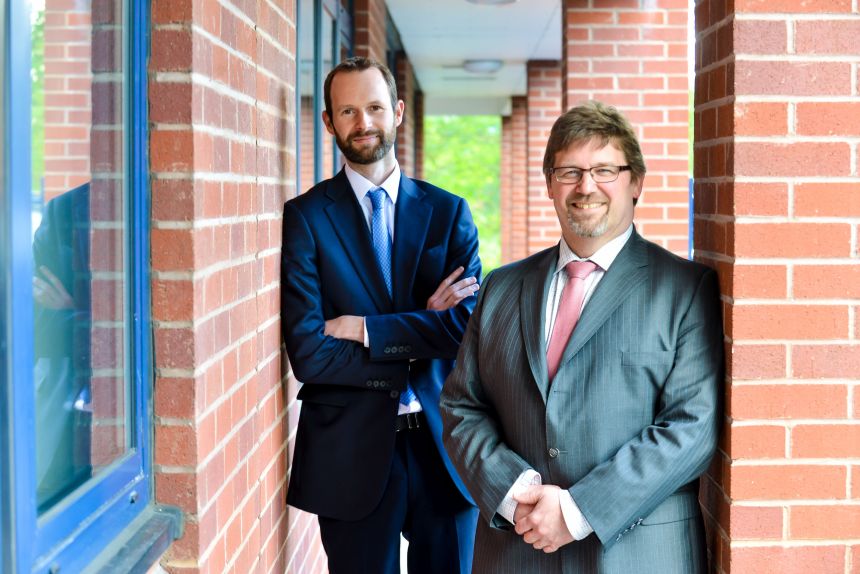 (L-R) Oxford University Innovation's Adam Stoten (Chief Operating Officer) and Matt Perkins (Chief Executive Officer) discuss their role in building the Oxford ecosystem and the challenges that they are navigating along the way.
Oxford has not historically been known for its tech outputs, what are the biggest challenges in building an innovative ecosystem?
Matt: There are a lot of good entrepreneurial services available in Oxford, and they aren’t always clearly signposted. For us, it is about making it simple and easy for people to understand and navigate the ecosystem, supporting the inventors and innovators of tomorrow to get started.
We have our Start-up Incubator, which supports companies that have been established by either students or alumni. We call these businesses start-ups, rather than spinouts.
Said Business School have their Launchpad and will soon open the Foundry, and they are both work spaces for budding entrepreneurs to achieve their ambitions and develop their inventions.
The links may not be as explicit as they could be, but each facility is related to the other, and more relationships will be established moving forward.
Helping people to find their way around the services available is a key element that OUI can bring. We can give the outside world a shop window into the Oxford University ecosystem. But one of the things we need to get better at doing is integrating ourselves and working more closely with people outside of the university environment, spreading this message more broadly.
There are some great organisations out there, such as the Oxford Investment Opportunity Network (OION). We need to find ways of reaching out to and working with them.
Are you able to share how you will go about that?
Adam: A cohesive regional voice is key, and being more collaborative is a big part of our plan for the future.
Cambridge University has done a really good job of acting regionally. Oxford is much more connected than we were a few years ago, but there remains an opportunity for all the different actors from the Oxford cluster to better market themselves, their outcomes and capacity from this region. I think that is great, and a great opportunity.
Matt: Oxford University is part of the community. We are not the whole community. We play a very strong and important part in it, but everyone will benefit from the whole region developing. The University has tremendous global reach, and that is a massive benefit for the city. We need to make sure the region understands what we can do, that the country understands what we can do. And then reach out to the rest of the world.
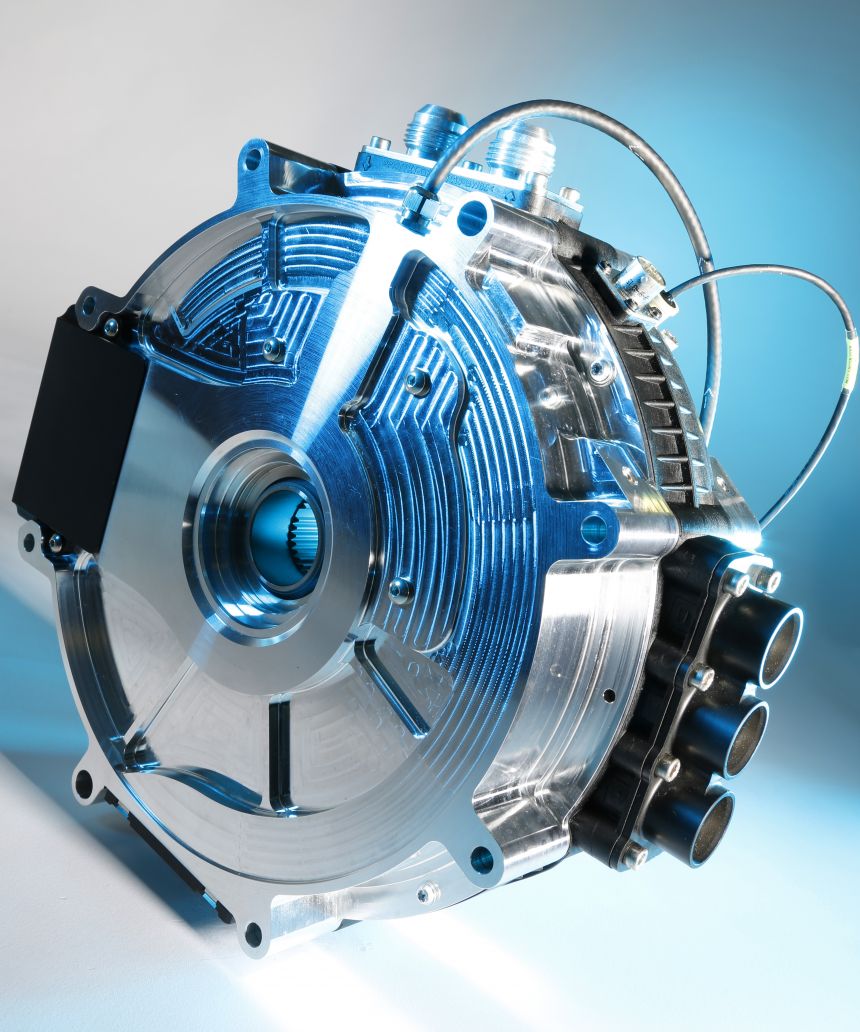 OUI's varied portfolio of spinouts include YASA Motors, which provides e-motors for hybrid or truly electronic vehicles
Image credit: YASA Motors
OUI's varied portfolio of spinouts include YASA Motors, which provides e-motors for hybrid or truly electronic vehicles
Image credit: YASA MotorsInnovation and spinouts are talked about a lot, but for many their meanings can be a bit clear, can you breakdown the jargon?
Adam: A spinout is a new company that is formed and founded by University academics, with the intention of developing a product or service(s), with societal impact.
The product itself can be anything, providing it is utilising intellectual property (IP) and is tangible for consumers. That could take the form of a patent, or it could mean channelling know-how and expertise into providing a service.
And what does innovation mean to you?
Matt: For me, it is the practical application of knowledge. Taking something you know and using it differently to achieve something that you couldn’t do before. That can take many forms: intellectual property, providing a service, reaching new markets - these are just as innovative as developing a new technology.
Adam: In our context it comes down to any way that we can help translate the outputs of university research into some kind of societal impact. That could be a new gene therapy to cure blindness, or a new smartphone game to help train healthcare workers in the developing world so they can respond to acute paediatric emergencies. That is actually a project called LIFE, which was the first to be successfully funded from our new crowdfunding platform, OxReach. It was launched with colleagues from the University last year and went on to hit its crowdfunding target of £60,000, and then to leverage almost a quarter of a million more from other investors.
No obvious economic value, but the project had massive impact potential, and could actually help save lives in sub-Saharan Africa. That is the kind of impact that we want to have.
 The spinout company Nightstarx is developing an ophthalmology gene therapy that can not only halt the progression of a particular disease, but restore a patient’s sight.
Image credit: NightstaRx
The spinout company Nightstarx is developing an ophthalmology gene therapy that can not only halt the progression of a particular disease, but restore a patient’s sight.
Image credit: NightstaRxAre there any projects in the pipeline that have a strong potential for impact that you are particularly excited about?
Matt: On top of having created 21 spinouts in the last year, we are working on 65-70 more. By the end of the year we will have created somewhere in the region of 20 spinouts. It is an incredible and wide ranging portfolio.
Nightstar is developing an ophthalmology gene therapy that has already shown in clinical trials that it not only can halt the progression of a particular disease, but restore a patient’s sight. We have very high expectations that this research will translate into a new drug with incredible impact.
First Light Fusion is a really interesting organisation that is looking to develop a form of nuclear fusion. The scale of their ambition is enormous, they have some really smart ideas, and we look forward to seeing what will happen.
Yasa motors is also very exciting. It provides e-motors for hybrid or truly electronic vehicles. Their motors are excellent and lead the world in terms of performance per unit weight.
It’s also important to remember that innovation isn’t just about tech. We are also talking to people about running spinouts from the humanities division, which is fantastic! Things like training people to speak new languages. There are some incredibly smart people out there who are coming up with good ideas which have commercial value, and our job is to provide a service to all of them.
Adam: Traditionally our focus has been with medical sciences and MPLS, but more than half of the companies that have been generated through our incubator have been based on social science research. This comes down to us thinking of different ways of commercialising outputs of research and generating impact. It might not be through patented technology, it could be more about consultancy, which is another big opportunity for us to expand our services to the University.
How do you think Oxford compares to other tech clusters and academic ecosystems, in terms of innovation?
Matt: There are lots of great universities out there, but Oxford University is overflowing with intellectual property (IP). University research now underpins around 75 per cent of the world’s key inventions, so no matter where you are geographically, any organisation would like access to that.
Cambridge have a great history of producing companies that have been successful. They started earlier and were the first British institution in that space. They are also doing a great job. This combination has attracted investment and it has attracted great people.
Oxford may have joined the game later, but we are now creating more spinouts a year than Cambridge are, substantially more. The quality of the academic researchers is as good at both universities.
I think the media sometimes like to pigeonhole people. They see Cambridge as the business university and Oxford as the place for technical experts. We have to find a way of making sure that people understand that we do the business bit just as well. That will take some effort - a combined effort across the university. We are operating at a level which is equivalent with the best universities in the US as well. But it is about raising people’s awareness as much as anything else.
What is the one thing that you would like people to know about the Oxford ecosystem?
Matt: More than anything else I would like people to understand that Oxford is the most vibrant ecosystem in the UK, Europe and probably the US. And it is only going to get better. The more that we can get that out to people, the better. I hope people will see that there is opportunity to create companies, for licensing and for investors to come in and be a part of that success story.
Adam: In the UK and Europe the Oxford ecosystem is unparalleled. You have the powerhouse of the University research, combined with access to the world’s largest investment fund dedicated to a single institution. And there is what I would consider to be the best tech transfer office working in Europe, supporting it all. I think that is an incredibly powerful combination.
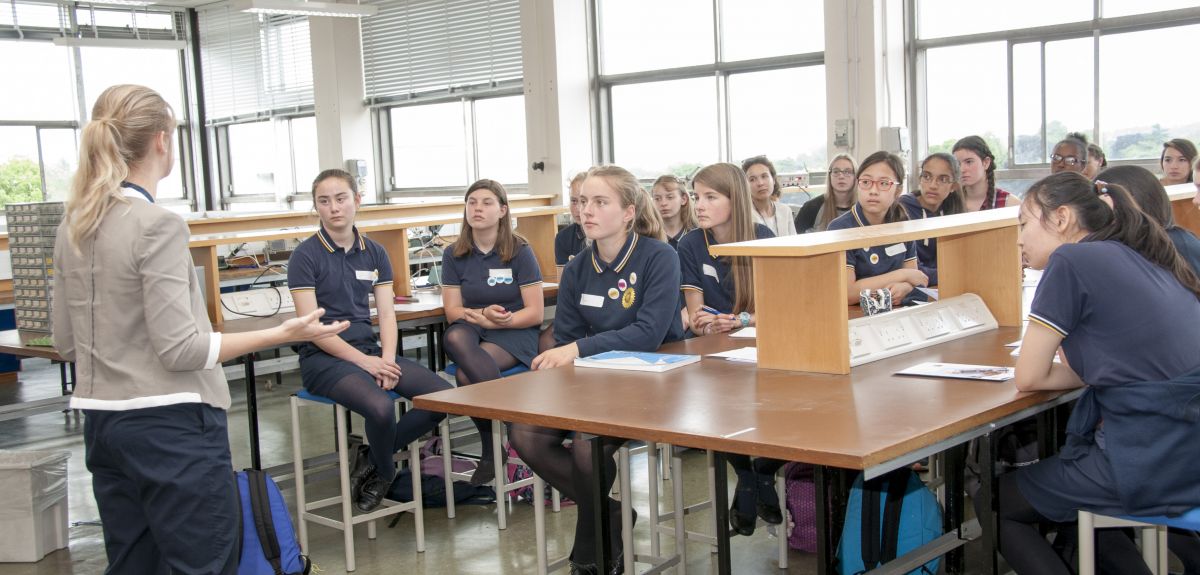
It’s no secret that of all the STEM (science, technology, engineering and maths) specialisms, the engineering industry has the biggest diversity problem. Just nine per cent of the UK’s engineers are female, and a disappointing six per cent of those in professional engineering roles are from black and minority ethnic backgrounds.
But, as followers of this series may have noticed, thanks to the combined impact of increased campaign efforts encouraging more women and minorities to enter the field, and the heightened visibility of established female mentors, the scientific community is evolving.
As a Canadian woman of South Asian heritage, Dr Priyanka Dhopade, Senior Research Associate at Oxford University’s Department of Engineering, notes female mentorship as a key factor in both the diversity tide turning, and her own career progression, commenting; ‘Female role models play a big part in a young girl’s life, and whether she can see herself in a certain role. From one of my earliest role models, Roberta Bondar, the first Canadian woman in space, to Professor Alison Noble, an incredible Biomedical engineer, they have been a motivating force in my career. You see someone like you, and just think ‘if she can do it, so can I.’ I want to offer that mentorship to other women and young girls.’
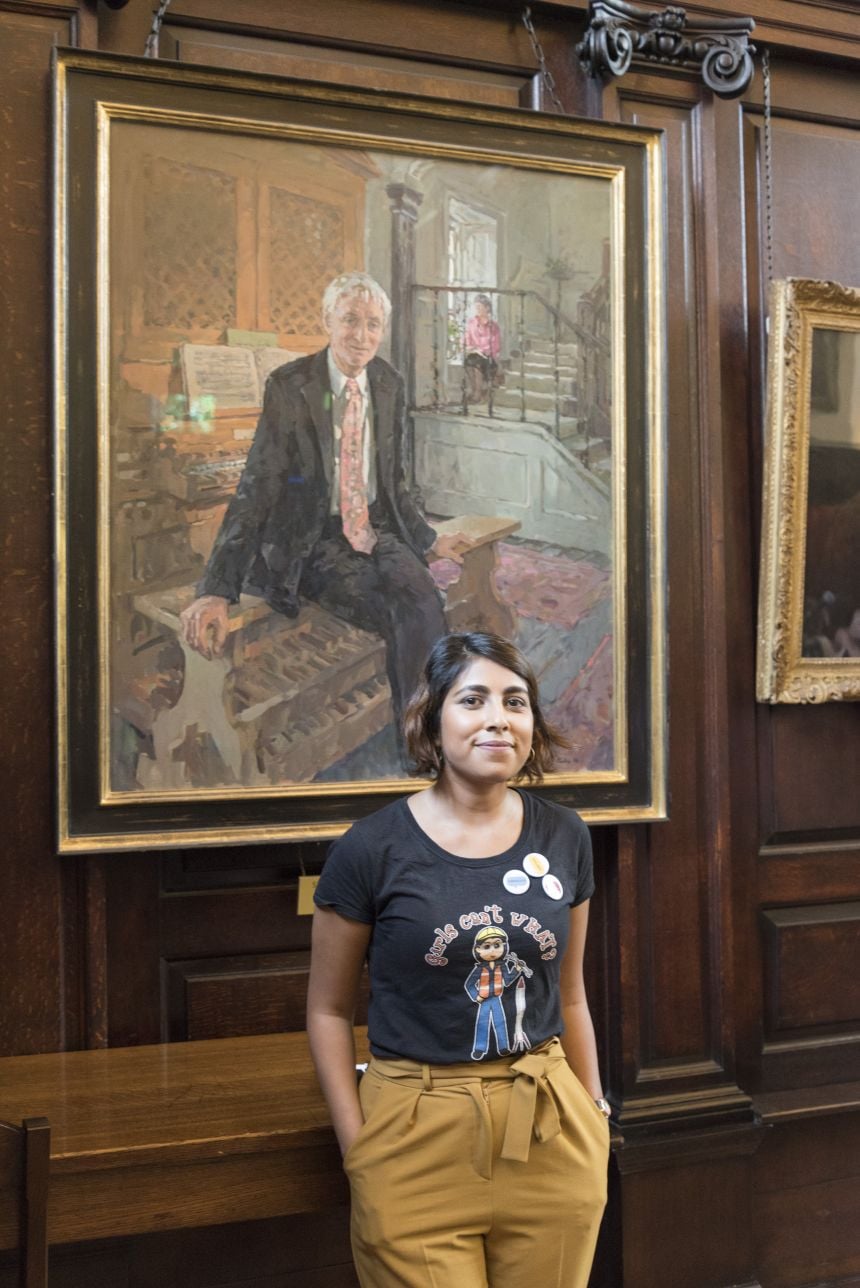 Dr Priyanka Dhopade was just named one of the UK's top 50 female engineers under 35, by the Women's Engineering Society.
In this spirit, Dr Dhopade, who was chosen by the Women’s Engineering Society, as one of 2017’s top 50 women in engineering under 35, recently organised a community outreach event to celebrate the International Women in Engineering Day (23rd June). During the event, young female science lovers, from across the county, (aged 13-15), had the opportunity to meet and learn from established industry leaders, over afternoon tea. Some attendees talk to Scienceblog about their experience of the day, and why female mentorship is so important to them.
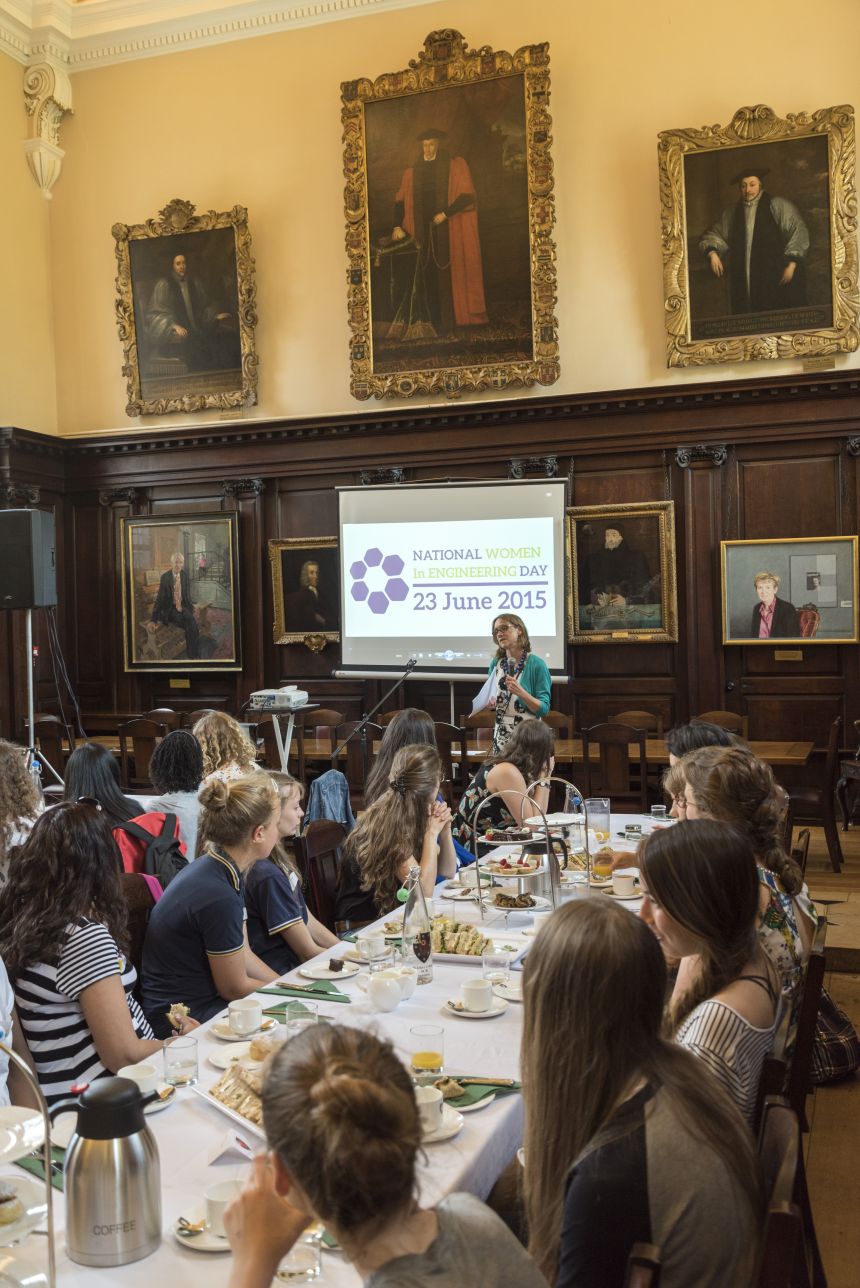 Professor Alison Noble gives a motivating speech at the National Women in Engineering Day Afternoon Tea.
Image credit: Janet Hovard
Professor Alison Noble gives a motivating speech at the National Women in Engineering Day Afternoon Tea.
Image credit: Janet HovardProfessor Alison Noble OBE FREng FRS, the event’s key note speaker, is a Professor of Biomedical Engineering and a co-founder of the medtech spin-out company; Intelligent Ultrasound Ltd. She discusses the vital role of engineers in society and her own personal journey towards being a successful engineer.
How would you describe your work to someone who knows nothing about engineering?
I am a senior academic engineer specialising in ultrasound image analysis, and I split my time between running a large biomedical engineering research group and raising funds for its activities. I also teach at the University, and I am Chief Technology Officer of my spin-out company, supporting the development of its products. I sit on a number of national committees that promote engineering in healthcare, and the commercialisation of science inventions and the growth of small science-based companies.
How has the industry changed during your career?
Image analysis deals with the extraction of meaningful information from ultrasound scans. When I started working in the field about 20 years ago, the academic and commercial focus was on imaging physics and improving image resolution, so that clinicians could see smaller structures and assess organ function. At that time, image analysis was considered a nice add-on, but not seen as having great commercial value. But, now the roles have in many ways reversed, or at least re-balanced. This is largely thanks to image digitisation, and more recently, the availability of large datasets, combined with advances in machine learning algorithms - particularly deep learning. Now, the focus is on how image analysis can be used to support workflow improvements and automatic diagnosis. My field has in a sense come of age, so there are exciting times ahead.
What research achievement are you most proud of?
At every career step there can be something special. For me, now, it has to be my recent election as a Fellow of the Royal Society. It is an incredible honour to receive such prestigious recognition.
What is the biggest challenge you face in your work?
Managing the many responsibilities, requests and expectations of an academic today.
What are your goals for the future?
My advanced European Research Council award is an ambitious project aiming to develop a next generation ultrasound imaging device, which is easier for a non-expert or occasional user to operate, than current systems. It uses machine learning to understand how an expert scans, and to build this knowledge into the ultrasound device. Realisation of this could have a big impact on use of ultrasound in healthcare.
We are also starting new collaborations in the developing world, specifically in Kenya and India. Unlike in the western world, women often do not go for antenatal check-ups during pregnancy. They only seek professional medical help if they feel very unwell. Working with overseas partners will help us to develop and evaluate imaging solutions that meet the unmet clinical need in these countries and could improve pregnancy risk assessment and outcomes in these challenging environments.
Are there any unique challenges to being a woman in engineering?
Two challenges come to mind, firstly, and perhaps surprisingly, as part of the movement to address gender im-balance in engineering, there are now arguably more opportunities presented to women to advance their career than men. But, this also means that women can be over-burdened with requests on their time, so individuals have to try to find a balance that works for them.
Secondly, the number of female directors, or members of senior management teams in companies - especially small ones, is depressingly low. I would like to see more women encouraged to get involved in innovation and set-up their own companies.
What more can be done to address the gender im-balance in engineering?
As with getting women into science, it all starts with school education. We need to teach school children to think creatively and to develop non-academic skills, which might inspire them to consider working in companies, and even setting up their own companies. Universities also need to take entrepreneurship education more seriously as core business.
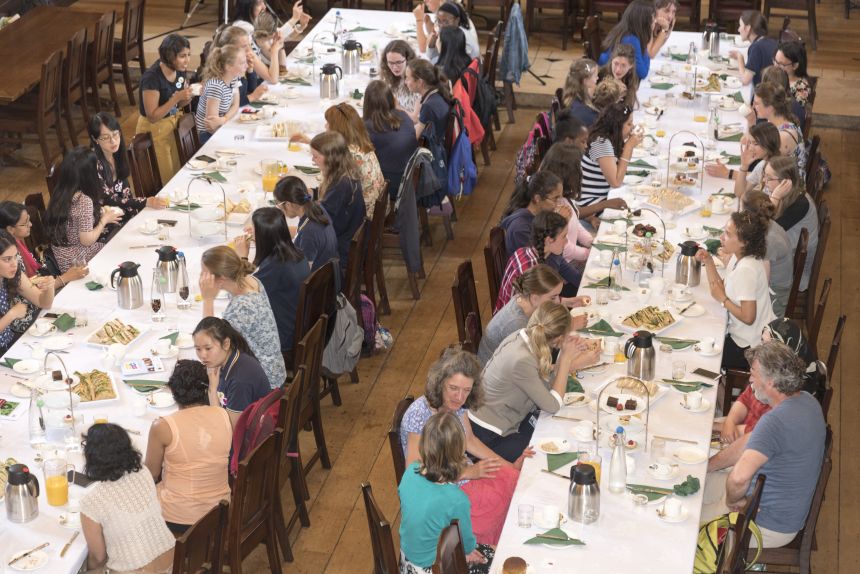 Image credit: Jane Hovard
 Why do you think events like today’s International Women in Engineering outreach tea are so important?
Special interest meetings are really important and bring together people with a common interest. For some attendees, they provide an opportunity to network and share experiences. For others, attending a meeting of this kind can potentially change their life.
Gladys Ngetich, Rhodes Scholar, Aerospace Engineering Dphil Student, Department of Engineering, Oxford University
What is your research area?
My research involves developing advanced and more efficient cooling technologies for jet engines. We work in a close partnership with Rolls-Royce Plc and are trying to find a new method of cooling that will use as little air as possible. The principle being that, by improving the overall engine efficiency you reduce emissions.
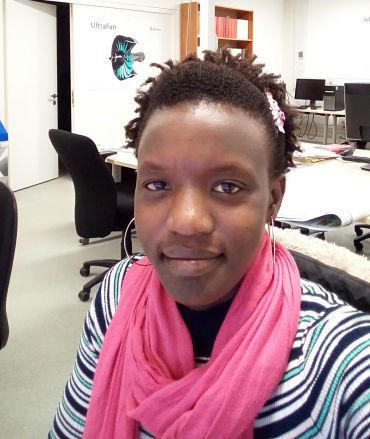 Gladys Ngetich, Rhodes Scholar, Aerospace Engineering Dphil Student, Department of Engineering, Oxford University
Did you always want to be an engineer?
Yes! My passion for engineering started when I was at secondary school in Kenya, where I grew up, but I always loved maths and science. My father and two of my brothers are engineers, so it was always a hot topic of conversation at our house.
What is the biggest challenge that you face in your field?
You need persistence and a lot of patience to be an engineer. Sometimes you have an idea that you think is great, but when you run the computer simulation to test it, it fails, so you have to start all over again. It can be a very long process that requires a lot of patience.
What are your goals long term?
I just want to be useful. Providing engineering solutions to all sorts of real world problems.
Are there any unique challenges to being a woman in science?
There is definitely a difference between being a man or a woman in engineering, and not just at Oxford. Even during my Undergraduate degree in Kenya, in a class of 80, I was one of eight women - that’s a ratio of one to ten.
Whether because of gender, or skin colour, when you are a minority it can be really lonely and challenging. You feel awkward, and it becomes about proving yourself. Proving to yourself and your classmates that you have as much right to be there as they do. At least half of the women in my class graduated with a distinction. It’s the same at Oxford, in a lab of about 30 DPhil students, I am one of three women, and one of two black students, so it’s a double challenge.
How can events like this support change in the industry?
I think there are lots of solutions, but for me, it is about encouraging young girls and talking to them from a young age about the importance of female role models and following your dreams. We have to really put the effort into supporting them to take STEM related subjects.
Some of the girls here today perhaps have never thought about a career in engineering, but after hearing Alison or some of the other speakers, they will start seeing it as a real possibility.
Never seeing someone that looks like you, working in the field that you dream of, can create a feeling that it’s not for you. Just being able to talk to, and even just see female and minority engineers makes all the difference.
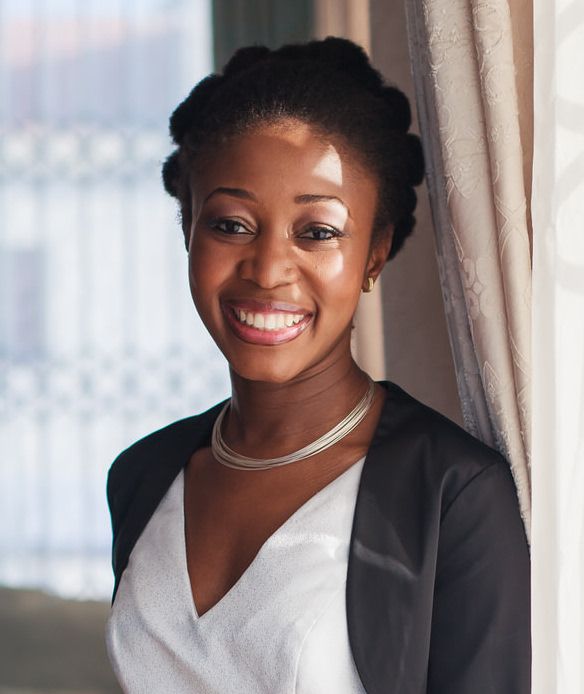 Dr. Ana Namburete, Royal Academy Engineering (RAEng) Research Fellow, Department of Engineering
 Dr. Ana Namburete, Royal Academy Engineering (RAEng) Research Fellow, Department of Engineering
Did you always know you wanted to be an engineer?
I actually grew up thinking that I was going to be the first doctor in my family. I am from Mozambique, and my parents’ generation were the first to be able to choose their own career after Colonial Independence. My grandfather had always wanted to become a doctor, but not had that choice open to him. He spotted my passion for biology and helping people, and urged me to become a doctor.
I was focused on that goal at school, but during my gap year I volunteered at a clinic, where I realised that the lifestyle of a doctor did not actually suit me. There were new machines coming in all the time, but nobody spoke English well enough to translate the manuals. I speak fluent English and Portuguese, so I took on that role. While I was setting up the machines, I realised how much I liked the technical side of understanding how machines work. That was when I decided that I wanted to be an engineer.
I had already applied to university medical programmes. But, I was lucky, I was accepted into Simon Fraser University, a liberal arts university in Canada, where I could change my degree. I switched to the Biomedical Engineering course, and have never looked back.
What motivates you?
I recently won a Research Fellowship with the Royal Academy of Engineering to look at how we can automate fetal ultrasound images. Most of the structural development of the brain happens during pregnancy so there is big potential for impact. I created algorithms that can learn the normal pattern of prenatal brain development, detecting abnormal development in the process. Because ideally, if you can detect abnormalities early, you have the opportunity to intervene.
Ultrasound is portable and affordable, so useful for community services. If we automate the analysis, diagnosis and detection of brain structures, then community health workers can operate the machine and collect the images. Our algorithms do the hard work so they do not have to.
 Earlier this year Ana (centre) visited Malawi to visit community clinics and assess their ultrasound needs.Ana has created created algorithms that can learn the normal pattern of prenatal brain development, detecting abnormal development in the process. This early detection of abnormalities allows healthcare workers to intervene as soon as possible.
What do you like most about being an engineer?
I love being able to work with different people, understanding and translating their needs, into solutions. I also get to travel lots – Malawi, most recently. I visited clinics to assess their ultrasound needs and work out plausible interventions that we could provide for them.
Are there any unique challenges to being a woman in engineering?
Well, there are not very many of us, and that’s a problem. When I did my undergraduate degree, there were 20 women out of 400 students in the entire engineering department. A really bad ratio - and I was the only black woman in the program. I couldn’t help but feel different.
Inclusion is a real issue. But, that being said, I have rarely felt that doors are closed to me - particularly at Oxford, where I have always felt supported. My chances of winning my Fellowship were actually increased by having the support of the department, and Professor Noble my as my mentor and role model.
What needs to change to level the engineering playing field?
I think we need to see more role models, and for that, we need more women in the industry in general. Girls decide at a young age whether STEM is not for them, and we need to understand why that is.
The way we interact with technology in general today is completely different to when I was a teenager. Now everyone is a digital native, interacting with smart phoned and the web from a young age. This is good news for STEM.
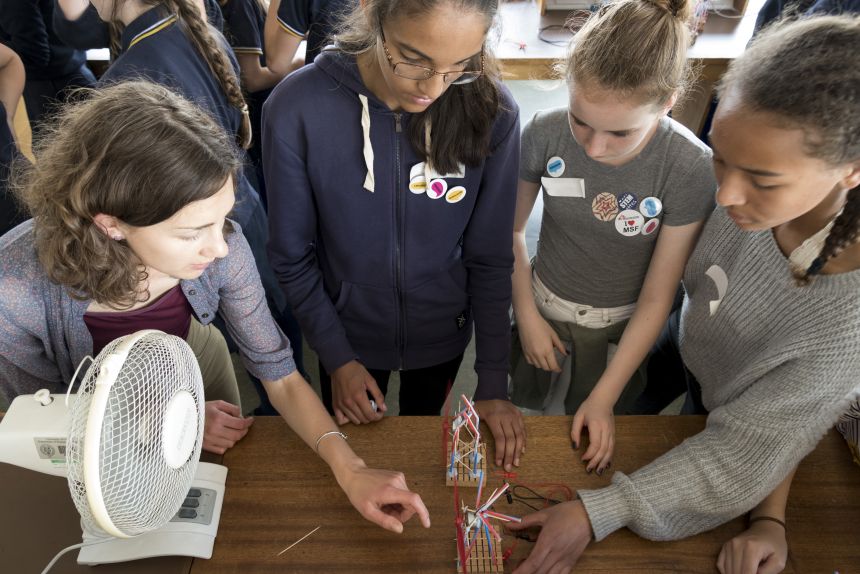 The girls' get hands-on, building a wind turbine.
And what do the scientists of tomorrow think?
Mary Lee, 14 and Kitty Joyce, 15, Oxford High School, Oxford
‘We have really enjoyed this event and having the chance to decide what we want to do. We know that there are more men in science than there are women, but would never let this hold us back. Girls should be encouraged to do what they want, and women should have the same opportunities as men.
It has been great to meet new people, and take part in the practical workshop (led by Gabby Bouchard, Outreach Officer at the Department of Engineering). It was fun building the wind turbine.
‘We don’t learn about engineering at school and we should. We are here because we love science, but until today had never really thought about engineering as a job - but, that could change now.’
Sol Zee, 13 and Carys-Anne,14, Cherwell School, Oxford
‘It has been great to meet so many new people, and talk to other girls that love science too. We have a female science teacher, but listening to, and hearing how much the women here have achieved is really inspiring. It makes you excited that if you work hard, that could be you one day. We noticed that there are so many jobs in engineering that we did not know anything about, and will ask more questions about now.’
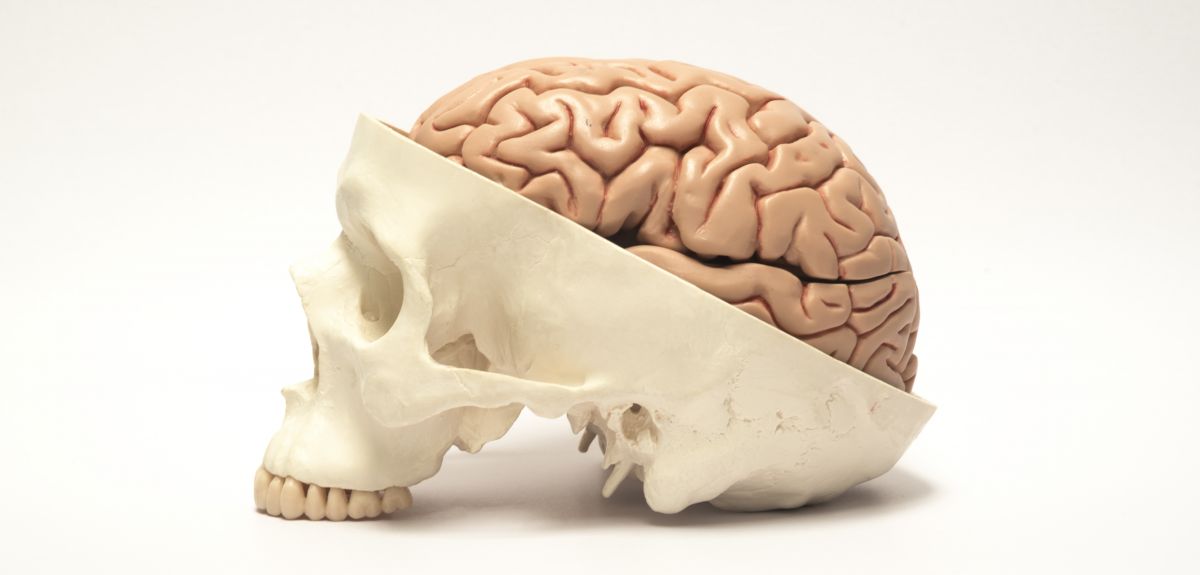
Professor Alain Goriely is Professor of Mathematical modelling at Oxford University’s Mathematical Institute and founder of the International Brain Mechanics and Trauma Lab (IBMTL). He talks to ScienceBlog about the key findings from his recently published work ‘Dimensional, Geometrical and Physical Constraints in Skull Growth’, and how geometry and mathematical modelling can help us to understand the mechanics of the brain.
In 2013, together with Prof. Antoine Jérusalem from the Engineering Department, I opened the International Brain Mechanics and Trauma Lab (IBMTL) here in Oxford. IBMTL is a network of people interested in the many and varied problems of brain mechanics and morphogenesis. As part of the launch, in true Oxford style, the team organised a workshop, where I got talking to Jayaratnam Jayamohan, aka Jay Jay, a brilliant paediatric neurosurgeon at the John Radcliffe Hospital, in Oxford, whose work has featured in BBC documentaries. Jay Jay routinely performs surgery on children to rectify abnormal skull growth (so-called “craniosynostosis”). The variety of shapes and intricacy of growth processes that he talked about immediately captured my imagination. He explained that much has been learnt about this process from a genetic and biochemical perspective and the world expert, Prof. Andrew O. M. Wilkie, also happened to be working in Oxford. I decided to pay him a visit.
Andrew Wilkie has done ground-breaking work in identifying genetic mutations behind rare craniofacial malformations and, in my discussions with him, he was particularly helpful in explaining the mechanisms underlying this fascinating process. Yet, surprisingly, I found that very little was known about the physics and bio-mechanics of the problem. And when I was told that the problem of understanding the formation of these shapes was probably too complex to be studied using mathematical modelling tools, I realised I had a challenge I couldn’t possibly resist. What’s more I had the perfect partner in Prof. Ellen Kuhl at Stanford University. Ellen is an expert in biomechanical modelling and has developed state-of-the-art computational techniques to simulate the growth of biological tissues. We had much to work on and still do.
The growth of the skull in harmony with the brain is an extremely complex morphogenetic process. As the brain grows, the skull must grow in response to accommodate extra volume while providing a tight fit. These are very different growth processes. The extremely soft brain increases in volume while the extremely hard bone must increase in surface area. Using mathematical modelling, we set out to understand how this process takes place.
In the spirit of mathematical modelling, we started with a very simple question: ‘how would a given shape remain invariant during such growth processes?’ We know that the skull grows through two different processes: first, accretion along the suture lines (transforming soft cartilage into bone) and second, remodelling of the shape to change locally the curvature. Without remodelling, the shape cannot remain invariant. Since surface addition mostly happens along a line, a point with initial high curvature away from this line would remain highly curved unless a second process enabled the reduction of the curvature so that the shape remains a dilation of the original shape.
Using dimensional arguments, we concluded that the three processes (volume growth, line growth, and remodelling) are inter-dependent and must necessarily be tightly regulated. But how is this process synchronized? Since the information about the shape is global, the cues that trigger the growth process must be physical as has been suggested in the biological literature. By simple physical estimates of pressure, stresses and strains, our analysis further identified strain as the main biophysical regulator of this growth process.
At this point, a natural question to ask is ‘what happens when this process is disrupted?’ We decided to extract the fundamental elements of this growth process by looking at the evolution of a semi-ellipsoid (an elongated half-sphere) divided into a number of patches representing the various bones, fontanelles (soft spots), and sutures of the cranial vault. Normal growth process is obtained by allowing the bones to grow along the suture lines. However, we decided to perturb the system by fusing some of the suture lines early as happens during craniosynostosis. To our great surprise, the various shapes obtained mirrored the ones found in craniosynostosis. We showed that idealised geometries produce good agreement between numerically predicted and clinically observed cephalic indices (defined as the cranial vault’s width by its length) as well as excellent qualitative consistency in skull shape – in other words the model worked. The particular geometric role in the relative arrangement of the early cranial vault bones and the sutures appear clearly in our models. What is truly remarkable is that, despite the extreme complexity of the underlying system, the shapes developed in these pathologies seem to be dictated mostly by geometry and mechanics.
What's next? Our models are, of course, extremely simple from a biological standpoint. However, they can be easily coupled to biochemical processes in order to analyse several open questions in morphogenesis and clinical practice, such as the impact of different bone growth rates, the relative magnitude of mechanical and biochemical stimuli during normal skull growth, and the optimal dimensions of surgically re-opened sutures. Our mechanics-based model is also a tool to explore fundamental questions in developmental biology associated with the universality and optimality of cranial design in the evolution of mammalian skulls. These questions were raised exactly a century ago by d’Arcy Thompson in his seminal book ‘On Growth and Form’ and we now have the mathematical and computational tools to answer them. We are only at the beginning.

Politics, elections, Donald Trump, and Pokémon GO are just some of the events, people, and subjects that influence British children’s creativity and use of language, says a report published today by Oxford University Press (OUP).
Following OUP's analysis of the 131,798 fabulously inventive, funny and politically astute short stories for the 2017 BBC Radio 2 Chris Evans’ Breakfast Show’s 500 Words competition, a wealth of fascinating insights into the lives of British children and their imaginative use of English have emerged.
The Children’s Word of the Year is trump, picked because of its significant increase in use (a total rise of 839 per cent on 2016) by entrants writing in this year’s competition and the sophisticated way in which children used it to convey humour and satire, and evoke powerful descriptive imagery.
Every year children show a keen interest in contemporary affairs and world events from sinkholes and the London Olympics to the Ebola crisis, refugees and Tim Peake’s spacewalk. This year, Donald Trump took office as President of the United States in the same week that 500 Words launched.
Trump is mentioned in a wide variety of contexts, from the US elections and politics, to tales of space, aliens, and superheroes, giving expression to children’s creativity, playfulness, and humour. Children also use the noun to invent new character names including Boggle Trump and Snozzle Trump.
Vocabulary associated with the US presidency was far more prevalent in 2017 than in 2016, including president, America, wall, Hillary Clinton, White House, Trump Towers, Obama, Mexico and Putin. Displaying an ear for Trump’s particular use of words and catch phrases, one entry stood out for its ability to brilliantly capture the rhythm of his speech. In Donald J Trump Goes to the Moon, a 12-year old girl wrote: “10... 9...8 ‘my hair is so amazing’...7. ‘And real’. 6... 5 ‘I am going to make the moon great again!’. 3... 2...1 blast off!!”
Political vocabulary is a notable area of growth in 2017, showing children’s engagement with the news and media. The words politics and political show an increase of 115 per cent and 78 per cent respectively since last year, and an analysis of a cluster of around 30 words relating to contemporary politics (for example president, vote, election, campaign) shows a 58 per cent increase in frequency since 2016. New words and phrases in this year’s stories include Brexit, Article 50, fake news, and alternative facts.
Vineeta Gupta, Head of Children’s Dictionaries at Oxford University Press, says: 'This year, the stories demonstrate creativity, style and wit, all underpinned by a sophisticated use of grammar and language. From humorous punning to creating their own words, children have played and experimented with language with impressive results. The stories have not only provided us with infinite entertainment, but also contributed to language research for children’s dictionaries. As well as this, 500 Words has led to academic research at Oxford University which will support teachers and schools.'
Chris Evans, presenter of BBC Radio 2's Breakfast Show, said: 'The OUP’s research is always such a fascinating insight into the minds of children today. This year’s analysis reveals just how tuned in they are to what’s going on in the world. It’s so inspiring to see how they use language so creatively, having fun with words, using humour and bringing them to life through their wonderfully unconstrained imaginations.'
500 Words is the BBC Radio 2 Breakfast Show’s short story writing competition for children aged 5-13, launched by Chris Evans back in 2011. Earlier this year, children were invited to compose an original work of fiction, using no more than 500 words.
OUP analysed the entries using its Oxford Children’s Corpus—a large electronic database of real and authentic children’s language—the only one of its kind in the world. It contains language written for children (54 million words) and also language written by children (284 million words).

From the books we read, to the films and programmes we watch, and the theatre productions we attend, the arts’ have the power to get us all talking and thinking. But can they actually influence our perceptions of real issues?
Using the play 'Brainstorm', (a Company Three production about teenage brain development), as a litmus test, recently published Oxford University research examines exactly that.
The study set out to see if watching a play about the teenage brain, could impact how people felt about criminal responsibility. Because of the nature of the production, perceptions of offences committed by children under the age of sixteen were of particular interest.
From hormonal outbursts, to rash decisions and bouts of expression, it is well known that young people go through a lot of behavioural changes during adolescence. How much people understand that it is the brain’s natural mechanisms that cause these changes, as it develops, with age, is less well known. Produced in collaboration with neuroscientists at UCL, and teenage performers, ‘Brainstorm’ supports this understanding, communicating complex scientific knowledge and highlighting the various developmental changes that adolescents experience as their brains change.
An adult might find it easier to resist the urge to lash out, or respond to confrontation. But, for a teenager, that impulse is likely to feel stronger and much harder to resist. Their brains naturally respond to impulses, and the part of their brain that would ordinarily resist them is still developing, and therefore much weaker.
When considered in the context of criminality, if people are not truly responsible for their brains and the brain influences whether or not we offend, it could be argued that teenage offenders may not be truly responsible for their crimes.
‘Brainstorm’ audience members were asked to complete a survey of questions, either before or after watching the play. A total of 728 respondents shared their views on four questions, framed around three key issues; the age of criminal responsibility, moral responsibility and the likelihood of reoffending.
Results revealed that the play did affect audience attitudes to crime, and particularly youth crime. After watching the play, participants perceived a hypothetical young offender as less likely to reoffend than an adult offender. They also perceived the young, but not adult offender, as less morally responsible for their actions, especially those who had committed a first time offence.
Robert Blakey, the study’s author and a DPhil student at Oxford’s Centre for Criminology, said: ‘We all have this feeling that when we resist an impulse, we are deciding to resist that impulse – not our brain, but this mental sense of me that makes decisions free from biological constraints. But neuroscience suggests this just isn’t true. We are always affected by our brain – in every decision that we make.
‘After learning about the science of the teenage brain, the public may change how it views teenage offenders. And that’s exactly what happened after these theatre goers watched 'Brainstorm'. They changed how they viewed teenage offenders.
‘In the future, I expect neuroscience to change our priorities, so that we think more about why teenagers offend, and how we can help teenagers choose the right path, rather than ignoring the cause and closing the cell door completely’.
The full study is available to download from the online journal Frontiers in Psychology
Learn more about the teenage brain in this Oxford Sparks animation:
- ‹ previous
- 95 of 252
- next ›
 What US intervention could mean for displaced Venezuelans
  Setting the agenda for the next century of quantum
 10 years on: The Oxford learning centre making an impact
 Mapping the Moon: the world’s first lunar atlas goes digital
  Oxford and The Brilliant Club: inspiring the next generation of scholars
 New course launched for the next generation of creative translators
 The art of translation – raising the profile of languages in schools
  Opening a window into the quantum world
 Tracking resistance: Mapping the spread of drug-resistant malaria