Features

Five graduate students currently studying at Oxford have been awarded £1,000 grants from the Vice Chancellor’s COVID-19 African Innovation Seed Fund for entrepreneurial projects aimed at addressing global challenges stemming from the pandemic.
Professor Louise Richardson, Oxford's Vice Chancellor, said, ‘I am proud to see how the five students have reimagined their research to address urgent global challenges created by the pandemic. Whilst completing their graduate courses in the midst of a global pandemic, they have unleashed their creativity and insight to support the most vulnerable in our societies.’
The COVID-19 African Innovation Seed Fund grants were awarded in partnership with the Oxford University Africa Society, during the 2021 Oxford Africa Conference. The five winners are reimagining their research and using their expertise to accelerate access to education, health services, and safe drinking water.
Held virtually in May this year, and introduced by Dr Tedros Adhanom, Director General of the WHO, the Conference highlighted innovations and progress in health, economics, climate and politics in Africa.
With their specific knowledge and engagement with the African context, they are uniquely positioned to tap into the vibrant Oxford innovation ecosystem to create purpose-focused solutions...The winners truly represent the explosion of talent that is in the African continent
Dr Watu Wamae
Dr Elisha Ngetich, President of the Africa Society, and a current DPhil candidate at Oxford said, ‘Innovation is the cornerstone of Africa’s future. It makes me extremely proud to see the cutting edge research and innovation being done by these students at Oxford and the potential this could have for the continent.’
Dr Watu Wamae, AfOx Health Innovation Platform lead, said, ‘The creativity and phenomenal ability of the five students to pivot their research to address real challenges in Africa is commendable. With their specific knowledge and engagement with the African context, they are uniquely positioned to tap into the vibrant Oxford innovation ecosystem to create purpose-focused solutions that will positively impact livelihoods. The winners truly represent the explosion of talent that is in the African continent.’
The Winners
Increasing access to Preterm care in a time of a pandemic
Josephine Agyeman-Duah

Josephine is a 3rd year DPhil candidate in the Nuffield Department of Women’s & Reproductive Health. Her research seeks to evaluate the effectiveness of a neurodevelopmental assessment tool for babies born pre-term. Such babies are at higher risk of neo-natal morbidity and developing mental health problems.
With the support received from the Vice Chancellor’s COVID-19 African Innovation Seed Fund, Josephine will be able to buy equipment and train more health assessors for the virtual platform.
She said, ‘My motivation for applying to the Oxford 2021 V-C COVID-19 African Innovation Seed Fund was to leverage the opportunity to promote a research idea by an African scholar at Oxford and to support an idea which will be a huge benefit to the African continent and globally. The availability of a platform for neurodevelopmental assessment in the time of a pandemic or where access to health centres is limited, will boost the possibility of scaling up neurodevelopmental screening.’
This innovation will have huge benefit even beyond the pandemic. Virtual screenings will allow health practitioners to reach more patients in a timely manner.
TGI career mobile app
Segun Afolaranmi

Segun is taking an MSc in Integrated Immunology. He is the co-founder of The Ganglion Initiative, an organisation supporting career development and entrepreneurship among secondary school students in Nigeria.
The pandemic significantly affected Nigeria’s already weak schools career counselling services. Segun’s team is building an innovative mobile app. It will allow The Ganglion Initiative to reach more students and schools digitally, providing comprehensive and tailored information on career and scholarship opportunities.
He said, ‘This award is in honour for the dedicated volunteers at The Ganglion Initiative who work tirelessly to achieve our vision, and the funding will support our efforts to reach more students by deploying the online tool.’
The app will simplify information on seemingly complex topics, such as choosing a career and applying to university, through explainer videos and puzzles. Users will also be able to chat with directly with volunteers enrolled in higher education.
Their aim is to reach at least 20,000 Nigerian students. The support from the Vice Chancellor’s COVID-19 African Innovation Seed Fund will help complete the product design of the app as well as online and offline publicity of the app.
Improving Water Pricing Strategies Amidst Ghana's COVID-19 Free Water Policy
Emmanuel Opoku

Emmanuel is taking an MSc in Water Science, Policy and Management. His innovation aims to ensure that the most vulnerable households in Ghana have access to safe drinking water amidst the pandemic.
Emmanuel aims to devise a strategy to subsidise water prices for the most vulnerable water users, by assessing their water affordability. Household water affordability is determined by finding the ratio of household’s expenses on water to their total expenditure/income. Based on the 2018 UN’s economic growth report, households whose water affordability is below 10% are considered vulnerable.
He said, ‘The Increasing Block Tariff water pricing strategy has been widely adopted by utilities in Sub-Saharan Africa, but it imposes differential affordability burden on low-income households and hinders utilities from fully recovering costs. This is a good opportunity for not only determining befitting subsidy beneficiaries but for developing cost reflective tariffs designs that could be adopted globally.’
Emmanuel has developed an innovative approach, calculating water affordability in 100 households over a 10-day period. From his analysis, households whose water affordability is below the 10% threshold will be marked as vulnerable. This will allow the Government to target vulnerable areas and provide proportionate subsidies on tariffs. .
His innovation has the potential to create long-lasting improvements in water-pricing techniques in Ghana. The support from the Vice Chancellor’s COVID-19 African Innovation Seed Fund will cover the travel and research costs.
Energy for Health Initiative
Godwin Nwangele

Godwin is taking an MSc in Energy Systems in Oxford’s Department of Engineering Science and his innovation aims to develop smart technology that connects solar power to hospitals.
One of the challenges facing the healthcare sector in Nigeria, and other African countries, is limited access to reliable electricity supplies. This challenge has been compounded by the pandemic, because the infrastructure needed to transport safely and store the vaccines requires steady supplies of power.
He said, ‘Winning the Vice Chancellor’s innovation award is a proud achievement for me. It is heartwarming to know that my idea is selected to build a resilient healthcare system in Africa. I am now motivated to work harder to complete this research, prototype it, and move to the implementation phase.’
This initiative seeks to conduct research using a Smart Sequential Loader (SSL) to provide solar power to hospitals, while cutting costs and achieving capacity optimisation. Not only will this be beneficial for vaccine equipment, but for the healthcare system and for those who depend on it.
Godwin will be using the Vice Chancellor’s COVID-19 African Innovation Seed Fund award to fund this research and obtain the device that will address this challenge. He also plans to partner with others on the African continent to roll out this solution beyond Nigeria.
The Right of Access to Educational Materials: International and Domestic Law
Sanya Samtani

Sanya is a final year DPhil student in Law. Her research offers constitutional tools to ensure access to educational material for people living in poverty and with disabilities in South Africa.
Despite the Bill of Rights in South Africa guaranteeing all people the right to education, the Copyright Act of 1978 prohibits people living in poverty and people living with sensory disabilities from access to educational materials such as textbooks.
She said, ‘Facilitating access to educational materials for all is key to knowledge generation and innovation, which in turn leads to a flourishing democratic society. South Africa's Copyright Amendment Bill is a positive step in the direction of inclusive access, grounded in constitutional values and the Bill of Rights.’
Sanya’s research highlights how these laws prevent millions of South Africans, who cannot afford a book, from accessing the material through photocopying. And that the law, which does not allow format shifting, precludes widespread use of assistive technologies, thus also denying access to people living with disabilities. As South Africa has entered into several lockdowns and tuition has been online, the copyright law, and the challenges it presents, have been exacerbated.
Sanya plans to use the grant to publish her research as an openly accessible monograph. This will be hugely valuable to those who are championing copyright reform and the access to education and learning materials in South Africa.

By Dr David M. Lyreskog, Postdoctoral Researcher, Department of Psychiatry
People across the world are looking forward to the greatest sporting event on earth: the Olympic Games. Although it may look and feel quite different this time due to the COVID-19 pandemic, it serves as a source of inspiration for millions of adults, children and young people alike. The athletes competing in the coming weeks mount a tremendous responsibility on their shoulders. Representing the pinnacle of human performance, Olympians are not merely idolized for their athletic abilities, but also often praised for their moral character, sportsmanship, and/or mental resilience.
We like to think that athleticism and doing sports is good for us, as it can offer a sense of achievement, and teach us valuable skills such as perseverance and team spirit. People are inspired by incredible athletes and their achievements; however, do these athletes make appropriate targets of aspiration – for young people in particular?
Exercise vs sports
Exercise and top-level sports differ in some significant ways. Where exercise has proven over and over again to be an excellent means to promote not only physical health, but also well-being and mental health, professional sports may not be very healthy.
During the Olympics alone, about 11% of the athletes incur injuries. In elite sports teams, the prevalence of depression and anxiety is sometimes as high as 45%, and in adolescent elite sports the prevalence of eating disorders is approximately 14%. The pursuit of performance – of excellence – does not appear to be a healthy one.
 Olympic gold-medallist Simon Biles recently withdrew from gymnastic events at the Tokyo 2020 Olympics to 'focus on her mental health'.
 I have to focus on my mental health...we have to protect our minds and our bodies and not just go out and do what the world wants us to do...There were a couple of days when everybody tweets you and you feel the weight of the world.
Simone Biles, Team USA gymnast
Exercise is commonly prescribed for reducing symptoms of depression and anxiety in young people. Alongside getting adequate amounts of sleep and adhering to a balanced and healthy diet, exercise arguably qualifies as one of the most important low-risk interventions to promote mental and physical health. And sports is probably the most common way for young people to exercise consciously, be it for physical or mental health, or just for fun. But that does not mean that all sports is exercise. It goes without saying that there are massive differences between your everyday sport enthusiast who exercises for health, and an Olympic-level athlete.
Health vs performance
While most of us are probably aware that Olympic-level sports may not always be healthy, it is less clear to us exactly when exercise for health turns into sports for performance and excellence. Indeed, one of the alluring features of sports is the direct feedback indicating improvement: the possibility of playing better than last week, running further and swimming faster than yesterday – doing better – is part of why we get out there at all.
But therein lies the crux: doing better performance-wise does not necessarily mean doing better in terms of mental and physical health. In fact, it can be detrimental to it. Sports is a difficult concept in this domain, because there is no clear line for us to pass between exercise on one side, and performance-based and risk-inducing training on the other. And of course, that line will be differently placed for different individuals.
Promoting physical and mental health
What are the key mechanics which underlay shifts in motivation, and how can we direct everyday sports and exercise towards levels and types of activity which promote physical and mental health?
It is clear that more research needs to be done in this area to help young people in particular strike a balance in exercise and sports. Perhaps the best we can do for now is to try to be aware of the motives and behaviours from ourselves and those around us, and to try to support healthy forms of exercise in the general population. Because, as impressive and inspiring as the performances on the Olympic stage are, they are not doing wonders for the health of the athletes.
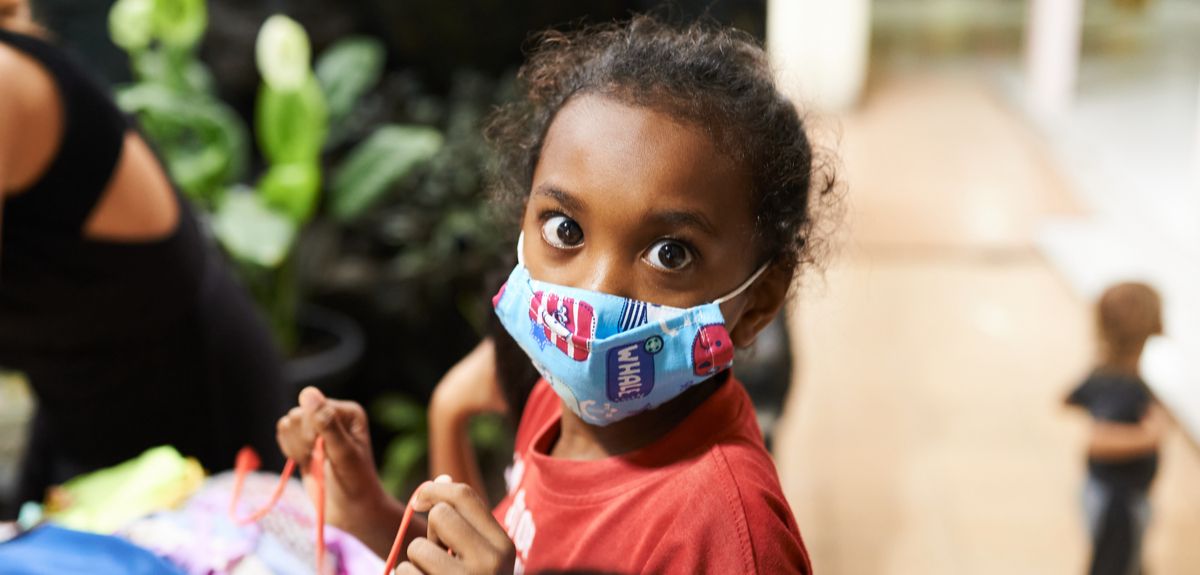
All the focus on children over the last year has been about lost education, keeping them busy and the impact of isolation. Right now, it is holidays and exams. But we should be more worried – a lot more worried.
Lucie Cluver, Oxford Professor of Child and Family Social Work, says Dr Susan Hillis, from the US Centers for Disease Control and Prevention, was so worried, she could not sleep. The thing is, children may not be dying from COVID-19, but millions have already or will lose parents and caregivers before the pandemic ends, creating an epidemic of orphan-hood in the wake of the virus. And that was keeping Dr Hillis awake at night.
Children may not be dying from COVID-19, but millions have already or will lose parents and caregivers before the pandemic ends, creating an epidemic of orphan-hood in the wake of the virus.
‘The global response has focused on adults, because that is who the disease is striking,’ says Professor Cluver. ‘But there has been no thought at a global scale about the impact of COVID deaths on children. This needed a concerted effort.’
Not long after that phone call, an international team of academics and policymakers came together, and the results of their work is published in the Lancet.
It is obvious when you think of it. Just as with AIDS and Ebola, the virus was going to leave children around the world without parents – and/or grandparents. Devastating for families and children and very costly for countries, in every sense. COVID-19 is far from over.
The global response has focused on adults, because that is who the disease is striking...But there has been no thought at a global scale about the impact of COVID deaths on children. This needed a concerted effort...we needed robust evidence
Professor Lucie Cluver
Dr Hillis emphasised they needed to work swiftly. But, before they could ask for help, they needed to know the size of the problem – and the locations.
'We needed robust evidence before we could ask for a strong response,’ says Professor Cluver.
What they really needed was the world’s best modellers, to work out the scale of the crisis. Professor Cluver had a not-entirely-scientific thought: maybe a dad at her children’s nursery in St Anne’s College could help? In normal times, you might ask a toddler’s dad for a playdate. But Dr Seth Flaxman was also a statistician at Imperial College, part of the team crunching COVID numbers, and soon to come to Oxford’s Department of Computer Science. So it was not quite as outlandish as it sounds.
As soon as he understood, Dr Flaxman brought together a team to work on the problem at Imperial and Oxford – including Professor Christl Donnelly, who works at both universities. Their series of papers, looking at the impact of COVID on countries around the world and at the fallout from new variants, were guiding national responses.
In previous studies, on disease burden, they had calculated global estimates, by combining dozens or hundreds of national surveys. But no surveys were being undertaken on children affected by the deaths of their parents or caregivers, so demographic methods were needed to combine data on average family sizes with COVID death information.
Given the heavy burden of deaths among older age groups, Professor Cluver says, ‘We needed to think about grandparents as well. There has been a huge increase over the last decade in children being looked after by grandparents. In many households, they are primary caregivers, and provide essential financial support.’
We focused on 21 countries with the highest numbers of COVID deaths, looked at age and fertility patterns and extrapolated to the rest of the world to find minimum estimates of the number of children affected
Dr Seth Flaxman
Dr Flaxman explains, ‘We focused on 21 countries with the highest numbers of COVID deaths, looked at age and fertility patterns and extrapolated to the rest of the world to find minimum estimates of the number of children affected.’
Alongside the calculations, the project has brought together international institutions including the CDC, the WHO, the World Bank, and USAID. They are leading today’s publication of the research and accompanying report, calling for immediate action from global governments.
The team is well aware what is at stake... According to Professors Lorraine Sherr and Charles Nelson, research shows, institutions are really terrible for children...it is much better to support the extended family to care for them.
The team is well aware what is at stake. With memories of the impact of the AIDS epidemic in Africa, when there was a rush to put orphans into institutions, they are concerned this does not result in a rush to separate children from families again.
UCL’s Professor Lorraine Sherr and Harvard Professor Charles Nelson insist, ‘Research shows, institutions are really terrible for children...it is much better to support the extended family to care for them. Almost every child has a family member who could do that.’
On a purely financial basis, the cost of institutionalising the COVID orphans is seven times greater than the cost of keeping them at home. With today’s Lancet release, Dr Flaxman and Professor Cluver hope policymakers will act to avoid the crisis becoming a long term catastrophe. It means taking country-by-country action to keep children out of institutions and with their families.
On a purely financial basis, the cost of institutionalising the COVID orphans is seven times greater than the cost of keeping them at home.
Dr Flaxman and Professor Cluver hope policymakers will act to avoid the crisis becoming a long term catastrophe
‘There needs to be support for children,’ says Professor Cluver. ‘But there are effective and affordable responses. If we make sure that families have some financial support, that children can go to school, and that they have help with parenting in these difficult circumstances, then children do better in many important aspects of their lives. But we need to act fast.’
There are some steps everyone can take. If parents and grandparents are vaccinated, then their children are protected too. When each of us gets our vaccination, we can donate to the World Health Organisation’s COVID solidarity response fund.
But help also needs to come from the international community, and both Dr Flaxman and Professor Cluver are optimistic about the prospects.
This is a call to action to support children who have lost loved ones. Our calculations can help policymakers turn good intentions into appropriately scaled help where it is needed most
Professor Christl Donnelly
‘Even small amounts of support help,’ says Professor Cluver. ‘A grant of $21 a month can benefit a family... a phone-based parenting program with support is $6 per child. The costs are manageable.’
Dr Flaxman’s open-source online calculator shows minimum estimates for the numbers of orphaned children per country and a country graph indicates the increase in numbers during the pandemic. At the time of writing, the numbers already orphaned in South Africa, for instance, was 101,400. There are about 10,000 in the UK who had lost at least one care giver.
There are already one million orphans, and 1.8 million children who have lost a caregiver...But with most of the developing world not expected to get vaccines until 2025, there could be five to seven million by the time the pandemic is over...since we submitted the paper, the numbers of orphaned children keep going up and up
Professor Cluver
‘There are already one million orphans, and 1.8 million children who have lost a caregiver’ Cluver explains. ‘But with most of the developing world not expected to get vaccines until 2025, there could be five to seven million by the time the pandemic is over.’
She adds, ‘It’s been a race against time. Even since we submitted the paper, the numbers of orphaned children keep going up and up. Something needs to be done - urgently.’
Professor Donnelly explains, ‘This is a call to action to support children who have lost loved ones. Our calculations can help policymakers turn good intentions into appropriately scaled help where it is needed most.’
Global minimum estimates of children affected by COVID-19-associated orphanhood and deaths of caregivers: a modelling study. (Published Online July 20, 2021). Available once the link goes live: at https://doi.org/10.1016/S0140-6736(21)01253-8)
prepared by the Global Reference Group on Children Affected by COVID-19: Joint Estimates and Action: Susan D Hillis*, H Juliette T Unwin*, Yu Chen*, Lucie Cluver, Lorraine Sherr, Philip S Goldman, Oliver Ratmann, Christl A Donnelly, Samir Bhatt, Andrés Villaveces, Alexander Butchart, Gretchen Bachman, Laura Rawlings, Phil Green, Charles A Nelson†, Seth Flaxman†
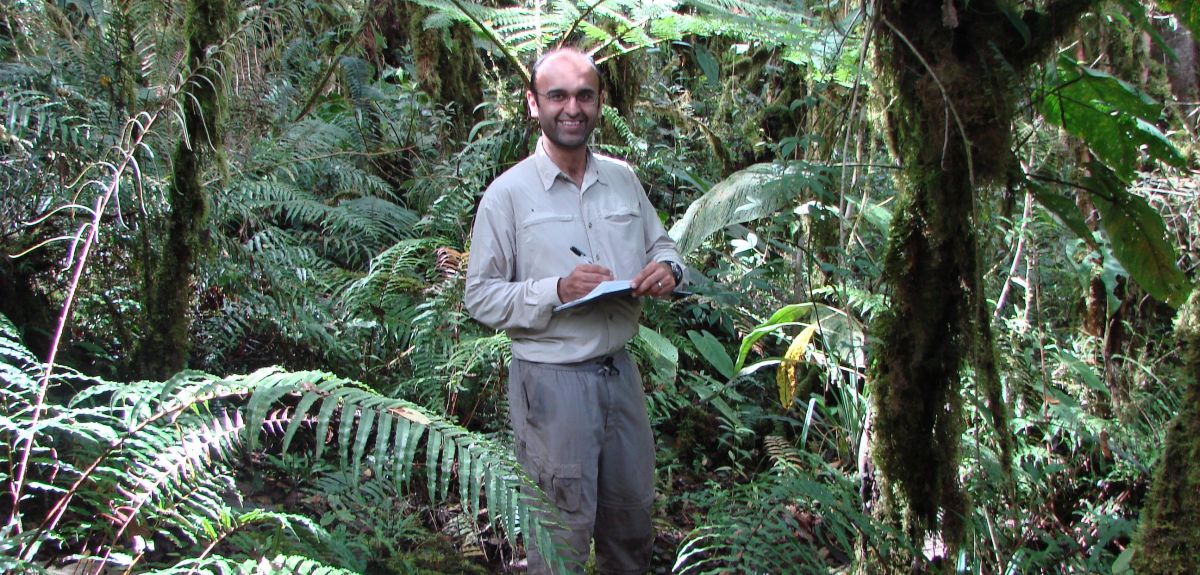
Rainforests are amazing places - great biodiverse ecosystems and carbon sinks. But, as a million nature programmes have shown, they are also full of things that could kill you: insects as big as your fist, some of the deadliest snakes alive, even the frogs can be nasty. Not unreasonably, this might well deter many people from venturing into these great forests – but not Oxford professor Yadvinder Malhi. He admits, he likes that sort of thing...a lot. It is not just the biodiversity which attracts the professor of Ecosystem Science, but the challenging nature of doing research there, the fact we still know so little about them and the major role rainforests have to play in our climate.
A million nature programmes have shown, rainforests are full of things that could kill you...Not unreasonably, this might well deter many people from venturing into these great forests – but not Oxford professor Yadvinder Malhi. He admits, he likes that sort of thing...a lot
Until the pandemic, Professor Malhi had spent years in and around tropical rainforests, visiting field research sites most years. He took his young family on holiday to one dense forest deep in Borneo and only went to the beach, reluctantly, after his son protested at the idea of even more time in the rainforest. This year, though, he has been a stay-at-home academic, with the most challenging environment being Oxford and the University’s Wytham Woods (actually a very interesting place to study, says the professor).
It is a far cry from where the genial professor grew up: darkest Essex. Although, when he was around six, the young Yadvinder’s parents sent him to live with his grandparents in the Punjab for a year – so he would understand his Indian roots. Life could not have been more different (and more challenging), but Yadvinder discovered an intense life in full colour surrounded by warm, welcoming people – and his love affair with tough places and nature began.
‘I saw the world open up for me,’ he says. ‘It made me want to explore the whole world.’
He recalls how his cousins would bring him local birds and animals to inspect, catching parrots in basket traps, so the budding young scientist could inspect them. After a year, he returned to monochrome Essex, more interested than ever in the scientific world, and told his incredulous classmates about one discovery, ‘There are more brown people in the world than white.’
'They did not believe me,' he laughs. Yadvinder's keen interest and scientific ability, took him from his local school to Cambridge in the late 1980s, to study Physics.
‘I wanted to study astronomy,’ he says. Awareness of the issue of climate change was in its infancy, but he was beginning to think that maybe environmental science, rather than the stars, was for him.
‘There is a tradition of physicists going into biology,’ he adds. ‘I’ve learned a lot in the process.’
Going to Edinburgh after his doctorate, the young researcher took his first big step into the natural world, with a study visit to Brazil. He learnt Portuguese (though his samba didn’t improve much) while waiting for his equipment to clear customs (it took three months). But the main point was to work in the rainforest.
‘We worked on a scaffolding tower in the middle of the Amazon,’ he says, reminiscing fondly. ‘We measured the rain, air and water....this was the first time I had been in a rainforest. I loved it all, the bugs, the big skies, the multitude of living things, everything.’
He adds, ‘There was rainforest for a 1,000 miles in every direction. It’s a continent-sized forest. To see such vast nature and to feel so small - it was transformative.’
There was rainforest for a 1,000 miles in every direction [on his first trip to the Amazon]. It’s a continent-sized forest. To see such vast nature and to feel so small - it was transformative
Professor Yadvinder Malhi
Perhaps with memories of his days as a boy naturalist, he says, ‘There was so much to learn. I was more and more fascinated by ecology.’
He was eager to learn more about ecology – while bringing his physicist’s mindset to the research. Professor Malhi worked largely in Brazil until the early 2000s, when he was invited to look at the potential to do research Peru. He loved that too, ‘I looked at the Andes, it was fantastic. We spent a few weeks, trekking ancient Inca trails.’
On the slopes of the Andes, working with local and international partners, he helped establish a ‘vertical science laboratory’, stretching from the steaming lowland rainforest to the high treeline of the cloud forest, four km up in the atmosphere.
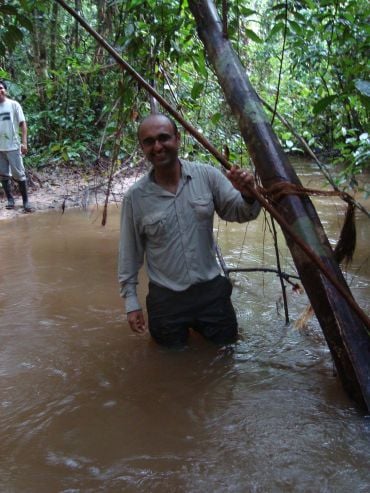 Full of things that could kill you: Yadvinder smiles at the memory of days in the rainforest.
 He beams as he remembers with evident happy memories, ‘We put study sites all up the sides of the mountains to understand how climate affected tropical forests, and moved plants and soils up and down the mountains [to look at the environment at different levels].’
The same method has now been adopted in other forests from Brazil to Borneo.
‘I was trying to look at the forest as a physicist would, as a system,’ he says.
In 2004, he arrived in Oxford, with a Royal Society fellowship. His work could continue, but he was based, for part of the year anyway, in the city of dreaming spires. Cycling home one rainy Michaelmas day after an intense few weeks of teaching, he missed the outdoors, the forest, the sun. On arriving home, he discovered his wife had been offered an overseas posting – Ghana. He did not need to be asked twice.
Cycling home one rainy Michaelmas day...[in Oxford] he missed the outdoors, the forest, the sun. On arriving home, he discovered his wife had been offered an overseas posting – Ghana. He did not need to be asked twice
‘We went to Ghana for three years,’ he says. ‘I was a stay-at-home father for much of the time, but I used it as a chance to get to understand the forests and people of this continent that was so new to me.’
He adds, enthusiastically, ‘Africa has an unjustified reputation to be really difficult to work in, but once you know people and build local friendships, it can be great and immensely rewarding. I have developed some wonderful long term friendships and working relationships there, and now over half my work is in Africa’
Since the creation of the vertical lab in the Andes, a key part of Professor Malhi’s work has been researching, with partners on the ground, the metabolism of the forest. It is critical work – finding out what is in the rainforest and what is happening – and it is varied from country to country and even within the same forest.
‘We were doing our own research but we realised a global understanding of rainforests was needed, which is where the Global Ecosystems Network (GEM) came in,’ he says.
‘We can see how events, such as El Niño, can lead to carbon pouring into the atmosphere [as the rainforest turns from carbon sink to carbon producer]...half of our plots [study sites] in a key part of the Amazon caught fire and we have been tracking them to see how they recover. These long-term ecological observations are like an ecological weather station, giving us insights into how the forests were and early warning of how they might be changing.’
We can see how events, such as El Niño, can lead to carbon pouring into the atmosphere [as the rainforest turns from carbon sink to carbon producer]...These long-term ecological observations are like an ecological weather station, giving us insights into how the forests might be changing
Professor Malhi
His scientific interest is clearly to the fore as Professor Malhi talks about major weather events, which are becoming more common, potentially having the capacity to turn a massive carbon sink into a carbon producer. The consequences for climate change would be severe. He maintains nature and the rainforest will play a huge role in the battle against climate change, ‘Restoring the rainforest and nature can’t solve climate change, but it can make a substantial and real contribution, while bringing all the many other benefits of a thriving natural world.’
Talking about the new Oxford Martin School Programme in Biodiversity and Society, his particular focus is on better connecting the university to nature restoration projects and plans recovery in the surrounding landscapes of Oxfordshire.
‘We need to do something here locally...the UK’s biodiversity is in a poor state and there’s a lot of potential and new political will to make things better. The experience of lockdown really brought home the importance of local nature. Biodiversity is no longer just thought of as something just nice to have – it’s seen as essential, bringing lots of benefits such as human health and wellbeing, flood control and air quality.’
Restoring the rainforest and nature can’t solve climate change, but it can make a substantial and real contribution, while bringing all the many other benefits of a thriving natural world
Professor Malhi
Professor Malhi is hopeful about the future of the natural world, ‘This is an exciting time. We’re going to see serious efforts to maintain and restore biodiversity...there’s a very positive agenda. It’s no longer about just stopping bad things happening, but about making good things happen.’
And his enthusiasm for research and hard-to-reach places is evident, ‘It’s amazing what you can learn from the countries we work in, from the people who live and work there every day, and from the amazing variety of tropical nature.’
As for him, the Essex boy cannot wait for the pandemic to be over, so that he can head back to where the wild things are, for the sake of science, ‘As a scientist, it’s really important to have a passion, a passion for finding things out – that’s much more important than revising for exams.’
Launching two major pieces of work about meat eating at the same time of year might not sound like ideal timing. But COVID-19 meant that LEAP, Oxford’s Livestock, Environment and People project, was faced with doing just that - launching two projects not only in the same week but on the same day in May. But, actually, it works, according to Lucy Yates, LEAP’s Public Engagement Coordinator.
‘What an opportunity to reach different audiences at the same time,’ she said. ‘By inviting them to Oxford’s Natural History Museum to see Meat the Future and going out to meet a broad range of people around the country with our touring installation, Meat Your Persona.’
LEAP research aims to contribute to an evidence-based discussion on the future of meat production and consumption: how frequently it should be eaten and its environmental and health impact. Some key research findings include:
- Even if we cut all fossil fuel emissions immediately, we still would not reach climate change targets without also cutting food emissions.
- Eating high quantities of processed and unprocessed meat is associated with higher risks of colorectal cancer and ischemic heart disease among other diseases.
Meat the Future offers serious food for thought about how the consumption of meat affects our health and the planet.
Meat the Future offers serious food for thought about how the consumption of meat affects our health and the planet. Showcased in striking, engaging displays, visitors to the museum can find out more about LEAP’s research and learn about the impact of meat eating. Displays include stacks of meat, which compare consumption in different countries. Visitors can browse a supermarket fridge, to find out more about ecolabels for foods, and be transported to the South American rainforest – where biodiversity is under acute attack from agriculture. They can also discover the carbon footprint of their own shopping habits in a specially developed digital interactive.
Professor Sir Charles Godfray, Co-Director of LEAP, Oxford Professor of Population Biology, and Director of the Martin School said, ‘With a population likely to peak above nine billion this century, Meat the Future asks how we square our growing demand for meat with the needs of the planet.’
Meat Your Persona, meanwhile, is a touring installation in a bright yellow horsebox, by design consultancy The Liminal Space. Subtitled ‘What you eat and how it can change the world’, it is also aimed at highlighting the impact of meat eating on the environment and the individual. It offers a fun quiz to find your ‘meat persona’ – such as the BLT or the Happy Eater – and there are a host of other interactive activities designed to help you find out more from new recipes to learning more about Leap’s research.
Meat Your Persona will provide us with invaluable insight into the UK's current thinking around meat consumption and, hopefully, encourage individuals to think more deeply about the impact their food choices have on our environment.
The travelling exhibition is designed to speak to diverse audiences about their meat consumption and be fun along the way.
So far, the yellow horse box has visited shopping centres in Cardiff, Leeds and Newcastle. Blackpool and Glasgow are yet to come - along with a return trip to Leeds.
If you cannot see it in person, can take the quiz and find your meat persona at www.meatyourpersona.com.
Susan Jebb, Professor of Diet and Population Health, Co-Director of LEAP, commented, ‘Most people in the UK are unaware of the environmental impact of meat or the health harms caused by eating too much meat. Meat Your Persona will provide us with invaluable insight into the UK's current thinking around meat consumption and, hopefully, encourage individuals to think more deeply about the impact their food choices have on our environment. This is often a difficult conversation to have, however we feel The Liminal Space has created a positive and engaging way to connect the public to our research.’
The response from the public so far has been very encouraging.
One visitor said, ‘Admiration for a brilliantly put together, very informative exhibition. As a result of this exhibit we have decided to cut beef from our diet for the rest of the family.’
A visitor to Meat Your Persona commented, ‘I am inspired by all the recipes. I think giving up meat would be good for my health so I want to try to cut down.’
After a far busier start to 2021 than she could have possibly imagined, Lucy Yates is delighted both projects have launched successfully and is looking forward to a summer of lively engagement and hearing the public’s thoughts on meat eating.
Come to visit Meat the Future at the Oxford Museum of Natural History or catch Meat Your Persona in Leeds, Blackpool, Glasgow or online. If you are interested in reducing your meat consumption, you can also sign up for our cohort study at www.optimisediet.org.
Wellcome generously support both projects.
- ‹ previous
- 21 of 252
- next ›
 What US intervention could mean for displaced Venezuelans
  Setting the agenda for the next century of quantum
 10 years on: The Oxford learning centre making an impact
 Mapping the Moon: the world’s first lunar atlas goes digital
  Oxford and The Brilliant Club: inspiring the next generation of scholars
 New course launched for the next generation of creative translators
 The art of translation – raising the profile of languages in schools
  Opening a window into the quantum world
 Tracking resistance: Mapping the spread of drug-resistant malaria